






Feature by Kayly Nguyen
Photos by Maggie Zhang
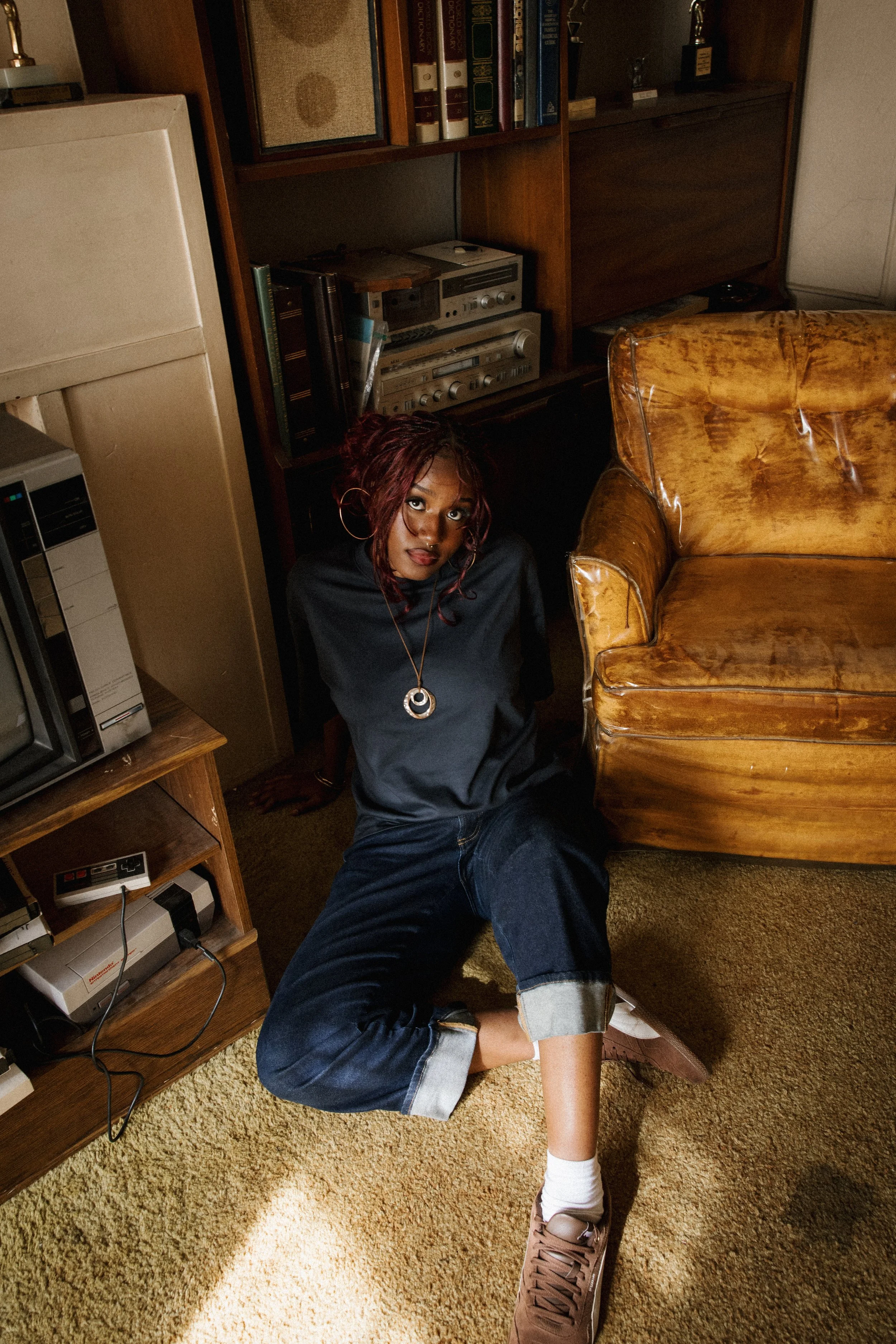
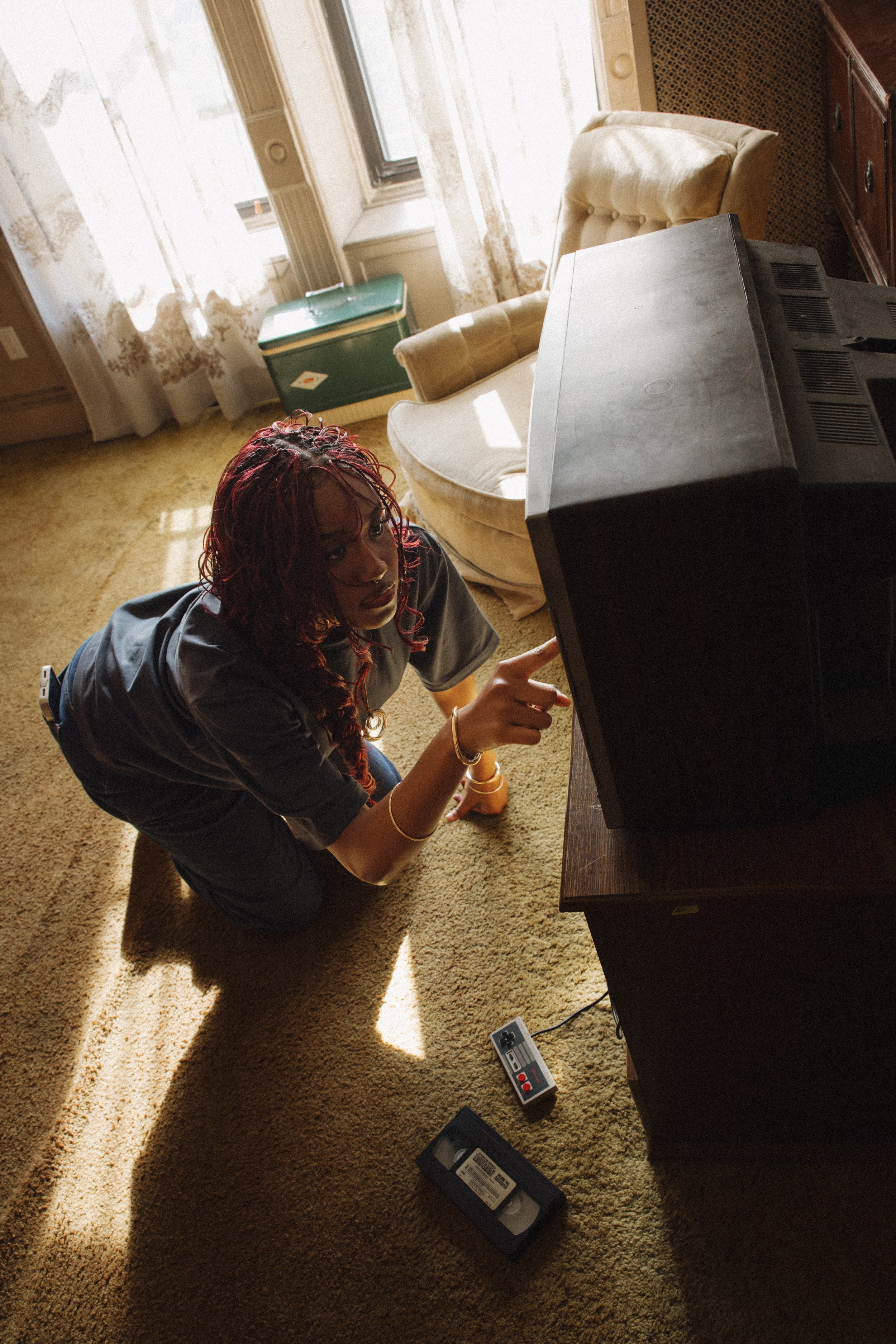
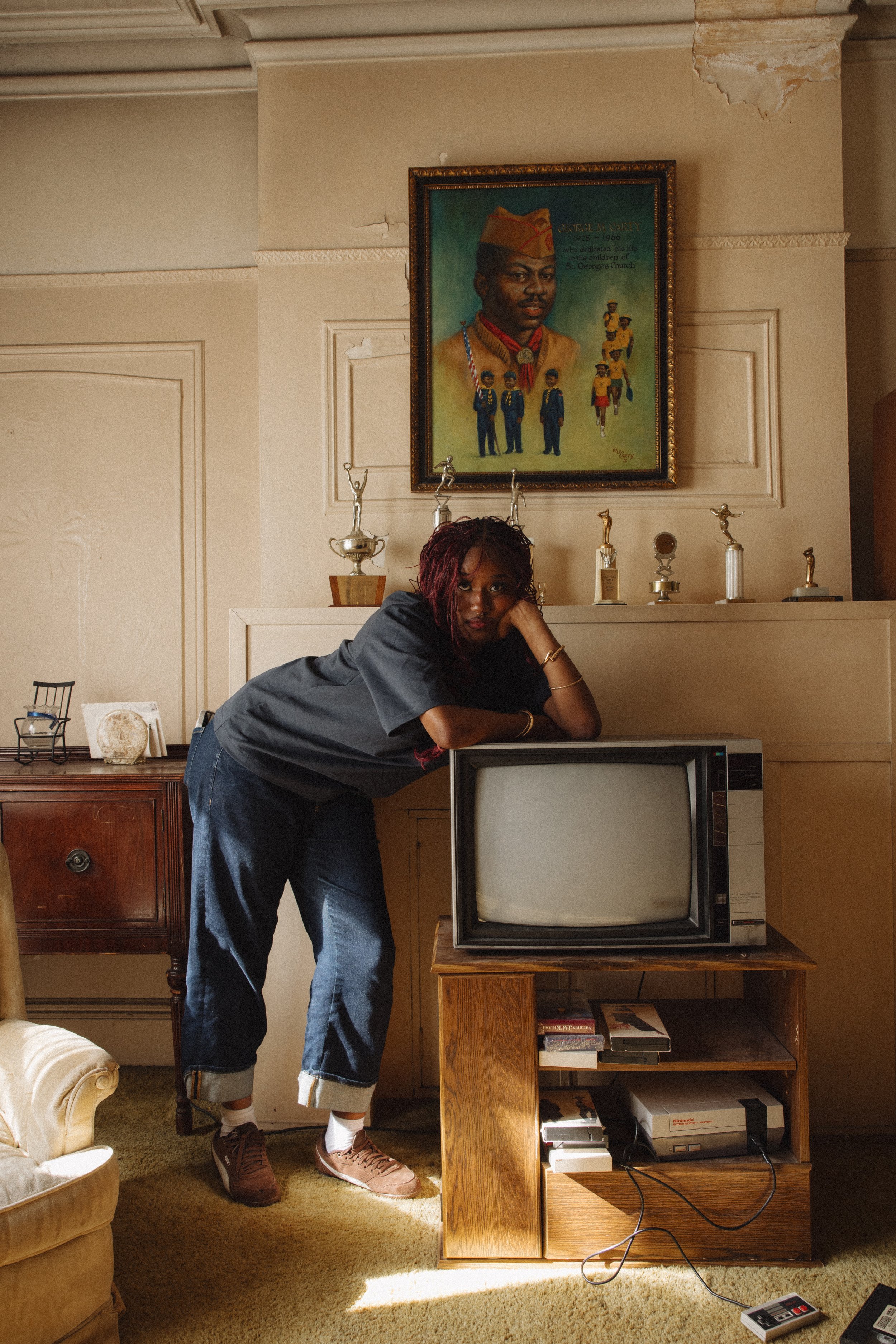
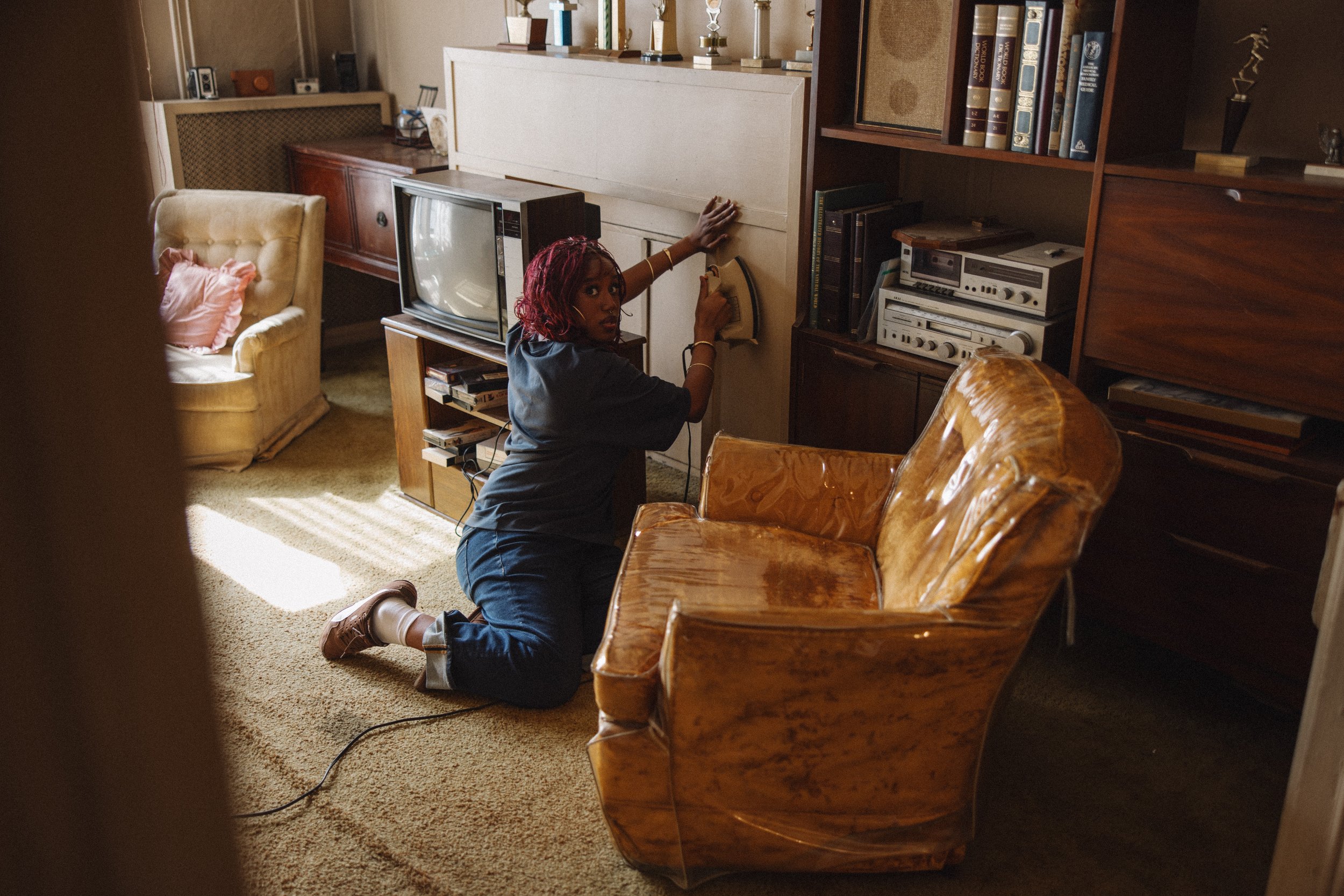
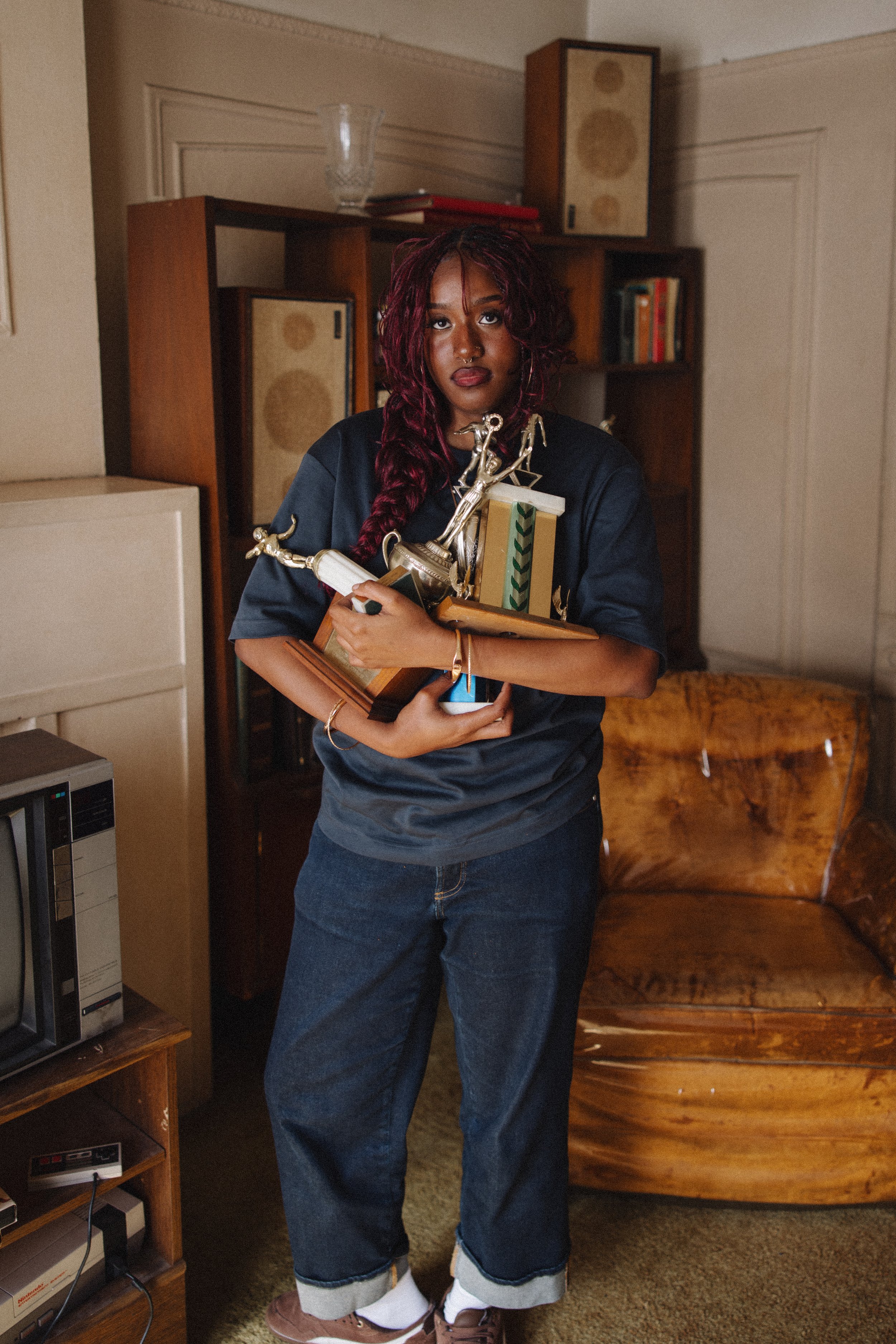
Shnayjaah Jeanty (CC ‘27) embraces contradictions and opposing emotions in her practice of spoken word poetry. On stage, she has nowhere to hide, so she releases all the deep-seated anger that has had no outlet for centuries. Her artistry is about building a narrative where abused undocumented immigrants have a voice in the United States’ legal system. Written or spoken, artistic or legal, Shnayjaah is working for migrant survivors to not have to be aliens–to be represented in society and the language of the law.
One story in her greater narrative is graduating with a Creative Writing major and Human Rights minor from Columbia College in 2027, and another is her upcoming publication of a poetry collection with Write Bloody Publishing in April of 2027.
What does it take to change someone’s mind?
What does it mean to continue building a community when it is constantly being broken down?
Mic in hand, Shnayjaah Jeanty will offer her answer.
—
But when Shnayjaah speaks, she cannot erase her words. She cannot change how she presents herself: a young woman on display in front of an audience, body trembling with the force of her emotions.
Nothing can be taken back. Nothing gets to be hidden.
But in some way, Shnayjaah tells me, that transparency is freeing. “The spoken word is the one place where my face can be the way it needs to be, and I can speak the way I want to speak. I won’t get caught up in watching my every move. I can hold two completely opposite ideas in one space [through my words and through my performance].” She leans into contradictions: metaphors that feel out of place, a visual center to her work that looks off somehow, and contrasts–intentionally voicing all the anger and injustice she buries within herself. On stage, there’s nowhere to hide. Everything comes through in her voice and her body language.
And what comes through in an excerpt from “Especially,” a poem written for her father, who was detained by the U.S. Immigration and Customs Enforcement Agency, is unmistakable rage–and also raw terror:
“especially,
meaning: the fight comes before the family.
meaning: good only exists in one language at a
time, and love has orders, so it always leaves.
and when it comes home–if it comes home,
it greets us with a gun, as if we’re supposed
to know what to do with a soldier in a house
built for a father.
today, mama told me my dad was in critical
condition. the ICU has codes for every kind of dying.
they are doing everything they can.
my daddy, a body fought for.
but his condition is worsening.”
Shnayjaah gives a voice to her inner thoughts: all the things she cannot bear to say in front of her father and all the grievances she’s bitten under her tongue till the blood comes rushing out. Once again, it’s contrast. Guns and soldiers and violence in the one place that’s supposed to feel safe–our home. Without somewhere to come home too–when your home itself is a battlefield, how could every day not feel like a war just to continue existing in this country?
“my daddy, a body fought for. / but his condition is worsening.”
Whose body was fighting? Was it his?
Is it Shnayjaah’s–
even if she does not forgive him for the battles
she fought every day in what was supposed to be her home?
Or was it the dead bodies of slaves that fought for her father to even be in the US as a free man–
look to Washington and you’ll see mass graves decorated by gleaming white monuments—
an ideal of independence (liberation for a nation, but what about for one man?)
standing atop injustice.
The ambiguity is intentional. Shnayjaah’s contradictions are intentional–because to her, artistry is fighting for those without a voice. Whether it takes the shape of the written word, spoken word, slam poetry, or studies in law, research, or advocacy, Shnayjaah has always been building up to one big narrative: creating a language where undocumented immigrants are recognized in–where they are able to speak.
In Shnayjaah’s research into ICE and the treatment of undocumented immigrants in America’s legal system, she’s written that, “Today's abusers know a woman with no language in the law is a woman who stays. And a country can finish what a man starts—an entire federal apparatus controlling one of our most vulnerable populations. This is the reality of an undocumented survivor of abuse—to be alien in love and in labor, in land and in law.”
At their core, undocumented immigrants are not aliens. They are humans just as citizens are, with their own thoughts, feelings, and complicated grievances they cannot express. How could they possibly be encapsulated and represented by a language they do not know and a label that isolates them? They have neither the language nor the law to stand beside them. They do not receive representation or recognition from our legal system.
In the language that Shnayjaah creates, she tears down the concept of alienation. By writing and by speaking, she’s working for a greater community–submerging herself in centuries or even millennia of Black oppression, letting anger that’s been held for much too long out in the present day. To her, it’s like “re-entering my body and feeling things I haven’t been able to feel. I can yell and show emotions I don’t usually show. I don’t have to be guilty for feeling angry.”
“if they send him back–
in a box, or chains, to a country
he won't survive again, i will
not write another poem.
i’ll be especially,
meaning:
our fight outlasts our families.”
And who is that anger directed towards? Her “fight” is with her father. Her fight is with her family and how she’s supposed to reconcile “safety” with her home, her personal “battlefield.”
But her fight is also with the abused undocumented immigrants who, with no words in this language to represent them, with no language to be able to speak and represent themselves in the legal system, lie silent.
“our fight outlasts our families.” Kindness and anger co-exist on one spectrum, and that contradiction is okay–because through the spoken word, Shnayjaah comes back into her body.
She allows herself to be angry, to feel injustice, and to want to change things.
Because perhaps that anger is the greatest kindness she can offer–
more than a personal anger directed towards or even for her father,
but anger on behalf of every migrant survivor.