


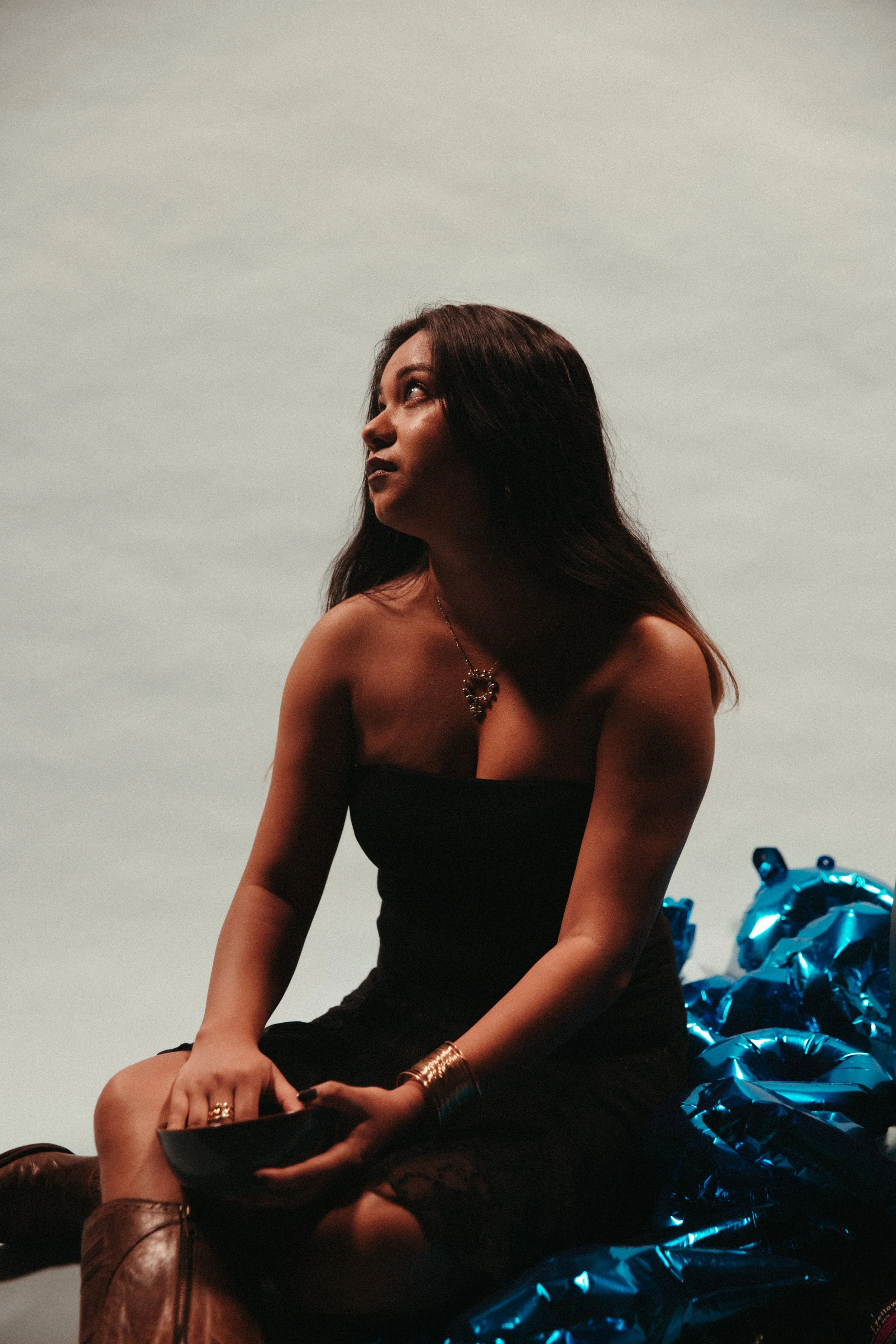


Feature by Tai Nakamura
Photos by Moksha Akil
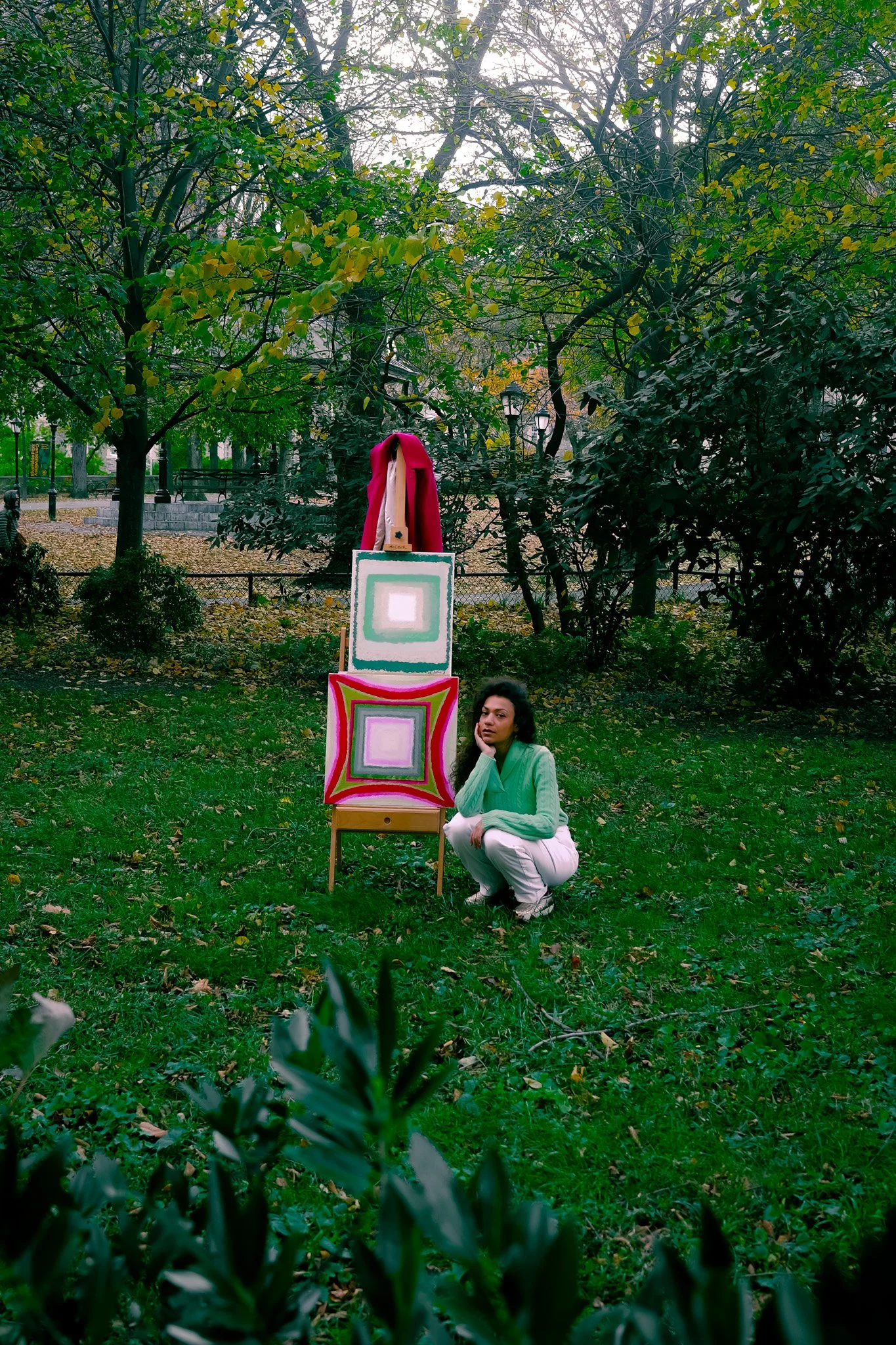
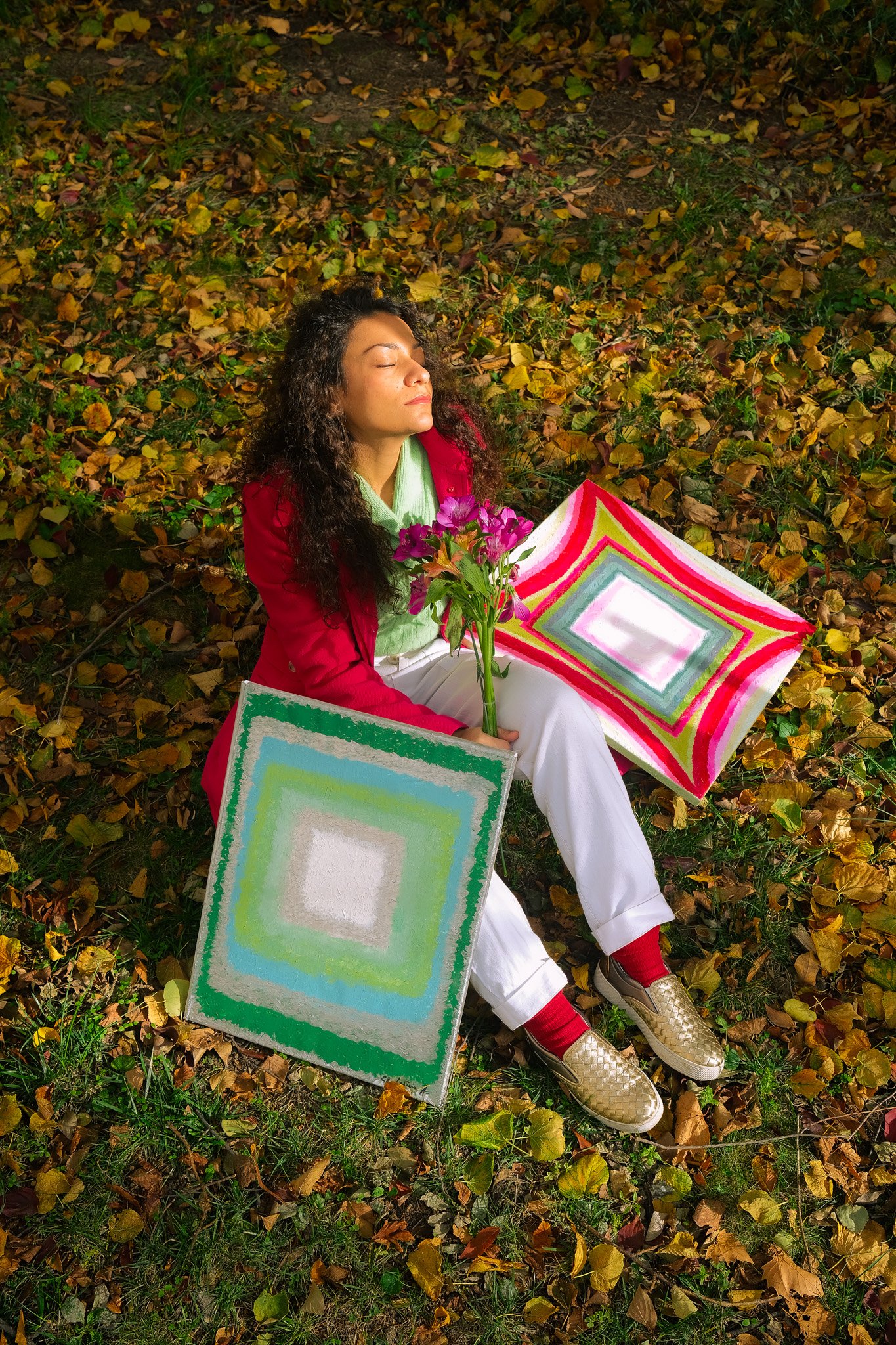
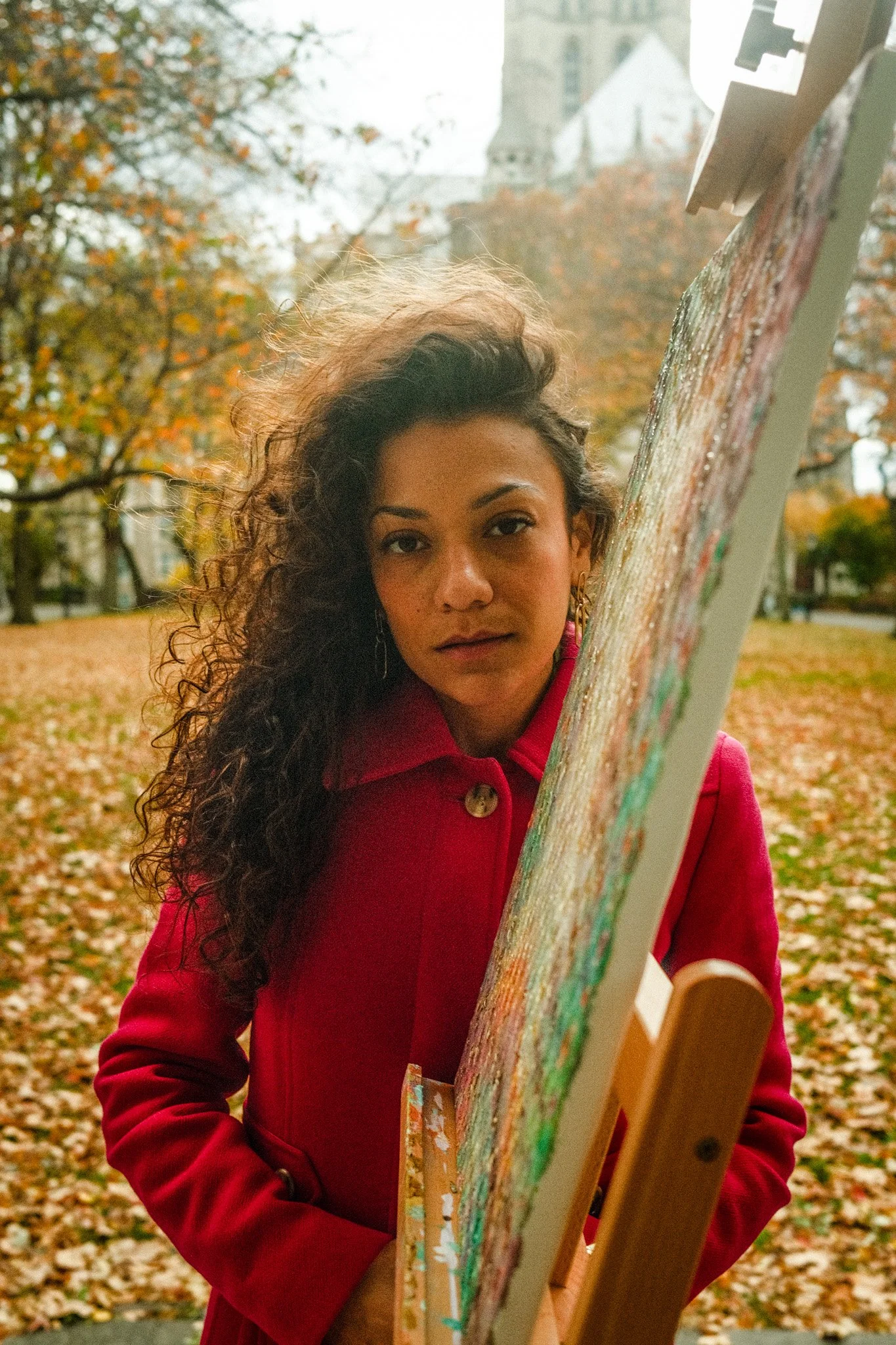
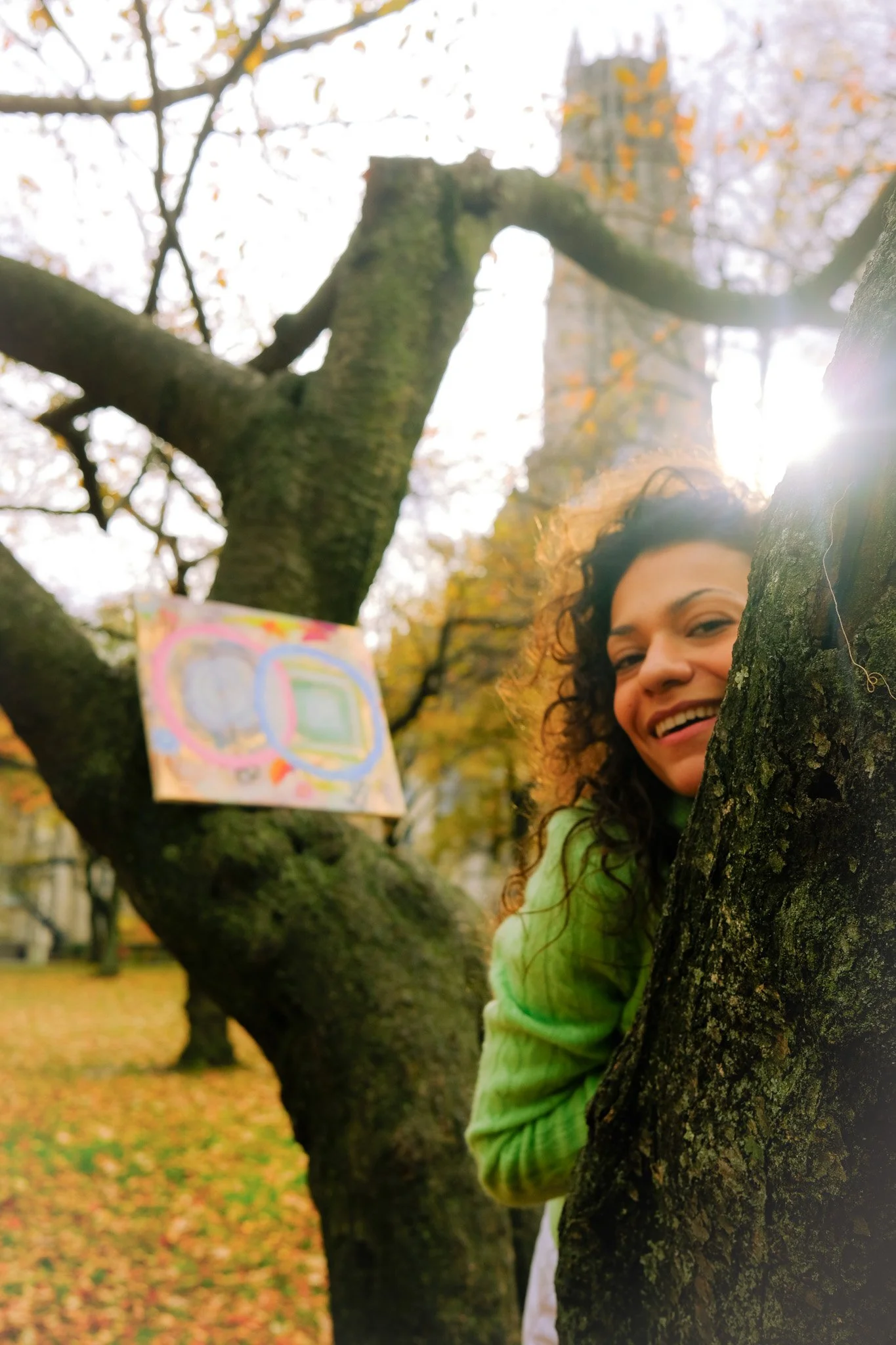
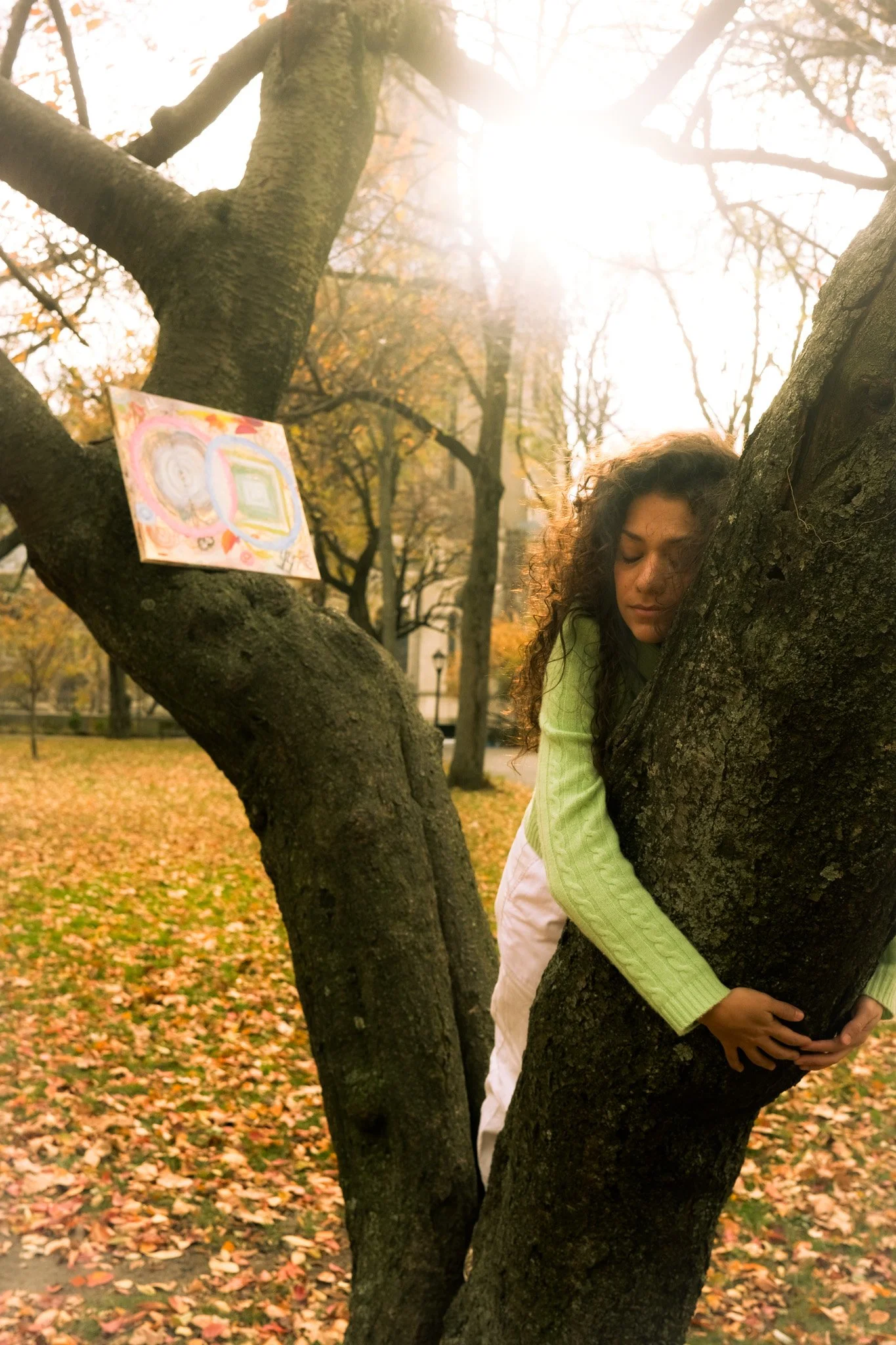
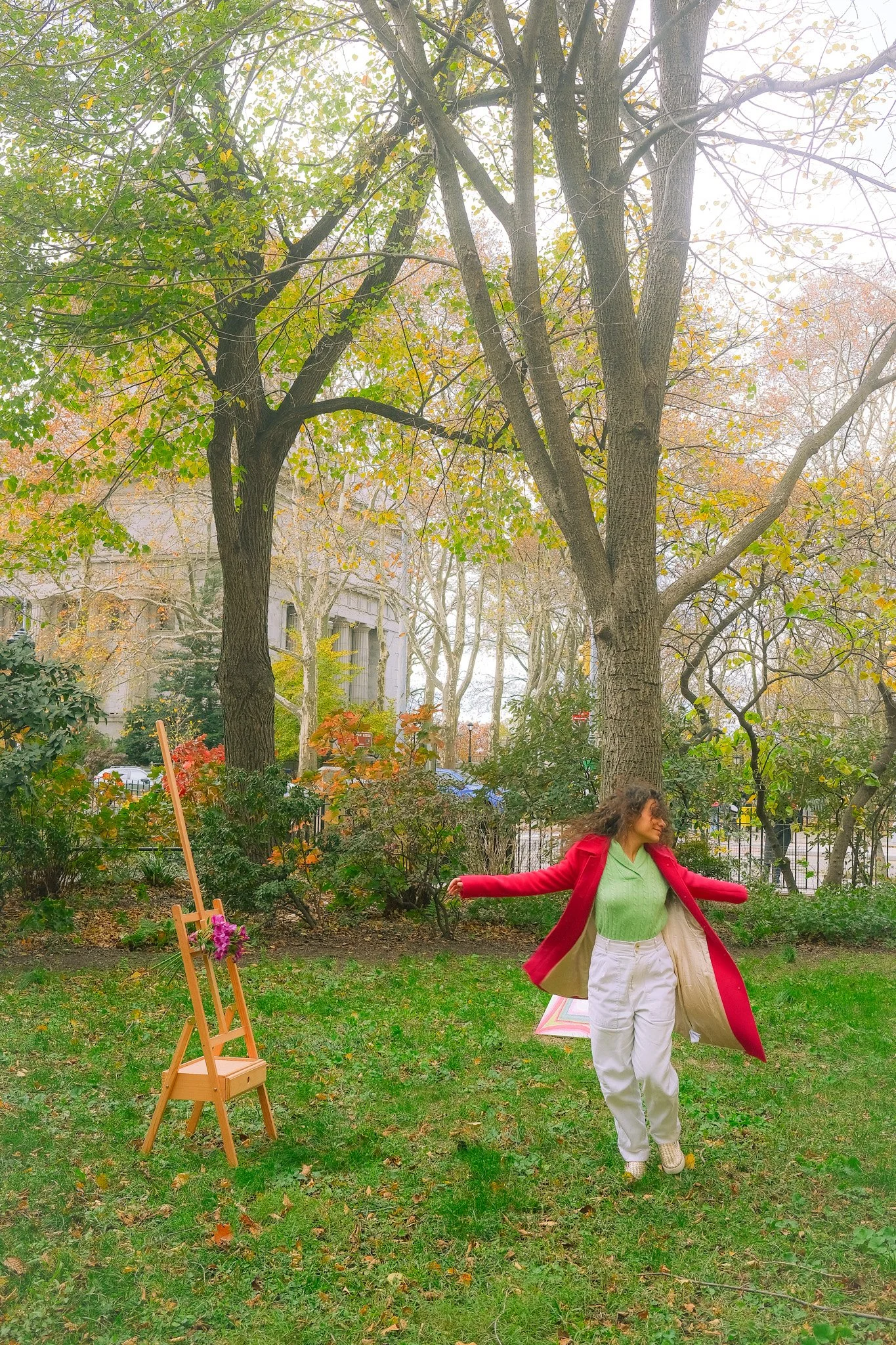
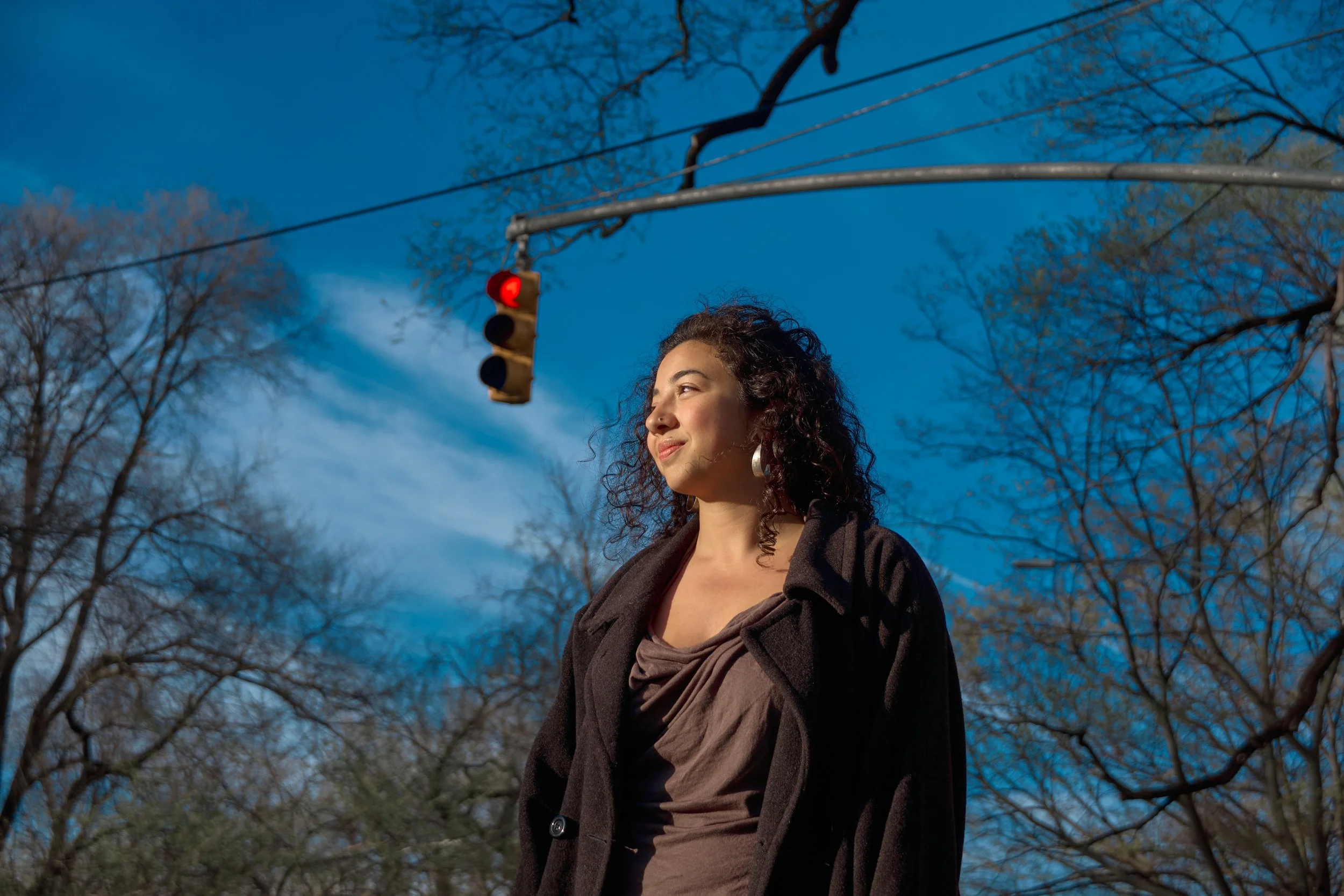
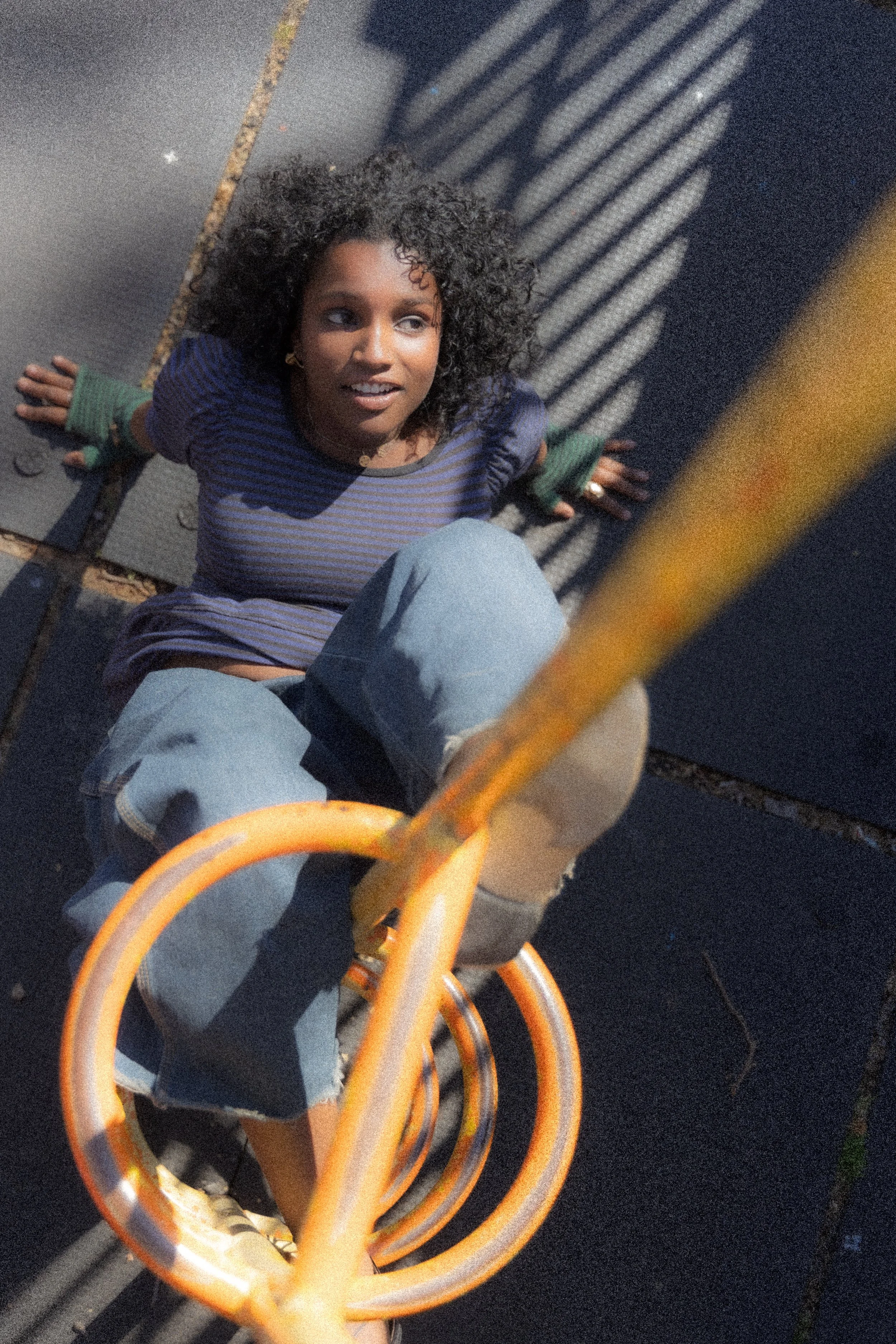
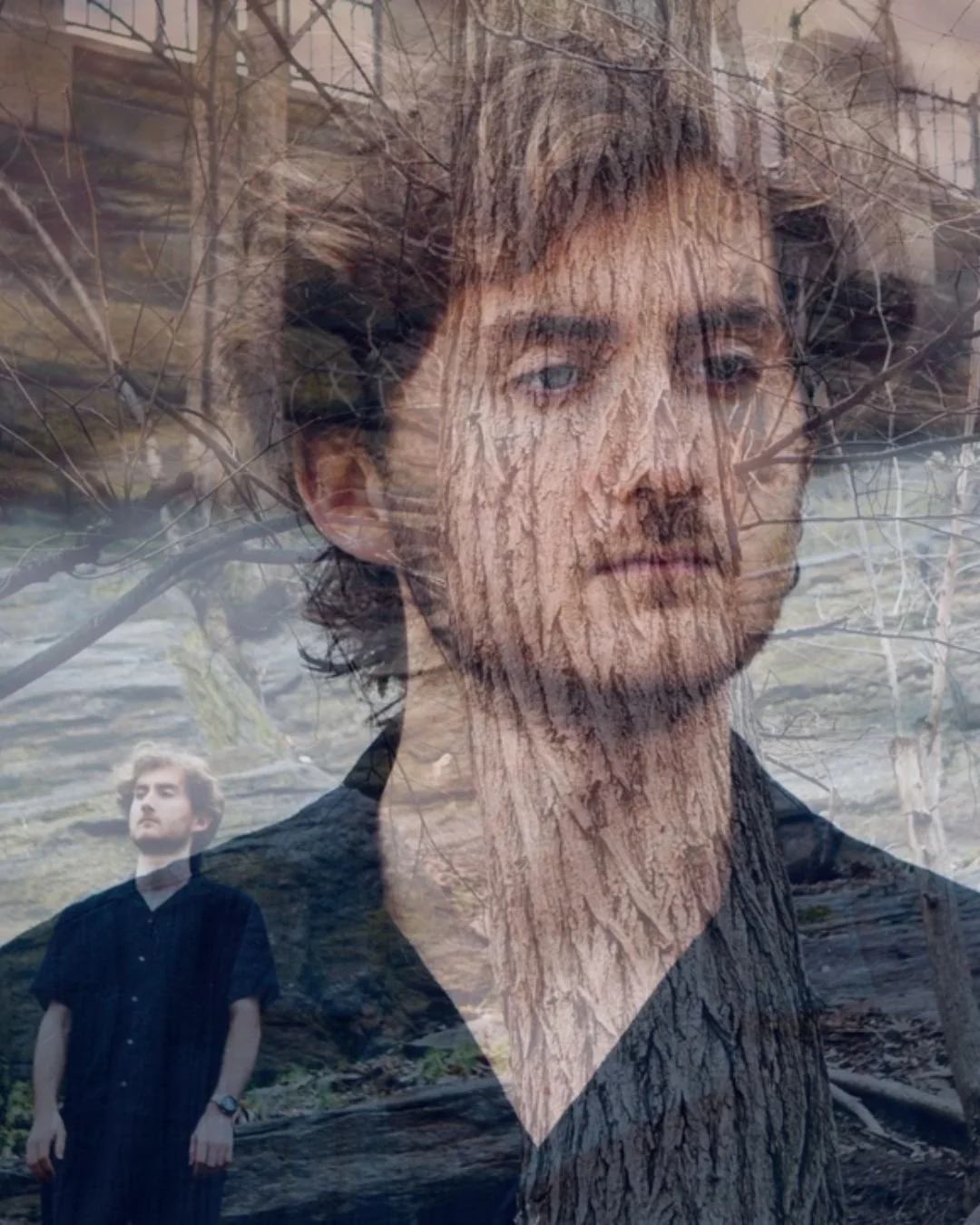
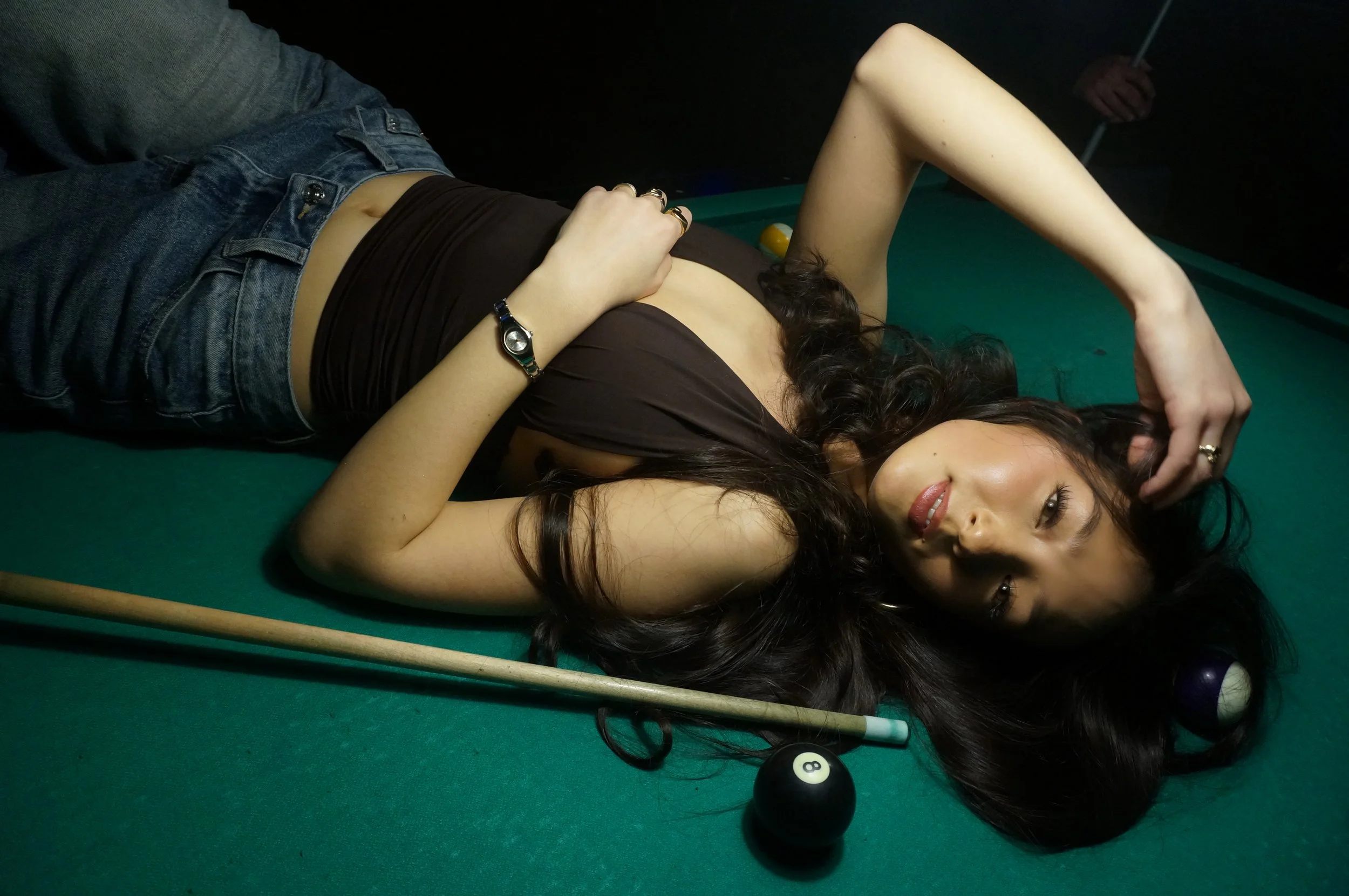
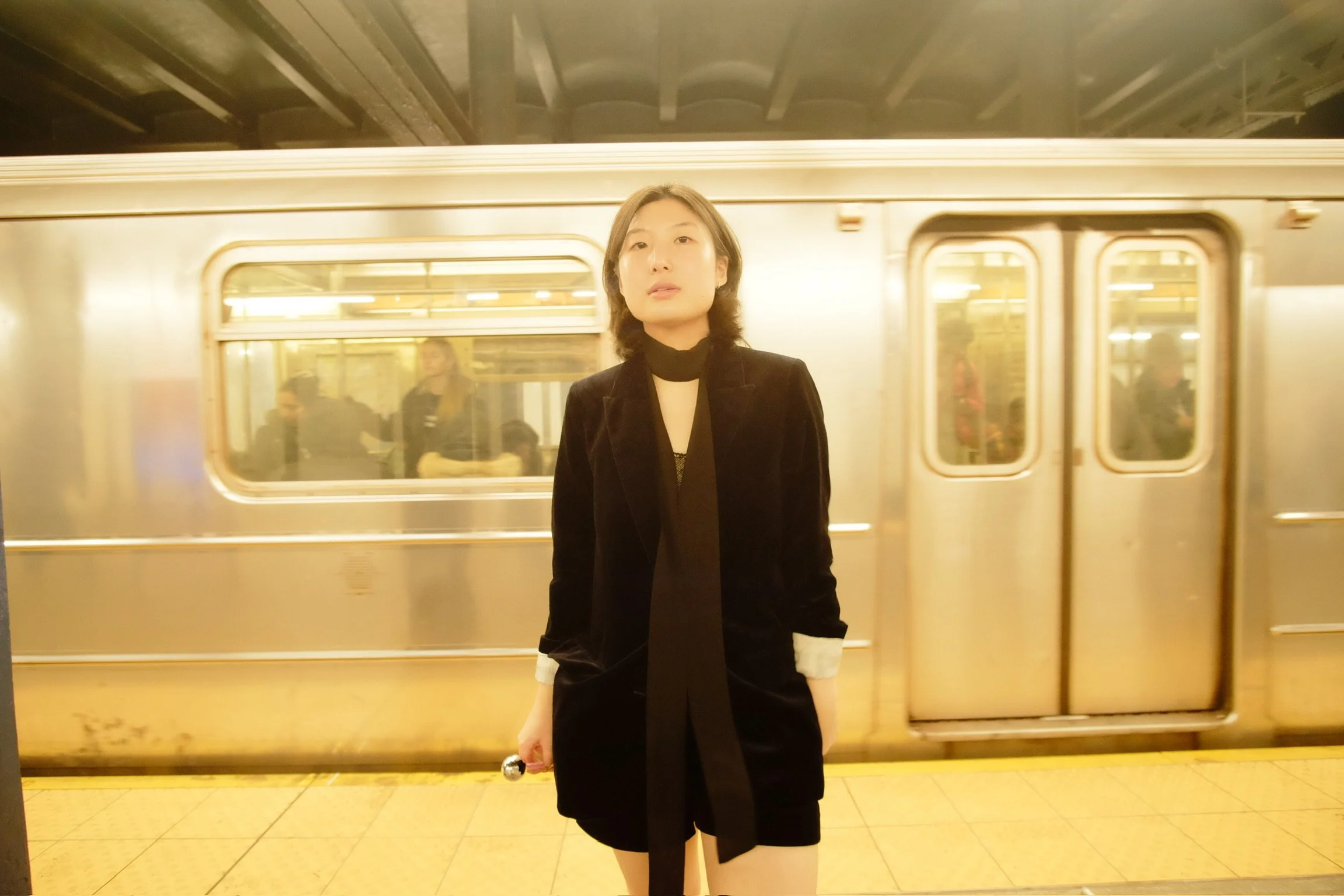
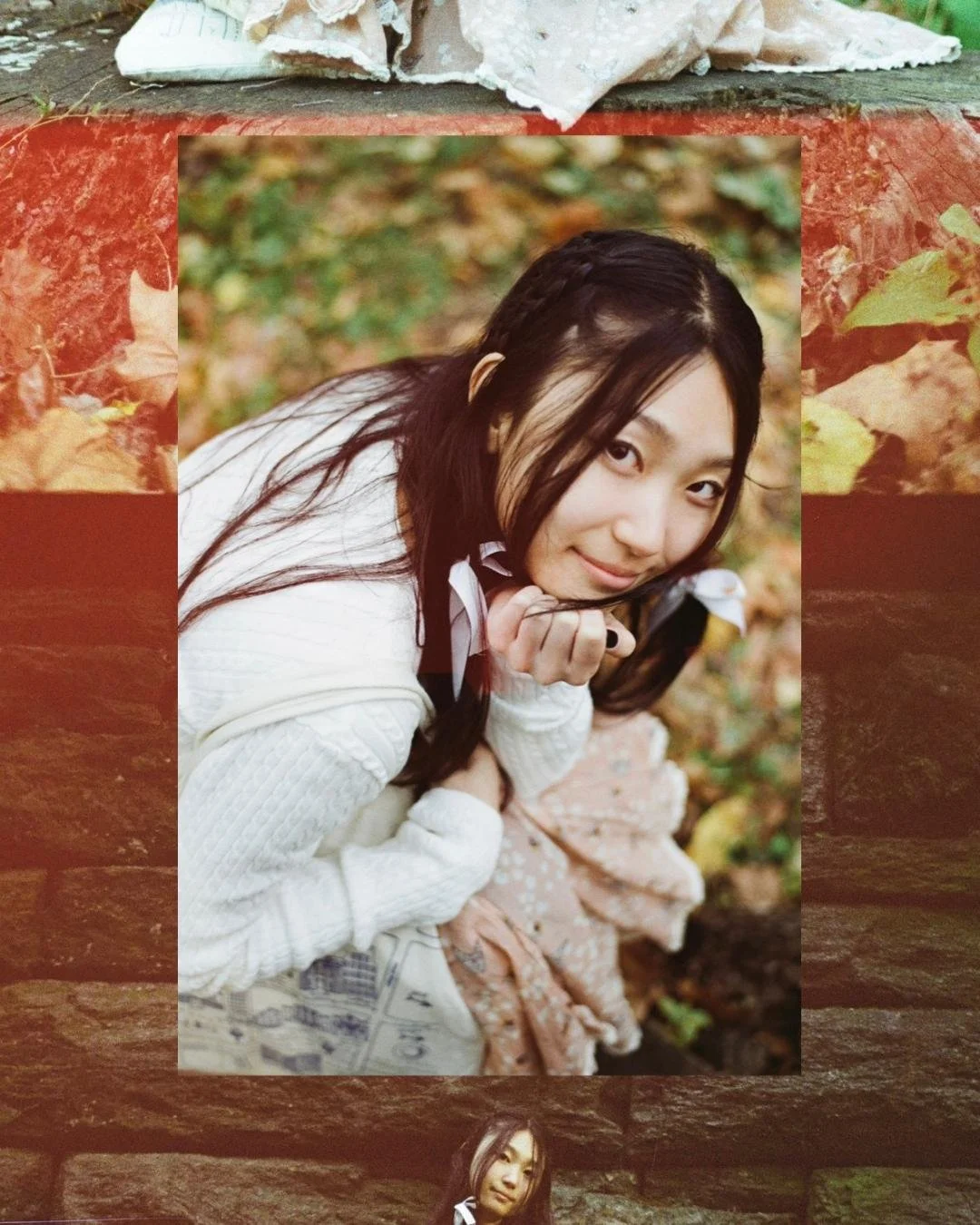
Leticia Abasto (GS '28) is a painter and traveler. Her paintings–"continuations" of the understanding she gains through her meditative practice–offer people the opportunity to feel a Uniqueness and a Universe simultaneously.
The air turned warmer as the apartment door opened. Leticia Abasto welcomed me in and led me down a hallway to the living room. This apartment–walls lined with luminescent paintings–serves as Leticia's art studio and gallery of sorts. Some pieces stare back at their onlookers; these works looked at me, but not persecutorily. A desk light washes the ceiling fleetly in circular rainbow. After a while, I start to imagine the paintings radiating this same light, and Leticia, too, as she brings coffees for the two of us. We sit on a nice sofa. I am seated under an artwork which proclaims: I AM WORTH OVER 2 TRILLION EUROS. Indeed! We begin talking.
Leticia was born and raised in São Paulo, Brazil. She says that though it's called a "grey city," her experience growing up in a neighborhood on the boundary between the forest and the people was far from monochromatic. The forest always bleeds into her imagination; as a child, she loved mixed colors—"young colors," as she called them, over unmixed primary colors—"old colors." Next to me on the sofa, Leticia sits right below Unconditional Love (2021), her first painting conceived through meditation. "It's quite magical," she observes, because "[people] that I ask, What do you feel when you see this painting?... answer things associated with nature, which was the idea when I made the painting."
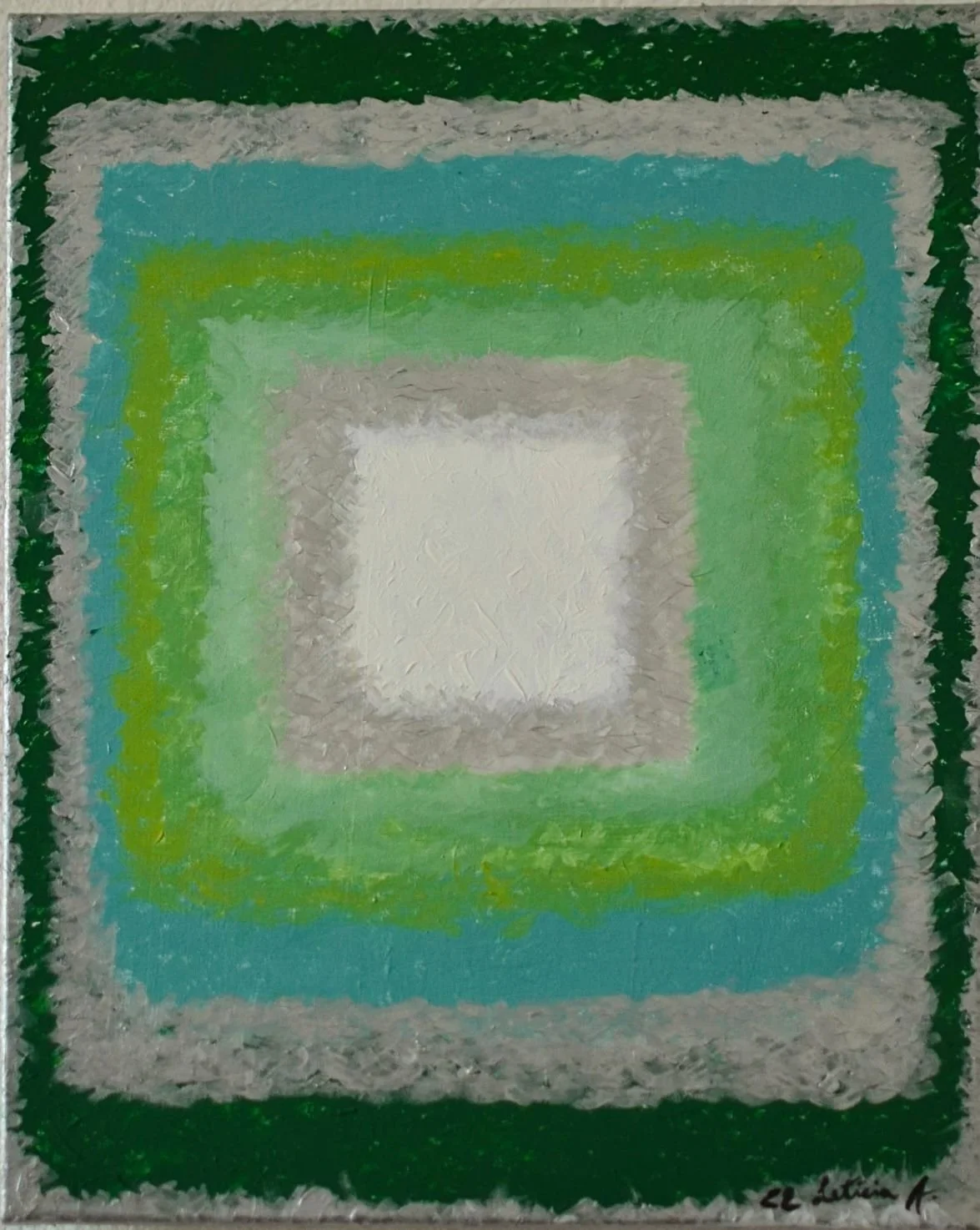
Unconditional Love (2021)
Before the pandemic, Leticia had been a fashion design student at Parsons. When COVID hit, though, she felt that the city was not the place to be (even if her roots are, she'd confessed, the urb). She decided to visit a friend in Hawaii, but the excursion unfurled longer and longer till she was all over the world–the next stop she made was Turkey, followed by Egypt, then the Amazon rainforest, the Galapagos Islands, Mexico, Guatemala, France (where she met her fiancé), Portugal, Iceland… she tells me that her book, Riding Clouds – The Journey Back to Paradise (No Caminho Das Nuvens), owes its origin to a TV documentary that told her the Amazon grows so lushly because clouds ferry nutrient-rich sand from the Sahara desert across the ocean. I ask her if she sees herself as the sand, and she answers, "I say… more like, I am the cloud."
Leticia is fascinated with religion: "And I'm reading the Bible, and then, the next week, I'm reading the Bhagavad Gita" (I spy a book titled Pagan Britain on her bookshelf). Traveling, Leticia loved to compare how human ingenuity manifests cross-culturally, how universality can be defined as the unique expression of each being. She adds sheepishly: "Even I think that's probably something annoying about traveling with me because I'm always like, This looks like [that thing I saw] in Turkey." We're facing Kundalini (2024), and she starts explaining: it visualizes the seven transmutations of the chakra. She describes one of the transmutations, the crown chakra:
"This is my first semester at Columbia. Sometimes I overthink, and I'm like, oh my God. But do I have things in common with this person? [...] But indeed we have. I have things in common with everybody because we're all human beings. So that would be like acting [on] your crown chakra, because you are acting on your clarity like this, remembering at all times that we can always connect because we're all the same."
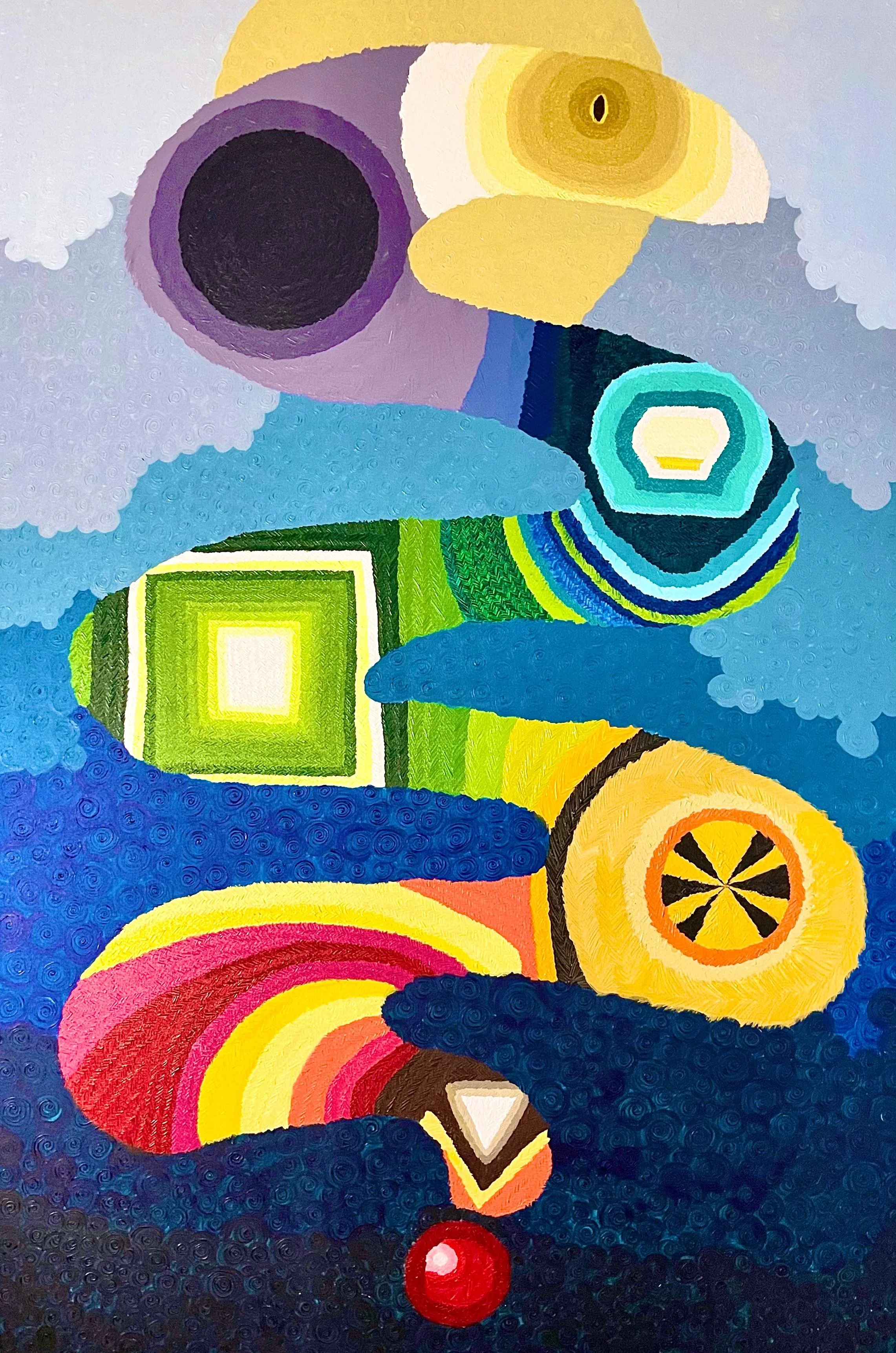
Kundalini (2024)
She then explains how she willed two kinds of brushstroke into this work—the blue spirals ("unity") and the X-shaped marks ("duality") within the multi-colored chakras; she lets me step closer to the painting, and I see the canvas swarming with these tiny patterns. The way these brushstrokes supplement each other is how, in Letician cosmology, unity and duality constantly pull at each other. She shows me the plant on her windowsill and compels me to think about how one spur counterbalances two leaves, another spur, another two leaves, and another, another…
“But how does this equilibrium sustain itself throughout everything?” I beseech her. How does she use painting to communicate with it? She starts by telling me that when she was in the Amazon, she contacted a shaman to try ayahuasca, in hopes that she might "see" a work of art…one twelve-hour trip later, she concluded that it did not provide the concrete experience hearsay had promised her, but instead, an abstract expressionist churning of energies. Inspired by this newfound way of visualizing things, she (sober) then meditated Unconditional Love into fruition. Another meditation two years later had an afterlife in the marvelously pink Self Love (2023); "They say it's not like official chakra, but above the throat, there is a self love chakra that is pink [...] for this one"—Leticia points to a green-and-pink painting with the square of Unconditional Love superimposed onto the four-pronged shape in Self Love—"I didn't even meditate it. I just combined the two paintings I did [while] meditating before."
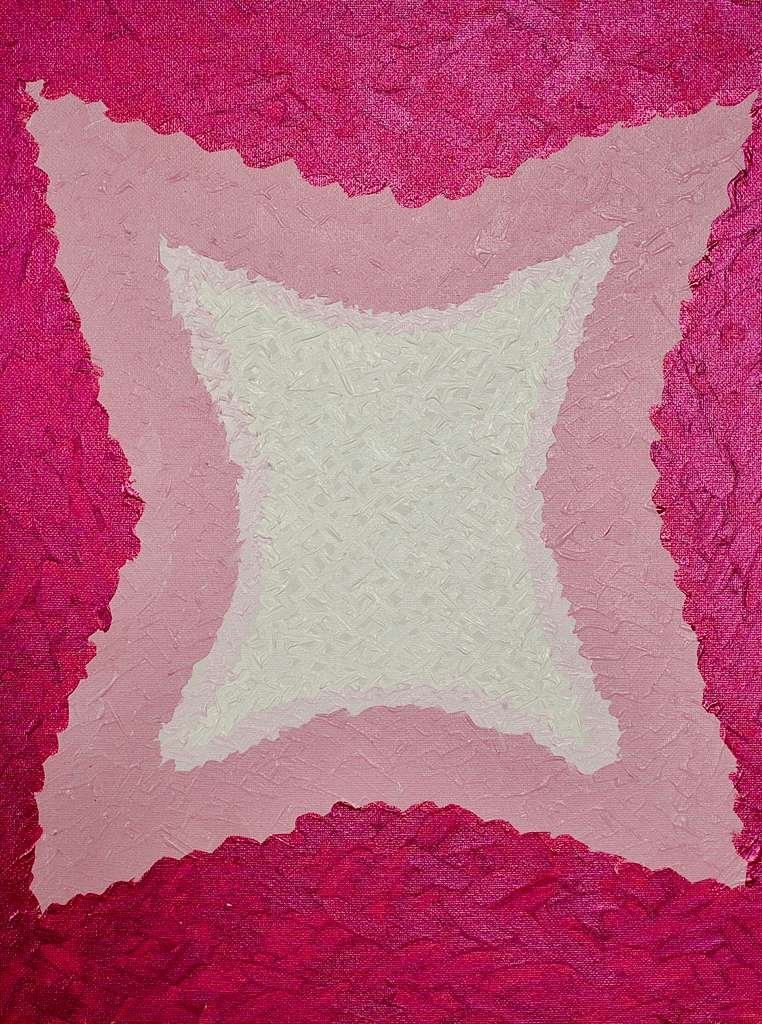
Self Love (2023)
This painting, Open Heart (Com Jeitinho), is centered by a fuzzy white circle that suggests a heart beating—only after self love, she asserts, can someone express unconditional love; only after the two, complete love; only inside of complete love, that heart. Having built up the ability to switch on, Leticia doesn't need to meditate as often now, though she tells me that she can sustain a thirty minute session whenever she desires.
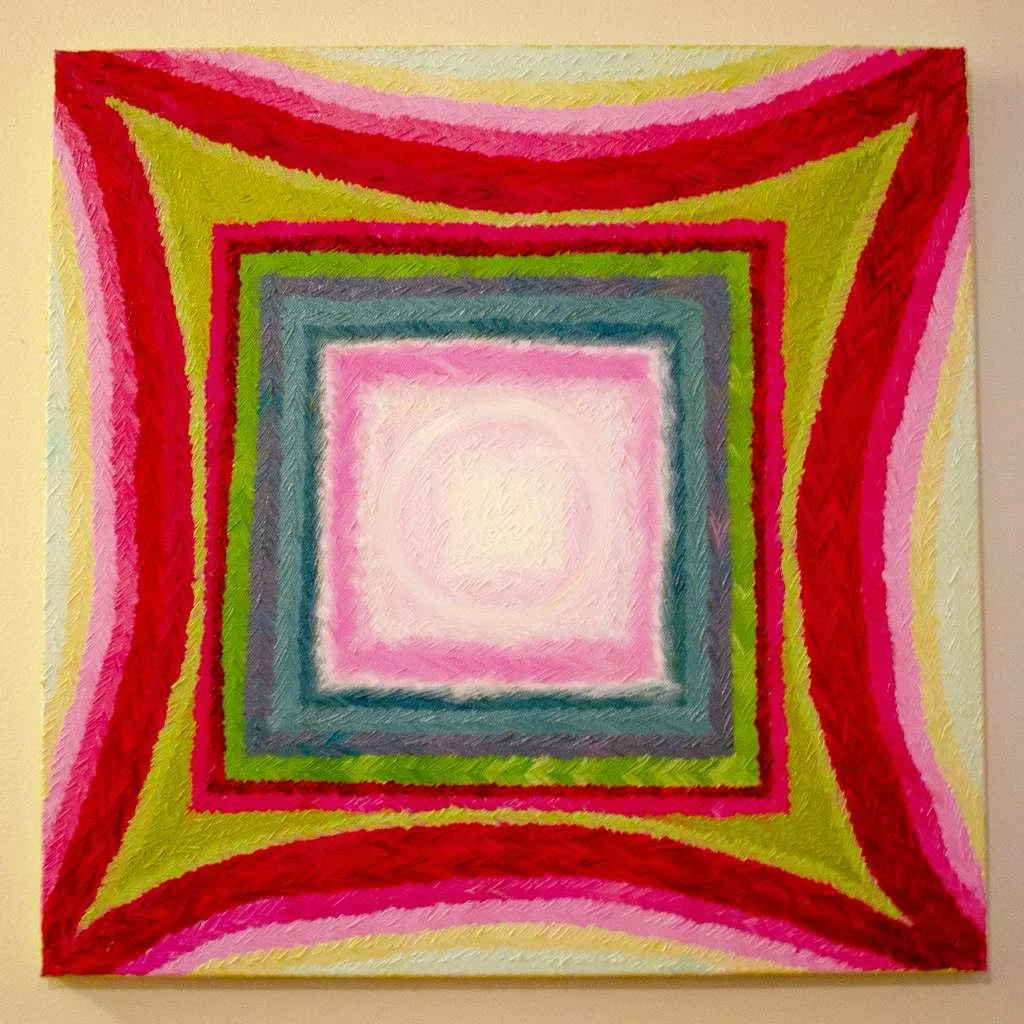
Open Heart (Com Jeitinho)
Leticia is getting settled in New York studying Visual Arts and Art History in Columbia's School of General Studies and believes she is ready to begin retelling her experiences through painting (though her fashion design thinking still lives on through her marvelous outfit). Her journey to date has been that of a cloud, dissolving across unfathomable distances and within ineffable spaces; she recalls Göbekli Tepe (an Anatolian Neolithic archaeological site) and the Pyramids of Giza as particularly memorable. However, as beautiful as the green of the Amazon is in person, her key idea is that the seed of that beauty is portable (even to places like New York City, which sometimes feels like a Tarkovskian Meat Grinder). Now she wants to create things that give people the opportunity to interact with this energy, this unique universal, without having to have undergone the difficulties of travel. Her current fascination is with appropriating history painting (originally an institutionalized Western genre depicting moralizing narratives on huge canvases) for the allegorical presentation of energetic interaction. She is beginning to incorporate print and text into her previously non-inscriptive œuvre; she leads me to her studio in another room and points me to two works-in-progress, one which contains humanoid figures and hieroglyph-influenced print, and another whose therianthropic creatures and zig-zaggy lines spill from Leticia's love for cave paintings.
Multiple times during the interview, Leticia encouraged me to come up with impromptu explanations for the works on her wall. When I tell her that I might be over-interpreting them, she comes up with this gem: "No, but this is the point. Over-interpretation is the point. So you expand the painting, [...] the viewer is a necessary part." Leticia wants meaning, but never wants that meaning to be preconceived for her audience; she muses to me whether titles are too prescriptive for her work. Though Leticia observes that "[in] all books of religion I have read so far, [they say] God is in everything [...] it never says God is just this," she also sees how writing is limited in communicating this everything-ness: "I feel like this is what misses a lot in religion [...] it [is] written and it's less about feeling." Thus, her voyage: could painting clear ideas over the Bermuda triangle of translation?
Eventually, she tells me, she would love to have an art temple where people can "merge with the energy of the paintings," where the divine is a matter of personal exploration. Hilma Af Klint (a print of No. 2 from The Ten Largest is on Leticia's wall), who conceived of a similar idea, is brought up, as well as Mark Rothko, whose chapel in Houston (built in 1971) continues to attract many visitors. She's also inspired by how ARTECHOUSE in Chelsea uses VR to construct an immersive experience, though she wishes to use it for something that has more of a "human touch." Human touch: a crucial component of Leticia's artistry. The temple is an "eventual thing," she expresses to me. Breaking the horizon and yet lining the apartment walls right in front of me, what she is manifesting makes me think that for her, eventuality is not something that is unclear or indeterminate. Leticia Abasto, painter and traveler, catches this wave with her canvas, and in doing so she, too, forms outside time, in every place.