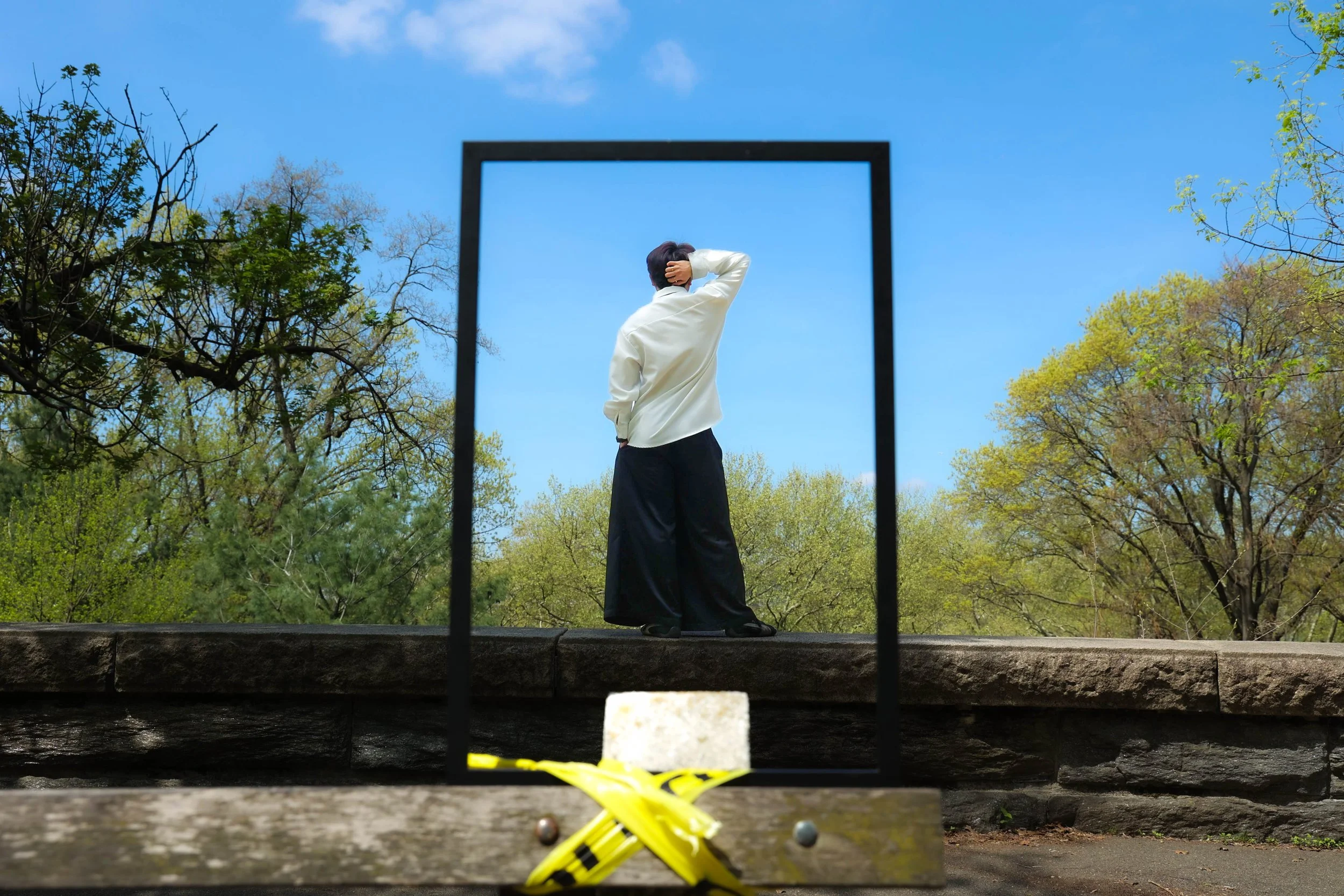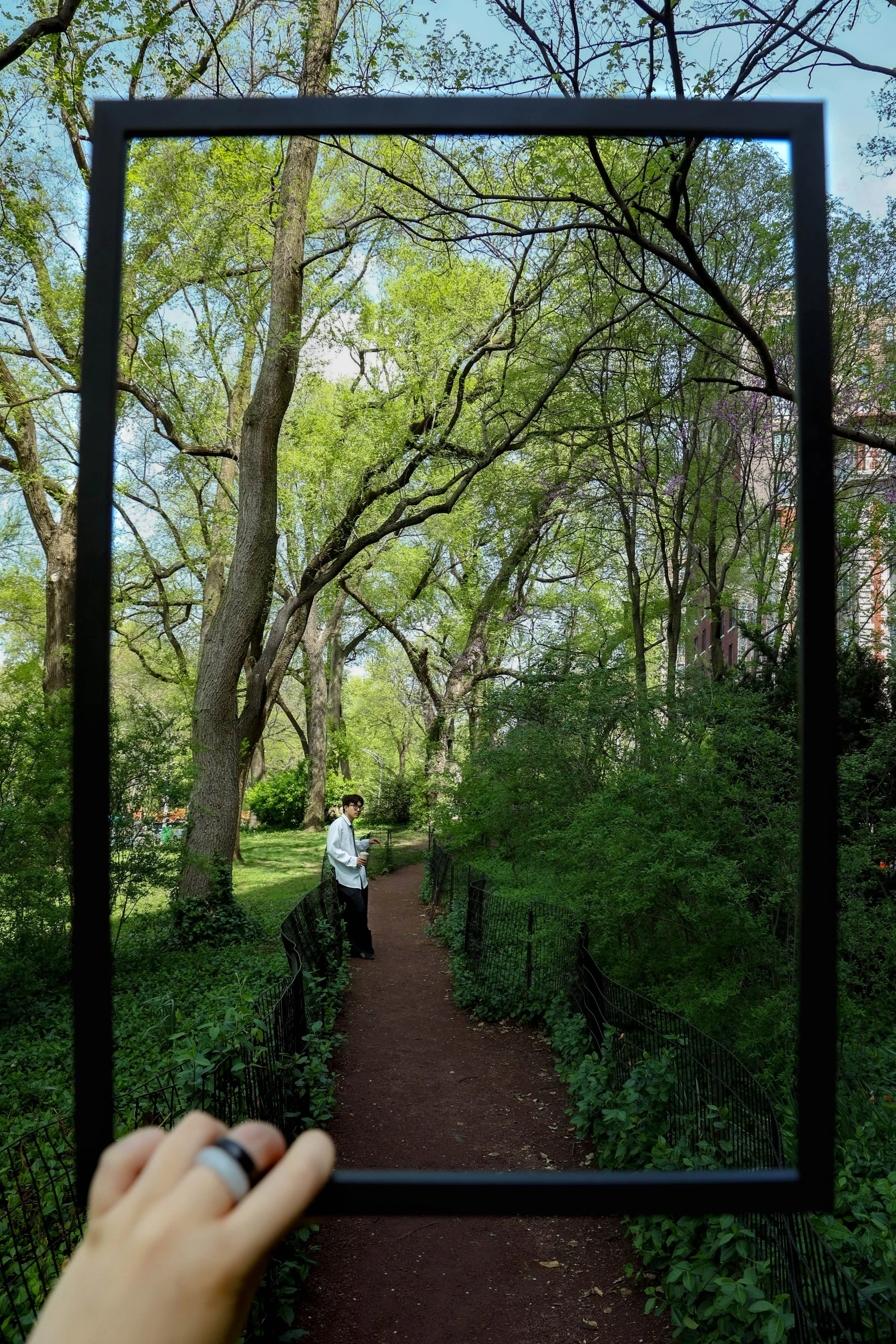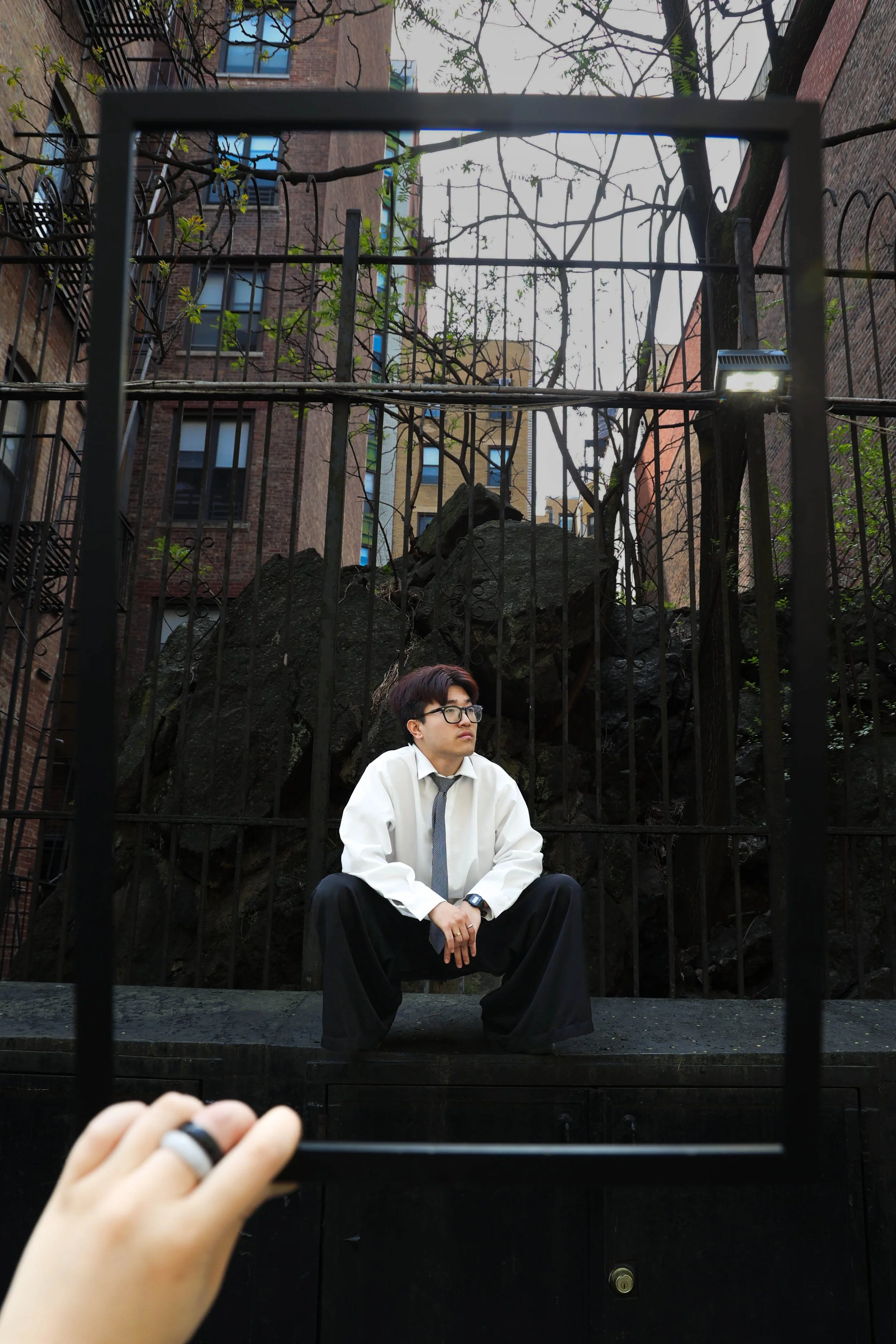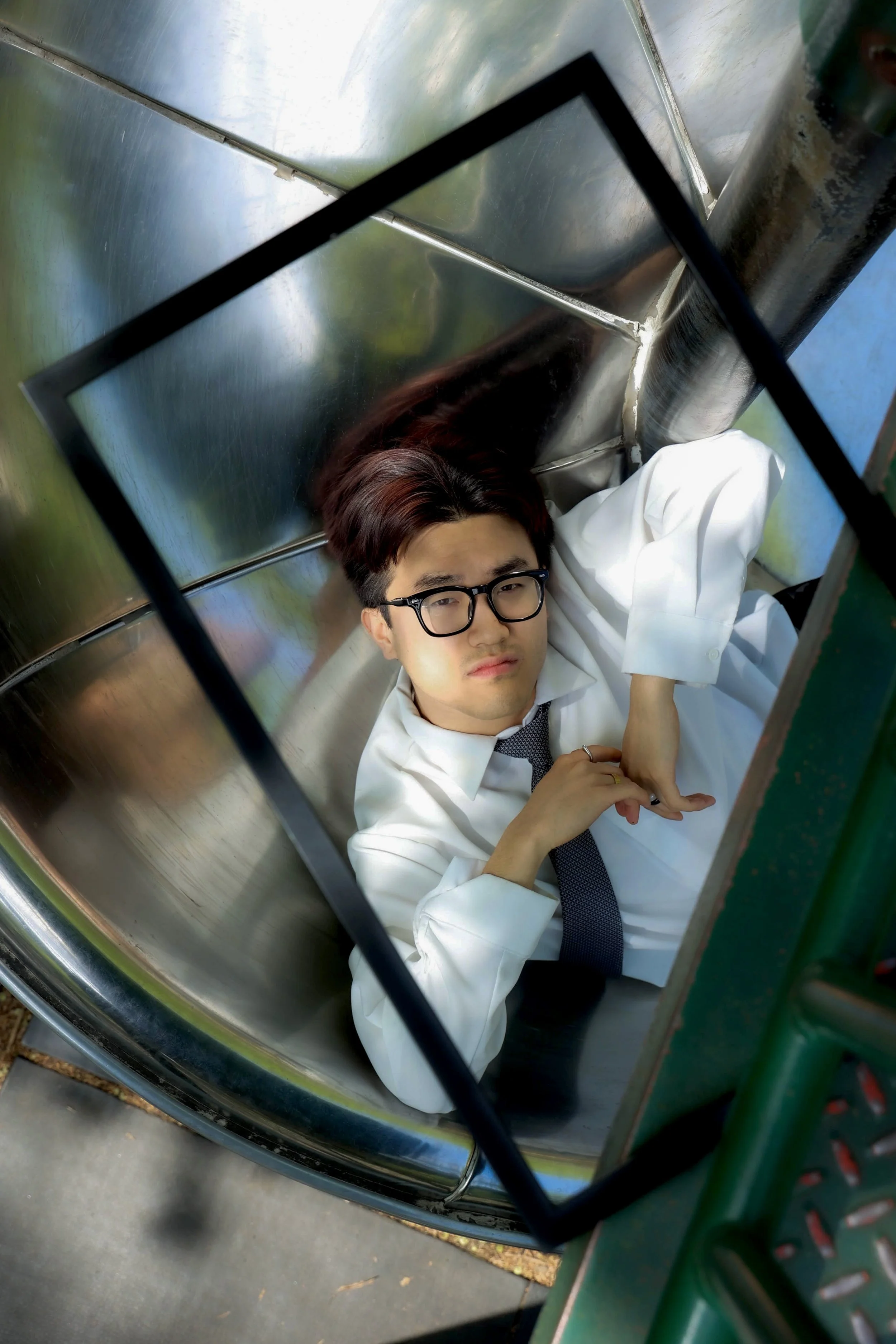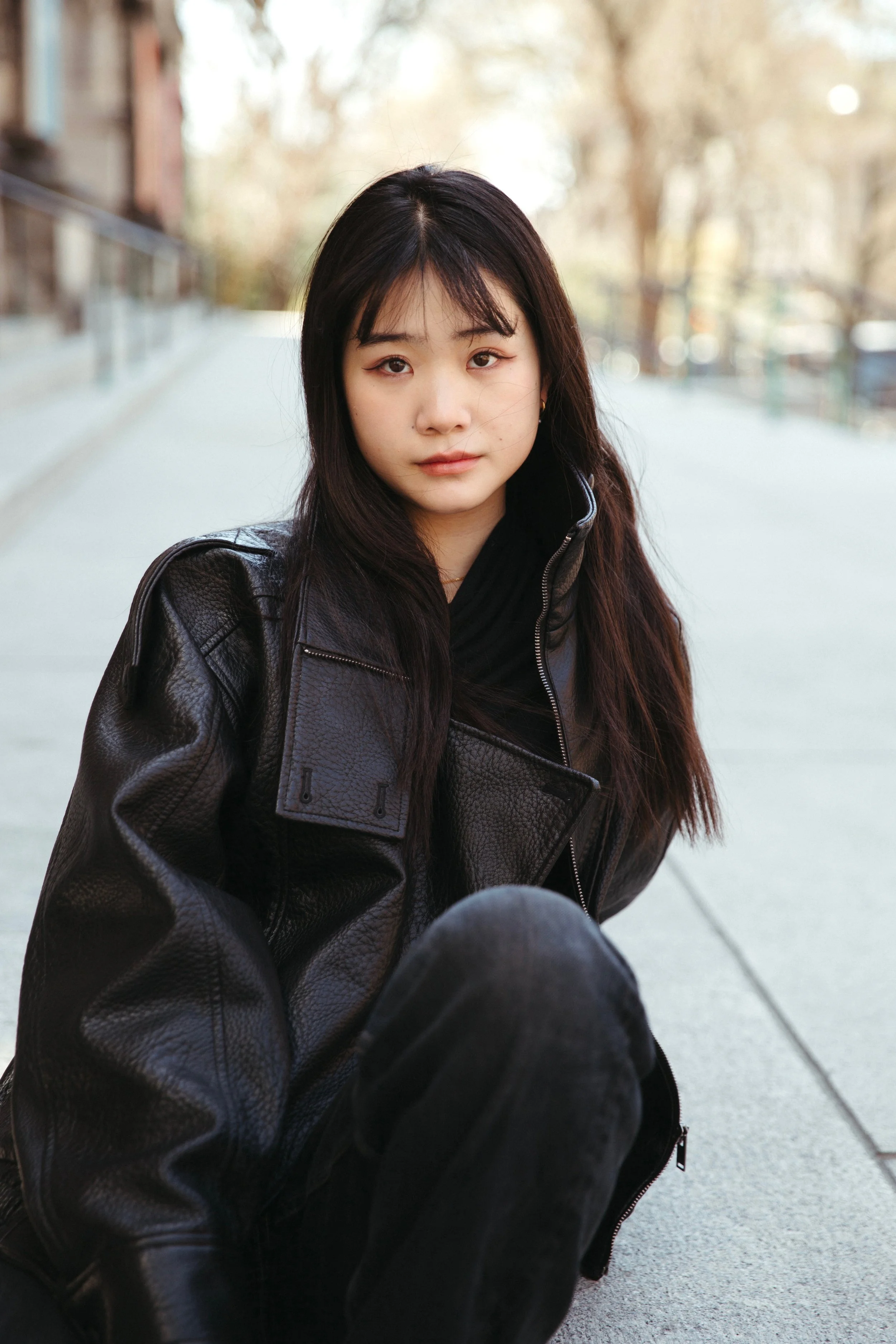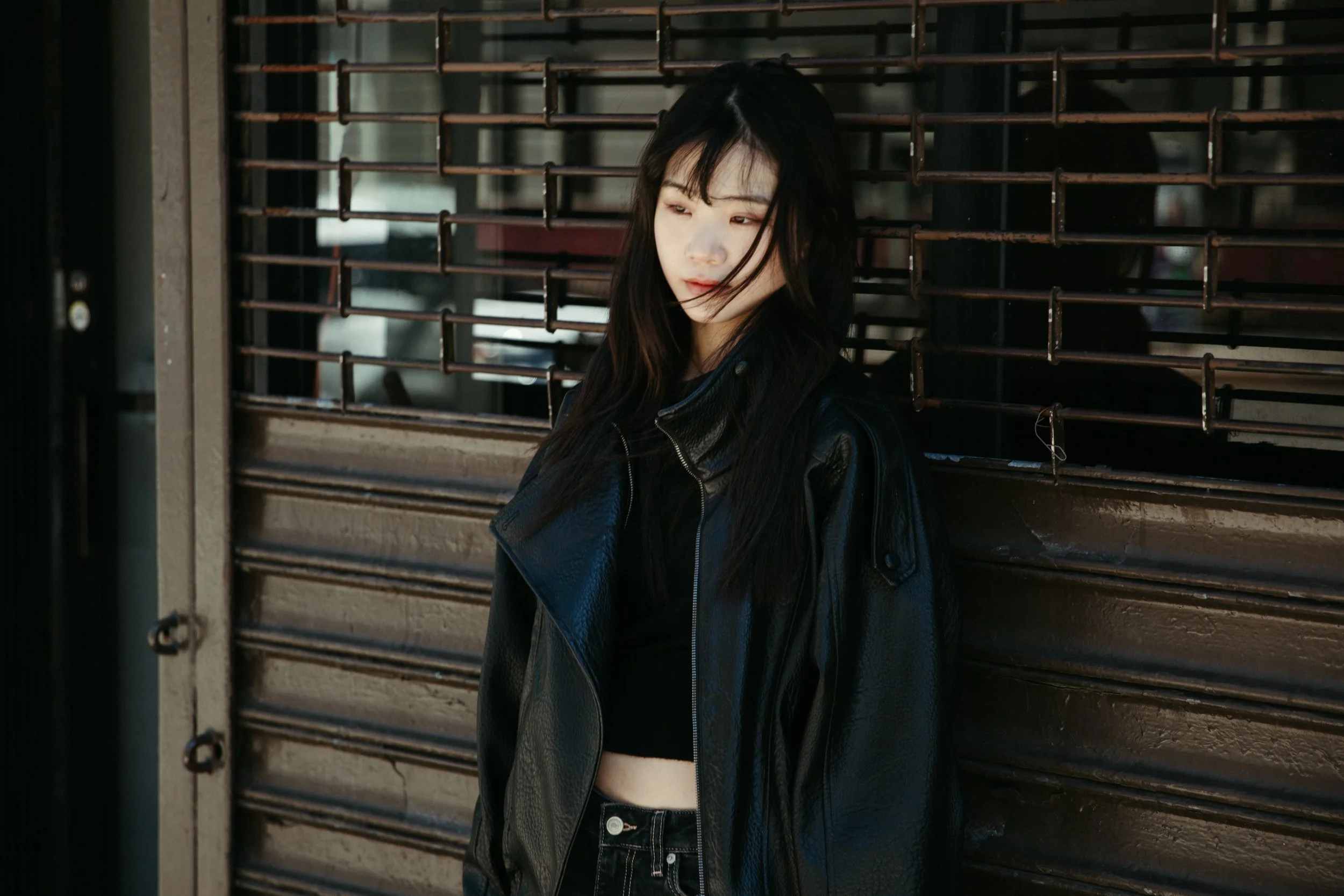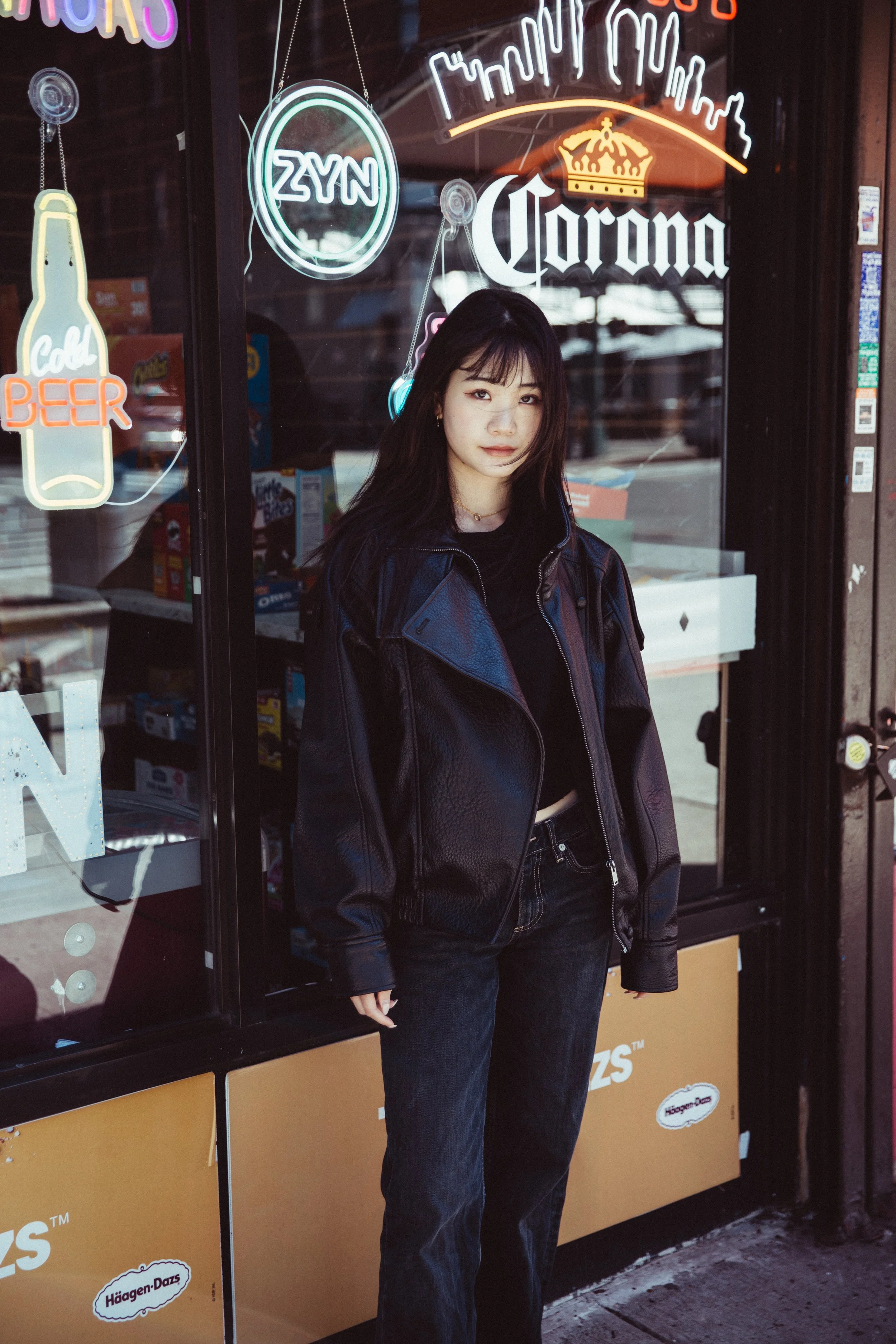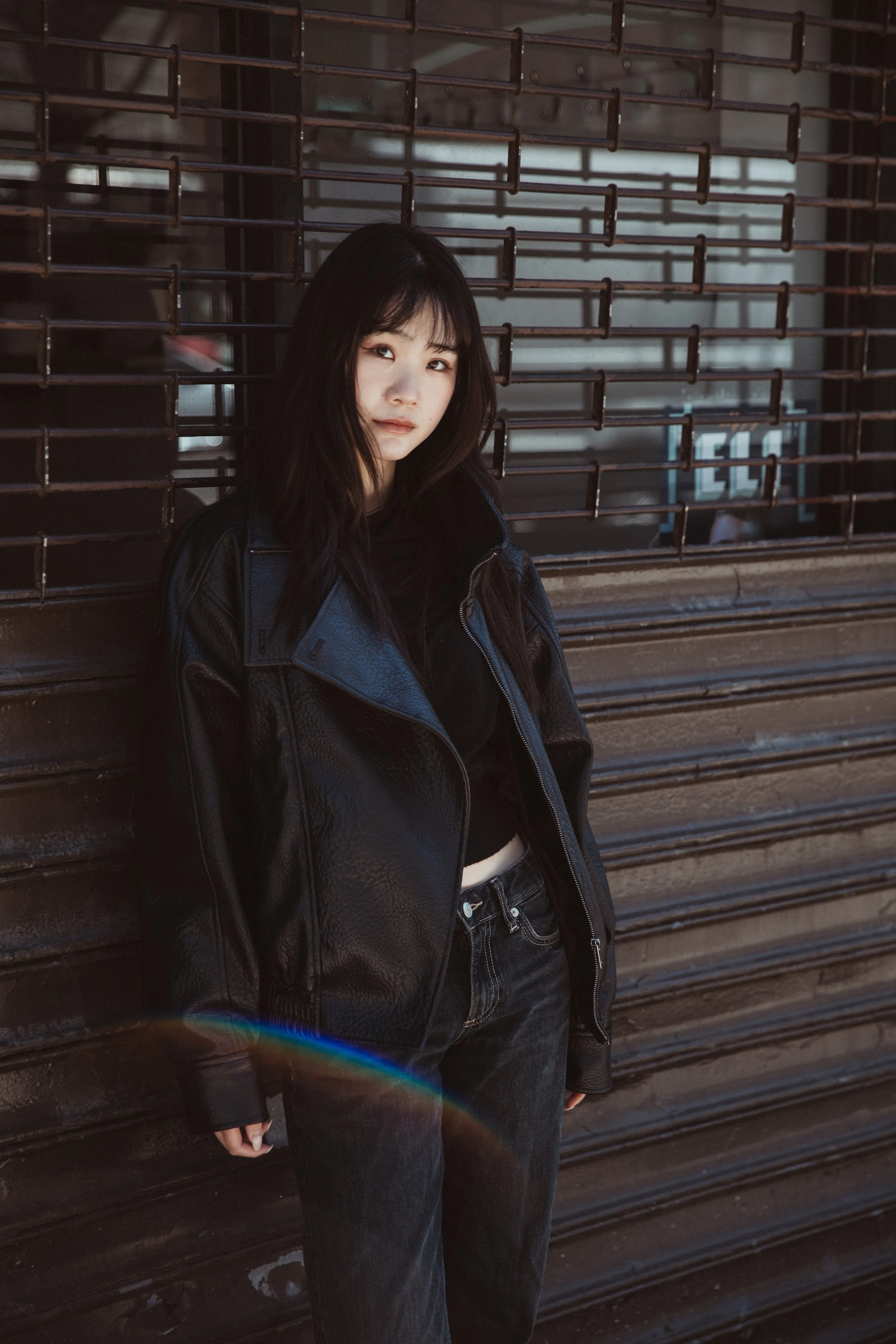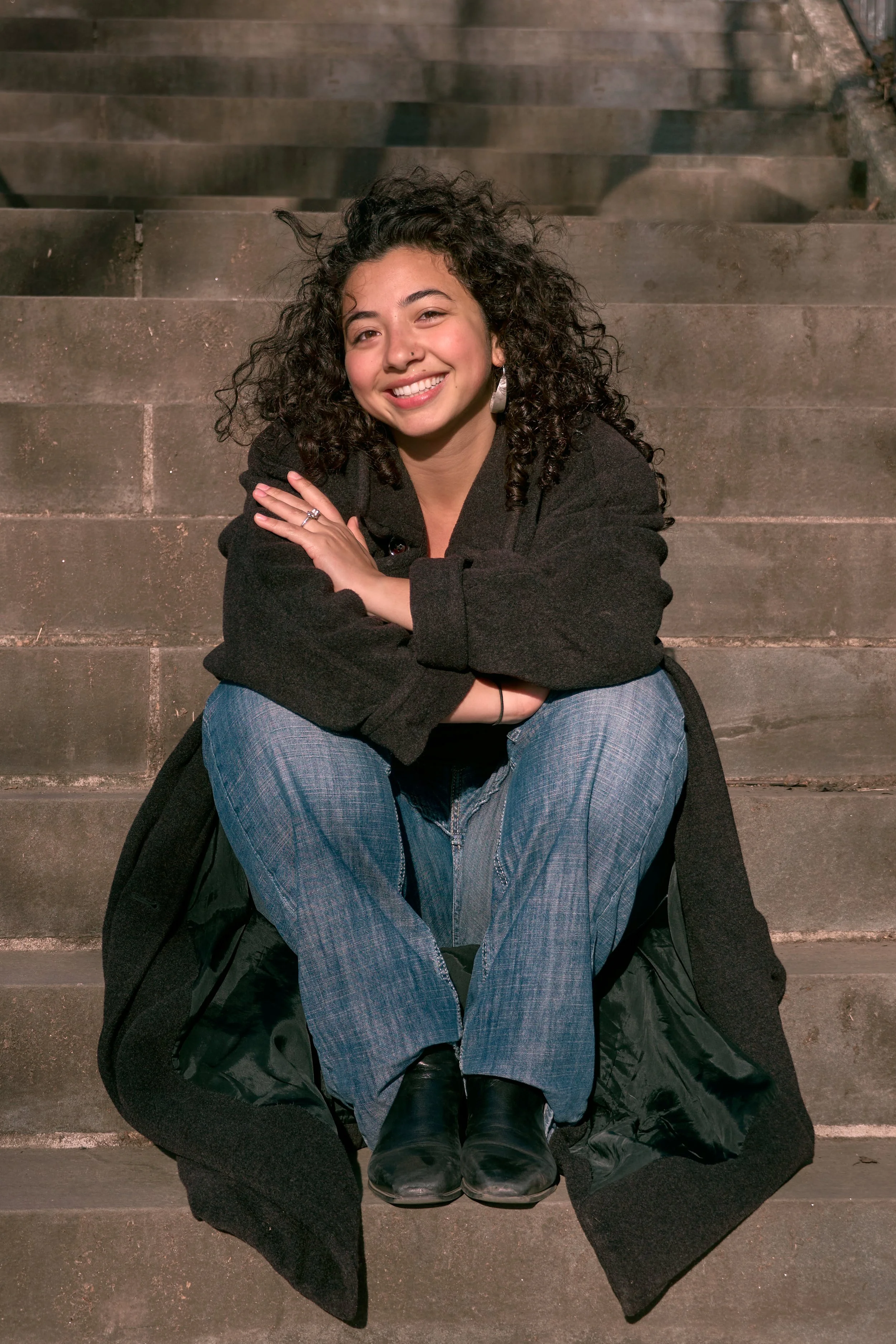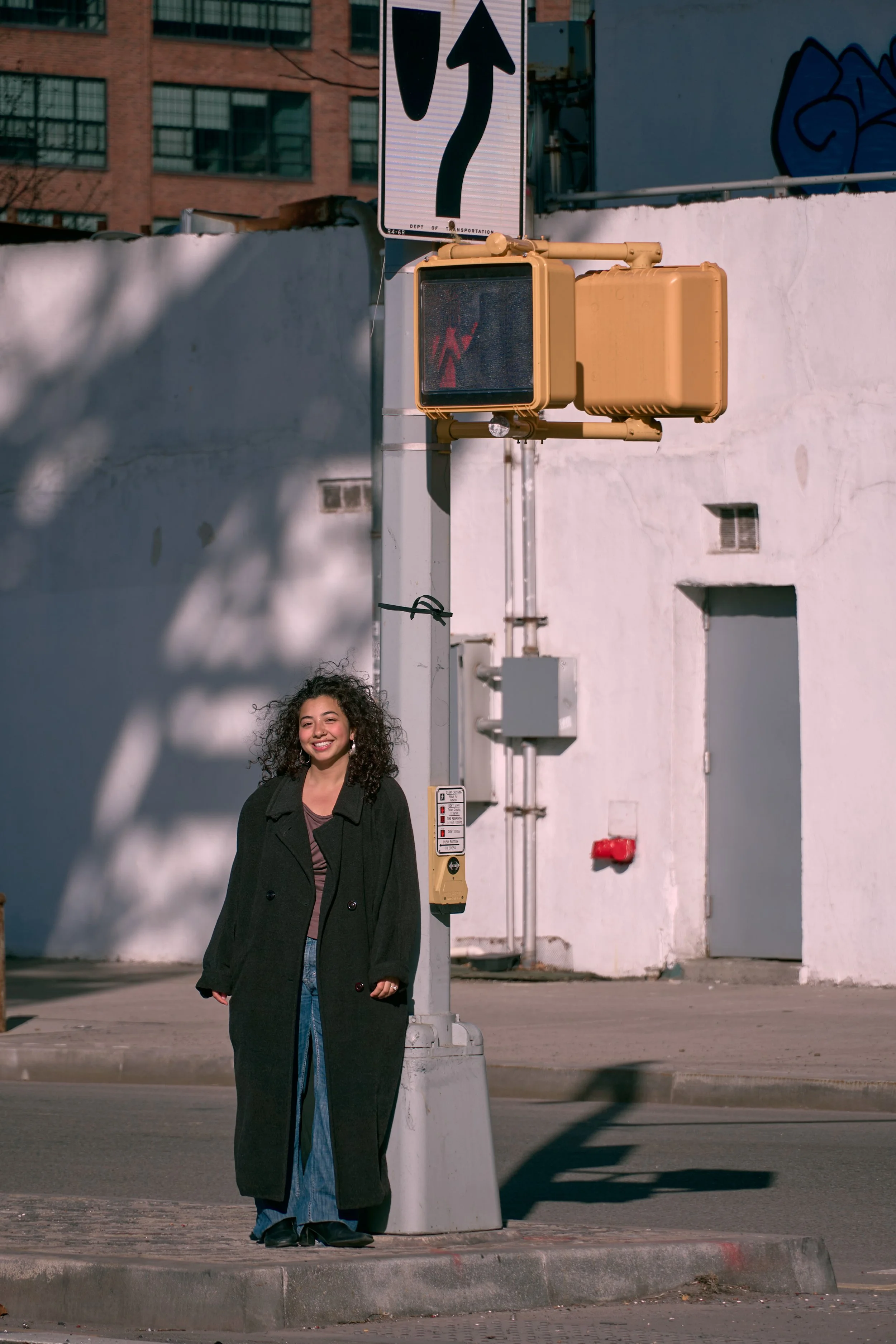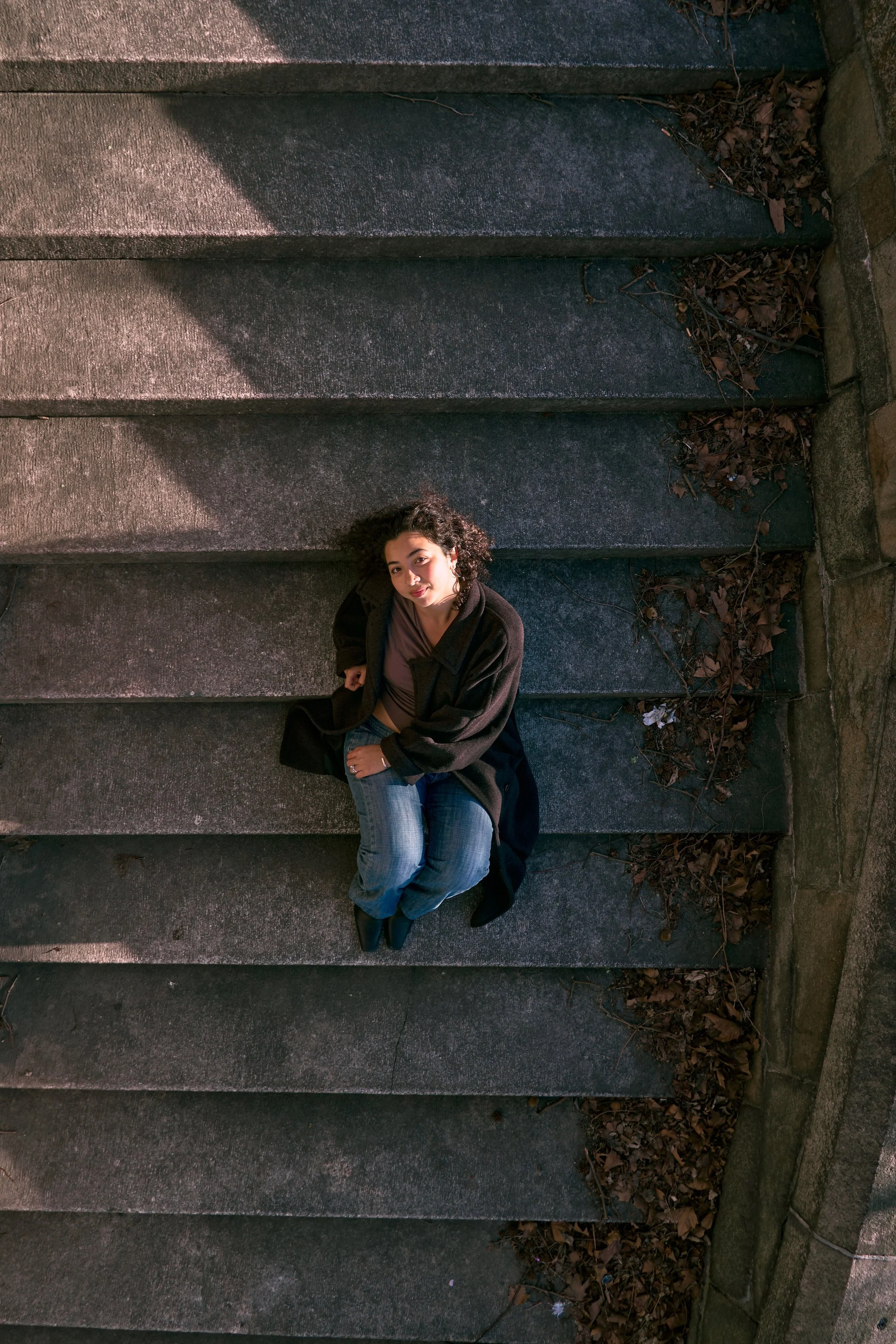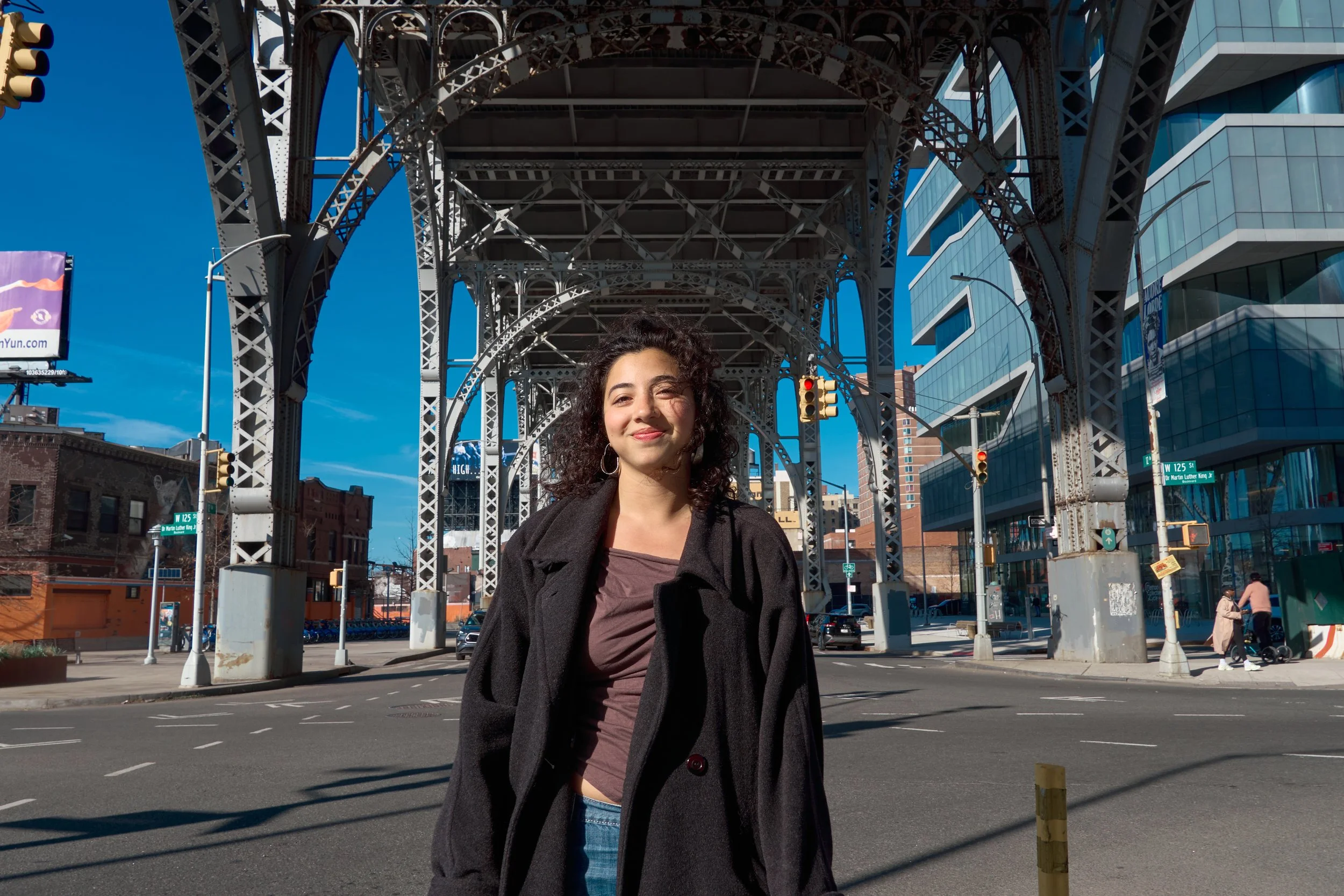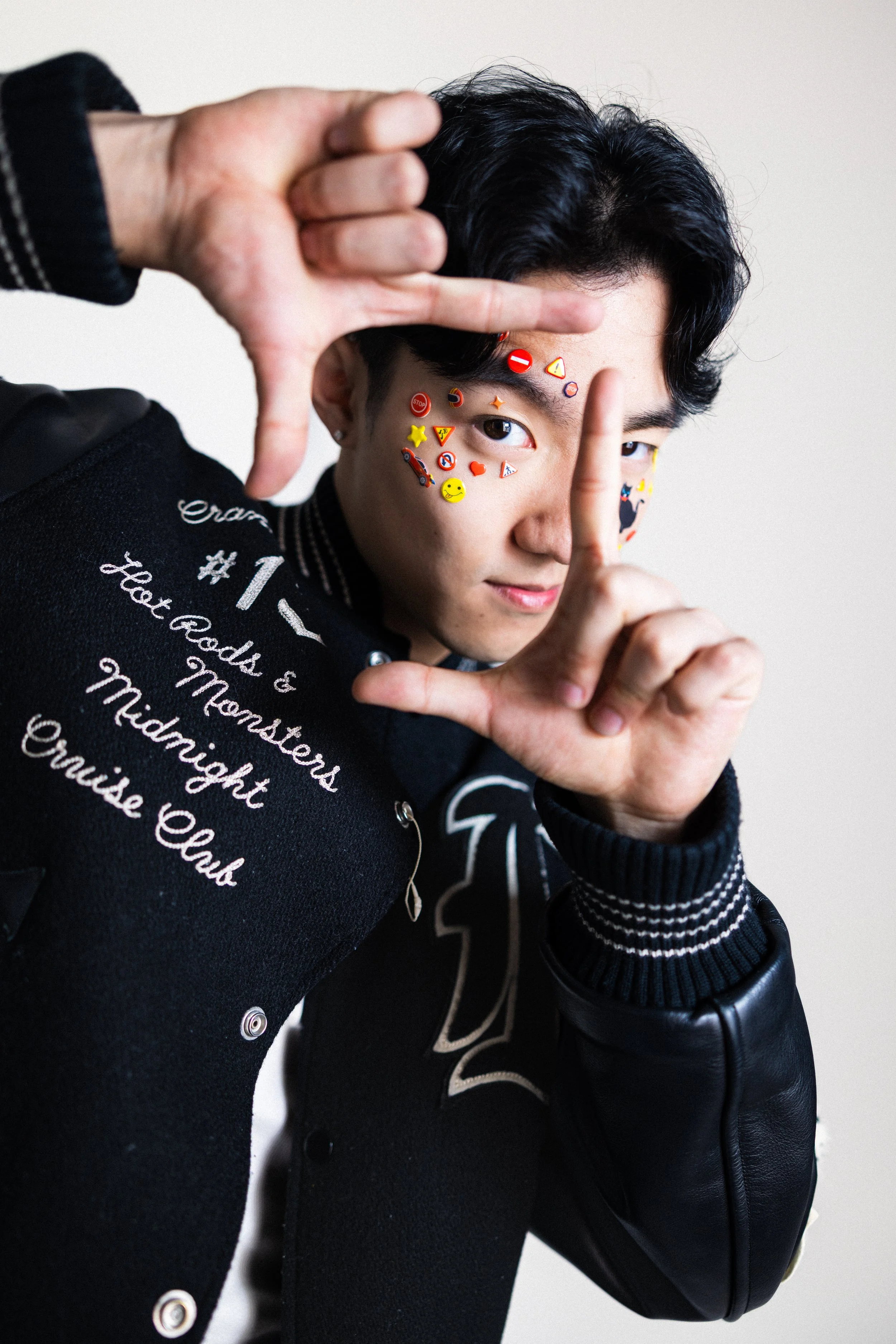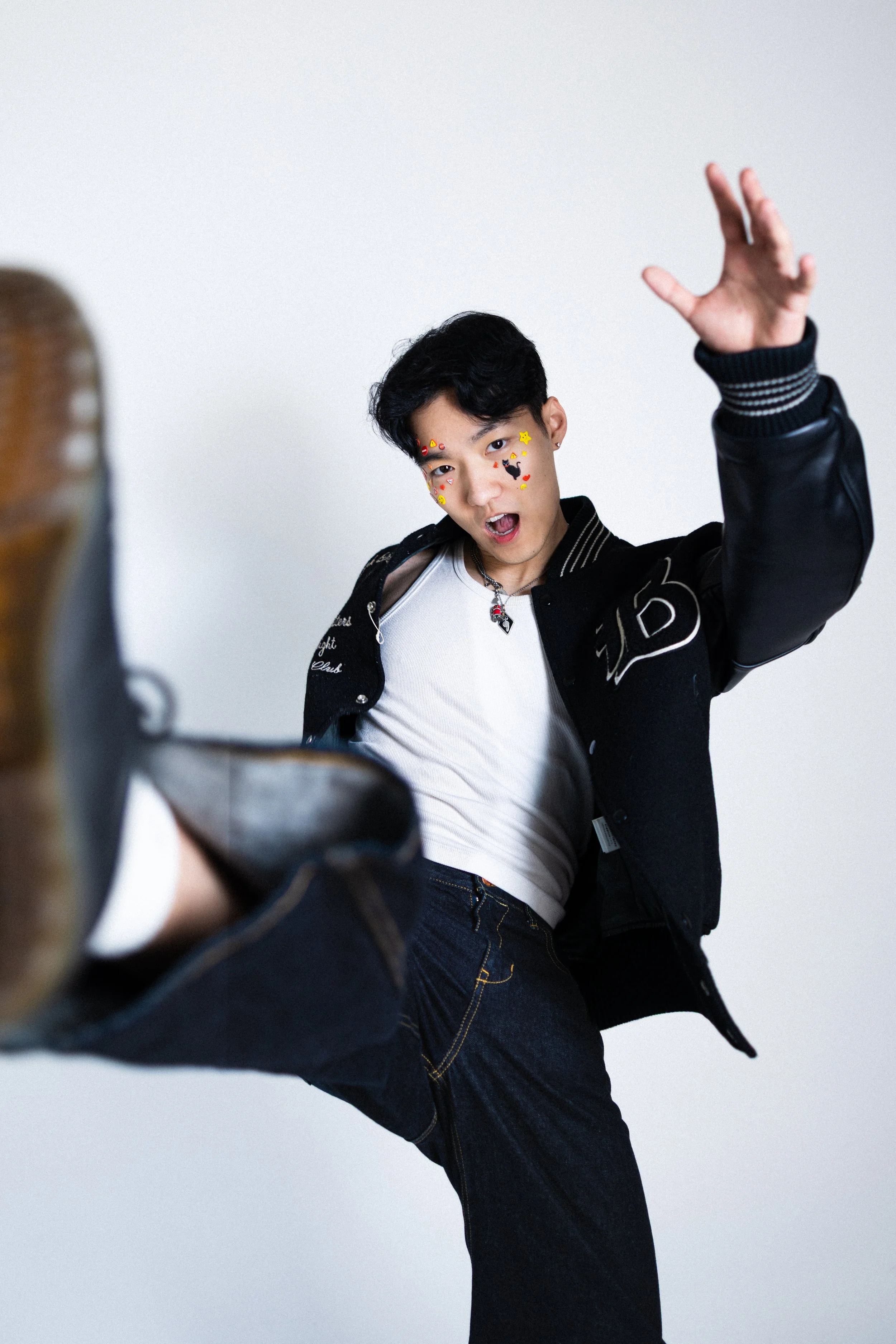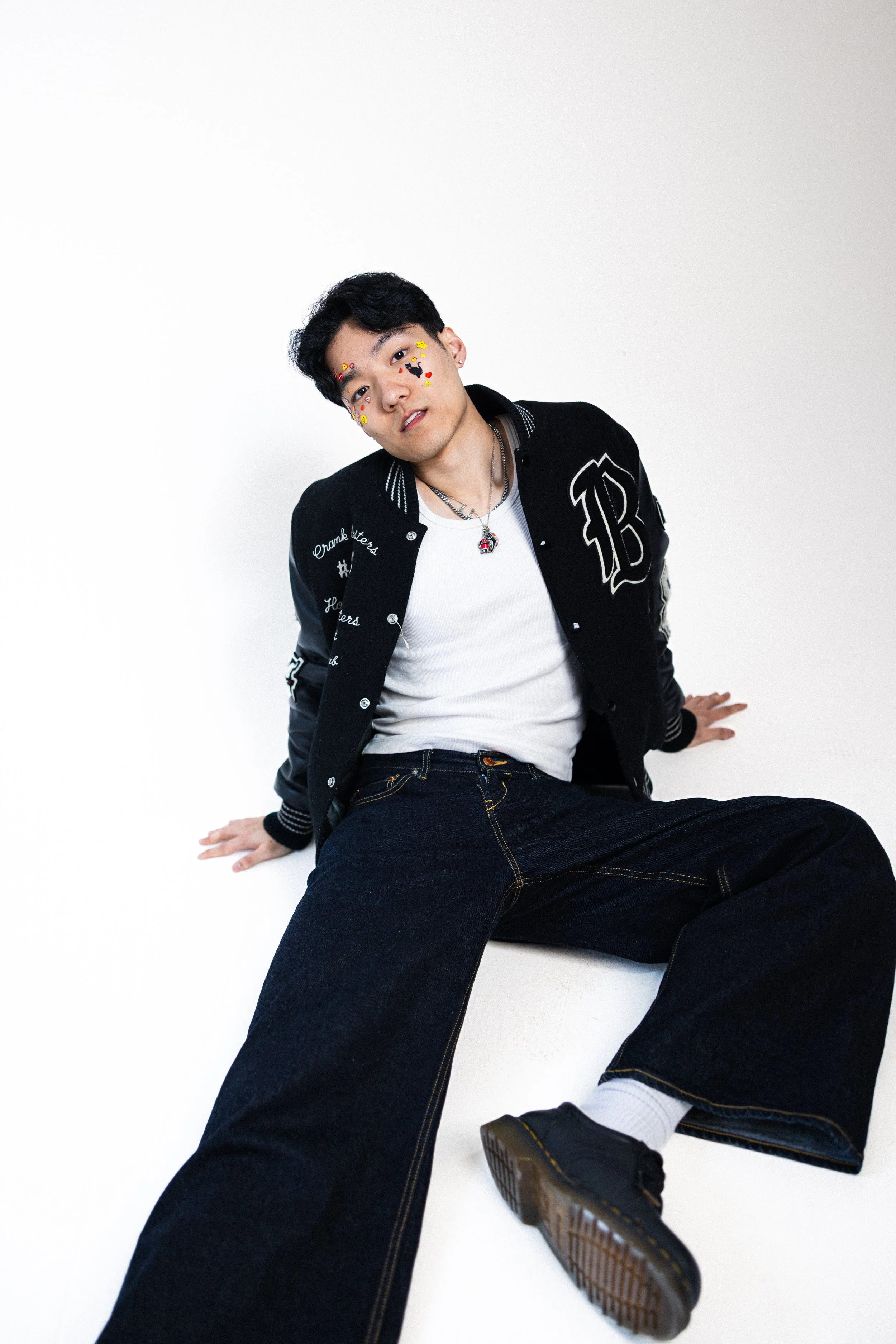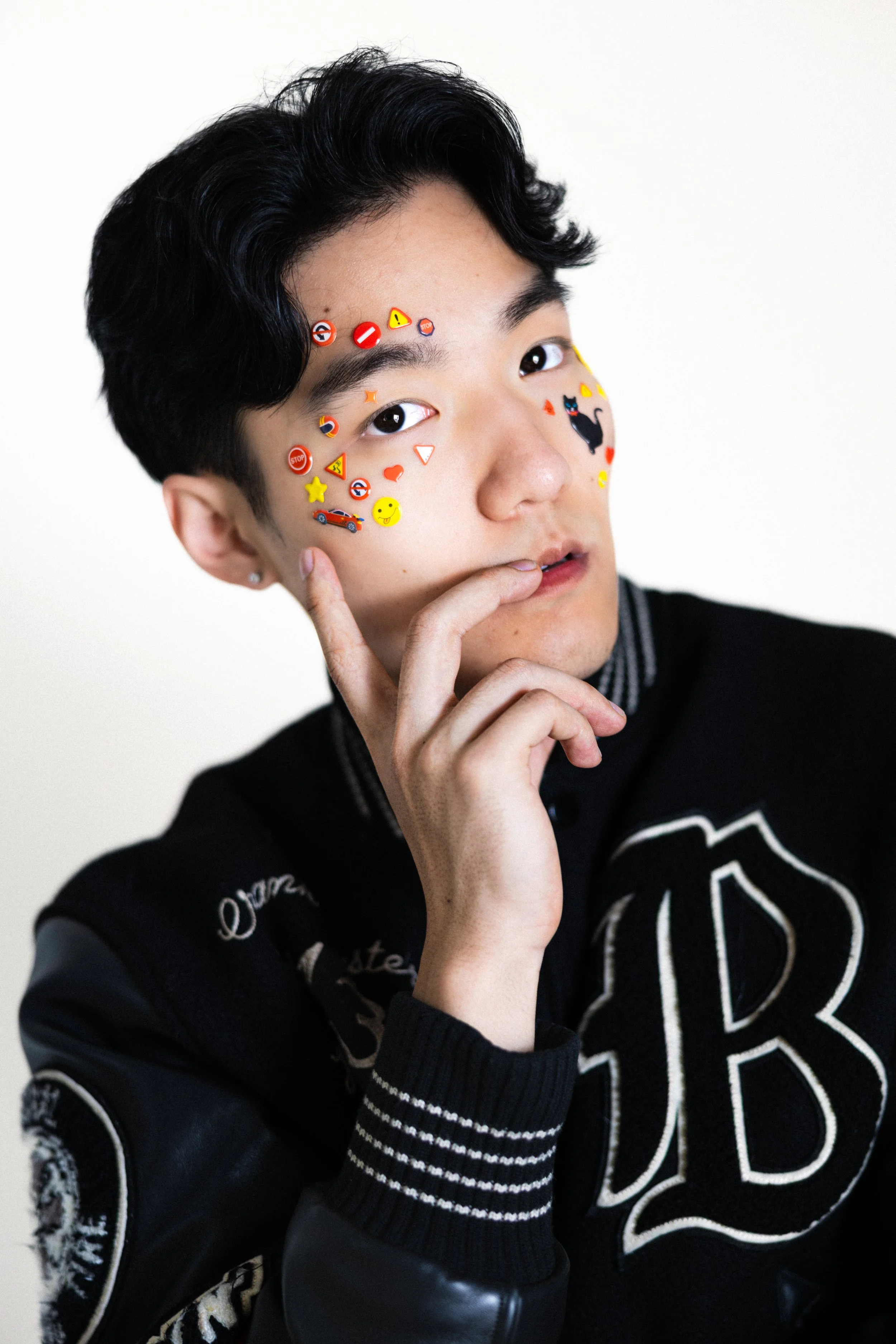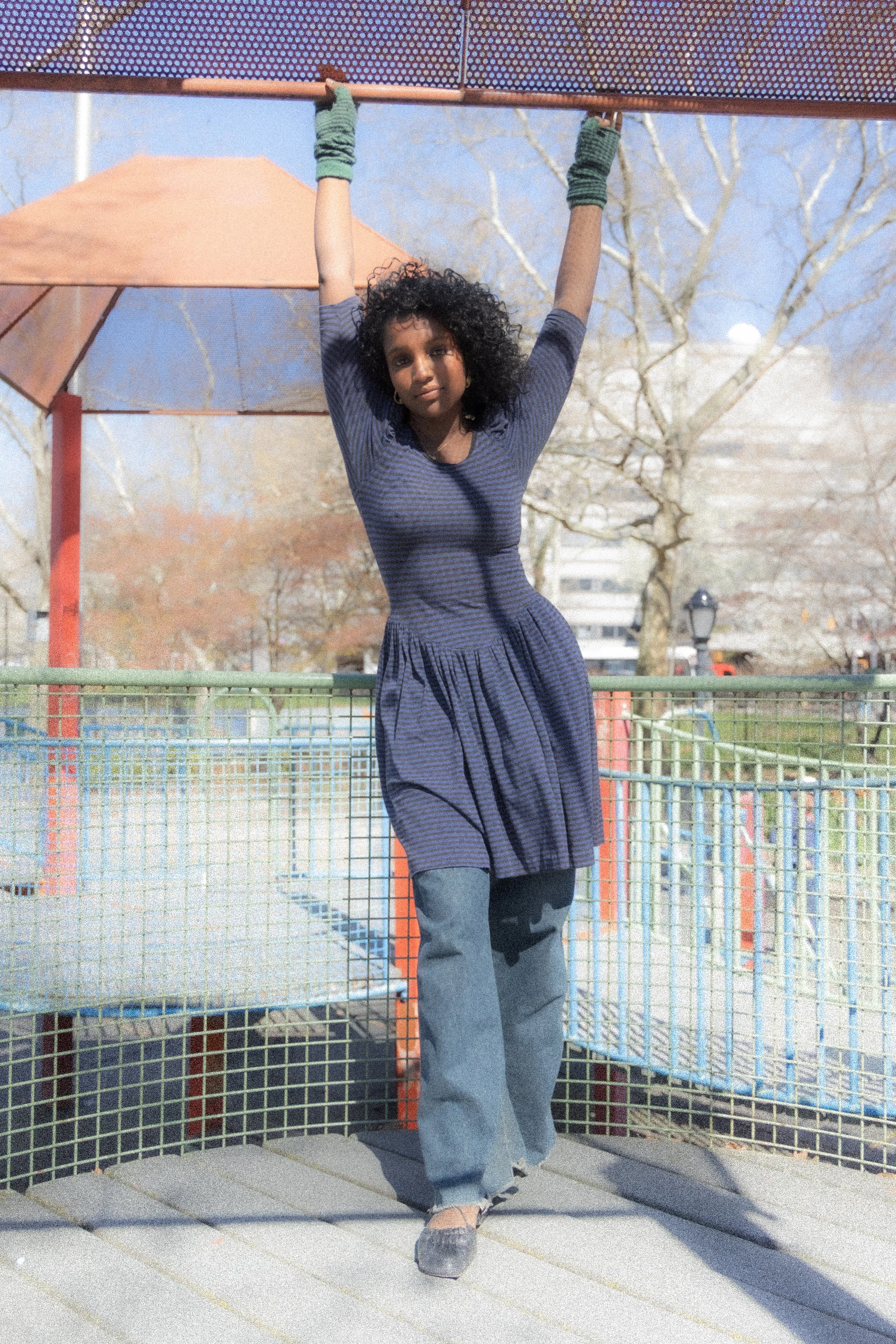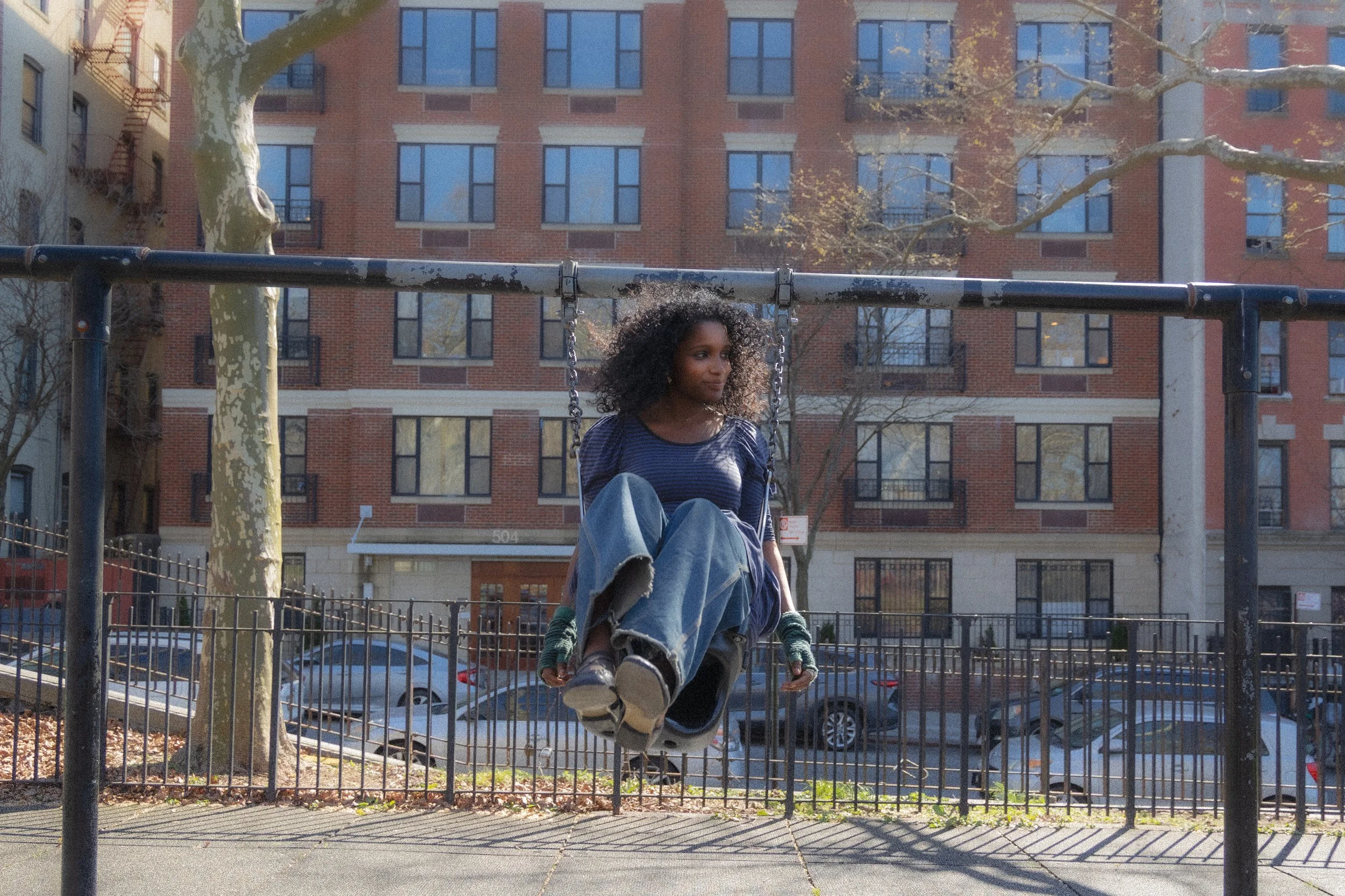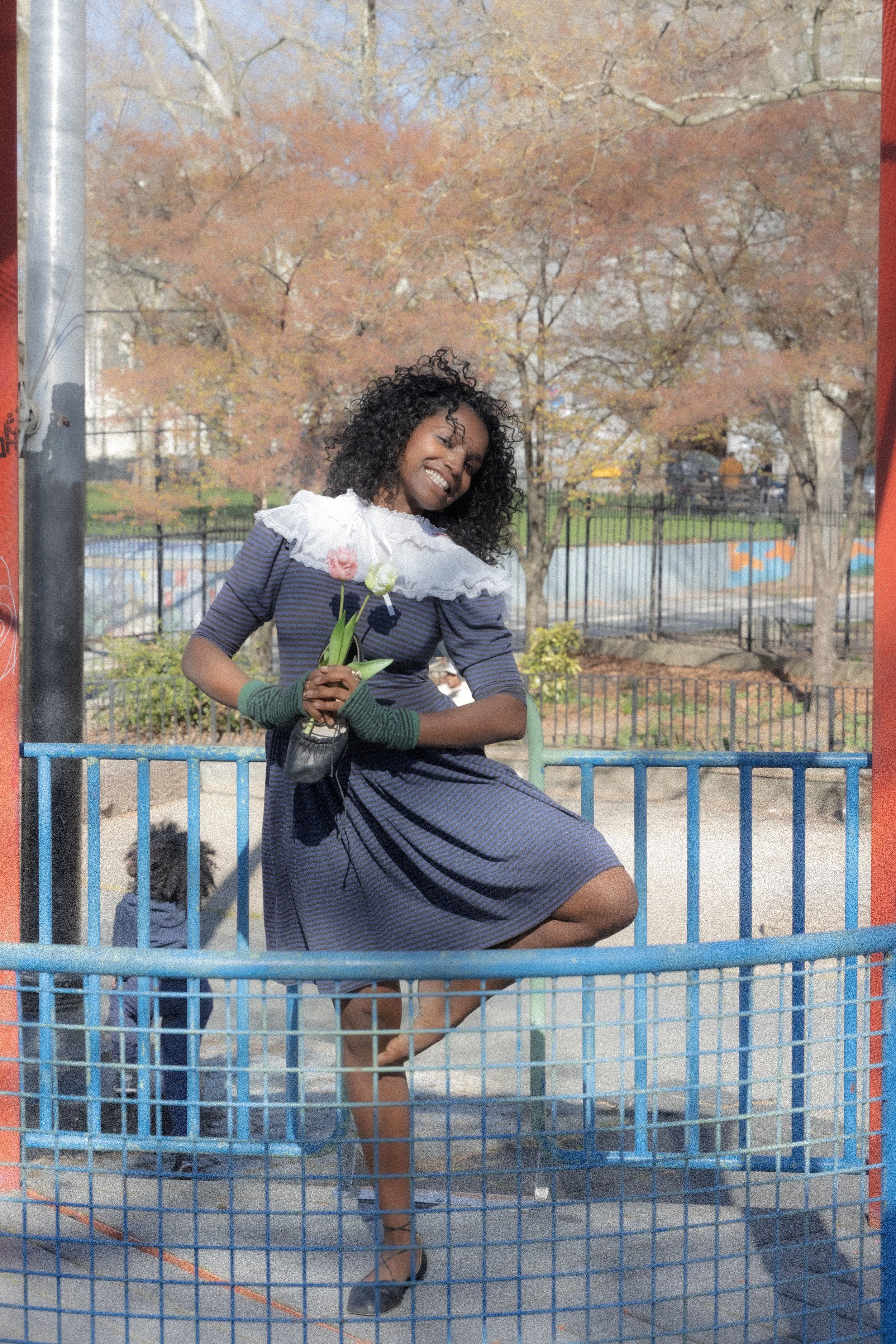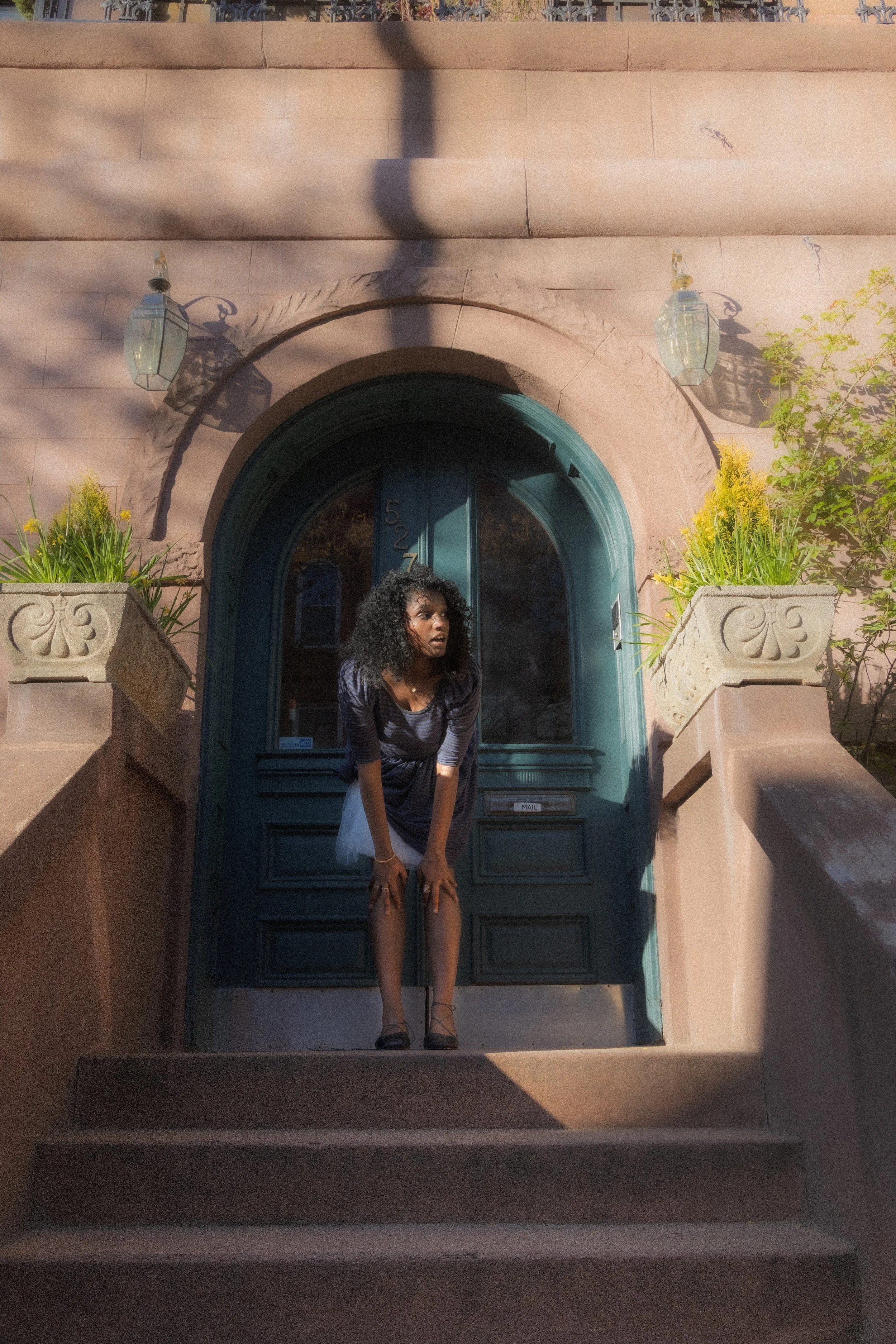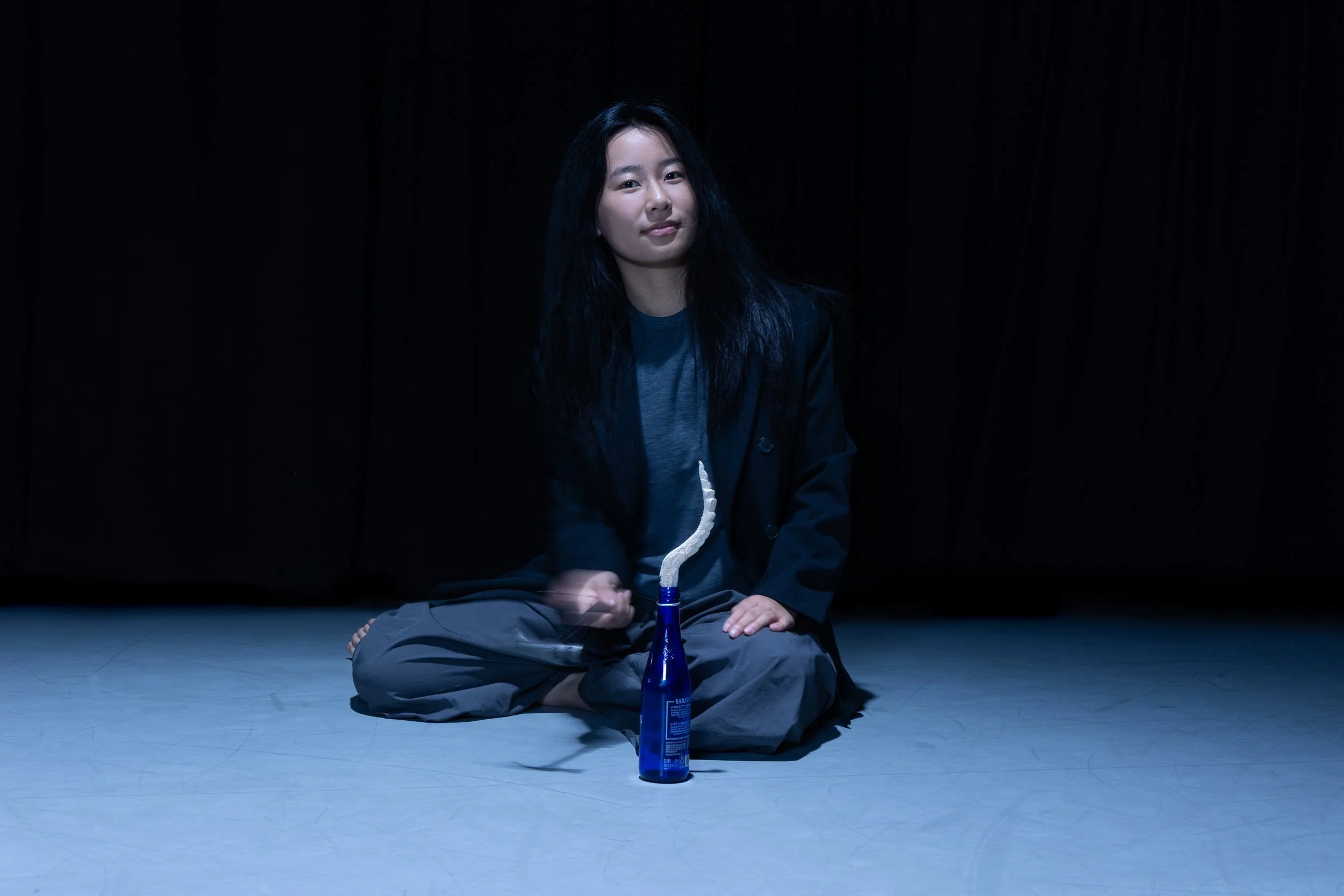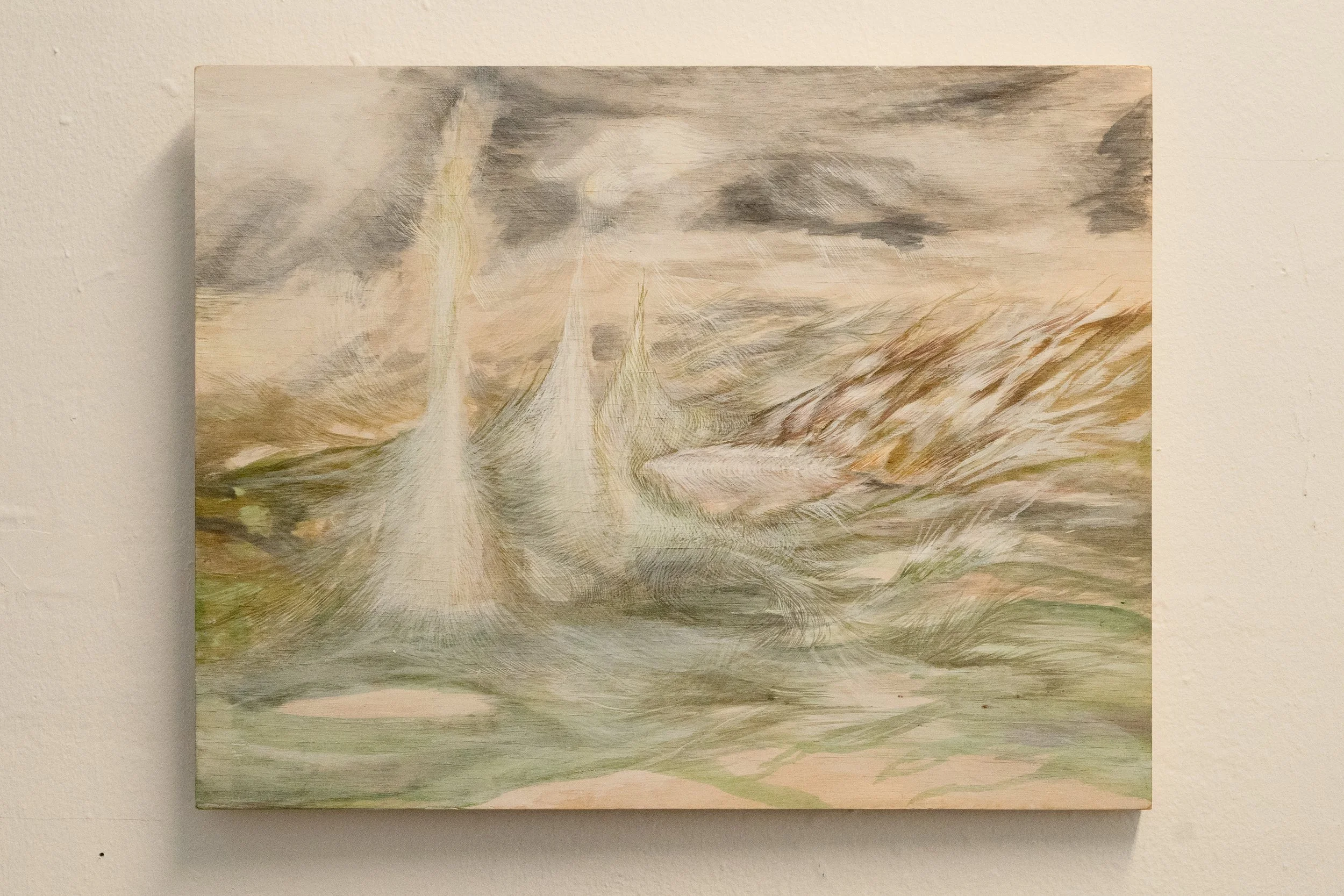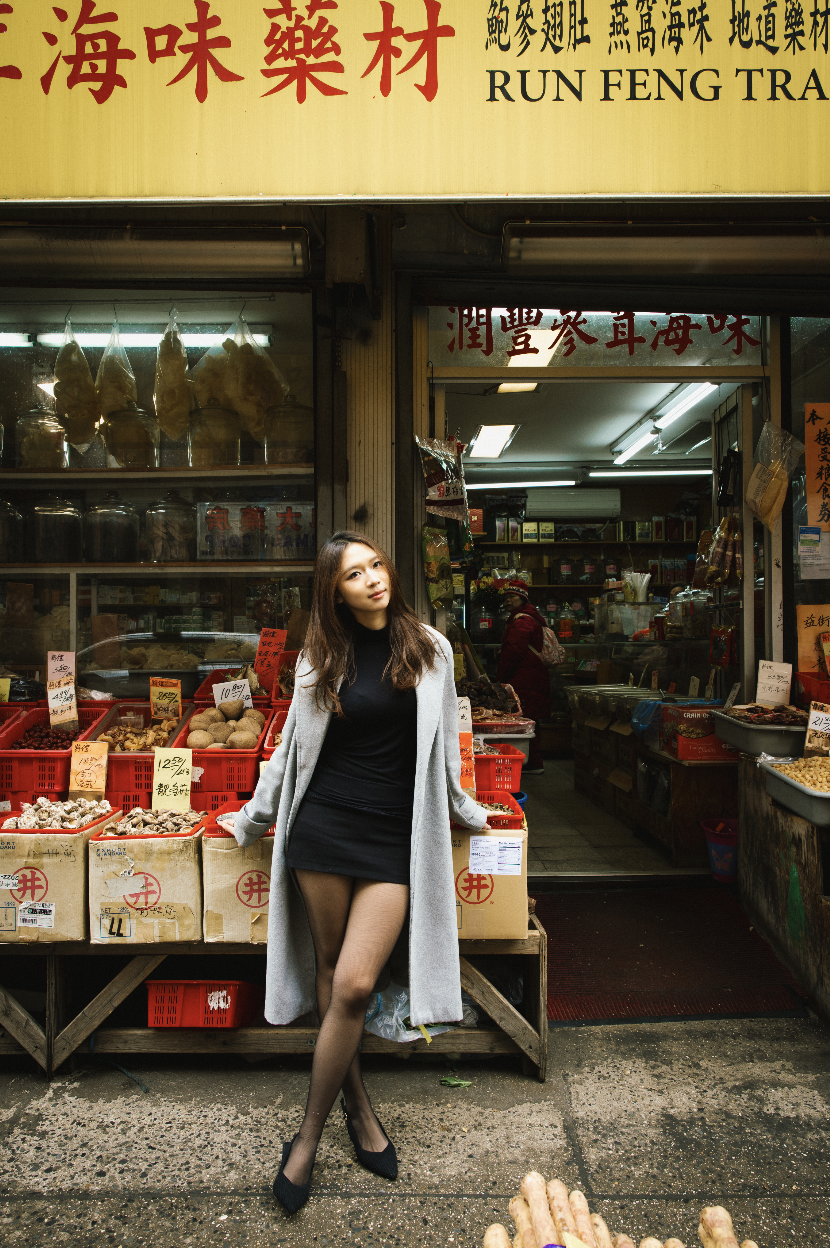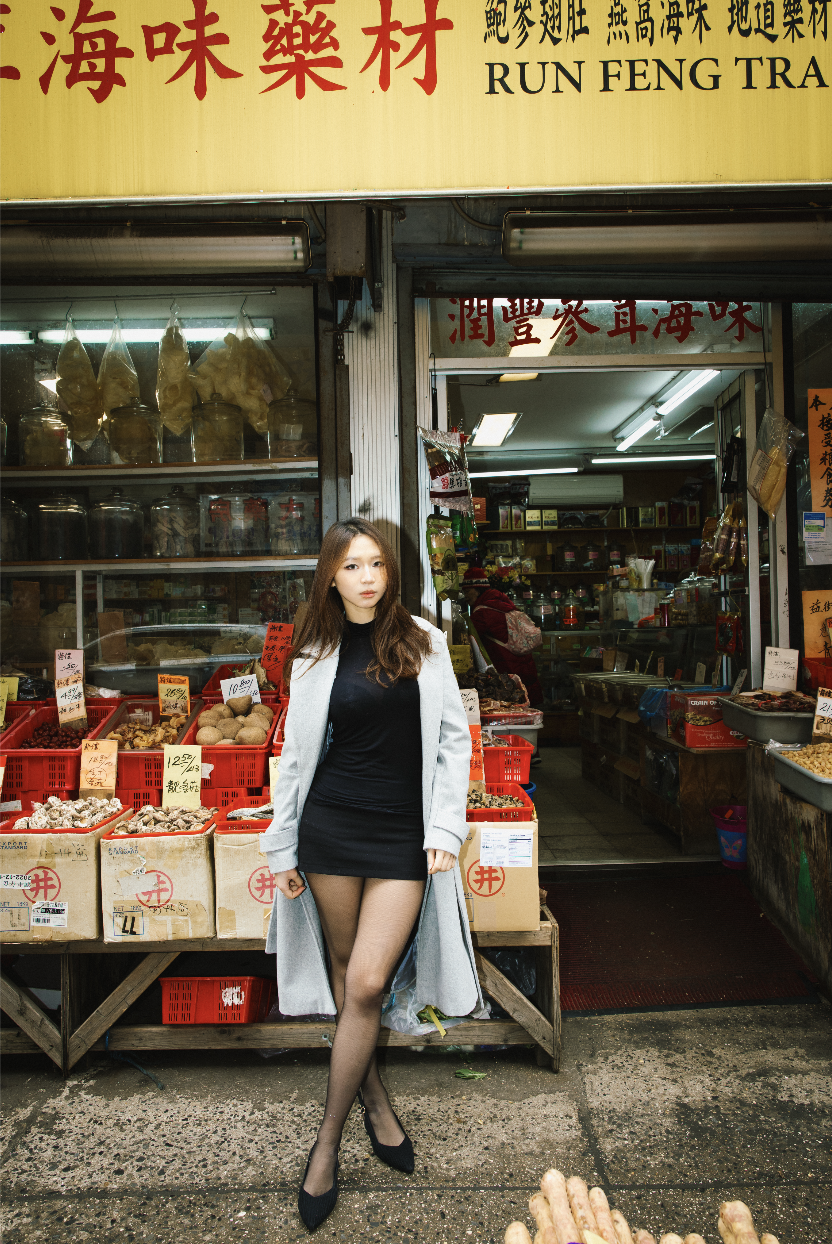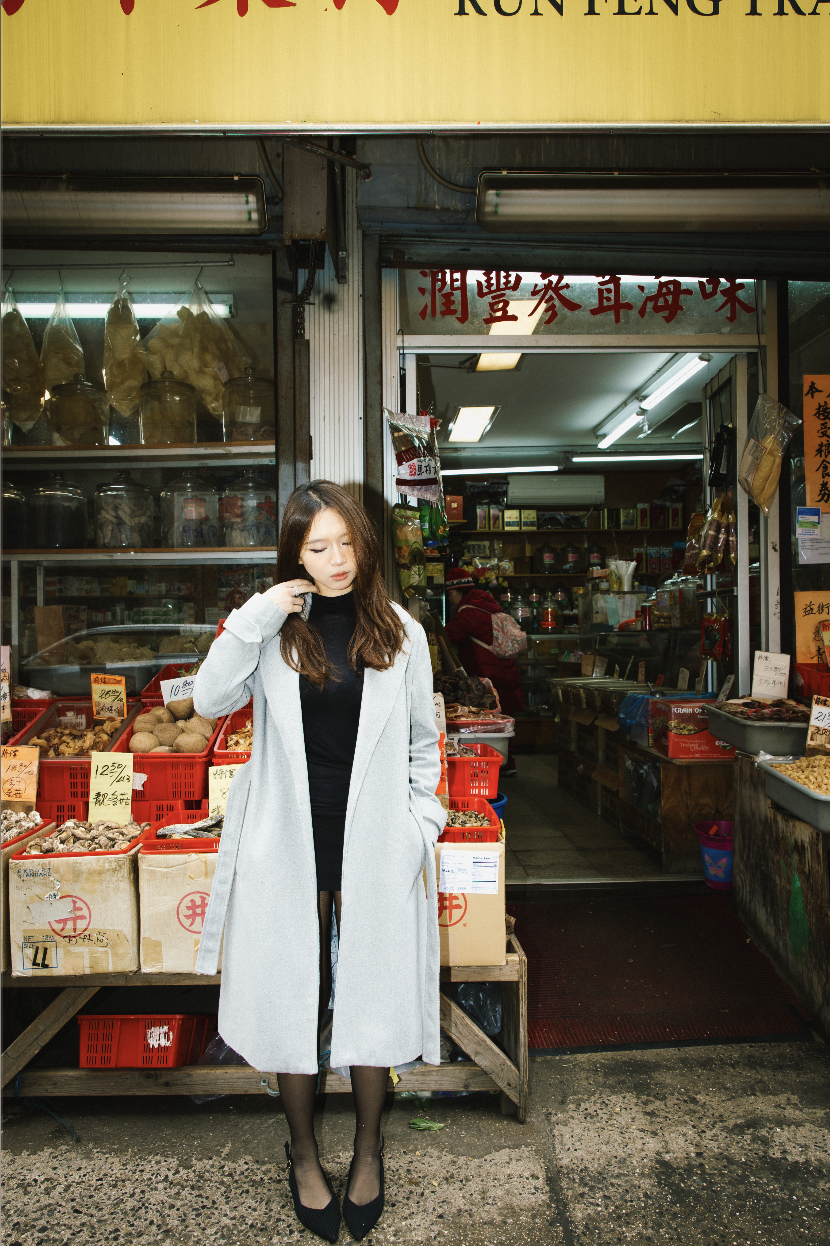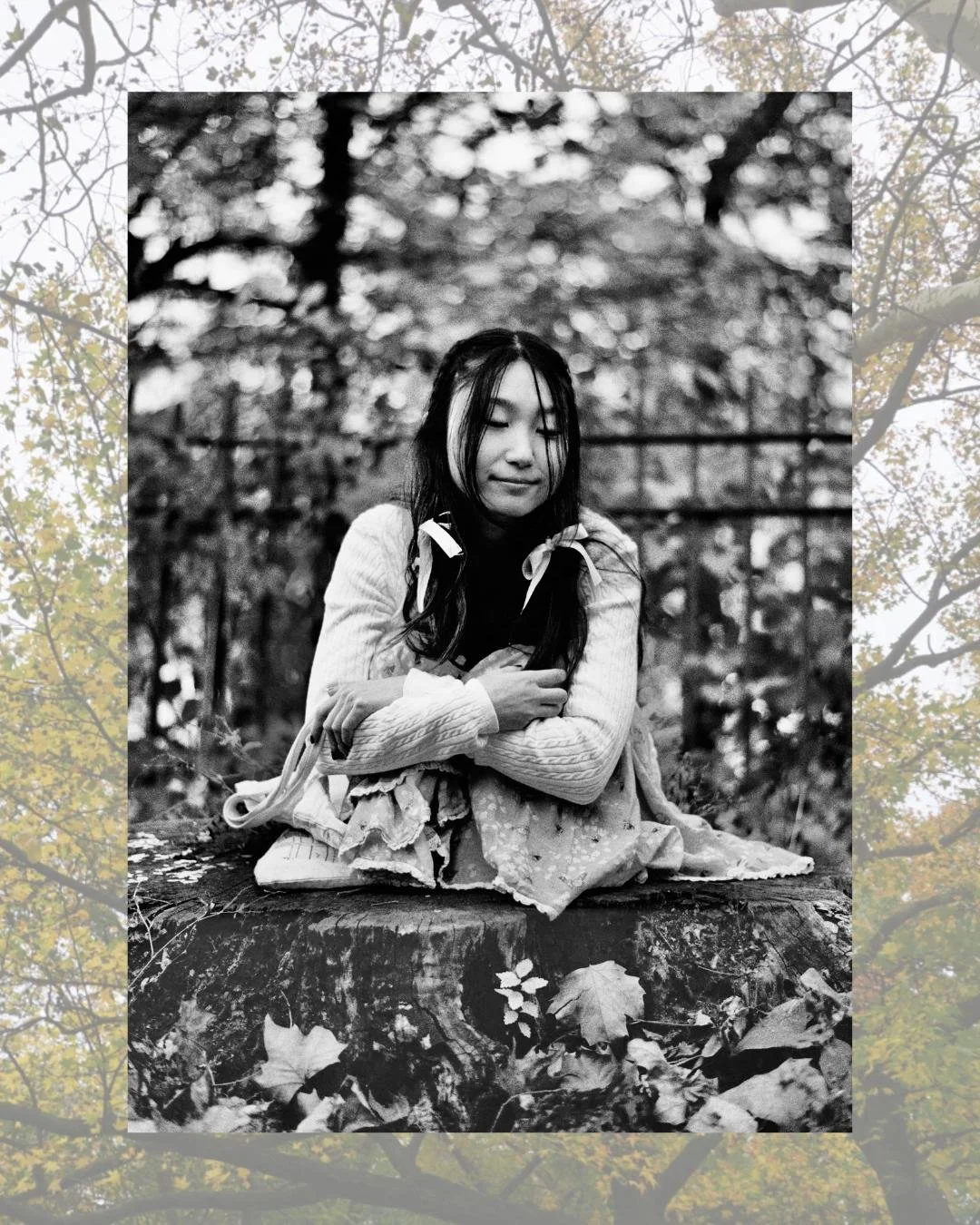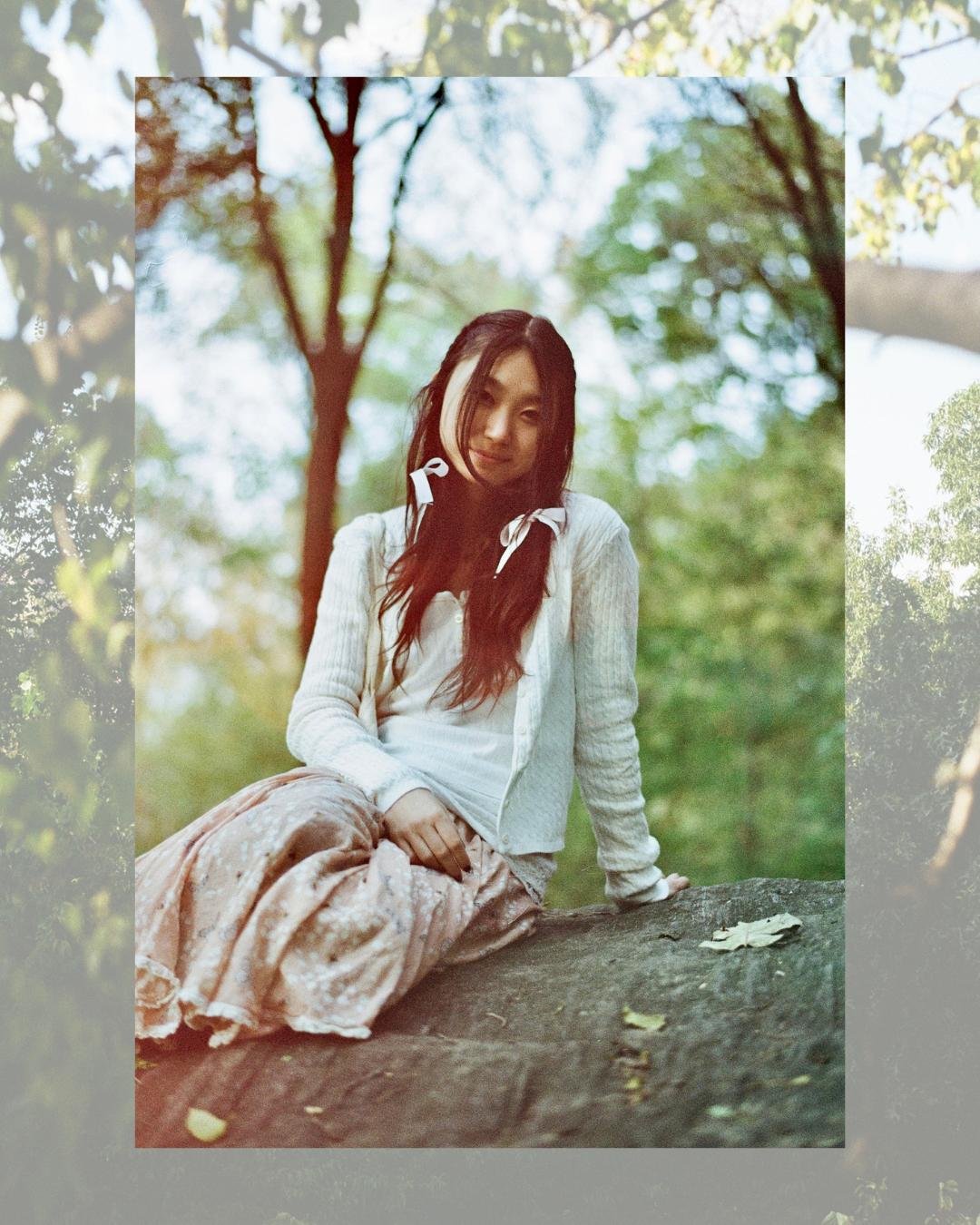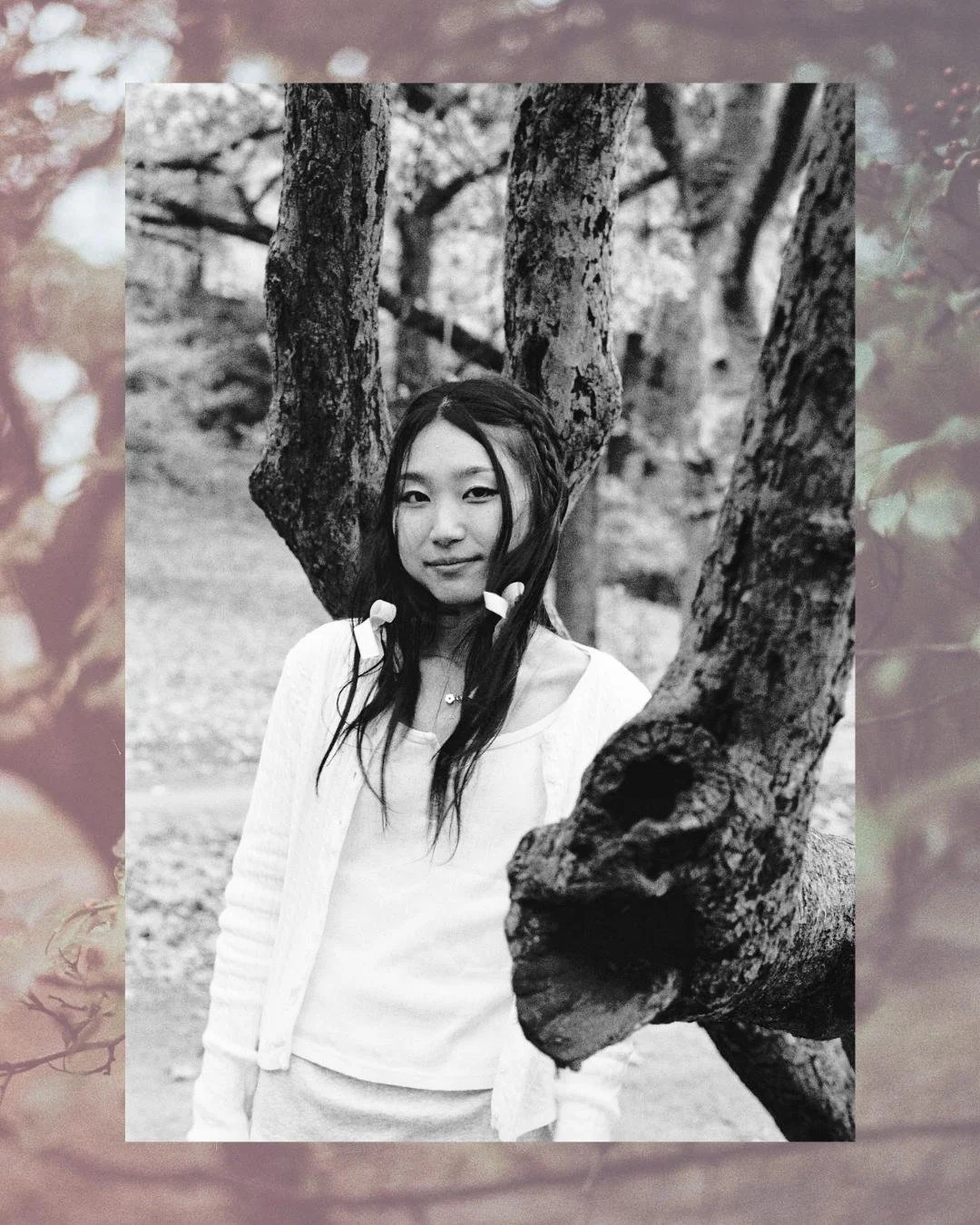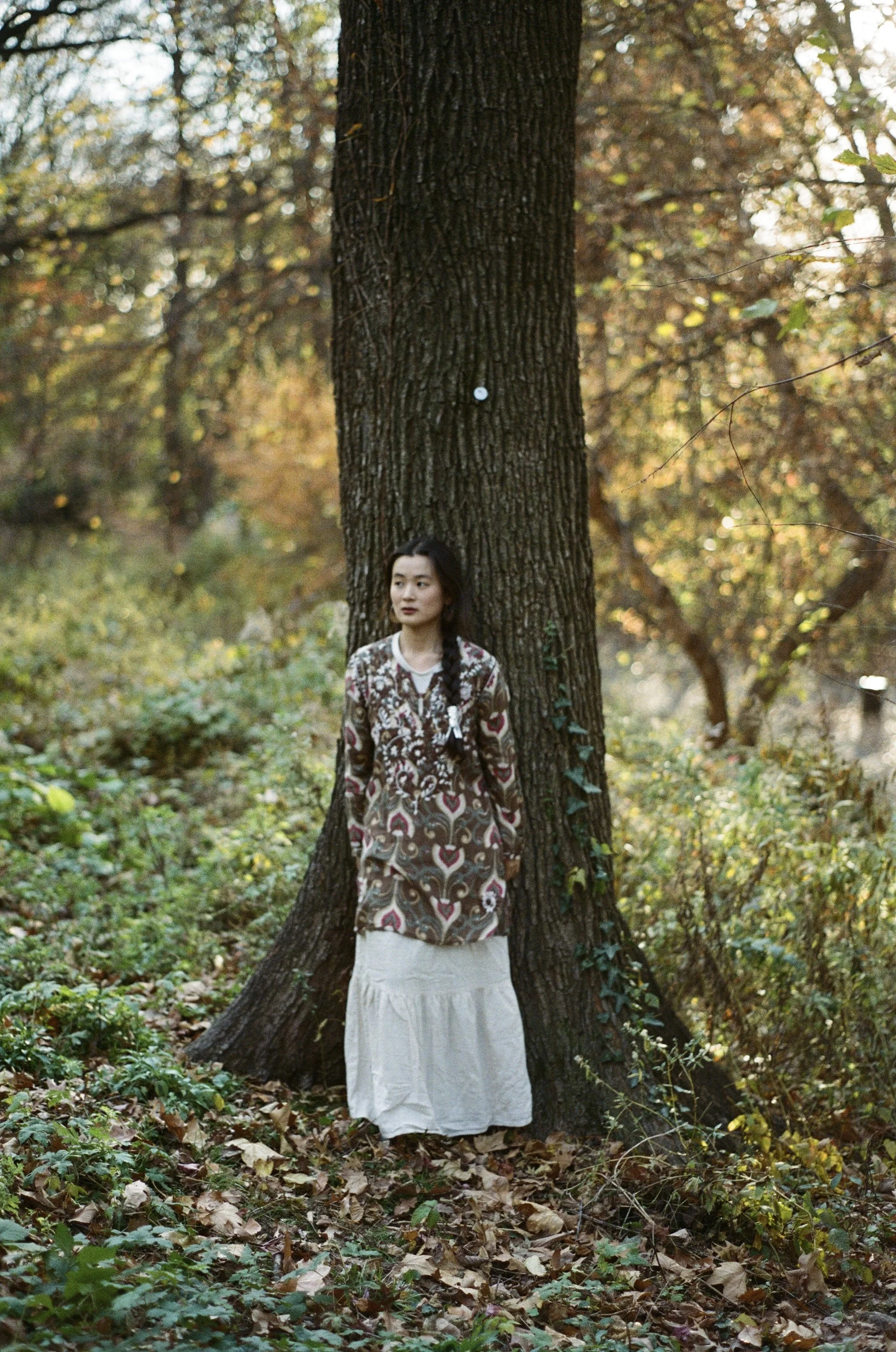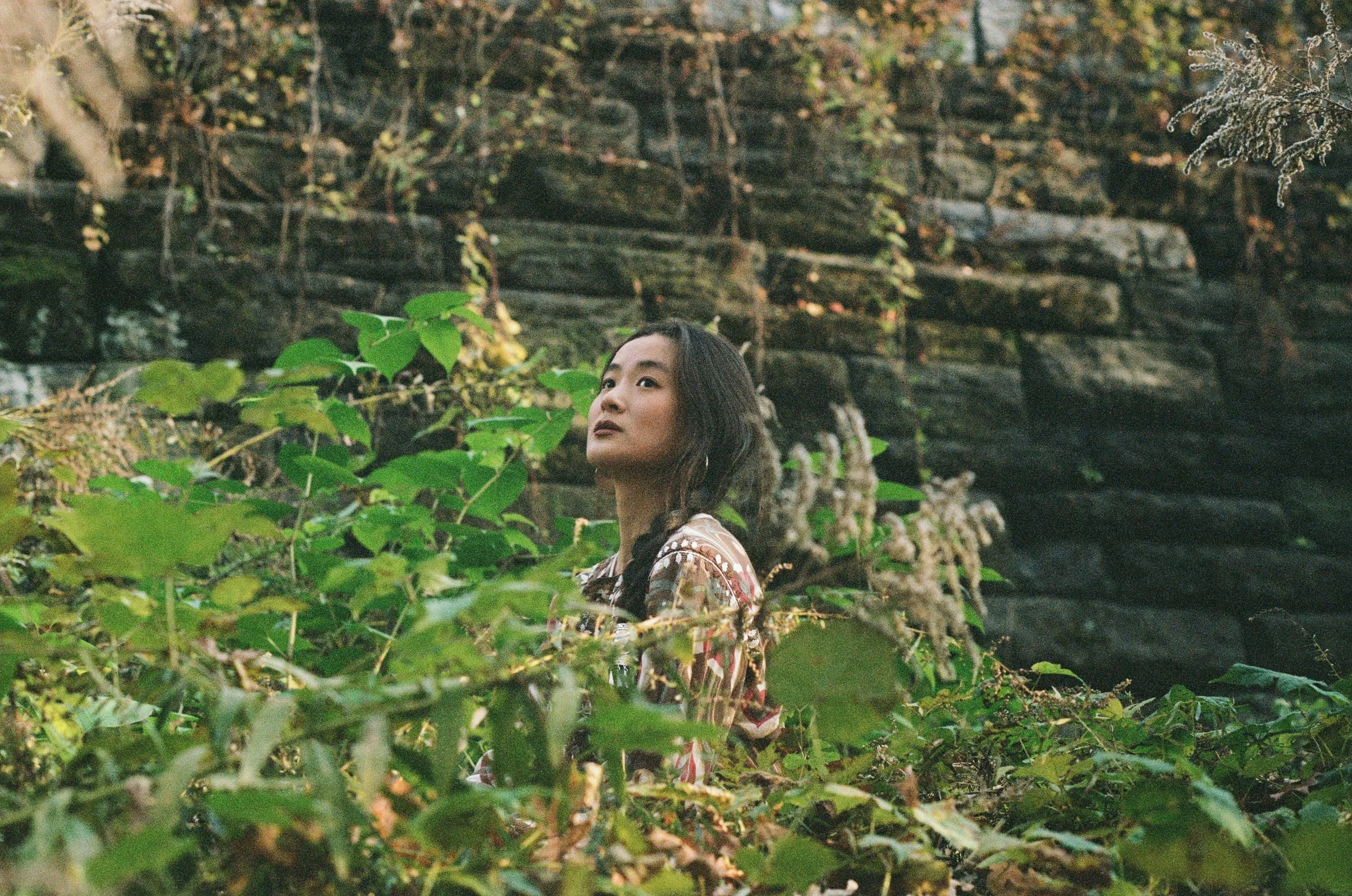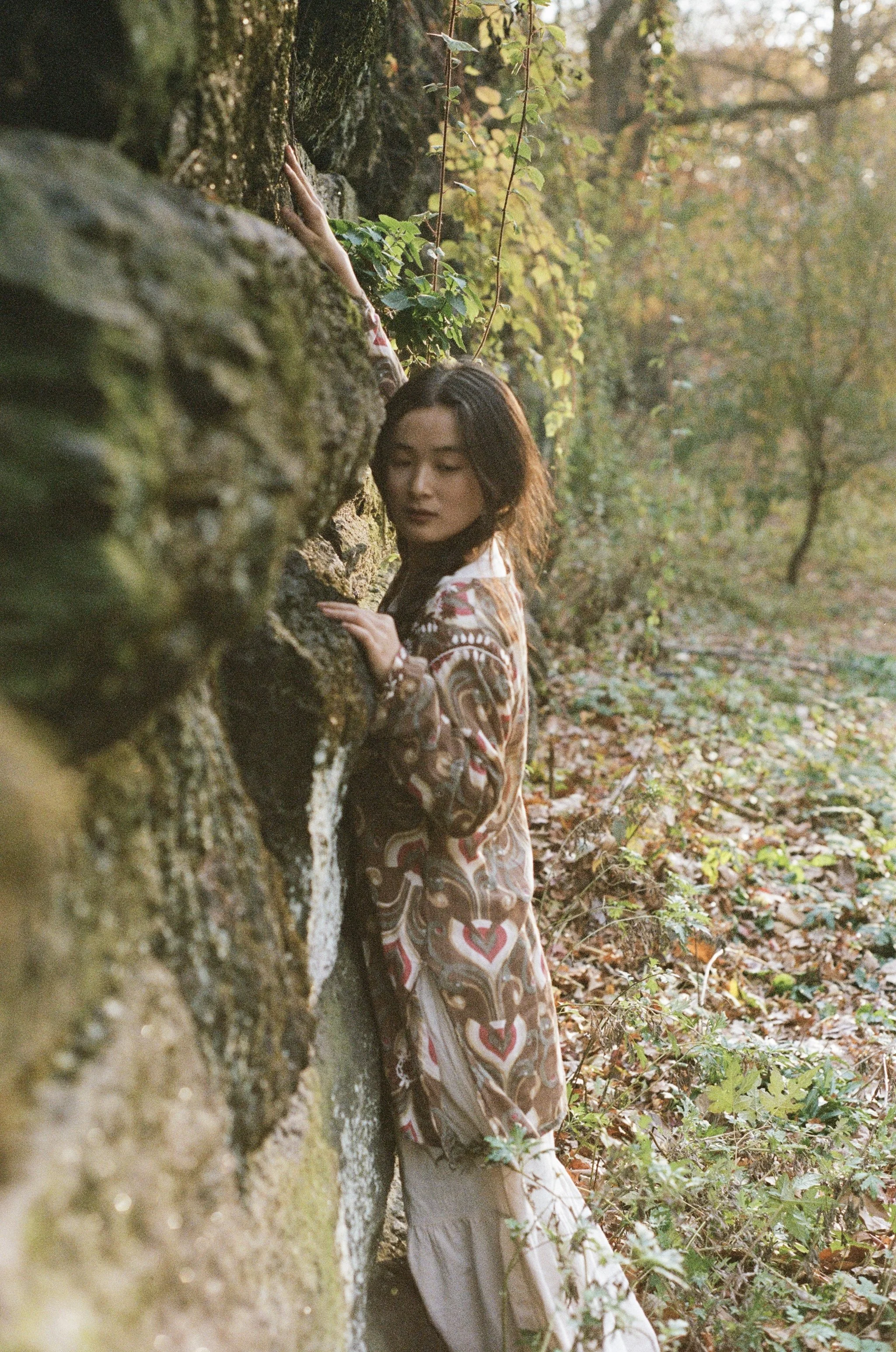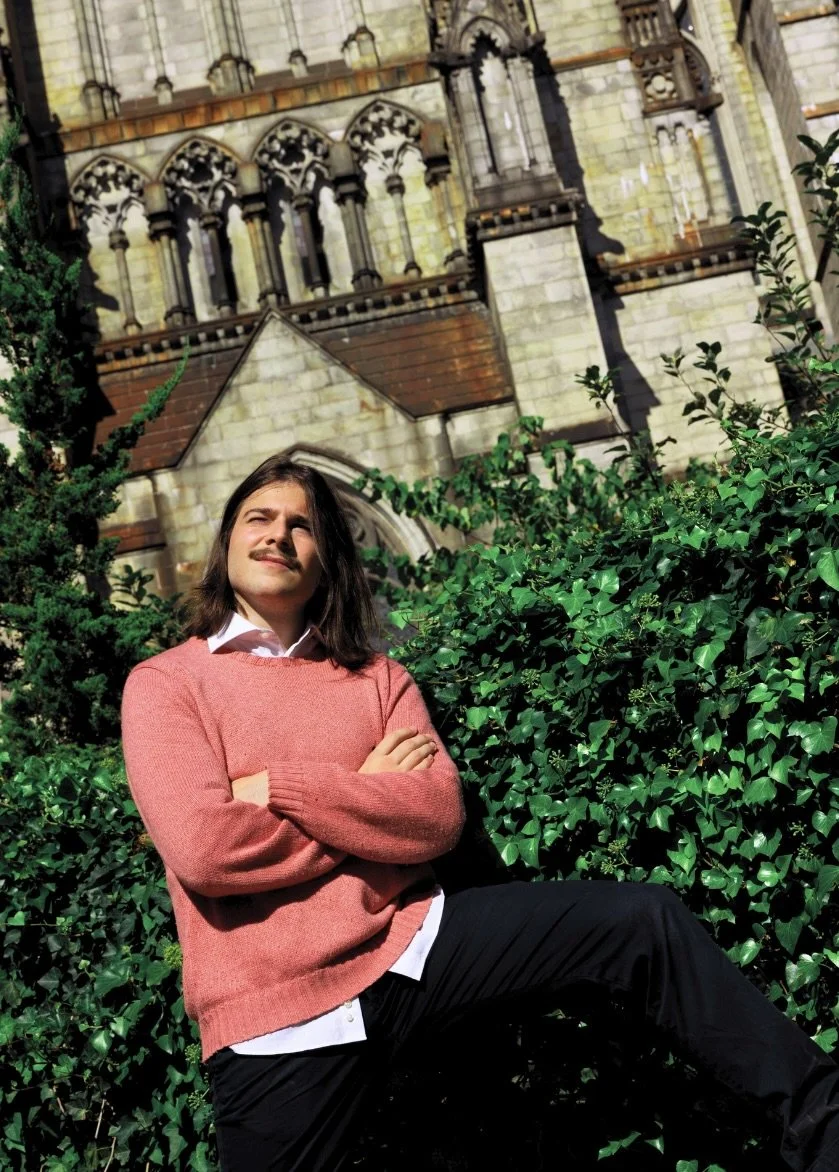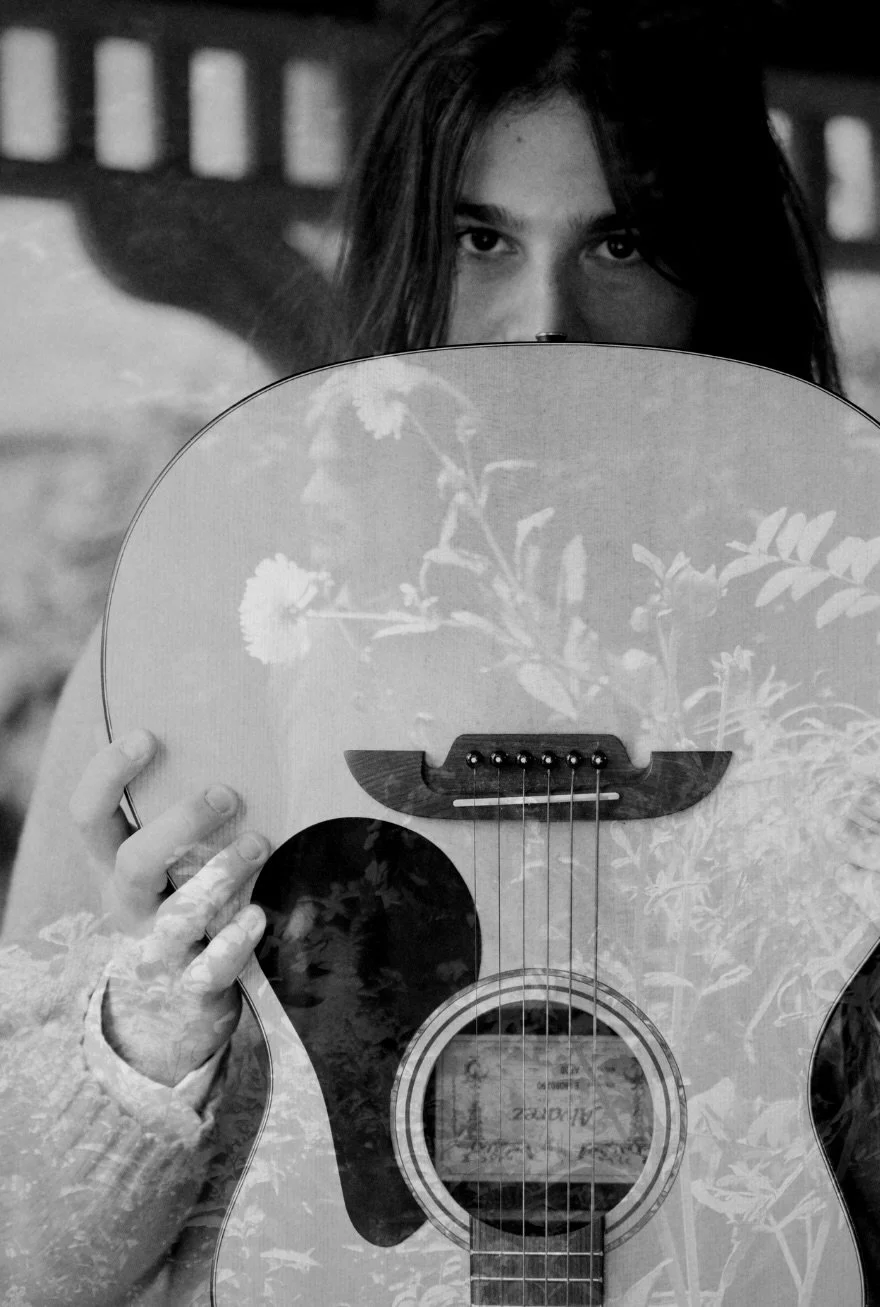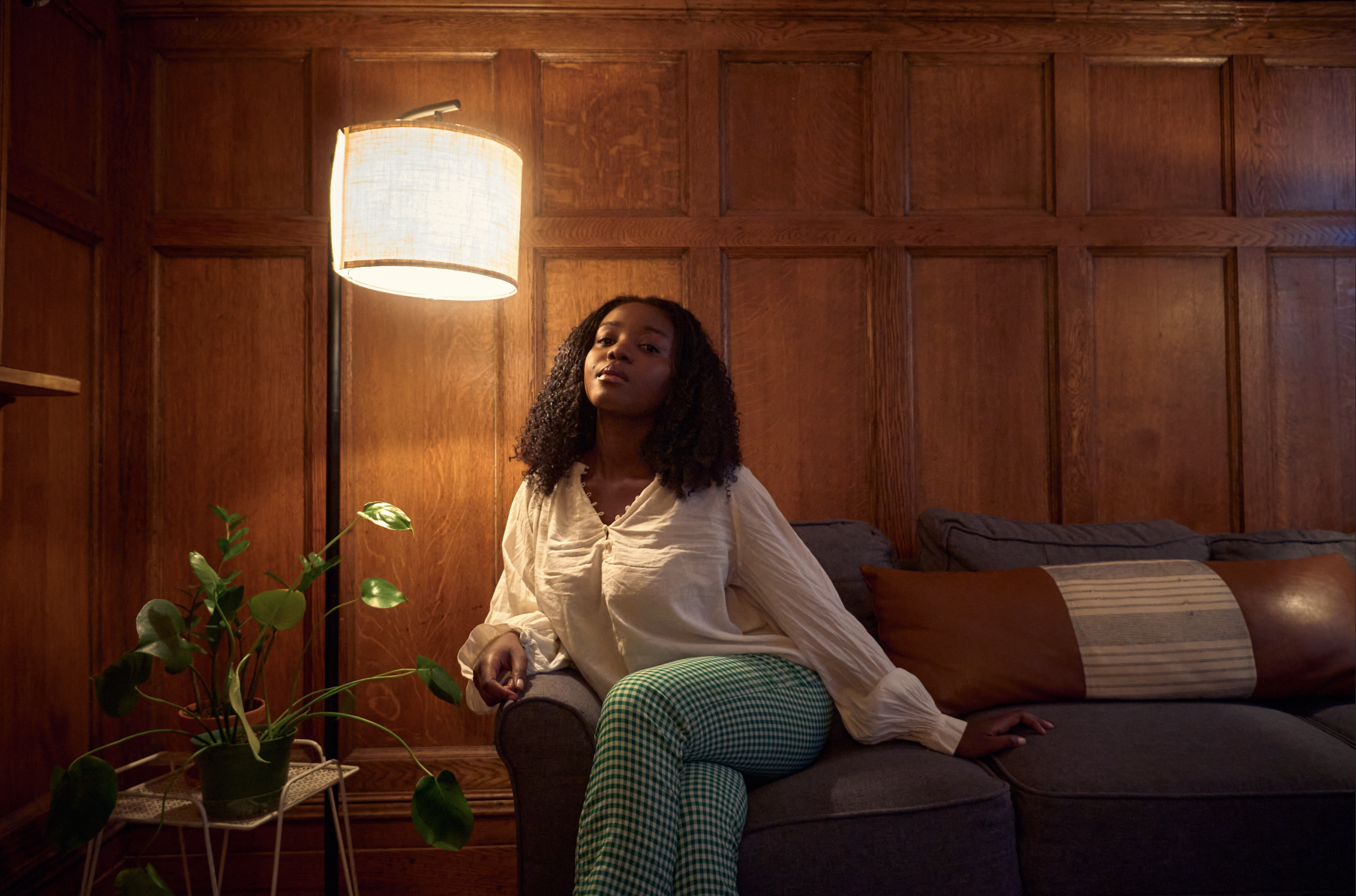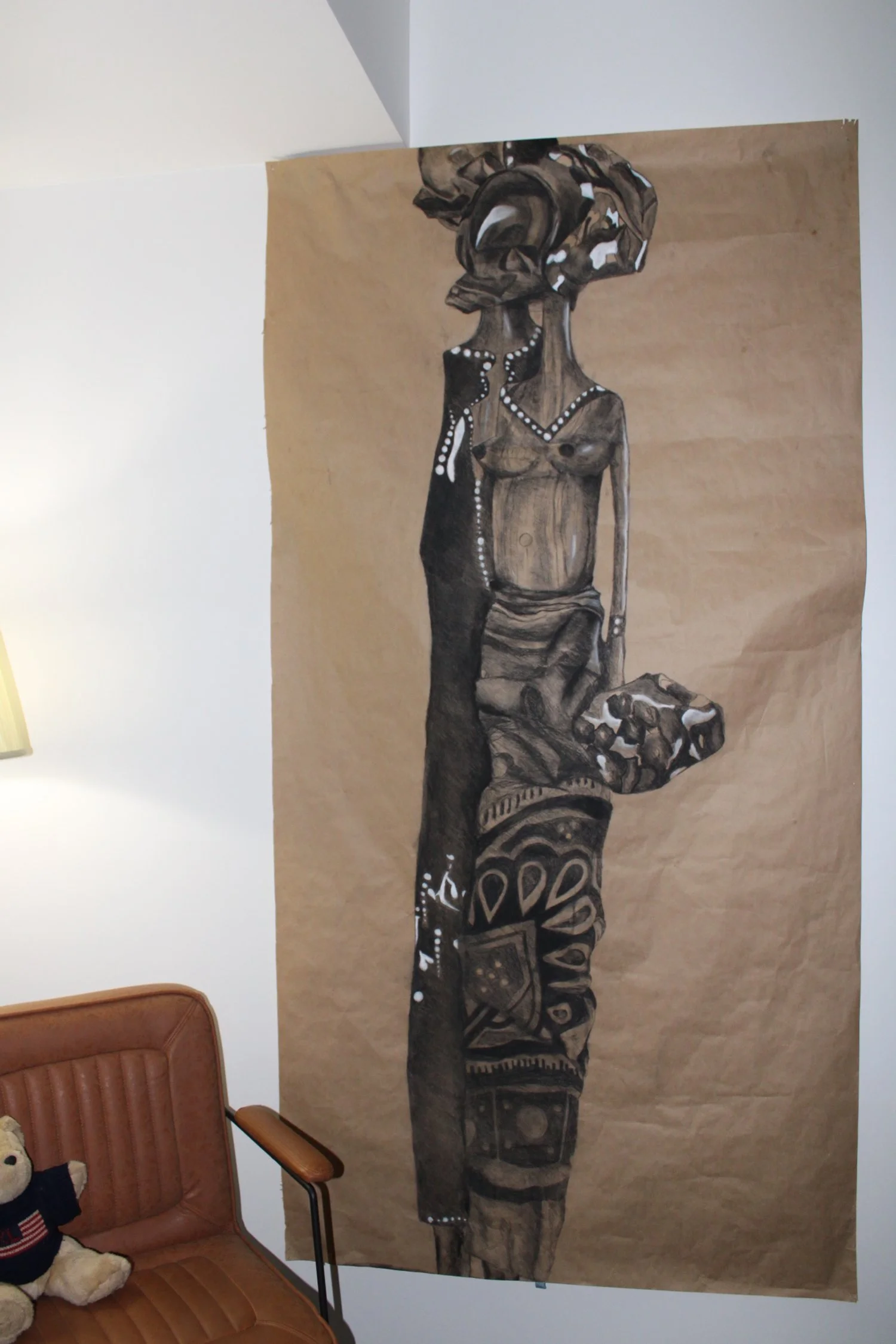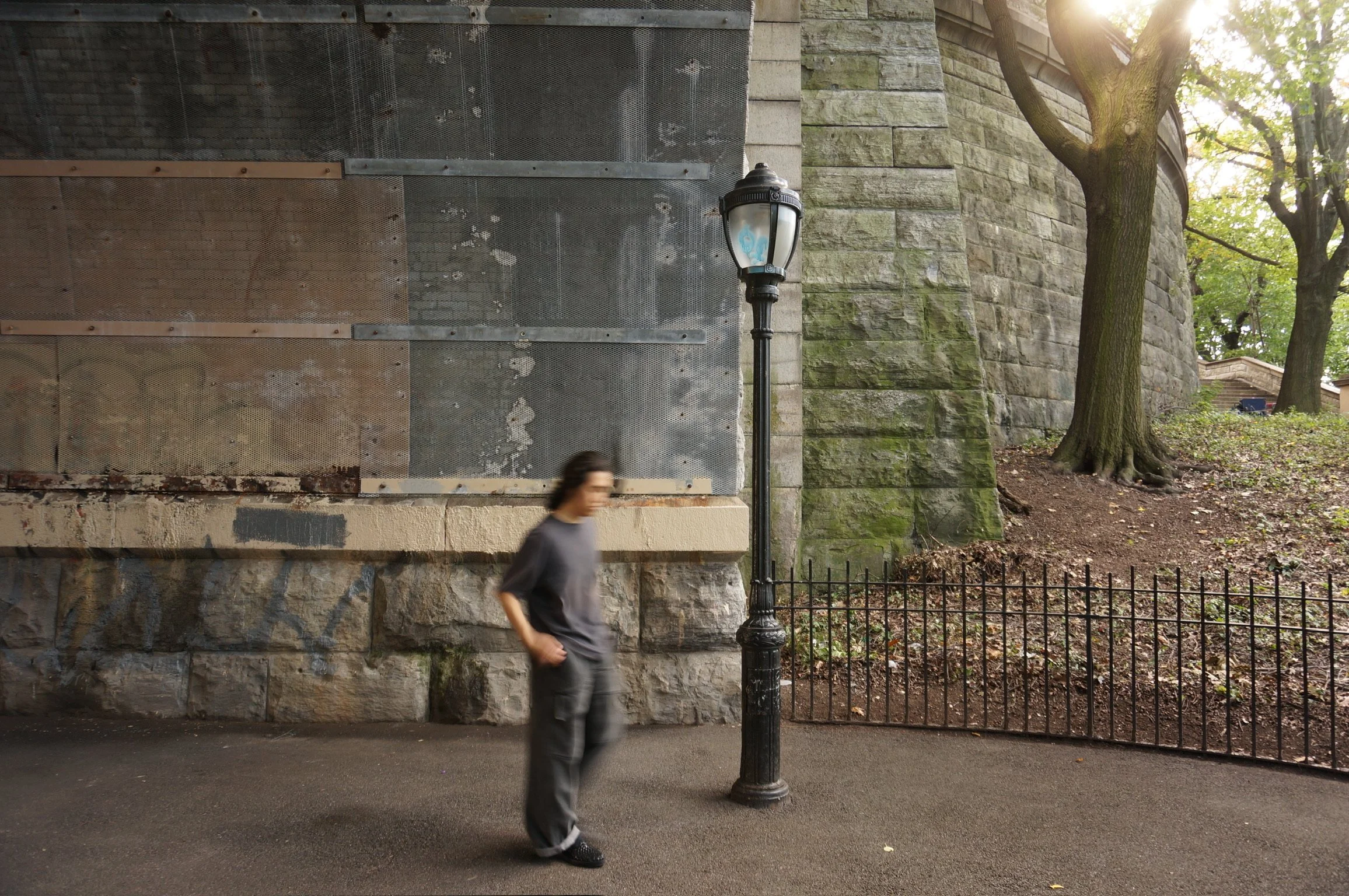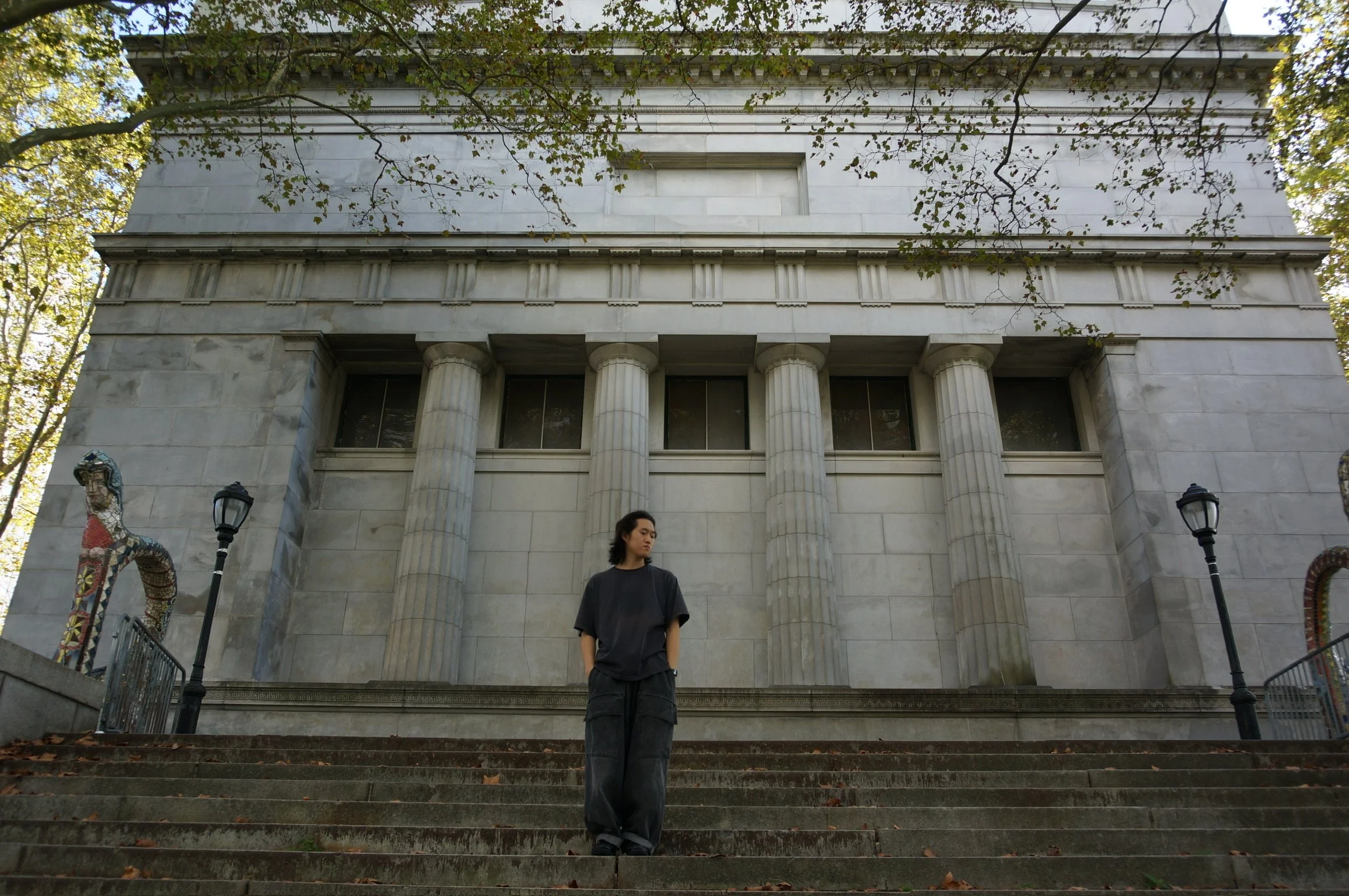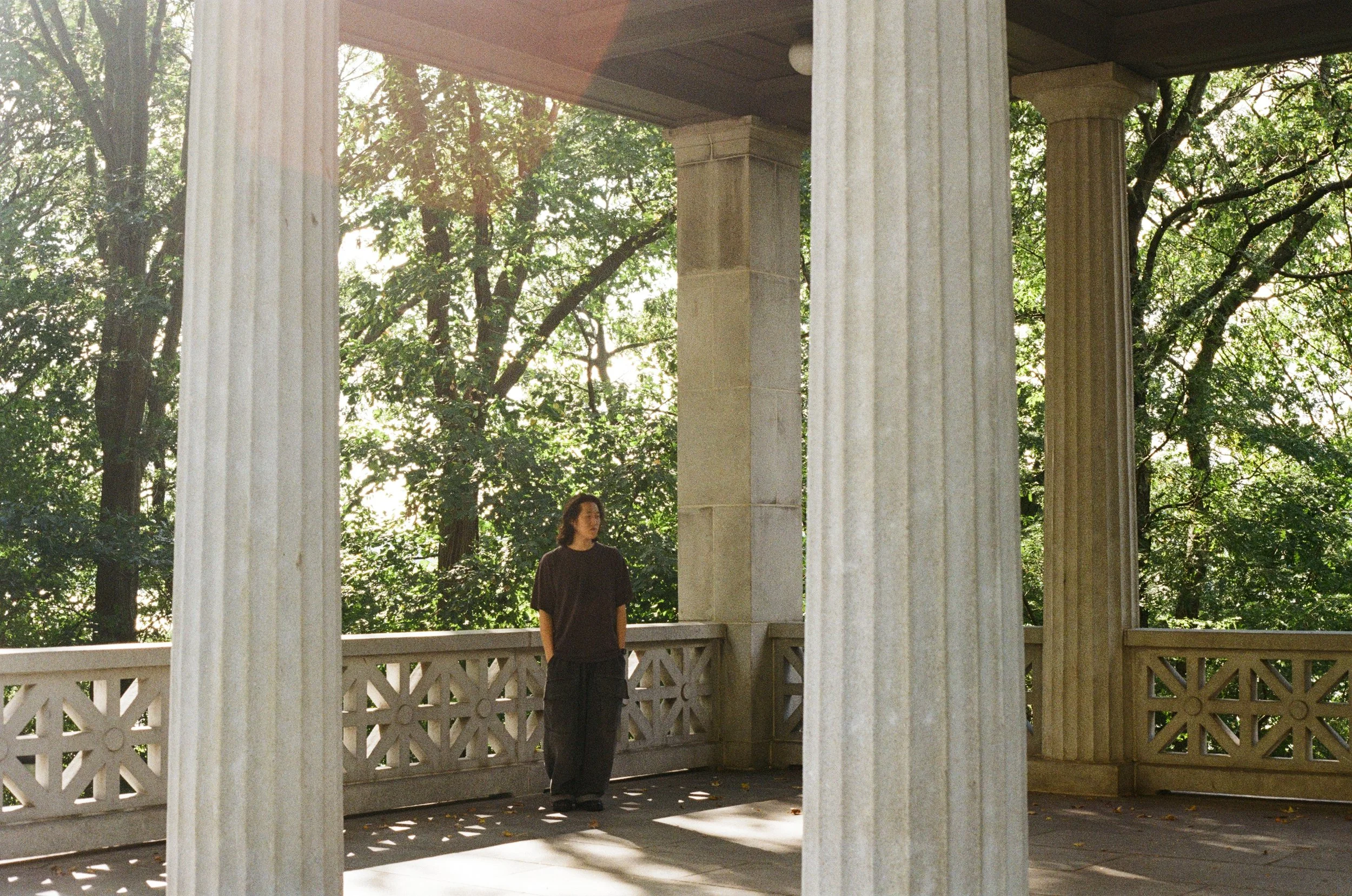
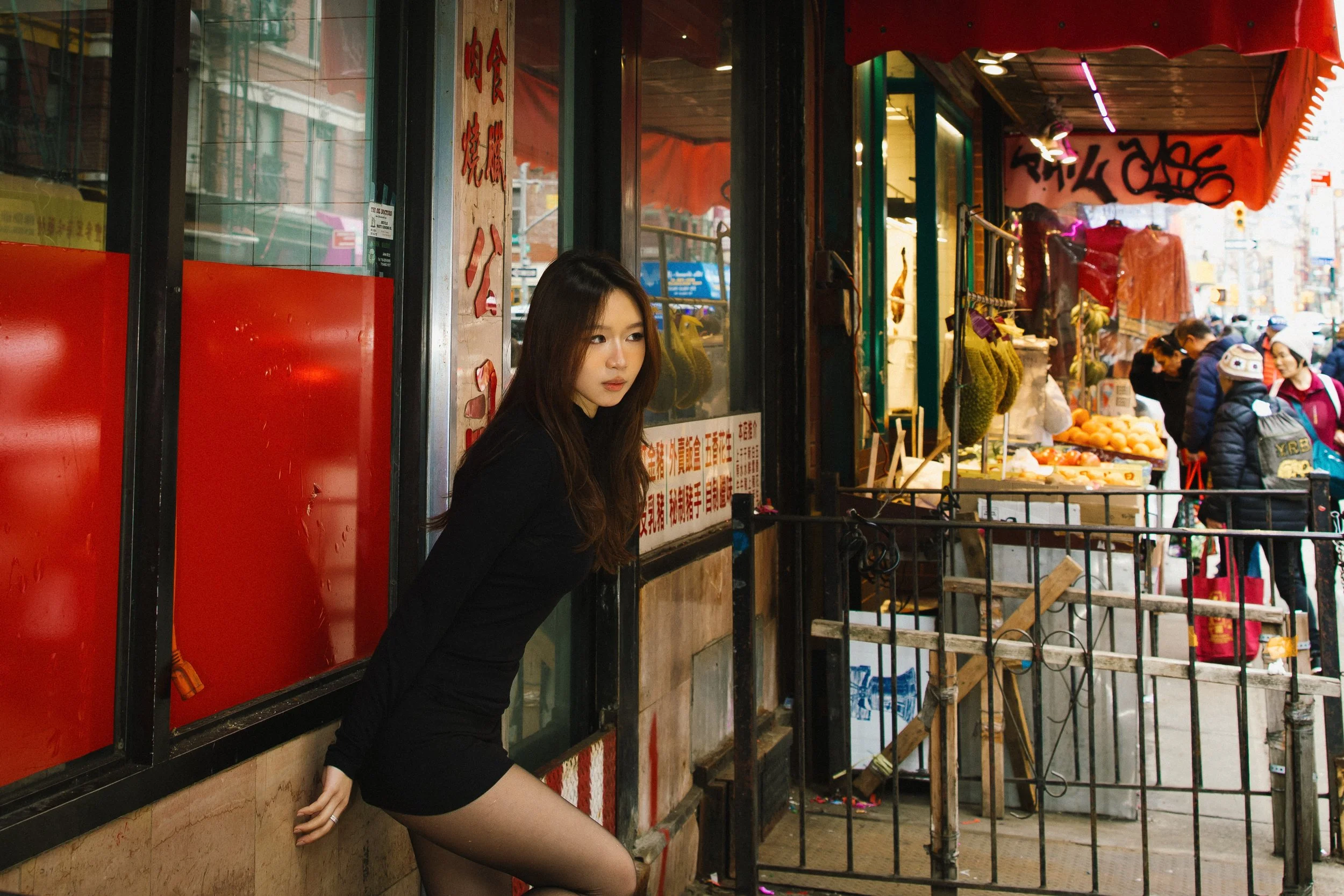
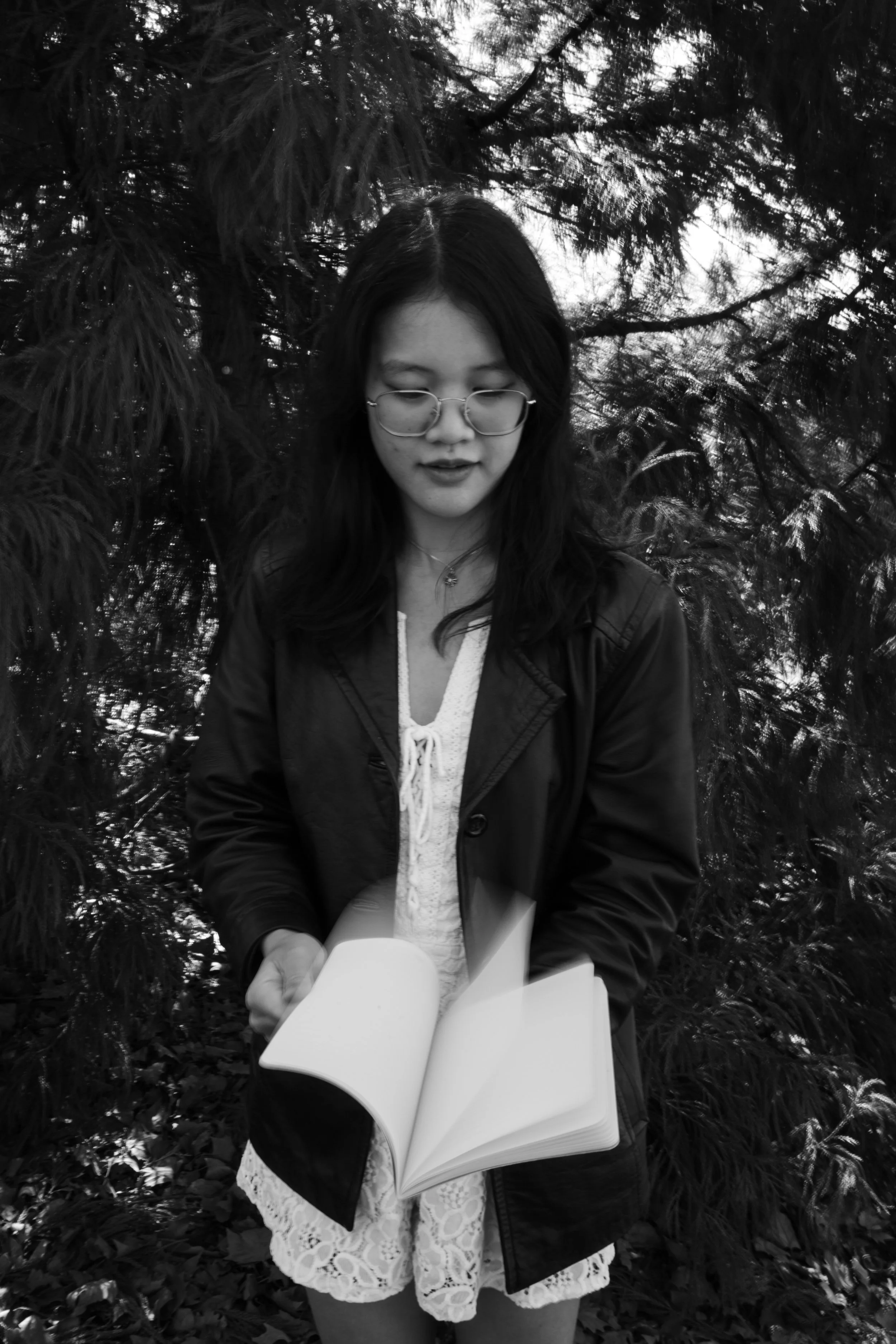
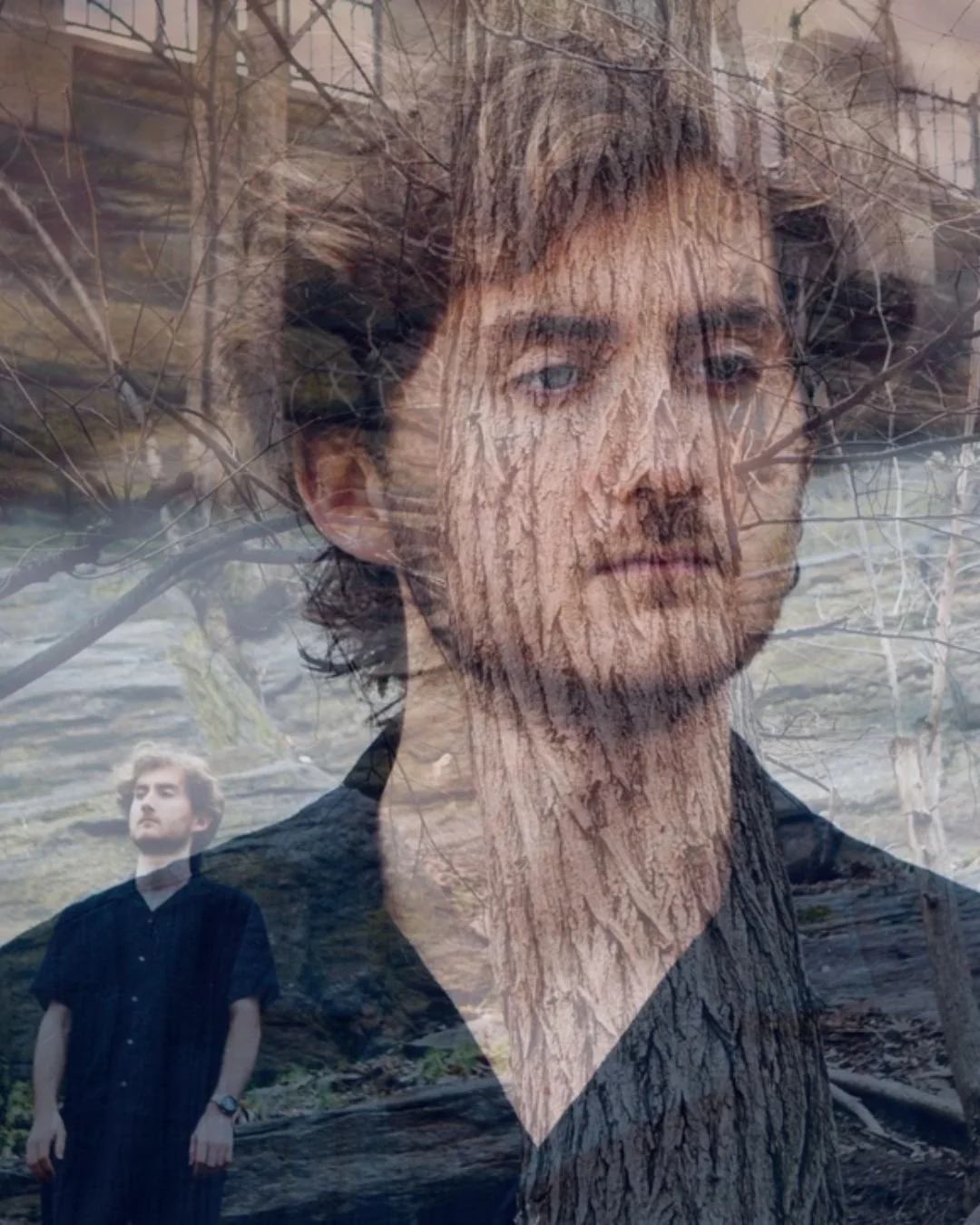
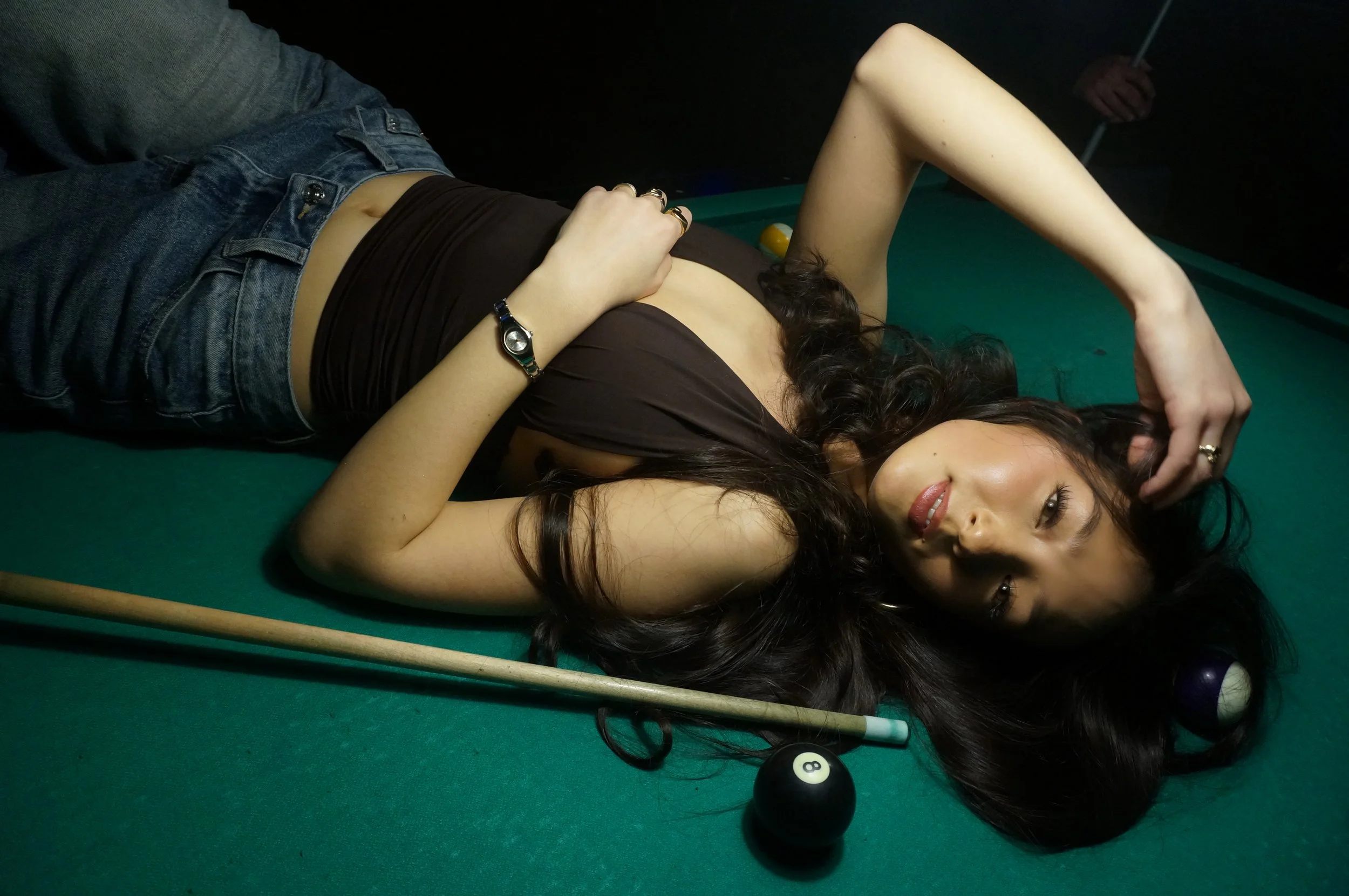
RAY ATLAS

Feature by Nika Raiffe
Photos by Audrea Chen


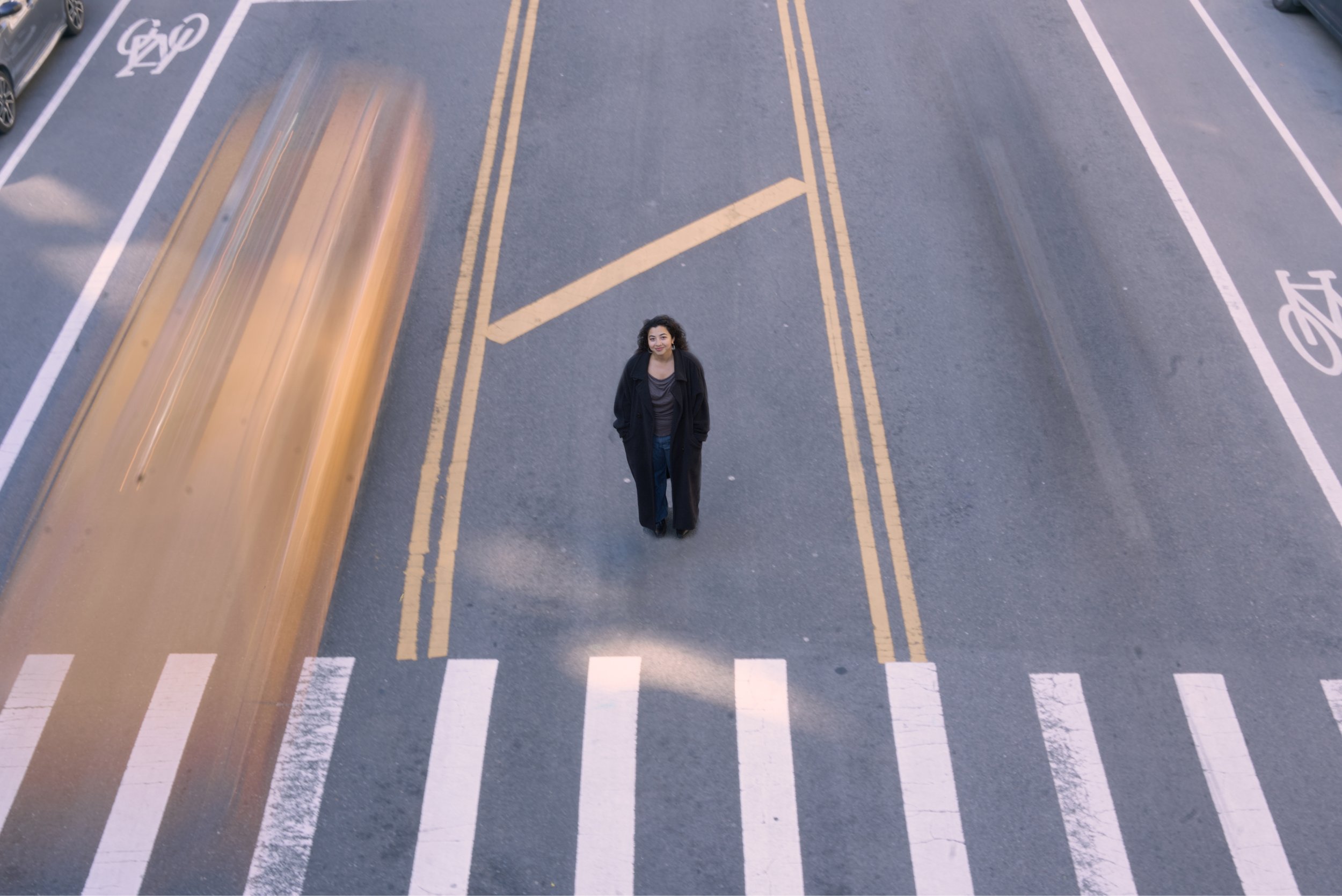
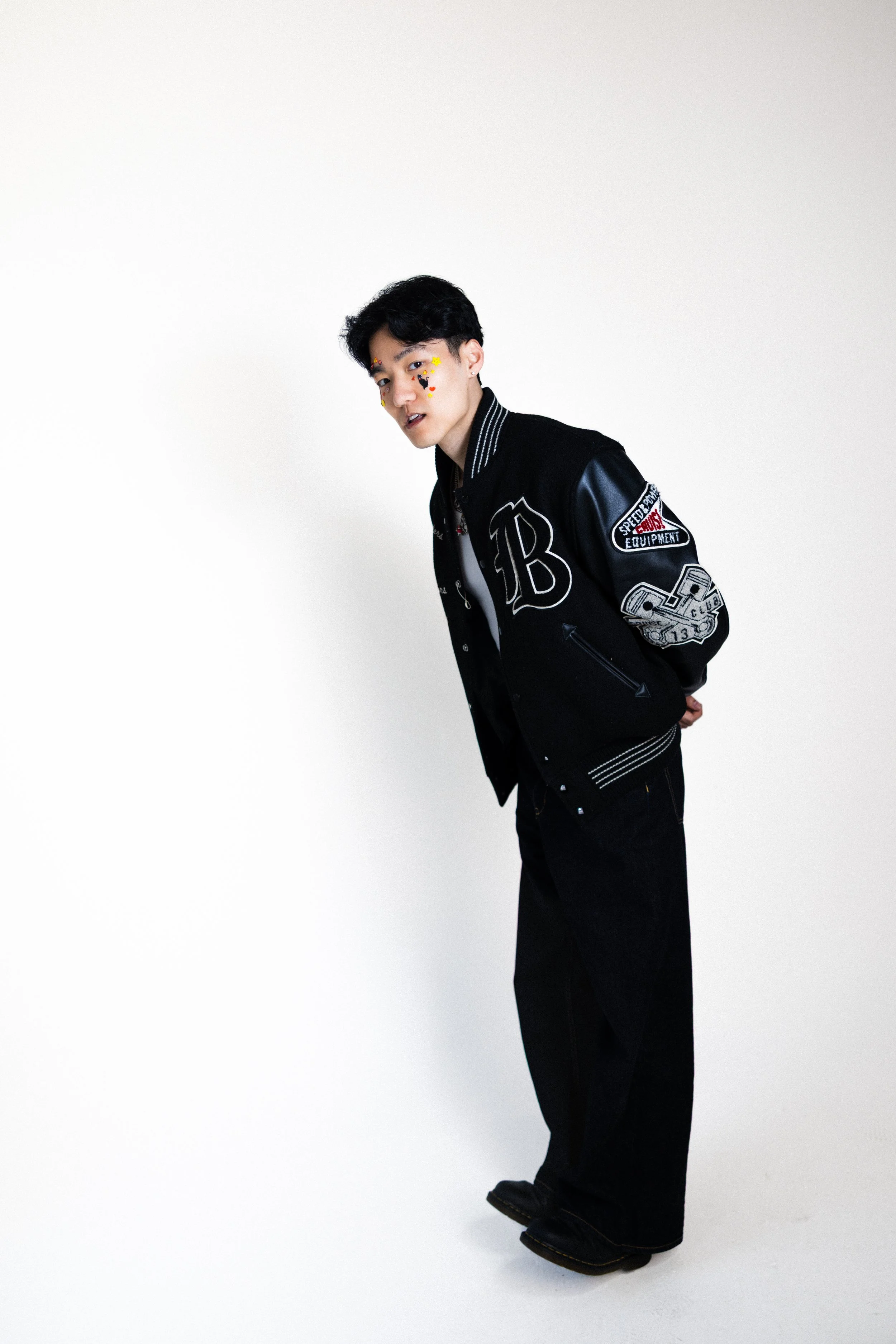
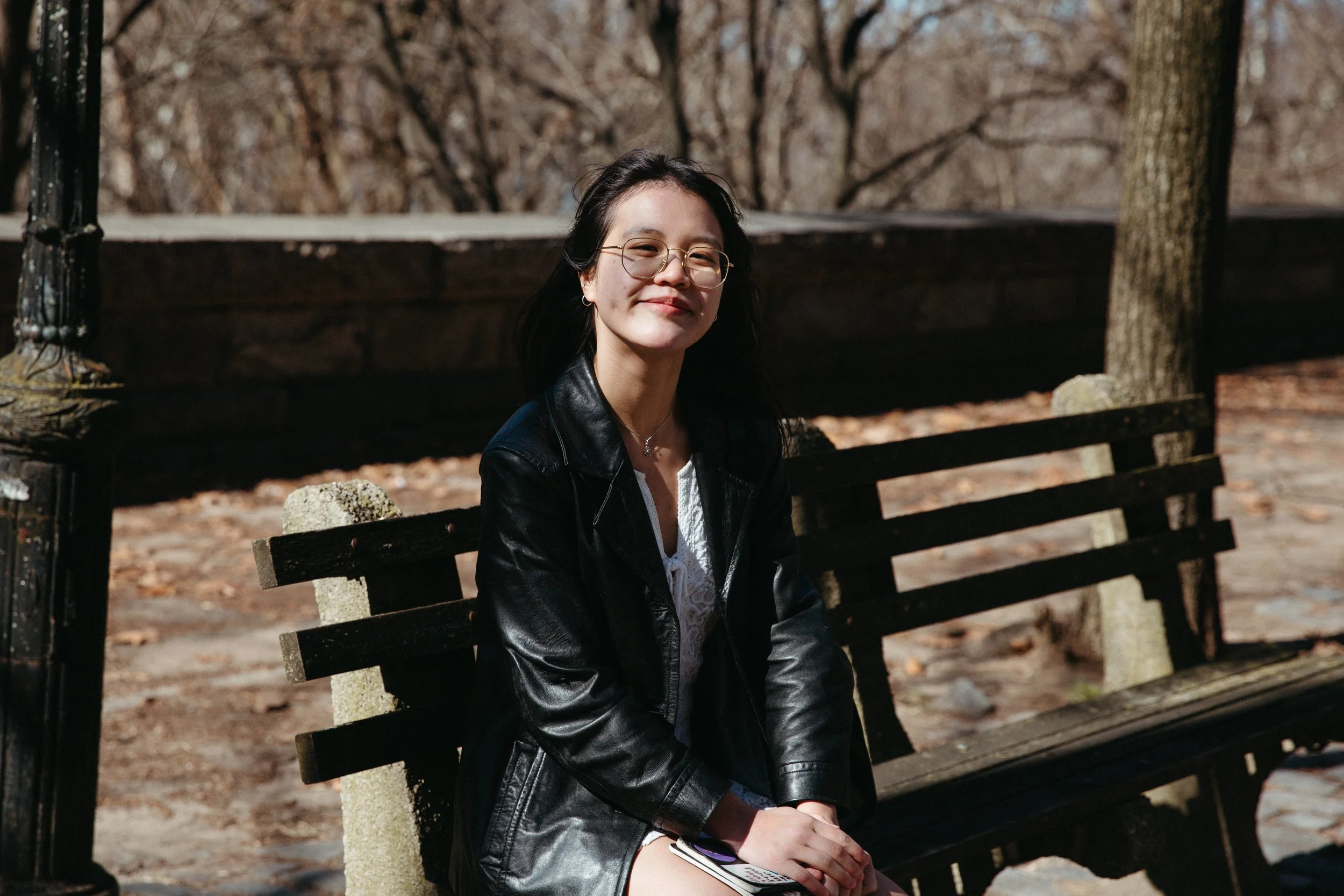
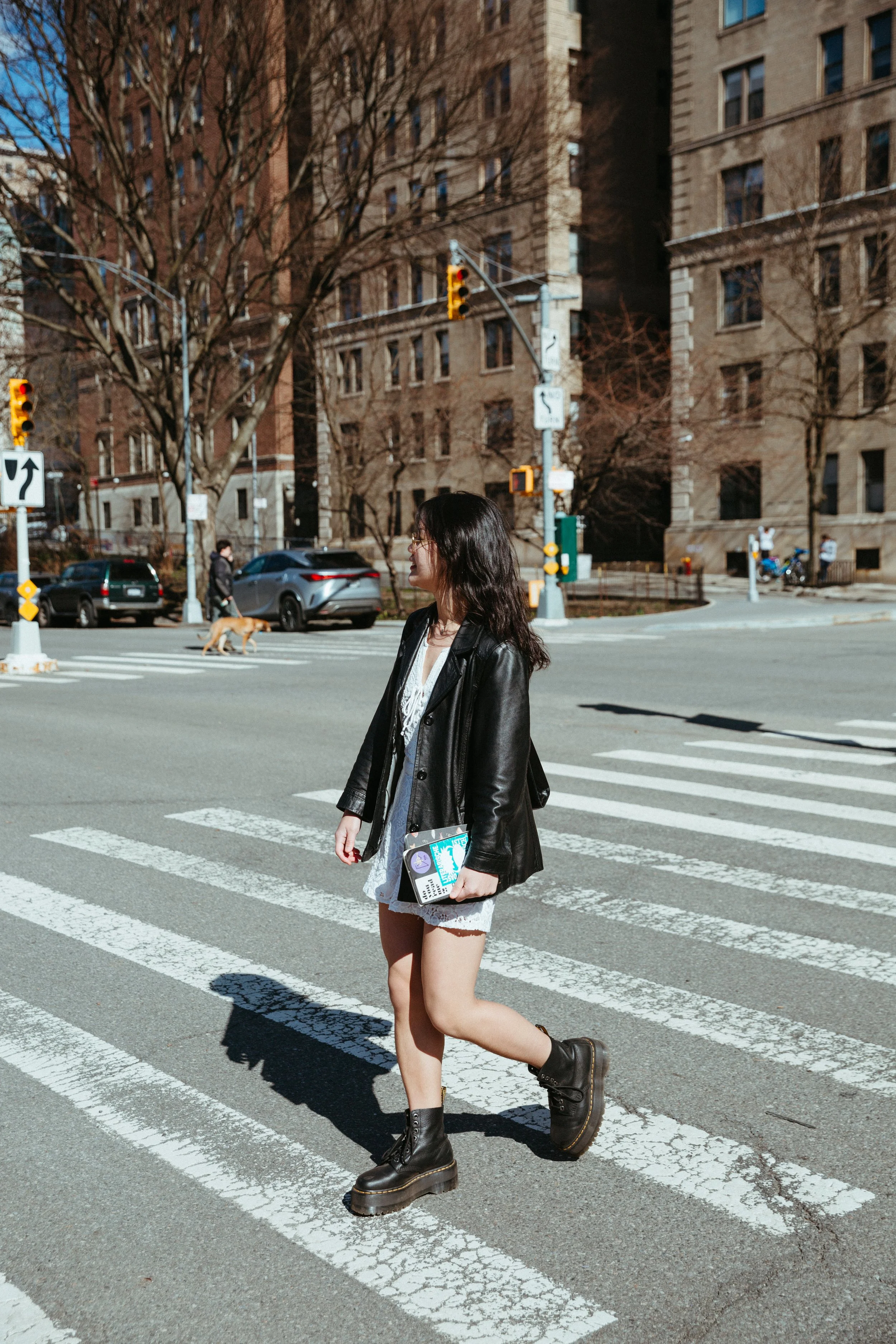
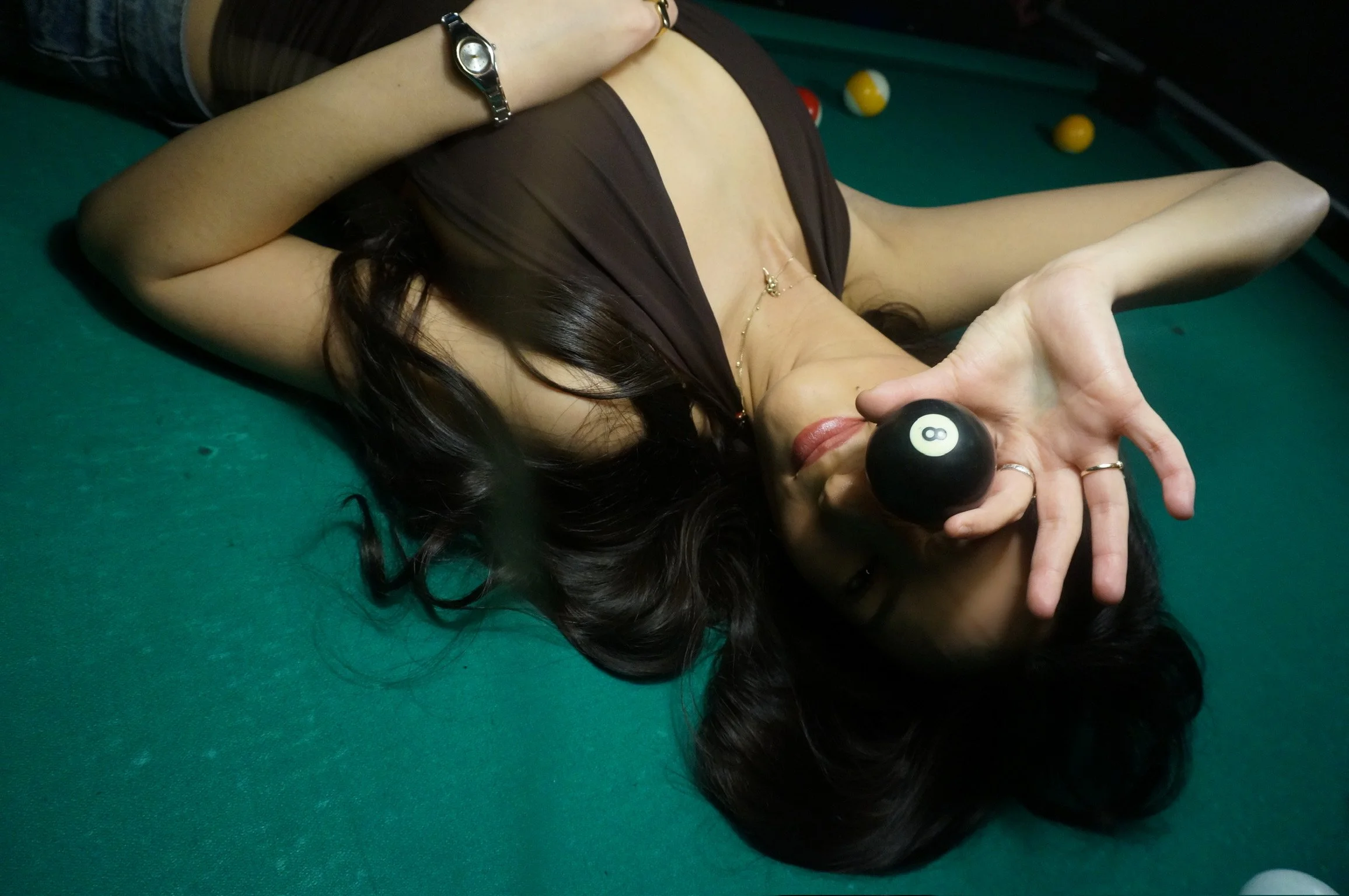
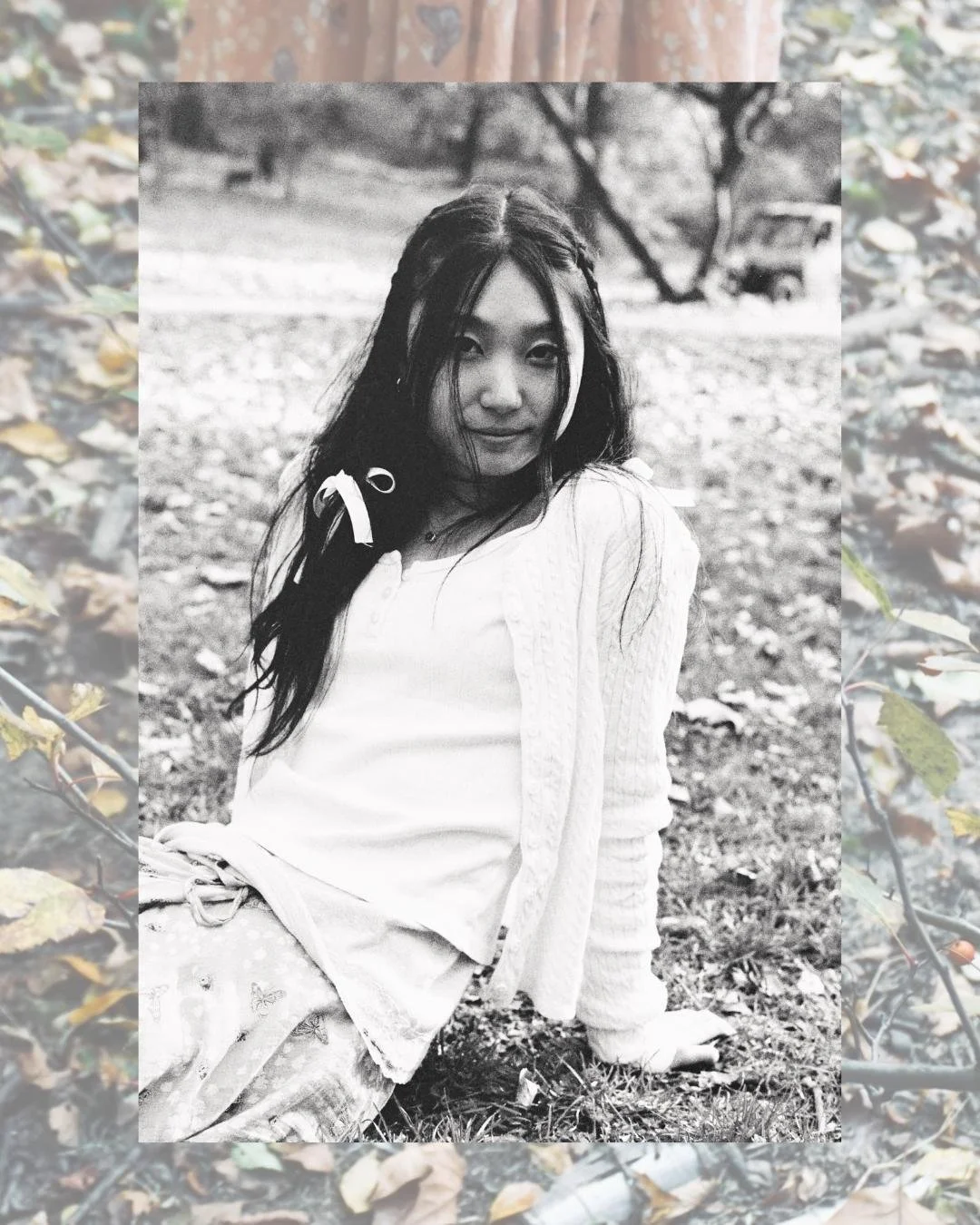
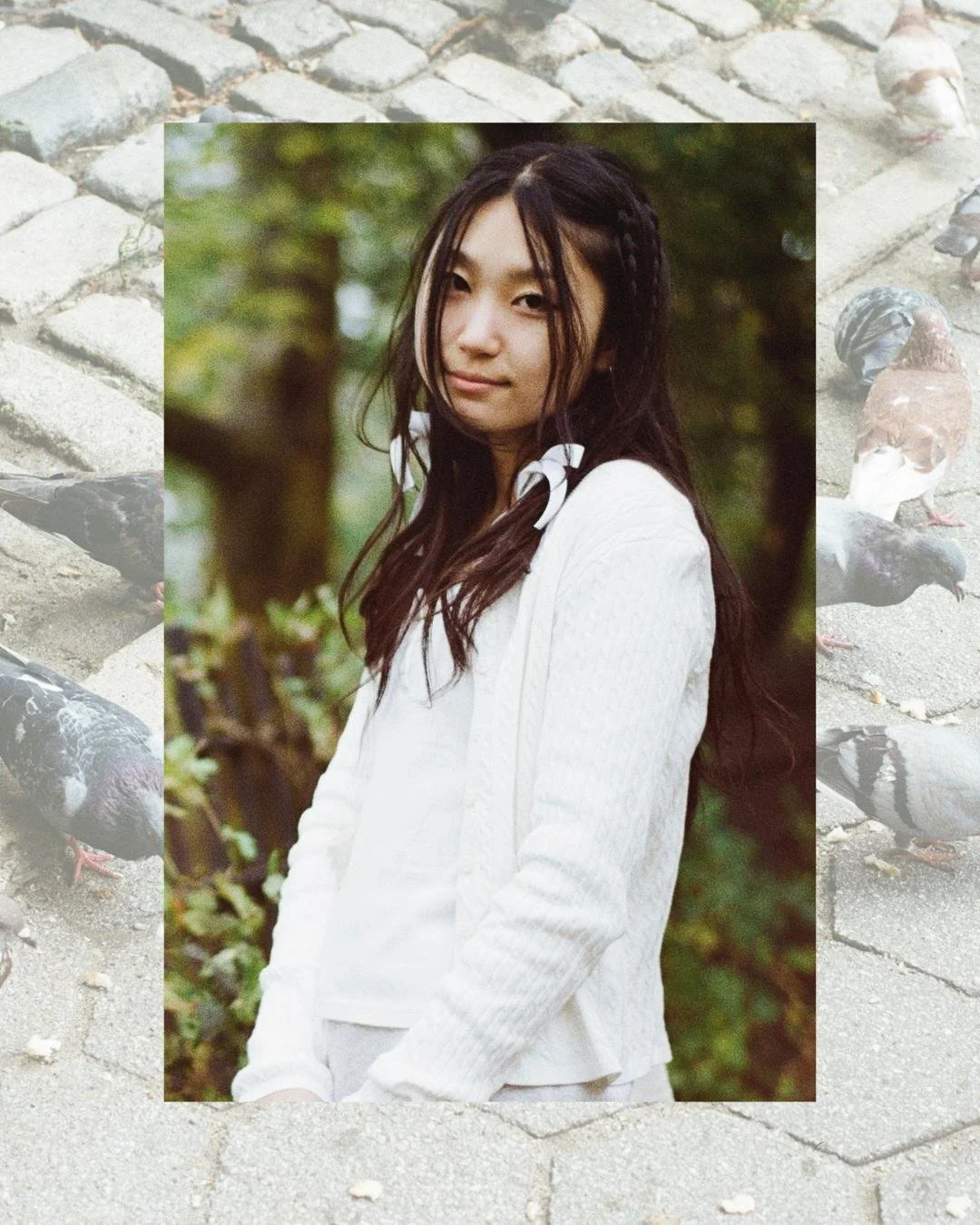
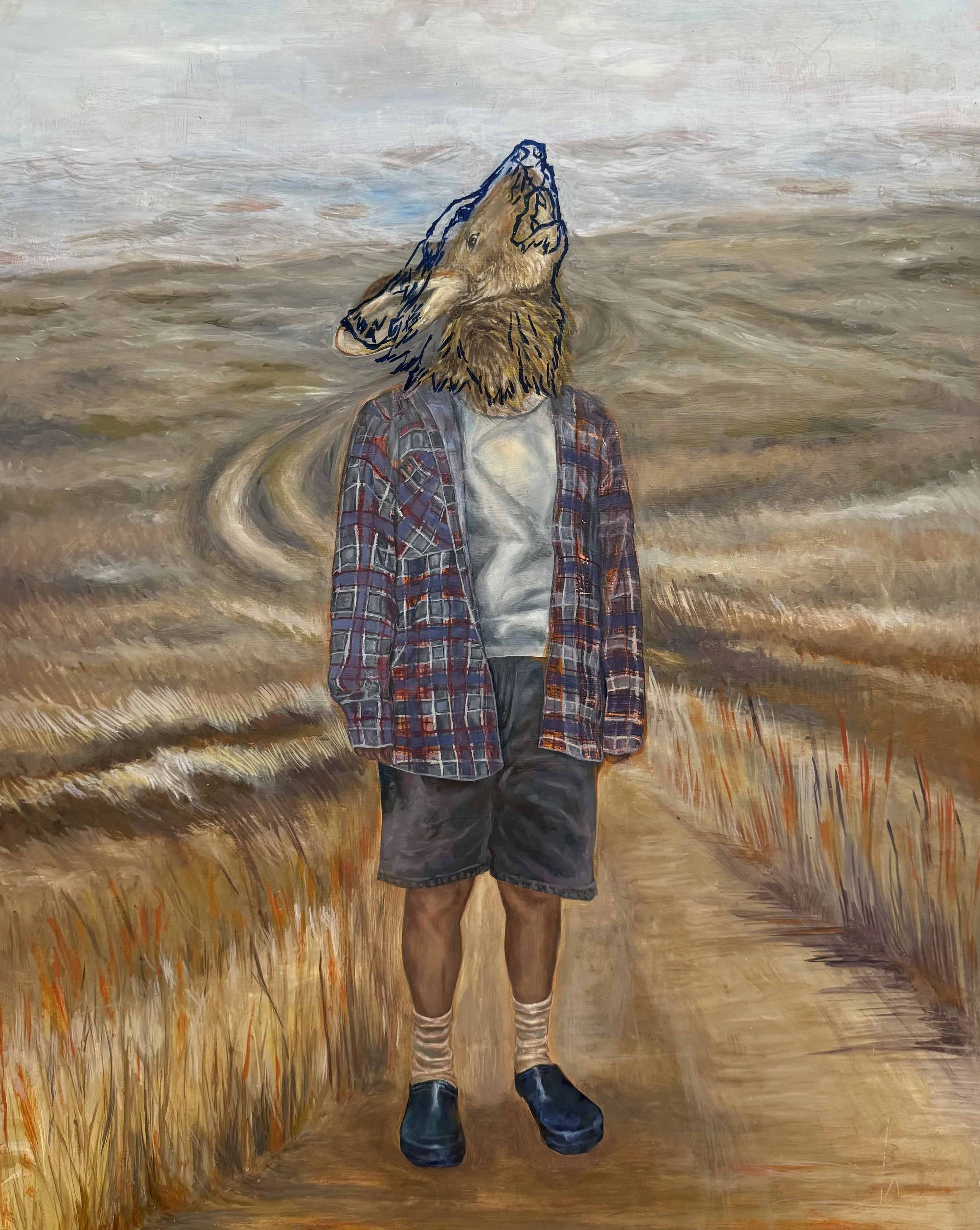
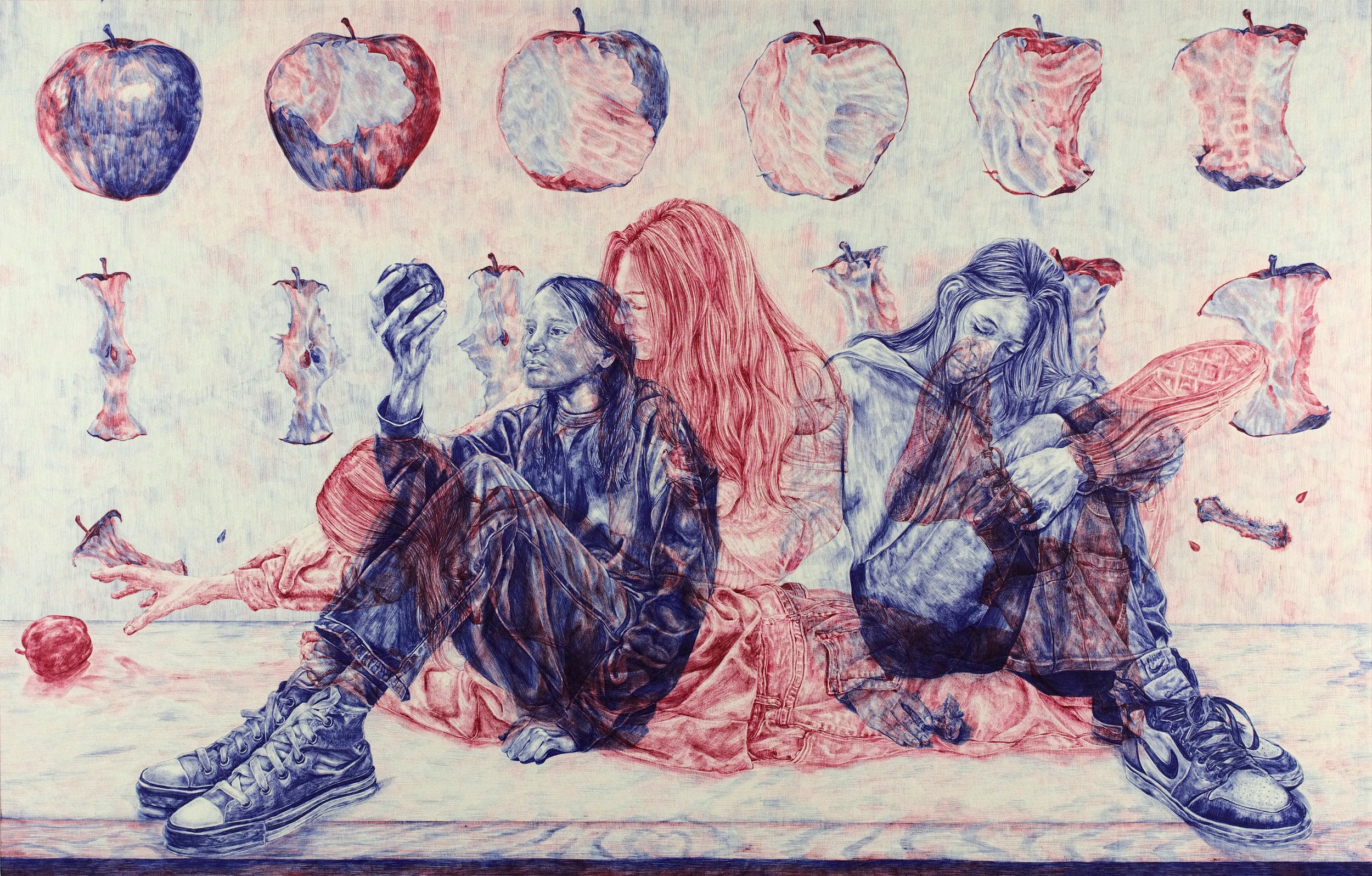
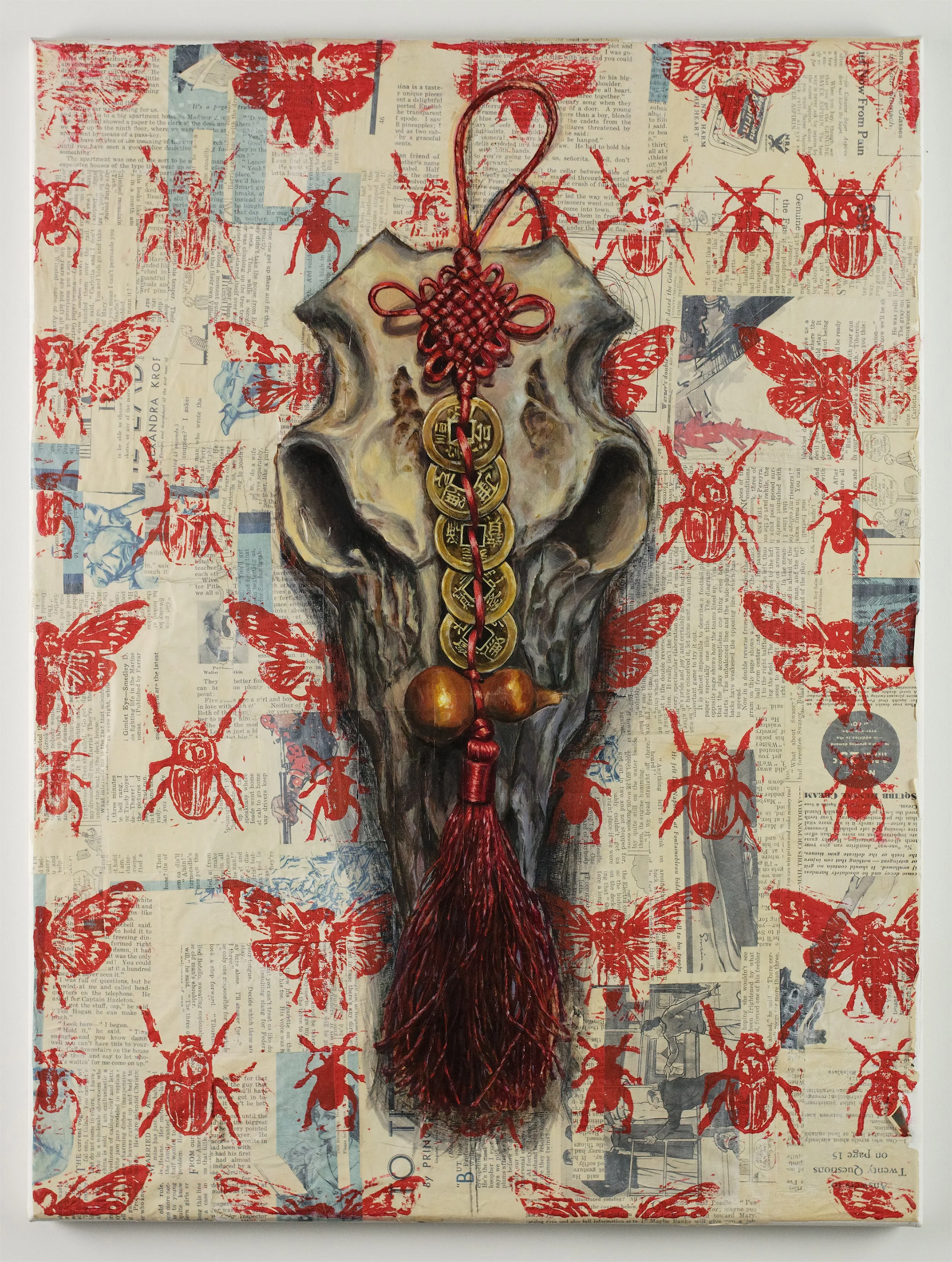
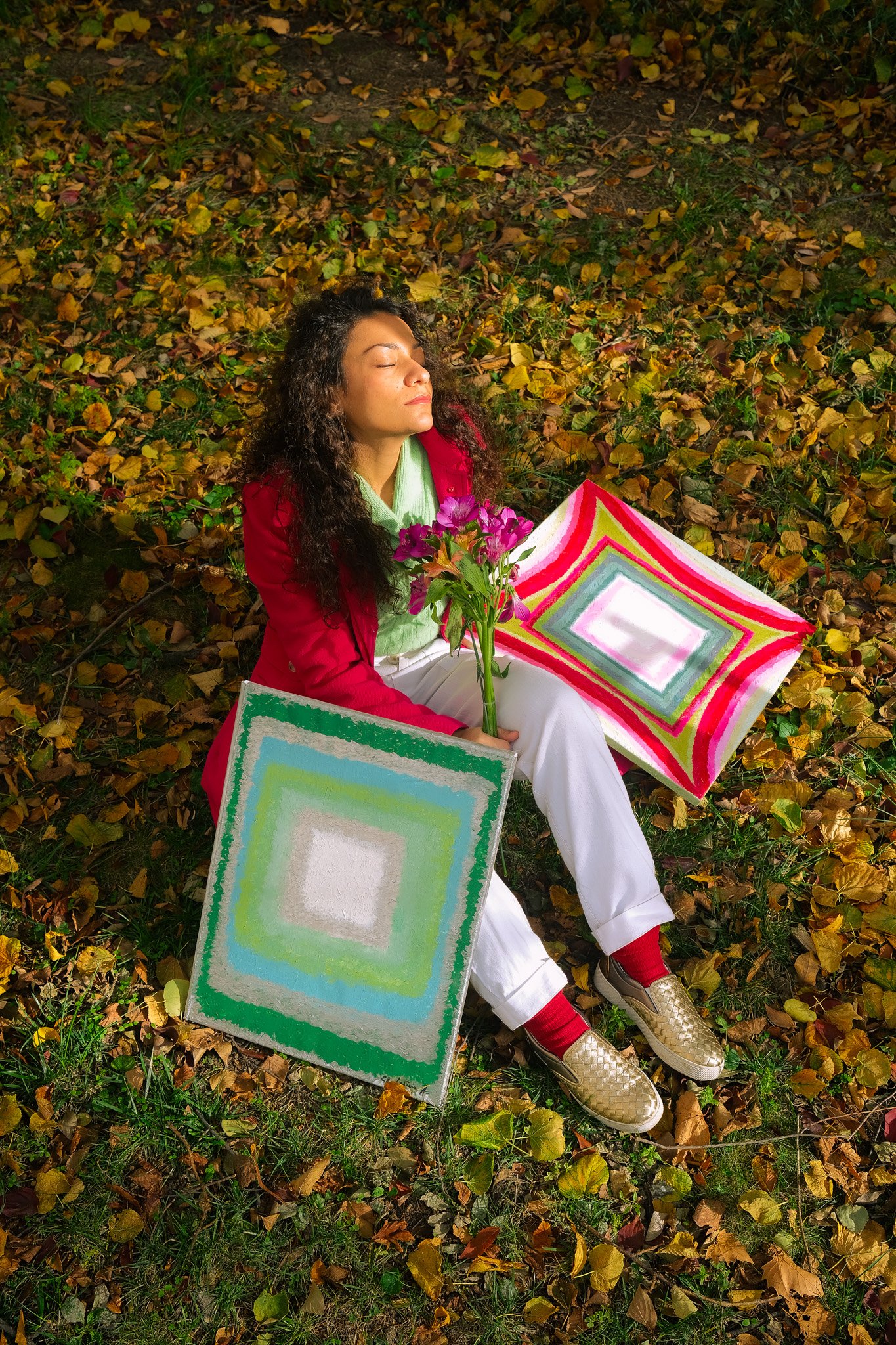
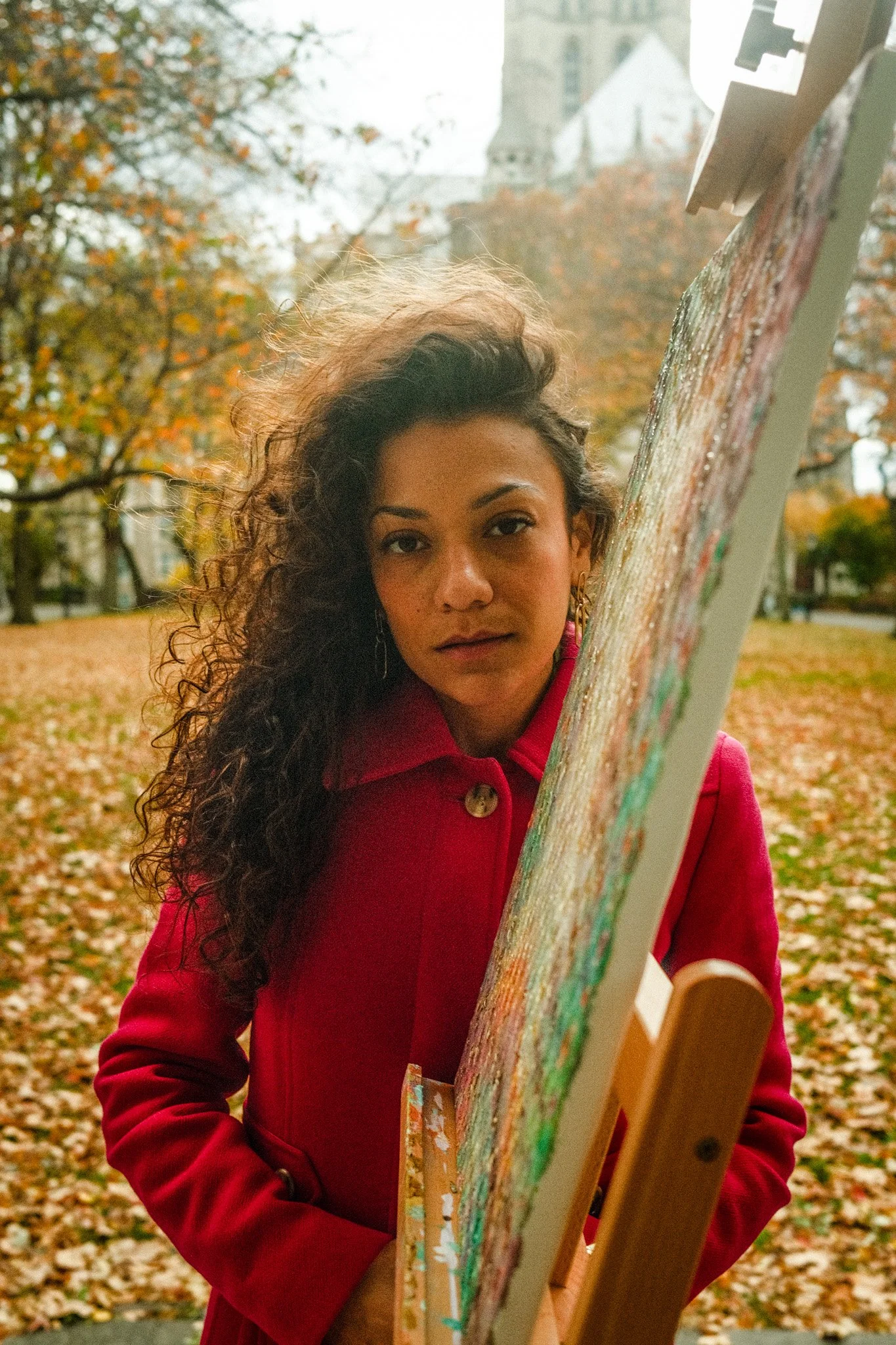
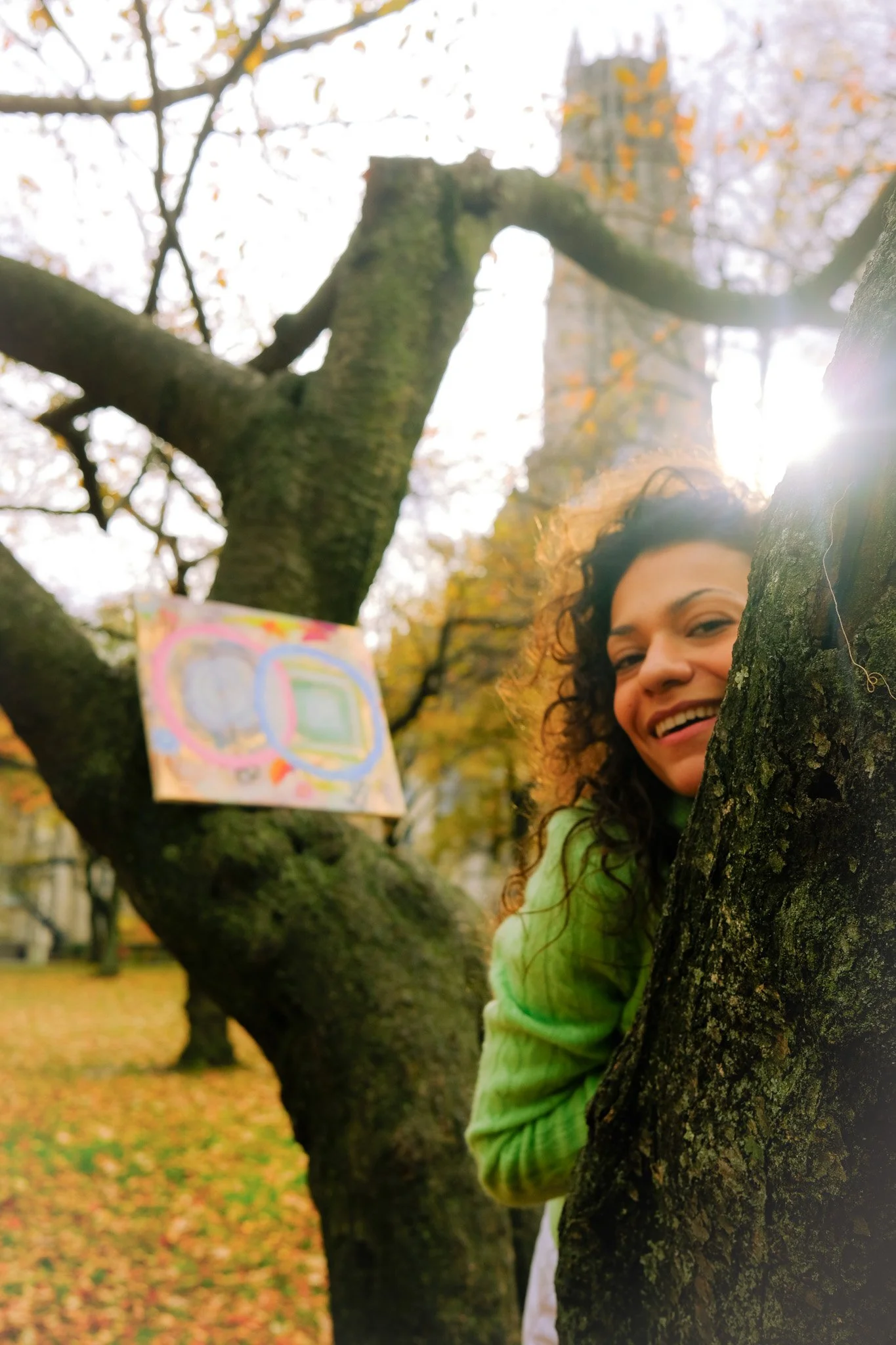
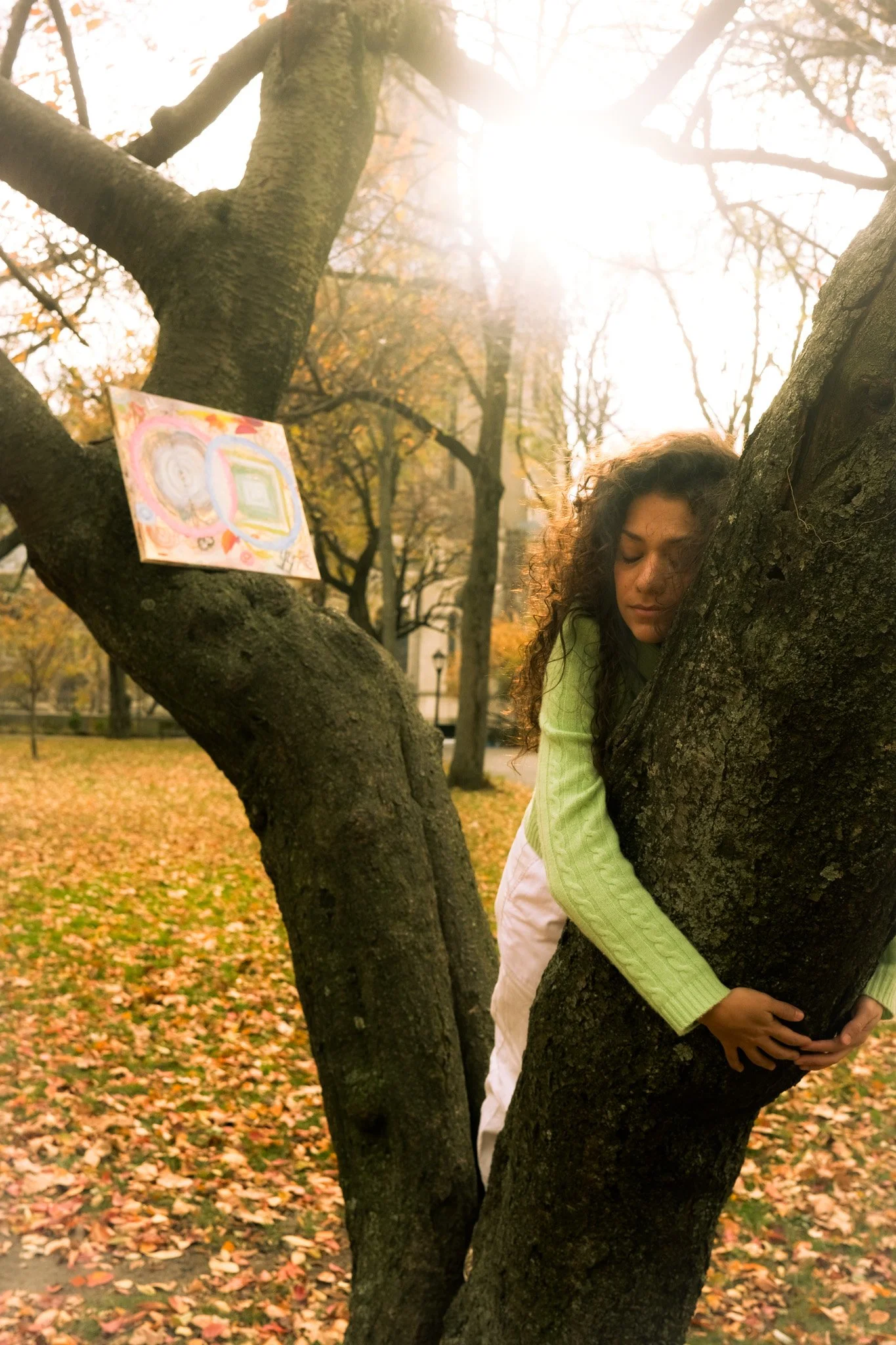
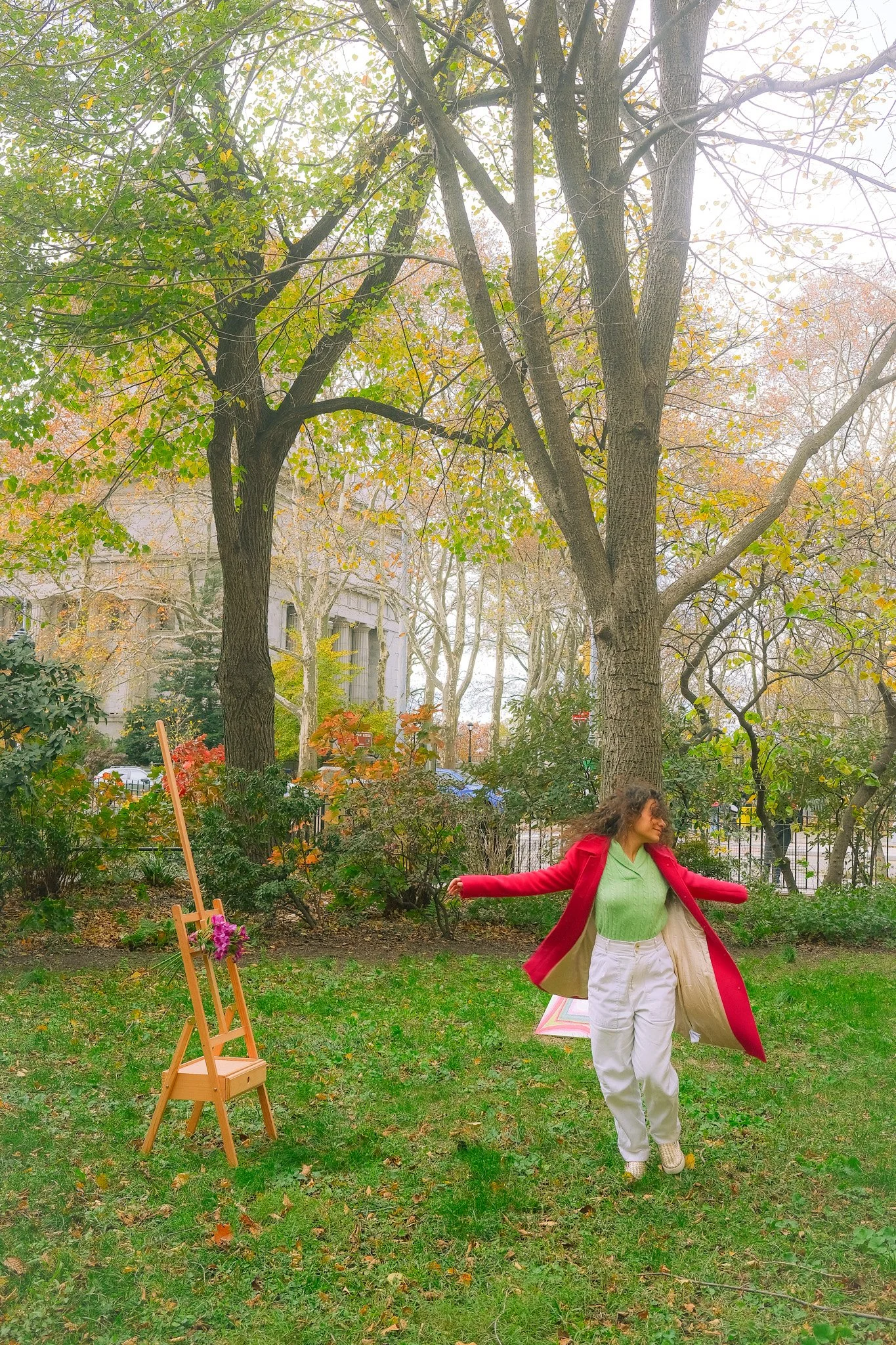
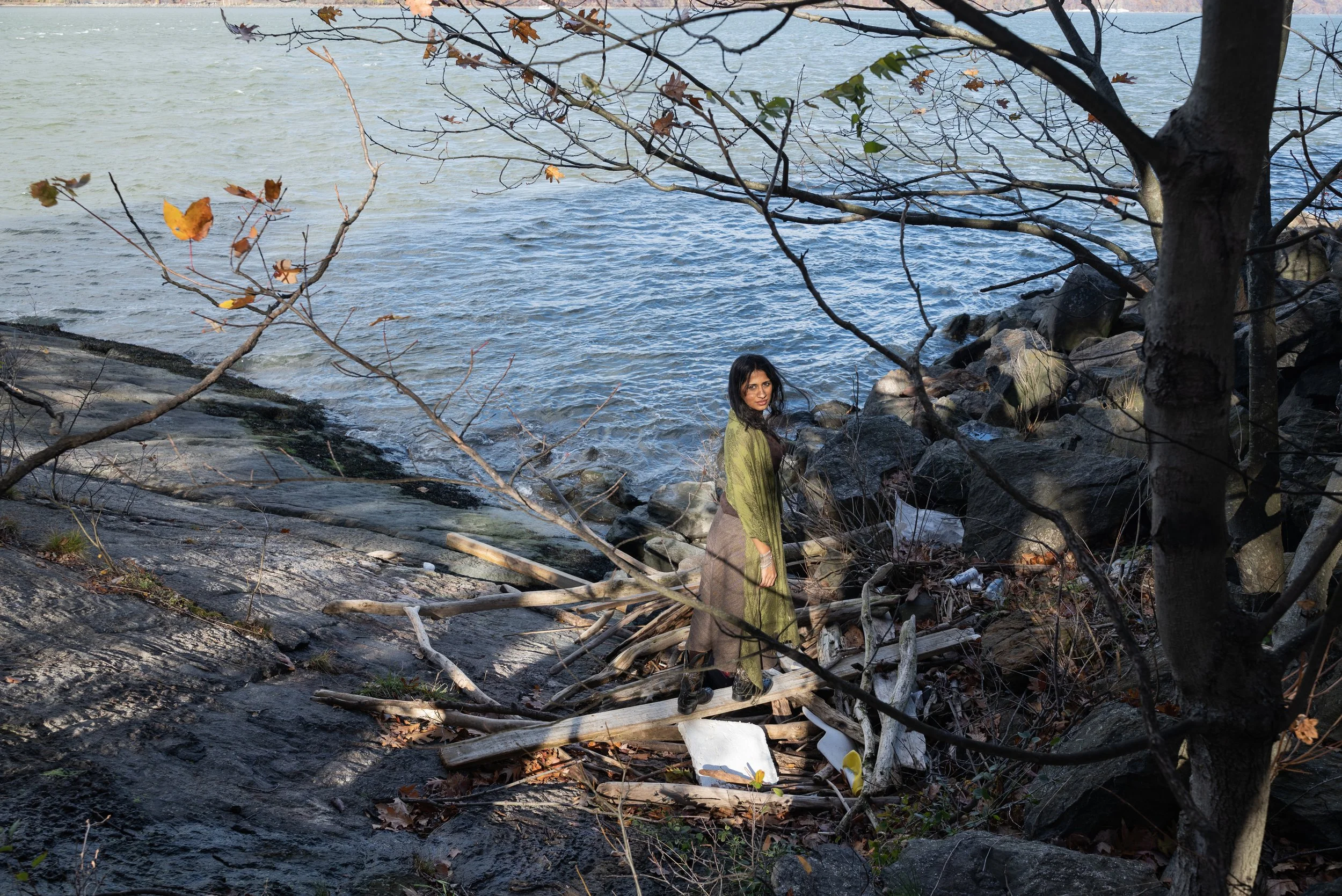
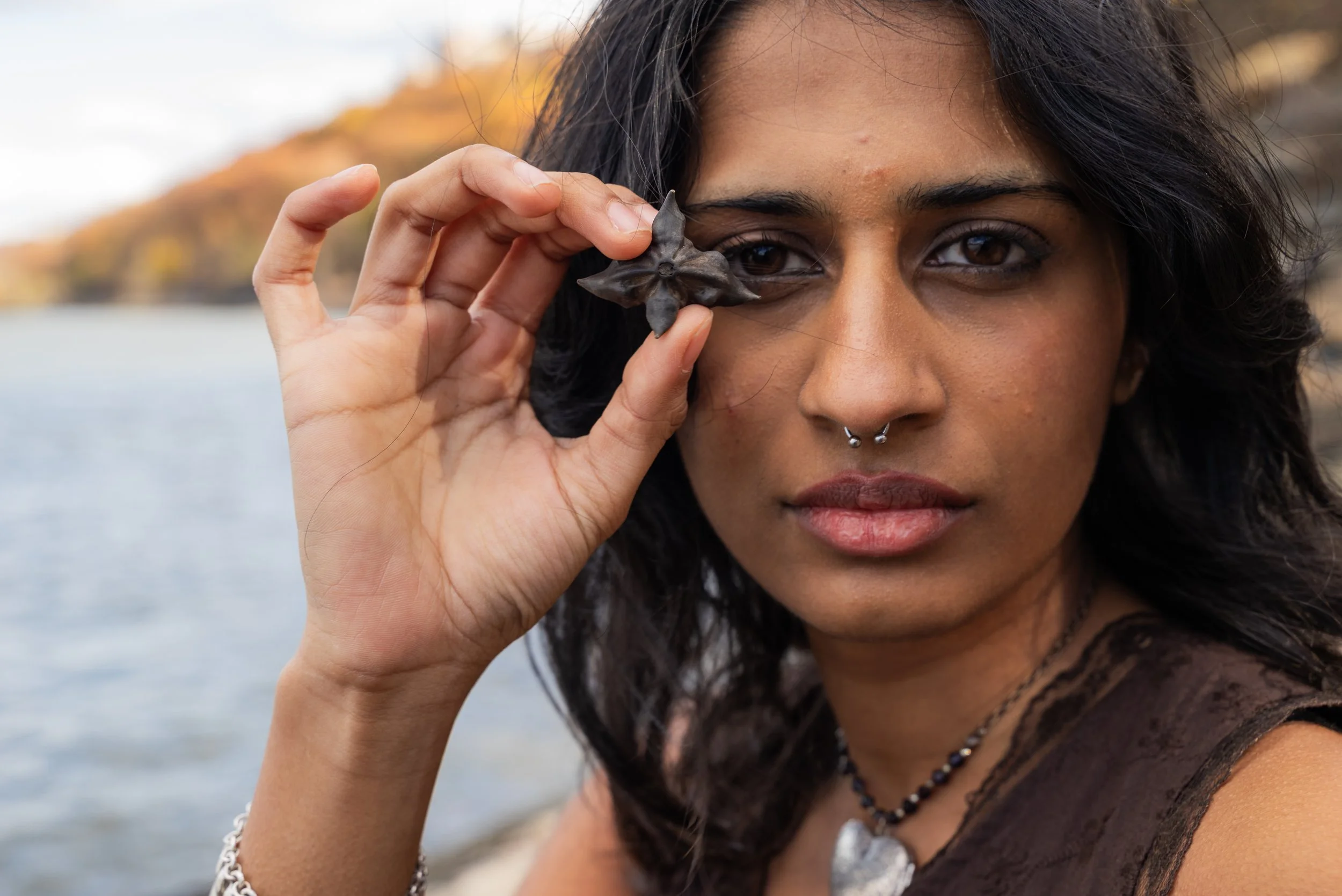
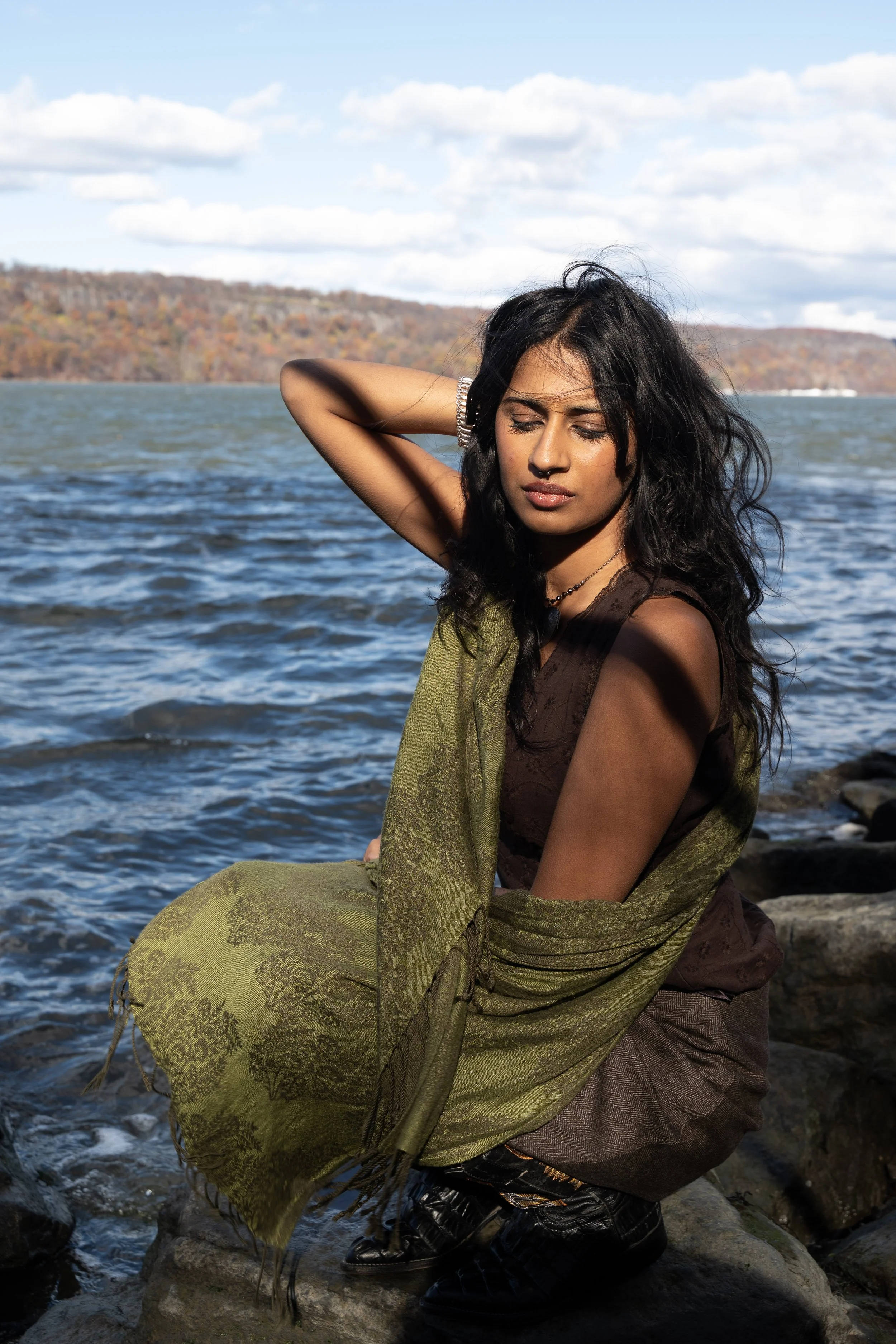
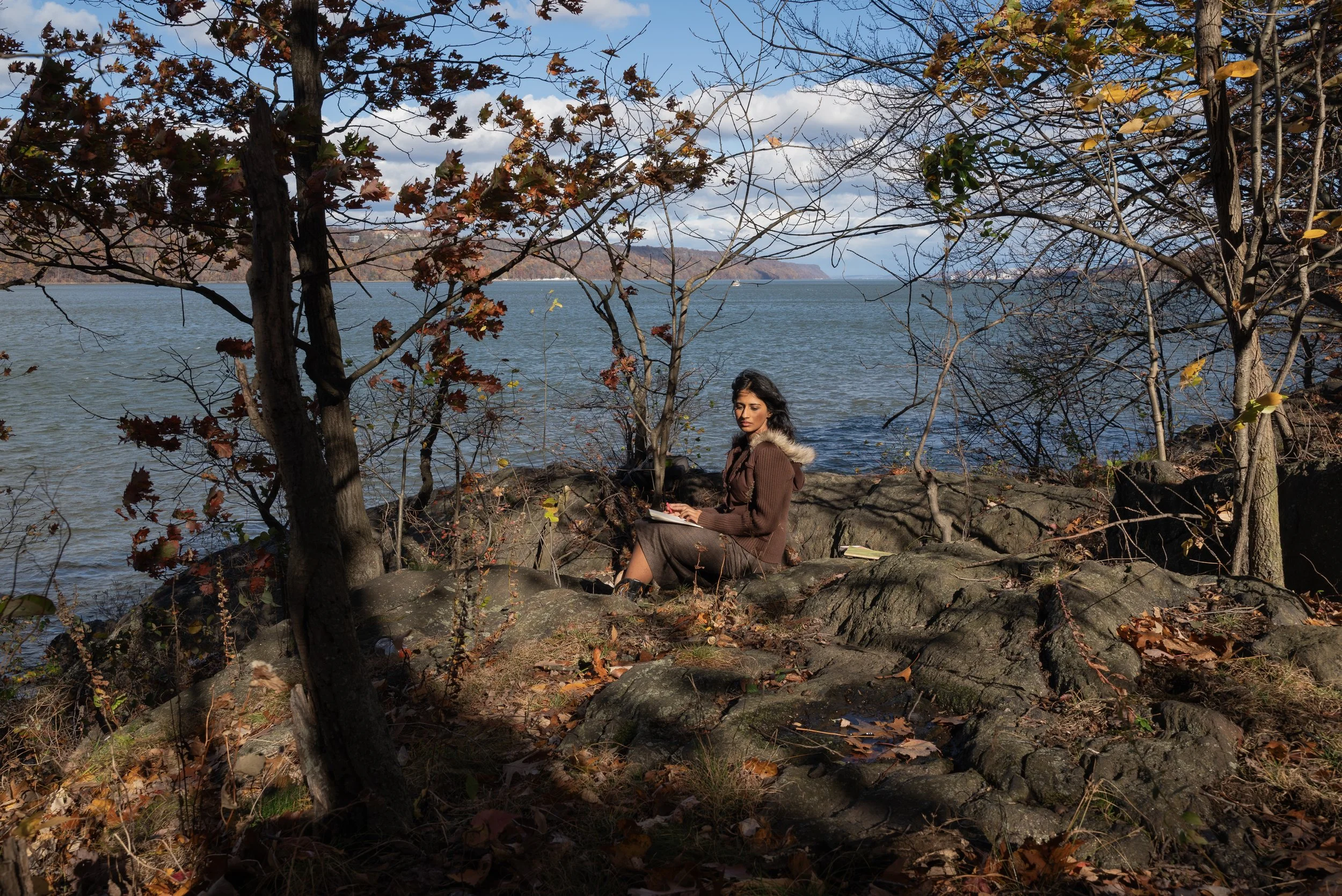
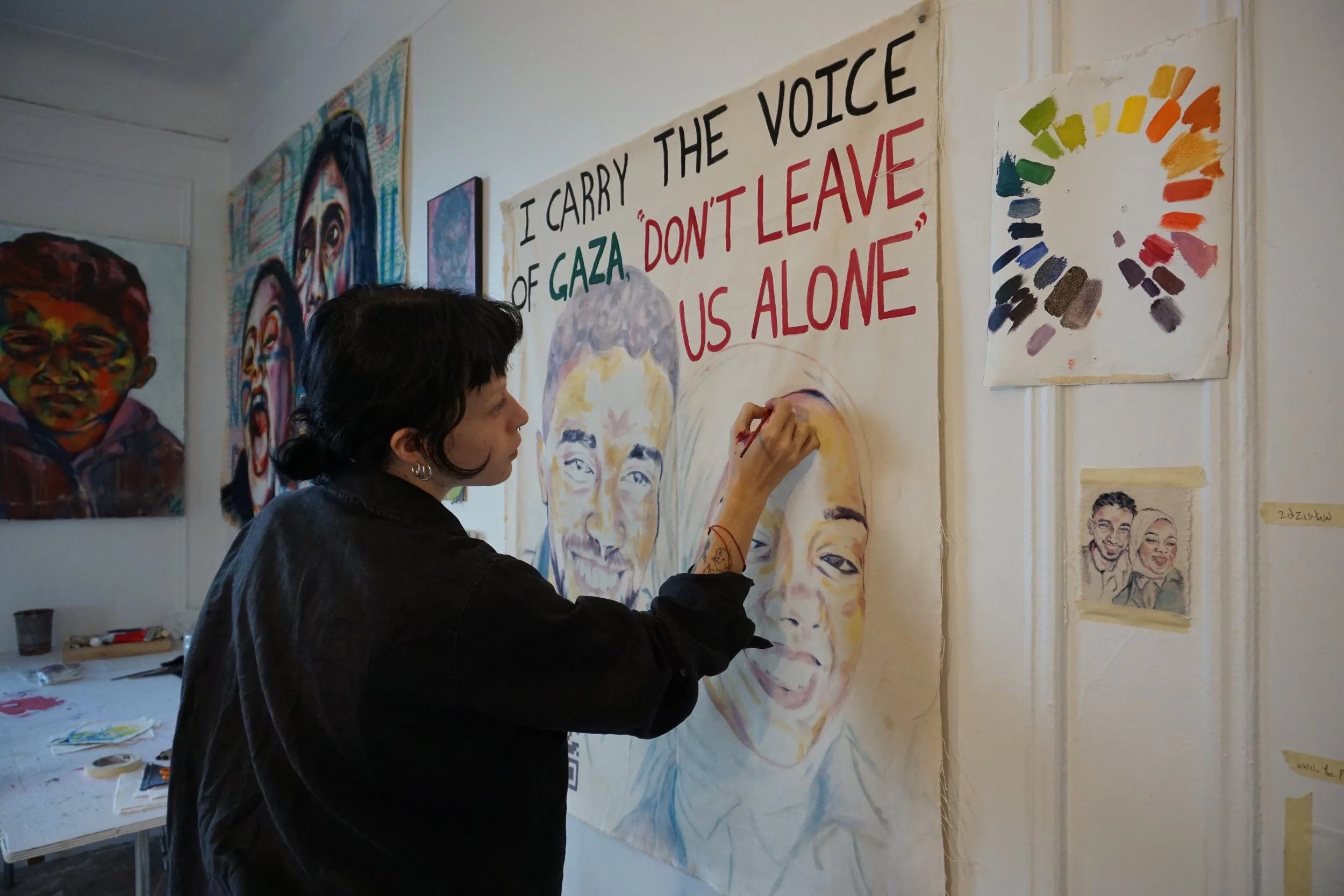
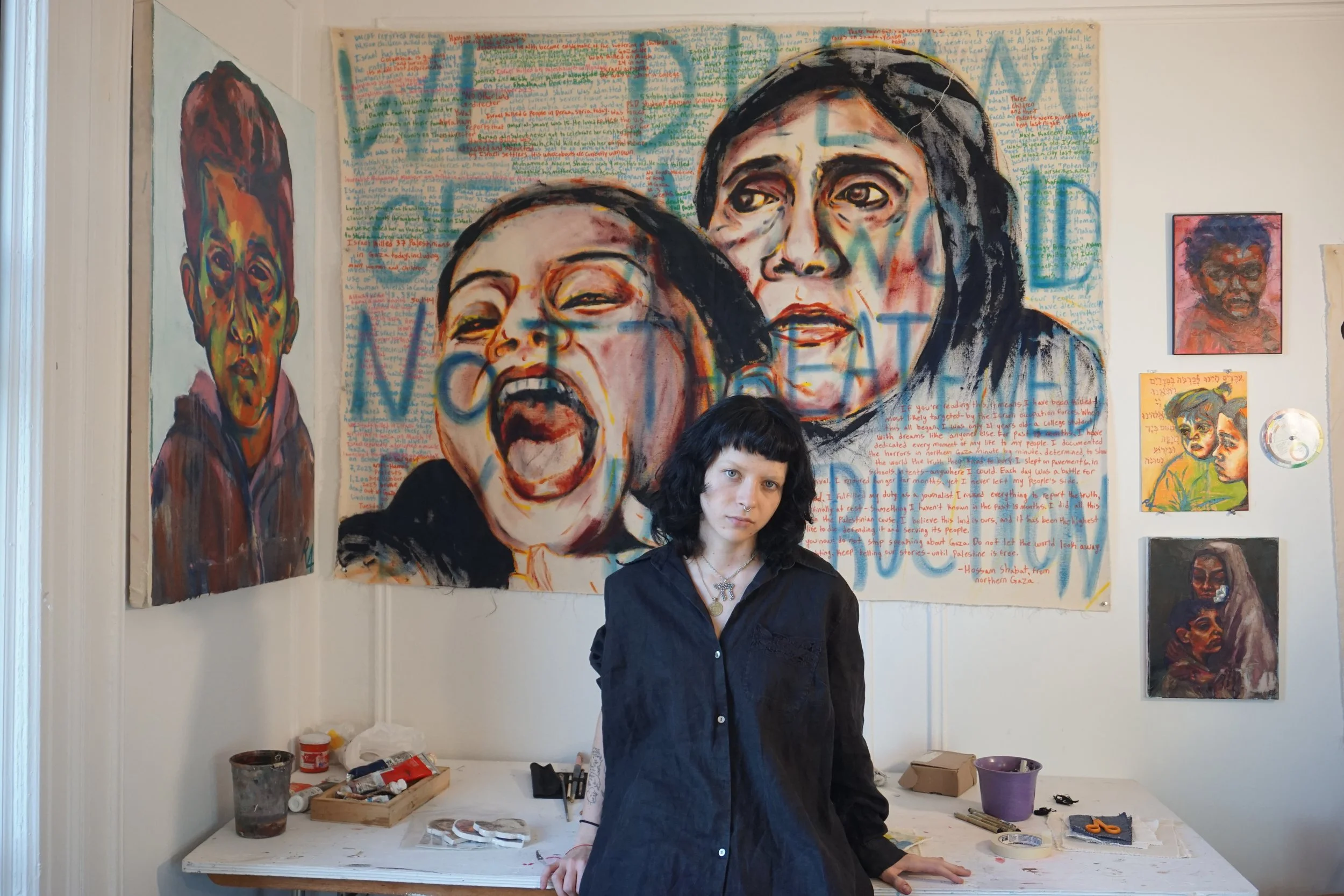
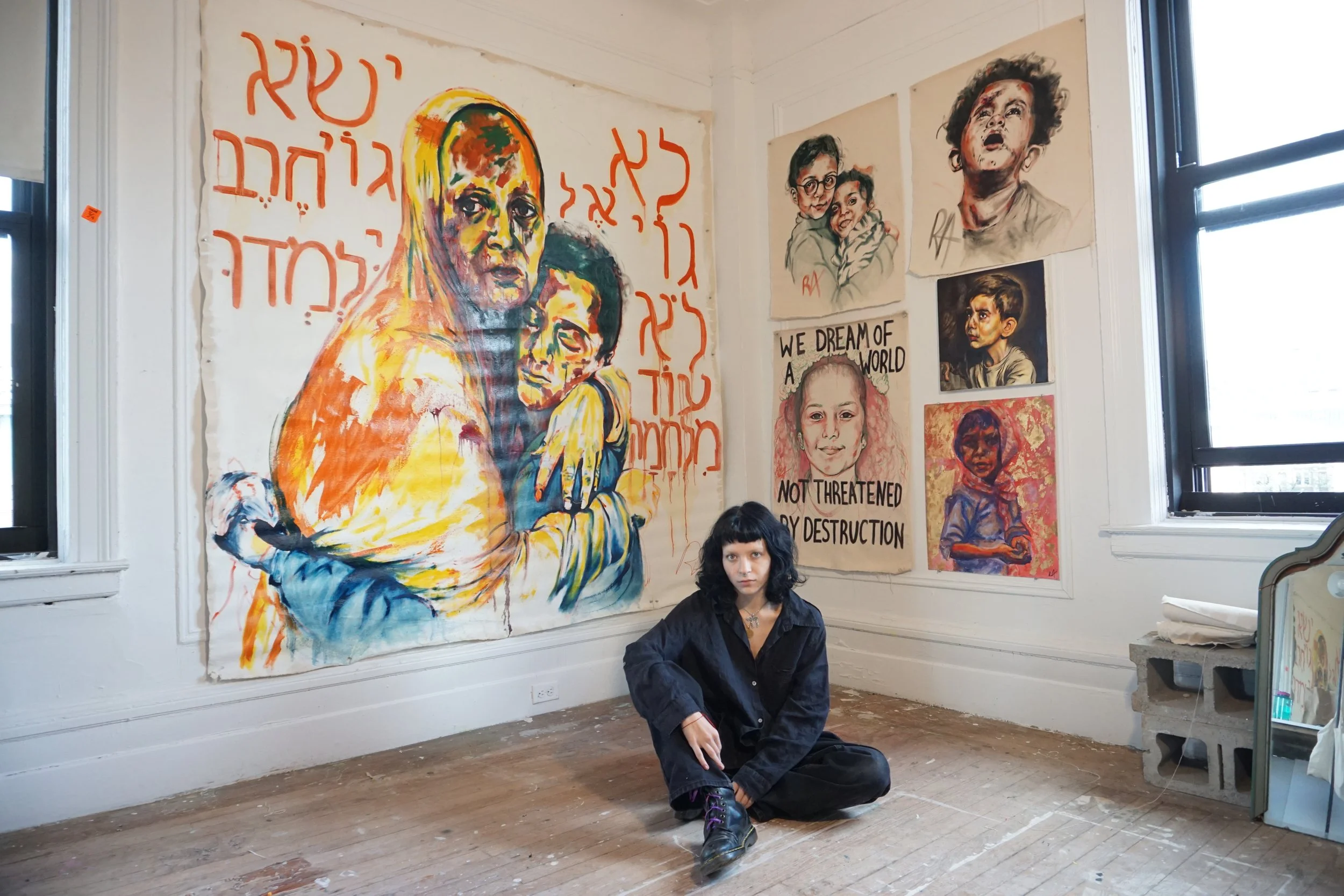
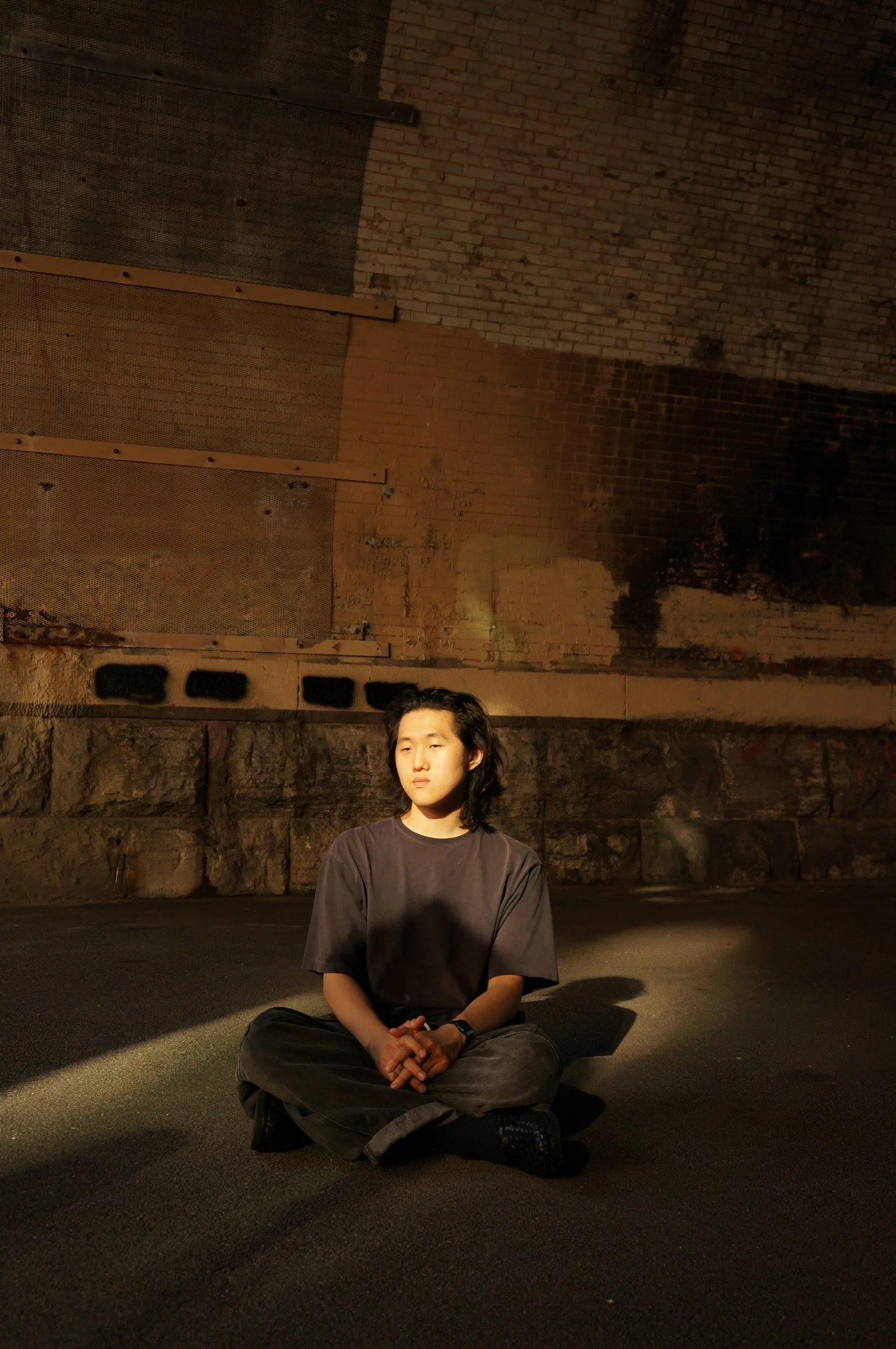
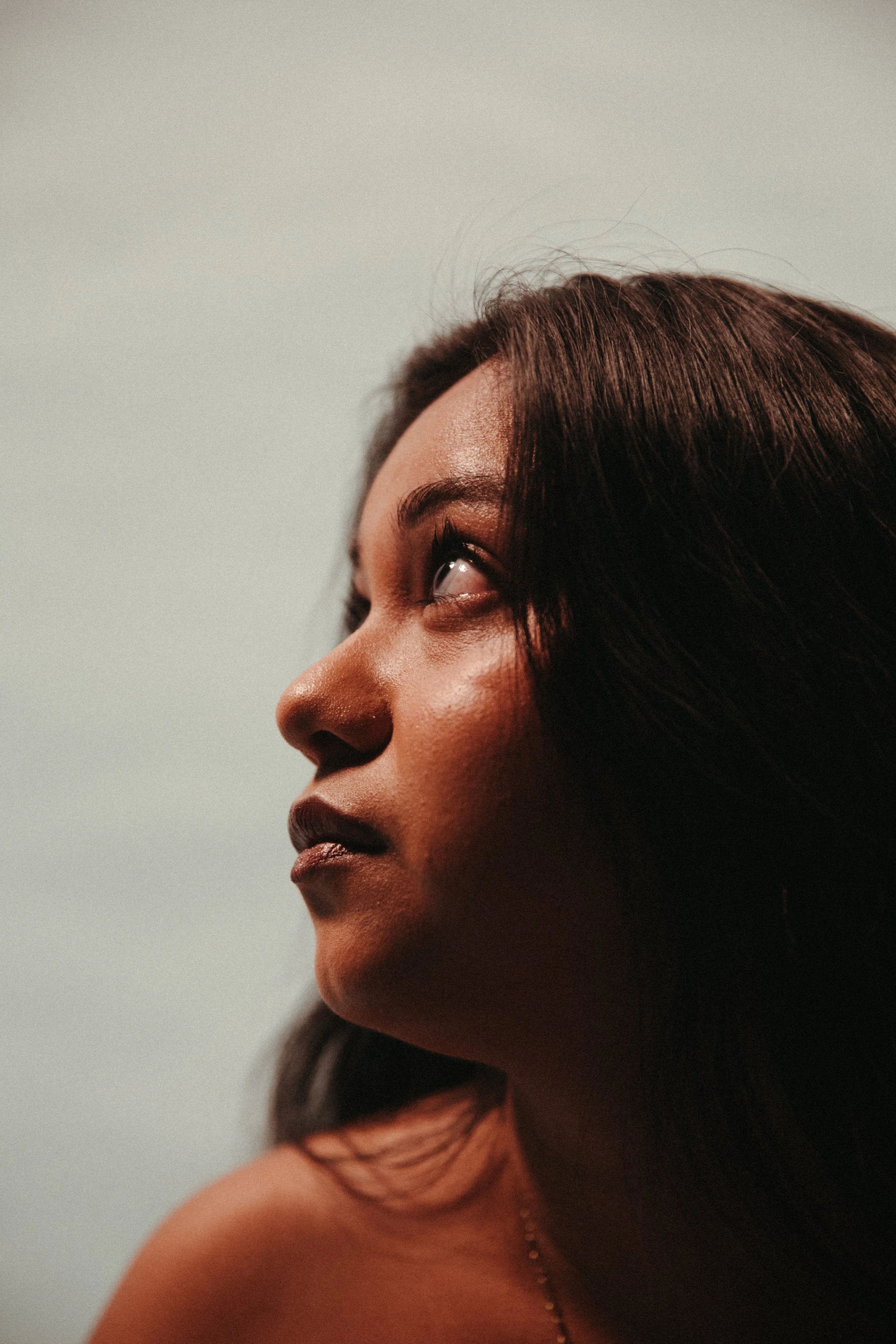
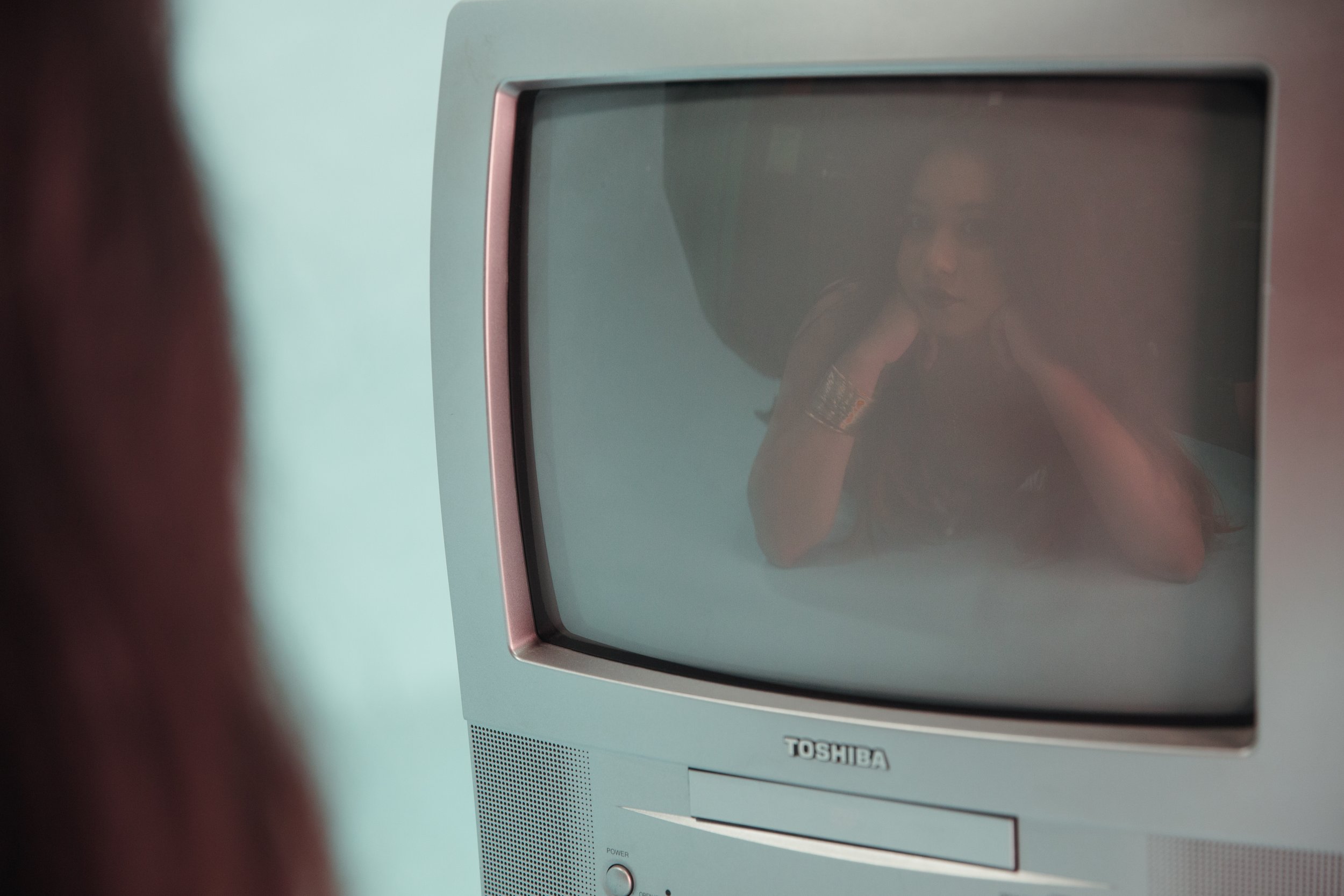
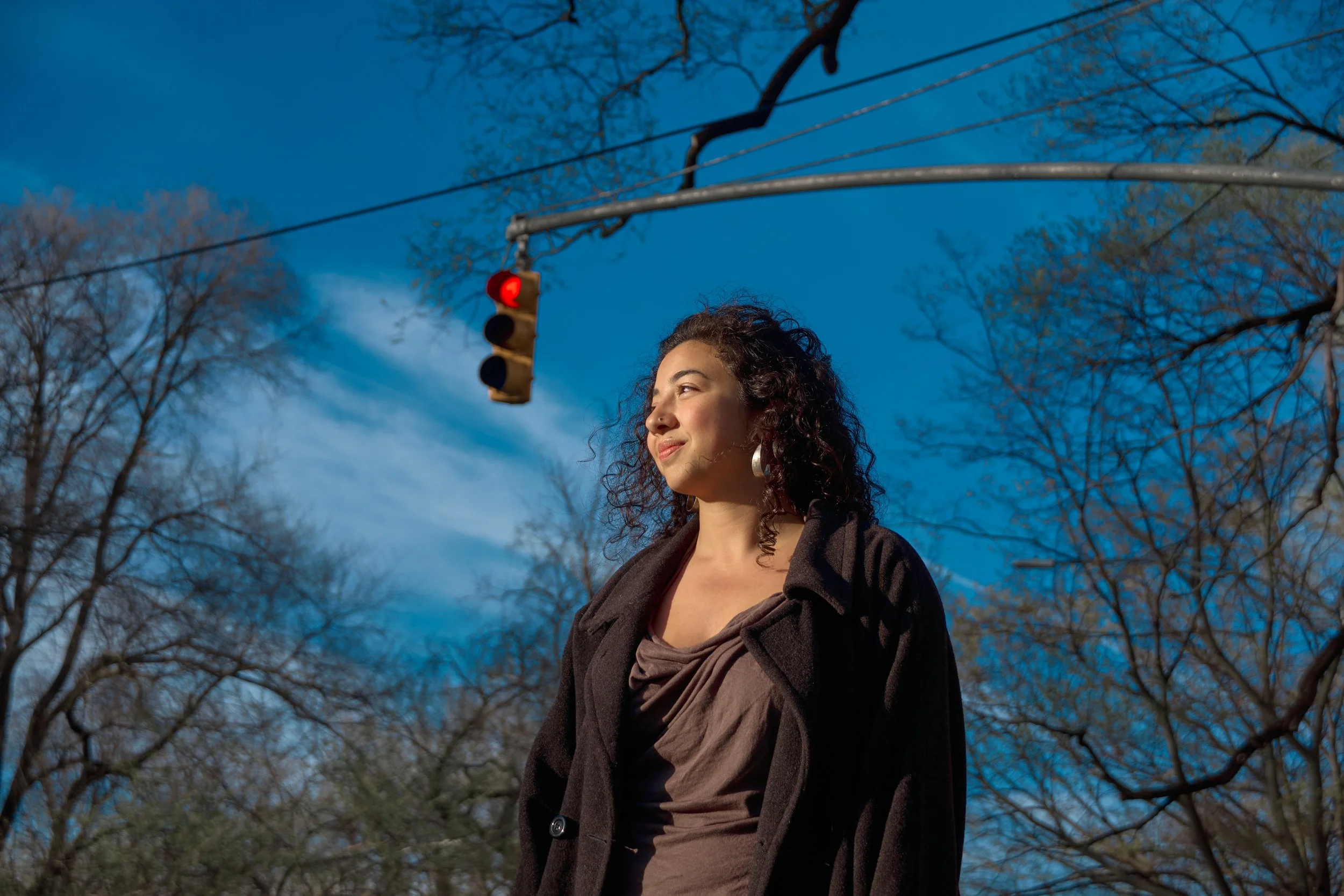
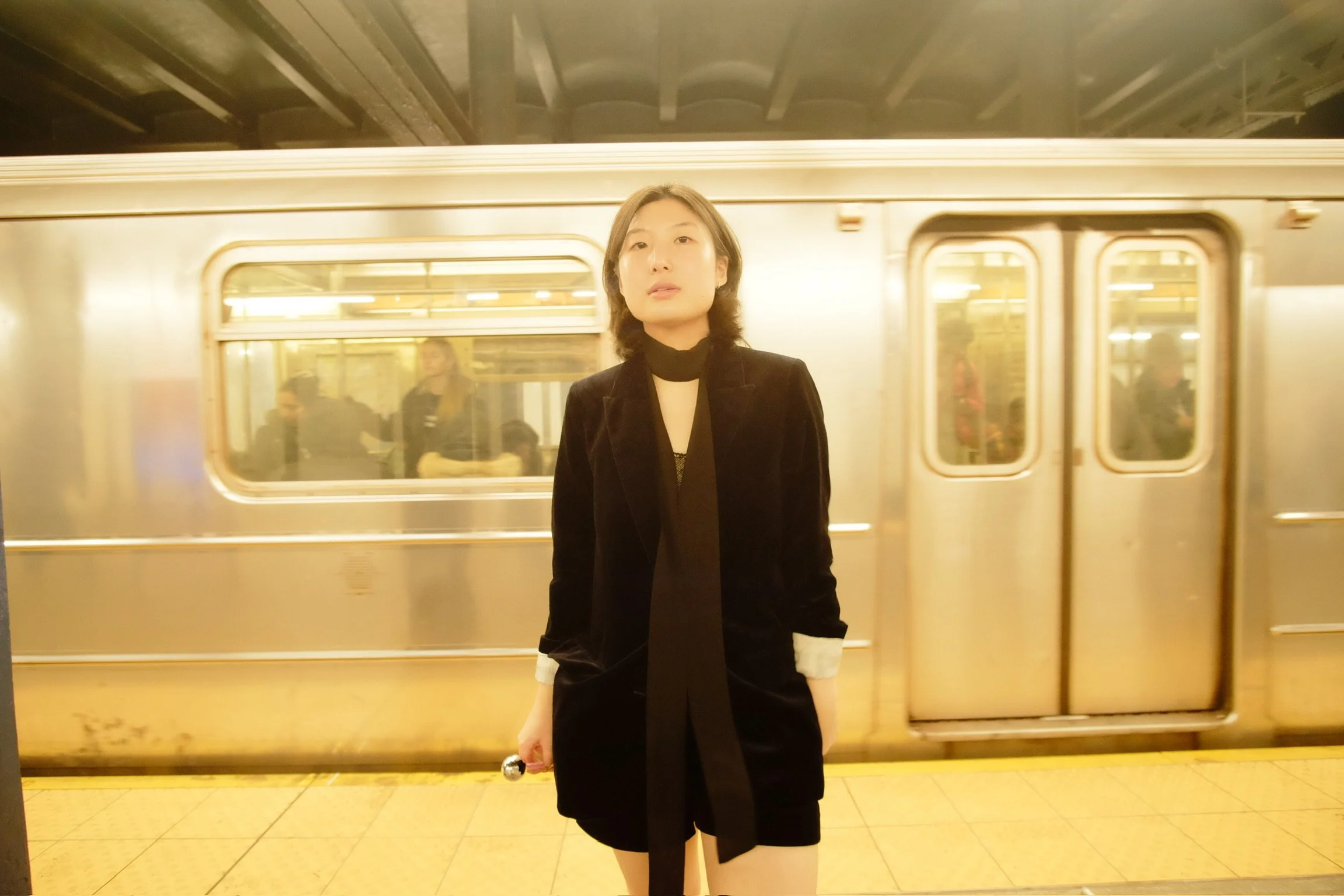
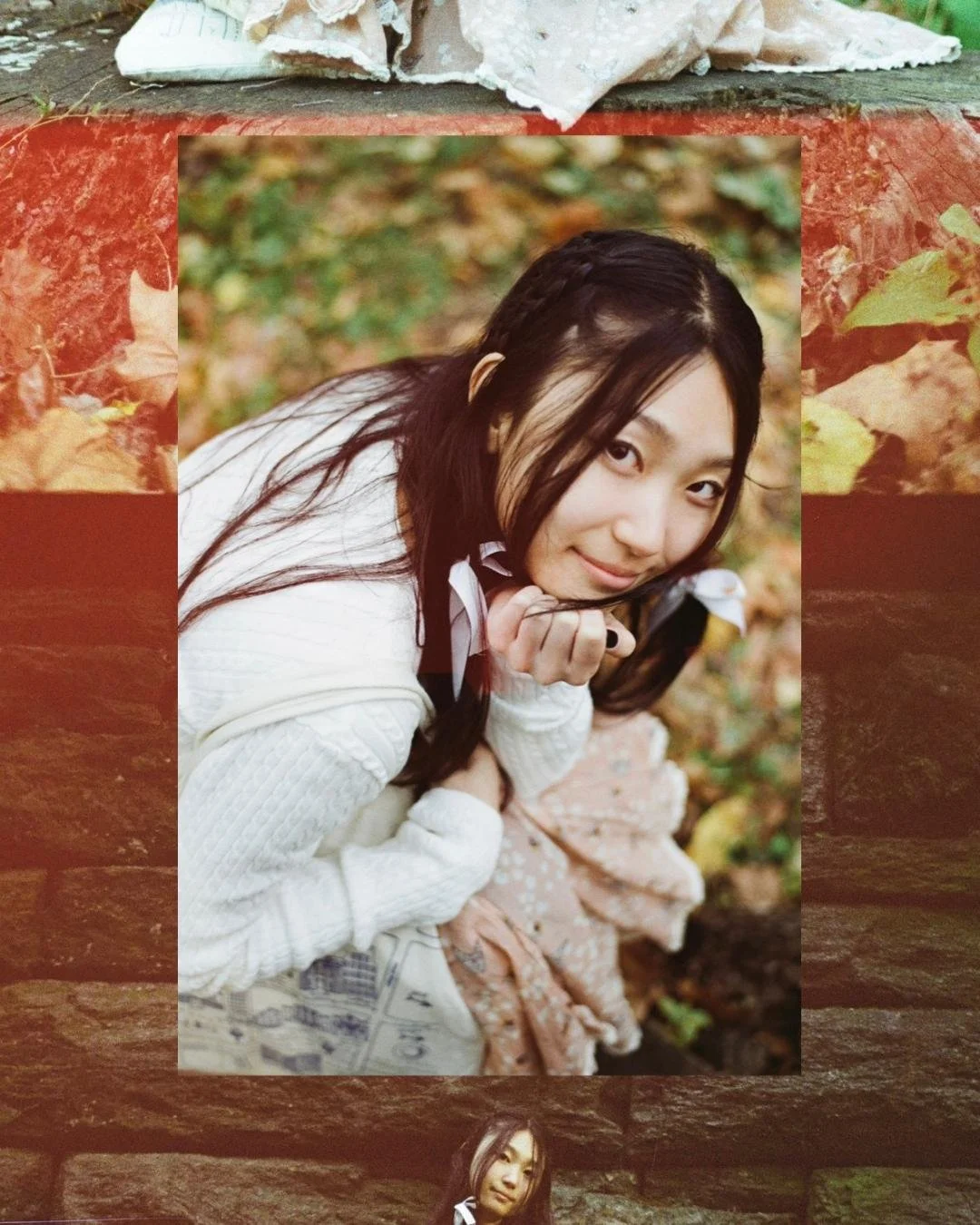
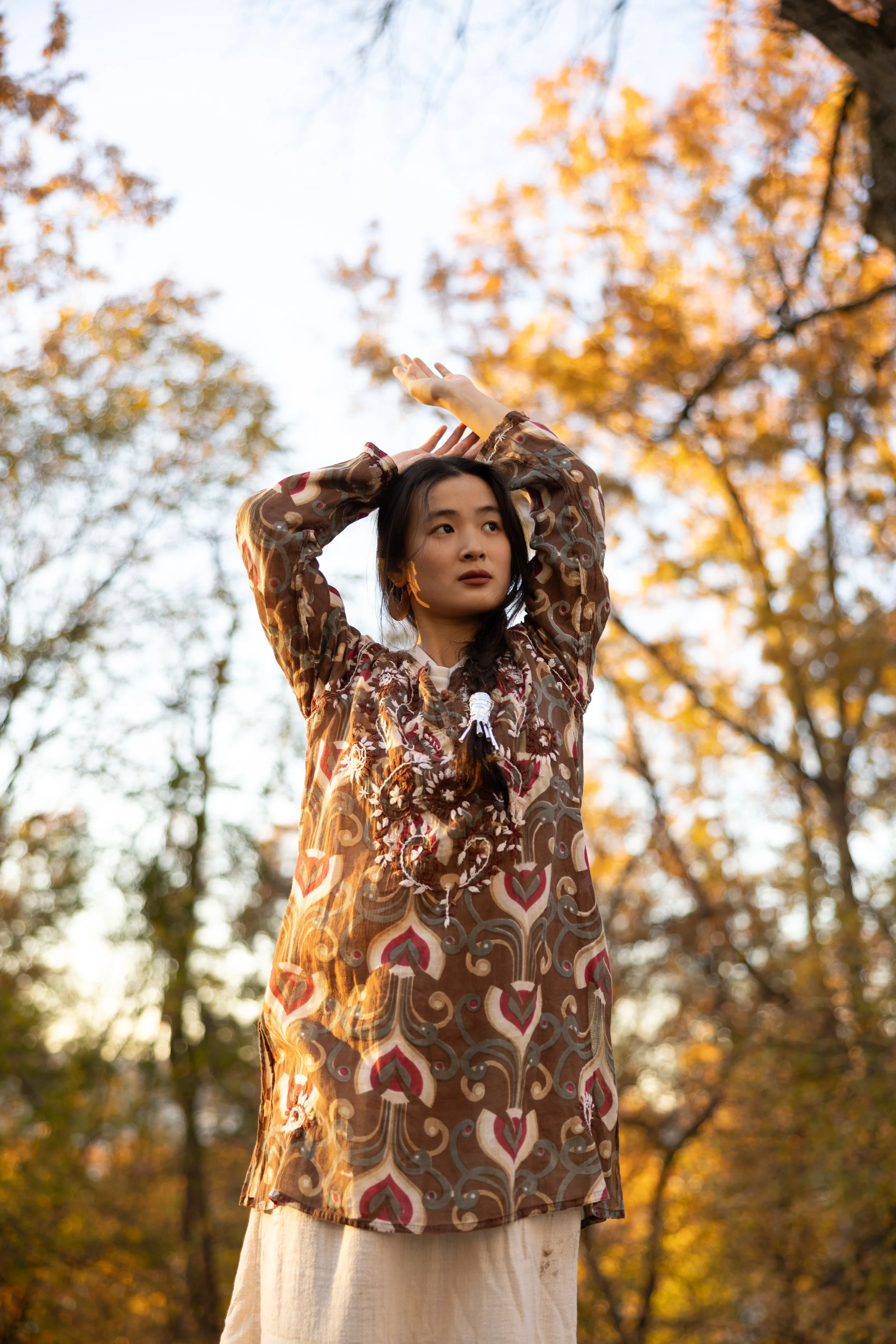
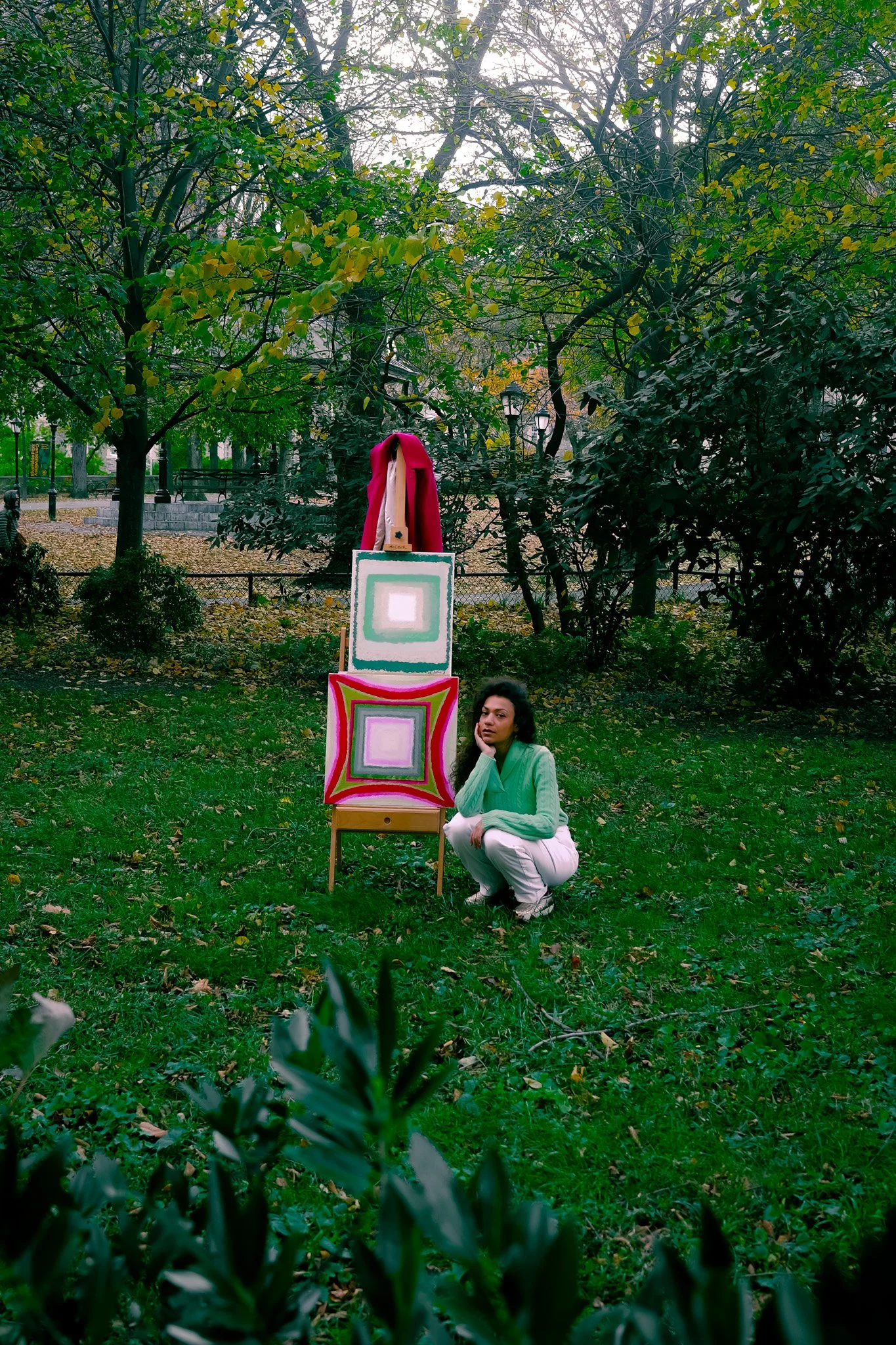
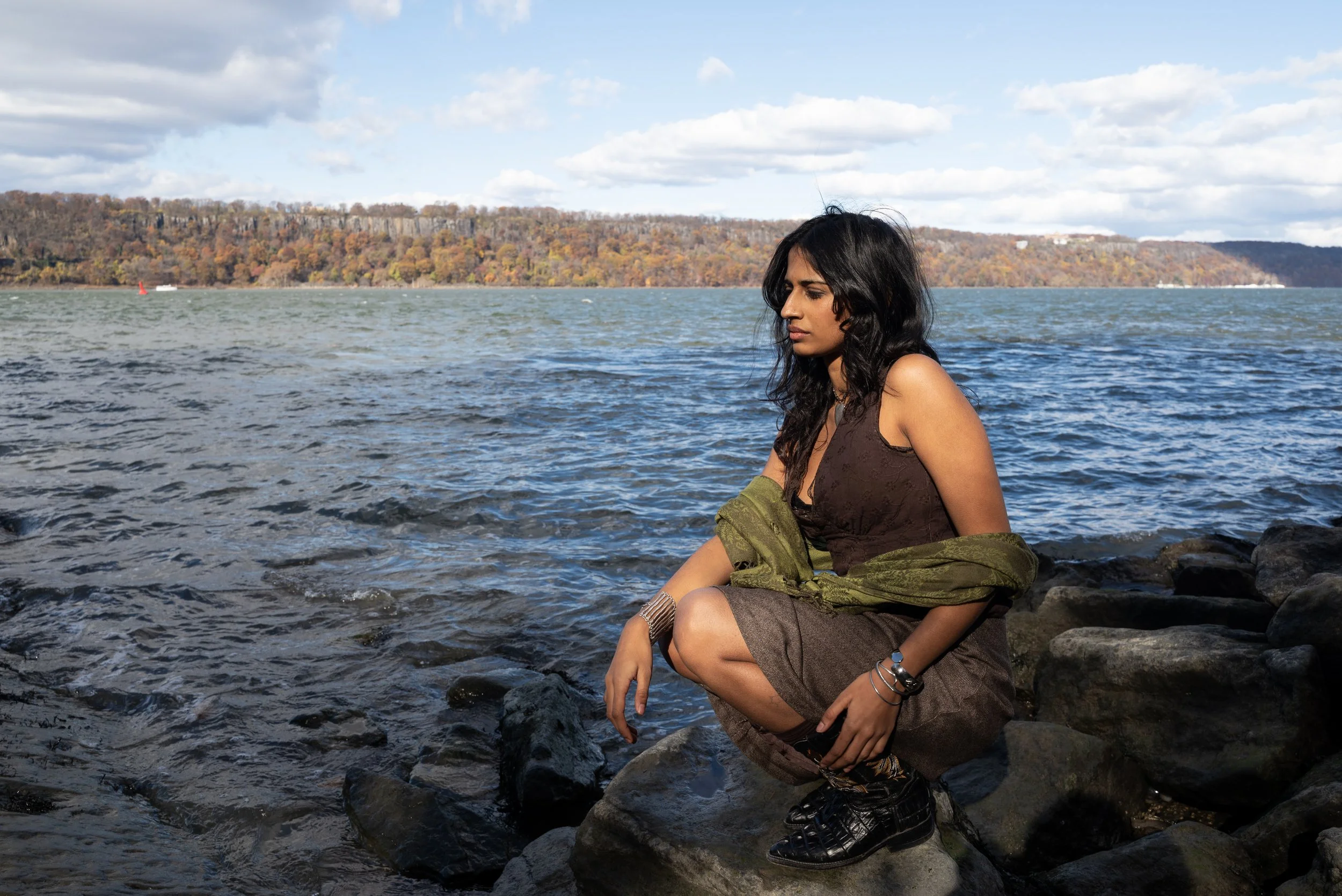
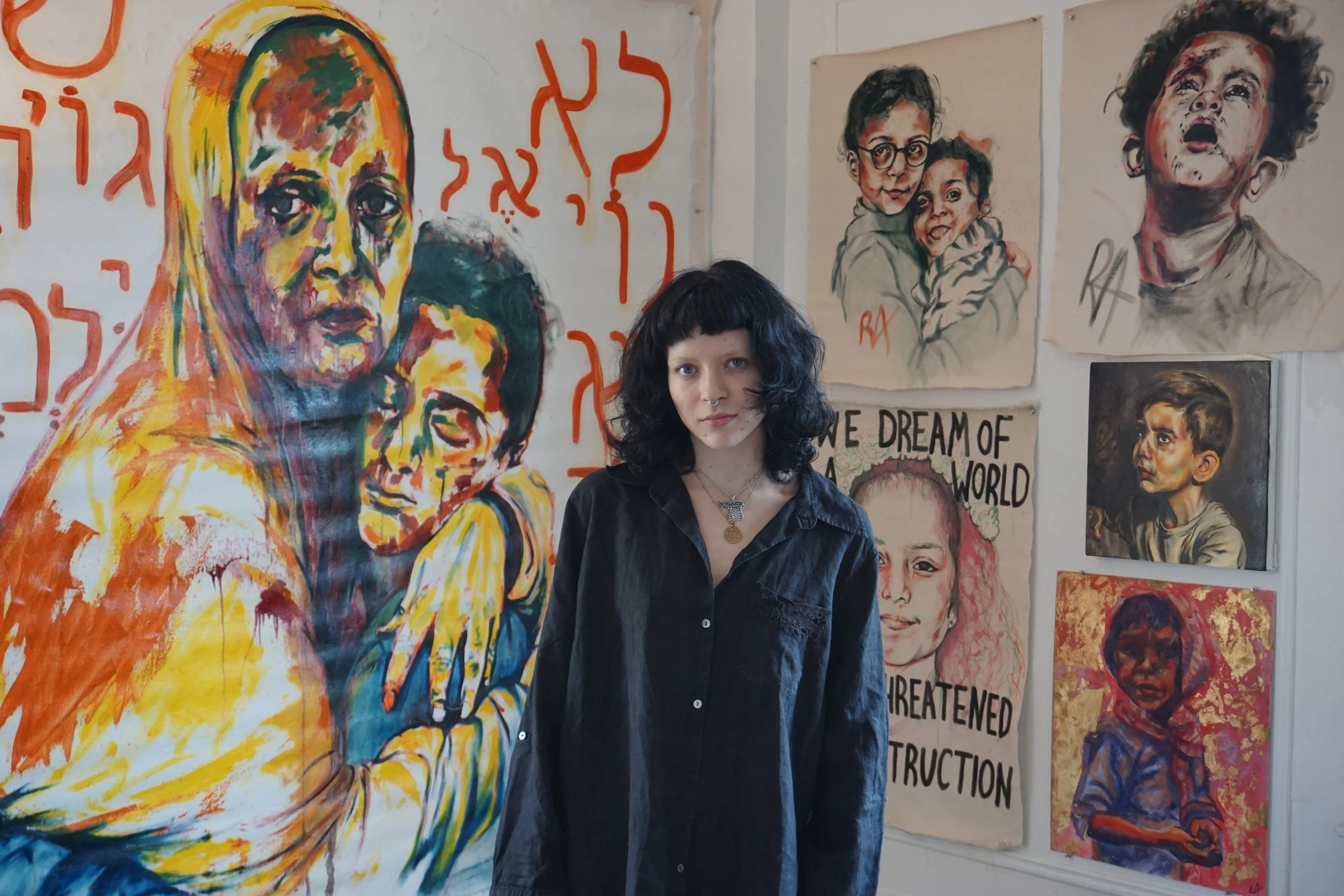
Ray Atlas (BC’26) is majoring in Visual Art and Archaeological Anthropology at Barnard College. She works primarily in oil portraiture. Her visual thesis, We Dream of a World Not Threatened by Destruction, focuses on attentive portrayal of Palestinian families, with all raised funds donated to families in need. Guided by a Jewish upbringing grounded in remembrance and liberation of the oppressed, her art grapples with themes of placehood, memory, and mutual aid. After graduating from Barnard, she hopes to pursue a PhD in Anthropology.

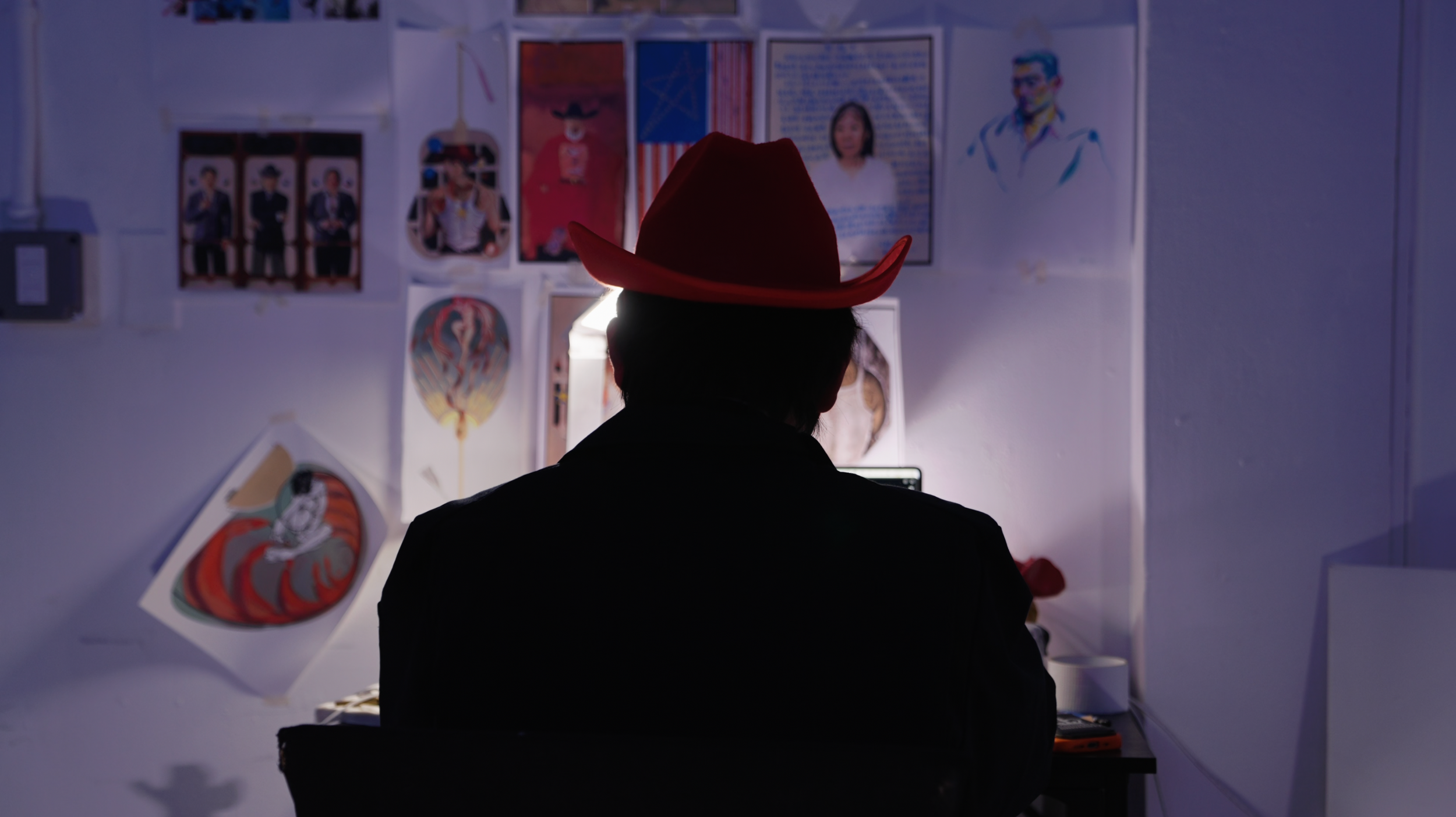
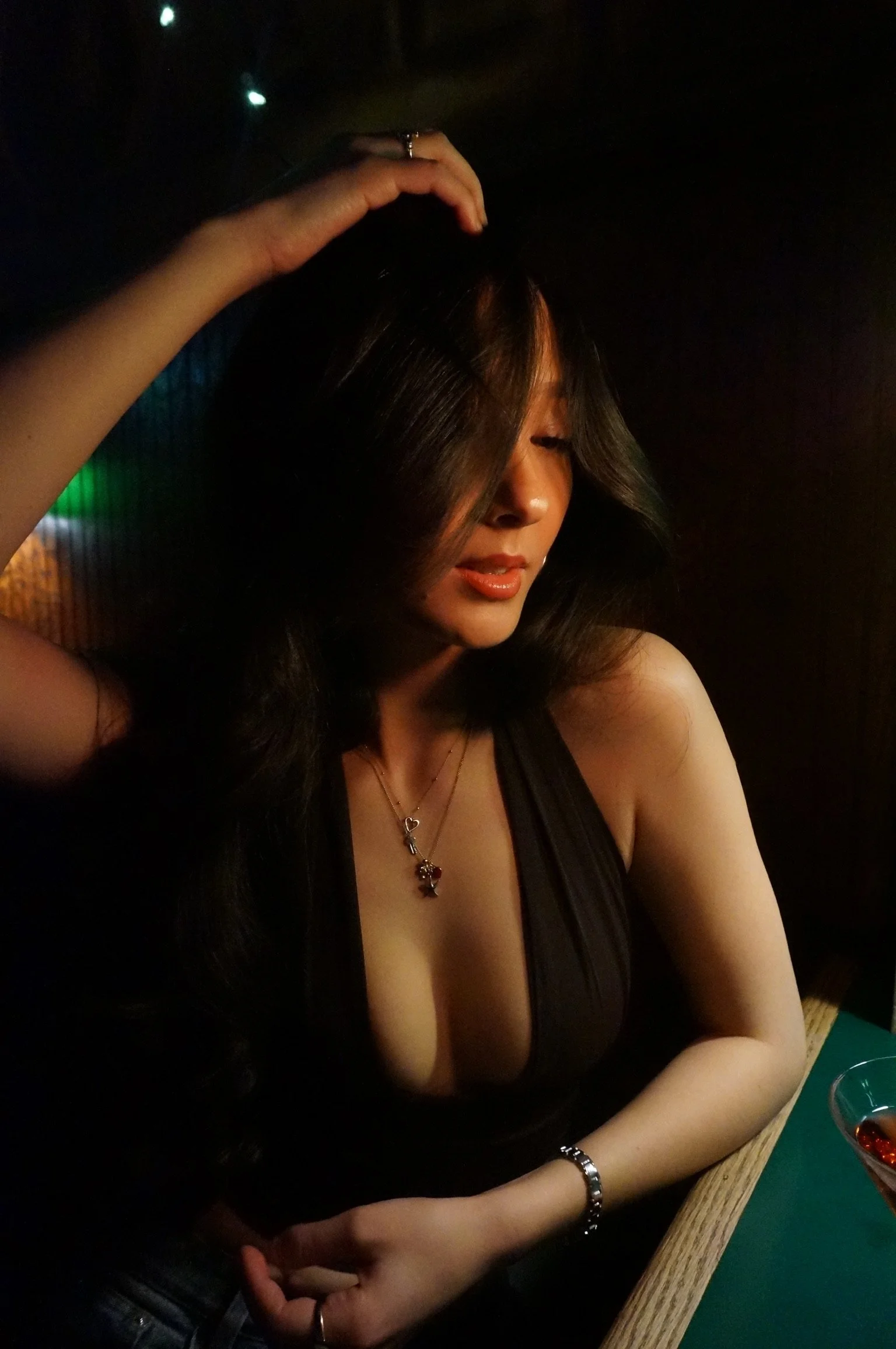
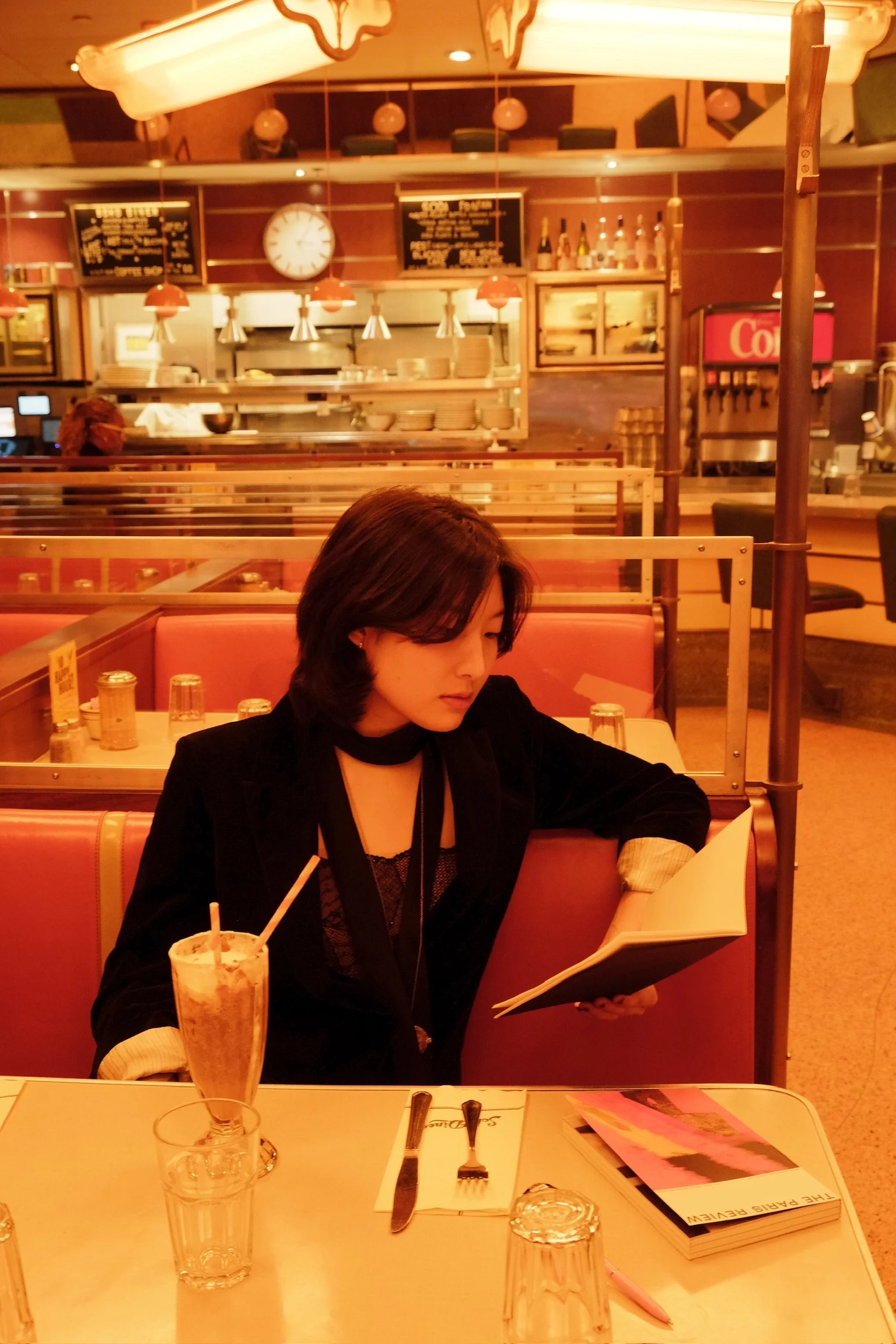
When I meet Ray Atlas in her senior studio, she is wearing all black. She confesses she had slept through her alarm, apologizing for the late start and its trace of chaos. I feel a quiet joy as the formality between us dissolves. When I ask how often she comes to the studio, Ray says she tries not to let every day be an exaggeration. She motions to a bag of pretzels and hummus, and tells me she plans to stay here all day.

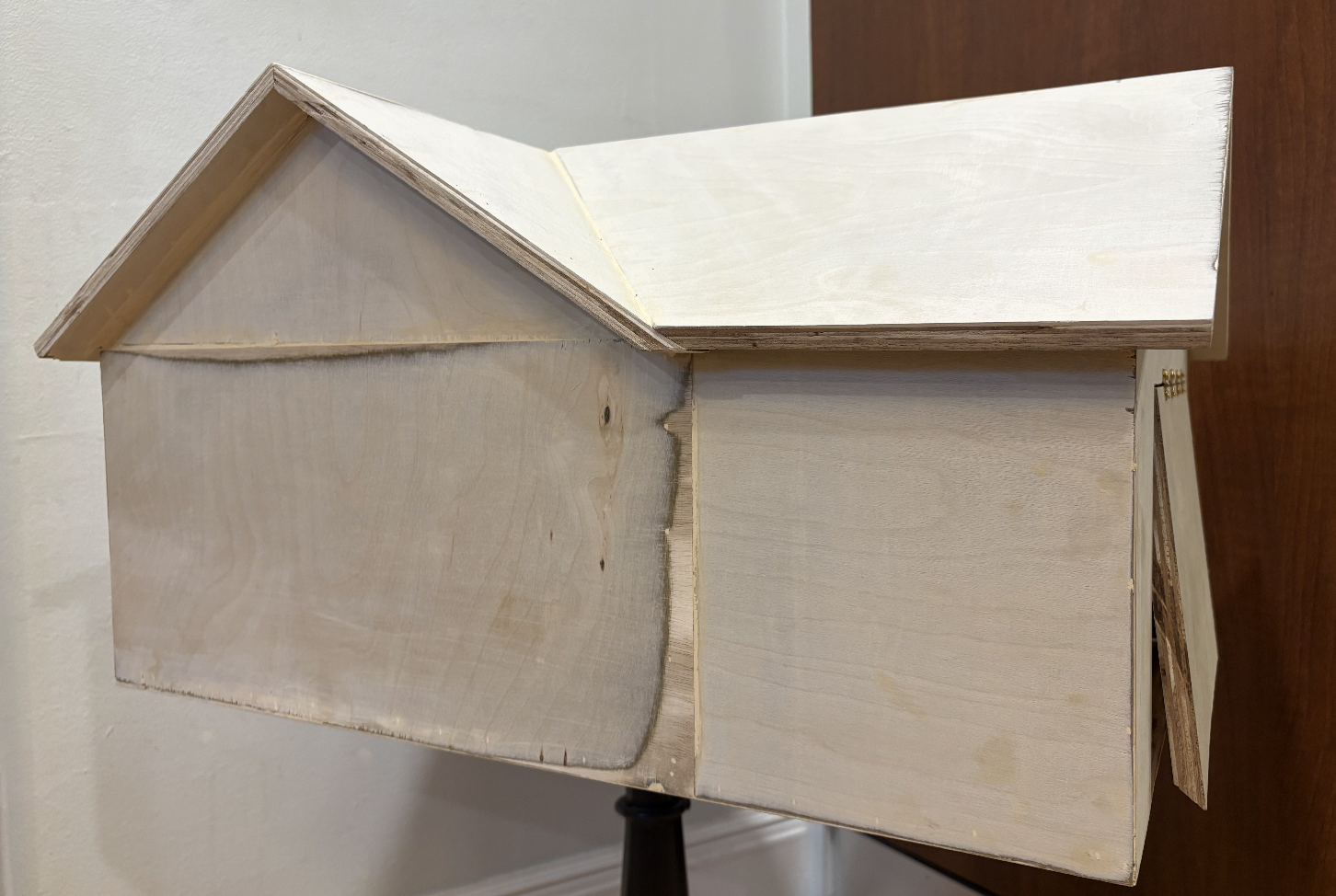
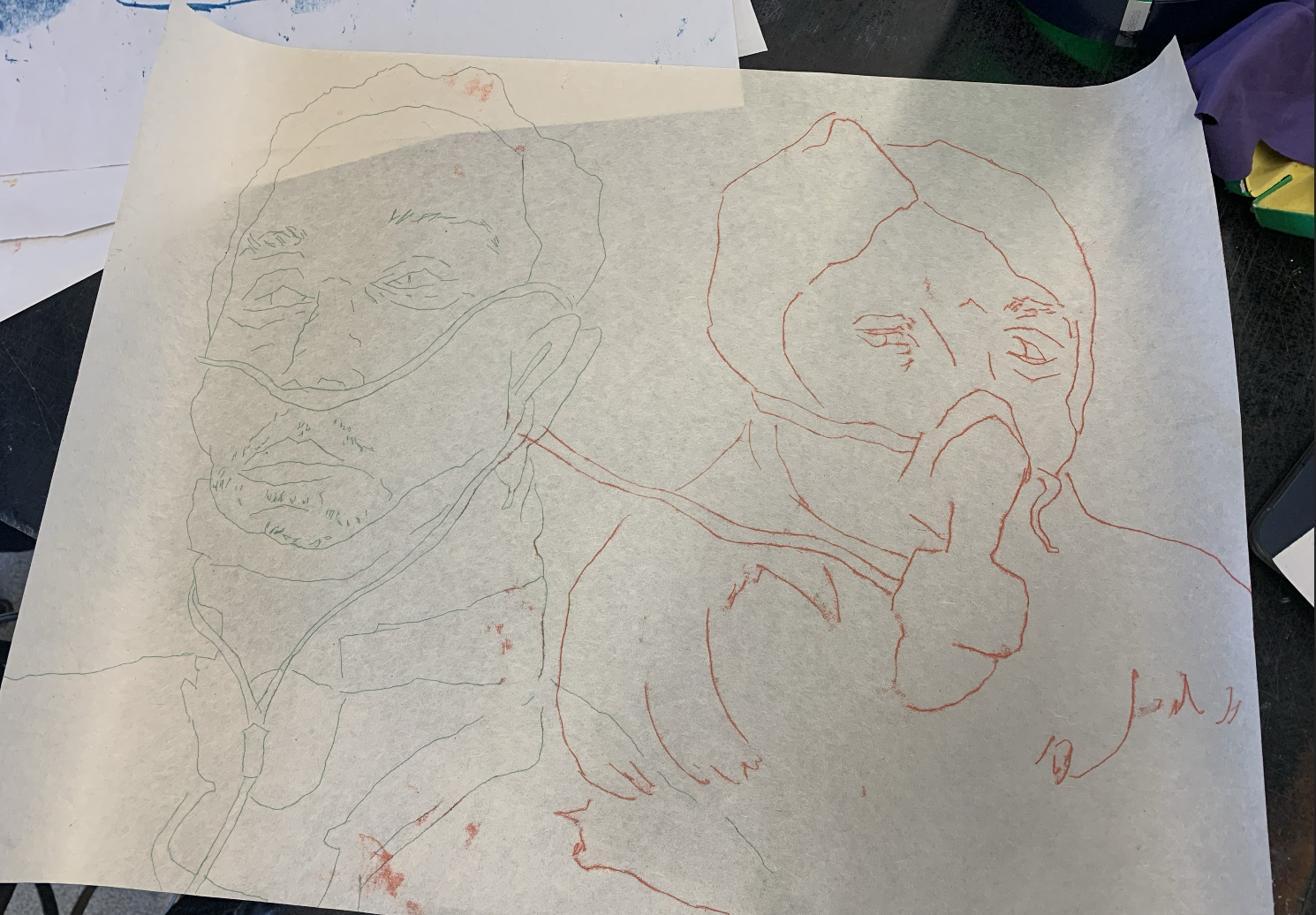
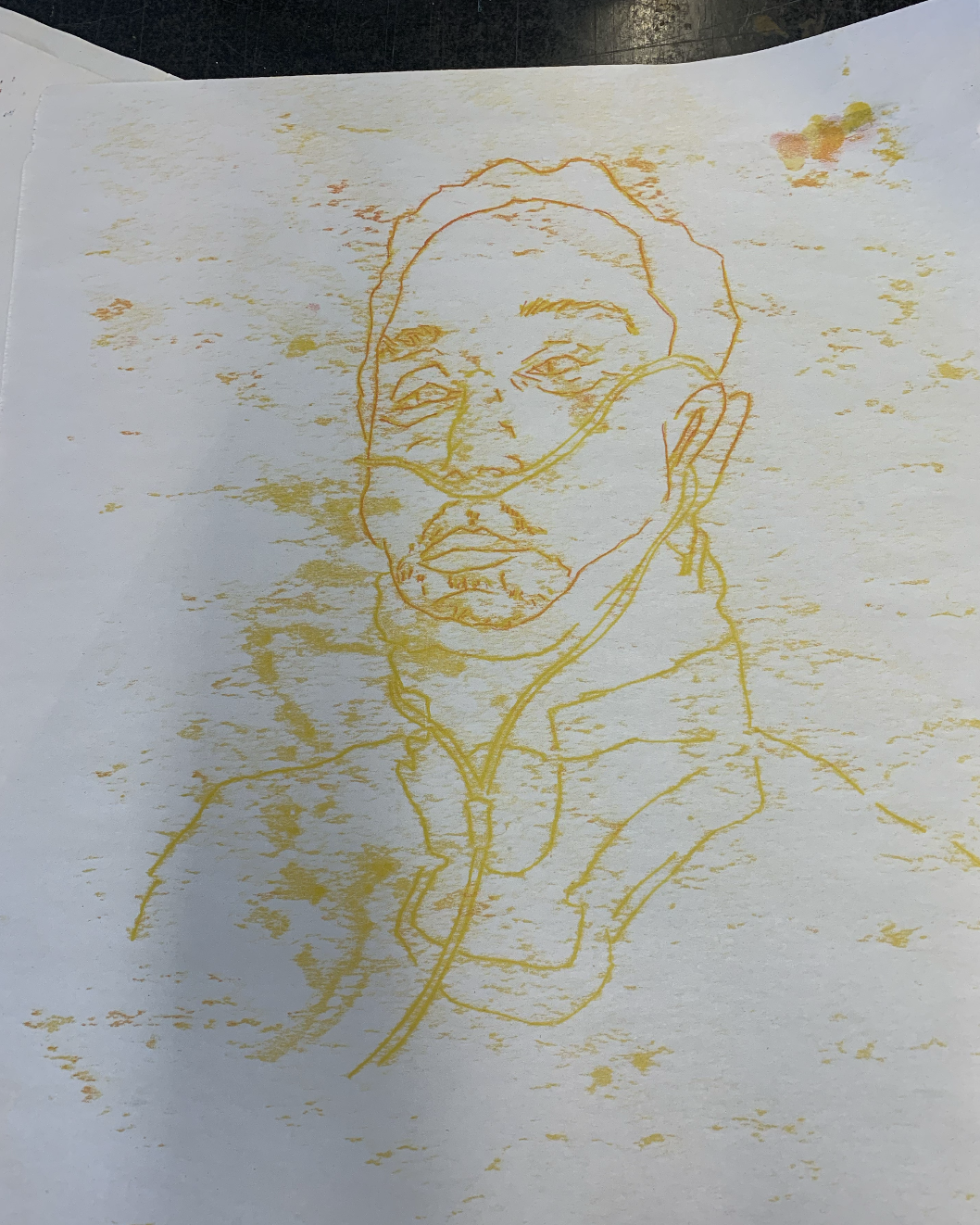
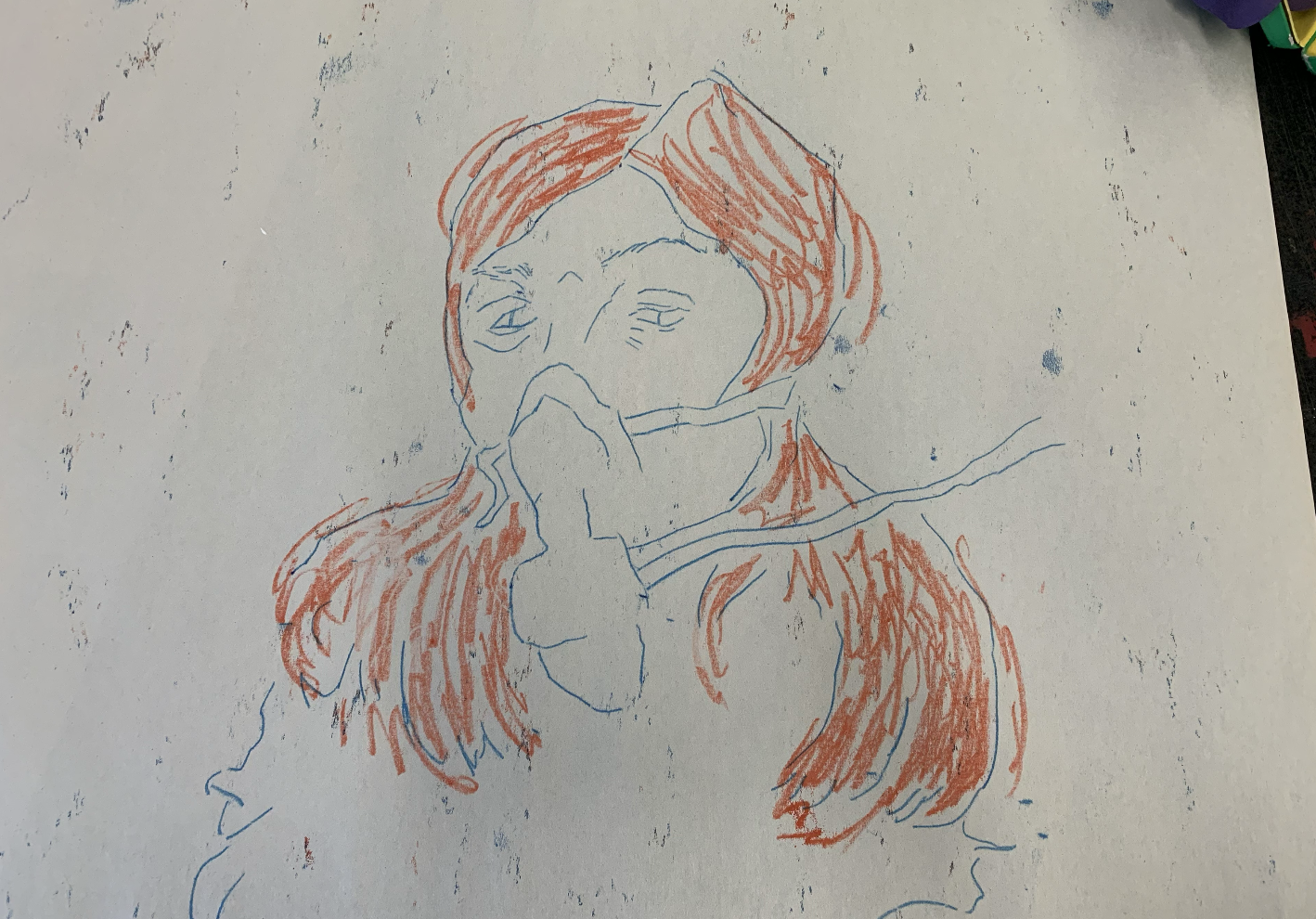
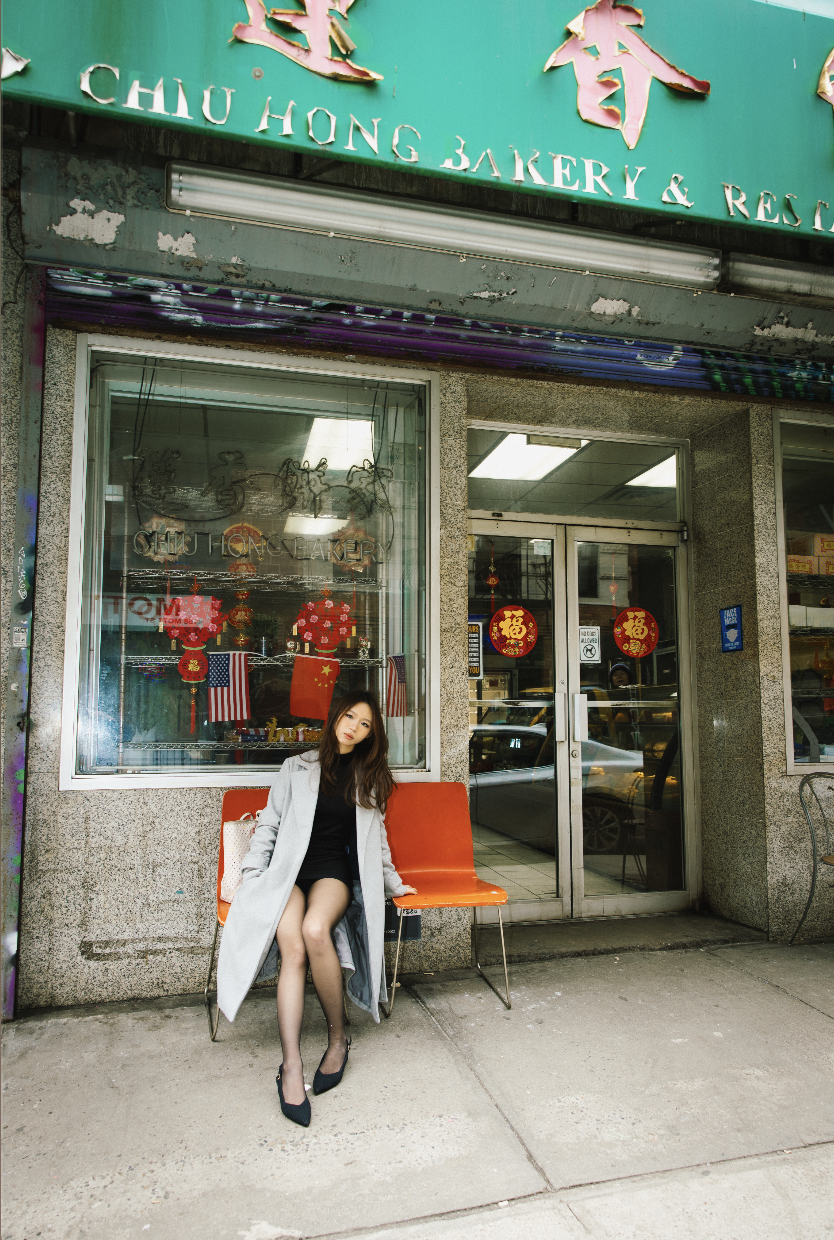
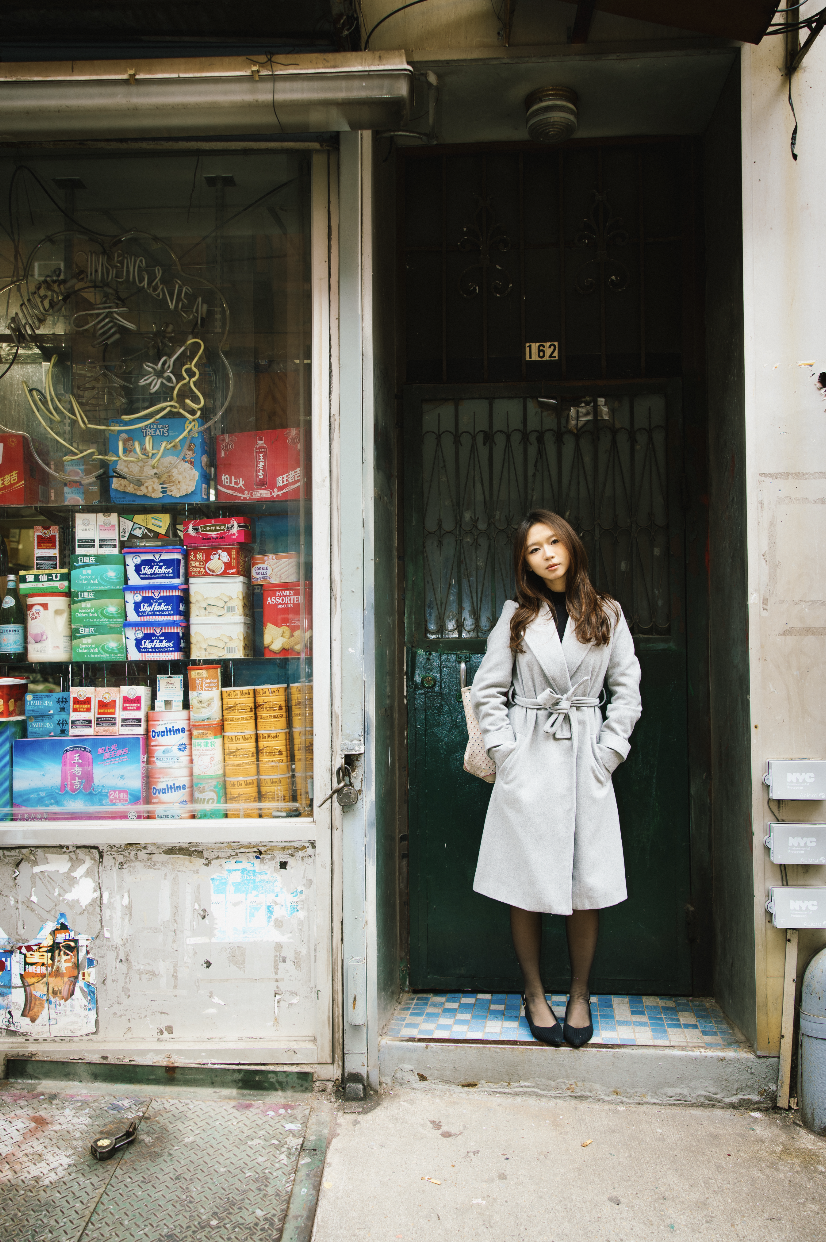
She’s busy at work on her two senior theses: her ongoing series We Dream of a World Not Threatened by Destruction, which intertwines portraiture and mutual aid, and her archaeological anthropology thesis transcribing her grandfather’s oral testimony—he survived a death march in Auschwitz, moved to New York, and opened a bakery. Her grandfather’s experiences shape the way she conceptualizes her place in society, yet she is careful not to invoke his voice as justification for her broader work. Her portraiture is an attentive dialogue with both her subjects and her own subjectivity, while transcribing his testimony becomes his portrait. She aims to honor both memories independently.

Informed by her studies in anthropology, Ray is attuned to the ethical responsibility of representation and the long history of artists aestheticizing suffering in ways that turn grief into spectacle, and compassion into consumption. Aware of how perilously thin the line between honoring and voyeurism can be, she strives to let the presence and the vibrant individuality of her subjects move through her work. Each portrait is guided by dialogue and mutual recognition.

Ray grew up in Sleepy Hollow, a small town upstate that inspired one of Tim Burton's movies—the town’s football mascot is the Headless Horseman. In eighth grade, Ray’s art teacher organized a field trip to Bushwick to see street art. “That experience blew my mind,” she tells me, “I knew right then that I wanted to be a mural artist.” If public art is the medium, then mutual aid is the leitmotif: she led her high school’s Interact–Rotary Club and sold her AP Studio Art pieces to raise bail funds during the Black Lives Matter protests.

Her faith and family history converge in the Haggadah her family reads during Passover, a prayer book her father made with friends at Columbia’s Teachers College amid the HIV/AIDS protests in New York City. Ray keeps a copy in her studio. She describes Judaism not as a set of rigid rules but as a framework of ethics: a guidance for living a good life, for being kind to others. “It doesn’t demand that you acquiesce,” she tells me. We meet during the High Holidays, and the timing is not lost on me, as I’ve been reconnecting with my own relationship to Jewish ritual. We look through the pages of the Haggadah together. The first line of the final prayer is “We dream of a world not threatened by destruction,” inspiring the title of her ongoing series.

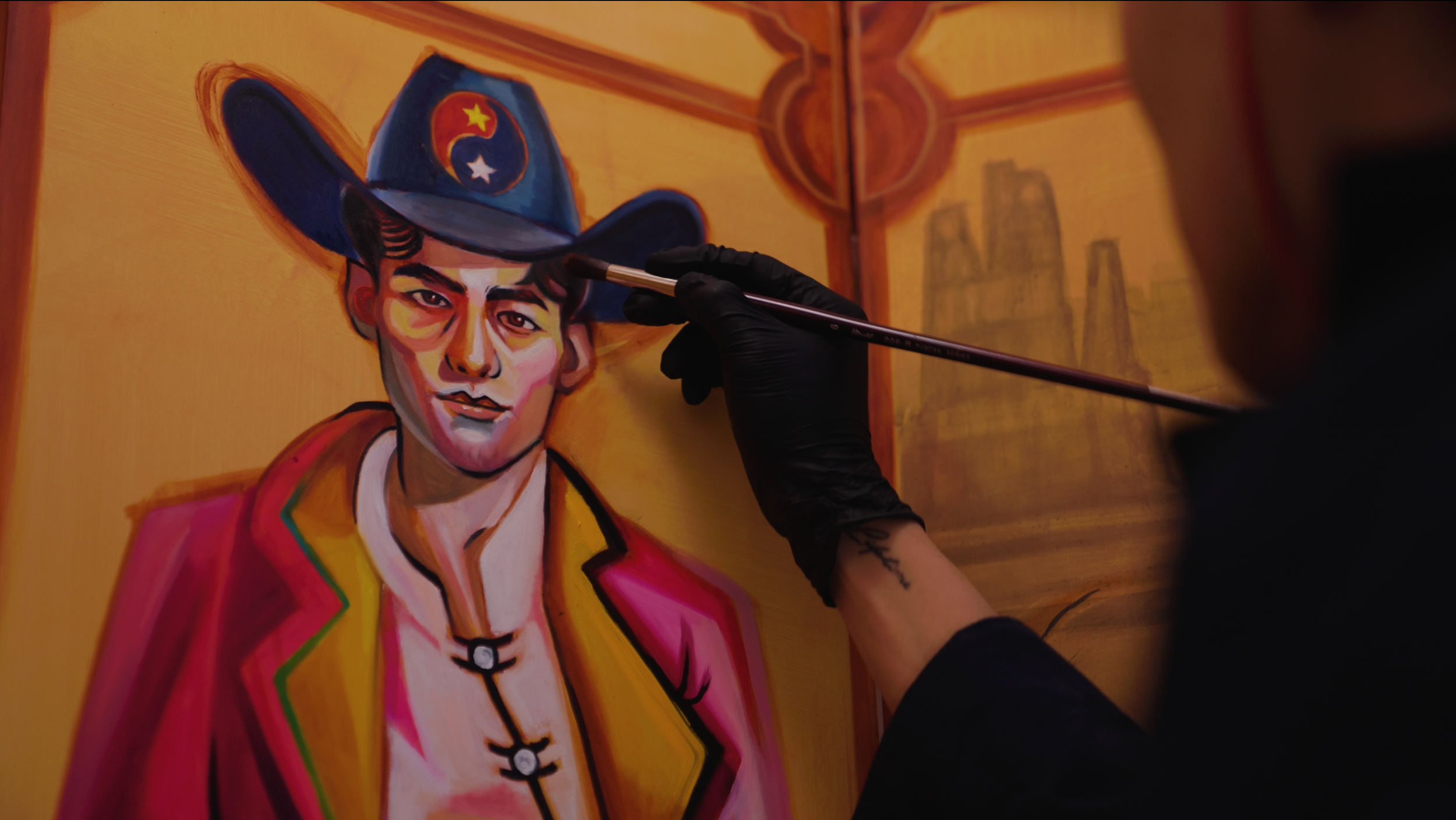
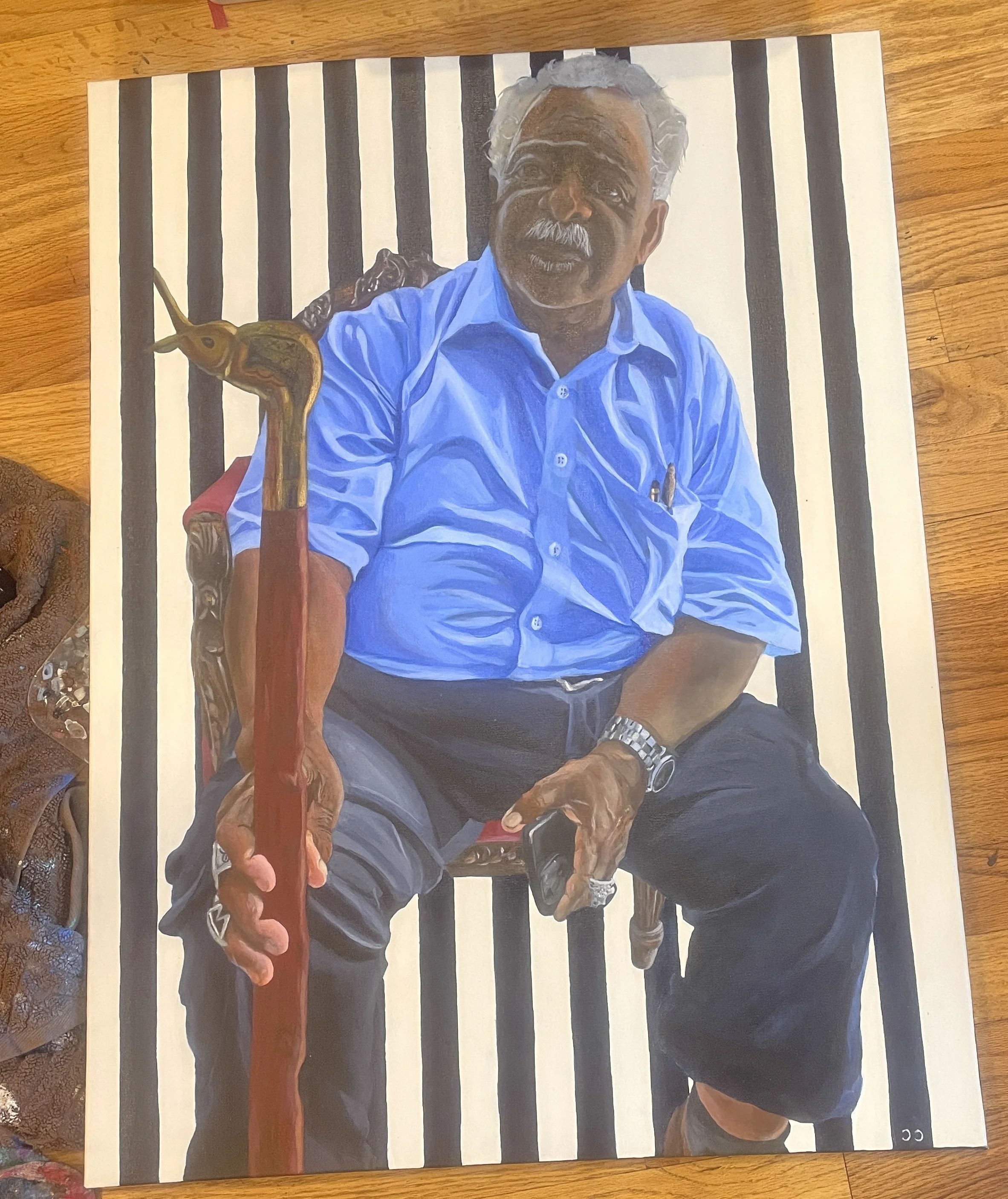
The series began with two pieces Ray painted during the 2024 Gaza solidarity encampment at Columbia: “I wanted to devote my energy to representing people who were very much silenced,” she says. “I also needed to express my own pain and frustration in a way that could be productive, instead of just wailing at the sky.” Then, she went to Paris for the summer. She hadn’t brought a canvas—just a journal—and began painting portraits of migrants being cleared out by the city ahead of the Olympics. Back in New York, she worked briefly as a portrait artist in Washington Square Park, but by junior year, when she was given her own studio, she felt she couldn’t paint anything else. “This was the only thing I was really thinking about. The only thing that felt worthwhile.”

An Outstretched Arm

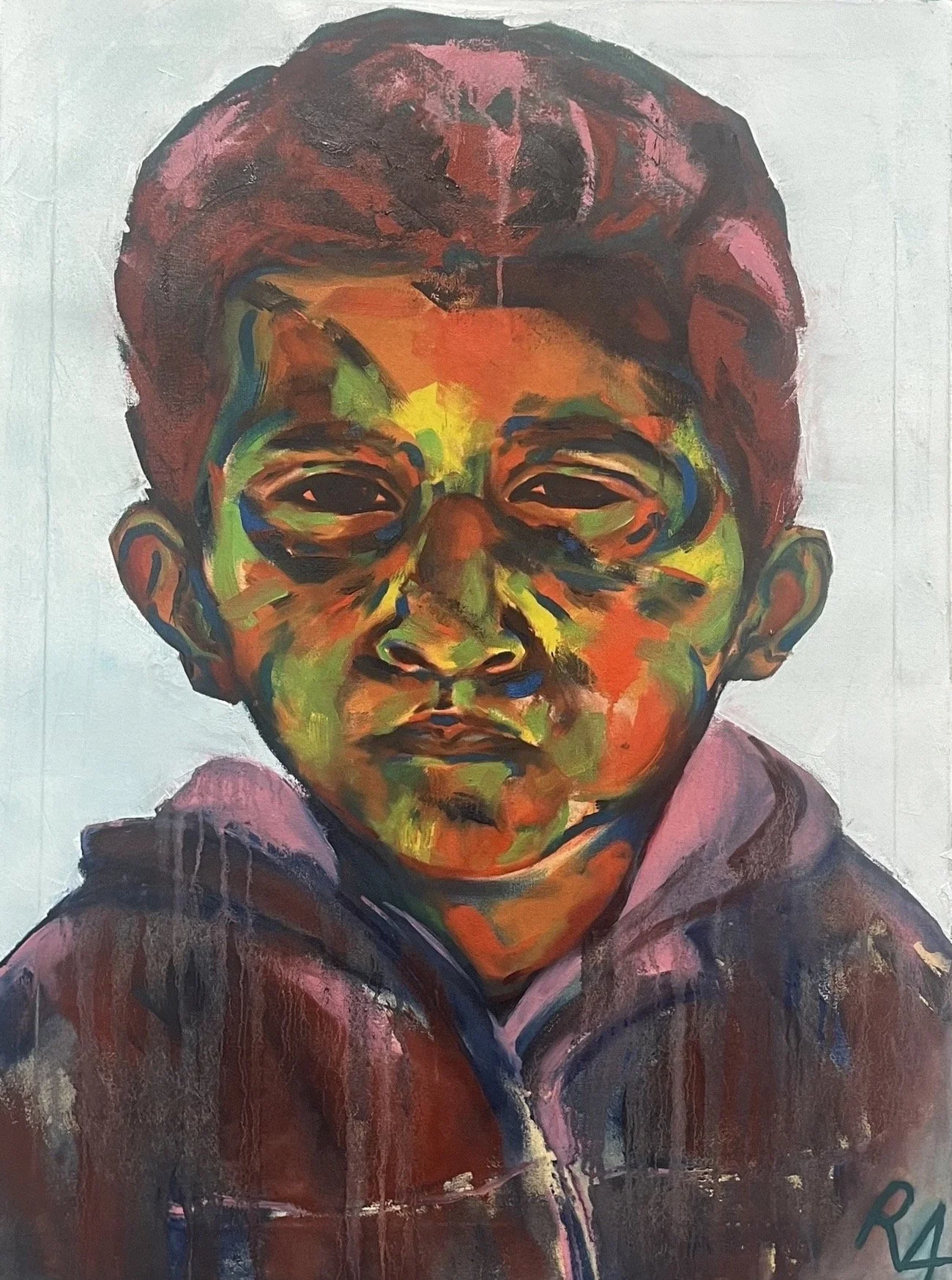
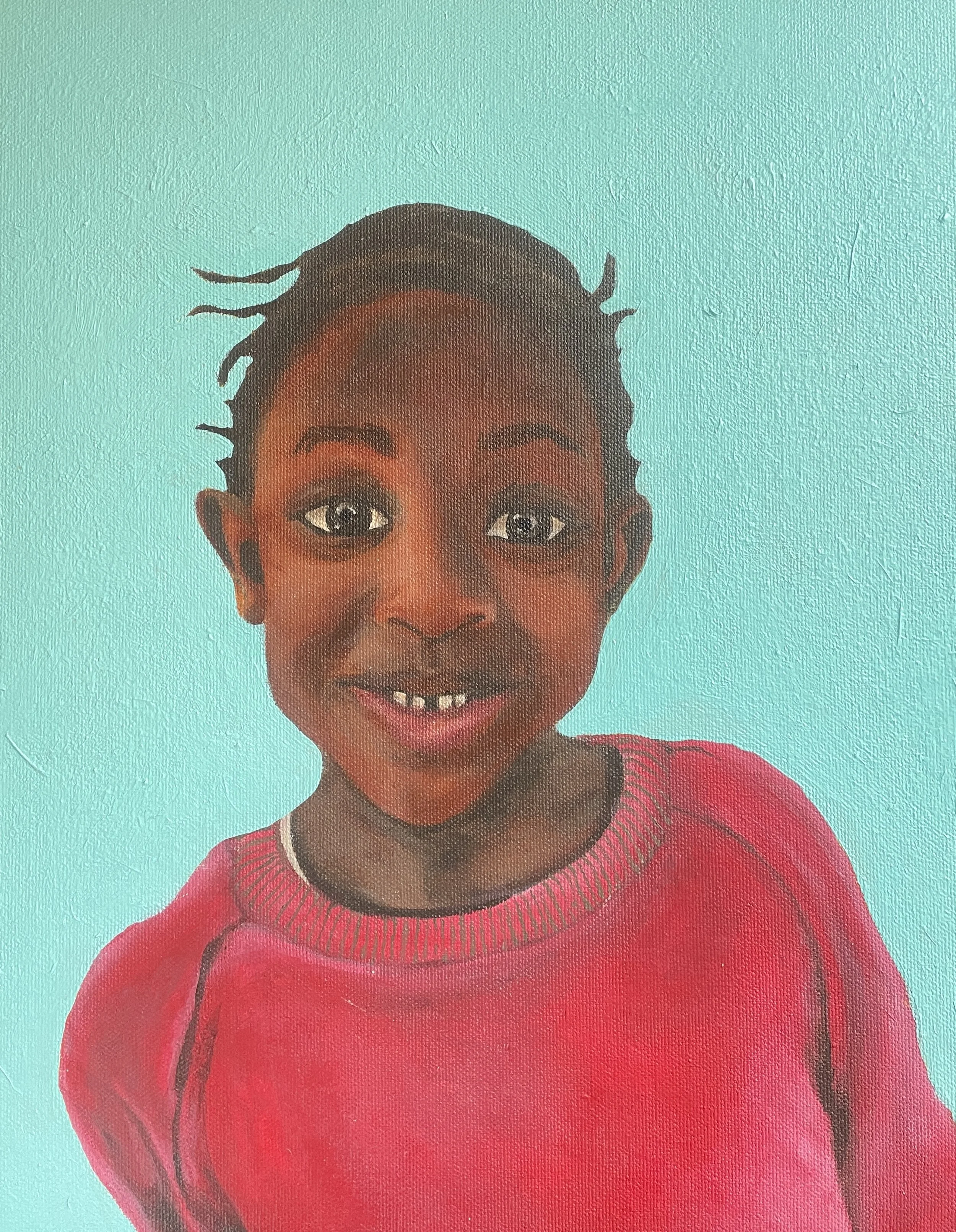
At first, the work was instinctive rather than deliberate. Those early paintings are thick with paint, color, and catharsis in a quest to reconcile with intense emotion. She felt the need to represent the humanity of people in Gaza, and hoped that the work might generate support or attention; it wasn’t yet about having a dialogue with the person in pain she was portraying. Over time, she began to understand what these portraits do for her, and in turn, what they can do for others. She realized she wanted to shape them in a way that honored both. That shift began with Miriam, painted on Rosh Hashanah last year—exactly a year from our conversation. Ray’s previous work was all from photojournalism, but she got the photo of Miriam from her GoFundMe. Proceeds from Ray’s painting go directly to her family. “[In the painting,] she’s looking out at you, and it’s kind of a witnessing of our own inaction,” Ray tells me, gesturing to the large canvas leaning against the wall behind me. “Not an accusatory gaze necessarily, but a witnessing of your own actions, or lack thereof. There’s a sense of frustration, but it’s frenzied and bright.” In today’s desensitized world of constant visual exposure, Ray’s portraits offer a different kind of engagement with those images, one centered in active recognition and attention. 

Miriam

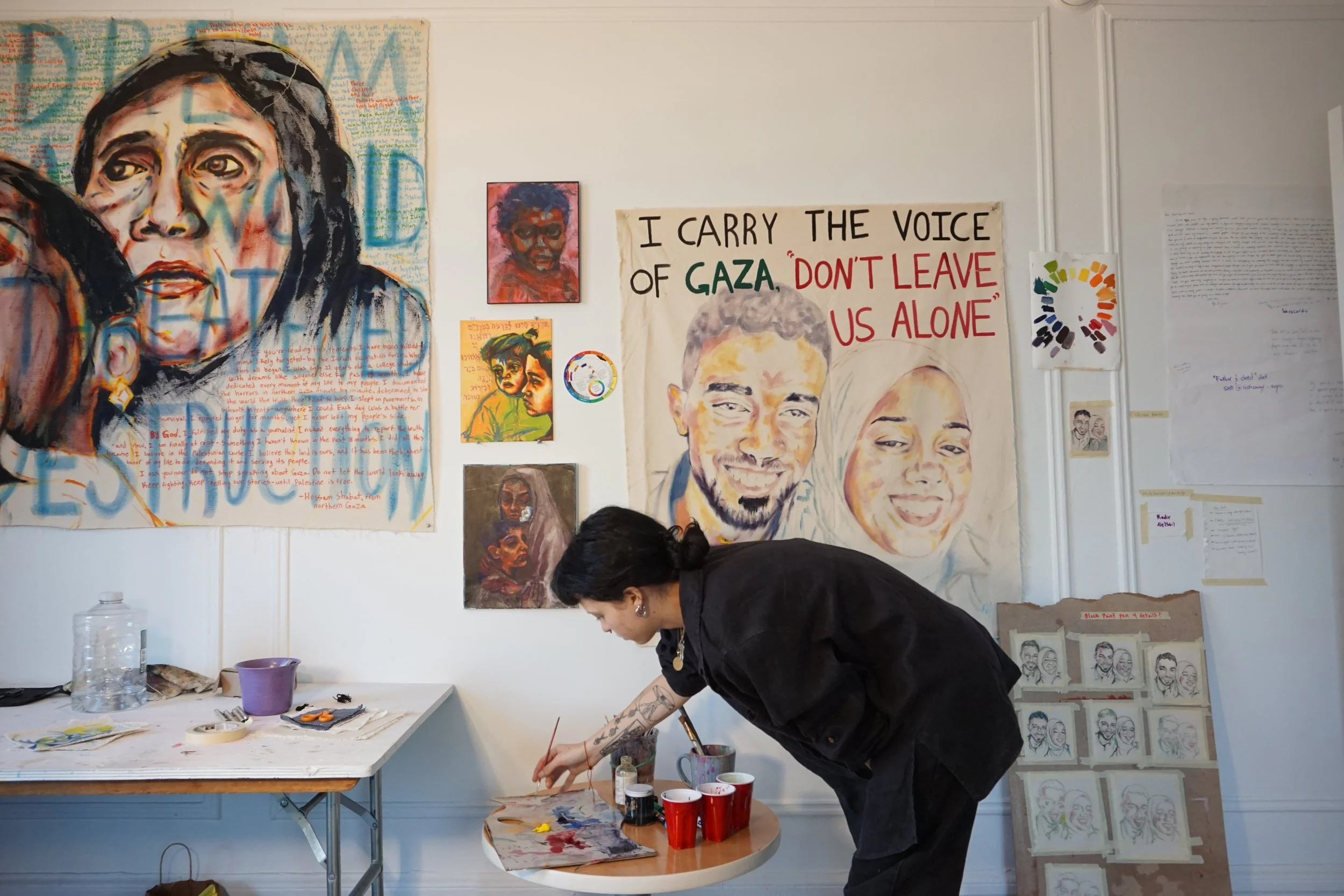
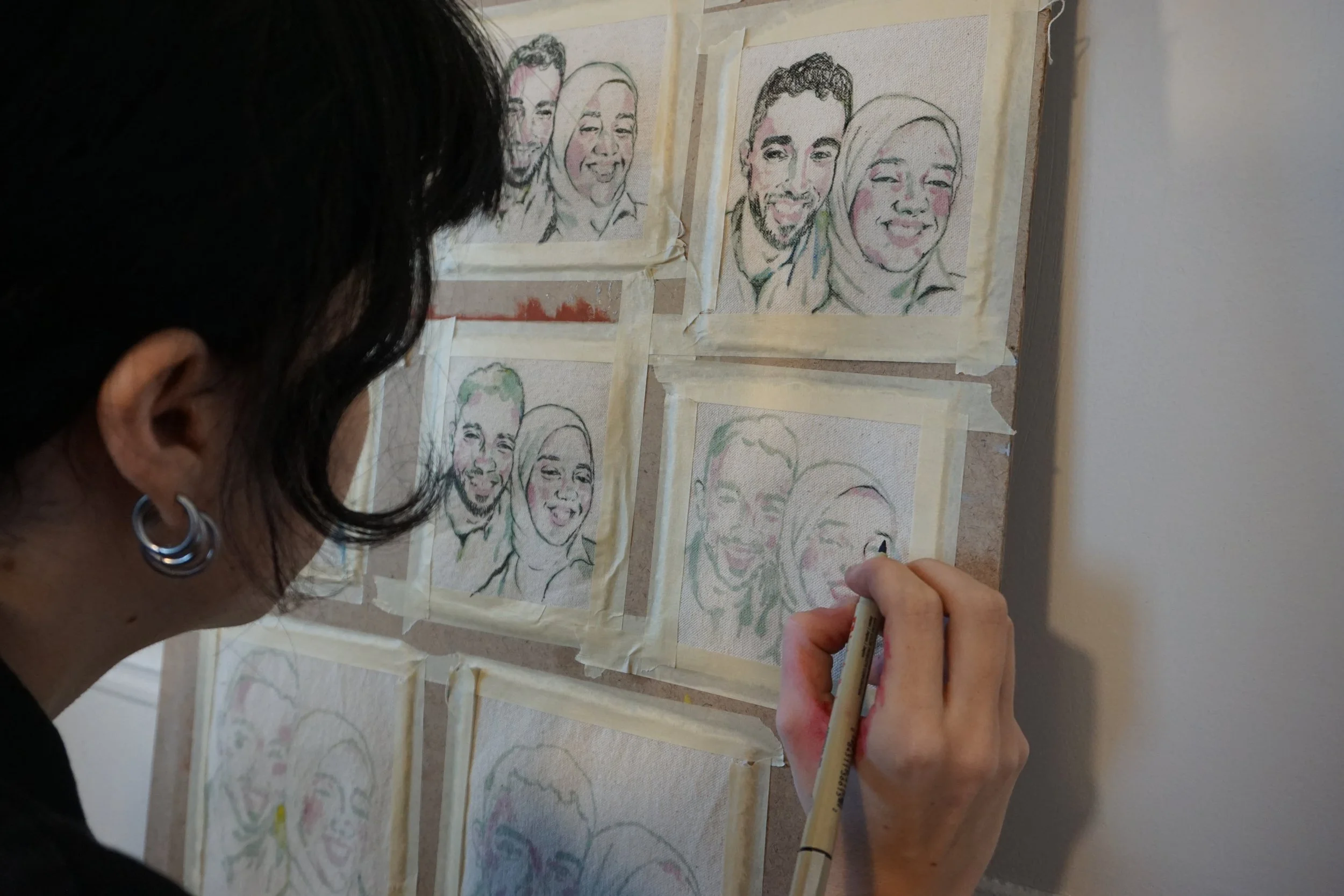
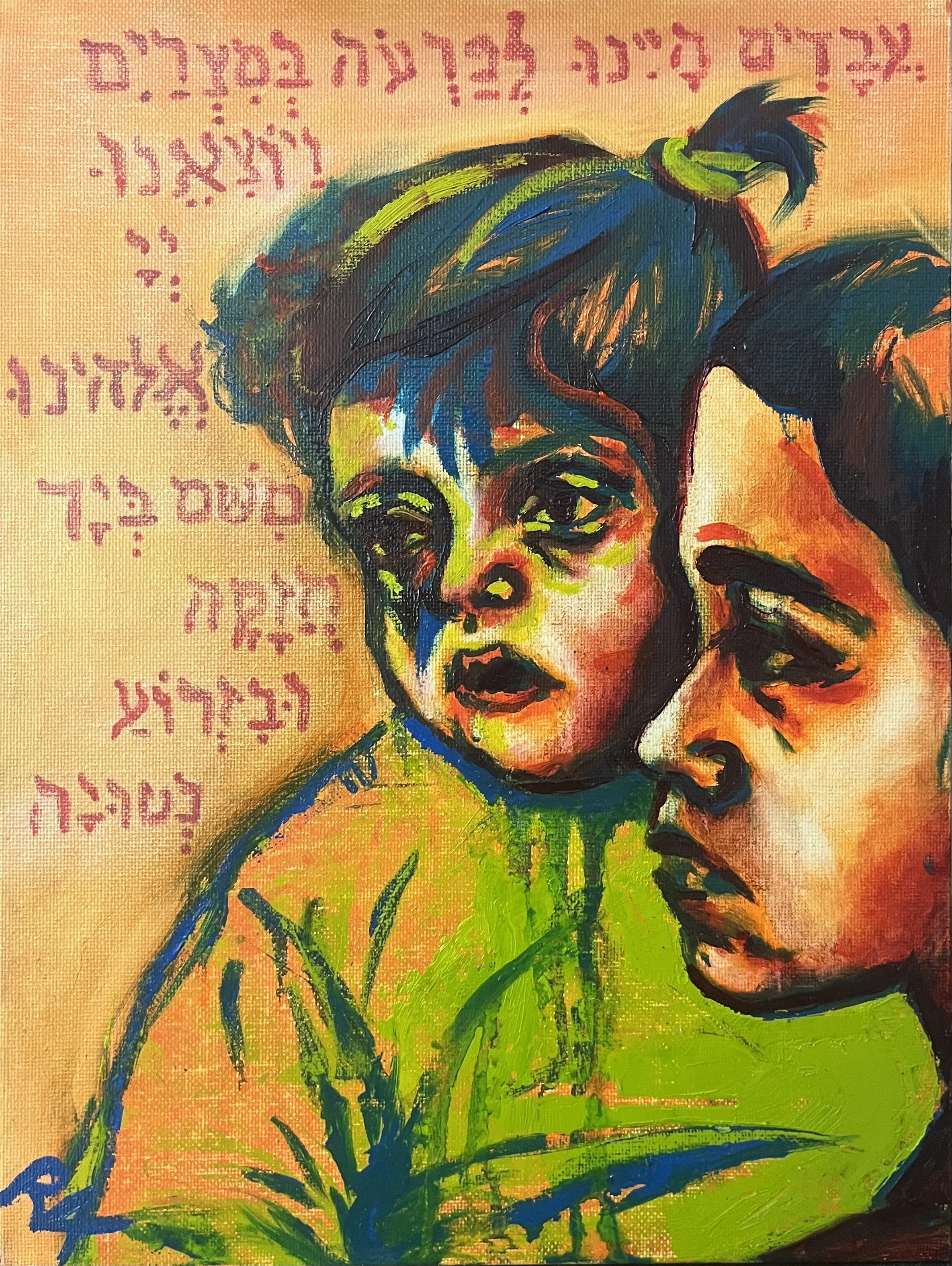
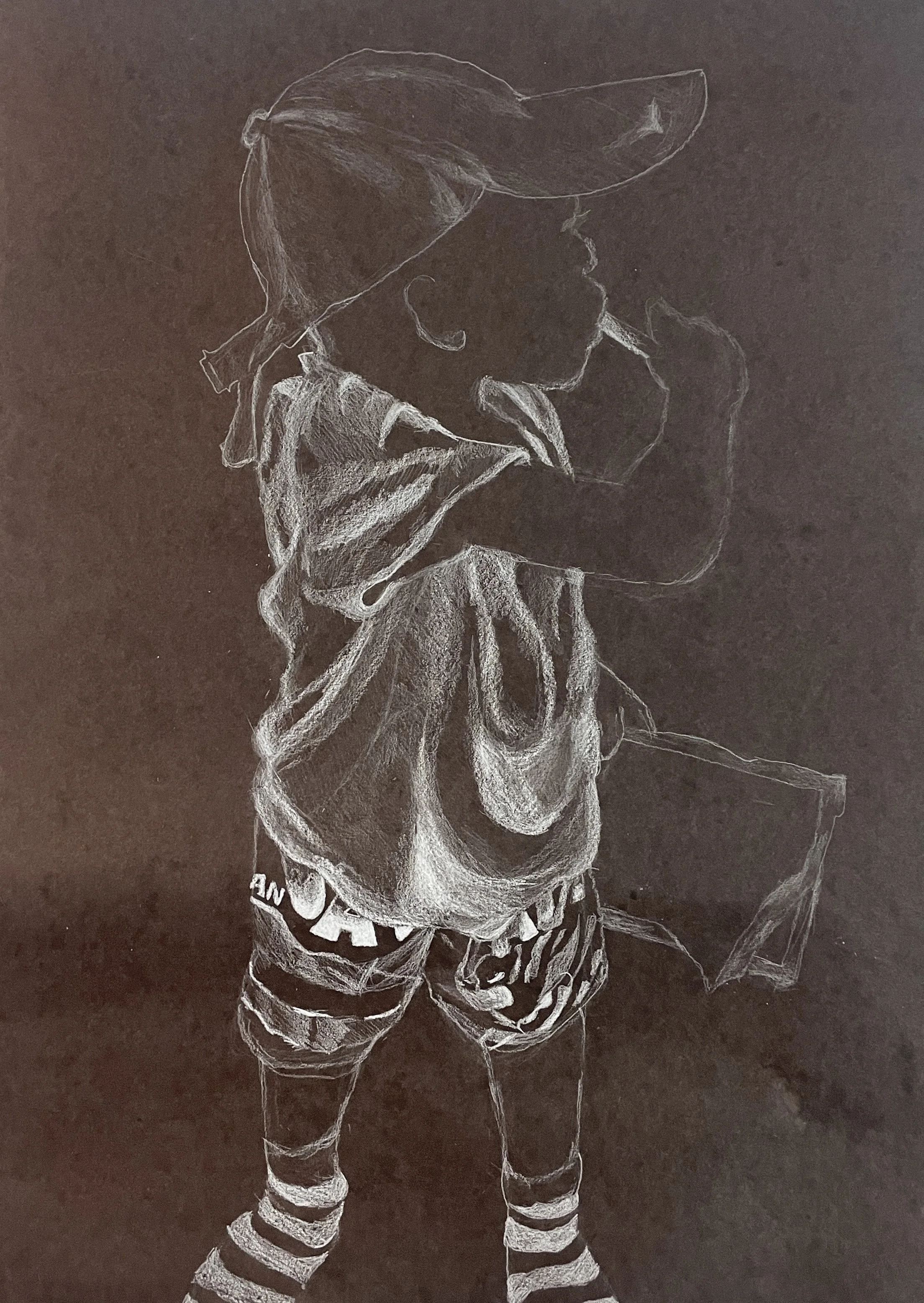
In her studio, Ray often works on multiple canvases at once, cycling through mini portraits while developing larger pieces. She experiments with texture and integrates text—prayers, news headlines, excerpts from fundraising campaigns—into her work. She likes carrying brushes in her mouth while she paints, like a pirate. “It’s messy, but it keeps me moving.” She looks at the work of photojournalists until a photo stops her, and she can’t stop looking into someone’s eyes—that’s when she knows she needs to paint it. If the reference photo isn’t linked to a fundraiser, she identifies families in similar circumstances and directs any profits made from the work towards their campaigns. More often now, Ray has been finding reference photos through families that message her over Instagram, asking for help.

Young Boy at Nasser Hospital

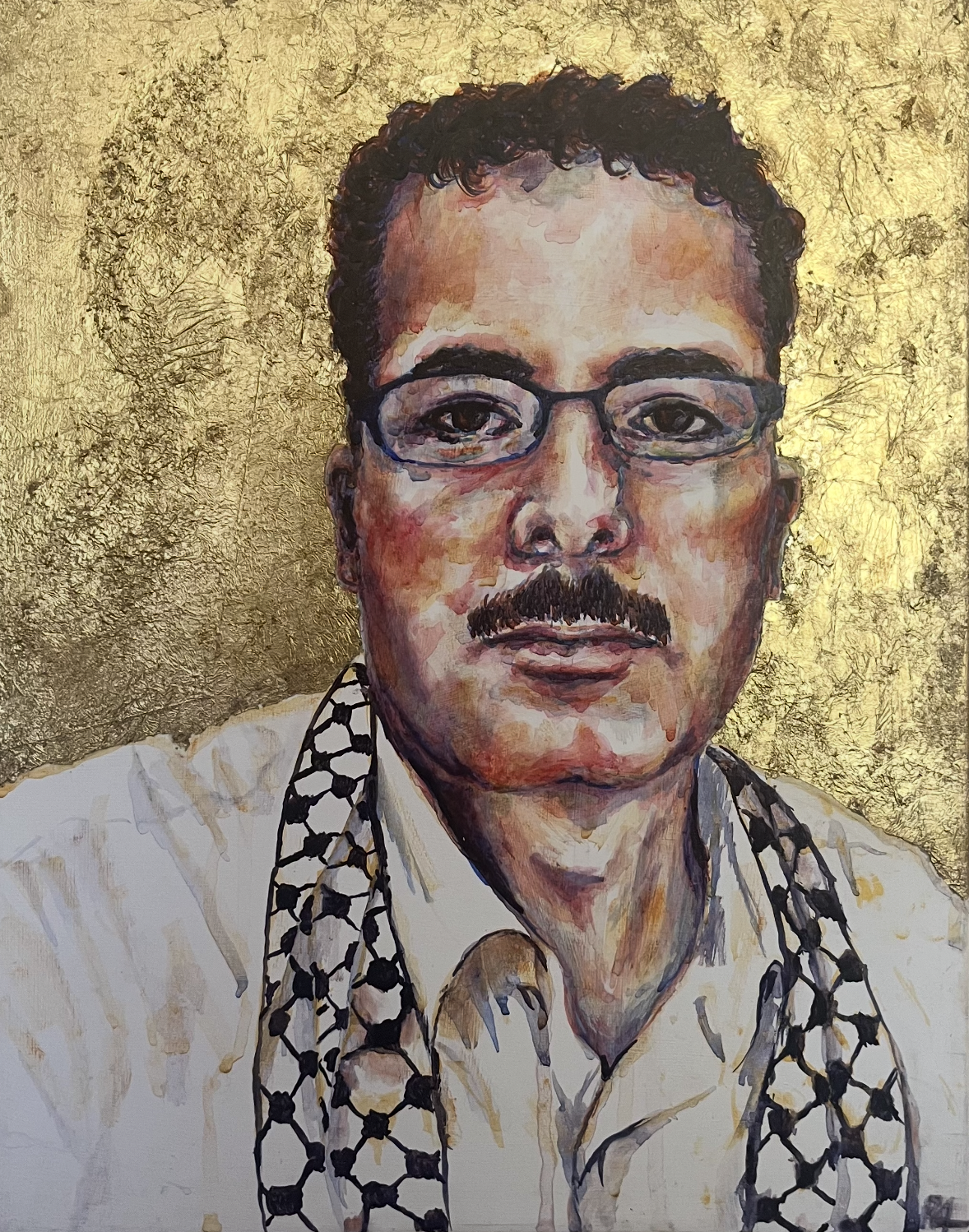
She painted Mahmoud Al-Najjar while in conversation with his son, Osama, who had fled Gaza to Belgium. “We texted about his daily life, his cooking videos, my life in New York,” she recalls. When the portrait was done, she mailed it to him. “He loved it, and I loved that he loved it. He has it now, and he’s studying French in college. He sent me pictures of the blackboard.” Proceeds from prints are sent to Mahmoud's fundraiser to help him evacuate.
Mahmoud Al-Najjar

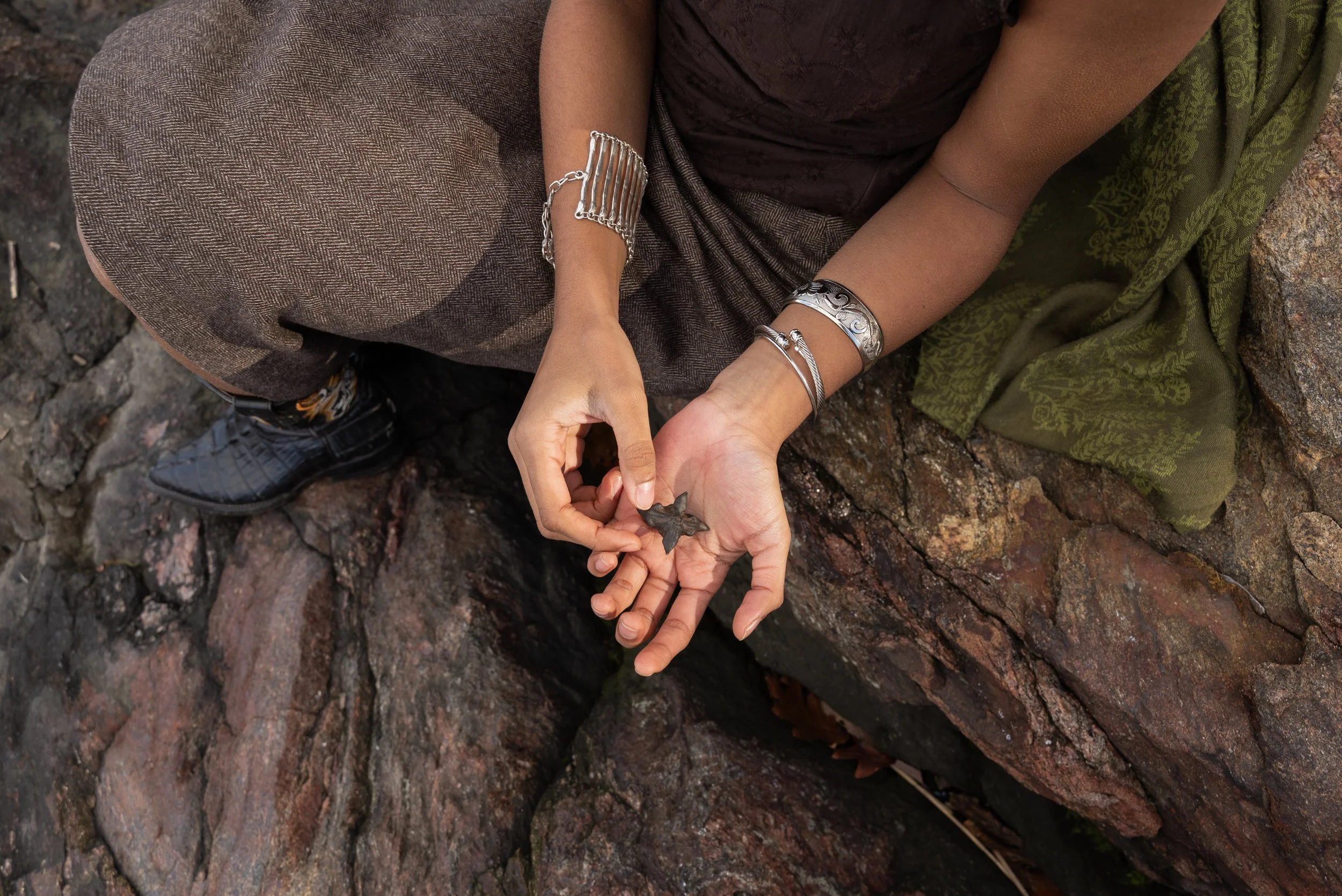
Tattoos are another layer of Ray’s medium, a nod to Oscar Wilde’s letters on making one’s life a living artwork and seeing the body as itself a living canvas. It is also a tool that subverts a practice harmfully imposed on her grandfather in Auschwitz, reclaiming it as an instrument of self-expression and love. Birds are a recurring theme: her family assigns one to each member, with Ray’s being a magpie. Some designs are illustrations from the Haggadah. The names of her parents in Yiddish, a language she gravitates towards both because it was spoken by her grandfather and because it invokes resistance and proletarianism. Around her neck, she wears a chunky necklace in the shape of the Chai symbol, discovered on a hiking trip in upstate New York. When asked about her artistic influences, she tells me she’s always loved the drama and chiaroscuro of Caravaggio and Goya, though now she’s obsessed with the Italian artist Ettore Aldo Del Vigo.

As my final question, I ask Ray about what she believes to be the biggest misconception about her. “That my self-expression reflects self-hatred. People sometimes see my tattoos, piercings, or my choice to paint political subjects and assume negativity, but everything I do is rooted in love, remembrance, and ethical responsibility.” There’s a sense of urgency in Ray’s voice, the same pulse that runs through her work—an attentiveness that I find deeply refreshing in today’s world, where fast-paced living often results in looking away from discomfort.

FEDERICO STOCK

Feature by Caroline Nieto

Photos by Natasha Last-Bernal, Sophia Lopez, and Sophia Zhu


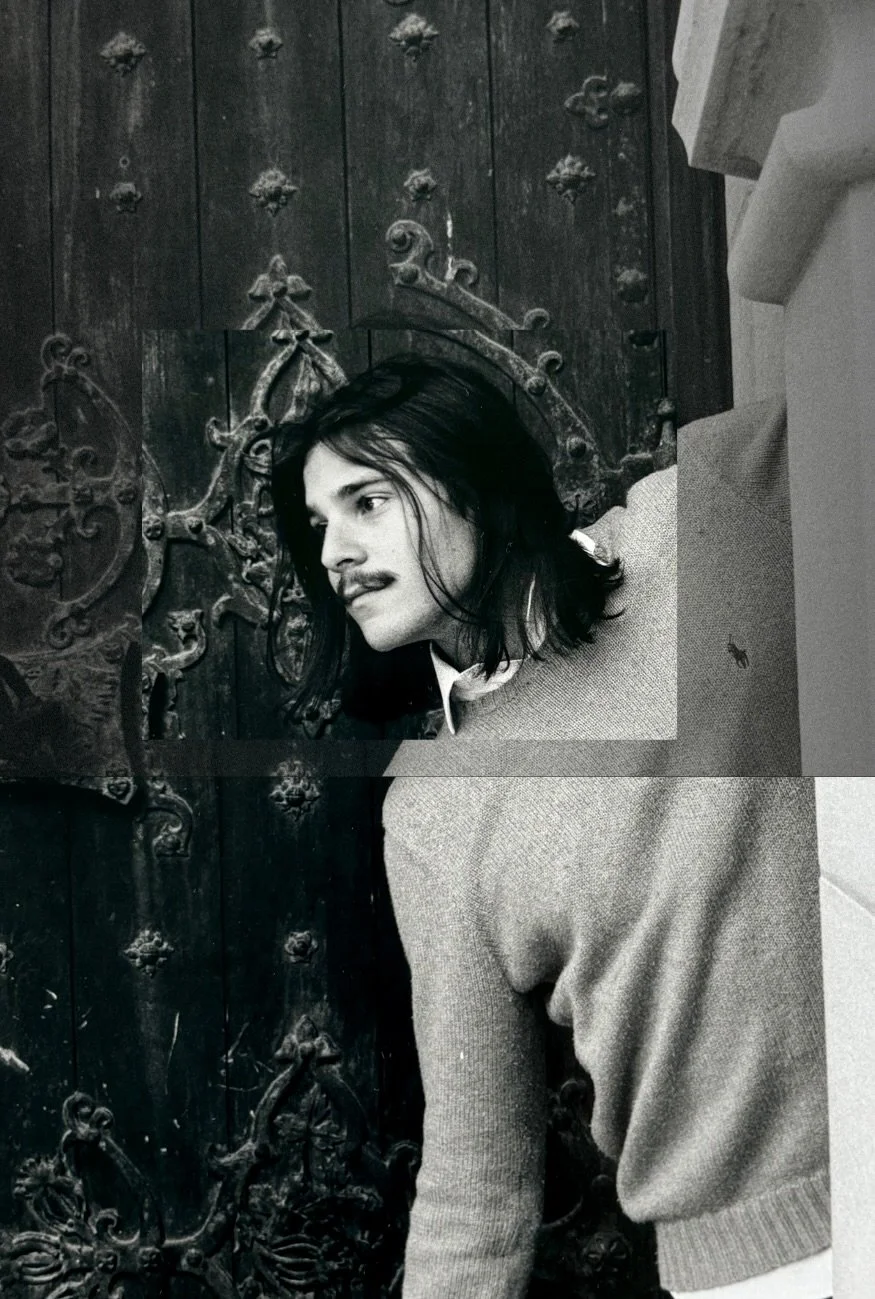
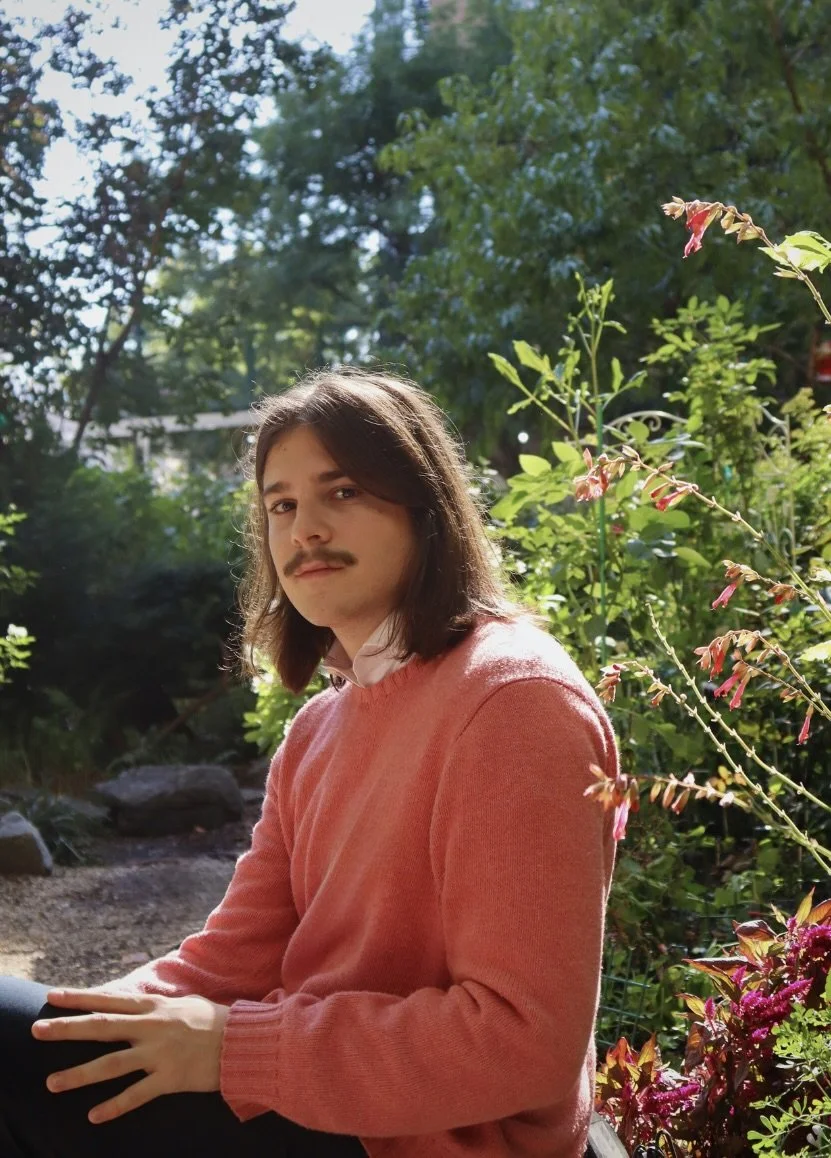
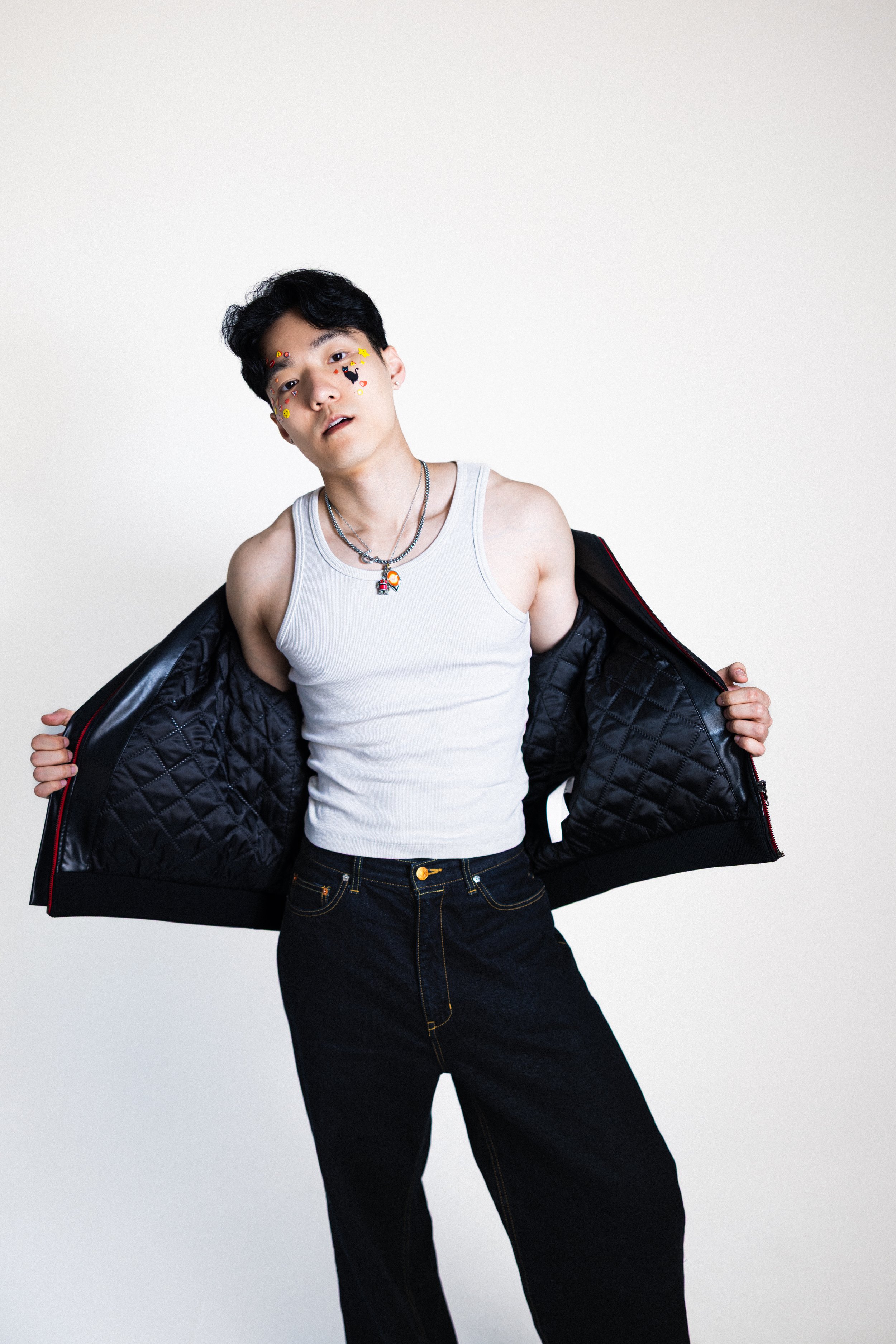
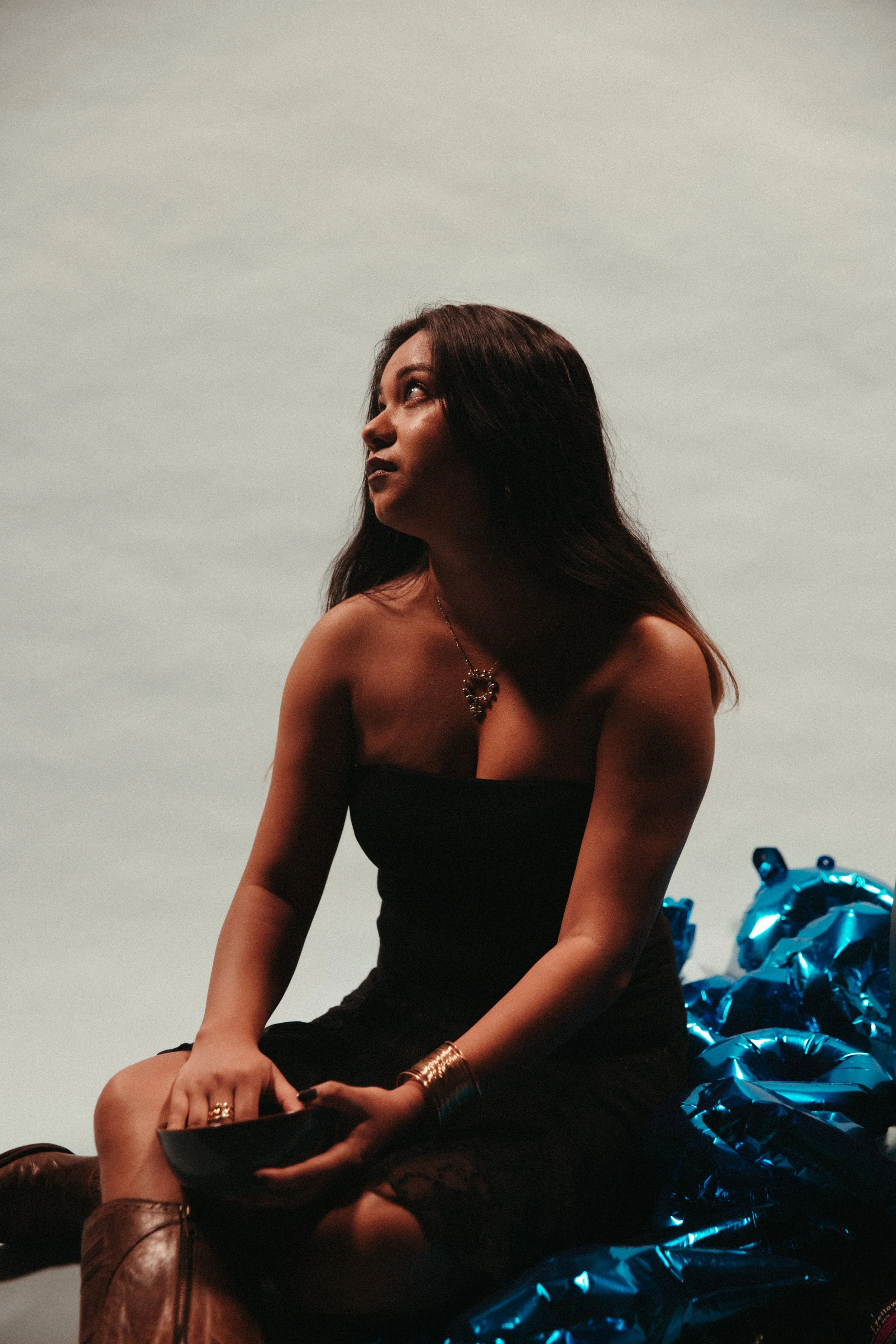
Federico Stock (CC’26) is studying philosophy and history. 
His music can be found at this Spotify link or this Soundcloud link for his unreleased music.

When I sit down to talk to Federico, it is the sunny final day of September, where the “summer’s still struggling to live,” a description I’ve pulled from his song, “Anything.” We perch on the steps of St Paul’s Chapel, in full view of the swath of students rushing to class during a passing period. We’ve chosen the location because Fed has a class in Philosophy Hall in an hour, and I can’t help thinking we’re in a corner of campus that’s been engineered to represent the musical catalog of Federico Stock. Religion and philosophy are tenements of Fed’s psyche as a songwriter, which is clear not only in the imagery he employs, but in his deliberate, thoughtful approach to writing as a whole. “I really like the Platonic idea in Symposium about seeing something beautiful and realizing, ‘I saw that before I was in a body, and I need to see that again,’” he says. “That feeling leads you to practicing philosophy, but I also think it leads you to make music, because you’re trying to translate it.”

The first time Fed recalls trying to translate a feeling was during a school break in high school. He had recorded a guitar part on Logic, and played it over and over again while he jotted down lyrics that he didn’t want to sing, "because I was shit at singing,” he says. These early teenage years were naturally a time of transition for Fed, and the changes he weathered coincided with his taking music more seriously. Growing up, music was merely a casual interest for Fed. “My music taste was pretty bad until I was like fourteen,” he claims. “I listened to a lot of pop music, mixed with the Beatles, mixed with random songs that I knew from my parents.” He names a tradition of his youth that informed his taste the most—“I would be playing Minecraft on the family Mac and I would press play on the keyboard and it would just play the first album in alphabetical order on iTunes, which was The Beatles’ single album, One.” If you listen to Fed’s music, it certainly sounds like he’s been fed Beatles songs through subliminal messages. His songs are evocative of McCartney’s tender melodies and the guitar parts of the band’s acoustic tracks. But it took Fed a while to render his musical influences into polished songs. “As a kid, I didn't know anything about theory—I mostly still don’t—but I would be thinking, ‘Wow, in these songs there’s just these moments of really intense feeling. There’s just chords that people play that make me want to start crying. How do I do that?’”

Fed claims he still hasn’t learned music theory. There was a period in middle school where he took guitar lessons, but “It was mostly classical,” he says. “I never practiced.” His musical education was much more successful when it took the form of collecting inspirations. He remembers playing The Red Hot Chili Peppers’ “Californiacation” at a middle school talent show with his friends. “That was the band that most people knew was my favorite band up until I was eighteen.” At this moment, he finds himself a bigger fan of the likes of Christian Lee Hutson and Elliott Smith—of the latter, Fed says, “he just succeeds more than anyone else in making me feel a way that enhances an experience.” The Smith comparison is a no-brainer when you hear Fed’s music. His first single, “Half-Man,” is a touching folk track that could slot neatly into place on Smith’s New Moon. It’s composed merely of Fed’s wispy vocals and the light, soft strum of his guitar. “Half-Man” exemplifies Fed’s tendency towards the clean, candid lyricism of his stream of consciousness. He explains that the first lyric of the song, “I feel uneasy between my shoulders” is a real description of a physical sensation he felt when he couldn’t sleep one night. Fed often writes down little phrases or feelings that inspire him in the notes app on his phone. Another resonant lyric of “Half-Man”—“Nostalgiamania is in my bloodstream/and in this river/and I am drowning”—is also the product of this ongoing list. “I’d written down this word, ‘nostalgiamania,’ because I thought it described my most common state of being,” he says. “Half-Man” certainly depicts nostalgia from top to bottom, even in places where Fed didn’t intend it to. His grandmother had died a year prior to writing the song, and while the peak of his grief had mostly settled, Fed found himself evoking her in the lyric that holds the song’s title: “a half-man/that’s what my Grandma called me.” “I always thought I couldn’t write a song about the death of my grandmother because it was too real to write about. But now every time I play it, it is about that.” 

Almost every song of Fed’s is tinged with a childhood memory in one way or another. “Paper Plate” recounts the first time he questioned his belief in God. “When I was ten, I was driving to my grandma’s house and stuck in traffic. It was completely dark, and I thought, ‘what if I die and there’s nothing?’ And then I felt so fucking awful. And that still happens to me sometimes.” As the song progresses, Fed traverses his relationship with faith as he’s grown up—oftentimes, he feels that same pang of doubt he felt when he was ten. But he finds solace in these spaces of uncertainty, allowing his questions to linger in the in-between. Take the premise of his song “Little Cross,” which is inspired by a real moment of ambiguity. While on a ski trip in the Alps, Fed recalls driving around the and seeing crosses on the mountain peaks. “A lot of the peaks in the mountains will have crosses on them, because people will mark them to say they’ve been there. But they also have crosses where people have died in mountain climbing incidents, so it’s a little vague.” This lack of clarity was eye-opening, and Fed began to wonder the meaning of each new cross he passed. As he sings in “Little Cross,” “did somebody die there?/or did somebody climb there?” The song eventually becomes a meditation on leaving things behind, a concept that permeates all of Fed’s songs. 

Fed’s music is certainly introspective across the board, and it may seem that each song is steeped in some kind of melancholy. But Fed rejects the popular tendency to reduce artists to people that make “sad music.” “It’s really a positive thing to hope someone will know how you feel,” he says, “even if that emotion is sad.” Part of this idea of Fed’s lies in his conception of these emotions altogether: “Happiness as an emotion is like laughing at a joke. It’s different from sadness, which is an emotion that is very physical for me. Happiness, for me, is kind of the absence of any of that.” While sadness, grief, and nostalgia have all colored the themes of Fed’s songs, happiness exists in smaller, simpler doses. It’s the moment in “Anything” where Fed describes “light in the palm of my hand.” It’s the moment when “the rain is louder than the cars” in “What I Want.” For Fed, happiness feels like “right after I’ve woken up when I’ve slept well.” An infinitesimal, fleeting moment that will inevitably be clouded by the day. But it’s a moment, nonetheless.

NAA AYORKOR LARYEA

Feature by Mira Krish
Photos by Iris Pope


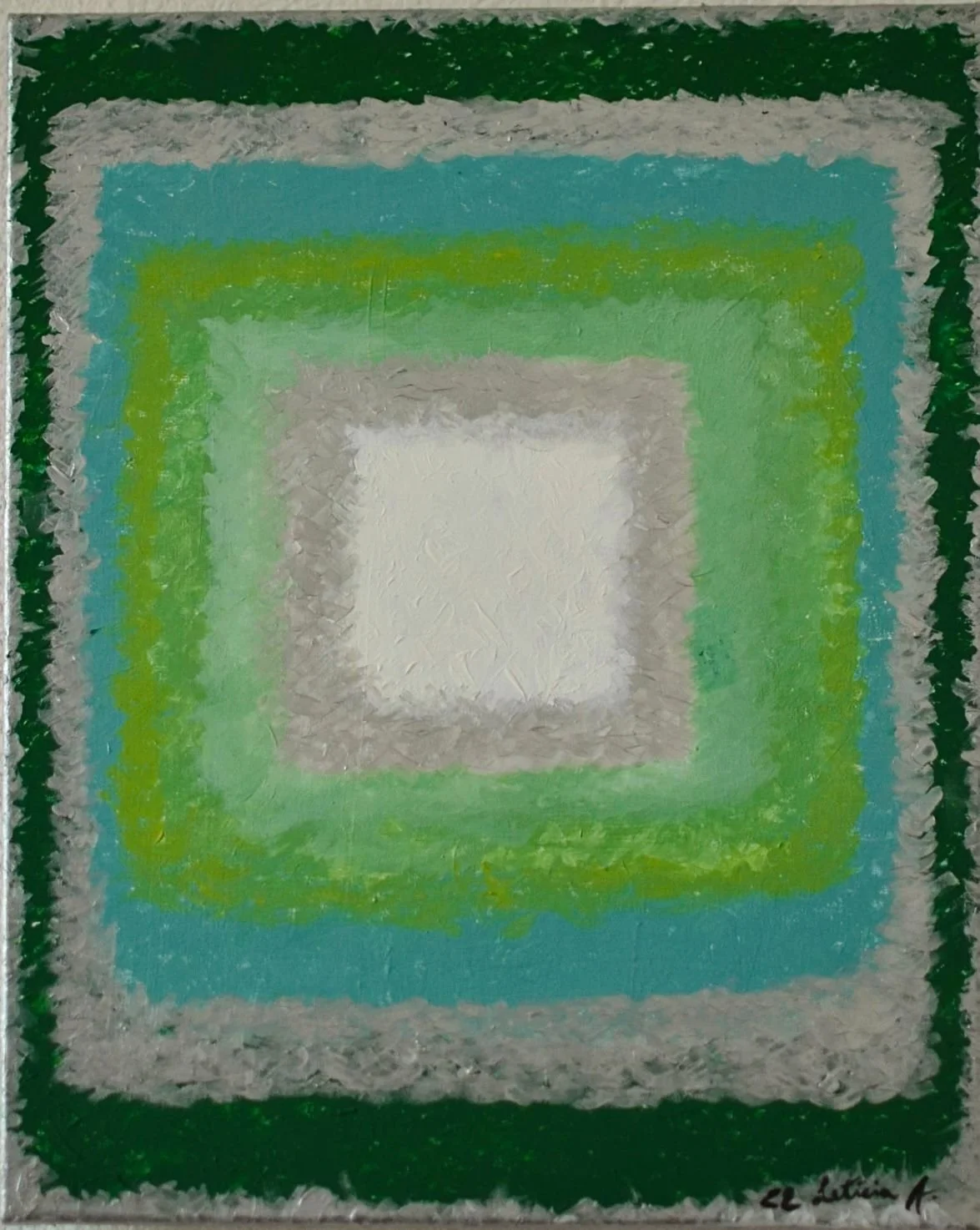
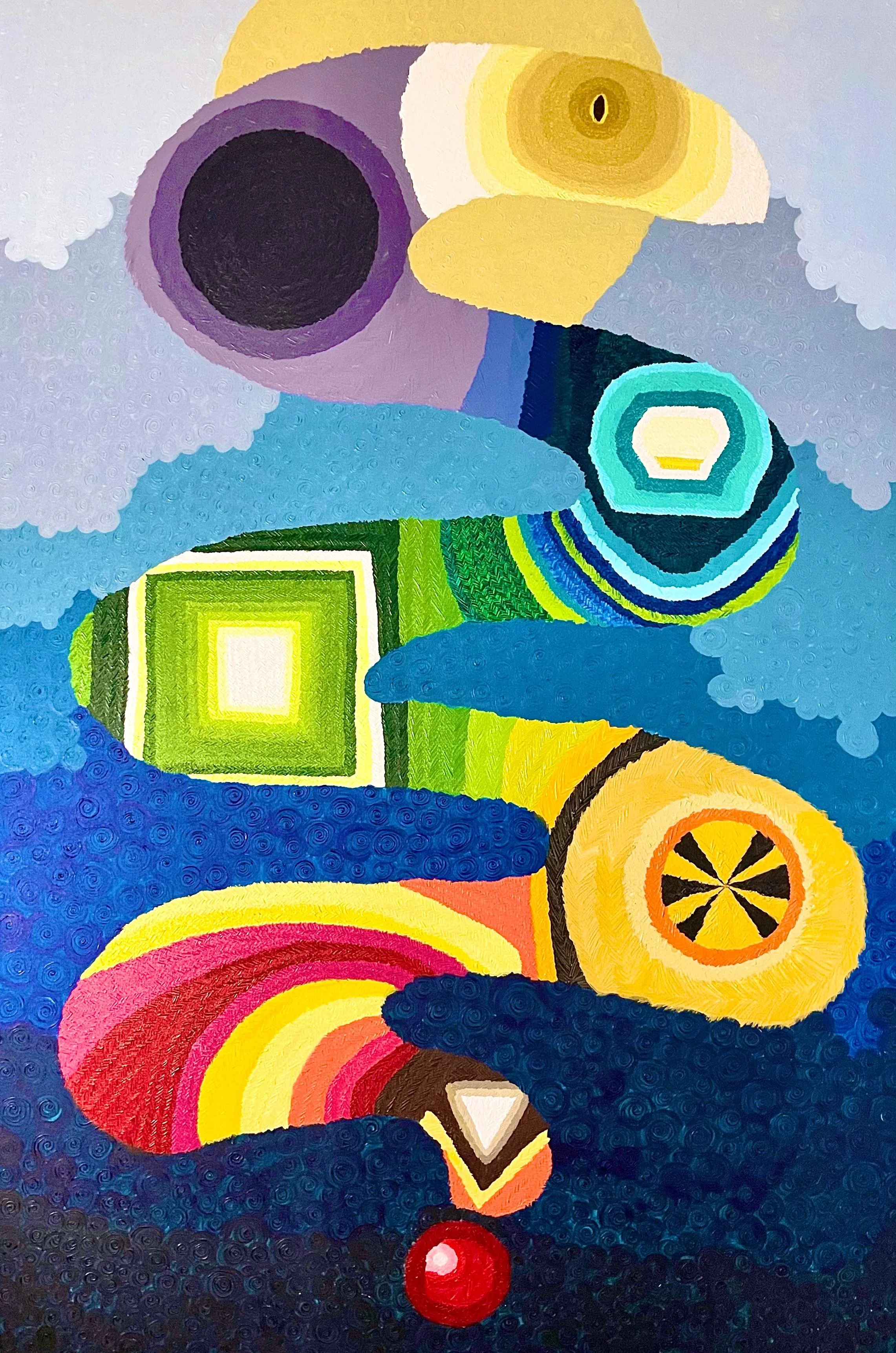
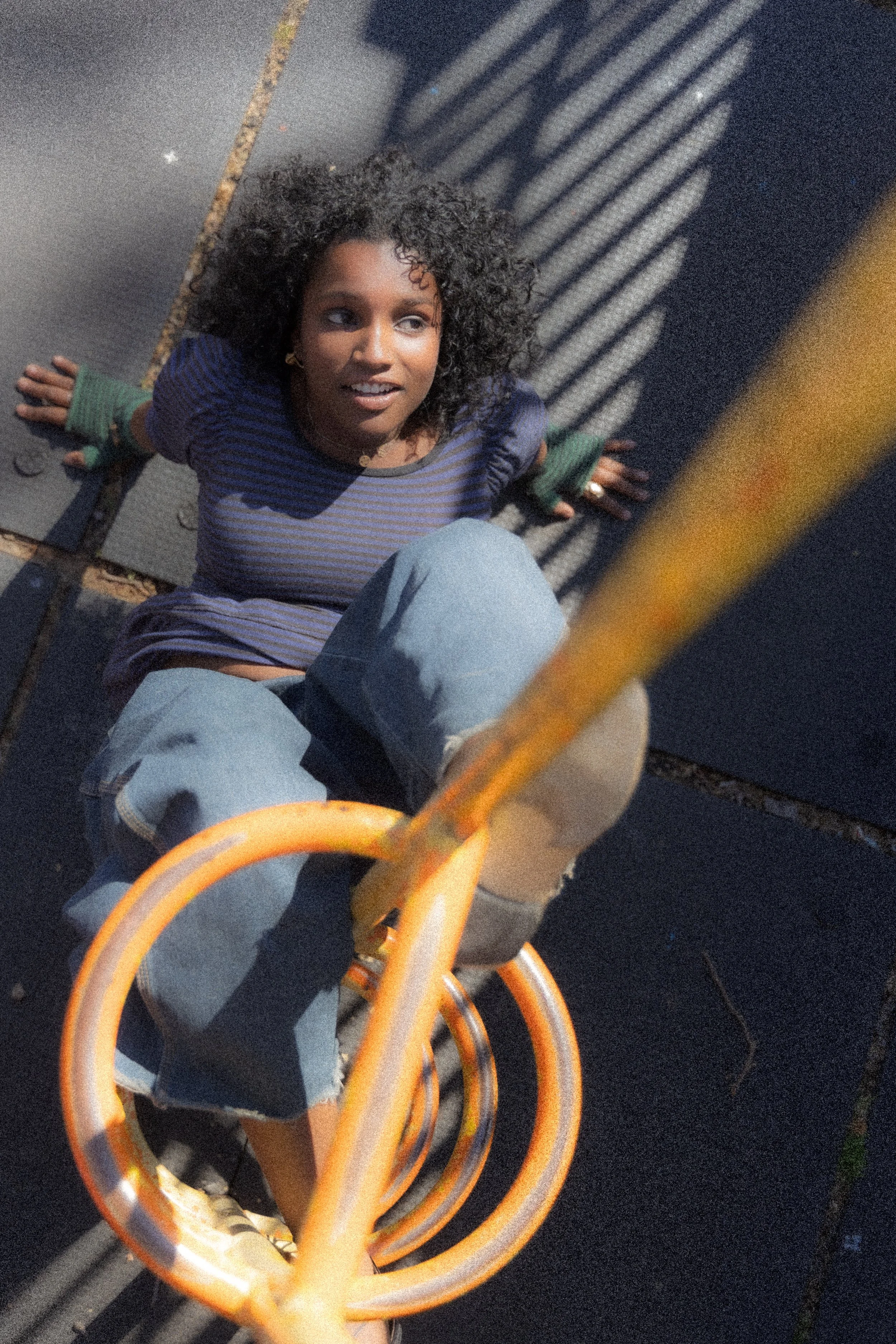
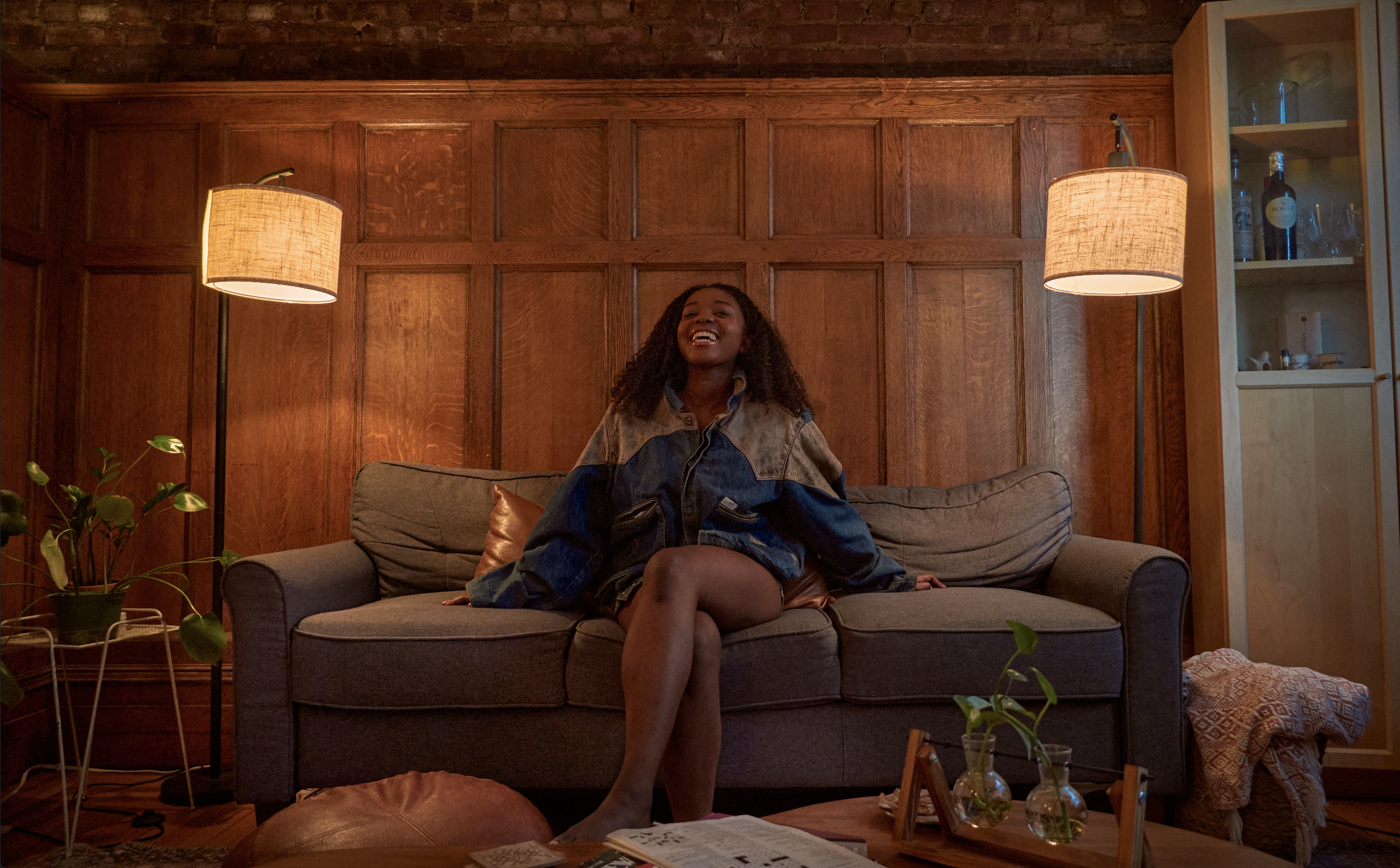
Naa Ayorkor Laryea, or Koko, is studying Psychology at Barnard in the class of 2027. She is from Maryland and recently transferred from University of Maryland. She paints bright, detailed portraits inspired by reflection, connection, and her cultural heritage. 


It is a warm Sunday evening when I meet Ayorkor at her apartment for our interview. Sinking into her couch I can see out her living room window. The setting sun paints the opposing building a golden color, the warm type of shade often used in Ayorkor’s paintings. By the end of our conversation, the sun is gone and the buildings have returned to their ordinary hue.

Upon entering her apartment, I knew only two things about Ayorkor: she is a psychology major and she paints portraits. So naturally, one of my first things I asked her was why, what connects the two? She explains to me how she sees it: psychology is the study of the mind, and portraiture is the study of people. They are, at their crux, one subject matter through different lenses. Two sides of the same coin. Ayorkor has always had a love for people—understanding them and portraying them. Laughing, she recalls asking her dad for a psychology book in fifth grade.

Ayorkor feels a sense of certainty in the idea that art and art creation is her purpose. Growing up her household was consistently saturated with art and culture, giving Ayorkor her longtime love for art. Ayorkor’s mother is a musician, and her father is a lover of African art. Ayorkor’s father has always ensured that she was aware and appreciative of her culture. Being West African, half Nigerian and half Ghanian, she tells me that in her childhood home her father is always wearing traditional clothing and cooking traditional food. As a result, Ayorkor feels deeply in tune with her heritage in her own accord; she sees it for its beauty and feels that it is often misunderstood. A lot of the time Ayorkor’s paintings are about portraying her heritage and identity in a way that she can connect to and feel proud of. 

untitled 1

At the time of our interview, Ayorkor’s sister had been staying with her. The two of them had been spending time reflecting about their childhood, and she shared with me a conversation they’d been having. “Our parents genuinely surrounded us with art, and not just visual art, but music. We were always listening to music in the house. My mom would take us to jazz concerts, even on school nights. And we would just sit there with older people, and I feel like my perspective for life just developed really fast.”

Ayorkor’s portraits are bright, playful depictions of people. Her subject is usually someone she knows, if not from an online reference, and her work is an attempt to capture their aura on canvas. Her art depicts the world as she chooses to see it, it’s based on observations and intricacies that capture her attention in the everyday. She conceptualizes her portraits in series with distinct themes, a few thus far have been Remembrance, Elders, and Black professors. Though, she admits to me that it is difficult to be both a student and an artist—so far her only complete series is Remembrance. It began by painting children, like her younger cousin. “I started off with just like painting kids, because I love kids and I feel black children aren't always shown in ways that I think represent youth.” She feels that her work is her part in creating representation. 

yemi

She has another series focused on the elders in her life, she has one featuring a family friend, and one about her grandfather is in the works. This series began in direct response to Remembrance. She pauses, trying to explain her inspiration to me, “I think it was about transition, again. I love transitions and adaptations. I previously painted kids, and I wanted to go the opposite, so elders. I didn't find it that different, even though obviously an older person has more wrinkles and their face looks different. But I definitely do believe you look the same, that the older you get you kind of revert back.” The proof of her belief in this sentiment is in her painting. Her portrait of her family friend catches him in a sort of youthful unburdened happiness, despite the obvious signs of his age. It makes me feel happy, she says that it makes her happy too. Her friend has been an art collector for his entire life. After years of looking at his collected paintings, she has been able to depict him in one of his own. 

the collector’s edition

Another series of Ayorkor’s commemorates Black professors. She started this at her previous college, University of Maryland, and is still deciding whether it should be resumed at Barnard. Ayorkor’s work consistently depicts Black life across generations. When I asked her about why she has made this choice thus far, she told me, “To me, it's kind of like a resistance. American culture tells us white people are the center. And I find it liberating to not care about that.” Interested in this artistic constant, I then asked her if she sees herself painting Black people exclusively in her artistic future, she told me she does not. At the end of the day, it comes back to Ayorkor’s love of people: this will continue to be the driving factor in her art regardless of how it looks. 

It is obvious that Ayorkor has always loved art, however, she only started painting portraiture in the 9th grade, when as she recounts, she simply felt a drive to pick up the paint brush. Telling me about how her painting process typically goes, she said,  “I don't like copying things. I really like using a reference, and building from it, and kind of just developing my own style.” She will typically underpaint her canvas a shade of burnt sienna, a color that reminds her of the soil in West Africa. She sketches her reference in pencil, a practice that is frowned upon within the confines of traditional painting etiquette because the graphite marks can sometimes be seen in the finished piece. But Ayorkor doesn't care—she prefers the control that the pencil gives her. 

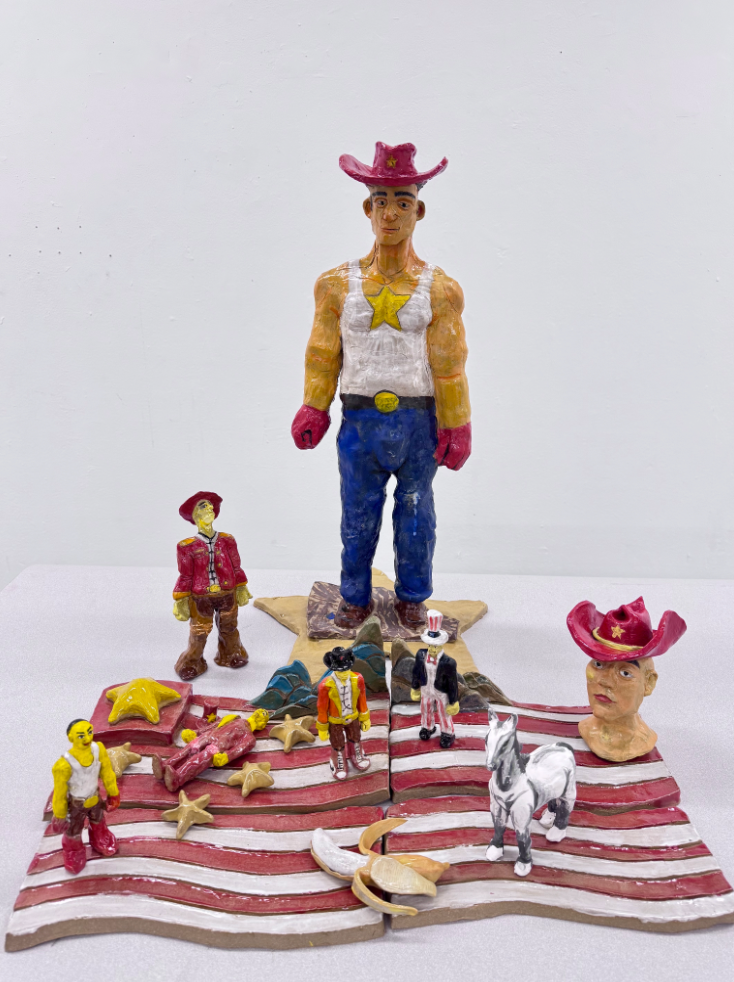
While she loves portraiture, Ayorkor tells me she feels a shift in her style oncoming. She feels her move to New York has come with many new observations which will serve as inspiration for her new work. She already has some inkling of what this will look like. She hopes to create something about the corporate scene or perhaps something about scenes of life in New York. While she is not entirely sure of the form these ideas will take, she feels a pull towards the  representational rather than the literal. She also wants to experiment with new mediums, like ceramics. 

untitled 2

I was impressed with the confidence that Ayorkor possesses when it comes to creating art without any formal training. She gives herself a lot of freedom when it comes to her painting and maintains a certainty that art is her purpose. When I asked her about where her confidence stems from, she told me something her mom always tells her: "You will do what you want to do—, there are no constraints.” These words are embodied in almost every aspect of her creation, style, process, subject matter, and medium.  

With that, our interview was almost over. Ayorkor told me that she is very much excited about her move to New York and the transition to Barnard, and that she has not been painting at all since she got here but hopes to start soon. When she does start, she will be painting in her room, as she always does. She has big plans for the future, while she has just started her third year she predicts that she will pursue a career in psychology. As one of my last questions I ask her if she will continue to create art she says definitely, stops for a moment and then continues, “I feel like it [art] is my purpose 100%, in the sense that it is not only one of my first loves, but it feels like what I'm drawn to do here while I'm here on this planet.”


WON JONG

Feature by Alexa Zacarias

Photos by Harper Rosenberg

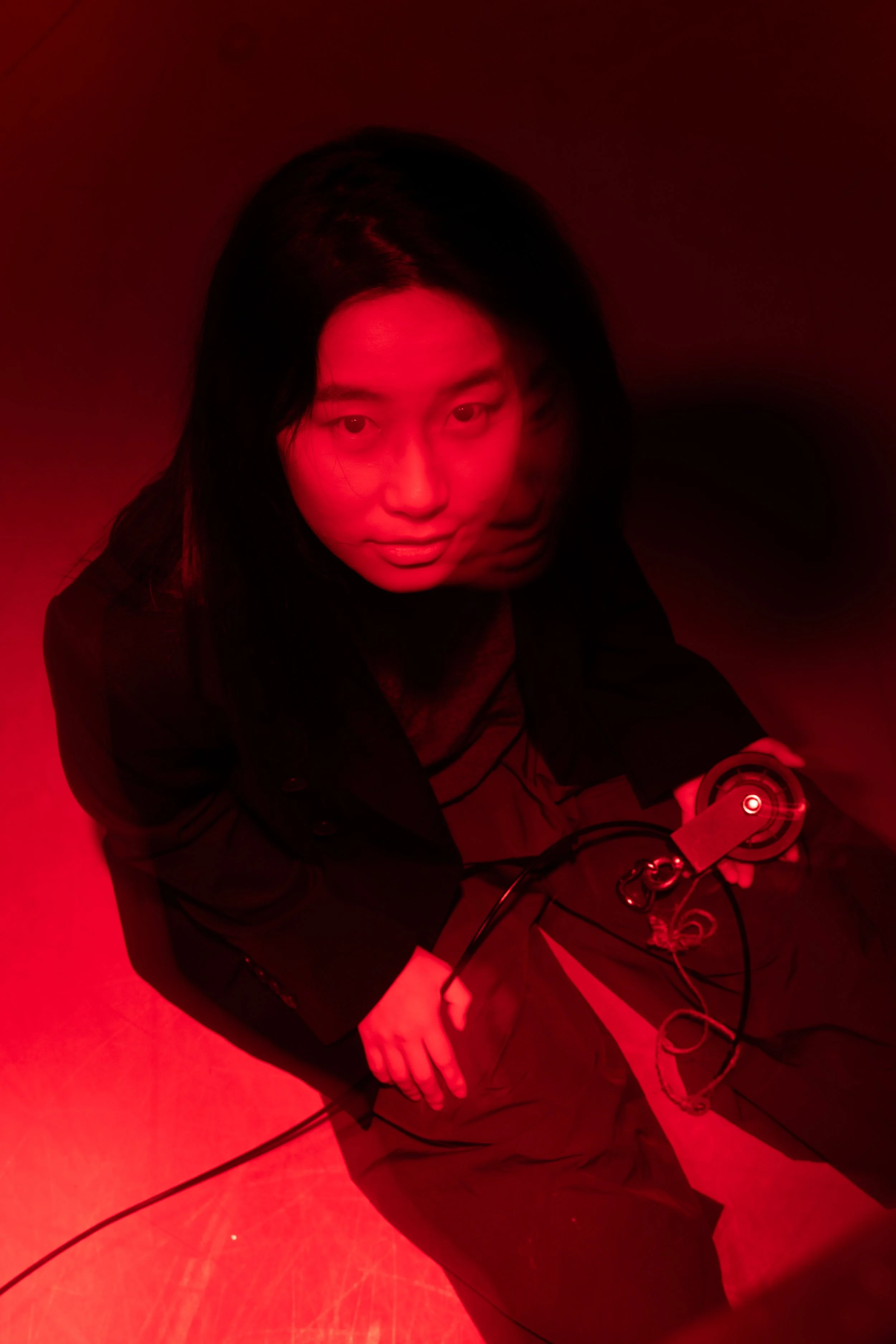
Won Jong CC’26 is a South Korean composer whose works have been performed across North America, Europe, and Asia. He moved to New York City from Seoul, Korea, where he is currently pursuing a degree in Composition at Columbia College. Won serves as Artistic Director of the Columbia University Bach Society, as well as having received the 2025 Boris and Eda Rapoport Prize, an honorable distinction in music composition from Columbia University.


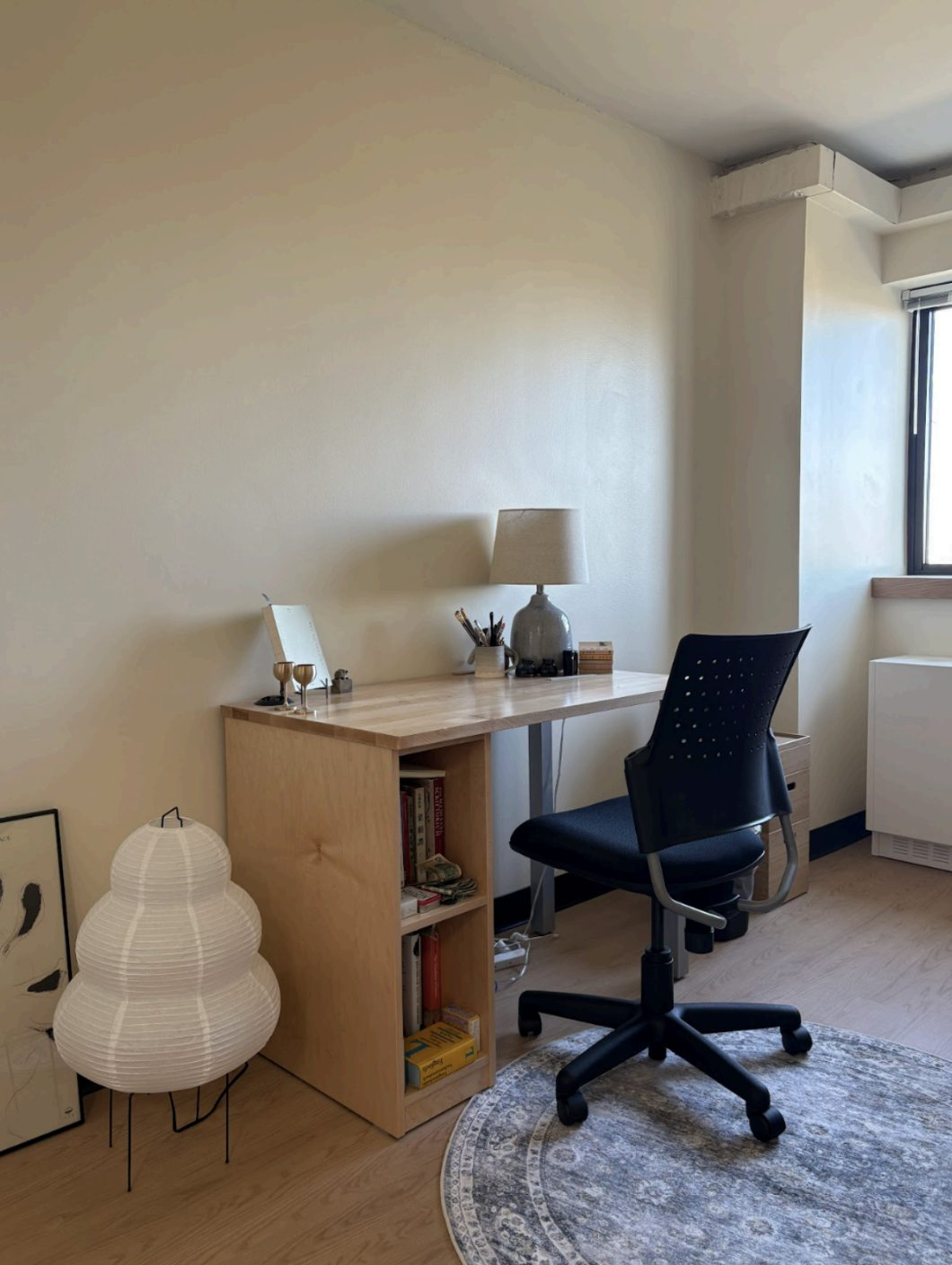
Won Jong sat across from me, criss-crossed on a swiveling chair, on a relatively sunny day in New York; his East Campus suite illuminated by the strings of light gliding in through his window. While he gathered the materials he wanted to showcase throughout the interview, I took the opportunity to look around. 

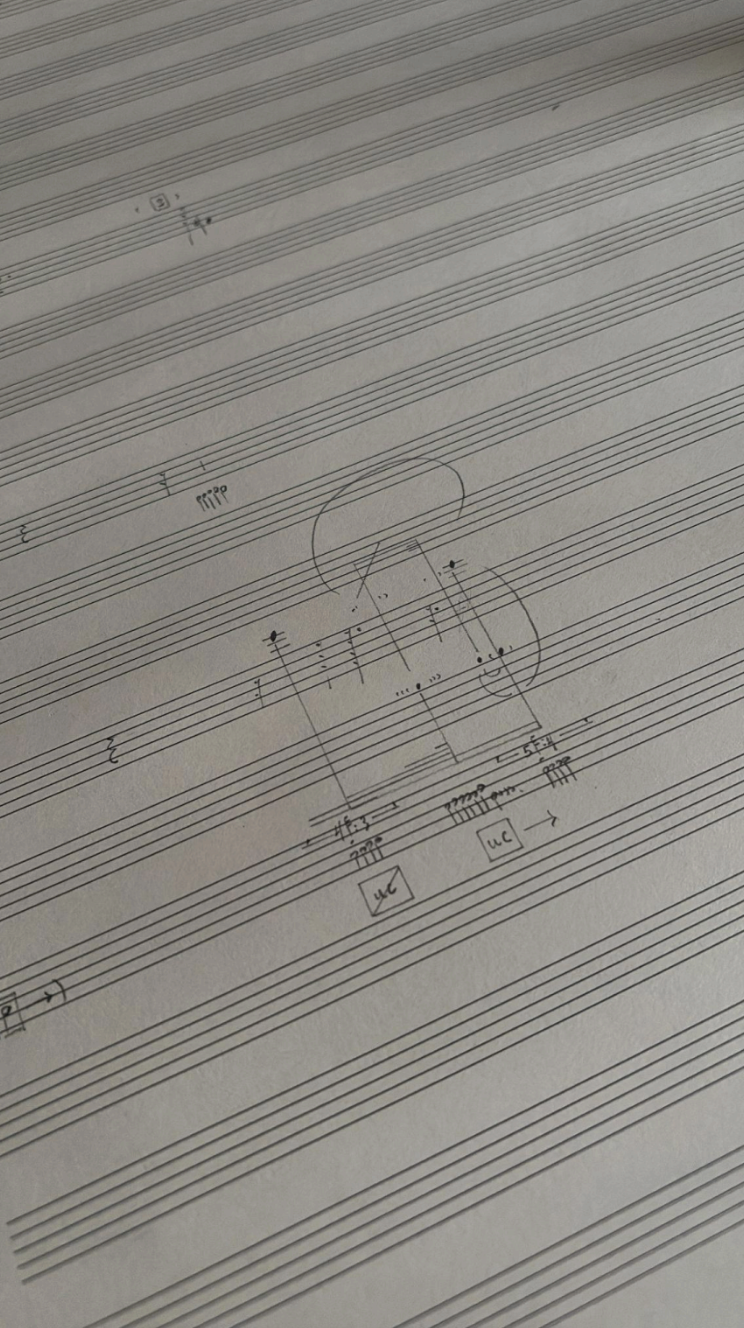
His set-up was simple, almost quaint. His workspace (his desk) had a ceramic lamp surrounded by a couple of pens, ink, and a penguin plushie hidden behind a light-blue mug and a ruler. Handwritten compositions were neatly placed on the right side of the tabletop, with a half-read book on a stand right next to them. The inscriptions on the staff paper were subdued, hushed, willed with incredible detail. There were notes, of course, with curves and small, almost unreadable phrases dispersed throughout the page. I then headed to his bedside table, his diffuser dispelling citrus-fragranced air into the soothing atmosphere of his room, a couple of essential oil containers tidily placed around each other, along with three bottles of cologne. Everything seemed to have its own place. The oils on the table, writing materials in the writing space, books stacked onto one another on the shelf, and Won in the middle of it all, his reflection present in every corner of the tiny space. 

“desk”

Won grew up in the bustling Seoul, Korea, living in a tranquil area near a mountain along with his grandmother, and graduated from a high school class of thirty students. Won began his musical prospects as a pianist and a percussionist, but as an introvert, he hated the stage, proclaiming, “I think what I dislike the most about performing is the fact that, you know, music is a temporal art form, right? And you're essentially judged on a singular strip of time.” Over time, his love for composing grew and diverted him from performing, as it gave him more agency over the rendition. He became the orchestrator of alluring pieces of music from the shadows, sitting in the corner of the concert hall surrounded by his scores. He states that “You can judge a piece of music independent of the performance.” 

Leaving behind the frenzy of Seoul and welcoming the similar buzzing of New York, Won takes it upon himself to find pockets of silence and stillness between the chaos, just like he did back home and in his musical career. Much like his pieces, Won is sparse, self-contained, filled with long moments of quietude. However, Won isn’t a solitary creature, despite the stillness of his music. He finds time to go to art galleries with his friends, always with a smile and a double-handed wave ready for anyone who bumps into him around campus. His desk carries the weight of all his compositions and every piece he’s ever created: waking up at 7:30 AM every morning and taking some time to practice his creative pursuits before class. His music doesn’t arrive pre-designed, but it unfolds like something tenuous you find in the dark— with the essence of discovery making defeat inevitable, and therefore more human. To Won, failure is not the opposite of art, but its very condition. 

“fragment of a score”

Won describes one of his “most stubborn qualities” to be his necessity to compose and engrave his score on paper, with meticulous attention to detail. He proceeded to show me a recent engraving of a piece titled, “Edison Kinetoscopic Record of a Sneeze - antiphon in two parts,” a composition inspired by the 1894 black and white silent film of Fred Ott’s Sneeze, the first motion picture to be copyrighted in the U.S. (fun fact, the snapshots of the film also happen to be Won’s computer wallpaper). Although I have little knowledge of music composition, I had never seen an engraving quite like this one, with the spacing so intentional, squiggly lines between notes, and unusual arrows. The manual engraving is a depiction of Won’s artistry and creativity, allowing him to fully feel and engage with his material as he writes it. This process allows Won’s work to “look closer to what it sounds like,” teetering on tension and audibility.  Some may call this process inefficient, but to quote Won, “If I wanted efficiency, I’d be an economist.” 

“edison sneeze score”

When asked if he had to write the soundtrack for the life of a figure–dead, alive, or fictional–who would he choose, Won mused about it for a bit, staring deeply at his screen, until finally he screamed, “Fred Ott, the sneeze guy!” When asked why he would give such a bizarre answer, Won gave a cheeky smile and said, “I would love to meet this man. He just seems so interesting. That’s my little cop out answer.” I totally think this was cheating, as he has already composed a piece about him (it was performed recently at the Maison Française). Oh well, he’s the artist, right? Whatever he says goes. 

We moved on to the actual listening experience of his pieces after looking through a couple of other scores. It was then that I remembered my first listen to Won’s “small room: anno 1130 aedificata, Eidyn,” played by a string quartet. I had to bring my phone up to my ear, sitting on my bed, careful not to ruffle my blanket, and trying to tune out the outside screeches of a cat from my window. I couldn’t truly connect. Won explained that his music was never meant to be listened to on a recording, but that it:

“...works better in live performance because with silence and such fragile material, in a live situation you’re sitting there in the audience and you become hyper aware of every single movement and little creak and sound that you’re making… That links to the idea of silence as energy. There’s a real tension to it. But on a recording, no matter what you yourself do, you’re not going to influence the recording, because it’s already fixed. So I think a lot of that energy is lost.” 

We watched a video of this performance played live, settled in complete reticence, aware of any sudden movements we made– the squeaking of the wheels of the chair he was sitting on, the soft rubs of my feet against the floor– and I understood what was meant by “fragility” in this piece. Throughout my listening and watching of the video, I was uncomfortable the entire time and extremely keen on not only the piece, but also how my surroundings added to it. Conscious of the long pauses of the musicians throughout the performance, the gaps in the production gave me time to take everything in. Though Won acknowledges how one might think of fragility as a material term, he thinks that it applies to gestures. He frames it as delicacy in music built from the possibility of failure, though he has yet to come up with a more definite definition of what it signifies for his pieces. 

Currently, Won is developing this idea further in a creative project for the ensemble “Hypercube,” consisting of a quartet of saxophone, electric guitar, piano, and percussion. It’s called… wait for it…“parchment grew hair, folio 21R,” and it’s inspired by Won’s recent interest in medieval manuscripts, medieval music, and the process by which parchment is made. Fascinated by the notion of craft, Won devoured a book of medieval scriptoriums, where they talk about the process of making parchment. Parchment is made up of animal skin dipped in lime and water solution, dried, and stretched for writing. We imagined the scribe taking notes on this process, like Won, sitting at a desk for hours a day, an observer of technique. Bored, the scribe would write small notes on the sides of the parchment, with one of them being, “the parchment is hairy.” As soon as Won read this, he knew what the title of his new composition would be. 

“parchment grew hair score”

Like a recording fails to capture the full scope of Won’s work, neither can an article. Maybe that’s the point: to attempt to write about Won as an artist and a human, knowing he himself is as tenuous as his music, slipping through the cracks, but firm in his quiet strength. Won’s work asserts that fragility isn’t a weakness– but a condition of living. To listen to him is to accept that nothing is everlasting, and that one must exist in the discomfort of the present. His work resists being captured despite its stillness, insisting on being heard in person, in a room, surrounded by others, following the musician’s every move, engaging between the space of sound and its petering out. Orchestrated from the comfort of his citrus-scented room, silence becomes charged, an invisible collaboration between the performers and audience

STEPHANIE FUENTES

Feature by Kayly Nguyen
Photos by Colson Struss

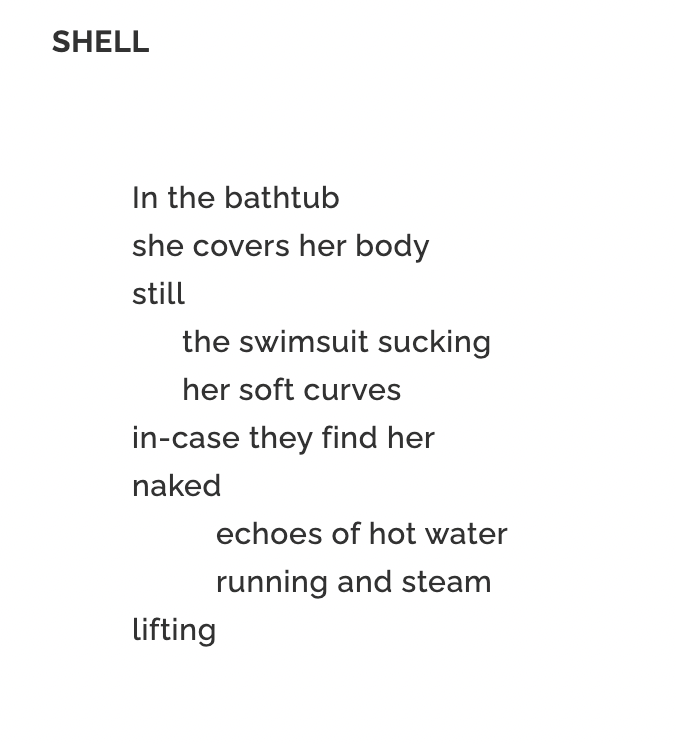
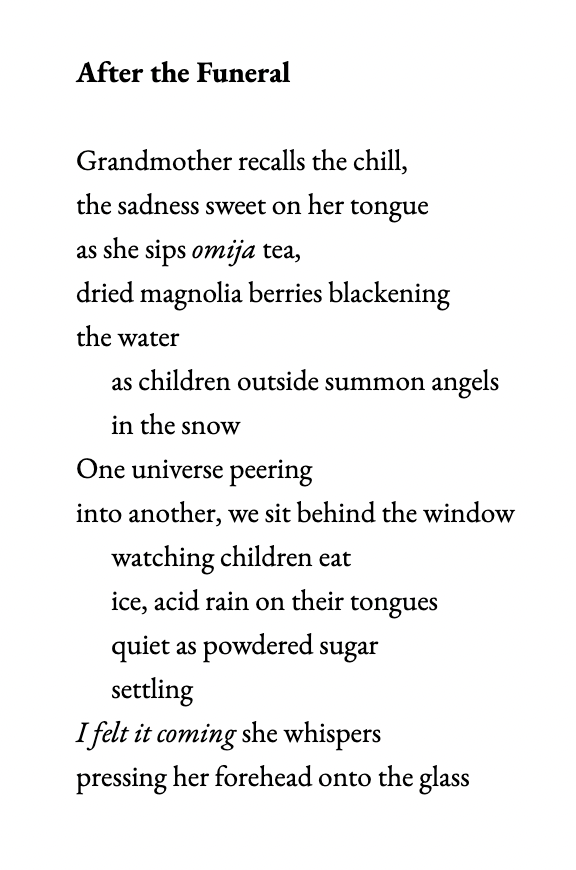
Stephanie Fuentes (BC ‘26) is a poet who unashamedly delves into the themes of grief and lust and their both vulgar and mundane depictions by using water as a thesis. She is currently preparing to graduate with an English degree and concentration in Creative Writing at Barnard College.

Stephanie Fuentes is still grieving.

She’s lingering in this feeling that’s taken root—first through her lungs, then through her veins and throughout her body. 

It won’t go away.

She exhales and releases the feeling—but now it’s in the air surrounding her like perpetual stasis. Moving on is supposed to mean letting go, but grief won’t let her go.

That’s what poetry feels like for Stephanie Fuentes. Water comes in as a thesis and connects the poet and speaker together, a channel for all-consuming grief that would otherwise run unchecked in the body. 

As such, Stephanie’s poetry intentionally does not inspire catharsis. It lingers in absence and in longing—in grief and in lust, which you would think are diametrically opposed. In reality, they’re two sides of the same coin: this desperate desire for what you cannot have in the moment—something just out of your reach.

Of course it’s sad. It’s painful. 

But for someone looking for something to hold onto, it’s everything.

Stephanie Fuentes is a poet who grew up as the eldest daughter of a Mexican-American family and learned to thrive in the unpredictable wildness that comes with it. She’s a native to New York and has spent life moving between Staten Island, where her immediate family resides, and the Upper West Side with her grandparents, aunt, uncle, and cousin, who she was also extremely close with. 

For secondary school, Stephanie left New York for Milton Academy in Massachusetts. Outside of the metropolitan bustle of daily life, Stephanie discovered a proximity to nature: an intimate connection with the world around her that eventually seeped into her poetry, which she describes by using water as a defining thesis.

When Stephanie returned to the city, that connection stayed with her. She’d often submerge herself in shallow ponds, like the third step of the childhood-defining pool in her uncle’s house, and sit, letting the emotions inside her flow like water: a substance that eventually leaves no trace in a container.

That parallel hit even harder when Stephanie lost her grandmother during the COVID-19 pandemic. She recalls close moments of her grandmother bathing her like a mother and spending every waking second with her.

A couple years later, Stephanie lost another mother figure in the form of her aunt. She describes grieving differently from her siblings and those around her, because to Stephanie, her aunt was everything, and it broke something in Stephanie to have to lose her—as if a part of her was lost when she died.

So, just as water leaves nothing behind, Stephanie remarks that “A headstone omits the actual person that was once there.” In the same way, Stephanie often draws on not only the presence of water as a defining element of her poetry but also the intentional absence of water: empty containers that used to hold water or rivers that have run dry, which also acts as an allegory for issues with sobriety.

Water, therefore, is almost universal in that way, whether it’s grief, love, or alcohol flowing into each other down the drain. Reminiscent of the phantom presence that water leaves behind, Stephanie believes that in poetry, even if something draws from a false memory, “It doesn’t make anything less real if the origin point was real.” The grief she felt over losing two mothers was real, no matter the fictional form it takes in her writing.

It’s the reason why Stephanie is so drawn to poetry: there is so much freedom to explore while inhabiting the persona of the poem’s speaker. She declares passionately that “I love the audacity in which you can cry for grief that's not your own. Making shit up is so important to poetry.”

“People forget that with the confessional day and age now,” Stephanie says. “I mean, I write confessional poetry, but the ‘I’ is never me. The ‘I’ is always the speaker, who's far removed.”

Stephanie revels in that same freedom to explore concepts usually seen as taboo and that are typically left unsaid. She enjoys writing about the “weird, warping, and vulgar forms of grief that overwhelm the speaker—the mundane and disgusting depictions of grief alike.” This is especially clear in “Chlorosis,” where the narrator subsists on material parts of a body left behind after loss:

“My sister asks, Why do you do this

to yourself.

Truth is, the year is still rendered as a year–

I find your hair strands striped along the unwashed

bedsheets and tape them to the bedroom walls.

They could be timbers. They could be longer.”

Stephanie also tends to incorporate an element of surprise into her poems. She visualizes her art as an experience for the reader, taking inspiration from how poet Yusef Komunyakaa describes his own work in relation to music. In fact, in a profile by the Academy of American Poets, Komunyakaa explained that "Jazz has space, and space equals freedom, a place where the wheels of imagination can turn and a certain kind of meditation can take place. It offers a meditational opportunity.”

In the same way, Stephanie describes her poetry as an “instrument of meditation.” She doesn’t want her poetry to influence. She says, “I want someone to read a poem of mine and like it—the way they would walk down a river or see a tree.”

This kind of intentional simultaneous surprise and experience for the reader is well showcased in “Alluvion,” where Stephanie remarks that, “If you just read it like this, you’re like, killing who? Killing myself.”

“The morning after I tried killing

myself, you

climbed into my bed and smoothed my

hair down the length of my back,

     your soft fingers the water

carrying itself back to the harbor

There are things I would have done

had your love been smaller”

Stephanie’s unexpected enjambments serve to remind the reader that this poem is not about relief from overpowering emotions: it’s about living in a moment of grief with the poem’s speaker, where line by line takes you by surprise.

(It’s like: you—you what after that? There are things you would have done—done what

Oh, I return to your love once again. I am left still grieving for you).

And at the end of the day, that’s what Stephanie writes poetry for: to be swallowed in the feeling of grief once again, like suffocating underwater. The reader just happens to experience it with her.

“I fell into poetry after this deep period of grief. And so, poetry was something that left this emotional residue on me. I was suffering and other people were suffering, but poetry was grief and that was it. That was all it needed to be. Just an acknowledgement of grief.”

So, Stephanie Fuentes is still grieving. She has not moved on.

Through poetry, she can let that be okay.

Work Cited

“Yusef Komunyakaa: An Argument against Simplicity.” Poets.Org, Academy of American Poets, 4 Apr. 2019, poets.org/text/yusef-komunyakaa-argument-against-simplicity.

Andee Sunwoo Lee

Feature by Nathan Ko

Photos by Cas Sommer

Andee Sunwoo Lee is a Senior CC ‘25 at Columbia College, majoring in visual art with a concentration in psychology. She grew up practicing art and exploring different mediums, such as sculpture, photography, and videography. She seems to prefer a lemon Spindrift over a grapefruit one, perhaps stemming from her fondness for the color blue. 

I’m one minute late for my interview with Andee. And, even worse, I have no idea how to get into Watson Hall. Luckily, Andee came down to help me. I’ve never met Andee before, and sometimes we, as people, unfairly create ideas of what the artist may be strictly based on our impressions of their art. In the case of Andee, it was really hard to imagine what she might be like based on her art due to the variety of her artistic expressions. In my first few interactions with her, it was clear that she was incredibly approachable. We sat down in her senior studio at Watson Hall. She offered me the nicer chair. I declined out of courtesy. She insisted. I accepted out of joy.

Andee’s passion for art traces back to her roots. Born in Los Angeles, she then moved to Seoul, South Korea, while attending a boarding school in Jeju Island. Her older sister did art from a young age, though she was more interested in the theoretical side of art. Watching her sister practice art was exposure to a different world that Andee could enter. She started to make art at a young age.

A lot has remained and changed since Andee was a kid. When she was a kid, the clash between Los Angeles and South Korea as a locus for home, as well as her father’s love for Daoism, exposed her to the dualities in the world. She attempts to incorporate some of those dualities today. Yet, what changed, or perhaps what became more apparent, is her artistic voice that is now both loud and shy.

“I’m now trying to overcome that fear and insert my voice into the images I make. The main feelings present in my art stem from hiding from people, but screaming, ‘Look at me.’ But when people pay attention, it becomes, ‘Don’t look at me.’ This liminal space I have in my art may be why I’m dabbling in different mediums.”

This longing to own her artistic voice is perhaps most evident in Through The Eyes, Beneath the Soil: A House of Flesh. In this video piece, Andee incorporates the voices of other artists. For example, she uses Kusozu Japanese art and the poems of Na Hye-sŏk (known as one of the first Korean feminist poets), the latter of which incorporated the plot of Henrik Ibsen’s A Doll’s House. Andee also cites Japanese artist Fuyuko Matsui and, specifically, her portrayal of a woman’s body decaying as an inspiration. Amidst all these different historical artistic voices, Andee aims to add her own artistic voice to create a new contemporary understanding of different issues, in particular femininity.

“I was doing a lot of collaborations with my friends who graduated, and this is one of them . This was for an exhibition in Shanghai, and the theme was like Blood Bowl sutra- this Buddhist hell where women are sent to because of the sin of polluting the earth with their menstrual blood. I was inspired by this Buddhist concept. Also, I studied the Japanese artist Fuyoko Matsui, and she has a painting of a female body that’s decaying. It’s a reminder that everything is ephemeral. The female body, sexual issues, it’s all transient. A lot of the images in the video are found images. I was trying to merge those existing narratives into my own image to make a modern adaptation.”

Through the Eyes, Beneath the Soil: A House of Flesh

It’s impossible to talk about this piece without mentioning her Korean background. When noting how the female body can be “liberating but also restricting,” she mentioned that Korea has influenced her views on femininity. In particular, growing up Korean, the concept of a “house” was not necessarily comforting. A house can be seen as a very patriarchal setting, reflecting it, simultaneously, in a domestic and cultural setting. In the video’s last scene, the physical body and the house relate to Andee’s interest in exploring the concept of a house as a “vessel of something very conflicting.” She made the house in the video.

“The house is something I made with 3D tools. It’s a collage  I made with decaying flowers. And I always get to add a twist to existing symbols. Flowers, for example, often symbolize life and purity. But what if it's decayed? I always like to add those twists to common symbols. That's why I wanted to make this female body using decayed flowers, referring to the reproductive system. It's supposed to look like a uterus. Combining the image of the female reproductive system and the domestic home as a site of both violence and life is my main motif, and I think [Hye-sŏk’s] poem kind of penetrates that idea of what it's like to be in a body you don’t have autonomy over. These experiences and questions are ones I can’t fully answer, and I just like to leave it to the audience. I'm just  leaving narratives and letting the audience do the interpretation.”

Andee mentioned the influence of David Lynch in her video. For example, thinking about the historical narratives surrounding the male gaze, she made the decision to have the video of the flickering eye at the start of the behavior in black and white. And, in the rest of the video, she’s again intentional with color, darkness, and light. These choices are for her “ways to construct [her] own language.” Yet, when she mentioned David Lynch, I immediately thought of the way Lynch would describe Inland Empire. Inland Empire is one of Lynch’s most experimental and abstract movies. It truly is a movie that cannot be encapsulated by words. When asked to explain Inland Empire, Lynch is succinct: “It’s about a woman in danger.” The 3-hour movie provides its audience with the joy of interpretation. This process of letting the audience interpret the work is similar to Andee “leaving narratives and letting the audience do the interpretation.” Yet, in Lynch’s film and Andee’s work, there’s both a clear unease: one cannot just relaxingly eat a melon wrapped in prosciutto while looking at Andee’s video work. One must sit down and watch. And try not to pause, even though there is a fearful addiction to what may unfold next.

The attention to detail in Andee’s work stems from her ascetic work habits. While discussing this video work, she opened a small and dainty notebook. Inside such a notebook, there were so many notes that were deliberate in explaining the project’s inspirations, goals, etc. She told me how she planned for the video through her notebook, and by looking at how packed her notebook was, it was obvious that it took incredible detail to create such a video. In many ways, this asceticism is an art in and of itself. Like Kafka’s The Hunger Artist, or Fasting Buddha Shakyamuni, there’s an awe I felt when looking at her notebook. Like damn, I don’t know if I could do that. 

Window and Tree

Compared to her video work, which was planned rigorously in an ascetic fashion, Andee’s photography arises from the desire of the moment. It’s not months of planning on a notebook that drives the shot, but rather the sudden impulse to capture a given moment. This sudden impulse can come from any stimulus- a striking feature or a pretty color. At the start of the interview, I offered Andee a Spindrift: she could pick either the grapefruit or the lemon. She, out of pure instinct, chose the lemon one because of the blue can. She even noted that her choice to attend Columbia was based partly on an instinctual fondness of Pantone 292. These sudden inclinations, such as regarding color, are what determines the photo for Andee.

Andee is deeply intentional with photography, though. For her, photography is uniquely alluring when she can play with its texture. She works to capture the dimensionality of texture with visual mediums. Also, I noticed that her photography captures movement in a sophisticated way. Her photograph of a tree explores the feeling of it being caught in movement, and capturing such a time-specific moment in movement under the backdrop of blue contributes to Andee’s talent of contrasting color with movement in her photos. 

For Andee, photography can also emerge from personal reflection. In her Self-Portrait Series, there’s a photo of a shower that again captures the compressed texture, in this case, of water. There’s a feeling with the photo: perhaps a suffocation of sorts. This makes sense, as the dorm shower overflowing can become suffocating. The shower is also an intimate space where one clearly sees their body in a bare manner. 

Self Fossil

While this photo may seem distanced from some of Andee’s sculpture work, there’s a similar barren, concrete feeling that emerges in both. In her sculpture Embedded, she depicts a bed in a way that emerges from her experience growing up in boarding school. There was a tension between the bed as a private space as well as a place to socialize with others. There’s also an element that a bed is a way to mark time; we’ve all spent so much time on our bed, and it changes so much over the years as we evolve.

“I tried to see how I could make this bed into a fossil of myself, where I’m traveling between different timelines in my life. In making this piece, I was collecting a lot of objects in my room and putting them in plaster liquid. Then, I would solidify it into the shape of a mattress.”

Embedded

This piece reminded me of a quote from William Carlos Williams: “No ideas but in things.” In a lot of Andee’s works, a lot of grand ideas are being played with (time, femininity, etc.), but they all arise from physical objects. Andee operates as an artist of detail—she takes perhaps banal objects like a bed and reappropriates them in a way that is packed with many layers and intertwining ideas. There’s also that sense of unease: the solid, black legs of the bed and the messy, broken-down mattress render the bed not as a soft home to return to but rather something more solid and painful.

The Nature of Being Born

In her diptych sculpture piece The Nature of Being Born, she again explores the concept of time. In this piece, there are attachments of boobs, barnacles, and the crying faces of babies. She sees a parallel between babies and barnacles as a form of dependent parasites. The nature of their time can also be seen as dependent, as a parasite must take the time from another for its own time. That feeling of unease—the tingling over the left shoulder—emerges in this piece. Perhaps it’s my personal tyrpophobic fear of barnacles, but when I first saw this piece, a silence ushered in my bones. This makes sense, as I felt a similar way with one of Andee’s inspirations for this piece: Damien Hirst’s Mother and Child, Divided, a sculptural diptych with a mother cow and her baby calf separated by the structure of the sculpture. 

While a lot of Andee’s work operates within abstraction, there are tangible things that I associate with her as well. Lemon Spindrift. Black clothes. Big smile. Use of the word” “gotcha.” Senior studio with her photographs on the walls. And we don’t ask why. Rather, we enjoy these little things, these little moments. And we interpret it. Like Andee’s photography, we let things be. And I don’t think that’s just her way of art; it’s also the energy she brings. There’s a deep methodical order, an ascetic madness, but all with an energy of ease. Perhaps that’s one of the dualities in her life.

Cate Mok

Feature by Anushka Pai

Photos by Arden Sklar

Cate Mok is a Senior at Barnard studying architecture and computer science. Though Mok's art primarily centers around her academic fields, she enjoys working with diverse mediums, often blending her design skills with her interests in performance, creative writing, and technology. 

We met at the School of Journalism on a rainy afternoon, a fitting location for our discussion. Mok explained that she had previously taken a course at the school, wanting to improve her interview skills. This is a common practice for Mok, who seems to have an endless capacity for new knowledge. I wasn't surprised to learn about Mok's vast intellectual pursuits, as they are reflected clearly in her creative work, which weaves design, technology, and philosophy together with precision. 

Mok arrived at Barnard with plans to pursue creative writing. However, it wasn't long before she fell in love with architecture, drawn to the opportunity to construct physical spaces and explore how design interacts with the human experience. She simultaneously grew interested in computer science, viewing the digital world as another space to be built and felt. 

"We increasingly live and build in a digital world using digital infrastructure. As technology has developed, the digital world has gained a physical footprint, interacting with us and the environment," stated Mok. 

In one of her many explorations of the digital and physical world, Mok used data centers to study how digital actions all have a physical location. Her project, Cloudland, explores how data centers can be redesigned to adapt to changing advancements in data and energy storage. Most data centers, like those built near Mok's hometown, Washington D.C., use large plots of land and rely on high intakes of energy. Interestingly, these expansive spaces are not built for human circulation, hosting less than 20 people daily. However, despite being physically inaccessible, data centers can be easily accessed digitally. Whether through an email or a simple Google search, our digital activity finds its physical location at a data center. In conceptualizing how data centers can be modified, Mok investigated one of her central curiosities: how interactions between people, the physical world, and the digital plane are multidirectional, all inevitably finding ways to influence one another. 

"In this project, I spent a lot of time arguing that traditionally, we see architecture as a means of providing shelter and creative expression. But I also think there's a huge aspect [of architecture] that involves the communication and organization of information. So I started looking at cave paintings, libraries, churches– all these ways to express and store information like we do digitally," said Mok.

Following a deep dive into the archival photography books in Avery Library, Mok found herself fascinated by the platonic ideal of an American diner: modest and non-threatening, a place you can go to disappear. Her project, the Heartbreak Diner, offers its customers an opportunity to seek closure through one last conversation with their loved ones. It is a space to grieve, reminisce, and vent, designed to be entered through virtual reality. The diner acts as a digital recreation of the physical world, a way to encourage intimate connection despite the barriers of distance and time. 

"No one can see your reaction, and as soon as the experience is over, you can still be in your place of comfort. It gets to a theme in my work, creating a space for conversations that can not or do not happen in real life," stated Mok.

Self-described as being in the 'let's not build any more buildings' phase, Mok believes architecture is most impactful when designed intentionally. She views architectural modeling through the same lens. Remaining conscious of the materials used and waste generated as an architecture student, Mok emphasized that 'intentional modeling' offers an opportunity to think critically about social impact and pursue unconventional constructions, such as edible, hanging, and compostable designs. Her models push the boundaries of how spaces can be represented, while still remaining tethered to the issues she is passionate about. 

Curious about what computer science research would look like without a computer, Mok constructed a mini 'pop-up cafe' where she could facilitate conversations between passersby. While reenvisioning the act of computation, this project also studied the role of space in fueling conversation. Equipped with a large roll of paper and a makeshift cafe set-up, Mok presented Love, Death, and Robots at the undergraduate CS research conference. The faculty, students, and researchers who approached her table were given a 'menu,' prompting them to answer a question asked by the previous visitor. While answering the question and raising one of their own, Mok took notes, ending the night with 4 hours' worth of ideas about love, grief, and life. 

"I consider love to be constructed from public discourse and moments of connection between strangers. The dining experience was used as an interface for meaningful connection, and conversation as an act of collaborative computation," said Mok.

Mok's latest project, The Mourning Room, is an immersive experience exploring how love and grief are spatialized, using generative and haptic technologies. The event will debut in Barnard's Movement Lab in the coming week, and programming will include a research presentation, audience demo, and open installation.

“I wanted to create a space for people to consider how we might design spaces and choreographies to miss someone and sustain the physical memory and presence of them. I also wanted to ask, how can hybrid technologies prototype and facilitate architectural and digital circuitries for love, grief, and the online and physical worlds built by two people,” stated Mok.

Celeste Funari Muse

Feature by Caroline Nieto

Photos by Colson Struss

Celeste Funari Muse is a visual artist and collage marker. She is currently a senior (class of 2025) at Columbia College pursuing a degree in archaeological anthropology.

You could say Celeste Funari Muse is a born artist. Raised by two artist parents—her father a photographer and collage artist and her mother a documentary filmmaker—art was less of a conscious undertaking than a way of life. In middle school, Celeste began keeping a journal, writing down thoughts and drawing self portraits “as a way of thinking about what it meant to be a human being in a body, because that felt really confusing at the time.” Since then, she has journaled not daily, not compulsively, but whenever she needs to translate a feeling. Over the past decade, Celeste has collected memories not just as a salve for the immediate, but in her words, as a “sacred way of preserving how I think and how I move through the world.”

Embrace I, Risograph

Celeste has used and replaced the same black spiral-bound journal for ten years. Recently she’s added something new to the rotation: a red pocket-sized journal with blank pages. This book houses Celeste’s most routine practice: drawing strangers on the Subway. While conceiving these images, Celeste is beholden to the time before she or her subjects reach their respective stops, and it is the thought that these people could leave at any moment that draws her to the page. Her perspective as an onlooker isn’t detached from the drawings, where the subjects are obscured by poles or face away from her view. Celeste calls this transient bond “an intimate form of connection in a city where connection isn’t expected.” For quick sketches like these, Celeste works exclusively in linework, depicting only the sparsest details to identify her subjects. While the drawings are minimalist in composition, Celeste sees their sparseness as an asset, where “a single line [creates] an image [...] that allows your mind to fill in the rest. “It’s choosing one thing to focus on and letting the rest fall away,” imagining what might live in the space.

People are what fuel and form all of Celeste’s work. While her parlay into art began as a means of self-investigation, Celeste now turns that inquisition outwards, where each person she meets, or even briefly encounters, adds to her well of inspiration. Given her history as an artist, art school might have seemed like the natural trajectory, but her fascination with the human experience led her to pursue a degree in anthropology, which has given her “a way to talk about art and film and culture without pigeonholing [herself] too early into one skill.” Celeste has found that academia, especially the humanities, can often get caught up in erudition without action; she felt compelled to balance her major with something that felt more tangible. She chose to concentrate in archaeology, a program that allows her to get her hands dirty and feel the “material action that is changing the way we think about history.” 

Opening, Risograph

This desire for the mind/body connection has its roots in Celeste’s history as an athlete: “I feel like in a similar way to finding myself through portraiture at a pivotal age, I found myself through movement and athletics.” Celeste’s art reflects this emphasis on physicality, which is difficult when drawing or working with collage, two mediums beholden to their inertia. Stilling bodies in action seems hypocritical, but Celeste considers it a welcome challenge, if not to improve her skill, but to feel “a point of connection between what have been two disparate pulls of expression for [me].” She creates the illusion of movement in her collages through texture, layering, and visual intrigue, attracting the eye to details that seem to contradict. Her collage “Aperture/Capture” features images of armchairs, two men holding a camera, and the blown up image of what appears to be a belly button, to state a few. These fragments of the physical create enough visual dissonance to keep the eyes from landing in one place, giving the experience of a moving image.

Aperture : Capture, Risograph

Where her drawings are often spontaneous creations, Celeste’s collage work is a more labored process, in which she slowly discovers patterns and images as they appear to her. Celeste finds pictures from magazines of contemporary art or photography, taking her scissors to anything that stands out. Typically, the final product comes from a night spent on her bedroom floor, images splayed about and glue on hand. Recently, Celeste has taken to sewing her collages, stitching directly onto the paper. What is left is evidence of her interference, a literal weaving together of discordant parts into an entirely new picture, forming “some kind of scene or reality that didn’t exist before.” Her collage, “Weapon Study,” is made of two images—a woman curled up and naked, gun in hand; and the roots of a tree in a forest. The images are sewn together such that the woman's bottom is overlayed with the slope of vacant space above the tree. What remains is the omnipresent reality of nature, a reminder of where our lives begin and end.

Weapon Study, Risograph

Celeste graduates this Spring, and she’s ready to live at a slower pace. She looks forward to making art with deliberation, not out of dissatisfaction with her previous work, but from curiosity at what this change will do to her expression. She plans to stay in New York, visit Italy in the fall, and work for a few years before going back to school. She doesn't feel the pressure to stick to a severe timeframe—or if she does, she doesn’t show it. Celeste dictates her pace through an internal rhythm, with the knowledge that no matter what, she will never stop moving.

Chandra Gangavarapu

Feature by Eli Schalet

Photos by Alicia Tang

(Pairs well with orange cake, mint tea in a familiar mug, and Mary Oliver’s poetry.)

Chandra Gangavarapu is a musician from the suburbs of Chicago in the class of 2025 at SEAS majoring in applied mathematics and minoring in music. Her work is in the realm of neo-soul and R&B, with personal lyricism and a warm, earthy sonic palette. “I like the stories that I tell to be very honest and very vulnerable.” Connecting with her at the onset of spring break over Zoom, we speak about her forthcoming EP, embodied artistic expression, and the necessity of naivety.

Shifting in and out of focus behind the Chandra on my computer screen appears a scene lifted straight from the soundscape of one of her songs: the deep, rich colors of vacation-vegetation saturated with sun under a great blue sky; you can’t help but relax that knot in your shoulder. She tells me about her beginnings in music about an hour outside Chicago. “I grew up learning Indian classical Carnatic singing since I was four, and I started learning violin in fourth grade after literally begging my mom for four years [she laughs]. And so, from a very young age, I think music has been a lifestyle for me.” Early on, she connected with the almost ritualistic practice of lessons, honing her skills through hard work over time. 

While learning Carnatic singing she was also practicing Kuchipudi, a style of classical Indian dance that greatly informed her artistic philosophy. “Dance especially has been very interesting to me because it embodies music. Kuchipudi has both very intricate footwork and deals with a lot of complex rhythms while also keeping the upper body incredibly graceful and flowing. I think that is how I view music, and why I like to gravitate towards neo-soul. Those drums, those live instruments, the baselines, it's the grooviest shit ever. And then on top of that you have such beautiful melodies that have so much scope to them.” 

This embodiment of music is also tied to her engagement with Western music theory. Chandra firmly believes that writing and performing are the grounding force for everyone involved, audience and artists. Yet she has found theory an essential tool for technical practice and, more importantly, communication with her musical collaborators. Theory becomes the language of musical partnership, the facilitator of that singular marvel when a song becomes more than just the sum of its musicians. Her songs are personal, “a way of understanding what's in my head”, but in collaboration the art becomes its own priority. It is the collaborative process that allows her to let go. “I think it’s the only way you get better at your craft, right? You’ve got to learn, you’ve got to unlearn, learn and unlearn, etc. That's the constant cycle.” The theory allows her to abstract the music from being strictly self-directed. “But at the end of the day, if it doesn't feel right and sound right in your head or as you're playing it, what's the point?”

This feeling is the main motivator of her compositional style, which starts with something solid like a bassline or chord progression, sometimes a rhythmic pattern. Then, Chandra uses her voice to outline melodies and harmonies which are later assigned to various instruments or set to lyrics. As opposed to an instrument like the piano which is limited to discrete tones, she likes the freedom that the voice provides as a continuous instrument, unlimited in this respect. By keeping the entire process in her voice, it becomes about more than just creation. “The voice is also an embodiment of music. After singing for a long time, after a long practice session, your mood feels better. And when you're really singing with your chest, you're feeling like that air coming out of you, in a way it is meditative, and so healing, you know?” It is no shock that Chandra’s music obtains this near-devotional quality. While she wouldn’t describe herself as distinctly religious (“I’m very spiritual. It's more about calmness and musical devotion. Those are what I want to bring out in my music more because that has given me the most calm and the most solace.”), the traditions of Carnatic music and Kuchipudi dance she grew up learning have a long history with devotional and meditative practice. But what she describes also brings to mind the phenomenon of entrainment, or the synchronization of biological rhythms such as breath and heart rate in people exposed to the same music, both in performance and in the audience. It’s not just a good emotional feeling that Chandra is describing; she’s conducting a symphony of rhythms inherent to the human body, brought into harmony with herself through her art. 

When she has an initial demo, recorded with her home equipment, Chandra will see how other people connect with it. She’ll send it to collaborators and friends, refining the instrumentation, and working with producers to record a final version. “That collaborative process is so fun to me. When we were working on producing ‘The Sun’, it took all summer just because I was trying to learn how to say what I wanted to hear, and that was just really fun. My producer for ‘The Sun’ was Jacob Pappas; he's out in LA and I would hear all of his drafts and I was so impressed by everything he was doing, it would be really great calls where I felt like I could just say anything that I wanted to hear, and then he would have it down so perfectly.” 

Something that has been playing on her mind lately is finding a balance between a more live sound and a more produced one. She describes this part of her process as the careful construction of a sonic world. “It comes down to listening to a lot and building up a nice reference list, picking out specific things you like in different songs. Then, once you have that ‘world’, then you fine-tune it to something that sounds good.” The difficulty of choosing where to take her sound stems from a reverence for her collaborators and a desire to capture her live experience with them in a static medium. Sometimes what needs to be captured is the ambience of a room or the feeling hanging somewhere between those four walls. How do you record a feeling? “Live takes capture so much more emotion than you ever could with having something that's so produced. In a way, you're trying to capture the ephemerality of one take, which some people have qualms about, but I think it's beautiful. But with a more produced track you can work with more nuance, you can be much more detailed. You can have everything you want, the way you want it. Both of them are really fun, and ‘The Sun’ is fully produced. But the recording process is definitely way more fun when you're doing a live take.” As is always the case, technology is a double-edged sword.

It’s at this crossroads that Chandra sees her academic work in applied math and music come together. People often assume because music can be so mathematical that the work would have many similarities, but most of her applied math work is engineering-focused. The persistent search for authenticity in music, she says, can be pretty analogous to the trial and error of solving any tough problem. “But as I was going through college, I've realized there's definitely a lot more overlap in the synthesized world. And so I actually did have a lot of fun exploring all of that, from a more technical aspect doing a lot more machine learning music and thinking about sound in a more abstract way.” Columbia’s Computer Music Center in Prentis Hall on 125th Street has been a huge outlet for this exploration. “In Composition I wrote this piece. It was very improvisatory; it was supposed to be a reflection of chance versus choice, which [in regards to applied math] was leaning towards probability. In those ways there are fun things you can be doing between those two worlds.”

This search for authenticity is front and center in the EP Chandra has been working on for the past couple of years, as is a sense of trust, especially when it comes to the self. “There’s a lot of thinking about the theme of trusting where I am, and with that comes a lot of grappling with naivety.” This too is in dialogue with the devotional aspect to her music. That cultivation of inner peace is what many people search for through religious journeys, that sort of self-comfort. By carving out a space for herself to do the same sort of work via her music, Chandra in turn provides the same for her audience who is seeking the same comfort in a way that is less explicitly religious. 

These themes are especially present on a song from this new project currently titled “Second Time Around”, which has been in the works for almost a year now. The chord progression is one she’s been playing with for a very long time and even made its way into her composition class last semester. “It has a lifetime that extends outside of the song, which I think gives more feeling to it. But it’s a song where I fully leaned into my naivety. I was like ‘Yeah, I fully believe things are going to be this way and I am so happy with that.’ I think it's so easy to be down on yourself for feeling naive, and it was nice to just bask in such silly feelings. The goal is to feel completely aligned with where you are, but sometimes you’ve just got to convince yourself you're there.”  We laugh about it because it feels especially true now, witnessing the nonchalant apocalypse that seems to have struck our peers. In the face of immense social pressure to appear as cool as possible and care as little as possible, there's something strikingly brave about investing in your naivety at least for a moment. “Nonchalance is out in my books.” I couldn’t agree more.

Part of what makes this possible in her art is achieving a certain distance from the musical subject. When working with old material, like with “Second Time Around”, Chandra tells me, part of it is an excitement around making space for new creativity. “Somehow, though, it's really fun escaping to that feeling again, feeling exactly like you did way back when and laughing about it. That's how I feel about performing ‘Over the Phone’ or ‘Dull Pink’ these days. I'm like, ‘Wow, girl…’ But sometimes, yeah, things do take on a new life. I wrote ‘The Sun’ about a completely different situation and now there's still so many situations that make me feel exactly how I did back then, and it's still me.”

There’s a certain freedom that comes from letting go of the idea that your art has to appeal to everyone, or be made with every potential listener in mind. It takes practice and intention to obtain, and maybe it’s impossible to hold on to constantly, but striving for it should be the goal. There's something to be said about having a body of work that is specifically you, so when it resonates with people it holds more significance; it means they're resonating with a specific vision that matters to you, and is incredibly personal. Chandra’s upcoming EP is just that: incredibly her. “I was gonna say there's something for everyone. There's not, you know, there's not. I hope people find something new and something warm in the project.” 

The EP is set for release in late June. You can enjoy  “Liquid in My Feet” and her other singles until then under Chandra on all streaming platforms, and find her on Instragram @chandralekhaxx.

Fatima AlJarman

Feature by Mara Toma

Photos by Chantel Hope

At the end of our conversation, Fatima gifted me a zine she had collaborated on: What grounds do we sprout from? We fought over who should buy the desserts at the Hungarian Pastry Shop. In the end, no desserts were bought.“Surrender” is the word Fatima searches up at some point in our conversation. Fatima’s writing is an intimate act of interrogation, construction, play, embodiment, and surrender. Fatima embodies all the beautiful writing she produces; perhaps that is why I wish our meeting to be seen not as a formal encounter but as a conversation devoid of structure. Fatima AlJarman is a Junior ‘26 at CC studying English and comparative literature.

MT — What is something that made you feel something today?

FA — Currently, I am working on an application for something and, of course, I am nervous. So I had an office hour with a professor, who is also an advisor at Quarto Magazine. We sat down and reviewed my answers to the applications together and his warmth was so comforting… It made me feel something because in the moment I realized that I really don’t care if I get in or not, I am just grateful that I have someone with whom I feel so safe having these exchanges.

MT— Your writing has something profoundly “embodied” about it. It feels very sensorial, nostalgic, yet very rooted in a particular moment in time. What does your writing mean to you and can you speak to this “embodied” quality of it?

FA –“Embodied” is such a good word and it resonates with me a lot. I think this is very connected to my writing process, or what I look like when I sit down to write. At some point, when I reach a very good moment like writing a really good sentence, or discovering a strange whimsical plot, it will feel like an out-of-body experience. In that state, I embody the reader’s position completely, I have no idea what is going to come next. Truly, every word comes and I will feel shocked by it. I’ll start to cry if it’s heartbreaking… if it’s about my mom, I’ll probably cry. It feels like something passes through and the fire is ignited and I've just set up the environment to prepare for a flame to explode. Something else is exploding but it is not me.

I think sometimes I write in search of them [these out of body experiences], but I would describe them as a state of euphoria. I often write in search of those moments and they don’t always come. I remember that I had one of those moments when I wrote the end of the first chapter of my novella— the part when the daughter says {“I wish I knew everything that I know now so that I could drive you where you are”}.So again, very far and few between—it comes when it comes and it does something crazy– and I don’t question it.

MT- What is your relationship with your own biography?

FA- For most of my life, I’ve had to tow the line between speaking and being silenced, and this balance has changed throughout the years. As a child, I was a shy little girl. Freshman year of college was a turning point. I had a very interesting conversation with a friend who, at the time, didn't know me very well. He nevertheless looked at me and said, “I feel like you are a really loud person but you shut yourself up.” I got a little scared because no one in my life had ever read me like that. Honestly, that switched something in my brain and I kept ruminating about this… am I actually this extroverted human who has been conditioned to be an introvert because of her upbringing as a woman, or perhaps her upbringing in “respectable society” that wants you to be poised, quiet, and reserved?

MT — When reading your pieces I felt that you were writing from a situated, autobiographical perspective. Can you speak to this concern with perspective, and perhaps even experimenting with the fluidity of point of view?

FA — Yes, but my perspective is morphed. People often take things at face value. Sometimes people will read and they will assume things about the characters—for example, they’ll read my ongoing novella and they’ll say things like that’s your mom and that you… but it’s not my mom and it’s not me. They are versions of a conception of a mother and a daughter. There is an element of fabrication to it— I am molding and creating characters. That’s something that I always have to emphasize, especially when dealing with the story of an Arab family. I think we are not given the privilege of existing in an imaginary and ephemeral sphere. People will often read the character and assume that this is exactly what it [being Arab] must be like. I think about this a lot; people truly speculate that the daughter is like me… maybe she is but maybe she's not. That’s why I like speculative fiction and autofiction. I like those subgenres because they allow me to explore what is real and not real at the same time, and push readers to bask in what is not real. I think our current culture sees everything that you write as factual or rooted to who you are, but, sometimes, I use writing to explore everything I am not. This goes back to your point about experimenting with the fluidity of point of view—that’s what makes fiction as a medium so powerful. 

MT — Your writing deals with an element of construction,  yet it is also highly fluid. You combine words with images, and print-making is often at the core of your craft. What is the significance of print-making in your work?

FA Whenever I browse a book, I am the counter example of “don’t judge a book by its cover.” That is the unfortunate cost of aesthetics. I am really obsessed with the presentation of books. That obsession extends both to the paper, the binding, and any physicality you can think of. I think this obsession started when I was introduced to the concept of zines as a teen. It was a really empowering medium because it felt so accessible. I knew I could make a zine, and it could be a finalized project, and all I needed was A4 papers, a printer, and a pdf. In a couple of steps, I could make a little zine. I am really interested in experimenting beyond zine-making. I’ve been learning book-binding, so eventually I want to learn how to make a hard-cover book.  I really want to learn all these technical skills because they feel very connected to how I see my writing. 

Don’t get me wrong, I love a good printer and I will always support local printers, but I want to see what it’s like to do it all on my own. I think the act of book-making makes the experience more embodied and personal because my work doesn’t end with a pdf. As soon as I am done with my draft, that is just step one of a larger process. 

MT– Something that attracted me to your printed materials was that your images are more descriptive than abstract– the prints themselves could be viewed as embodied glimpses of the writing, could they not?
FA- Thank you so much, I don’t want to take all the credit because “memory-book” or “intergenerational loneliness and other things i’ve inherited” (I haven’t decided on the title!), in particular, I worked very closely with my friend Mariam Almuheiri—the photography was all her. We weren’t interested in the abstract because everything that we were writing was still rooted in something real. The dishes that were being described were in the text, or the photograph. There were so many references to cite, whether it be a signpost, a piece of clothing, or the look in someone’s eye. It felt very important to make the publication a total experience for the reader.

MT- It seems that a lot of the characters you construct often live through one another or exist within larger multigenerational stories. Are you interested in vicarious experiences or, perhaps, how we live in multiple bodies at the same time? What about representing certain cultural moments?

FA – Maybe this is a personal reckoning but my distance from home makes me so conscious of my cultural upbringing, my Islamic upbringing, my hyper traditional upbringing. Now I am learning how to honor that upbringing and recognize the perspective that that offers me in a world where everybody is nurtured in a different way… maybe my characters represent a reflection into forms of nurturing. I hesitate to say that they represent different cultural moments because at the end of the day I am trying to craft characters that feel like people. Whether we like it or not, we will have cultural moments passing through. It is a difficult line to tow, it is something that I am trying to avoid doing, but it is also an effective need. Whether you are conscious of it or not, cultural experiences impact the way you exist in space. 

MT- I want to go back to your project “an archive of grief,”and I want to ask why “archive?”
FA- In all honesty, I produced that project for an English class where we were studying archives. I remember researching the concept of an archive, and the origin of the word [archive] and being very fascinated. I love the image of an office full of metal cabinets that you open and there are files upon files of materials. Archives are kept “just in case–” this is usually the  thought process behind it [archive]. That is how I felt when I was keeping track of what I was thinking and reading while I was writing about my brother’s death. This was all ‘just in case” I needed to go back… just in case… and I am finding that I do keep coming back to it.. I am glad that I had that intuition two years ago because it’s been a very valuable archive to return to. It is an artifact of a moment and emotion that I cannot access anymore. Truly, how I felt that year I don’t think I will ever feel again… it’s so unique and it is its own signature experience that I can only access through an artifact. It feels very connected to its purpose.

MT- I think we associate mourning, particularly in this cultural moment, as a consequence. But you were just talking to me about a perpetual sense of mourning. What does this perpetual mourning mean for you?

I currently exist between two places. When I am in the U.S., I am constantly mourning my life back home. I am mourning all of the changes in weather, every single type of rainfall, or every meal that my family cooked together that I will not have access to because I have decided to spend these years on my own. When I am back home, for whatever brief period, I constantly mourn my life here – my friends, my family, thinking of New York streets, Hungarian Pastry Shop, and all the desserts that I am not getting to taste. There is a constant mourning that I experience no matter where I am at because I am so conscious that, in a different moment, if I had chosen things differently, my life could have looked very different. It is the byproduct and beauty of having the ability to make choices… the  beautiful privilege of being able to make choices. I know that I have made the choice to study abroad, but I want to also give myself the privilege of feeling what I need to feel instead of hiding or being ashamed of it. When I graduate, I will make another choice, and I will make choices for the rest of my life but I always want to hold the “what if” near to my soul.

MT– What would you say to someone who maybe wants to be a writer but is scared? How do you get to a point where the joy perhaps becomes a little bit more important than the pressure or the expectations?

FA– It is important to ask yourself why you want to write because, then, that will give you a sense of reflection as to what your expectations are. It is really easy, especially in our culture, to not want to do something unless we expect something grand at the end. I think it is so easy to fall into that, and we have all been trained for that mindset. What I would say to a fellow writer is: figure out why you want to write, and if you are writing for yourself then remember that it is only for yourself… no one will look at that page. If it is truly for your soul and for yourself, keep that in mind; we have to be honest and fearless. We have to get comfortable with gazing upon truths that are hard to bear. I think writing is a process of being very brave, even if it is something small that you have to be brave about. 

What has been so helpful for me is to remove the agenda… every single time I felt that I wanted to write to win this major award, I would not write at all because I would be so horrified. However, every single time I accessed a piece without an agenda, I felt limitless. 

I think that this is an important point of an interrogation for any writer: consider your agenda, question your agenda, and write without one.

Renee Morales

Feature by Nathan Cho

Photos by Arden Sklar

Renee (She/Her) is a Senior (class of ‘25) at Columbia studying English and Creative Writing. She is a poet who sees language and words as a site for endless destruction and creation. Through language, Renee channels her emotions into exhaustive explosions that practically feel erotic. These poems, which she puts her whole self into, are felt from the tip of your head to the edges of your toes.

When asked where she wanted to hold our interview, Renee  promptly suggested the poetry section of the local Book Culture. Truthfully, I was a little thrown off and trying to think of ways we could squeeze into the tight little aisles of Book culture that overflow with books. Having collectively decided upon a pair of old chairs as our interview setting, I felt the  presence of books slowly overtake my vision. Right then, possibly, I  began to see the world as Renee did —- replete with beautiful poems  awaiting to be  pulled off the shelf and read  aloud.

Renee (she/her) has had a creative streak all her life. An avid reader from a young age, a habit she owes to her mother, Renee has always had a fascination with the literary. In middle school, she finally put pen to paper (literally) and started her own creative writing practice. In our talk, she expressed that, at this point, her work wasn’t necessarily defined by genre. She called the pieces she wrote during this time “blurbs” or “fragments”. They were bursts of writing that would inform and eventually evolve into her current writing. As she navigated this practice, she asked herself a question that beginning authors often ask : fiction or poetry? Despite a familiarity with fiction, Renee found herself drawn to the spontaneity of poetry. She connected  her path to poetry with a larger  fascination with the ending. In fiction-writing , there is an unspoken expectation to gear the plot and characters towards a satisfying ending. Renee found herself more concerned with the precise moment of the ending. In particular, she found that the poetic medium allowed for the expression of a “precise ending” through its intense focus on the moment. As she discovered this proclivity, she found herself being more and more drawn to writing poetry.  Renee really started coming into her poetic self in high school. She was a part of Poetry Out Loud, a national poetry recitation competition.

20 figs to Bethany By Renee Morales

One of her favorite things about poetry, and something Renee herself loves to explore , is language itself. Hailing from the predominantly Cuban city of Hialeah, Florida,and a Spanish speaker herself, Renee sees  language as a way to connect to her own identity. In her poetry, she loves to “fuck” with English, and she loves playing with the grammatical and syntactical bounds of English. The grammar of English often expects us to express ideas in a strict ABC format, but Renee feels her ideas flow in the direction of XYZ.  By forcing these lines of logic together, Renee uses language as a site of destruction and creation. She resists linguistic conformity and creates soundscapes that create something new and beautiful out of the messiness of English. This is nowhere clearer than in her love for and inspiration of music. Rumba, traditional Cuban music, serves as a major inspiration for Renee, who tries to emulate it in her poetry. Her poems are constantly shaped by the  onomatopoeias and exclamations that echo the sound and rhythm of Rhumba. The language of her poems is constantly in tune with sound.

Sea Came Bearing Her Hip @ Night But Yemaya He Meant to Be My Husband by Renee Morales

In her works, Renee demonstrates an intimate knowledge of emotion. She discussed, for instance, her love for humor, especially when dealing with more tragic themes. She finds that this humor actually enhances a sense of tragedy. Alongside this, Renee enjoys leaning into a sense of anger. Anger, for her, becomes an avenue for earnesty where she is able to feel and express fully. All of these emotions intertwine and charge her poetry with a feeling of exhaustion that Renee seeks to convey. Her poetry becomes overloaded with emotion and the words describing it, and it feels like you're sprinting towards the end of each line. Renee sees this feeling of exhaustion as generative and as a true reflection of her own emotional experiences.

I AM HERE WAITING FOR YOUR TO RETURN MY BODY TO ME DON’T YOU KNOW YOU STILL OWE ME MY LIFE By Renee Morales

When asked where all of the power and force in her poetry comes from, Renee owed it to her natural emotional rhythm. When confronted with strong experiences, she channels herself by writing into those very moments. Inspiration flashes like emotion in a creative loop where she feels no problem with expressing her emotions as they flare and flash. They become a source of creativity and a way to connect back to herself through writing. Renee distinctly writes from the perspective of a Brown, queer woman and owes so much of her practice to the black and Brown poets that have come before her.

Wallet Poem By Renee Morales

She points to poets like Morgan Parker, specifically her poem “Magical Negro #217: Diana Ross Finishing a Rib in Alabama, 1990” as being one of the very reasons she became a poet. SHe loved how unapologetic Parker’s voice was. It was concerned with being pretty or ornate. If you're looking for new poets to add to your reading list, Renee is in no short supply of amazing recommendations. Her clear respect for the poetic craft is evident as she spilled over in inspirations from Safiya Sinclair, Dawn Lundy Martin, Phillip B Williams, and more.

In her personal life, Renee nurtures her poetry in communal, informal ways. As much as her personal experiences inform her poetry, so does her poetry inform her life. She described how her and her friends connect over poetry. They help each other with each other’s poems, and they even held an informal workshop together where they just sat and shared and worked on poems. Renee gushed about these intimate, informal settings that she feels really help her develop in a stress-free environment as well as forging deeper connections with her friends.

Formally, Renee studies poetry and English. She is a Managing Editor for Quarto, Columbia University’s Official Undergraduate Literary Magazine, where she’s been since her freshman spring. Quarto has been a second home for Renee and she has been so happy to watch both the community and craft grow in her time. She noted that Quarto gave her unique involvement in the creative writing department which is often restricted even for Creative Writing majors (you are limited in the amount of department classes you can take each semester which makes it difficult to form a real community in the major). She also loves being able to read student work and being able to get a read (literally) on the literary scene here at Columbia. 

As graduation is on the horizon, the future holds nothing but possibilities for Renee. As she leaves college, Renee hopes to recenter the actual craft of poetry more. She feels that her time in school was primarily focused on an academic approach to poetry, and she wants to experiment more with the writing process itself as she leaves. She hopes to work in the literary world and expressed a hope to go into teaching poetry. Poetry is something that Renee feels is underappreciated in early education, and it’s something she wants to fix. Poetry, as it stands right now, seems to be taught from a very “stuffy” perspective that makes it hard for young students to really fall in love with it, but Renee sees it as the complete opposite. To her, there is nothing more accessible than poetry. If you can read and write, then you can write poetry. In teaching, Renee wants to show that anyone and everyone can be a poet.

Kendall Bartel

Feature by Caroline Nieto

Photos by Cas Sommer

Kendall Bartel is a senior, ‘25, at Barnard College studying Art History. She received her first camera one summer before sleepaway camp and has taken pictures ever since then. We met at The Hungarian Pastry Shop one afternoon to talk about life and art.

Kendall Bartel is finally on the other side of the camera. After working on Ratrock’s photography team since her sophomore year, here she makes her debut as an artist in her own right. Outside of Ratrock, Kendall is a seasoned photographer—her credentials range from taking pictures for Hoot, Barnard’s fashion magazine; taking graduation pictures for Barnard and Columbia students; and taking classes at the International Center of Photography. Yet for a long time, Kendall hesitated to even call herself a photographer. Even after taking photos consistently since high school, she finds it easy to slip into imposter syndrome. Recently, Kendall came to realize that the only person who refused to recognize her work was herself: “I could fall down that rabbit hole of delegitimizing myself. Or I can just say I’m a photographer.”

The first time Kendall remembers taking photography seriously was when she was sixteen years old. She and her friends would take the train from their Massachusetts suburb into Boston to wander around and take pictures for Instagram. They would arrive with bags full of clothes, facilitating their costume changes in the city’s public restrooms. These photoshoots were the start of Kendall’s interest in photography, at that point simply a vessel for her love of fashion. Even now, she rarely purchases clothes for her shoots, using her own wardrobe or the subjects’ own clothes. Kendall “didn’t realize that people bought things for costume parties until this fall.” Her personal style is one reason for her distaste for the commercial side of fashion. In her photos, Kendall aims to “expand the idea of what beauty is,” subverting expectations of what you might see in fashion photography. 

While Kendall got her start taking pictures for Instagram, she sometimes has thoughts of scrubbing her entire catalog from the internet. She points to the falsity of the Instagram “photo dump,” which consists of a string of casual pictures on the same carousel: “There’s this presentation of authenticity that I think we all understand is incredibly calculated,” says Kendall. Her work stands in opposition to this feigned nonchalance—it announces itself, it’s purposely performative. Take her “Dollface” series with Hoot, which features models in sparkly pink and purple makeup posing in the skate park in Riverside Park. She often plays with this juxtaposition of setting and models, with an implied question in each of her pictures: why are these people here? And why do I want to know?

Kendall’s editorial shots and portraits make up the bulk of her portfolio, in part because of the relationship she has with her subjects. Most of the time the models in Kendall’s pictures are her friends—“I find the people that I know so interesting. Even if the individual is covered in feathers or glitter or wearing some ridiculous outfit, there’s still that person.” For this reason, street photography did not interest Kendall until she found herself in Seville, Spain. 

While walking in the streets of the city, traffic stopped, incense burned in the air, and people began to chant. Kendall had stumbled into the middle of a parade for Holy Week, the week-long Catholic celebration preceding Easter. She says she was “in the right place at the right time,” and thought, “I actually, for once in my life, have my camera on me when I need it.” She incessantly snapped pictures that became some of her favorite photos she’d ever taken. One features a row of men in black suits holding up a statue of Jesus on a cross. It’s shot in black and white and in high exposure, the majority of light in the photo hitting the statue’s chest. 

Kendall found herself in Seville that day as a part of a trip while studying abroad. For her entire junior year, Kendall studied at NYU Florence, an experience that’s been her biggest artistic inspiration to date. Her art history major allowed her to be abroad for the entire year, since Florence is a city rich with artistic history. Kendall’s Renaissance art class only met in the classroom for the midterm and the final—otherwise, most of her learning involved exploring Florence’s countless museums and public art displays. Regarding this artistic haven, Kendall simply said, “I love art. I love studying art. I love thinking about art. I love looking at art. I love talking about art. I love making art.” This environment brought out Kendall’s appetite for photography—almost every weekend she’d travel to a new city, scope out its sights, and capture them with her camera.

When in Rome, Kendall discovered the Ecstasy of Saint Teresa—a sculpture that features the saint draped in robes while an angel stands over her, bearing a spear. The work is just ten minutes from the train station, so Kendall visited it each of the five times she traveled to the city. Much of the art in Florence is biblical or historical, which has informed Kendall’s belief that art history is “just a lens through which to study history and philosophy.” The Ecstasy of Saint Teresa depicts everything that interests Kendall artistically: divinity, desire, and the body. “What we find beautiful and why” is an ongoing question in her work, where disjointed visual elements that don't seem to fit together come to form a beautiful image. To explain her idea of beauty, Kendall pointed to the Catholic tradition of relics, a part of a saint’s body that is deemed holy. Throughout Europe, these saints are immortalized by displays of these relics in churches. The disjointed parts of their lives are celebrated, even worshipped. 

Upon returning to Barnard this fall, Kendall found herself in a time of “personal transformation and even upheaval,” partly a result of the campus’s increased surveillance in the wake of student protests. While this transformation has left Kendall with an unclear path to the future, she will be returning to Italy this fall for the Peggy Guggenheim internship in Venice. For the present, Kendall and her work remain a reminder of her time at Barnard and beyond. Her images are the visceral, strange, eclectic fragments of her past, worthy of their own relics.

Phoebe Wagoner

Feature by Susana Crane Ruge

Photos by Iris Pope

Phoebe Wagoner is a Senior ‘25 at Columbia College, majoring in American Studies and minoring in Visual Art. She grew up doing all kinds of art- drawing, painting, ceramics-  and has settled into making intricate paper cuts. 

I called Phoebe my co-parent throughout the summer - and I’m unsure if she knows that. We met as TA’s for a summer program we worked in; we lived together, taking care of high school seniors for around a month. Phoebe and I developed a very caring and somewhat motherly friendship stemming from the caretaking context we were immersed in. When I went over to her suite in EC, she was almost done with cooking me a Mediterranean-inspired meal. “Don’t say I cooked for you, the people will think I’ve gone soft” she said, to which I responded by questioning if she had ever been in a fistfight. Neither of us has. This typical back-and-forth between us concluded with us differentiating ‘boy fights’ through the fact that they were a push– needing to cover a wide area of the opponent's body to signify defeat, and ‘girl fights’, which consist of pulling– of deep scratches and point-and-shoot attacks. Phoebe often comes to very poignant conclusions about simple things by visualizing and conversing through any given topic, ending with a surprisingly eloquent vignette of her thoughts. 

Her paper cuts are also concluding vignettes of thoughts, feelings, and experiences that come from “a non-verbal place”. She insists that if she could say what it means with art, she would just say it, and would not need to “make the thing”. Phoebe allows for a free interpretation and interaction with her pieces since others are also encouraged to approach her art from a “non-verbal” place.

House

I asked Phoebe how she began doing art. The story her parents have told her is that, as a baby, the value of a crayon lied in the action of peeling the paper off of it- she would then need a new box of crayons because they were useless without their paper. One day, after visiting the aquarium and having lunch at a fast food restaurant with a kid’s menu and crayons, something clicked in Phoebe’s 1.5-year-old mind, and she had to draw the eels she had just seen. Since then, she never stopped drawing. She used all of her free time during elementary school to draw. Eventually, she attended an art magnet high school in Lexington, Kentucky, and is now pursuing a visual arts minor, along with majoring in American Studies. So Phoebe only knows life through art. She has experienced lulls, dissatisfaction, moments of inspiration, and artistic pivots throughout her childhood, which I find beautiful to follow throughout her pieces. 

When Phoebe began at her art high school, she felt like she was ready for the next step: to join the industry and to be a professional artist. She has been an artist since a young age, and, along with the many turning points and defining moments of her early teenage years, she was looking for more. She was trained in all the classical methods of art, for which she is thankful, and she dabbled with ‘being a bad art student’; 

“I would start doing protest art- he [her teacher] hated goats and thought they were really creepy- so I only painted goats for an entire year, and he got annoyed at me. I was disrespectful. You know how high school art is like a robot girl saying ‘the system doesn’t define me’ I don’t know, there is such a specific way high schoolers do art, and I got to a point where I wanted that, the strict funnel of still-life, shaded art we had to make, and the ways to rebel against it, to end. Not to discredit my school, I am thankful for learning all I did, and there was space for you to do your own thing, I was just ready to do art my way.”

Eventually, there was a feeling of burnout - ‘I think that is why I didn’t major in it in college’. 

onions on a string on your front porch

Listening to Phoebe talk about her non-conformist artistic identity as a teenager, while simultaneously being surrounded by her two stuffed animals, the art on the walls, the warm and welcoming feeling of her room and her ways of making home, I can sense how Phoebe has grown through and with her art as intimately hers. I think that Phoebe’s rebellious years as an artist, the exploration of her own creativity and need for material expression are part of the consistent poise of her pieces. I can confidently say that, even if she feels like it is an overstatement, Phoebe is creatively free.

I asked her what doing art her own way meant. Phoebe doesn’t do much shaded, realistic art anymore, and I wondered how she got into paper cuts, her main artistic medium. She began in high school making colorful, contrasting papercuts- a little more realistic than the ones she makes now. Still, like most of Phoebe, her papercuts are inspired by her farm in Kentucky, her natural and cultural memories, and Appalachian folk songs. She seems to jump from imagery of a rural life she cares so much about, from a timeless place that combines the animated, simple, and imaginative essence of childhood, with the changes and experiences of growing up, and goes from there.

Papercuts sold to raise funds for Eastern Kentucky Mutual Aid

She is glad she stuck with the idea of papercuts, and she has been dedicated to growing within a specific medium. In college, though, as a visual arts student, there is no formal instruction in the medium. So she has a whole base of artwork that has allowed her to experiment with other mediums like clay and sculpture, printmaking, drawing, and painting. Her papercuts have been made independently. I asked Phoebe what the ‘thing’ is that she tries to create with her papercuts. Is it a thematic link? Is it the medium itself? To this, she answered that ‘the goal is to develop a specific visual language in both content and form. Exploring the ways in which the content informs the form, and the form can inform the content.’ Initially, Phoebe didn’t know that traditional Jewish papercuts existed, even though she is now acutely informed by them; her Rabbi's wife gave her a book on Jewish papercuts after she had begun making them of her own accord.

“I had no idea it was a Jewish art form! I was so excited to learn that there was this long history, and I tried to start to be more historically informed about what I was doing, I was learning a lot about how they were doing it. I began copying some of the borders, and now I experiment with my own ideas through this historic Jewish art medium. I like the mirror effect of them.”

Pigs in hat

Some of the traditional paper cuts have writing on them, and even though Phoebe hasn’t written on any of them yet, she has left space, just in case she wants to. When discussing writing in her art, Phoebe showed me her sketchbook from high school. The writing included ‘banana’, ‘big lot’, and a sketch she made for JD Vance, which said ‘JD Vance’. Phoebe’s art is playful. She strikes a balance between technique and play that is truly eloquent and interesting. Each time I take a glance at her pieces, there is another layer, another corner, or another detail to look at- she allows her art to be evergrowing. Phoebe’s art gets bigger, more playful, more serious, it engages with many meanings simultaneously, allowing for a multitude of potential engagements with an audience. She never wants to limit an artistic interpretation by over explaining her work.

My art is very instinctive. I don’t really know what I am making when I am going in. I’ll have the paper and the pencil, and I’ll play. In terms of content, it’s the first thing that comes to mind- this is partially why I find it hard to describe my art- I don’t think about a meaning before I draw it, I just draw it and then it sort of exists. My TA for one of my classes said something I agree with. There is a way for me to say things I feel intensely about without having to verbalize them, and no one has to know that they were really intense for me, but I know. It’s my own secret. There are references, sometimes, of things that have scarred me, and they are my own little reference. I have moments where I can take back some things by having them in my art, and no one really has to know. I don’t want to have to make some kind of statement, I want it to be both mine and the audiences’ in different and personal ways. It’s more about the individual interaction. I don’t want my art to make only one statement.”

Ceramic yard

Most of Phoebe’s art includes animals, which she has a specific relationship with, growing up on a farm. She told me how her dad would take her out to the barn and kill animals in front of her to desensitize her to it, which both worked and backfired (she was a vegetarian for 10 years). So, Phoebe both personified and attributed personalities to animals, which is clear from her pigs in hats, crocodiles in dresses, and kind of stealthy cats, and is fascinated by “representing the dynamic of animals, those of love but also violence. I have been told that my art is almost childlike, and I do think that it comes from this place of growing up and going through childhood in the farm, and the woods, and the barn.”

Red room

All of these informants that constitute Phoebe’s art make it truly authentic. She provides such genuine art and ways of being that are both refreshing and incredibly complex. She is weird in the sense that she allows herself to express what she needs to without fear, and art will always, I think, be a medium for that. As she comes close to graduating, she has thought about teaching art, or teaching another subject and doing it on the side. She knows that art will always be around and that she will be doing it, to some degree, forever. I see art being so ingrained in her that she might or might not have to pursue it professionally. She does want, however, to get to a point where all of her pieces can be shared or shown. The next step is to figure out a way to share it in a way that is meaningful for her- like local art galleries.  Phoebe is, truly, a soft artist. While thinking about teaching as a potential career, she sees creating as a process of intimate creation that is connected to care- she has gone soft, and hopefully will continue to do so.

Ankita Chatterjee

Feature by Vivian Wang

Photos by Harper Rosenberg

Born and raised in California, Ankita Chatterjee (BC’27) studies mathematics and religion at Barnard College. Through her “readymade” conceptual art pieces, she takes advantage of the denotative and connotative implications of everyday objects, bringing her fascination with deciphering the world into the physical realm.

“With traditional art, it's all about the aesthetic, and how much physical labor is used. Conceptual art taps into the raw ideas and the subconscious.”

Ankita’s Duchampian artworks are filled with eerie juxtapositions and hauntingly beautiful symbolism, often ambiguous and sometimes even mischievous. Her creations are built with a manifesto to shock and disrupt their audience. In these carefully manipulated readymades, Ankita is able to curate our emotions and excavate the deeper meaning of objects, both familiar and unfamiliar. Having just taken a course in 20th-century art, I was eager to connect Ankita’s artwork to the likes of Meret Oppenheim or Claes Oldenburd, artists with similar interests in disturbing the senses and incurring reaction, but Ankita operates independently from these larger movements. She explained, “I did not spend my life consuming things. I spent my life creating things.” Her source of inspiration comes from the quotidian objects themselves rather than other artists.

Studying math and religion satisfies Ankita’s underlying desire to understand our world. She described herself to me as an ideological individual, preferring argument and logic. The former helps organize patterns and categorize certain concepts while the latter tackles the inexplicable feelings and phenomena that can’t be categorized through proofs and formulae. 

Ankita was born with an itch to create. As early as she can remember, she was scribbling on walls with crayons, which eventually led her to an art studio where she was trained in traditional media, primarily oil painting. There, she found solace and validation in creation; however, switching art studios in high school became the pivotal push she needed towards introspective creativity. Her new teacher seemed to understand her on a deeper level, encouraging her to dissect life rather than accept it at face value. Through this, she found herself resonating with the mundane objects that surround us, uncovering meaning in the everyday.

“Every object I look at serves more than just its functionality. I think we have a lot of really strange things. Think about the underground irrigation system. Think about cow’s milk. These things are so odd. A lot of my art and a lot of my thought process has just been trying to understand the world and its complexity and how humanity has built everything that we see around us. Things like art, music, creation, and ideas really testify to that strange capacity that humans have that other animals don’t, which I think is really amazing.”

Ankita described her transition from traditional to unconventional media as a painful process, one inseparable from her evolving philosophical perspective. The shift from the familiar structure of traditional techniques forced her to confront uncertainty and redefine her creative identity. “Being able to use any object to create your art and being able to do anything, give you a certain freedom– but that freedom also means, how do you tell whether it's good art or bad?” she explained. Still, in utilizing her visual rhetoric, she was ultimately able to discover a more authentic mode of expression that allowed her to engage more thoroughly with ideas, emotions, and issues in the world around her.

Grandmother’s Afternoon Tea

Many of her artworks are rooted in a personal experience that evolves into broader human themes. A fan favorite, Grandmother’s Afternoon Tea is a spectral recomposition of Ankita’s grandmother. Using a lacquer process, she meticulously transferred images of her grandmother onto fresh teabags, arranging them in slices within a glass cylinder. The inspiration stemmed from Ankita’s childhood, spent listening to her grandmother’s stories about her life as a professor in England– her extravagant lifestyle, defining experiences, and proudest achievements. Over time, Ankita came to associate teabags, the quintessential British object, with her grandmother. This connection led her to explore the intriguing idea that people, their essence and their narratives, can be represented– or even distilled– into singular objects, whether as ordinary as a tea bag or as grand as an award. 

Defending the Womb / Fetal Chaos

Her series Defending the Womb / Fetal Chaos, similarly comes from a childhood experience of fearing the mysterious insides of empty shells. What began as an irrational childhood anxiety became a powerful metaphor for how society perceives confident women. The unsettling tension between beauty and fear became central to this piece, reflecting the ways in which strength, particularly in women, is often misunderstood or even vilified. “When a woman is strong, she’s regarded as scary,” Ankita explained. “There’s a long history of men being afraid of strong women who know how to protect themselves.” She explores this idea through an elegant shell lined with a sharp set of teeth. This juxtaposition embodies a dichotomy in femininity: delicate yet fierce, nurturing yet defensive. The addition of teeth transforms a shell from a passive object into one with agency.

Sweet Phobia

Fear and juxtaposition seem to weave through her work as recurring themes. In Sweet Phobia, she explores the hustle culture that has permeated modern life, drawing inspiration from her own fear of riding bikes. It’s not a matter of ability—unlike me, she can ride—but rather the anxiety of having to stop. The thought of pausing, even briefly, fills her with anxiety– how could she ever mount quickly enough to merge back into the relentless flow of traffic? The bicycle, being an intrinsically kinetic object, becomes an emblem of momentum. The bike’s brake wire in Sweet Phobia is broken and filled with candy, highlighting the absurdity of constant productivity. Through this playful yet pointed allegory, Ankita critiques the toxic notion that taking a break means losing all momentum, revealing the irony of a system that glorifies burnout over balance– something Columbia students could take note of. 

While Ankita’s personal fears inspire various sculptures, others seek to create fear in the viewer. Works like Filtered Communication are deliberately designed to trigger a reaction of unease. Affixing colorful insulation wires to a gas mask, Ankita uses this ominous piece to interrogate the enigma of communication, a concept she considers to be fundamentally flawed in our society. This investigation extends across multiple artworks, including Dialogue, where she further dissects the complexities of human interaction. In a rather suffocating composition, Filtered Communication examines not only the barriers to understanding but also the distortions that occur when different perspectives, ideals, and intentions collide. It grapples with the inherent loss embedded in language– how meaning is diluted through syllables, sounds, and imperfect translation, leaving behind fragments of what was intended to be understood. 

A lot of the works that caught my eye reflect a self-awareness of the innate triviality of this genre of art. With limitless possibilities at her disposal, the challenge often lies in determining which objects have the merit to become art pieces, but Ankita has learned to trust her intuition. She leans into the fact that much of conceptual art lacks technique and is rather inconsequential. 

There’s a certain humor in watching the audience try to determine a deeper meaning in these pieces that are simply meant to be visually intriguing, and, for lack of a better word, cool. I, unfortunately, fell victim to this trap. Before even conducting our interview, I had already drafted up sentences in my notes app discussing the relational composition of Murmurings, and by the time we sat down, I was practically jumping out of my seat to know what narrative filled these paper cups– only to find out there wasn’t one. We laughed together at my overeager enthusiasm. “This is like the banana on the wall,” she remarked, “ I included this just to say that I’m owning up to the fact that I make art that’s also really shit. It was initially about communication and data privacy, but really… there’s nothing going on.”

Sweet Illumination

My favorite piece by Ankita, Sweet Illumination, began as one of those fun experiments but became something far more profound. There was a broken light fixture in her art studio, long forgotten, and she wanted to repurpose it in an unconventional way by filling it with gummy bears. She was drawn to the playful, almost absurd contrast of synthetic candy and industrial design, expecting only a visually striking result. But then, something unexpected happened. After years of dormancy, the fixture flickered back to life, casting a warm, stained-glass glow. The piece is meant to convey the fleeting euphoria of eating, while also critiquing the addictive mechanisms engineered into food products that encourage overconsumption and contribute to widespread obesity. But for me, Sweet Illumination transcends its intended message. It’s a beautiful reflection of chance, a quiet moment of serendipity where something broken reignites, against all odds. 

There's an aspect of ephemerality in Ankita’s pieces that enhances their impact. She doesn’t subscribe to the idea of preserving her sculptures, rather, once a piece is formulated and documented, it’s disassembled. For her, the essence of the artwork is not in its physical longevity but in the process of its creation and the ideas it leaves behind. By removing the pressure of preservation, she finds herself more free to experiment. 

She put it this way:

“I take them apart because part of my maturing has been realizing that good art doesn't have to be something profound. It just has to represent some element of human life or something that I found particularly beautiful. There's this element of success and failure, which I don't believe is how art should be approached. It's just junk without the context of being art. When you add the context that this is an art piece, which I think the photography does and the narrative does, then it becomes meaningful.”

Though her pieces only exist in the physical world for a brief period of time, the emotions, ideas, and reflections they evoke linger in the minds of viewers, becoming fleeting testimonies to the unnoticed.

Coming to college, Ankita has shifted more of her creative energy towards poetry and essay writing, yet sculptural media remains a constant in her daily life. “After making art like this, I really started seeing things in a schizophrenic way. I see things that aren’t there,” she joked, demonstrating with the couch next to us. 

“My life dream is to wander off into the woods, totally disconnect from society, build my own farm, live self-sustaining, and write essays about religious philosophy.” 

Grace Kim

Feature by Korrin Lee

Photos by Audrea Chen

Grace Kim is a senior at Columbia College (CC ‘25) majoring in Visual Art and Art History. Though she works principally with oil painting, Grace’s work includes ceramic sculptures and tattoos. Grace’s portfolio is a synthesis of East Asian and European artistic practices that draws inspiration from Korean dancheong patterns. Outside of the art studio, Grace loves Lebron James, UFC, WWE, and Formula 1 racing. 

It’s a semi-cold February night, and I am welcomed into Grace Kim’s Senior Studio at Watson Hall with an explosion of color greeting me upon my entrance; the walls are covered with art, a testament to Grace’s prolific creativity and all that inspires it. Grace’s work is full to the brim with dynamic colors, a theatrical juxtaposition to her all-black zipper-clad outfit. At the very back end of her studio, a Monster-can creation assembled with hot glue and sorted by flavor, a record of Grace’s caffeine-fueled nights, towers behind a busy easel. A few large canvases are lying around, providing a glimpse of Grace’s thesis project Anachronologica in its middle stages. To my left, Icarus Reimagined 2.0, a larger-than-life reworking of the myth of Icarus, depicting the moment of the fall with a juxtaposition of vibrant, ornate patterns framing the fateful scene. Despite the violence of impalement, the central figure is artfully posed, embodying the clash of euphoric flight and gravity-filled reality amidst a beautiful, yet deadly, sea. To my right, the figures of Orpheus and Eurydice emerge from a blank canvas; Charles Oliviera, a UFC fighter who’s saint-like in this painted iteration, peeks out from behind the thesis-in-progress, tucked neatly in front of Grace’s tattoo caddy. A somber man holding a fish stares at me from the small easel on her desk.

Icarus Reimagined 2.0, 2024

It would be misleading to describe this encounter as a completely unfamiliar one–Grace and I have been friends since our freshman year, having shared a room and countless memories. So, that is where I am starting this interview: a nice conversation with a longtime friend, accompanied by the plethora of plushies surrounding her studio's cozy corner, in the same spot where I was blessed to receive my first Grace Kim Tattoo last semester. With both of us in our last year at Columbia, the conversation starts with the inescapable topic of post-graduate plans and the gamble of fellowship applications. Though academia was not the initial plan for either of us, Grace speaks of her plans to pursue her own research project in Korea, one that would allow her to study the dancheong (단청) patterns that are ever-present in her art.

“So much of my art since before even high school or college centers on my Korean American background; I’ve been using images and motifs of Korean history for my whole life—it’s always been a part of my art. I want to study the dancheong 단청 patterns that I use in my art, with the hope that, with certification, I can potentially work on restoration projects” 

Dancheong refers to the ornate details that both decorate and protect the wooden facades of traditional Korean temples and palaces. Though there are regional variations, the typology of dancheong patterns utilizes the five cardinal colors–blue, white, red, black, and yellow—representing the cardinal directions and the five elements in traditional Korean culture and philosophy. Characterized by radiant colors, geometric patterns, flora, and fauna, dancheong is a rich Korean artistic tradition that Grace has been exploring in her work since her freshman year at Columbia. Though Grace pulls from the dancheong patterns in many of her portraits, she sees her work as a synthesis of multiple artistic traditions, an aspect of her art that is fitting, given that the dancheong itself ultimately emerged from cross-cultural exchanges.

Dancheong Exploration no. 1, 2022

“I incorporate a lot of different types of patterning in my work, both from my experience tattooing and the freehand style that I developed through that and pulling from other styles of art like Rocaille from France or other countries in Asia. The dancheong was the base for these kind of patterns to spring from. So, if you look at my thesis work, you can still see those patterns, but it's a lot more intuitive now. It’s very much inspired by Korean art, but not defined by these existing patterns–it’s a tribute to Korean art rather than a direct copy of it.”

For Grace, her academic future and her relationship with Korea consist of repair on multiple levels: physically, by studying repair and potentially going into the restoration field, and internally, by repairing and better understanding her Koreaness as a Korean-American. Having spent her childhood living in Koreatown, Los Angeles, Grace talks to me about growing up in a microcosm of the country her parents are from. Grace’s decision to stay close to Korean culture has been a concerted one; she tells me that once she started learning English in school, she consciously chose to never lose her Korean. Her relationship with Korea is not one that she takes for granted—it is maintained and nourished, despite the underlying anxieties that come with going ‘home’ to a country that exists only through second-hand stories and memories.

The notion of repair extends to her academic interests– Grace speaks of her desire to strengthen the understanding of Korean art in the United States, an area of art history that is understudied in academia. Japanese colonization has undeniably marked Korean history, including Korea’s artistic history, the suppression of Korean culture and forced assimilation leaving lasting impacts that continue to reverberate throughout Korea today. Navigating the overwhelming Eurocentric academy is difficult—and I won’t say “at times” because it’s difficult all of the time— but Grace Kim is committed to disrupting this. Since high school, Grace has been very cognizant of Eurocentrism, in both the art world and at the university level; she cites the desire to subvert Eurocentric norms motivating not only the medium in which she paints but her subjects as well. For her, representative oil painting serves as a way to challenge the Western art canon; it is a medium through which she demonstrates her incredible artistry, cultural heritage, and close relationships, elevating herself and her friends to the pedestal that she placed the Western ‘greats’ on for so long. 

Grace wasn’t always intent on pursuing academic art history as a career, though she’s always had a love for it —she came to Columbia intending to make art and “figuring it out along the way.” Both of us being first-generation, low-income college students, there’s a level of understanding between us that can be rare to find in the wild (AKA the Columbia classroom or studio). One: it is absolutely a privilege to study a subject you’re passionate about, especially if it’s not seen as ‘lucrative’, and Two: the pressure of making life worth the sacrifices that your parents made might someday kill us, or at least crush us under its weight. But for Grace, art has been a lifelong companion, and more than that, it's been a means of survival. She recounts to me the Korean tradition of Baek-il, where, as a celebration of the 100th day of a child’s life, objects are set out to determine the child’s future; on her 100th day, Grace chose a pencil.

During the most turbulent moments of her life, Grace turns towards art and her friends–an invaluable support system that intimately shapes her art. Grace makes a point to only paint those with whom she has a close personal relationship; her portraits not only serve as a visual history of Grace’s life but a commemoration of everything and everyone that has made that life possible. In the process of portraiture, everything is intentional, even if it isn’t—Grace sometimes builds an idea around her subjects, like in her work Charlie in the Image of Saint Sebastian. This portrait, a reinterpretation of Saint Sebastian for her best friend Charlie, features the lotus flower and vivid colors characteristic of dancheong patterns. Charlie is swathed in flames, feathers, and arrow shards that crawl out of the vivid green background, an homage to Saint Sebastian, who has taken on the status of a religious icon in the queer community. For other portraits, Grace tells me that her method of selecting her subjects differs, however, Grace cites the innate beauty of her friends as her primary motivation. As she describes the Kumiho, it becomes clear to me that every stage of her process drips with intention. 

Charlie in the Image of Saint Sebastian, 2024

Kumiho features her dear friend Michelle, centered in front of a dancheong-esque floral pattern, the painting bursting with vibrant reds and greens. In one hand Michelle balances a floating sphere-like object, the other hand caressing the face of a fox–an intimate detail whose significance, unless explained, might go unnoticed. Grace loves to include small nods to the shared imagery of her friendships, their life stories constructed in a narrative through her portraits; she embraces multiple interpretations of her work, saving some symbolism as a secret between artist and muse. In this particular portrait, the fox serves as a symbol of the misogyny rampant in both Korea and the male-dominated field that Michelle finds herself in. The folklore of the nine-tailed fox can be found across East Asian cultures, but in its Korean iteration, the story of the kumiho is typically a female figure, a notable detail given the negative connotations of the fox in Korean society. Here, Grace reclaims the fox as a symbol of Michelle’s strength, Kumiho a testament to the intimacies and symbolism present across Grace’s portfolio. 

Kumiho, 2024

Grace’s senior thesis project, Anachronologica, will take the form of an oil painting triptych that reimagines classical Western mythology through her unique, Korean, style- Icarus Reimagined 2.0 being the first entry in this series. In her work, Grace continues to center experiences across the Asian-American diaspora through a synthesis of Asian traditional art styles, principally drawing inspiration from dancheong patterns. With portraiture as her main weapon, Grace is determined to forge her own path in academia, art, and beyond, all while keeping those closest to her present in both her thoughts and artistic endeavors.

Charlotte Lawrence

Feature by Anushka Pai

Photos by Natasha Last-Bernal

Two weeks ago, I hosted an unexpected guest in my dorm. Dressed in her best knitwear and draped in pearls, the doll lay on my dresser, glaring. After three days under her watchful gaze, I walked her across the hall to the room of Charlotte Lawrence (they/she), BC’ 25. As an architecture and environmental science student, Charlotte is passionate about the intersection of design and sustainability. While they often spend their time sketching and doing graphic design, their most beloved hobby is crocheting.

The doll, resting on a crochet pillow (2024

The doll is one of Charlotte’s many projects, made over several months. Since then, she has quickly accumulated a collection of jewelry and crocheted outfits, which she routinely alternates.

Having lived together for the last four years, I have witnessed Charlotte’s creative process from beginning to end, ten times over. The doll began as a textile, evolving into a head, body, and limbs. Starting each project without a blueprint, their vision materializes as they work, turning textiles into dolls, dresses, and accessories.

Tapestry made of scrap yarn (2022) and headphone cover made of second-hand alpaca yarn (2022)

“It’s kind of hard to pinpoint when I decide what it’s going to be because crocheting has always been more about the act of doing it than making something for me. As a textile grows, it kind of starts to take shape into something, and that’s when I realize what it can be,” said Charlotte. 

Charlotte allows their mind to wander freely while crocheting. The repetitive motion of creating stitches provides them with a sense of relief. More than once, I have tried to call out to Charlotte from across the room, only to be met with silence. Lost deep in thought, and crochet, it would take me numerous tries to get her attention. 

“I’ve gotten to the point skill-wise where my mind can really wander anywhere and my hands just take over. I’m half focused on the motions and trying to get consistent stitches, but for the most part, I just let my mind wander wherever it goes. I’ve found myself in a meditative state before, where my mind is completely detached from the movements of my body,” they stated. 

Charlotte began crocheting at the age of 5, learning the craft from their aunt. Over time, it became a way to bond with family, relieve stress, and pass time in their hometown, Kansas City. 

“My Aunt Lizzie taught me how to knit when I was young. She’s a fiber artist as well. I got really into crochet when I was about 15 and my math teacher was teaching a crochet class. When I took that class with her, I fell in love with it all over again. Once the pandemic hit, it became a daily activity for me,” they said.

While at home, Charlotte spends their time crocheting with their sister, Ella. Having learned most of their technical skills from her, Ella has played an important role in Charlotte’s artistic development. 

“Crocheting with my sister is the way we bond. We often sit side by side, put on a show, and crochet for hours. It’s the most comforting feeling. She is also the one who has taught me the most over the years, and I’m grateful to have someone so creative to guide me,” Charlotte stated. 

After entering college, Charlotte’s background in sustainability began to influence their creative process, inspiring them to change how they consume and dispose of materials. 

“The more I learned about sustainability and the more classes I took, the more environmental consciousness came into focus in my passions. I used to use acrylic yarn because it’s so widely available. When you use it, it sheds all of these little fibers. However, after taking classes in environmental science, I realized that the shedding of the yarn was basically microplastics and that every time I disposed of little scraps of yarn, I was just putting those chemicals back into the environment.” 

While Charlotte almost exclusively purchases her yarn from a second-hand store in Kansas City, she just as frequently reuses materials from previous projects. On their shelf, sit two large bags of old designs, textiles, scraps, and balls of yarn. Many of these materials date back to freshman or sophomore year, made while holed up in our dorm. Often, Charlotte revisits old projects, reworking them into something new. Likewise, she incorporates scrap yarn into her pieces, ensuring nothing goes to waste. 

Halter top made entirely of scrap yarn (2022)

“In the machine age, we’ve all become somewhat obsessed with perfection–artistically, design-wise, and functionally. Mechanizing forms of creativity, like crochet, generates a lot of waste. It’s weird to throw that stuff away when you can just use it, even if what it makes isn’t completely perfect,” said Charlotte.

Embracing the ‘imperfections’ of hand-stitched crochet, Charlotte gravitates toward organic shapes and free-flowing lines. In their clothing, these preferences manifest as swirling patterns, unique silhouettes, and alternating stitching. Working without a pattern, each piece is wholly individual. 

Mesh halter backless top, made from second-hand alpaca yarn (2023)

After dropping several hints to her, Charlotte gifted me a pair of bright pink fingerless gloves, which she had made earlier that year. One of the reasons that I liked them so much was because, like so much of Charlotte’s work, the gloves were made with complete spontaneity, yet came together so cohesively that it was hard to imagine it wasn’t planned. 


“I’ve always been drawn to organic shapes because it feels the most natural to me. It also just kind of happens when I let my hands do the work without interfering,” they stated.

Purse made from acrylic yarn, an old iPhone charger, and a necklace (2024)

Charlotte emphasized that, above all, it is important to them that crochet remains enjoyable, free from becoming something they ‘have’ to do. So long as it remains fun, they plan to continue crocheting for the rest of their life.

“Crochet is one of the few things in my life with no deadline. I can pick up any project I want, but I don’t feel pressured to do so. My timeframe is all of eternity, or at least until I get severe carpal tunnel” 

To learn about Charlotte’s latest projects, visit @c.lawmachine on Instagram. 

Em Chmiel

Feature by Caroline Nieto

Photos by Yawen Yuan and Harper Rosenberg

Em Chmiel is a senior at Columbia College studying political science and fine art. She is a

photographer working primarily in digital and recently exploring film photography.

I met Em on a Thursday, and we stood on one of the longer lines outside of the Hungarian Pastry Shop. She snagged a table for us while I waited, and we bantered until we sat down with our respective drinks (mine a coffee, hers a tea) and could speak freely.

After browsing her portfolio, it was clear to me that Em’s photography can’t be confined to one style. Bleak interiors, barren landscapes, and nightlife shots all make up the scope of Em’s vision. She works with a brand of digital consciousness—an astute awareness of the screen’s power to create an alternative truth. The internet, and social media in particular, has become infamous for allowing ultra-curated versions of the self to pose as reality. But with the screen as an intermediary, Em sees this power to manipulate as an extension of the artist’s perspective. “A theme I’m really interested in is the presence of the medium,” said Em. “[Much of the time] we’re viewing on a screen, and I want to make viewers very aware of that.” She doesn’t ignore the fact that her photographs are shot digitally, in fact, she embraces how unnatural some of her work can feel. Her images feel irreplicable in the real world, often overexposed, double exposed, or curved inward with a wide lens.

DANCE FLOOR

It tracks that Em finds inspiration in the digital world—the first camera she used was attached to her blue Nintendo DSI. She eventually upgraded to a small point-and-shoot camera, a gift for a family vacation, and took the liberty to capture everything in sight. Her appetite for observance stayed with her as she grew, yielding images that feel fresh, rarely premeditated. But these days, there’s a distance between an inciting inspiration and the choice to pick up a camera. Em is careful about the work she chooses to make, and even more cautious of what she shares. “I don't really like to make [creative] things for the sake of making them,” said Em, “It’s really hard to motivate myself if I don’t feel a calling to do it.” 

As a political science major, Em is inclined to view social phenomena with more scrutiny than most. She treats photography as an extension of her perspective, where her own thoughts and biases are intrinsic to her artistic output. Em and I talked about Susan Sontag’s On Photography, which positions a photograph as a small death, a memento mori of an irreplicable moment. This makes Em wary of street photography—even when a subject consents to the use of their likeness, they’re still at the will of the artist’s perspective. ”You don’t think about taking iPhone pictures like that. [It wasn’t until I began] using a camera on a pretty regular basis [that I seriously] considered the moral implications,” said Em. Sontag couldn’t have foreseen the meaning of her work in the digital age, where images take on a new life when posted online. Inimitable moments become basically disposable images that can take on meanings entirely divorced from their context. 

Instead, Em turns the invasion of photography onto herself. Her photo series, “Unbaby” came from a period of personal struggle—just days before leaving the country to study abroad,

she discovered she was pregnant. She knew almost immediately that she would go through the process of having an abortion, leaving her less than a week to parse through the medical red tape. The pressure of this situation led Em to create her photo series, “Unbaby,” a walk through her experience with sexual health. Her own wellbeing, both reproductive and mental, had been at the top of her mind since the removal of her IUD last year; despite the inner turmoil brought about by both the insertion process and the ensuing hormonal effects, her doctors insisted she keep her IUD in. She questioned whether to prioritize her mental or reproductive health—her own instinct or the doctor’s orders. 

Abortion is an issue as personal as it is political, and Em doesn’t try to define where one stops and the other begins, saying, “I don’t like drawing lines between where something’s art versus politics [...] I think it’s best to just receive things at an emotional, face value [level] and then go from there.” Given the precariousness of reproductive rights post-Roe v. Wade, Em doesn’t need to spell out a message in her work that’s already implicit. “Unbaby” presents a vision of sex education that hinges on its disturbance—each image holds the weight of discomfort associated with its setting. Em included a prose poem to go along with the images where she verbalizes this unease, describing “Unbaby” through the moments in her life when sex education played a pivotal role. To Em, the series can be described by “The metallic middle-school fountain tap water that I resuscitated myself with when I had my first panic attack in sex ed” or “The globs of Vaseline my grandmother taught me to coat my tampon in when I was learning how to insert it dry.” 

“Unbaby” begins with an image of Em’s apartment, the place where she became pregnant, shrouded in darkness save for two dim lamps. Then a picture of a classroom in her elementary school, where she received her first lesson in sex education. There are two pictures of the waiting rooms of abortion clinics, the second being where Em actually got her abortion. This room is painted baby blue and lined with fluorescent lights. A mounted television shows a stock image of a lake, maybe a weak attempt to tame the austerity of the environment.

Unbaby 5

The image that stands out most captures a medical examination room with a green gynecological chair in the center. Taken with a wide-angle lens, the image seems to close in on itself, aided by a flash that brings out the room’s actual darkness. Considering the intimacy of the procedures it houses, the room is uncanny, or as Em called it, “otherworldly and distorted.”

Though most of “Unbaby” is characterized by eerie interiors, the final image upends this theme, depicting the parking garage of the clinic where Em got her abortion. Above the empty parking spaces is a barred window completely filled with greenery. It’s the only photo in the series taken entirely with natural light, allowing for the shadow of leaves to reflect on the concrete ground. Em ends the series with a beacon of hope that growth can happen anywhere and in spite of everything. As she writes in her poem, “Unbaby” is not only marked by the sickly green of the gynecological chair, but “The window that I saw when the world began / to grow back green.” 

Unbaby 6

Ariana Eftimiu

Feature by Sayuri Govender

Photos by Arden Sklar and Audrea Chen

Ariana Eftimiu (BC’ 25)  is a senior at Barnard majoring in Political Science and Human Rights. She has been writing for years, using poetry as a method to find and unravel meaning. She also runs an online magazine, Potted Purple, with her childhood best friend since they were 17.  For her, poetry has been a medium for catch and release for years. In our conversation, she reflected on the temporality of her poetry, collaging beloved forms of media, and creating space for artists to thrive. 

When I enter Ariana’s bedroom, the first thing I notice is how thoughtfully and artfully each decoration is placed on her walls. She walks me through each image, tchotchke, poster, and sketch– with each having a deliberate meaning, position, and coordination with the rest of the decor. Next to her bed are a myriad of postcards, receipts, and photos sharing the same pink hue, while above her desk features large, dark, and haunting posters–representing her love of “everything black and white and a little scary”. Her friend Macy’s art is spread around the room, as well as images of her favorite Depeche Mode album and memorabilia from her favorite restaurants and cafes. This thoughtfulness and sentimentality for her world extends deeply into her writing. 

Her process for writing a poem always begins with an “impetus to write”. She describes to me the sensation of being struck with the “need to write about this”. First, the moment must fully pass, and only in its aftermath she writes most honestly. “I need to act on the desire to write or it'll die” she confesses, explaining that the truest feelings expressed in her poetry are the ones first put down on paper. With her poems, she hopes to conjure a distinct and palpable image for her readers, expressing that “ I really want us to be seeing the same thing”.  Her writing is both melodic and visual; as she muses that a poem exists almost as a collage of “what does this feeling sound like and what does it look like? How can I make it very clearly look like that to other people? How can I make them see what I'm seeing?” She reveals that each poem has a set of songs that goes alongside them, with meticulously crafted Spotify playlists titled after them. (At the end of our conversation, I confess that I share the same intensity for crafting Spotify playlists for each moment of my life. We laugh and share in our love for writing, music, poetry, and the devotion to it all, and she immediately follows my page.)

As she describes her efforts to conjure images through her poetry, she also jokes how her mother and her sister are incredible visual artists and painters, but she can barely draw–so the gene must’ve skipped her. Then why poetry? Ariana states that “poetry is extremely honest–it's honest even when it's evasive. I like that it can hide something to an extent. There's a thin veil over everything, but otherwise, all of it is confessional” The abstraction of a raw confession is sown throughout Ariana’s poetry. She invites you into her world, to see, hear,  and feel what it's like, and put your own meaning into it. (She may even write about you, but can obscure it enough that you might never truly know.) Her work is “an open letter to whoever is willing to understand it.” In a way, it is how she paints. 

Within her poetry, Ariana works to understand her place in both suburbia and the city. She grew up directly across the Hudson River, telling me how she stared at the New York skyline from a secret corner of the woods only accessed through a hole in the fence. Her poetry is evocative and critical of the suburban, portraying high school imagery of cars, pool parties, and sneaking into the garage, as well as the loneliness and conformity of it all. Yet, when she works to characterize New York City, she tells me “it is not necessarily less lonely than a suburban area. There's loneliness and struggle in both spaces”. She reflects, now on the other side of the river and embedded in the sparkling skyline, that  “a space will not be your saving grace. You need to be your own saving grace, and you can find it in community and people–that love is what makes the space what it is.”  

For Ariana, poetry is a reckoning. She writes and encounters yearning, anger, femininity, and sweetness. She tells me how she finds beauty in the fact that poetry is open-ended and can exist without arriving at an answer. Furthermore, she tells me how poetry helps her sift through these emotions, working through wants and desires within the words, expressing how “a poem grounds them as things that can be ethereal and linger in the air, while still being incredibly real”

I find that her work takes these huge emotions and grounds them in specific, intricate, direct things. Her poem “mandarins and roses at the dinner table tonight” starts with “he colors me in, red and white plaid, / poppy on the kitchen table.” In a few words, she evokes a simple yet profound image. She tells me that her ability to see poetry in the mundane comes from her belief that “poetry can make things that are  delicate and quiet be seen with a new importance.” She jokes that she might care too much, but that care is what drives her passion for her work. “My overarching sentiment is that everything is that deep,” she adds  “and writing about something super mundane is choosing to be inquisitive about it and choosing to ask: what is the significance that this small thing has to me? The beauty of feeling and the beauty of poetry is that they're very constant. It's like listening to a song that was also one of your favorites 10 years ago.” 

More recently, she has tried a more outright, staccato style in her poetry with the poem “THE DOW WILL TRADE ALMOST FORTY FIVE THOUSAND POINTS THIS YEAR & YOU EXIST HERE BY CHOICE OR BY FORCE”. In it, Ariana chronicles a desire to “return to a world where art governs,” revealing to me how “that poem came out of a frustration that art doesn't seem to matter. I've interviewed professors and I've talked to friends about this, and it seems like there's an overarching feeling that to be an artist, you must consider what you have to give up” I am stuck on the “return”--has this world existed, or will it? Ariana tells me the want to “return” is born from watching dissent of public trust in journalism, the difficulties of getting published, the loss of funding for the arts, and the inability to get your art into different spaces. She also adds that “‘return’ is also idealistic because it's this world that doesn't entirely exist, but it definitely could. It would just take a giant breaking apart and restructuring [of our society].” 

However, Ariana has been working to provide these spaces for artists since her sophomore year of high school, when she and her best friend Nina Evans decided to make an online magazine: Potted Purple. Their website describes how the magazine was “built from a shared dream to collaborate with other creatives in an effort to foster a community of art and writing; encouraging their community to advocate for what matters and vocalize what is on their minds.” Ariana expresses how they wanted to create a magazine with no barrier to entry which young people can get their work published in. Since its founding in August 2019, it has grown a following of more than 3,000 people, with submissions from over 35 countries in its 13 published issues. Furthermore, it partners with Universal Music’s program that boosts musical and artistic projects by 18 to 24-year olds. This has allowed Ariana and Nina to interview a multitude of artists for the magazine, such as Jon Batiste, Billie Marten, and Ariana's favorite, Vlad Holiday. Because of the magazine, they have attended once-in-a-lifetime concerts and music events and followed their passion for loving and dissecting all things music. Yet, even with its continued growth and success, Ariana confides “I think it'll always feel like an idea that we came up with sitting in our hometown tea shop together.” Nina and she have spent the past years side-by-side, both making their way to New York City for college and being able to continue not only the magazine but their love for songwriting together and exchanging their art.  She tells me that talking to other creative people is such a lifeblood–it is so important.” Our conversation leaves me feeling the same way. Her infectious enthusiasm for poetry, music, and art, as well as her passion for both pursuing it and opening doors for others is incredibly inspiring. 

Her efforts in pursuing her art are meticulous and deliberate. She often feels that her poetry and her magazine are a “lore drop” that completely dismantles her image as a poli-sci major. Yet, her art is not an afterthought, but the center of her life. She has worked to strike a balance between her academics and her art these past four years and thus follows every small spark of creation. Whether it's 11pm and she realizes she needs to go play piano and write a song, or at the kitchen table after everyone’s gone to bed writing the poem that struck her earlier in the day, Ariana always fans the fires of her art. 

She hopes in her future that she never loses sight of her artistic practices, and maintains her wonderful devotion. She recognizes that in college it often seems like we have no time for these endeavors, but we don’t realize that we do, we can, and we should.  

Viela Hu

Feature by Vivian Wang

Photos by Colson Struss

Viela Hu CC’27 is from Vancouver, Canada, studying art history and visual arts at Columbia. Her multimedia creative works have expanded far beyond her traditional training for technical works, investigating concepts of the female body, nature, cosmic connection, and more. Rather than conveying a definitive message, her art documents a continuous exploration of her evolving understanding of herself and the world around her. 

As I made my way to the sundial to meet Viela, I tried to remember all the questions I had prepared, wondering how (and if it was even possible) to encapsulate her vast portfolio in one article. Both of us were bundled up against the sudden chill that's picked up in this year's unpredictable weather, and having just come out of class, we unanimously decided to grab something to eat first. After finding an empty table in Lerner to settle down with our sushi, we tried to get to know each other in a casual conversation, giving us time to finish our meal before the formal interview began, but even in casual conversation, we couldn’t help but circle back to her art.

Creating has always been an intrinsic part of who Viela is– an instinctive way of expressing herself that comes more naturally than words. There is no clear “beginning” to her creative process; it’s simply something that exists alongside her, as constant and natural as breathing. 

“Art is so central to me. It's a comfort place because there's an intimacy that you have with your work. I always say I feel like it’s alive. You interact with it.”

Viela describes her work as a “curated chaos.” Her artistic process, she explained, usually sparks from a very banal moment in her day-to-day life. From there, the creation unfolds through a highly mechanical process, one that she compares to a scientific experiment. She often pulls from a variety of foreign materials to express the specific concepts she explores, resulting in a lot of trial and error in her work. Despite the presence of recurring elements, from Barbie dolls to peonies, that seem to connect her work, Viela doesn’t seek to convey a singular, overarching theme. Her portfolio, she says, is more like an exploration of the random, the serious and the absurd, with no grand intention behind it. 

“It goes back to a conversation with my French professor. Our conversation was centering on ‘is there even a message that the author’s trying to convey?’ And I really agree with this point. There really isn’t anything behind my art that I’m trying to convey where I haven’t figured out already. My work isn’t even a final product, as opposed to an accumulation of my exploration. If I knew what I wanted to convey, I would have told everybody in a very simplified way.”

Much of Viela’s artwork is an exploration of the body and meditates on how it shapes one’s sense of self and their relationship with the world. In Garden of Life, Viela confronts the interplay between life and pain that stems from the uterus. “There’s no religious reference,” she clarified. “I only realized after I named it that the garden could be interpreted as religious. I meant it as the uterus is the garden of life.” This three-dimensional collage embodies a maximalist aesthetic that she tends towards in her artworks, emphasizing depth, texture, and a rich palette of colors. As I gazed at the collage, I felt as if I was looking through an I-Spy book, trying to identify all the elements that strung together to form this symbolic orchid. 

Flower Womb serves as a striking visual and tactile manifestation of the journey through the psychological and physical shifts of puberty, using peonies as a metaphor for the uterus. For this project, sourcing materials became a crucial part of her process, as she experimented with a variety of silicon samples to simulate the look and texture of skin. Functioning as headpieces, Flower Womb invites the spectator to become a part of the work. “I wanted it to be that your head is inside the uterus, so you’re seeing and feeling the psychological changes as well as physical changes,” she said. Each of the three headpieces explores a different stage of transformation. The first, with a blue peony peeking out from the corner, symbolizes the subtle unfolding of physical change. The second, featuring pom poms and draped yarn, conveys a surge of energy, while the third, in bold fuchsia, reflects an awakening.

Viela is also fascinated with the relationship between herself, the people around her, and the entire universe, a concept sparked from an astronomy class that she took at Columbia, “Stars and Atoms.” She explained to me that the universe began with hydrogen as the basic element, and the remainder of the periodic table was built from the bursting of stars, which ultimately comes together to form us. “There’s this connection between all things and everything,” she notes thoughtfully, resting her hand on her chin. Me, Others, and the Universe, is a 1 minute video artwork that took two years to make. The video opens with her eye staring directly into the viewer. Her eye becomes a metonym for herself and her deeper inquiry into the feeling of insignificance amidst larger natural forces and the expansive world around her. As her breath becomes the dominant sound, it drowns out the hum of static chatter, placing the viewer in a position of vulnerability and overwhelming presence. Throughout the video, different clips of the bustling city and natural disasters come together, and the rhythm of her breathing subtly shifts, becoming erratic at times, almost as if it's struggling to keep pace with the enormity of the universe. By the end, we’re left with the sound of her breathing and the subsiding of a wave, leaving the viewer with a lingering sense of intimacy.

“Exploration is so central to me. Through the eye, you see the world, and through the eye you’re interpreting the world in a visual sense. I take more of a passive position in my explorations, like I'm looking and I'm interpreting. Unlike the mouth, I’m not projecting things into the audience. With the eye, I’m just looking and interpreting, so it’s a more reflective process.”

From Stars is a continuation of this idea of cosmic connection through a laborious collage of oil paintings. Viela focuses on circular forms, both industrial and natural, while revisiting motifs of her own body, including her eye and mouth, positioning these symbols along the Milky Way. Returning to her multimedia roots by using yarn, she constructs a tangible linear line that ties these earthly elements to the cosmos.

Other pieces take on more playful tones. Split into two series, Me, Life In The Wild, is a satirical commentary inspired by a jarring camping experience. “I have an affinity towards nature, in a quarantined sense. I don't hate camping. I just think that there's something funny about the idea of going outside and camping, but then having to isolate yourself in a tent that's plastic,” she said. While lying on her plastic air mattress, trying to ignore the itch from her constellation of bug bites, Viela began to reflect on our increasingly industrial lives. She saw Barbie as a token of the industrial robot, as well as herself. In series one, she positions the doll in various awkward poses, where the very idea of connecting with the natural world is at odds with its synthetic, plastic form, drawing a dystopian parallel with the artificial boundaries we’ve created between ourselves and the environment. Series two takes a metafictional approach; the dolls seem to be trapped in a continuous loop of self-examination, which I found mirrors Viela’s own process of self-discovery and questioning. 

With her art history and visual arts degree, Viela is thinking about going into education, given the impact her various professors have had on her life and her artwork. Viela’s website (vielahu.com) houses more of her portfolio and delves deeper into her rigorous artistic process, alongside glimpses into her life beyond the studio– whether it's baking or skiing. My favorite section, the sketchbook page, shows fragments of her raw, unfiltered creative thoughts and early concepts. You can also connect with her through her instagram @hu.fineart.

Andre Adonnino

Feature by Nathan Cho

Photos by Aliaya Nesru

Andre Adonnino (CC’26) is a junior studying Biochemistry. He is also a pre-med student. Andre primarily works in the medium of drawing and his go-to tools for this are a simple black pen and white paper. Andre finds artistic inspiration in the body and its many contortions while infusing all of his work with the “scribble.” Andre leans into the line and the restraint and freedom of it. He often fuses his medical studies with his artistic passions.

I had barely put my bag and jacket down when I looked up to see Andre Adonnino (CC ‘26) standing there eager and early – really early. He showed up twenty minutes before our scheduled interview. There was a lot I had hoped to do in those twenty minutes: print out my notes, go to the bathroom, assemble my recording, and generally look at least somewhat presentable. Caught off guard, I quickly rushed through my preparations and tried to compose a setting for our interview. As Andre began, I grew glad for his early arrival. Andre’s story, rich and compelling, was barely contained within those twenty extra minutes and surely would’ve been incomplete if he had come on time.

Andre’s journey with art is one filled with twists and turns. Although Andre’s love and passion for art is palpable, he intentionally resists any formal education of it. In fact, he is currently a Pre-Med student studying biochemistry. Andre cites his experience with arts education in high school as  having contributed to his complicated views on formal arts education. In high school, so much importance was placed on realism. However, this strict emphasis wasn't something that spoke to him. During this time, Andre found himself spiraling in the competition of art, pushing himself against standards that he himself didn’t embrace or aspire to meet. Art began to lose its expressive value– becoming a means to a competitive end. As Andre transitioned out of that environment and came to Columbia, he wanted to free his art of competitive pressures. Now, art is something he orients around himself and his community. In his personal journal, Andre sketches though many of these drawings never see the public light. Now, his growth comes from consistent personal practice and community interaction. His community provides a space where his art can grow without being restricted.
Smoke Break

However, this is not to say that Andre entirely opposes an arts education. In fact, one of the most influential experiences in his artistic career came from an interaction with his high school art teacher. She was the first teacher to shake Andre’s confidence and tell him “NO.” This was Andre’s first experience with the semblance of failure. He felt shaken by his teacher's critical assessment of his artwork. The teacher provided him with valuable criticism that proved vital to his artistic practice. Andre describes this experience as crucial to the development of his art. This encounter pushed him to invest more in his practice while starting to shake him from the perfectionist mentality that constrained him early on. He still keeps in contact with that teacher today. Over the three years he’s been at Columbia, he has slowly recuperated art as a practice for himself. This focus on the self is a distinguishing quality of Andre’s style. Having moved away from the standards and confines of hyperrealism, Andre has stripped drawings down to their basics.

Puppeteering

Andre's drawing style is primarily characterized by black pen on paper. These drawings are usually sparse in background and center around figures in dynamic contortions that emphasize the possibility of the human–particularly masculine– form. In these dialed down compositions, the line gains a special importance. This line, as it traces and forms the body, is a key subject of exploration for Andre. Just as Andre resists the conventional route of arts education, so does he resist the expectations of the line. In Andre’s drawings, line has the equal power of creating form and destroying it. Lines create the arms and legs as they fling in various positions, but they also leap out and form webs and tentacles that at once distinguish and blur the figure. These “tentacles” have become exaggerated over time as Andre himself began to reckon with his impulse towards them. According to Andre, his exploration of line is “the fun part” that imbues a piece with emotion while also controlling the weight of his composition. These tentacles perform the dual purpose of technical and emotive weight.
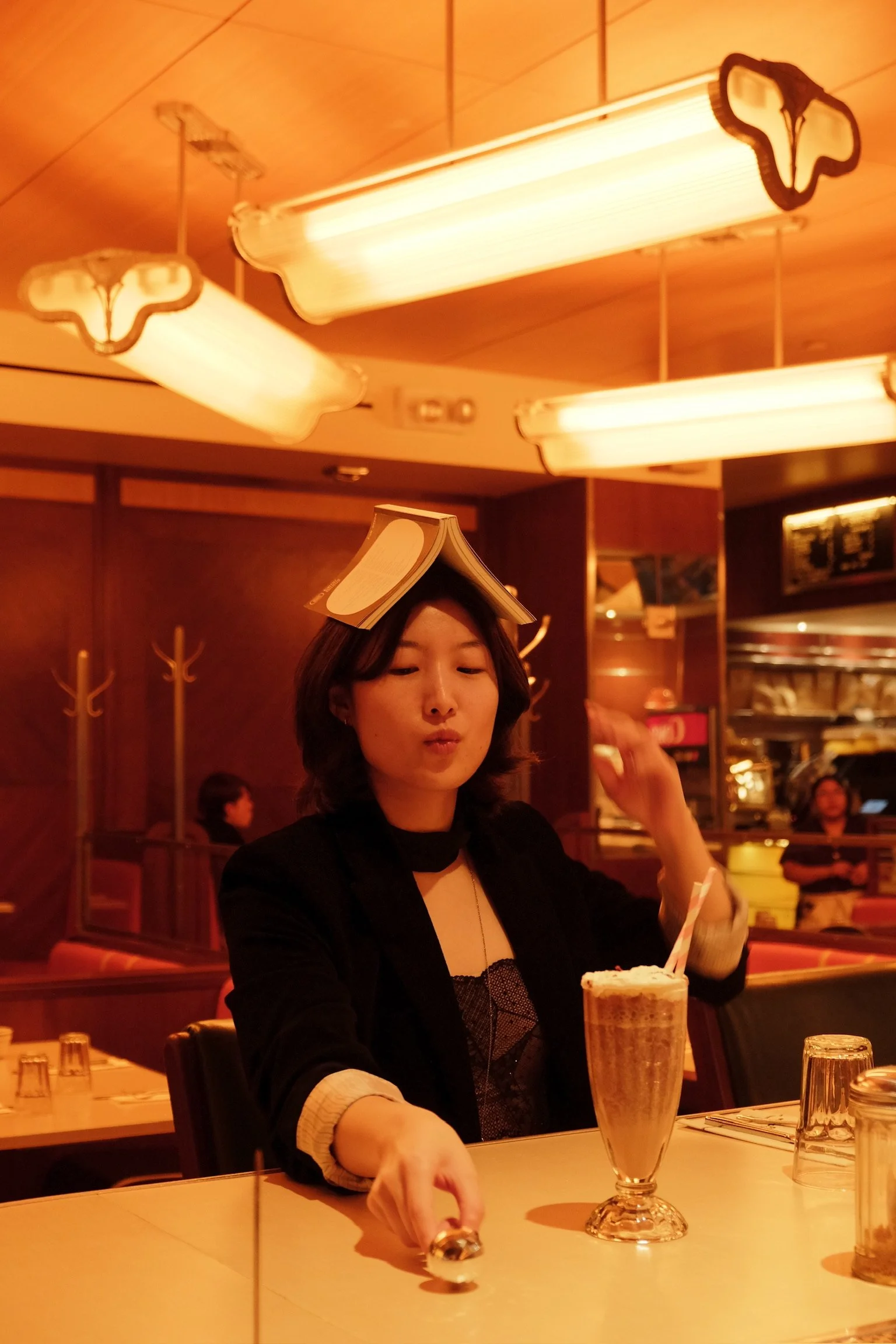
Faux

This focus on form and figure explains, in part, the running motif of Spiderman present in much of Andre’s work and life. Whether he’s sporting a Spiderman T-shirt around campus, filling his sketchbook with him, or setting him as his phone background, Spiderman has always been one of Andre’s biggest and longest-lasting inspirations, a fact he is not ashamed of. On an artistic level, Spiderman acts as an important exercise in form. Spiderman is often associated with iconic poses that push the boundaries of the body as he is flinging through the air or swinging through cities.  Spiderman has also always played an important role in Andre's personal life – having been introduced to his comics from a young age. Spiderman’s intelligence and ambition made him an aspirational figure for Andre who reflected that: “It’s good to have heroes.” And to the people who think his inspiration is childish or cringe, Andre offers straightforward response:  “F**k the haters.” Andre knows who he is and what he loves unabashedly. He demonstrates that whether in art or life, “sophistication” is overrated.

Face Front

As Andre has formed his own identity through and with his art, he has been able to take a personal and unique approach to art. As Chief Illustrator for the Columbia Science Review, Andre combines his interests and passions together. However, his multifaceted practice is not just confined to Columbia’s campus. Andre is a project manager for the Dementia Art Therapy Alliance where he practices art as a form of healing. Working with patients suffering from dementia, Andre implements a collaborative and emotionally attuned approach to artistic creation. Art becomes an active site for healing and connection that is really important to Andre and speaks to the value of art past its technical expectation. Andre was able to expand this work as he was brought onto a pilot program for the Lenox Hill Hospital where he had the opportunity to meet with patients one-on-one and draw as they engage in conversation. Art becomes a space where patients can listen and be heard. It’s a place where even the cagiest let their guard down and share a story that Andre can immortalize through his drawings. Art is a practice as much as it is a craft, and Andre engages with it in all its unique facets. His layered understanding of art is something he owes to his occupation of both the scientific and artistic realm. His experience at the intersection of different disciplines is a huge reason why he sees the “divide” between these two spaces– art and science– as “stupid.” They intersect and rely on each other in so many ways, and this is a truth that Andre not only knows but practices.

Winged

Andre’s artwork is constantly changing, and he is open to anything and everything that could help his art grow. So, his future is hard to predict. Although he currently works in black pen, Andre expressed a keen interest in color. Though it isn’t necessarily evident in his current, public artwork, he assured me that color is something he is investigating in private. He wants to ensure that he truly has a handle on color before publicizing it in any of his pieces. Color opens a huge realm of possibility that he wishes to investigate for himself first. With this intention comes to light another important aspect of Andre’s artistic philosophy: the process is just as important as the product. Andre sees the process of creation as if not more important than what is left at the end. If Andre doesn’t find himself enjoying and indulging in the process, he sees very little purpose in the product. This philosophy takes shape in Andre’s handle of time. Rather than slaving away at a piece for the purpose of unattainable hyperrealism, Andre prefers the spontaneity of flash drawing. He finds himself feeling more empowered and connected to the process when engaging in flash drawing. Importantly, his fast-paced drawing is not indicative of a lack of artistic dedication. Andre leans into time and allows it to have its own influence on his artwork. In this sense, time becomes its own space– one where he can push himself and discover new techniques or practices as he races against the clock. Just like the adage goes, for Andre, the journey is more important than the destination.

Andre hopes to always have art in his life, despite his career path not going directly into the art field. He views art as a crucial outlet for expression that he hopes to continue to tap into both formally such as in medicine and informally in ways like his doodling. He sees the interweaving of medicine and art as endless– particularly in the realm of volunteering. He hopes to continue the work he currently does as a volunteer throughout his career. Andre is also interested in investigating some new forms of drawing that engage with medicine more explicitly like anatomical drawings or medical illustrations that push his focus on form to new contexts.

MAE Skateboard

You can follow Andre’s ever-growing practice on Instagram @vowelful where he goes by the pseudonym: vowel. He is also trying to get more involved in showing off his work. He has already sold prints for the Morningside Art Exchange and has even drawn on a skateboard that was raffled off at one of MAE’s events. Keep your eyes on MAE for future appearances of Andre’s art.