
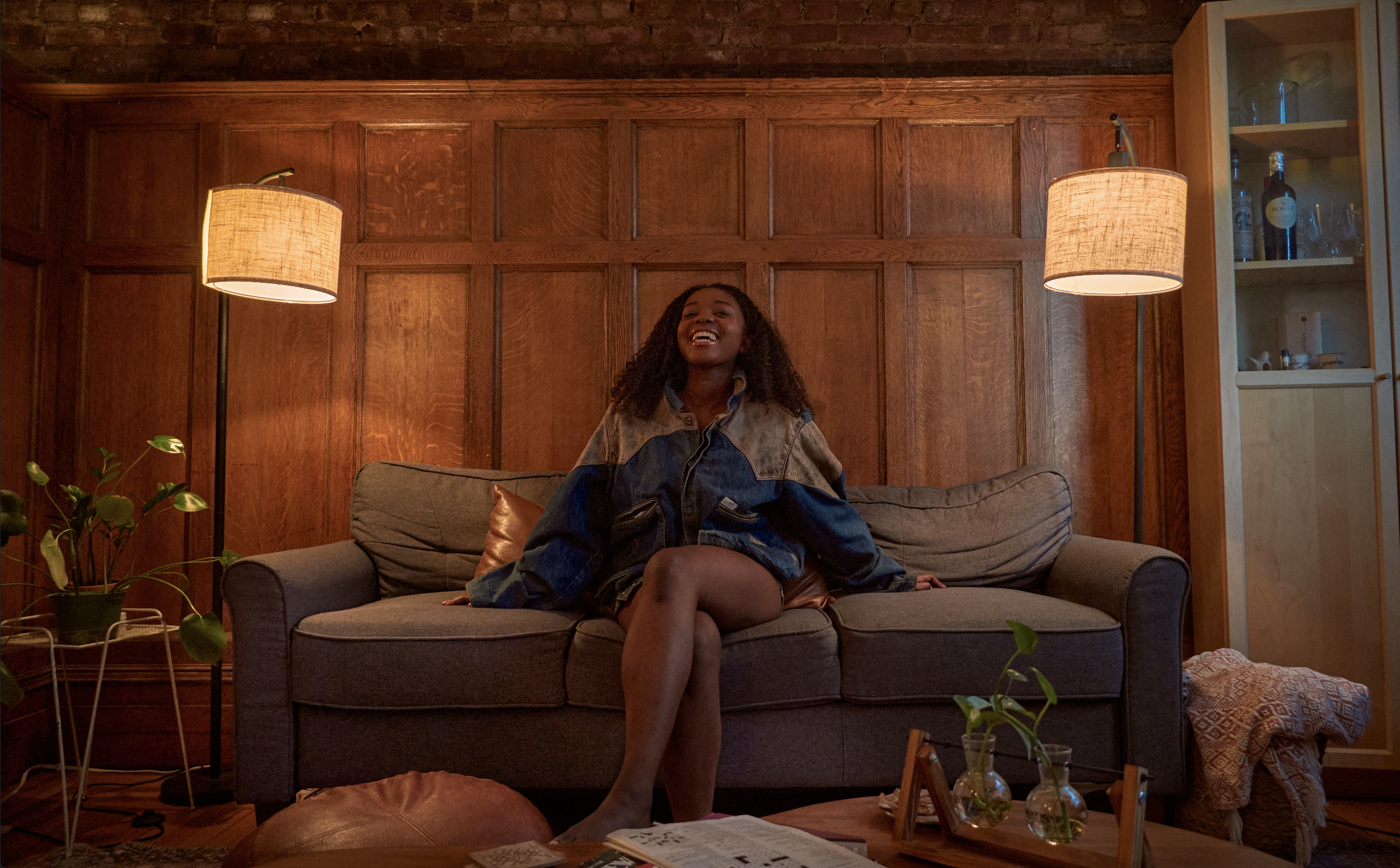

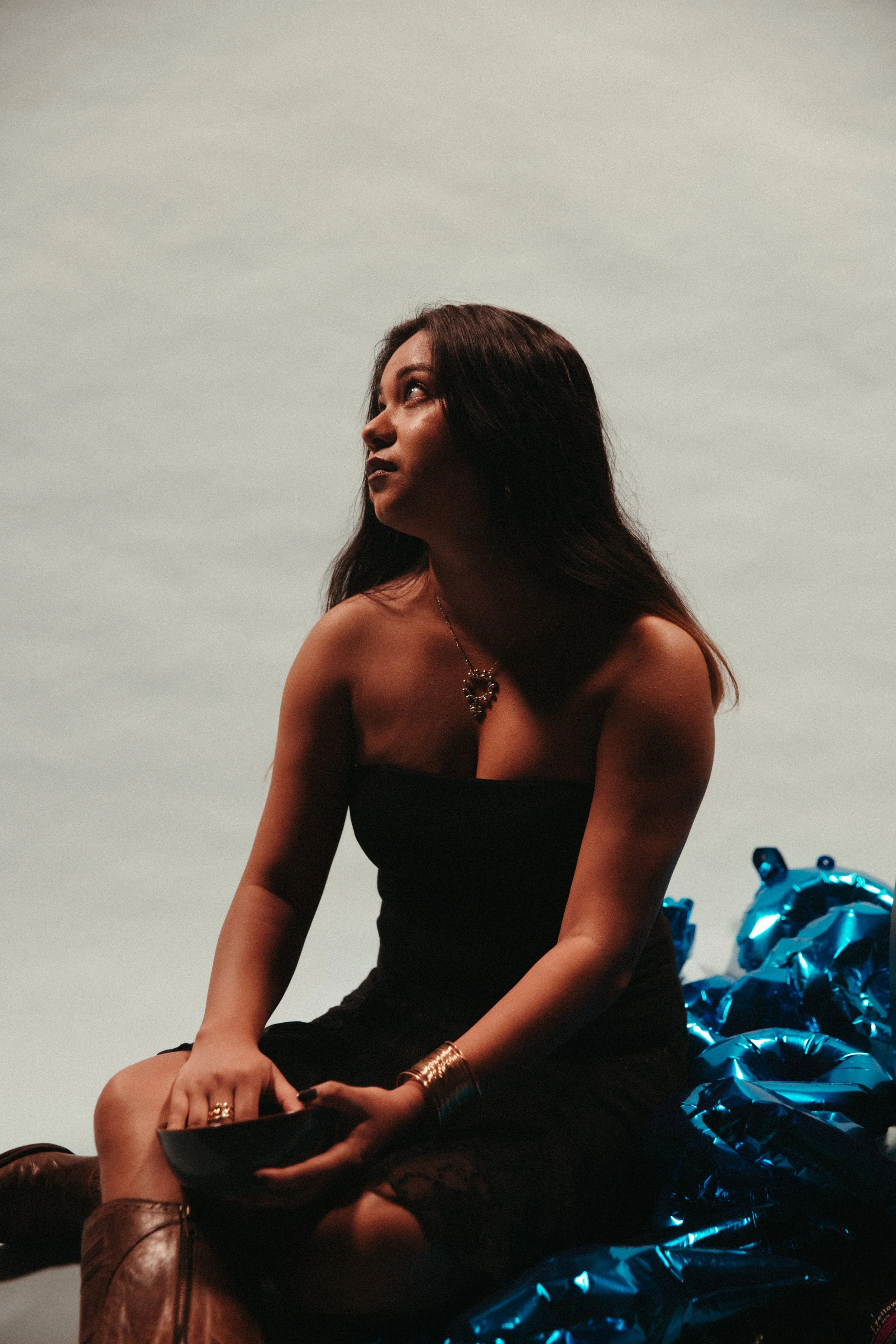


Feature by Vivian Wang
Photos by Arden Sklar
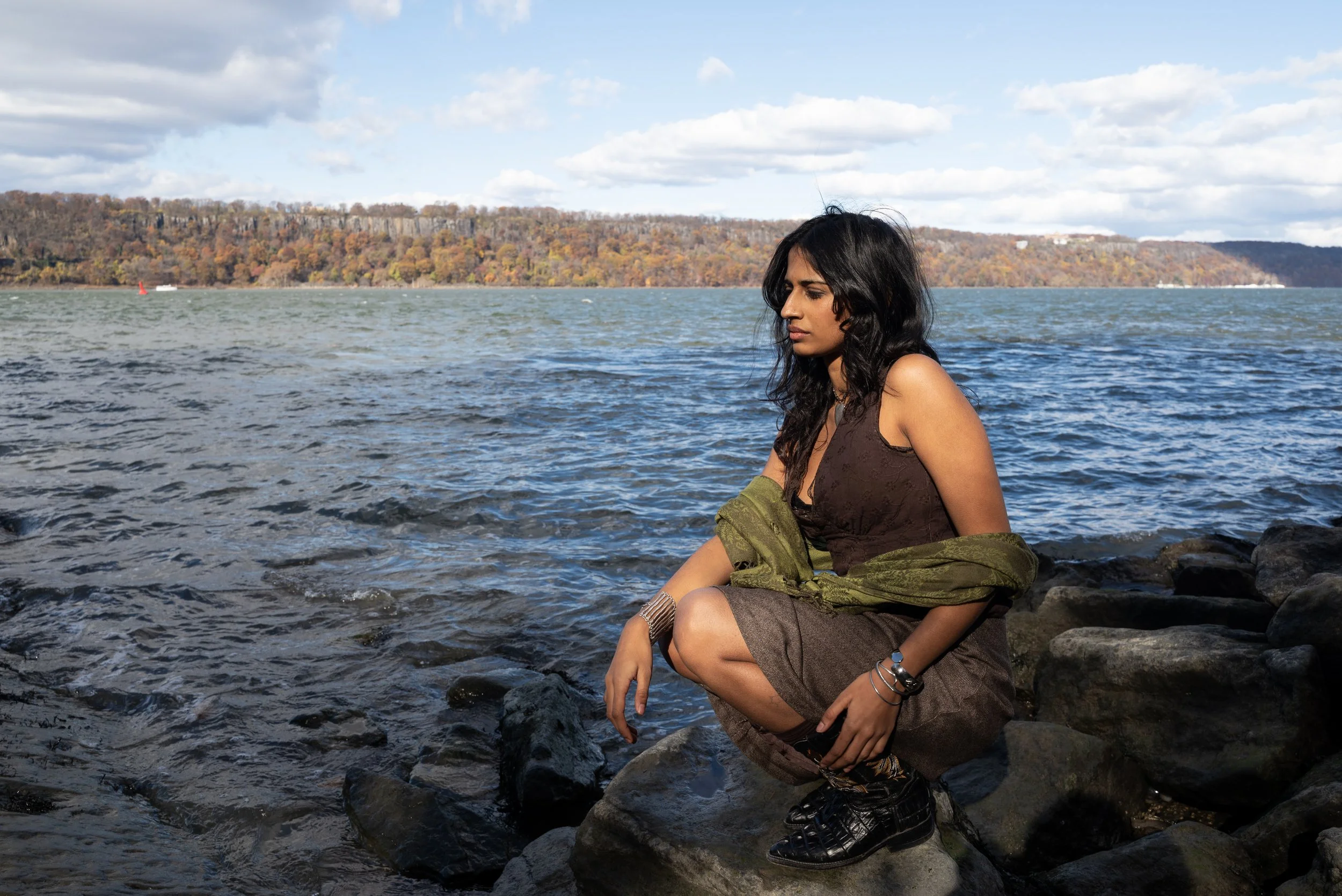
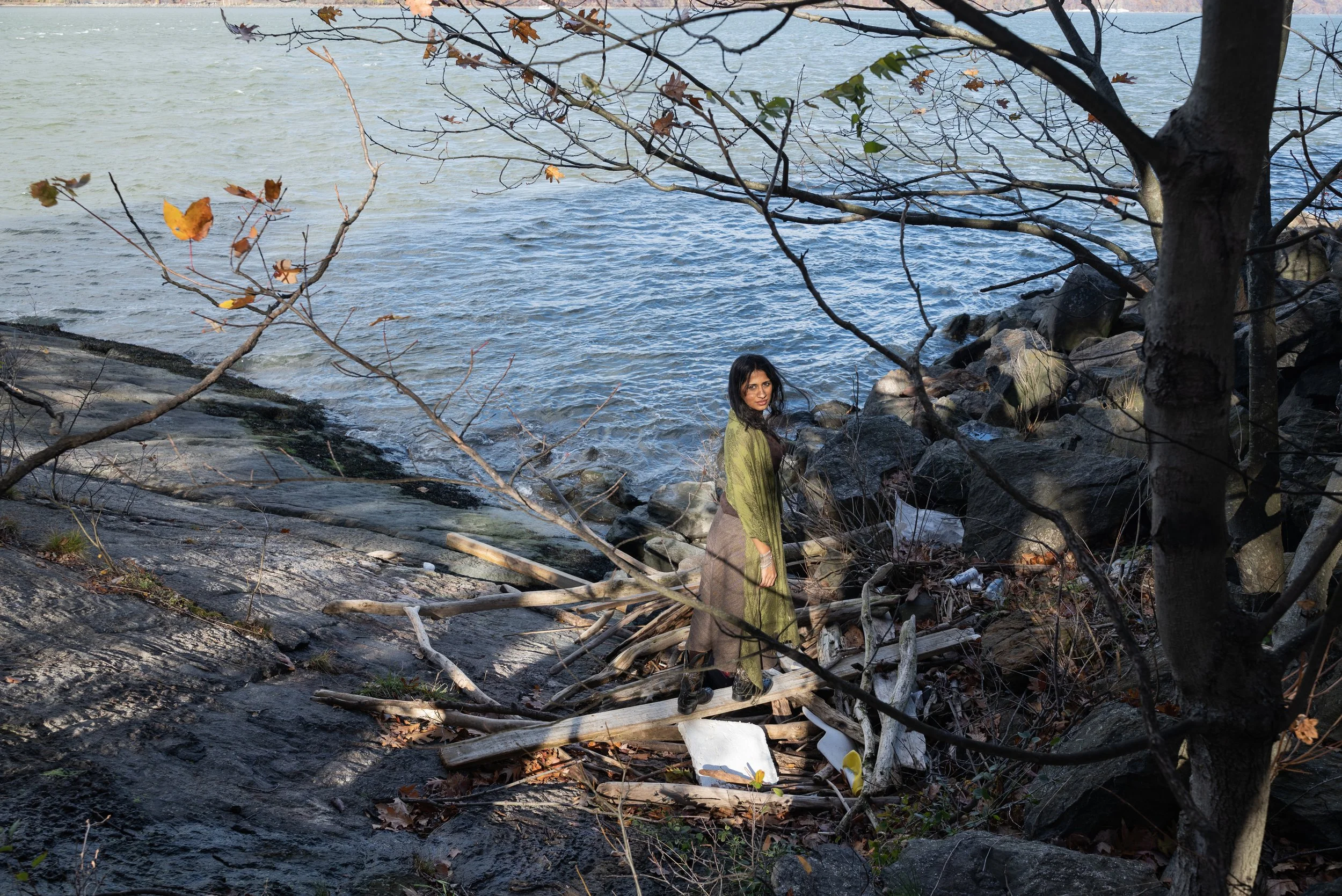
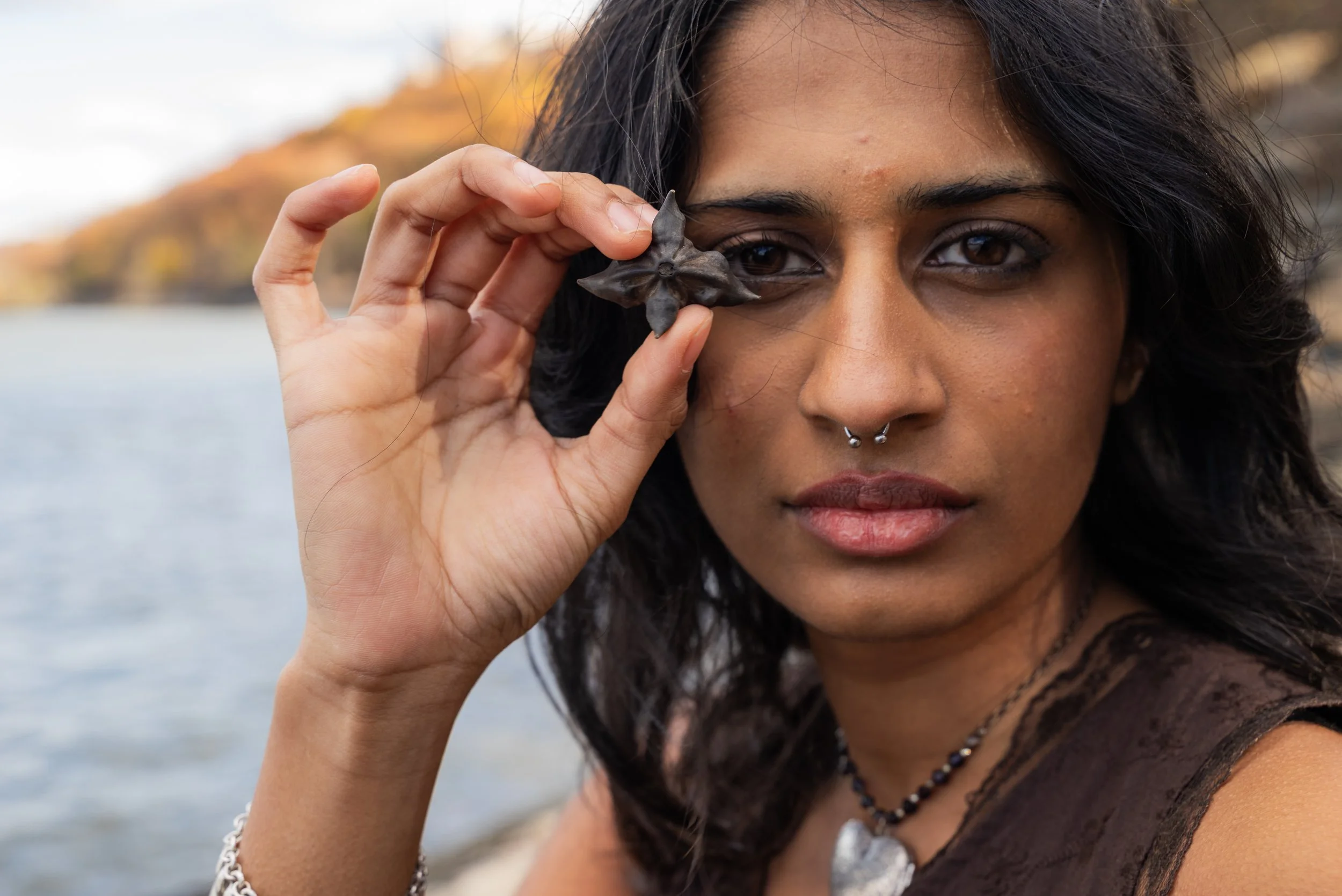
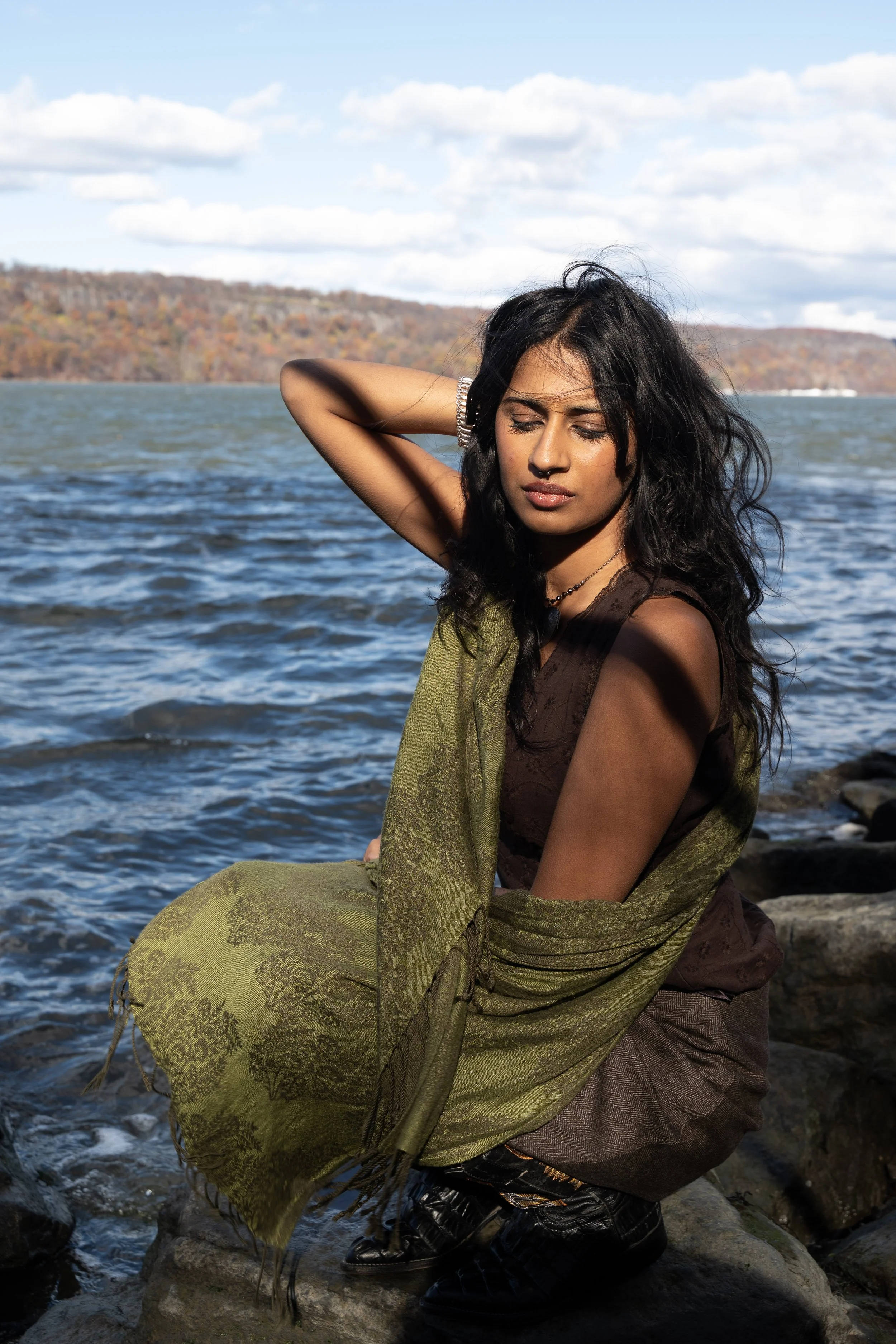
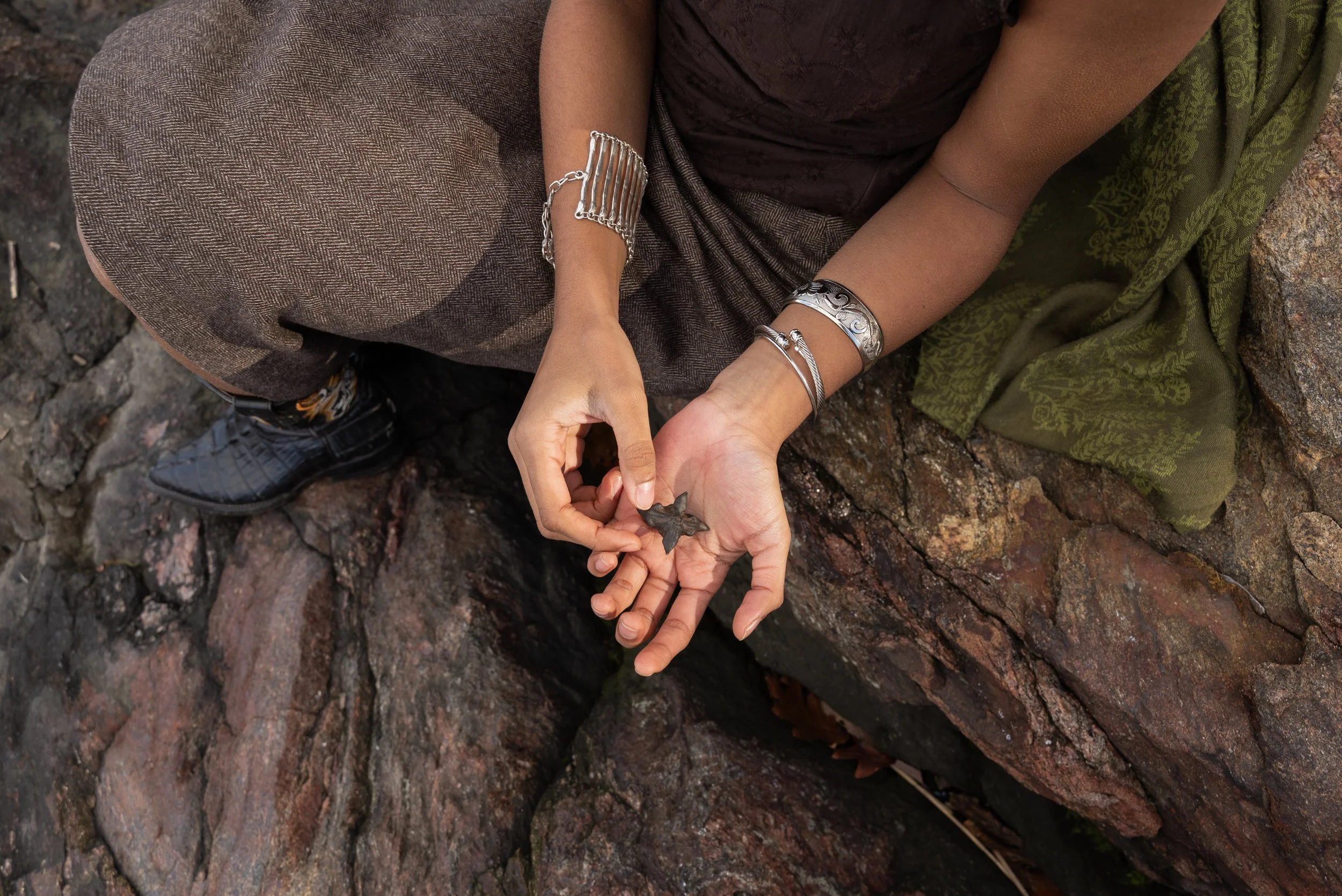
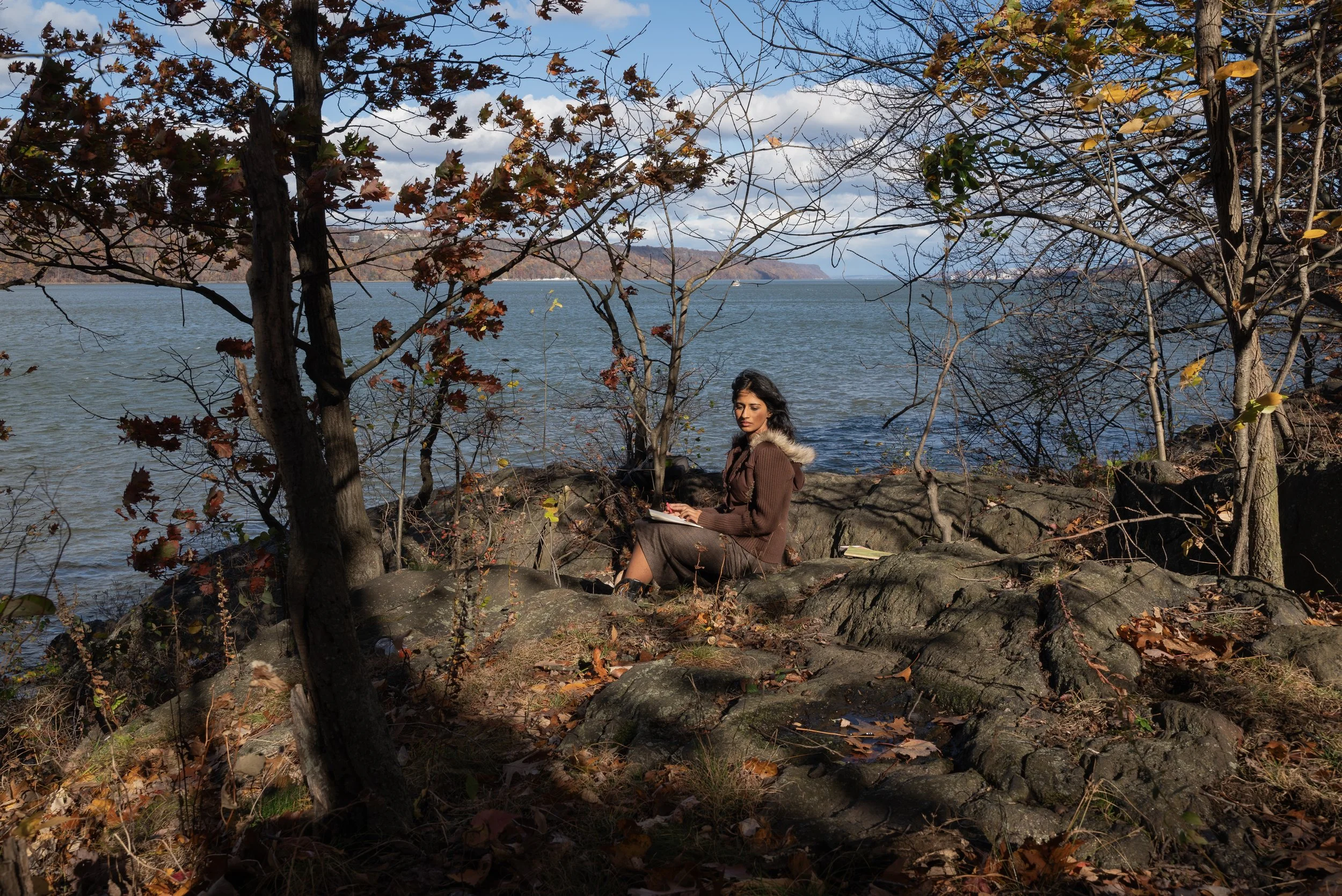
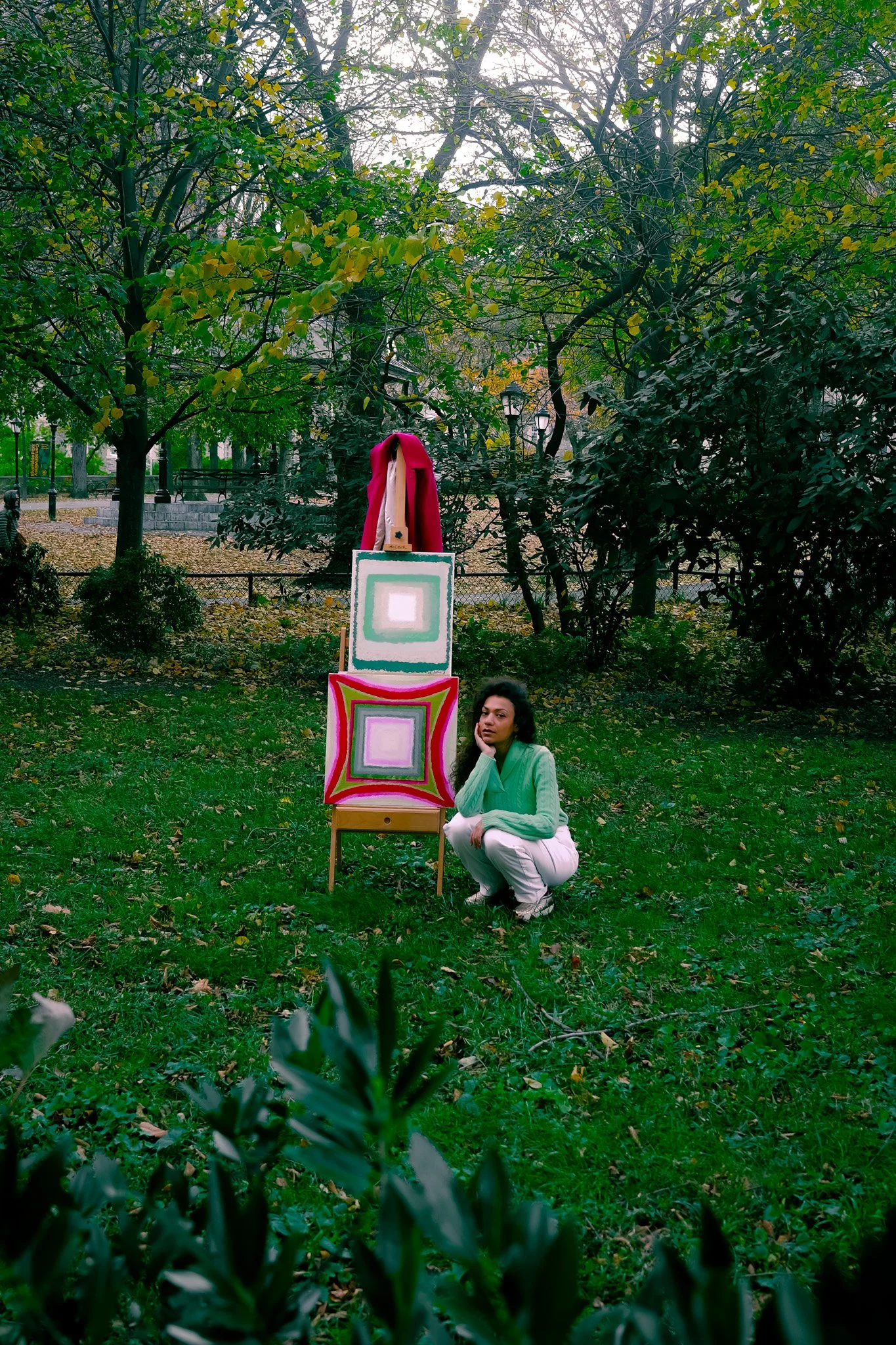
Raised in San Diego, California, Meher Lakdawala (BC ’29) is currently a freshman at Barnard College intending to study biochemistry. Having grown up around nature and the ocean, she explores organic abstraction at the margins of soft and sharp through a variety of mediums.
On one of those brisk and particularly quiet mornings, I met Meher on a bench outside Avery Library. Both of us bundled up against the sharp wind, as we began talking about the early scaffolding of her practice. She attended an art-focused elementary and middle school where, as she puts it, “making things was just part of the day.” Then came a large public high school, where the tone became more competitive, but she carried that early sense of play with her. Her mother worked at her elementary art school and is a chemistry teacher, while her father is an engineer. That mix of arts in education and science in the family reads through her work as curiosity made material. “I like experimenting, and I've always been drawn to the intense learning side of things,” she noted.
I was surprised to hear that she is now dedicated to pursuing a career in the sciences, given how professional her work seemed. Art, she explained, would always be a steady companion and a way of thinking that travels between her lab notes and sketchbooks. At university, she expresses this through her work as an illustrator for the scientific magazines on campus, such as the Columbia Science Journal and the Global Health Journal.
Looking through Meher’s portfolio, I noticed a throughline of natural forms, from seed pods to tree branches, to the spiral logic of shells and corals. These motifs are not simply decorative; they’re the structural questions she keeps returning to. “I get inspired by the abstraction in the shapes of branches, leaves, and shells. I wonder if natural perfection exists, and how humans fit into the natural world,” she explained.
She won’t stick to any one medium; part of her practice is figuring out how a material behaves and how far a medium can be pushed before it gives way.
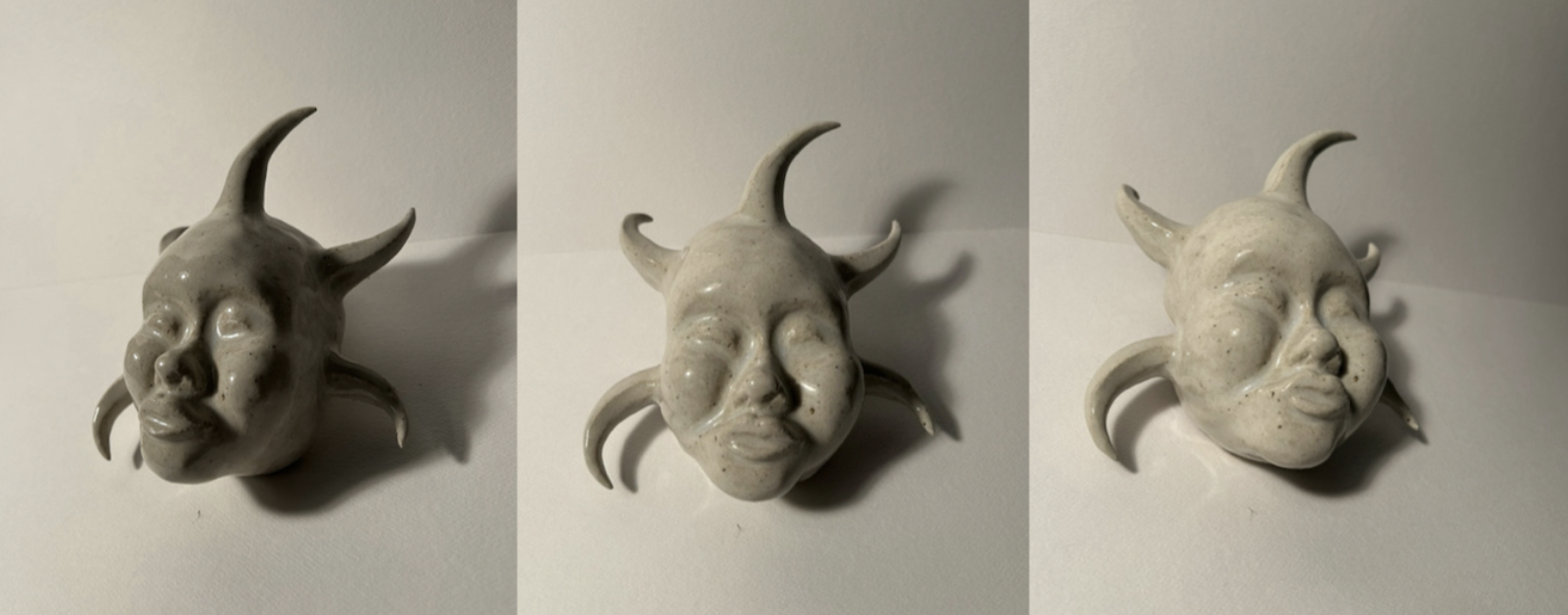
That experimental impulse produces work that often sits at the eerie border between the familiar and the uncanny. One of her pieces began with these spiky shells. She laughed when I brought it up. “I wanted to make something creepy,” she said, and the result was a small ceramic figure whose most unsettling feature is a baby’s face rendered in a way that makes you feel both protective and uneasy. “There was no big message to it at all, it’s just really eerie. Maybe the message is my subconscious,” Meher admitted. The modestness of that explanation, art as a trace of the unconscious, feels honest and raw.
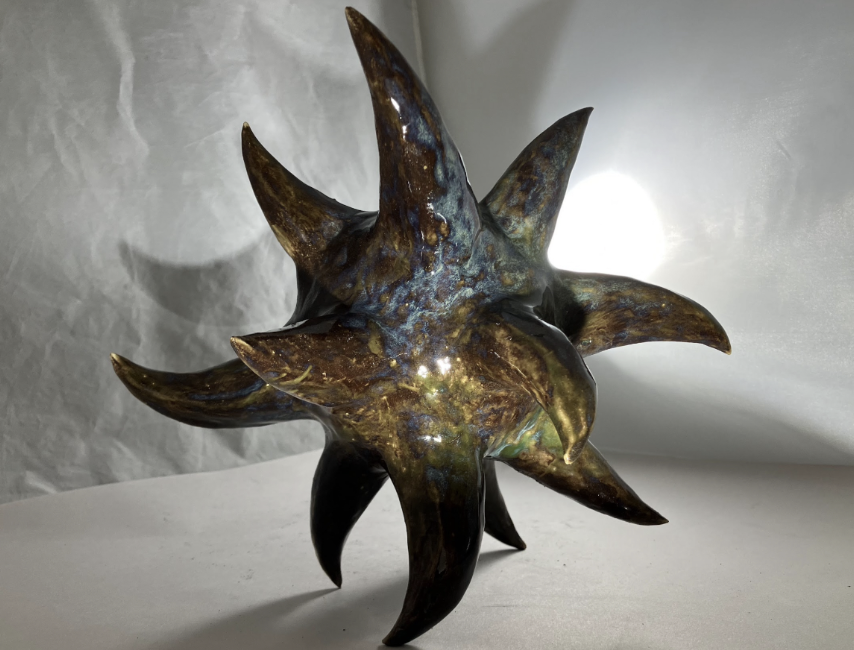
Technical rigor is also important to Meher. She spoke at length about a ceramic work that challenge both her and the material’s capabilities: balancing thin, jutting forms that threatened to collapse under their own weight. As I listened, I imagined the kiln disasters and last-minute armatures; instead, Meher treats those constraints as the objective rather than the obstacle. “This piece pushed the medium of ceramics because of the balancing aspect. It was very technical. I was really nervous that it just wouldn’t support its own weight,” she said. The nervousness is conspicuous in the final object, tension held in fired clay.
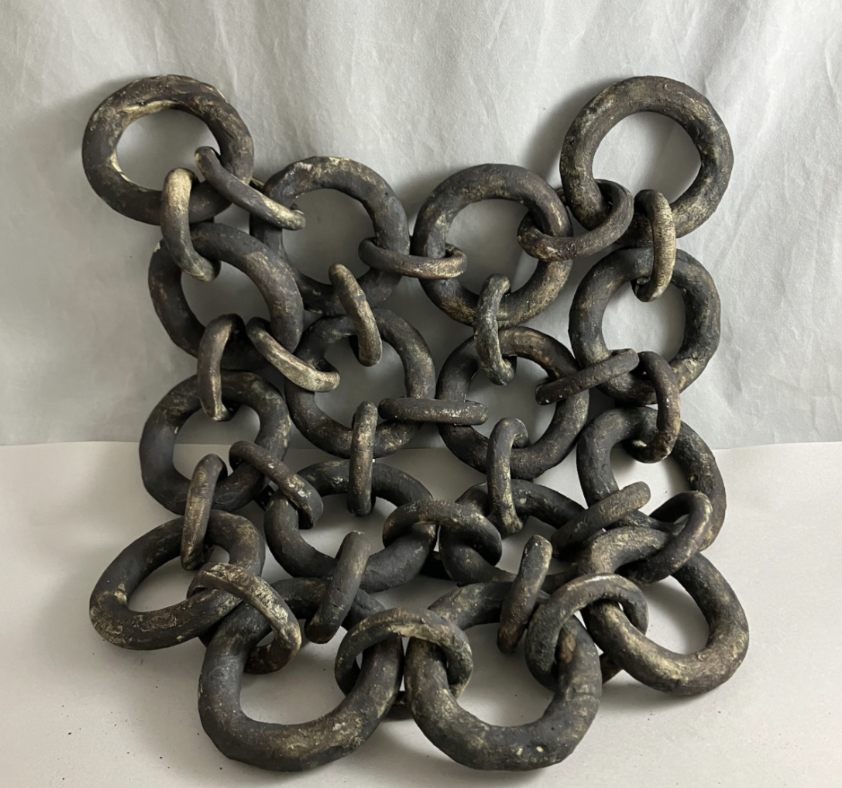
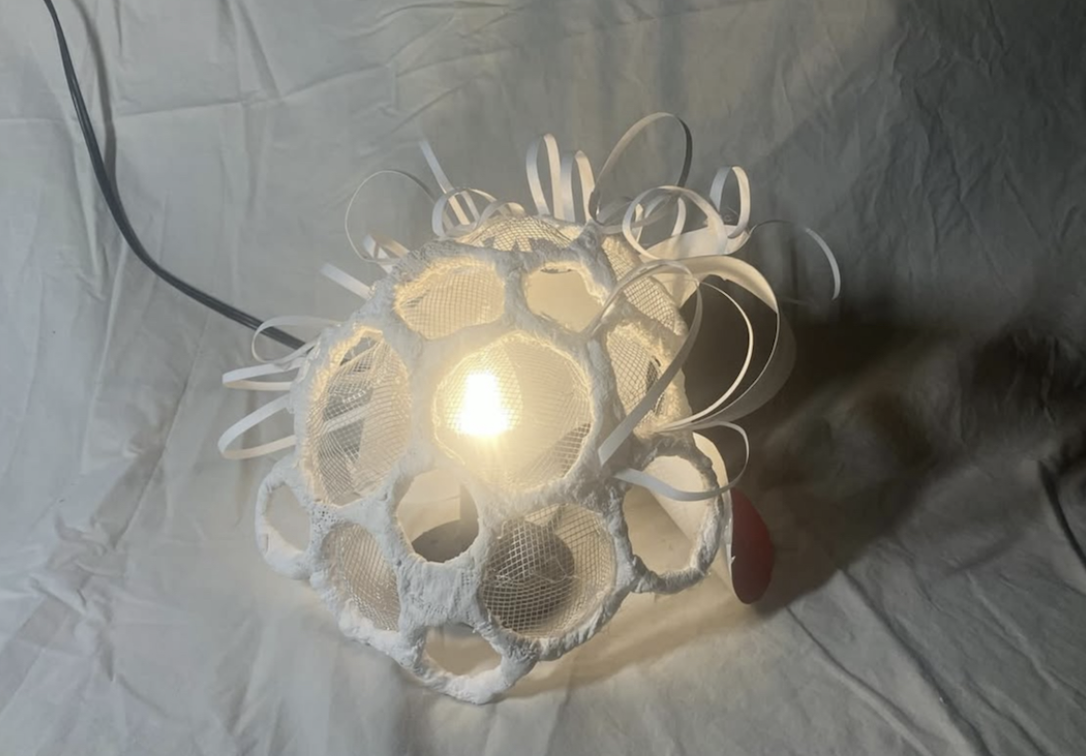
Material play extends beyond clay. Her list of projects reads like a natural historian’s sketchbook crossed with a craft-supply wish list: a crustacean-inspired lamp made of wire and papier-mâché, a chainmail chrysalis that hangs like a small, engineered cocoon, a seaweed-like installation built from scrap yarn and wired supports, and experimental woodcuts and large self-portraits that translate the grain of wood into the grain of a face. Each piece is an inquiry into how a medium can embody a concept, whether it be protection, movement, or fragility, without flattening it into an explicit narrative.
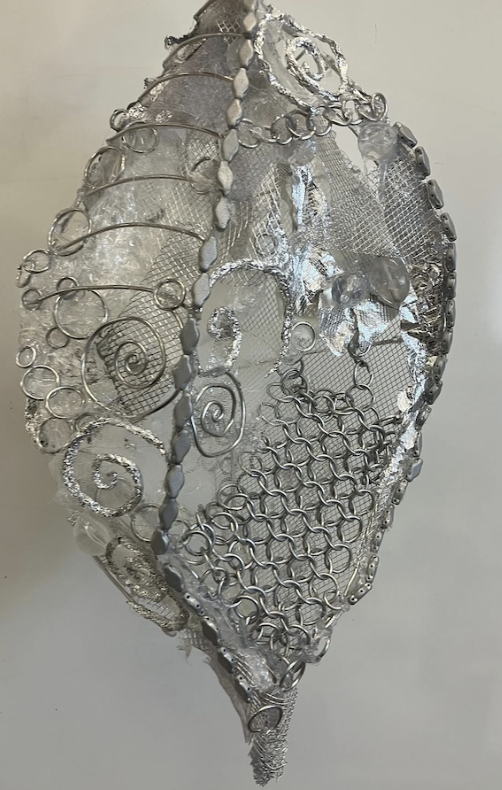
There is an evident kinship between Meher’s scientific training and her studio practice. She talked about ceramics the way a lab partner might describe an experiment. When I ask her how she starts a piece, she tells me that she prefers to start and finish many of her works in a single sitting, with ceramics as the exception- a slow conversation that rewards patience. “I don’t really make plans. I’m bad at extending projects over multiple days, other than ceramics. I try to finish a whole piece in one sitting because I’m very impatient,” she said. This impatience is more about energy than about rushing. The initial spark yields work that feels direct, offering an immediate sensation within her enduring investigation of the natural world.
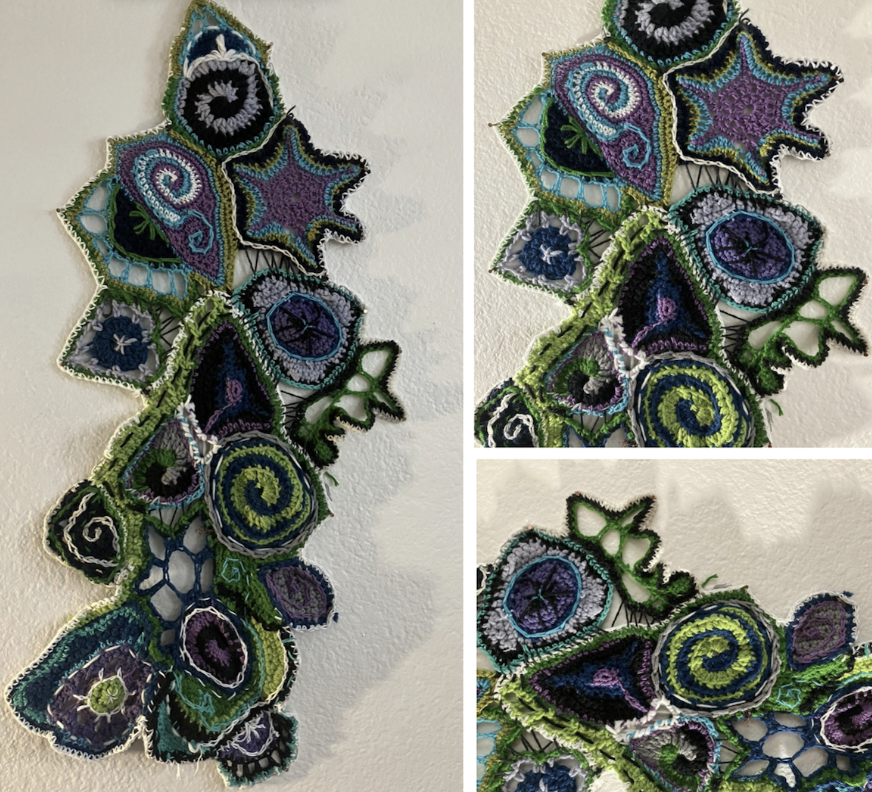
Meher’s artist statement crystallizes the themes that surfaced throughout our conversation: the obsession with organic patterns, the balance between meticulous order and chaotic growth, and a practice that moves freely between soft and hard materials. In her words,
“My work explores organic perfection, drawing from the natural shapes of shells, corals, bones, cells, muscles, rocks, and more—forms where patterns emerge that are at once meticulous and chaotic. I use a range of mediums—some soft, some hard, some fragile, some durable—each serving as a material expression of nature’s systems, from the macroscopic to the microscopic. Within my art also lies an element of introspection through self-portraiture, where I examine my own connection to the most elemental states of existence and confront the reality that I am composed of the same atoms and particles as everything around me.”
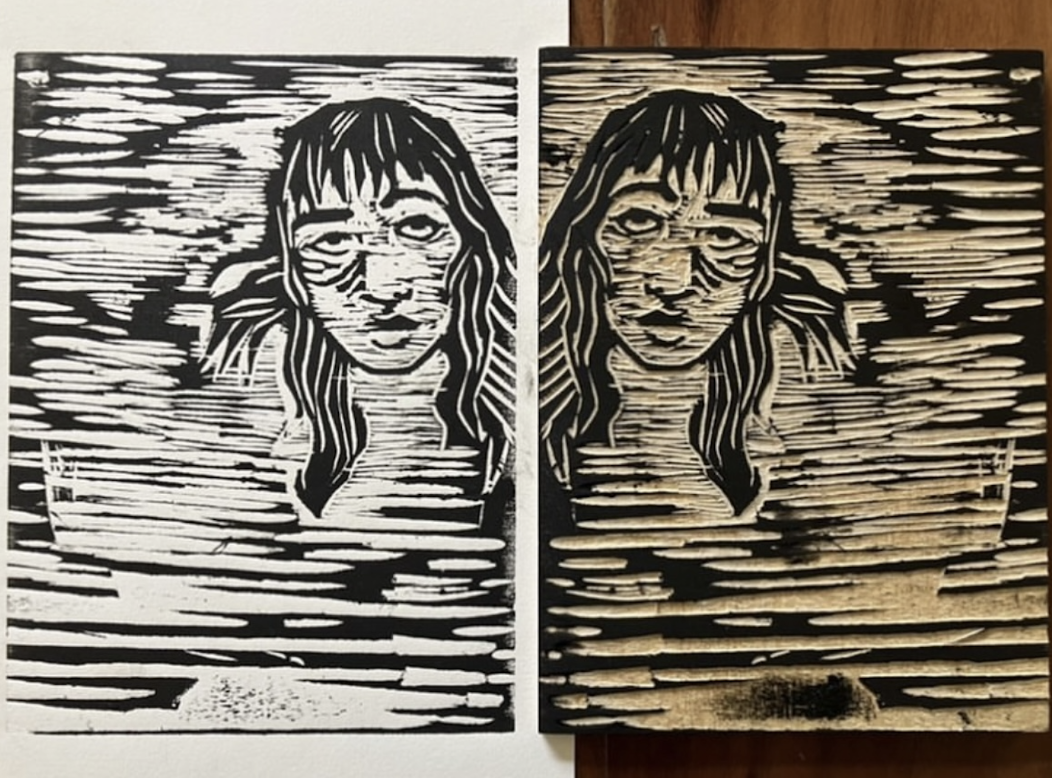
At the end of our conversation, I realize that Meher’s artistic practice is less about finding beauty than about studying it, tracing its anatomy until it reveals something deeper. The strange logic of living systems, the tenderness of structure, the patience of form. Regardless of the material, her pieces seem to breathe. They remind us that the line between art and science is porous, that curiosity itself is a kind of art, and maybe that’s what I love most about Meher’s work. It makes you feel, for a brief moment, like you’re seeing the world from the inside out.
We walked together towards the dining halls for breakfast. As we reached Low Steps and faced that quintessential view of Butler Library, campus, for an instant, felt like one of her sculptures, balanced precariously and caught between growth and collapse.
For Meher, art will remain a constant even as she explores paths in healthcare and biotech. “I’m keeping all my options super open,” she said. “Art is more so a hobby, but something I’d always pursue to some extent in my life. It’ll always be a constant in my life, especially ceramics.”
More of her work can be viewed on her art Instagram account @rottenstarlightt._