


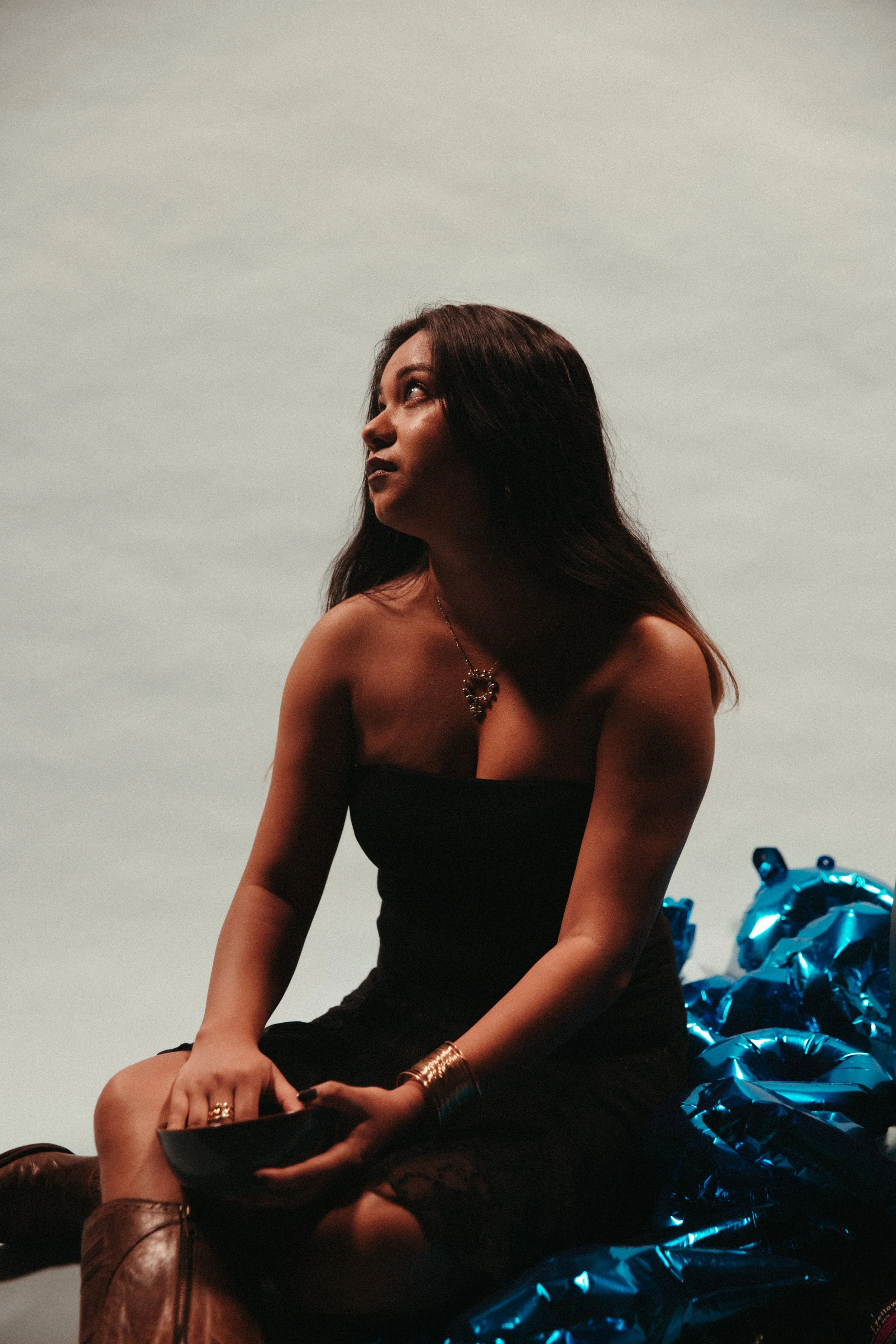


Feature by Nika Raiffe
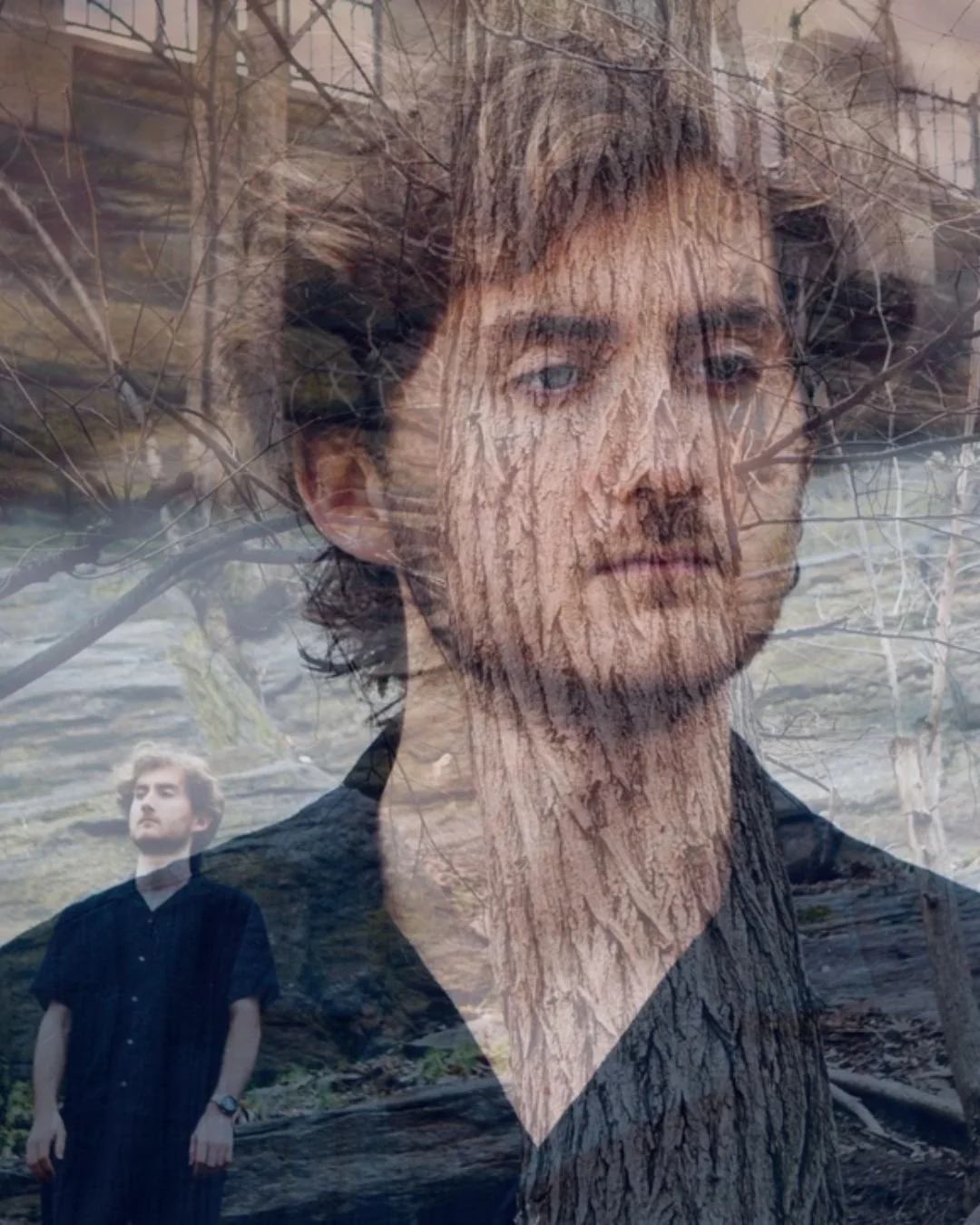
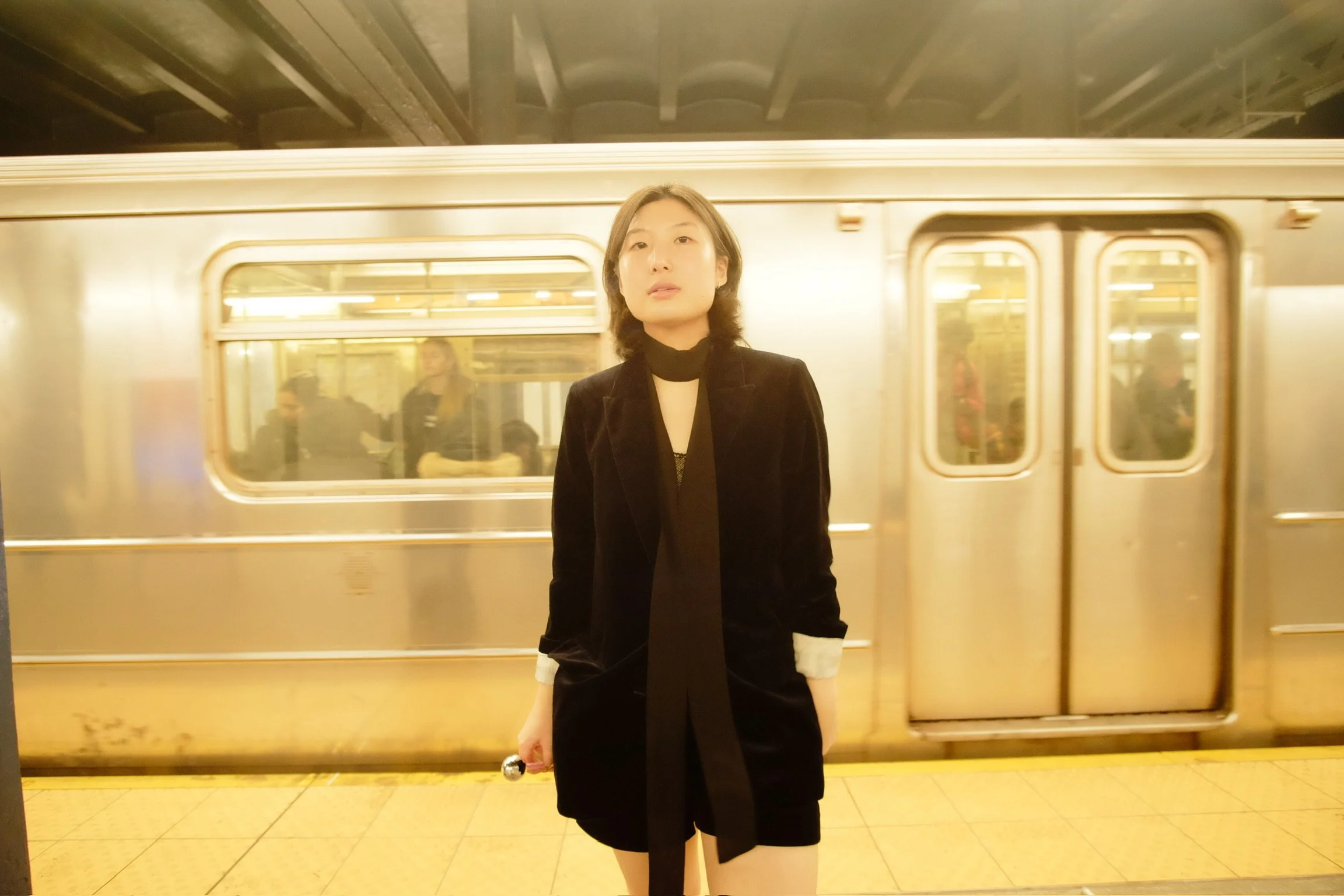
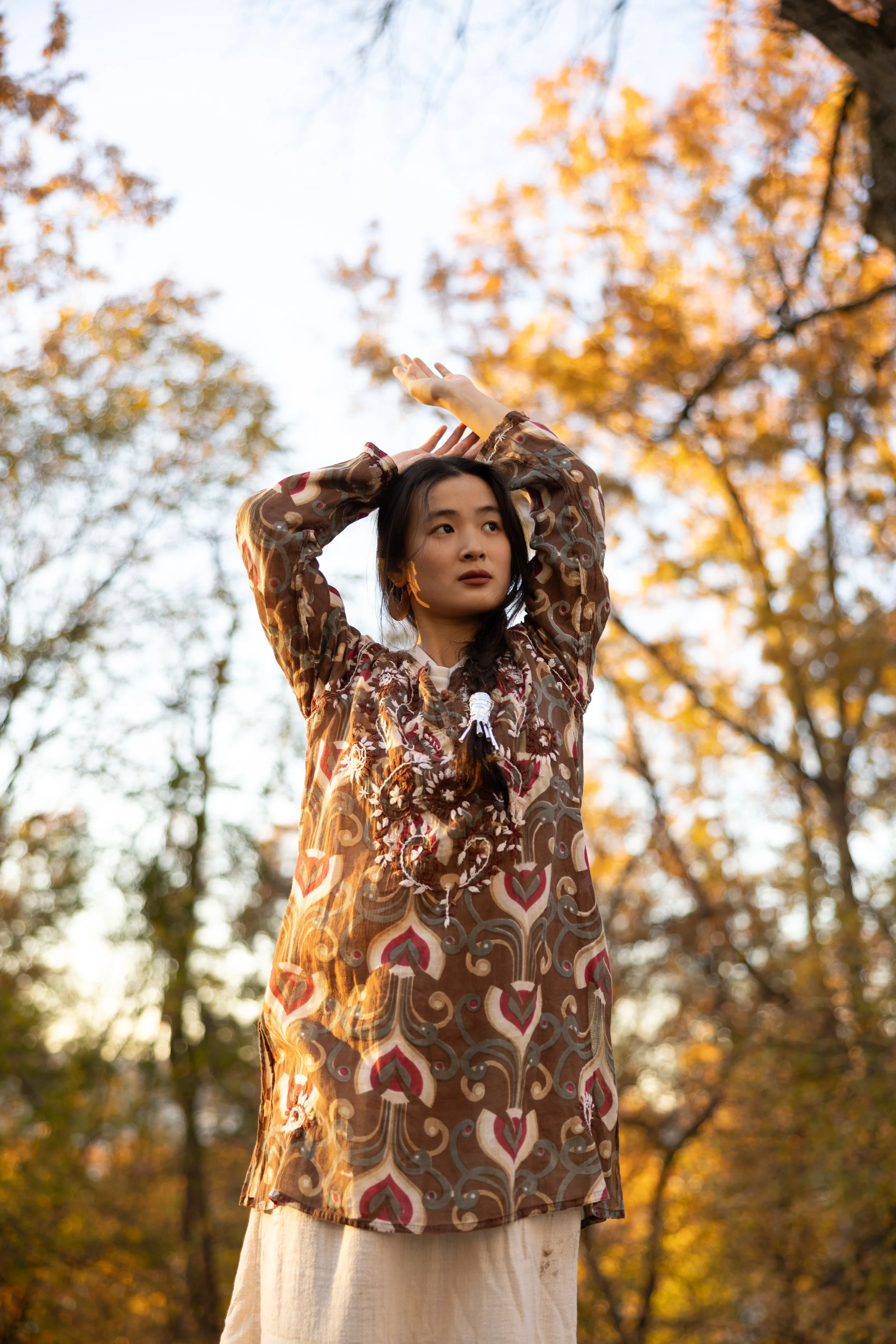
Photos by Lucie Bhatoey-Bertrand
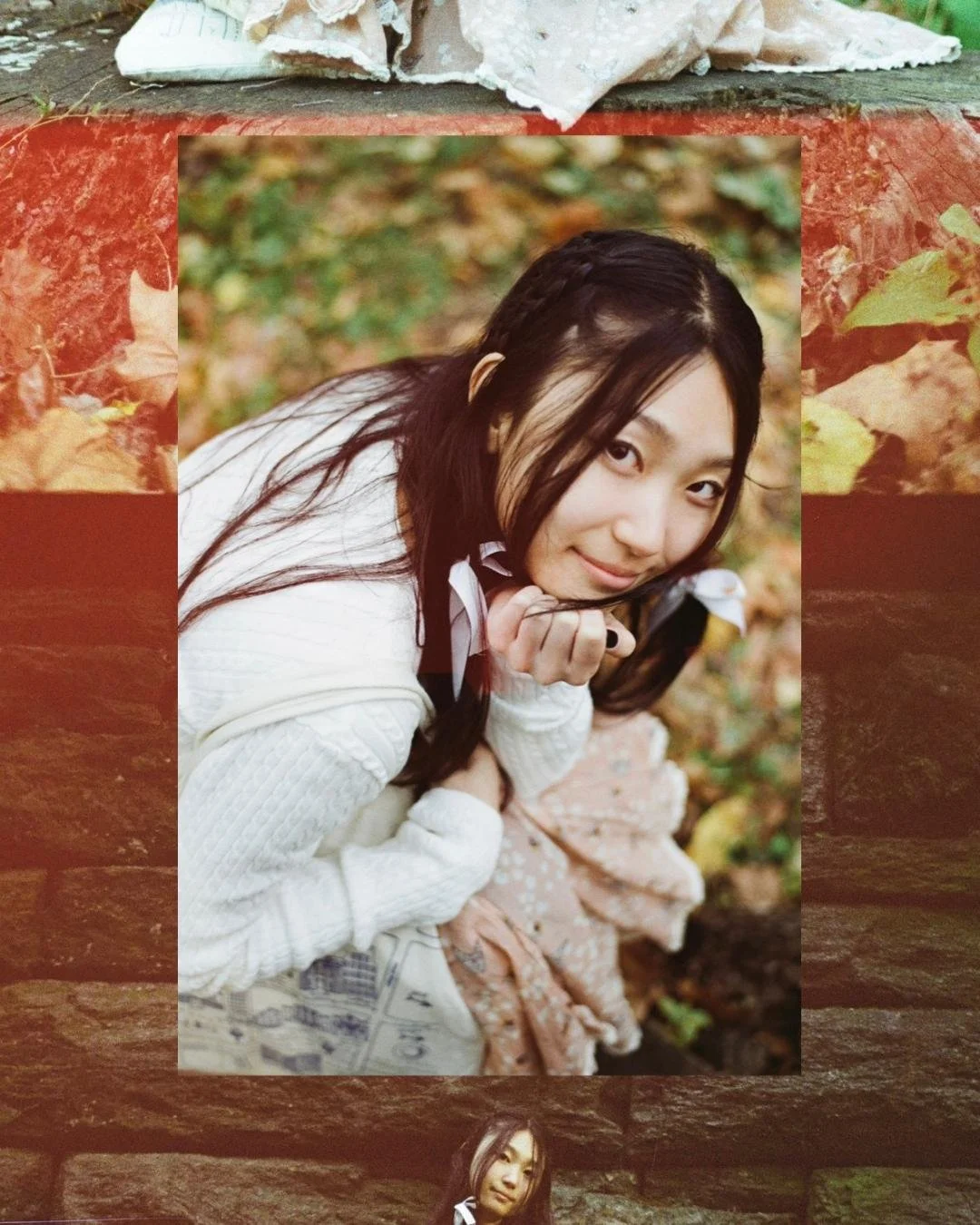
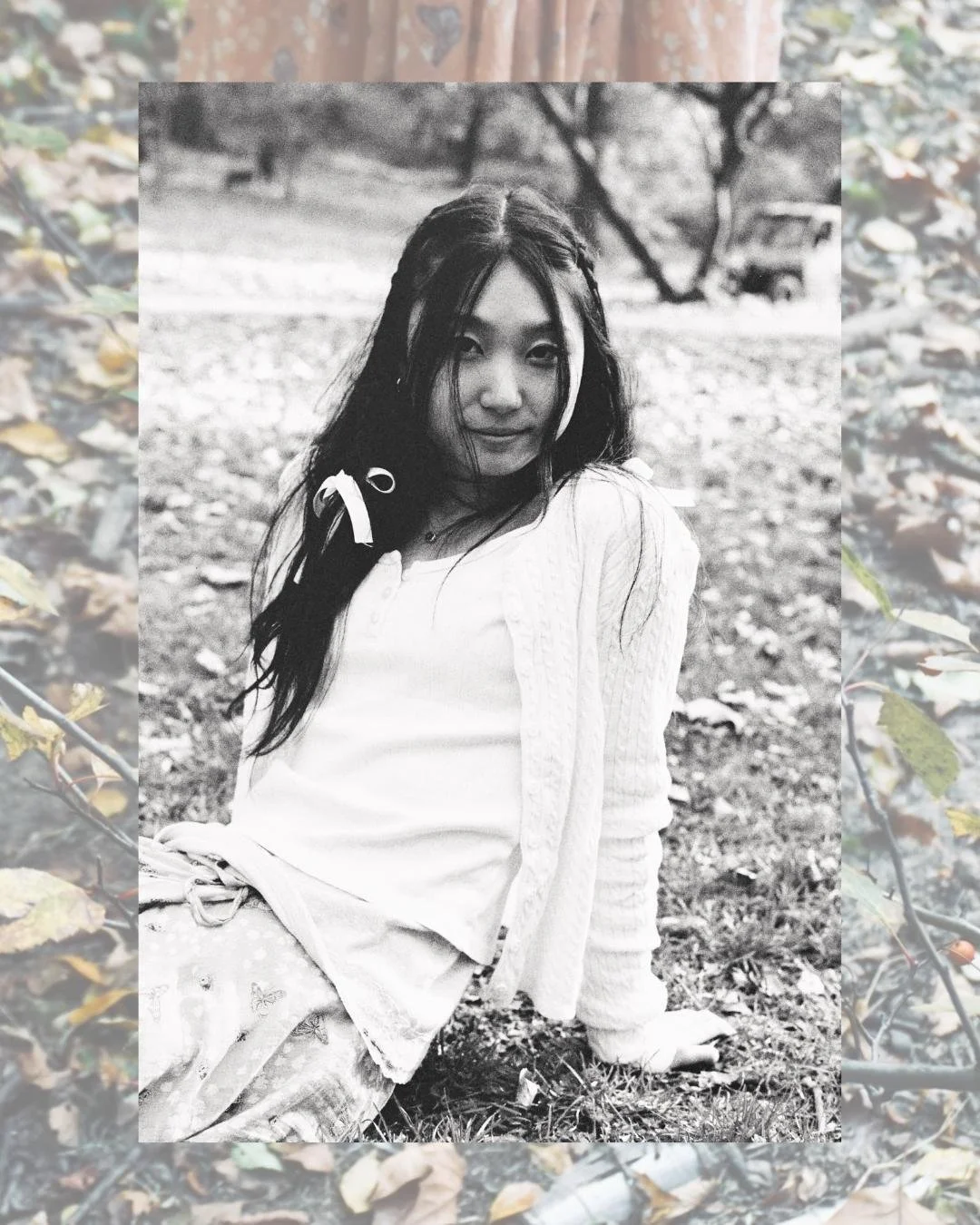
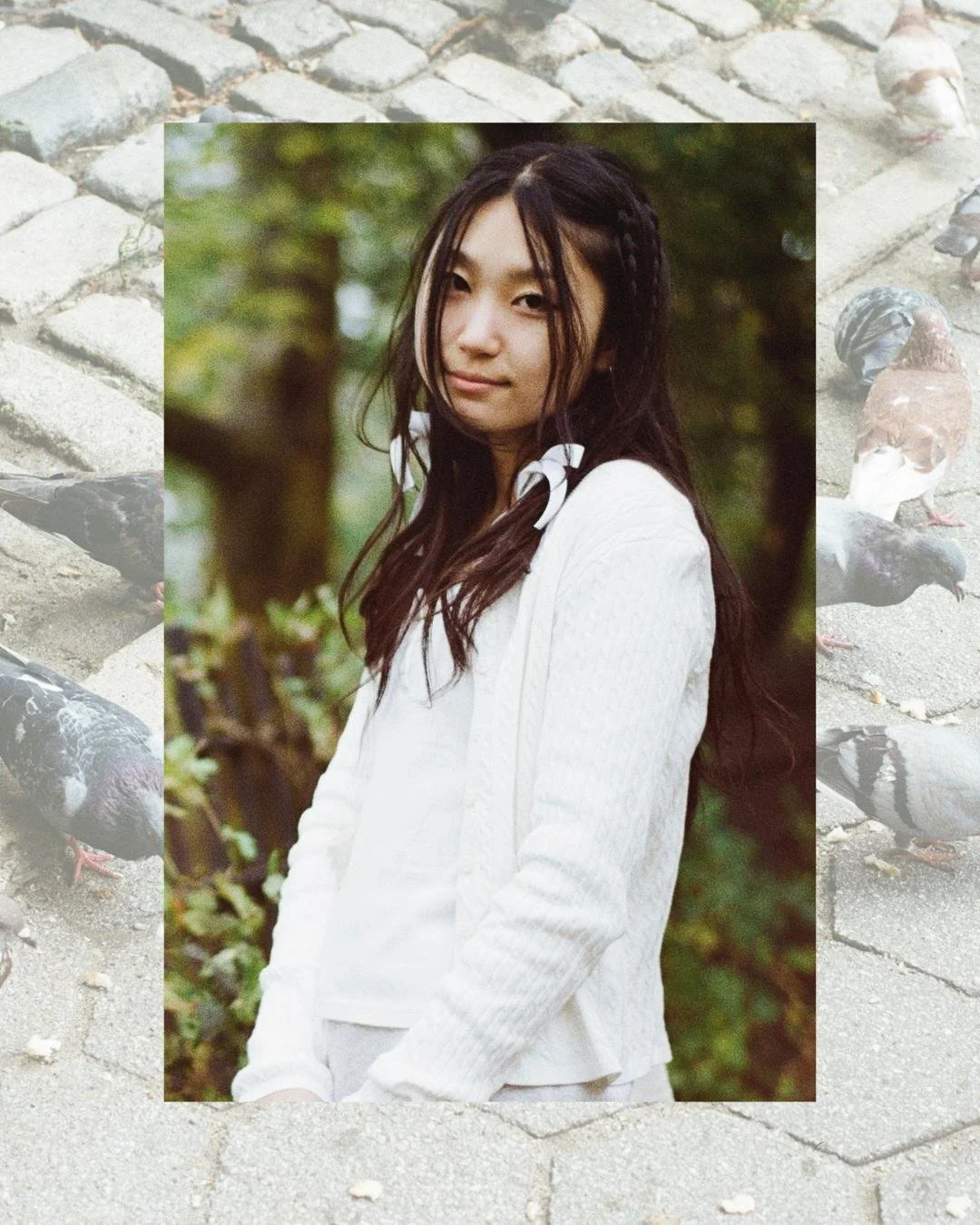
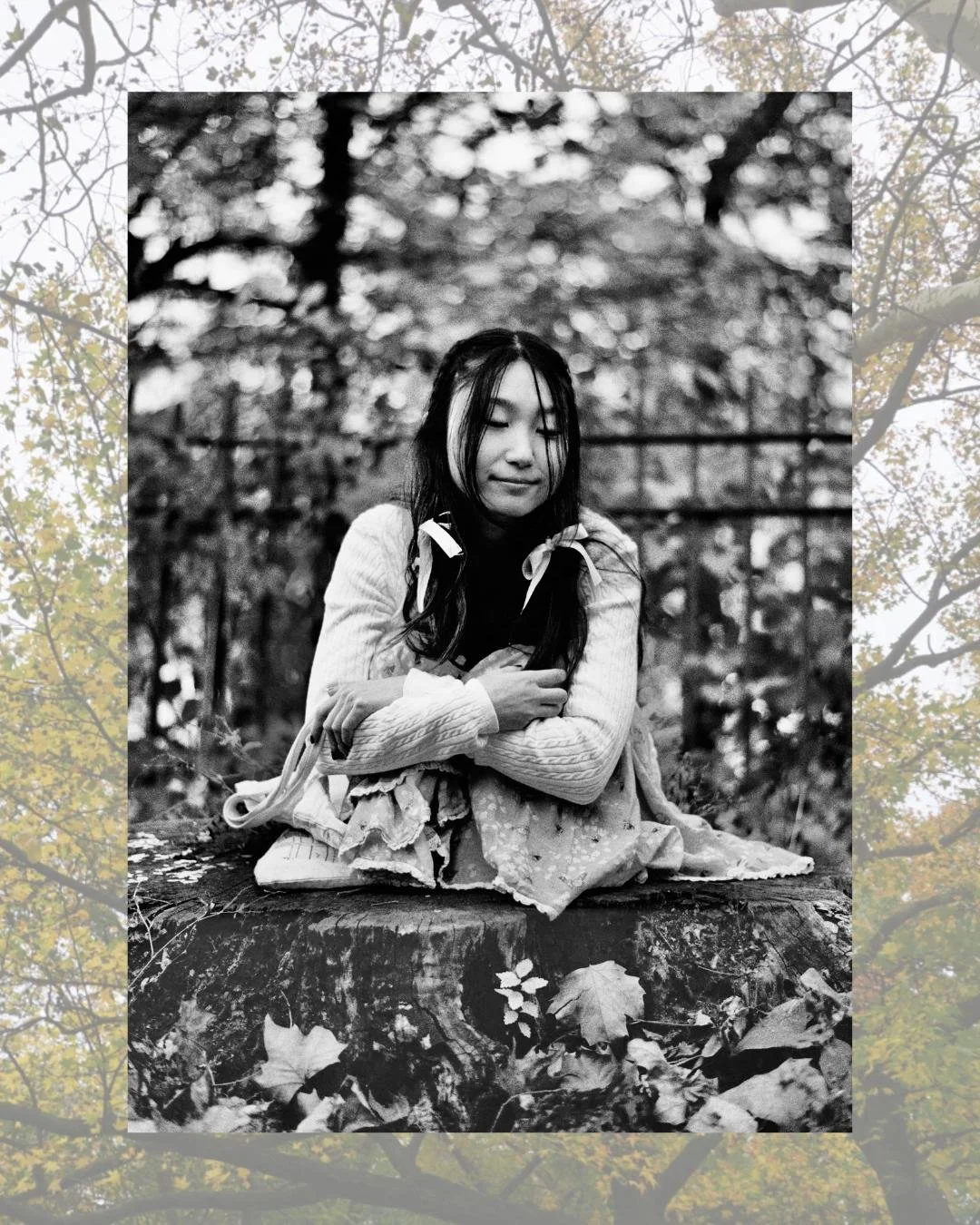
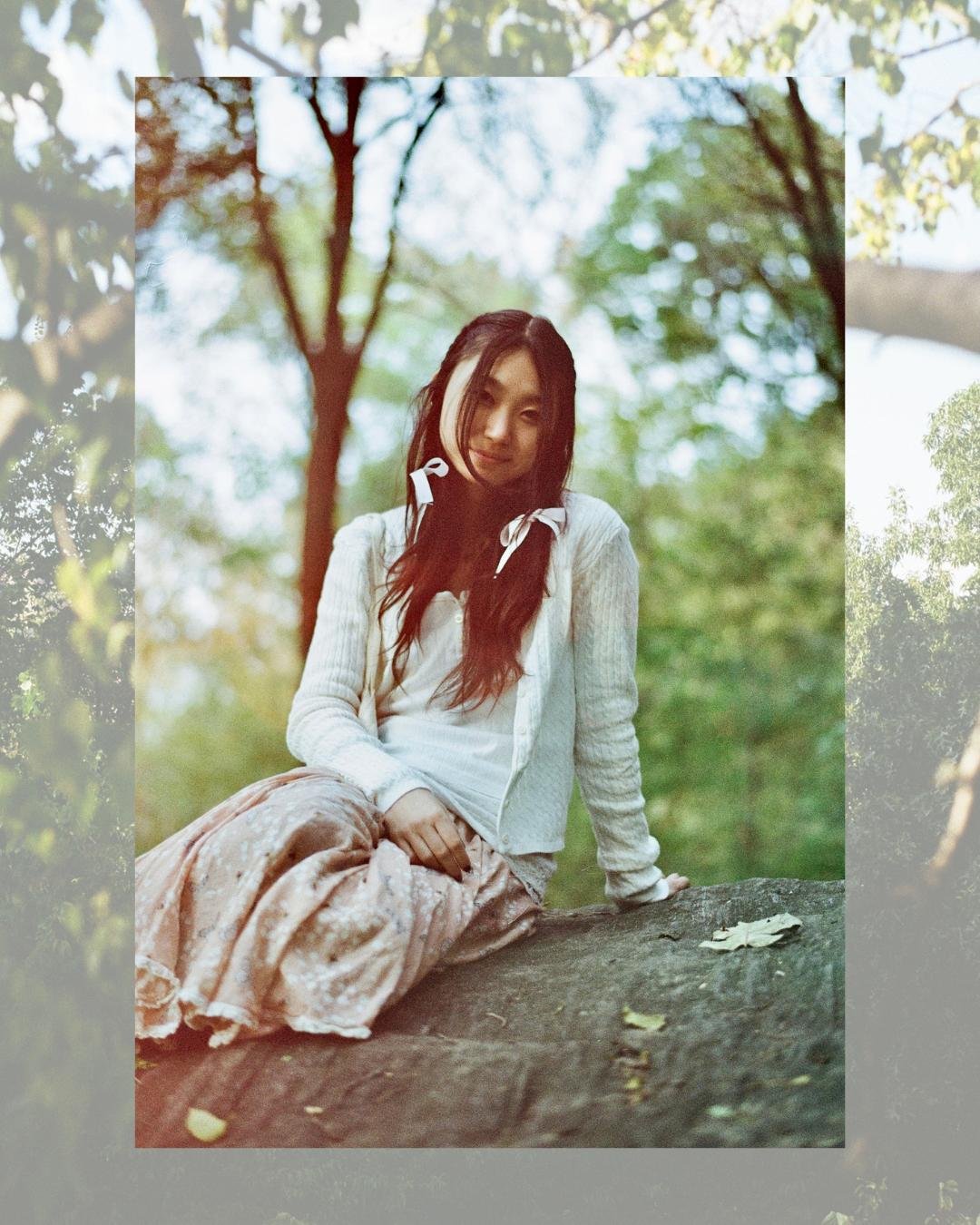
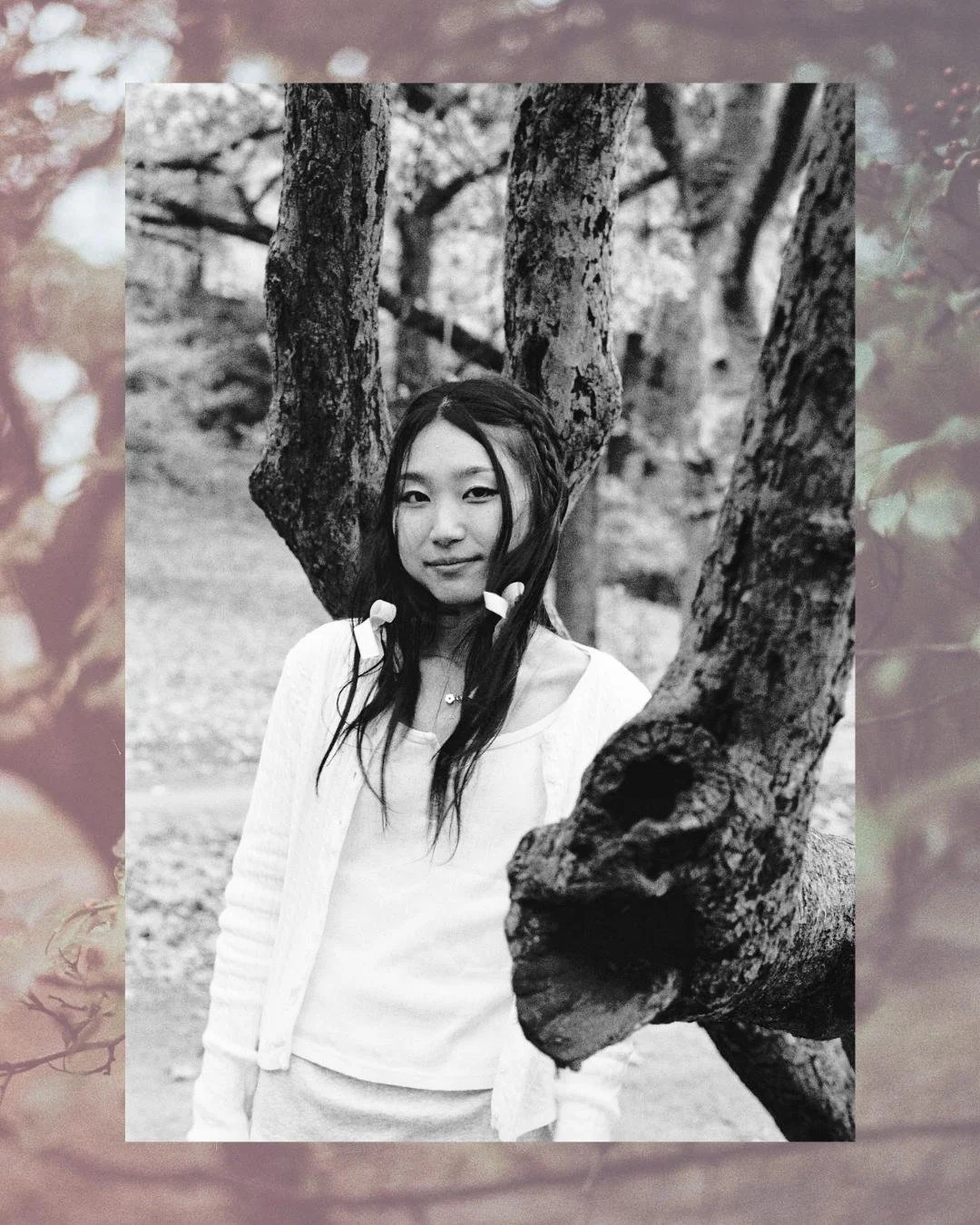
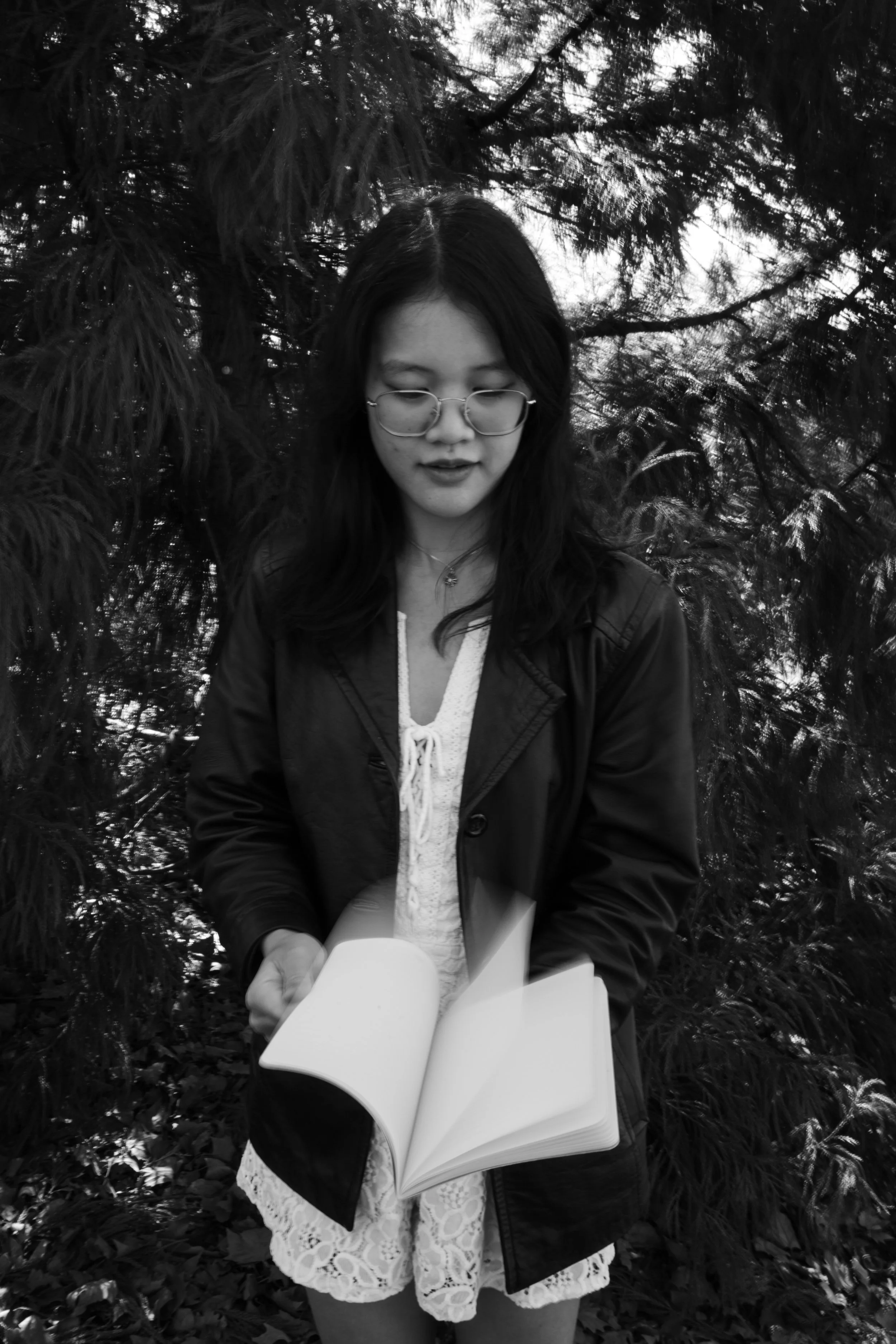
Madison Lee (CC’29) is a Korean-American artist from rural Colorado. Her multimedia work blends animal symbolism, plant matter, and motifs from local hunting culture to explore predator–prey dynamics as metaphors for assimilation and identity formation, focusing on the interplay between permanence and decay, personal and collective identity. A freshman at Columbia College, Madison intends to major in Visual Art and History.
When I asked Madison where she’d most like to be right now, she answered without hesitation: on horseback. Her answer almost surprised me at first, given her delicate, almost fragile frame—but on second thought, it made perfect sense. She grew up in rural Colorado, surrounded by animals both living and dead. She spent her childhood riding horses and discovering deer skulls half-buried in her backyard. Life and death were no abstract ideas so much as daily presences: something you could stumble over, pick up, turn in your hands. It was a world marked by cycles of predation and renewal: life, death, decay, and rebirth unfolding daily within arm’s reach. That early proximity to nature’s rhythms became the foundation of her artistic language.
Her practice spans acrylic paint, ballpoint pen, oven-bake clay, and wire mesh, though those are just some of the materials Madison uses in her work. Despite this range, her work feels strikingly cohesive. Skulls recur. So do animals mid-transformation, hybrid bodies, and symbols caught between reverence and erosion. What unites these elements is a consistent inquiry into how identities take shape, how they’re disguised or exposed, and what carries over in the process.
What initially struck me about Madison’s work is how precise it is, both in terms of theme and technique. For this, she credits the rigorous, art-focused high school she attended in Denver, where students presented 15-20 piece exhibitions on a regular basis. The demand to produce at volume and consistency sharpened her ability to translate abstract ideas into physical, multimedia form. She has been creating art every single day since sixth grade, and carried this legacy of artistic discipline with her out of Denver to New York.
Animals appear in her work much as they did in her childhood landscape. Never merely decorative, they serve as metaphors for social behaviors and hierarchies: symbols of vulnerability, dominance, adaptation, and survival across minority groups. These predator–prey dynamics, she explained, are not strictly about race relations, but rather explore deeper questions of humanity and belonging. They explore how communities assign vulnerability and power, and ultimately how those roles shift over time.
One standout piece, Evolutionary Byproduct, embodies these themes through surrealist imagery. Using a photograph of a friend as a base, Madison layered a rabbit head, then a wolf outline, over the figure’s face in a way that blended realism with allegory. “It’s about minorities masking themselves, assimilating to seem less attackable,” she explained. The rabbit–wolf dynamic felt natural for that tension. In contrast, a ballpoint drawing titled Bitter Rot, turns inward. It inquires into past and present selves, perfectionism, and the unattainable: a young figure—Madison herself—reaches for an apple that decays before it can be grasped. Rendered with careful detail, the apple becomes both alluring and repellent. “It’s symbolic of how past selves yearn for things that don’t exist anymore or aren’t permanent,” she told me, reflecting on the transience of ambition and expectation. The choice behind the fruit is not accidental either. “I used the apple as a symbol for American academic culture. At first glance, the apple looks like a symbol of achievement, but here it’s being eaten and decaying. I liked playing with that contradiction.” The work lingers on the ache of perfectionism and the quiet grief of realizing that some ambitions, once attained, dissolve on contact.
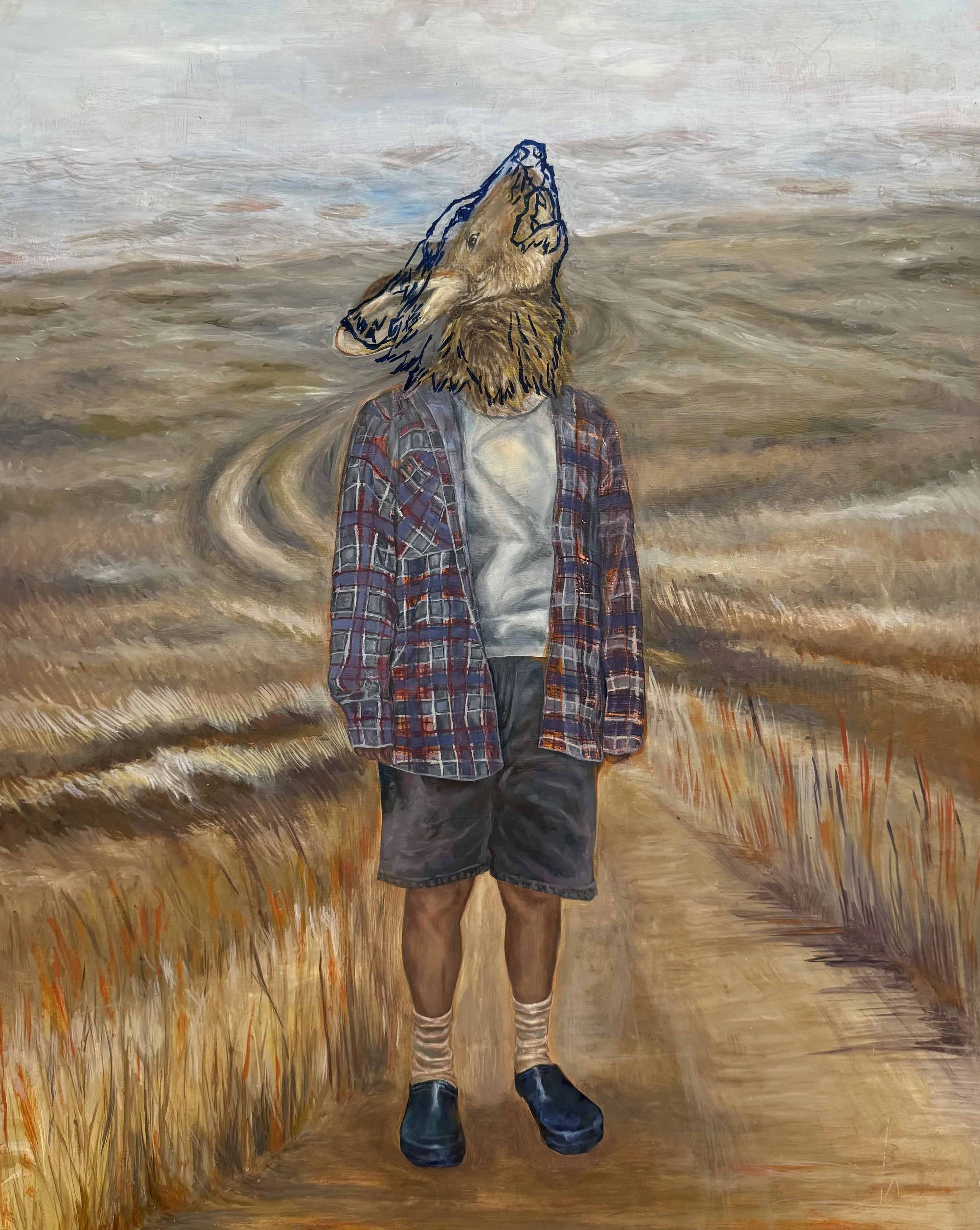
Evolutionary Byproduct
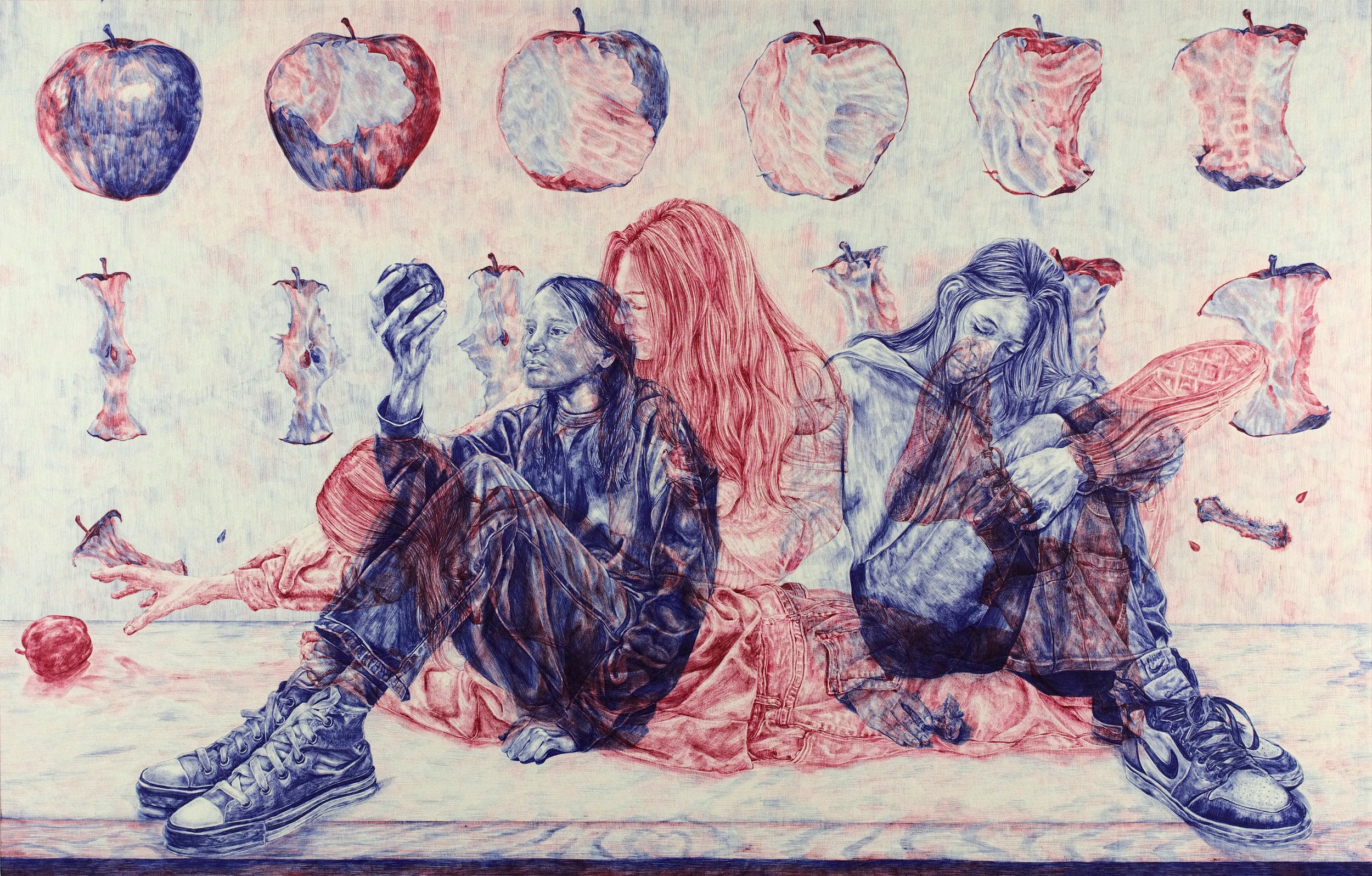
Bitter Rot
If Evolutionary Byproduct and Bitter Rot grapple with transformation and decay by centering on the individual, Desert Ritual does so specifically within a broader cultural landscape. This mixed-media piece layers acrylic paint over torn pages from 1930s Western magazines, which Madison sourced from an antique store in her hometown. The yellowed paper, filled with idealized images of frontier life, forms a collaged backdrop steeped in Americana. Over it, she painted an animal skull—the kind she often encountered in the Colorado fields of her upbringing—and affixed a Korean bok charm, a talisman associated with good luck and protection.
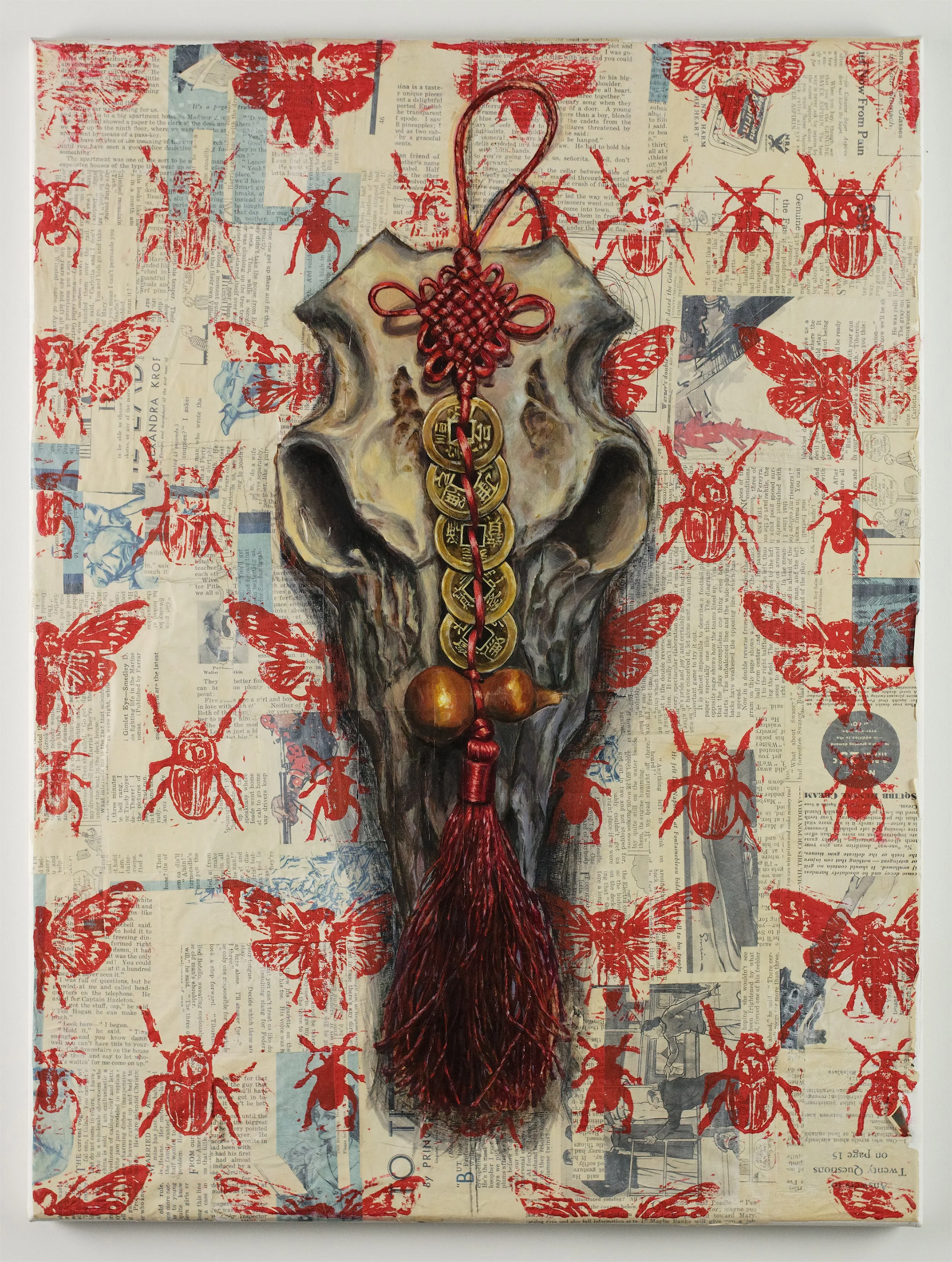
Desert Ritual
Scattered across the surface are hand-carved rubber stamps of Colorado moths, each species carefully researched, drawn, carved, and printed by Madison herself. The moths, native to the region, made me think of how their gentle fragility is inseparable from their nocturnal persistence. The result becomes a layered meditation on inheritance; both what is carried and what is lost in translation across landscapes and generations.
Besides high school teachers and her mother, Madison cited painters Georgia O’Keeffe and Norman Rockwell as her key influences. From O’Keeffe, she borrowed a reverence for animal skull paintings and desert forms. From Rockwell, a curiosity for capturing Americana with that vintage look that Madison told me she loves.
Even amid serious artistic work, Madison preserves a sense of whimsy. She cracks her knuckles, collects receipts for scrapbooking, and maintains a playful sensibility in her observations of life. Her dream dinner party guestlist includes Ariana Grande, Spider-Man, and JFK seated together while being served Rice Krispies treats. When I asked her how she would like to return to life after death, she chose an anglerfish or a blobfish: “They’re so deep-sea that I’d just…be left alone,” she said. “I’d have a light on my head so I could see everything. And I’m somewhat of an introvert, so being somewhere no one bothers me actually sounds quite nice.”
We laughed at the silly appearances of those creatures, but her answer hinted at a refrain in her work: a resistance to the neat moral and social binaries that govern who takes the role of predator and who takes the role of prey, who is legible and who is expendable. Madison’s art dwells in the liminality of the in-between. It occupies the space where vulnerability meets resilience, where decay becomes evidence of life, and where identity is not fixed but continuously negotiated with the environments that shape it.