







Feature by Nika Raiffe
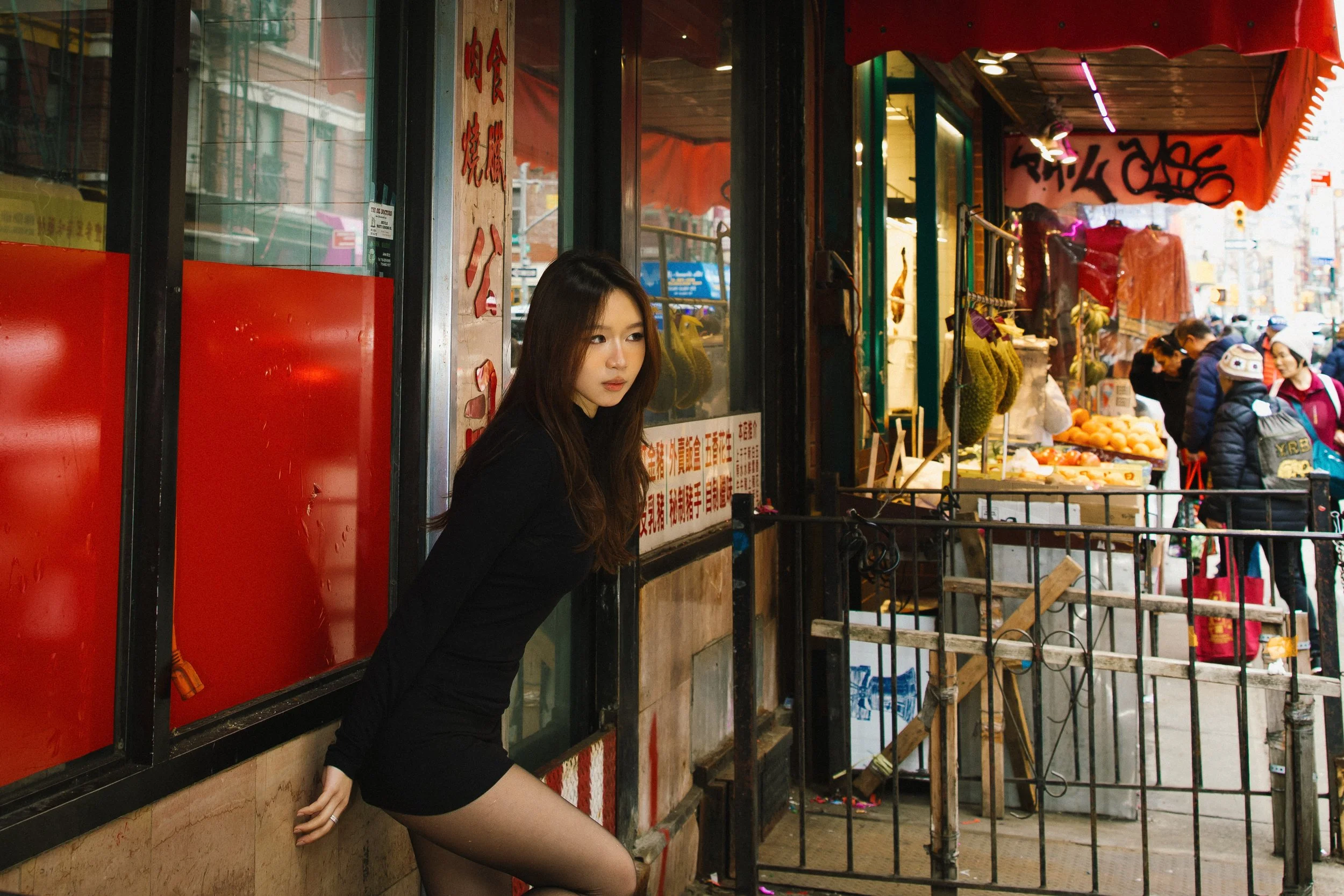
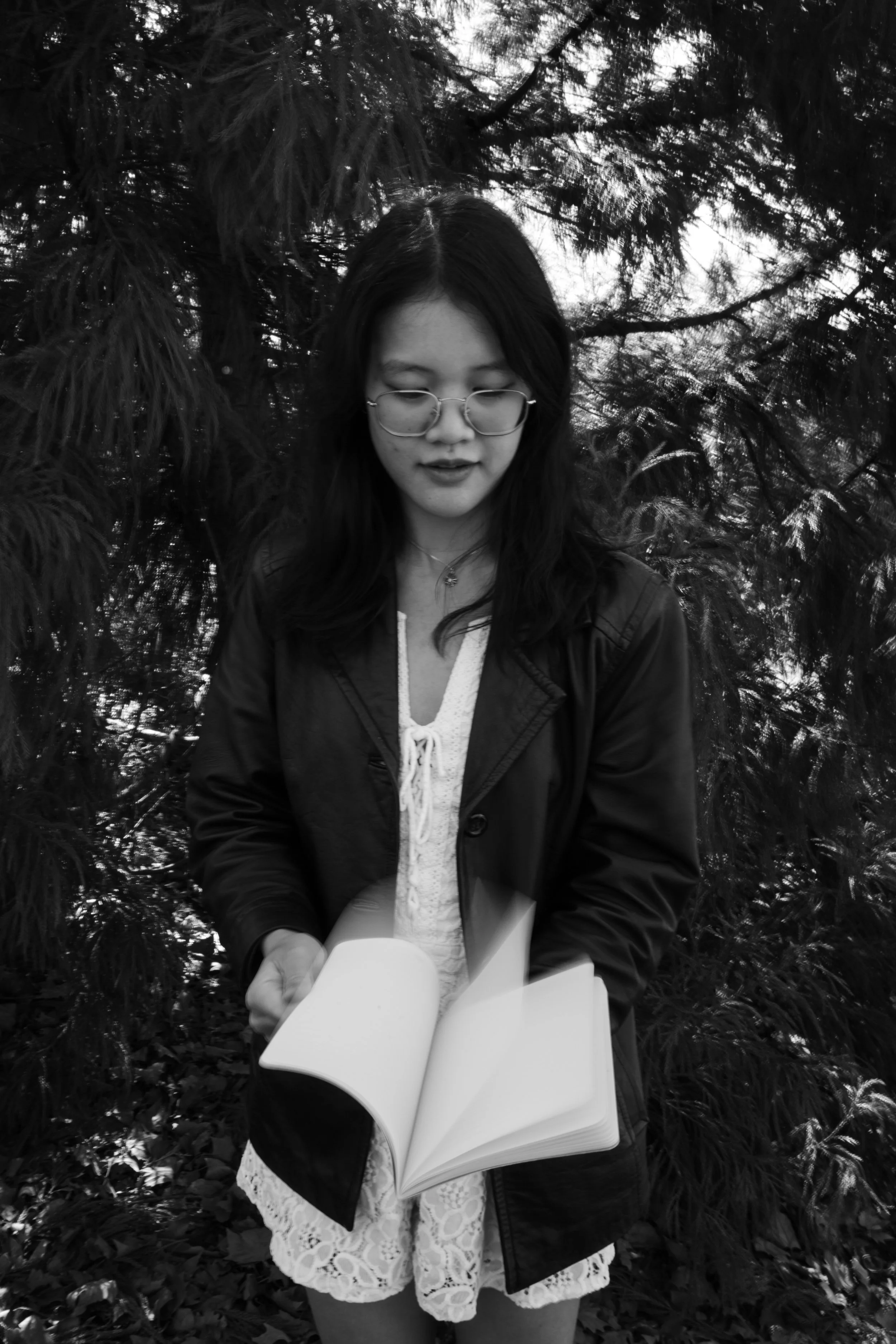
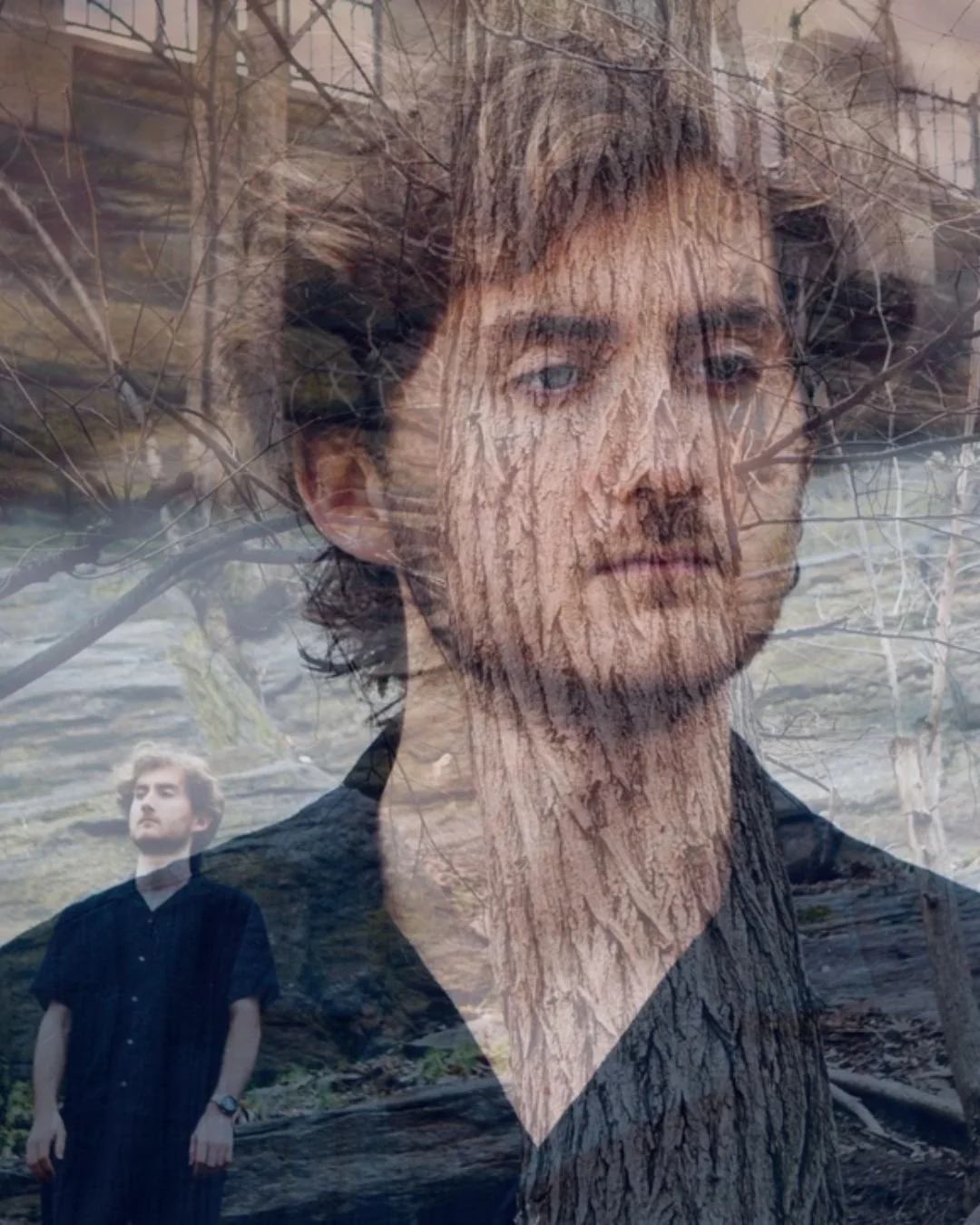
Photos by Sophia Zhu
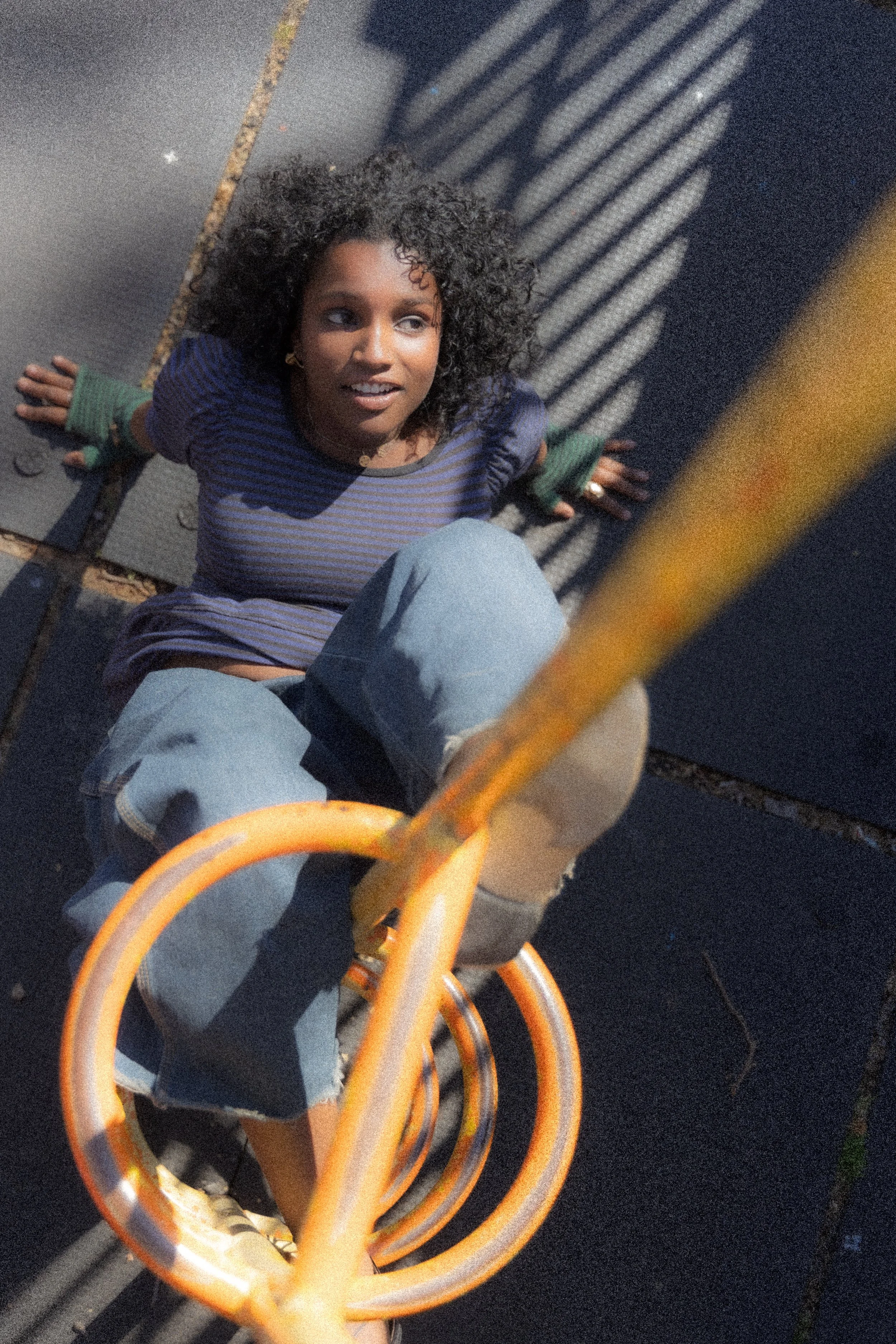
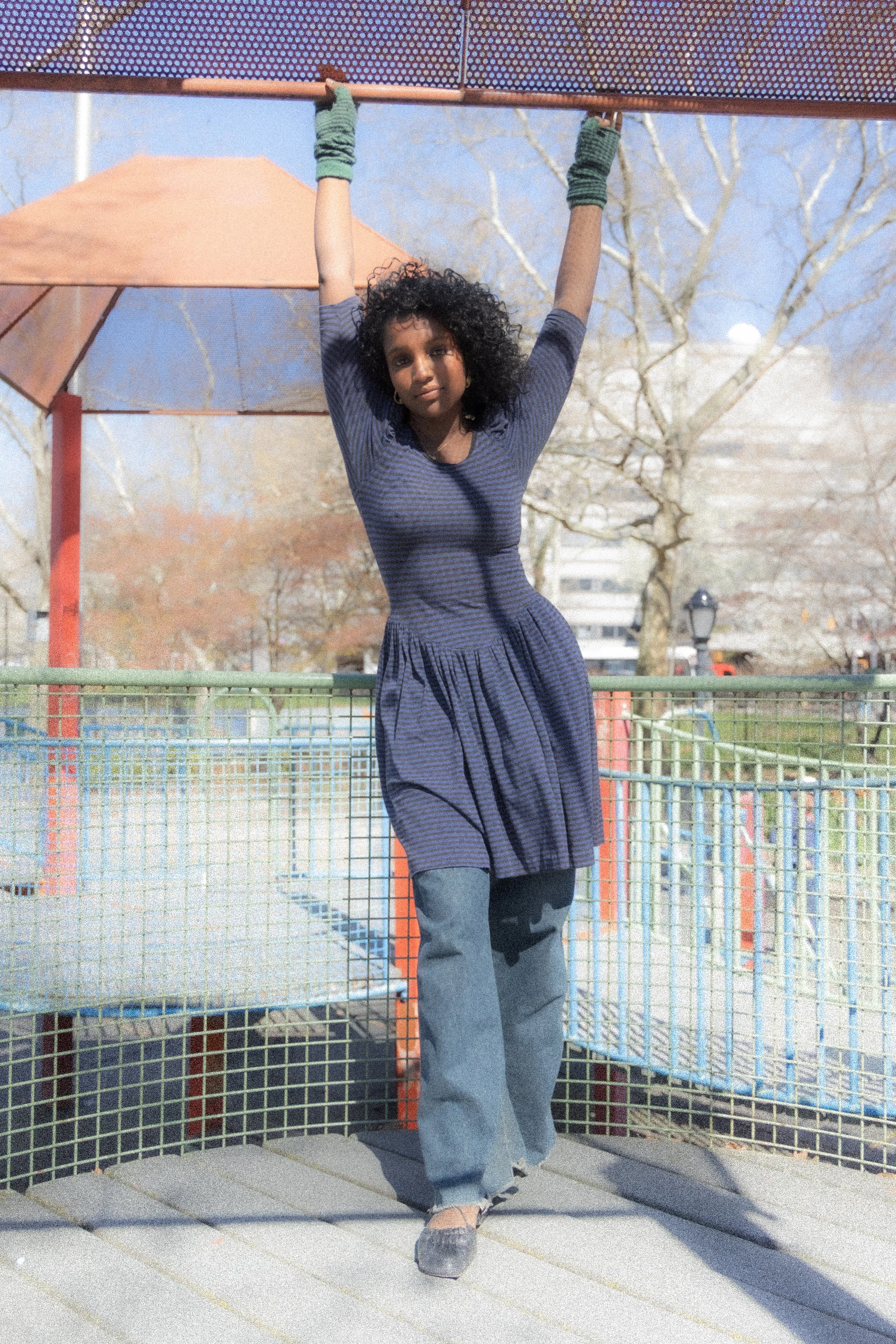
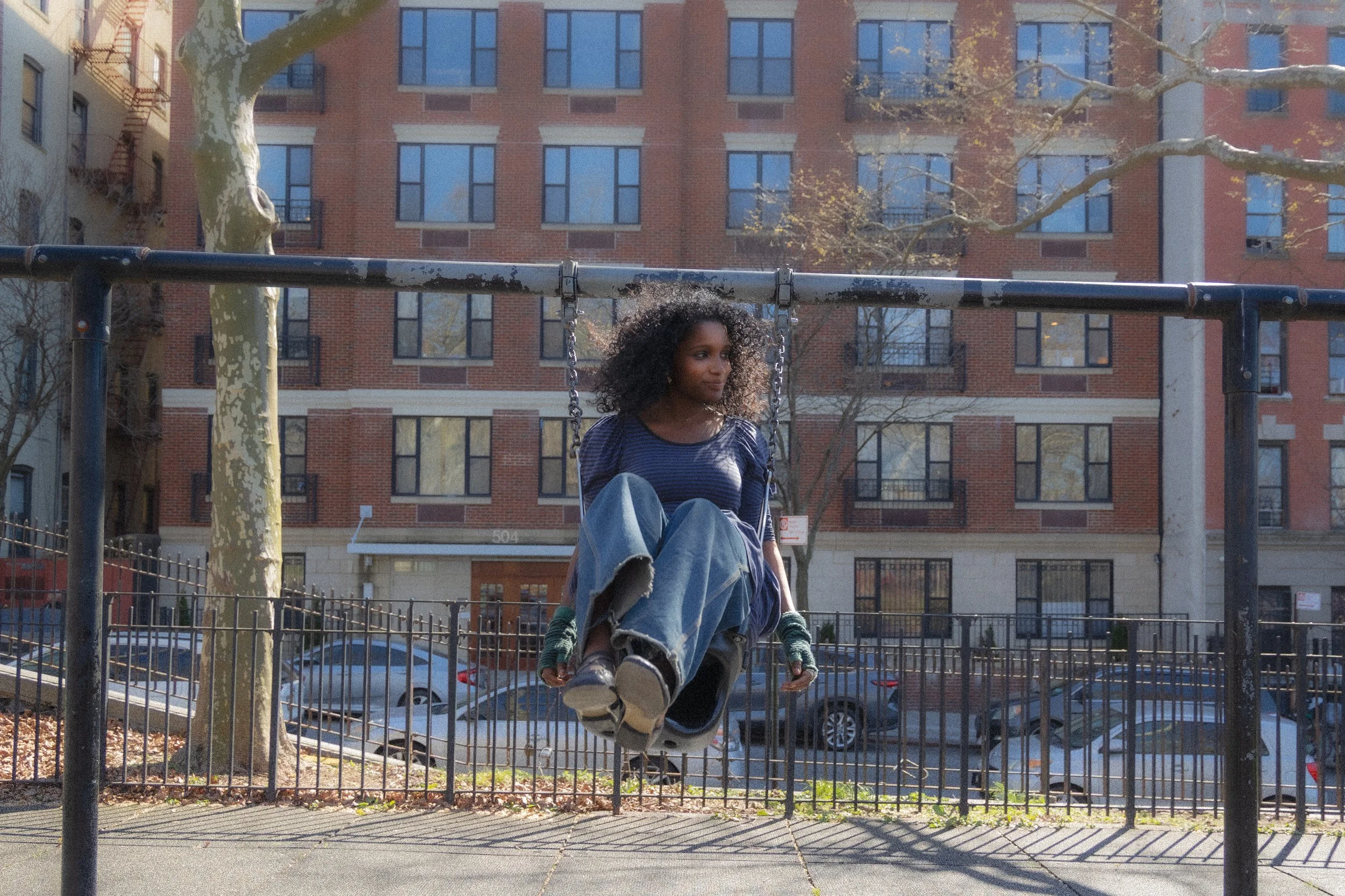
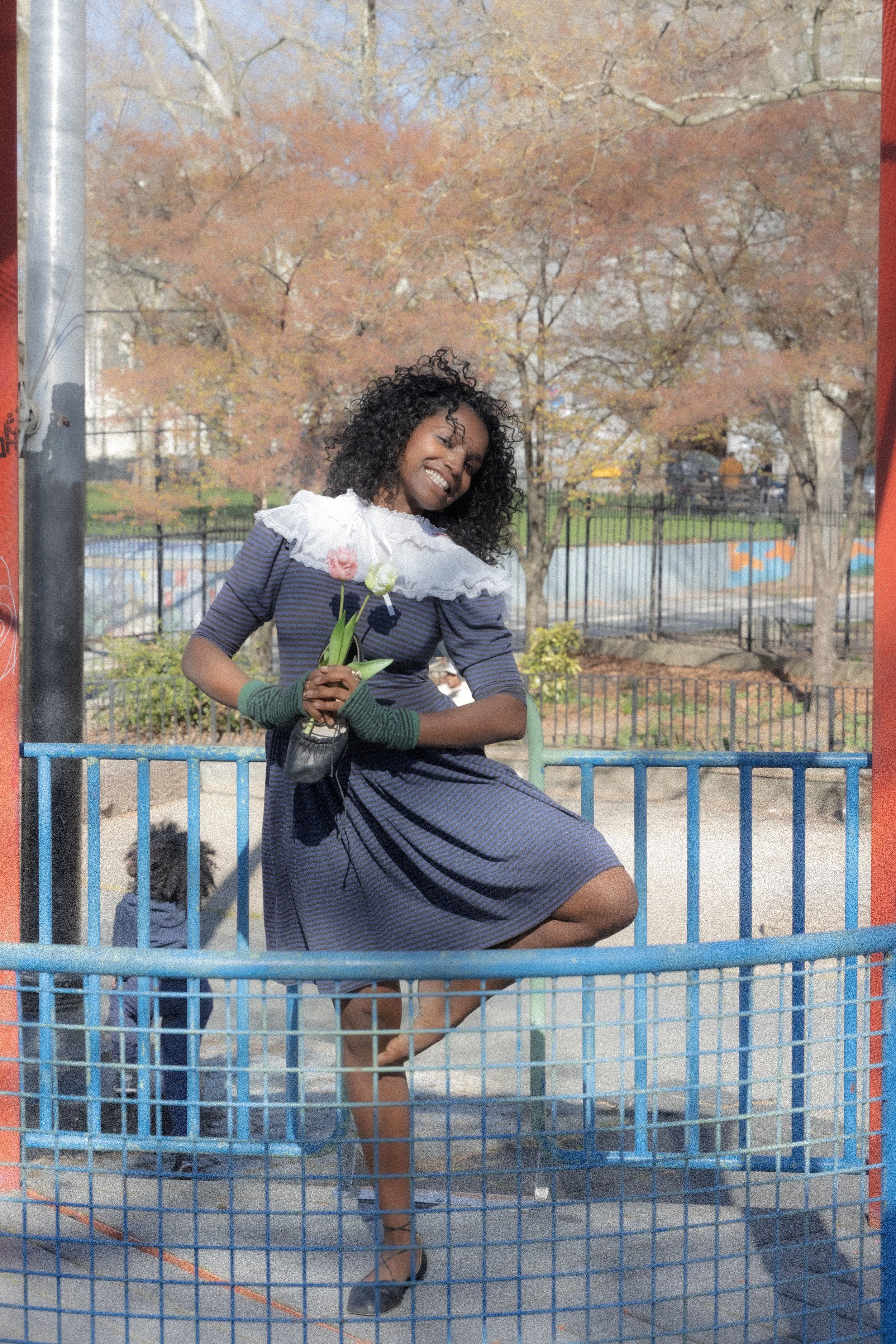
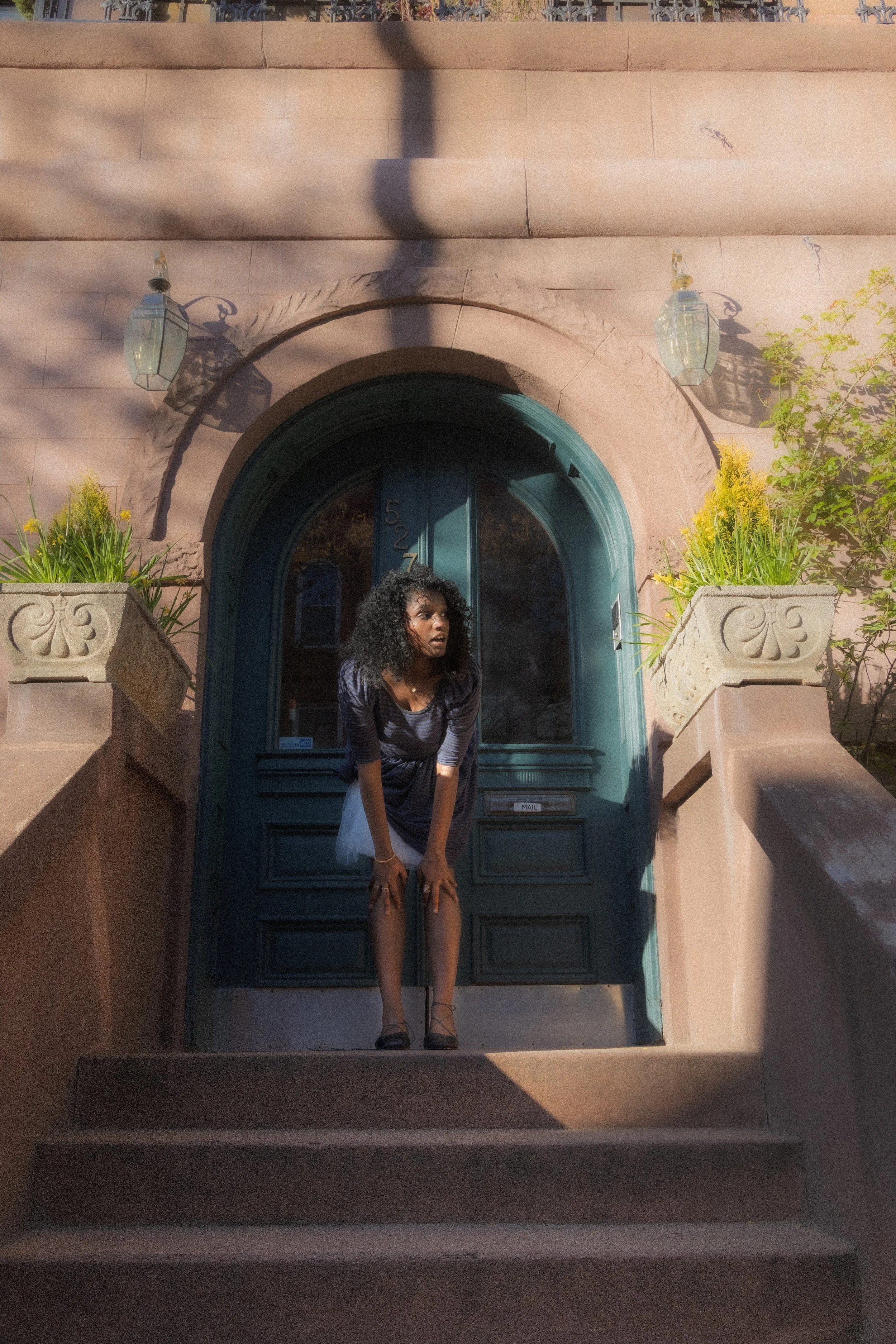
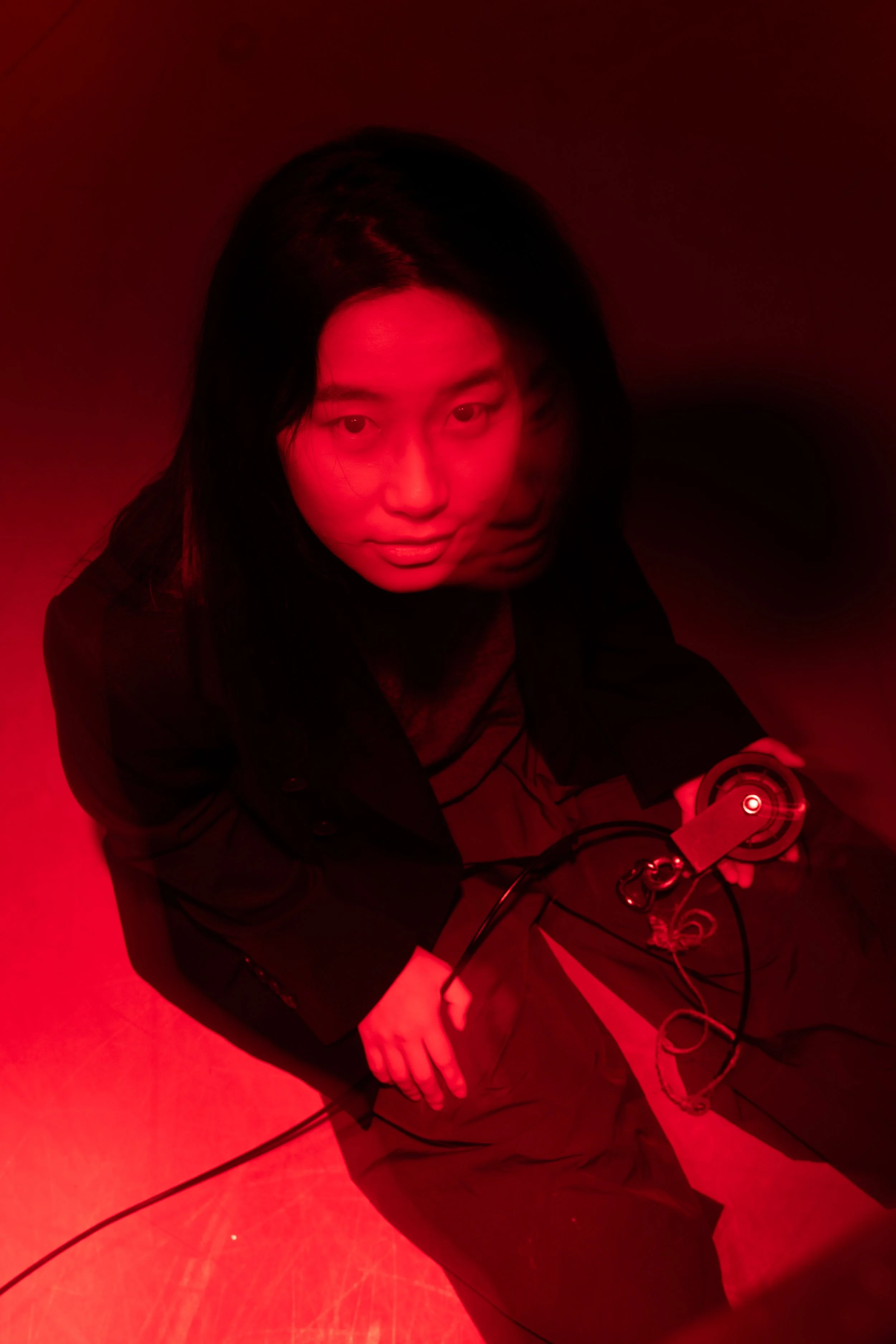
Moksha Akil (BC’26) is majoring in Dance and History at Barnard College with a concentration in intellectual history. She creates movement–based multimedia work that brings together experimental dance, choreography, photography, and film. She speaks of these mediums not as separate artistic identities but as different tools for asking questions: about autonomy, trust, and embodiment. After graduating from Barnard, she hopes to pursue graduate studies in film.
When I meet Moksha outside Avery Library, I notice her voice before anything else. It is clear and resonant in a way that makes me wonder if she’s had some kind of formal stage training. She’s tall, wearing a light blue jacket, a carabiner clipped to her jeans holding an NYPL card, keys, a bottle opener, and a small knitted teddy bear dressed in the same shade. She immediately asks me, “So what's your story?” Later in our conversation, she tells me that she approaches each of her creative projects the same way—with a question. What does it mean to be interrupted? How can I trust myself? Who owns the body? Sometimes, what am I doing?
Moksha has been dancing since she was two. She grew up in a Carribean–Indian household in Brooklyn, then Long Island, moving between drum lessons, chorus, piano, and dance, until dance became the one that stuck. She trained at Alvin Ailey through its pre–professional program, studying ballet, Horton, jazz, and West African. For a long time, however, dance was not yet joy, but something she knew how to do, something she kept doing. That shifted when she began choreographing, first in middle school and then more seriously in high school, where the work started to feel like her own. At Ailey, she says, you are a dancer and you are given the tools. Choreography offered something different: a way of deciding, with intention, how and why to move.
That shift still shapes how she describes herself now: she prefers the word mover to dancer. Part of it is rooted in discomfort with the rigid expectations attached to being a ‘dancer,’ but part of it is also philosophical. The postmodern dance framework she encountered in college, particularly after transferring to Barnard from George Washington, gave her language for something she had already been circling: that any intentional movement can be dance. A military tactic is dance. Speech can be dance. Singing can be dance. Gesture can be dance. ‘Dancer,’ she says, can feel like a role you step into, a body carrying out someone else’s vision, while ‘mover’ leaves more room for autonomy.
It’s something she returns to in her thesis, where she looks at Black experimental dance, and argues against the narrow definition of what counts as Black dance. Her argument is direct: Black dance is not a fixed style or canon, but simply dance made by a Black dancer. The body is read before anything else. “Palatability is stupid,” she says. It’s about making honest work on your own terms, and letting it stand.
Moksha credits CoLab, the Barnard–Columbia multimedia performing arts collective, with giving her access to the community that now anchors her creative life. In her telling, it’s less a club than a hub—where she cultivated her artistic expression, took photos, choreographed work, joined weekly jams, and found the collaborators who now form the core of her practice. She speaks about them with distinct warmth. Describing her MFA portfolio, she says it feels like she has her own little company, except they are all her friends; they believe in her. When I ask how she fosters that trust, she doesn’t overexplain it. A lot of her creative process can look improvised, even uncertain, but she’s always working from a question. The question, more than anything else, seems to hold it together.
Up close, that structure becomes clearer. From the outside, improvisation can look like uncertainty. In Moksha’s practice, it’s guided by intention. Many of her pieces are not traditionally choreographed; instead, she builds scores, tasks, and prompts. She tells performers what pressure the room should hold, what obstacle they are facing, what they need to reach, resist, or break. A prompt might be as simple and as charged as: look outside the window and try to escape it. There is a barrier—examine it, push against it, get through it.
She is careful to distinguish this from vagueness. “Improv is intentional,” she says, though admits that understanding took time to arrive at. She credits her teacher Caroline Fermin with helping her think through the difference between focus and mere flow, between drifting inside motion and using improvisation as a sharpened tool. One of the biggest misconceptions about her work, Moksha says, is that because it is improvised, it must not be planned. She pushes against that.. “It’s never gonna be an answer,” she says. “The piece, the output, is part of the answer.”
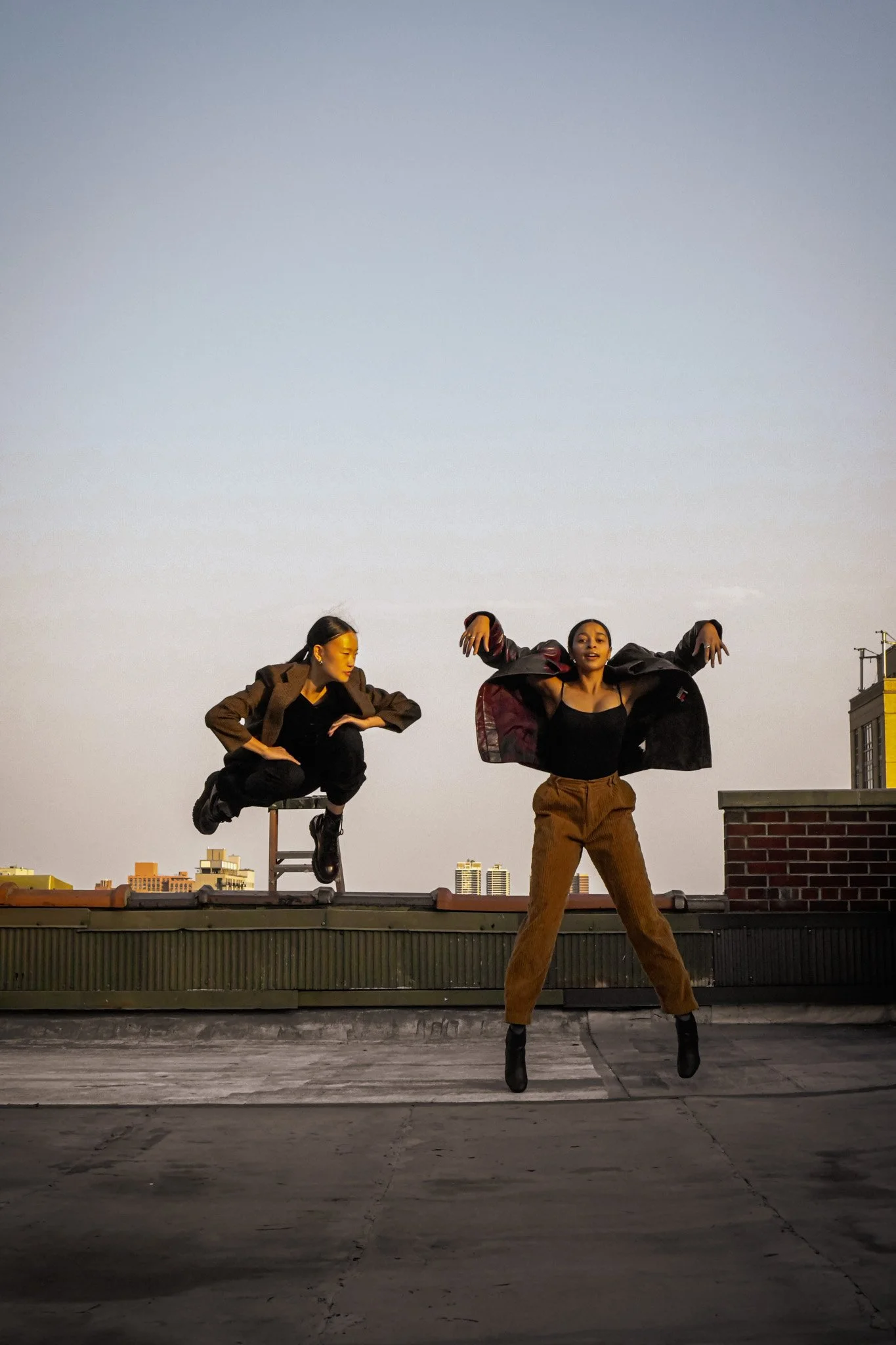
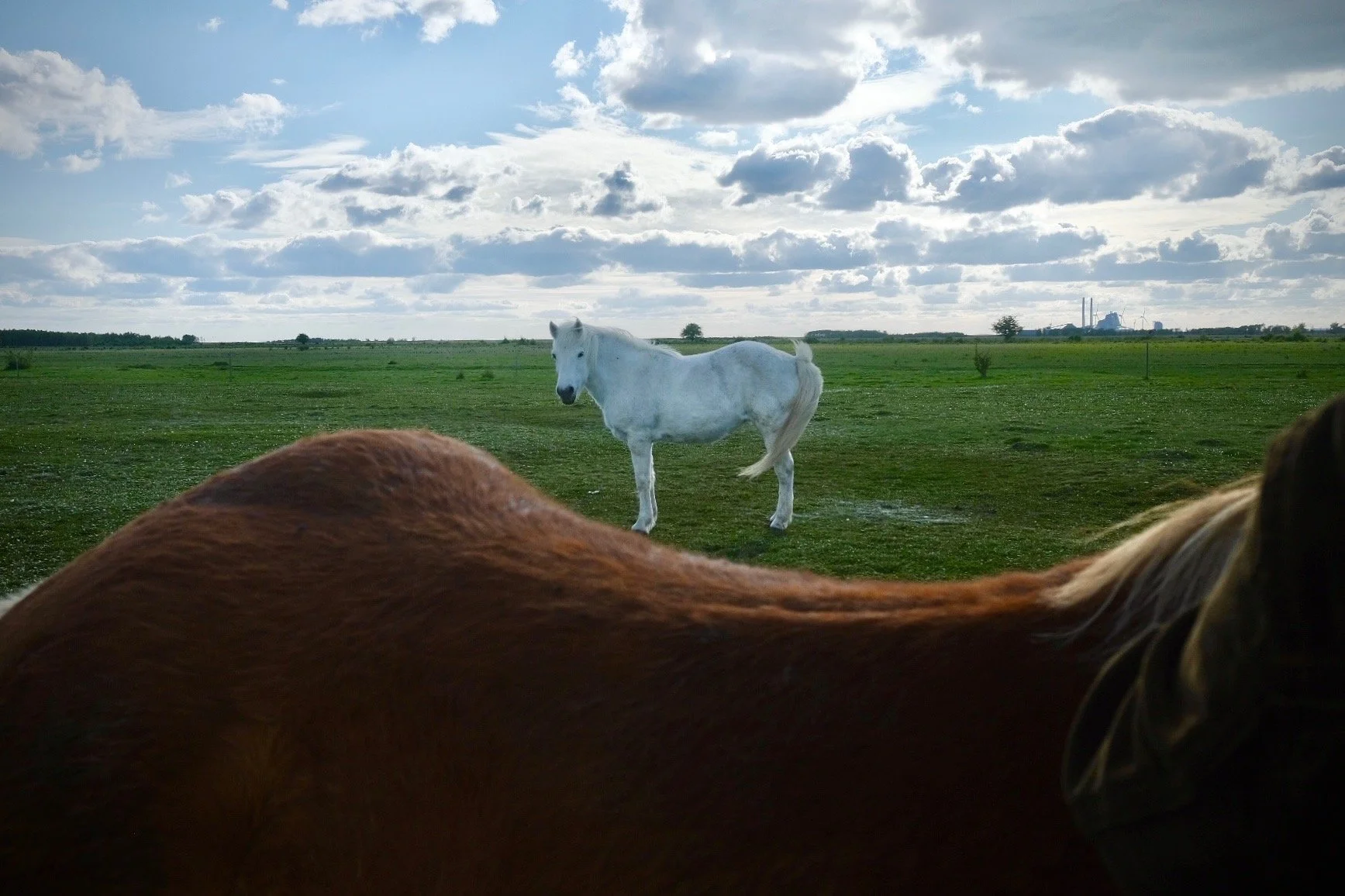
During her semester abroad in Ireland, Moksha dislocated her shoulder within the first few weeks and spent much of her term unable to dance. Luckily, she had brought a camera. It followed her everywhere. She became more and more drawn to moments that feel less staged and more in motion. At one point, she made it a goal to roll down as many hills as she could.
After going straight from Dublin to Barnard’s summer dance intensive in Paris, she dislocated the shoulder again. She could not perform in the final showing, so she made a film instead.
That Paris film became a turning point. Film gave her something still photography could not: fluidity, duration, rhythm. It let her stay with movement rather than stop it. “Movement is not static, and neither is experience.” The shift is visible in her work since: I think I need a nap, Tussle, and her thesis performance, “Moksha”. All three are interested in what happens when a body is placed under pressure, but each begins from a different place. Tussle asks what it means to be interrupted, to have someone else take up your space. Her thesis turns inward: how can I trust myself?
Even I think I need a nap, which she describes as one of her hardest works, reflects this process by resisting it at first. She knew she wanted a liminal space, color, shape. But she did not yet know the question. “What am I doing?” is the feeling she remembers. The title came afterward, cinching together a mood she had already been circling.
For all the assurance she projects, some of the most striking things Moksha says are about anxiety and disembodiment. “I dance to not be disembodied,” she tells me. Dance, for her, is not the performance of certainty so much as the place where it gets temporarily rebuilt. It is where she knows where her elbow is, where her jaw can release, where her body stops feeling theoretical and becomes immediate.
After graduating from Barnard this spring, Moksha hopes to pursue graduate studies in film. Her mother is a filmmaker, and the medium has long been close at hand, but now she’s looking to develop the technical language for instincts she already has: editing, color, film theory, abstraction, the grammar of the moving image beyond conventional narrative. She also wants to leave New York, at least for a while. She doesn’t reject the city but she knows how easily familiarity can harden into comfort, and comfort into artistic rut. “Discomfort leads to questioning and questioning leads to inspiration,” she says. “Discomfort ends up leading to joy.”
By the time we leave the Avery Library basement, I keep thinking about the small constellation clipped to her jeans: the library card, the keys, the bottle opener, the tiny blue bear. They are practical, odd, affectionate objects, all attached and carried together. Moksha’s practice feels built the same way: dance, photography, film, writing, voice, theory, friendship, improvisation, anxiety, confidence—none of it stays in a separate compartment for long. It all hangs together. It all moves together.
Her work does not move toward a neat resolution. It moves toward the next question, the next collaborator, the next hill. It trusts that if the body keeps going, something true will emerge in the process.