
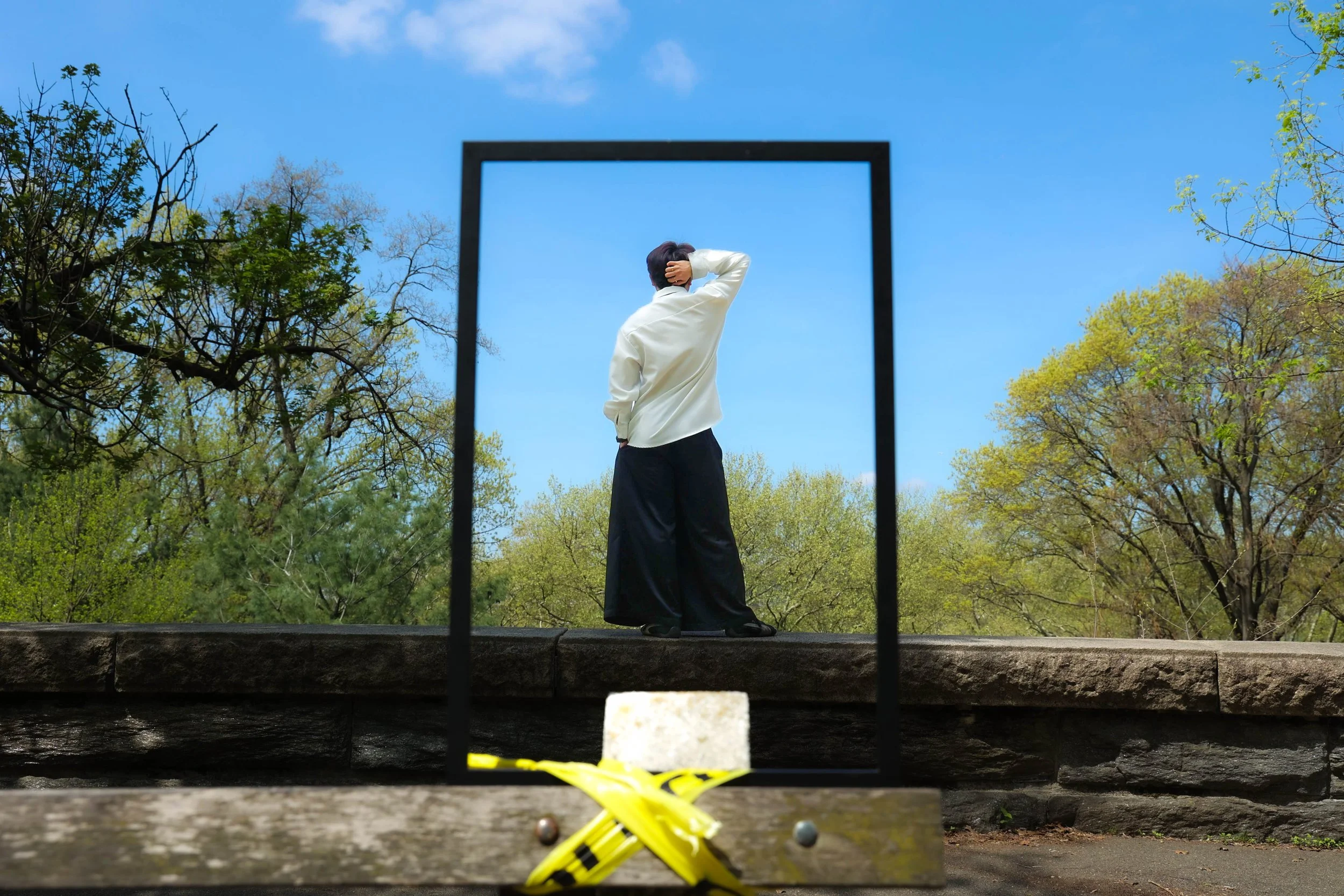




















Feature by Alexa Zacharias
Photos by Harper Rosenberg






Delia McGowan BC’26 is an undergraduate research assistant at Dr. William Fifer’s Lab at the New York State Psychiatric Institute. Delia is currently pursuing a degree in Neuroscience and Behavior on the pre-med track as an aspiring obstetrician. Apart from this, she works as a poet during the early twilight hours, jotting down what moves her stream of consciousness before the mind fully awakens.
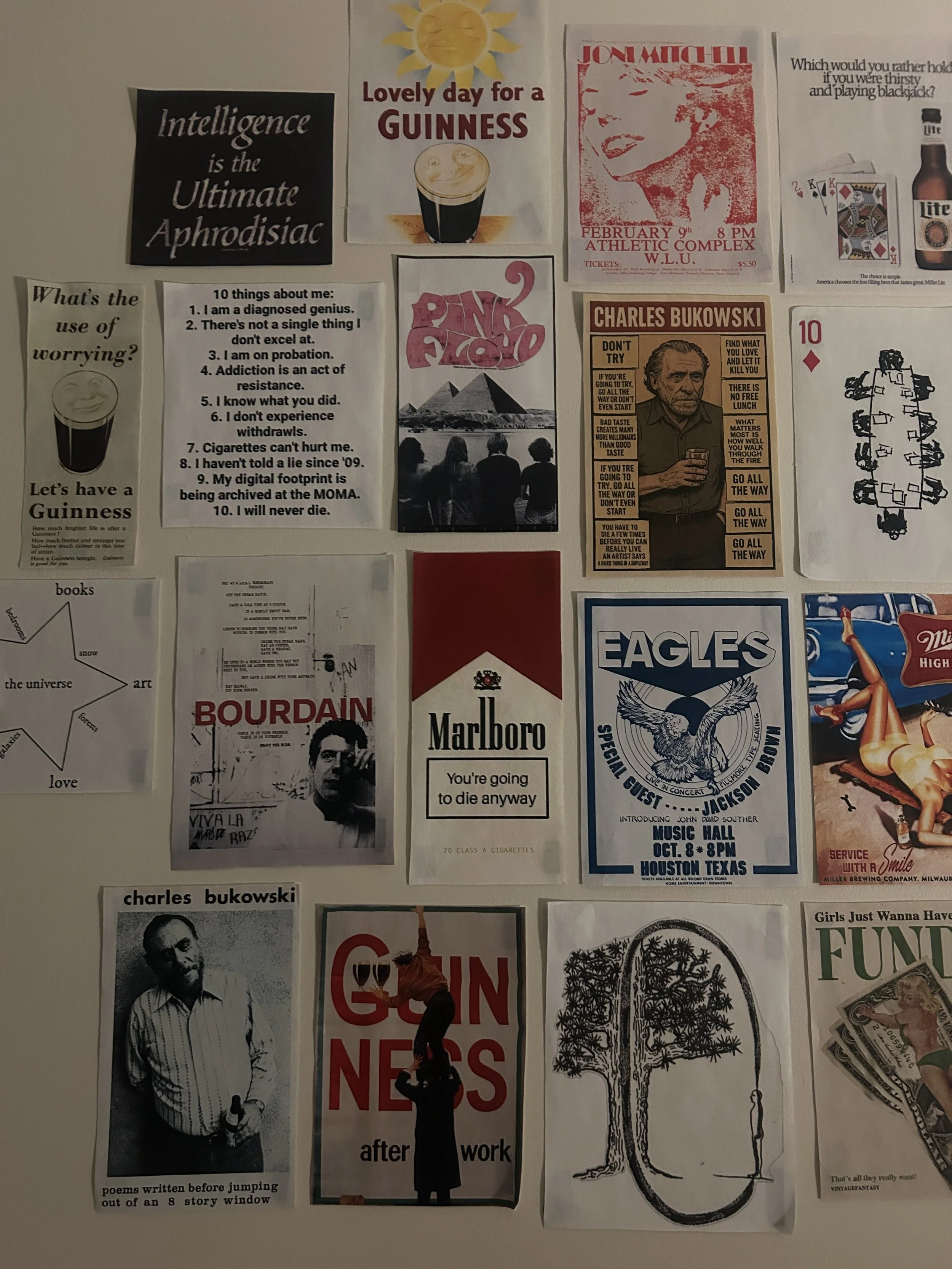
In between sips of jasmine green tea imported from China and the chill of a soon-to-be Spring breeze sifting through the open window of the four-walled space, Delia sat on her bed. We each had our own porcelain cups and spent a second in silence, taking in the sounds of the city— ambulances, soft-spoken conversations, and cars speeding through the streets. Her walls were encrusted in posters of Guinness—she used to be a bartender—Marlboro Reds, Anthony Bourdain, Charles Bukowski, and a funny, crude quote saying, “Never Fake An Orgasm… Let Them Know They Failed.”
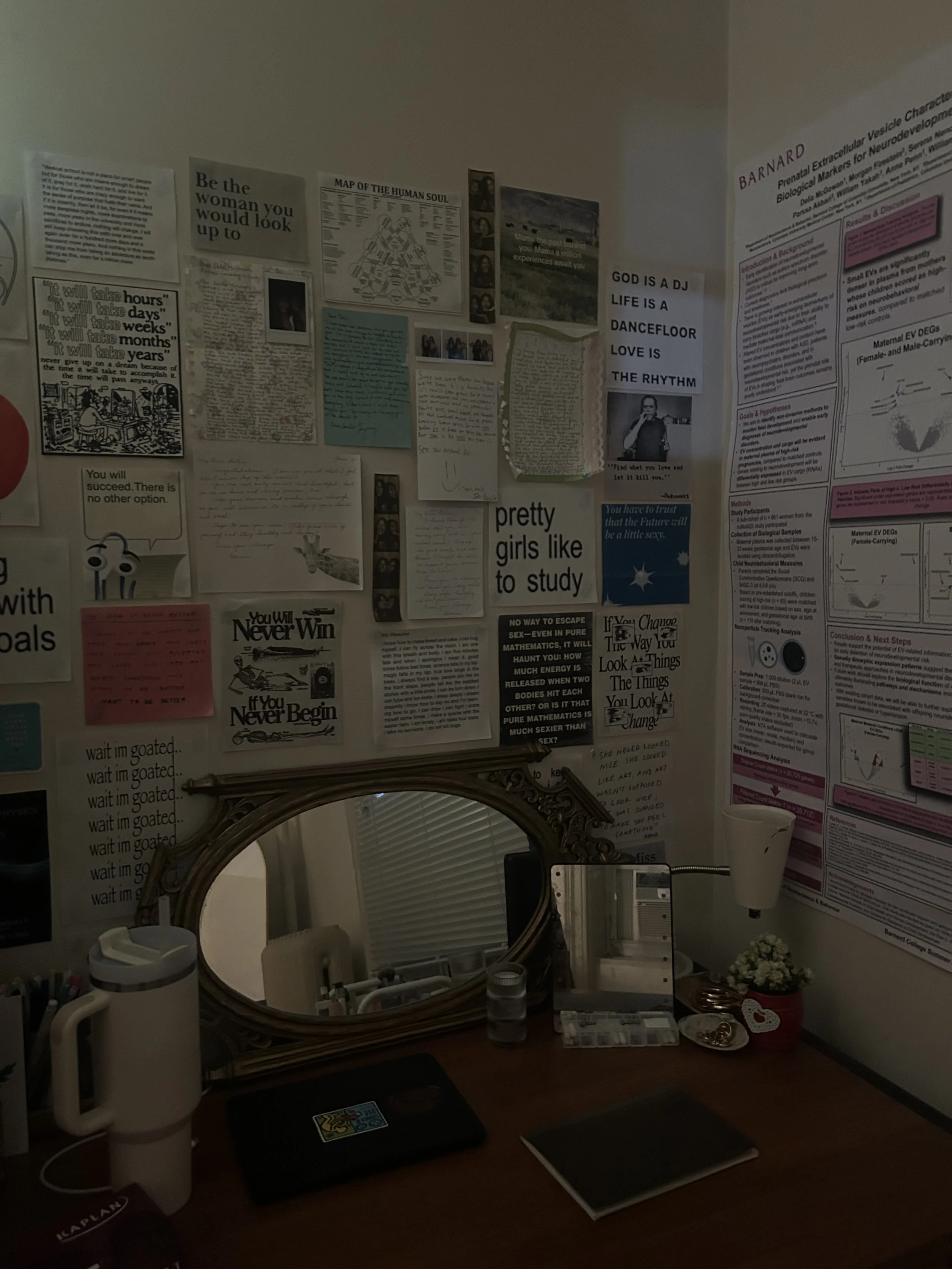
However, around her workspace, the scene was quite different. Instead of beer brands or misogynistic writers, the space was filled with motivational study sayings, pictures of friends, and a large advertisement on the “Biological Markers for Neurodevelopment.” I understood then that Delia was a two-sided coin, a future obstetrician with the introspective mind of a poet.
She spent her morning sectioning mouse brains, the scent of formaldehyde still clinging to her clothes. “Oh my god, can you smell it on me?” she asked. I reassured her that the only thing I was breathing in was the scent of the warm water vapor emanating from our teacups. From her neuroscience thesis seminar, she headed into her writing seminar, where she revised a couple of the poems she presented for this article. Poetry allows her to take her mind off the heavier subjects she studies, setting aside the technicality of neurobiochemistry and enveloping herself in commemorating people, the observable, and the intricacies of intimacy through writing. She doesn’t separate her two interests, but rather, she puts neuroscience into poetry. When asked to further expand on this statement, she said, “I feel like practicing poetry and reading poetry makes you a better person. It makes you care more, makes you notice more. I feel like those are important qualities in medicine. Especially in caring about little peculiarities about people that you will see in the medical field. I feel like they work really well together. I also try to incorporate writing wherever I can.”
As the scientific review editor of both “Grey Matters,” the Neuroscience Journal at Columbia, and “GYNECA,” the gynecological journal, Delia has oscillated between empirical writing and jotting down the first thing in her head in the space between waking and sleeping.
“Why do you write?”
“I have a terrible memory.”
This seemed to contrast the grounded reality of her poetry. As a reader, I felt like a phantom rummaging through the crevices of Delia’s most intimate thoughts. Sitting in the back of the car as she sped through the Oklahoma interstate, a tornado was right behind. Or watching as two lovers took in the sun at a rooftop bar, being swept away by the overwhelming feeling of falling in love. “Writing is something for me where I can—almost in a memoir style—write something down and then read it and feel like I'm in the moment again. And that's really important to me for a lot of reasons. Revisiting relationships with friends, with people, or just like, even nostalgia.”
In “Lawton, OK,” Delia depicts an instance in which she and her partner drove through a tornado, immortalizing the few moments they get to spend together due to their long-distance love. Delia loves driving and being on the roads. I caught sight of her Anthony Bourdain poster then—the infamous food critic and traveler, and their faces merged at my sight.
“Caught Throat” is another perfect example of this. Interstates, exits, and erotic melancholia permeate the stanzas Delia has so carefully crafted. The scientific part of Delia’s brain, together with her creative flux allow her to really delve into the imagery and tactile performance of bodies and people being intimate. “I love writing about sex,” she said and in “Caught Throat” she writes:
“By the time we hit Tennessee, I reasoned that I am pulled everywhere by either my heart / or my hair (and that I have come to like it) / It mattered how I looked, being pulled in more than it mattered if I liked where this was going.”
One of Delia’s literary role models, contemporary poet Charles Bukowski, writes about sex in this same way. Raw, unfiltered, and… kind of ugly. Although she puts intimacy at the forefront of her work, Delia weaves it subtly into lines so as to create a sort of universality. According to Delia, someone in her class “said that she felt she knew the people that I write about based on how I write them,” and that’s how she likes to write about intimacy. With a cheeky smile, she explains that she wants the reader “to feel like you could know that person or be in that moment or also map onto what I'm writing, what your experiences are.”
When asked about her inspiration for “Caught Throat,” Delia opened up her laptop and swiveled the bright screen around, showing me an enormous file full of poetic jargon and unused sentences. Wide-eyed, she tells me, “I have a Google Doc of everything I have in mind, and it's like a bullet list of every line that I wanted to put in poetry or anything I wanted to write about. It's like 30 pages long.” I took a deep breath and quickly scanned through the amalgamation of words on these white pages. To write “Caught Throat,” she took one of the sentences from this giant Google Document and used it as the base to write about the feeling all of us know quite well– the sophomore hometown-sickness. At the time, Delia was grappling with the overbearing feeling of isolation in the cosmos of a city that is New York. However, because both of her parents used to live here, Delia thought about the places they went to, the dates they held all those years ago, remembrances of an aged love and now marriage that led to the creation of these lovely stanzas. In “Caught Throat,” Delia writes about her past. Who came before her, and who she is now, navigating the same spaces that once held the two warm bodies of her procreators.
Although Delia loves the city, she often reminisces on the slow, day-by-day living of her birthplace—a small military base in upstate New York. In her poems, Delia embraces life's short moments, inviting us to savor an occurrence before it becomes a memory—with the possibility of fading from oblivion, slipping through the cracks of our brains. By the Hudson River, on a helipad, Delia would go down and settle in after a long shift at the bar she worked at, the dashboard displaying 2:00 AM. Looking out the window, she describes her spot: “There's one single parking spot right next to the helipad that faces out towards the river, and there are mountains and the rugby pitch. I would just go there and sit for hours, cry, or I would bring my friends there, or I'd bring people that I liked there. That was like my spot, and everyone knew that that was my spot. I can't really find a way to make it poetic. That’s my North Dock… all my good memories are from there.”
She has never written about this spot. Words couldn’t properly convey the magic and weight it holds for Delia. We shift onto the relationships she held with people back home that continue to permeate her writing. Besides writing about sex, she primarily enjoys focusing on the messy nature of young love. Their one-sidedness, the overthinking, the shame, but overall, the beauty of two people navigating the turmoil of attraction and budding feelings. “ I feel like relationships that are worth it come with a lot of turmoil, forgiving, learning, communicating, and having those ups and downs. Having those ups and downs within a relationship with someone is what makes it so much more valuable, to work for something so hard, and it certainly makes for good poetry.” I could notice this trajectory through her pieces, just like her descriptions of driving through the interstate, she navigates relationships with her past, parents, friends, and lovers in a similar way. There may be bumps or a tornado looming close behind you, but you keep your grip on the wheel and speed on, making sure to take in the views.
Delia’s duality, the blend of scientific jargon with tender introspection, is what makes her work jarring, real, and compelling. As she navigates the demands of her chosen career and the emotional landscape of her poetic persona, she finds solace in keen observation– the ability to love and write about the deep peculiarities of the people she’s known and loved. Whether she’s picking her brain on remembrances of two lovers powering through Stormy Oklahoma roads or detailing the tiring performance of womanhood and sexuality, her writing works as a tool against forgetting. Delia’s journey is a testament to enjoying the little moments that ignite a smile or a deep-felt heartbreak, making sure to embrace life’s inevitable surges and bumps by keeping one’s eyes on the road.