



Feature by Tai Nakamura
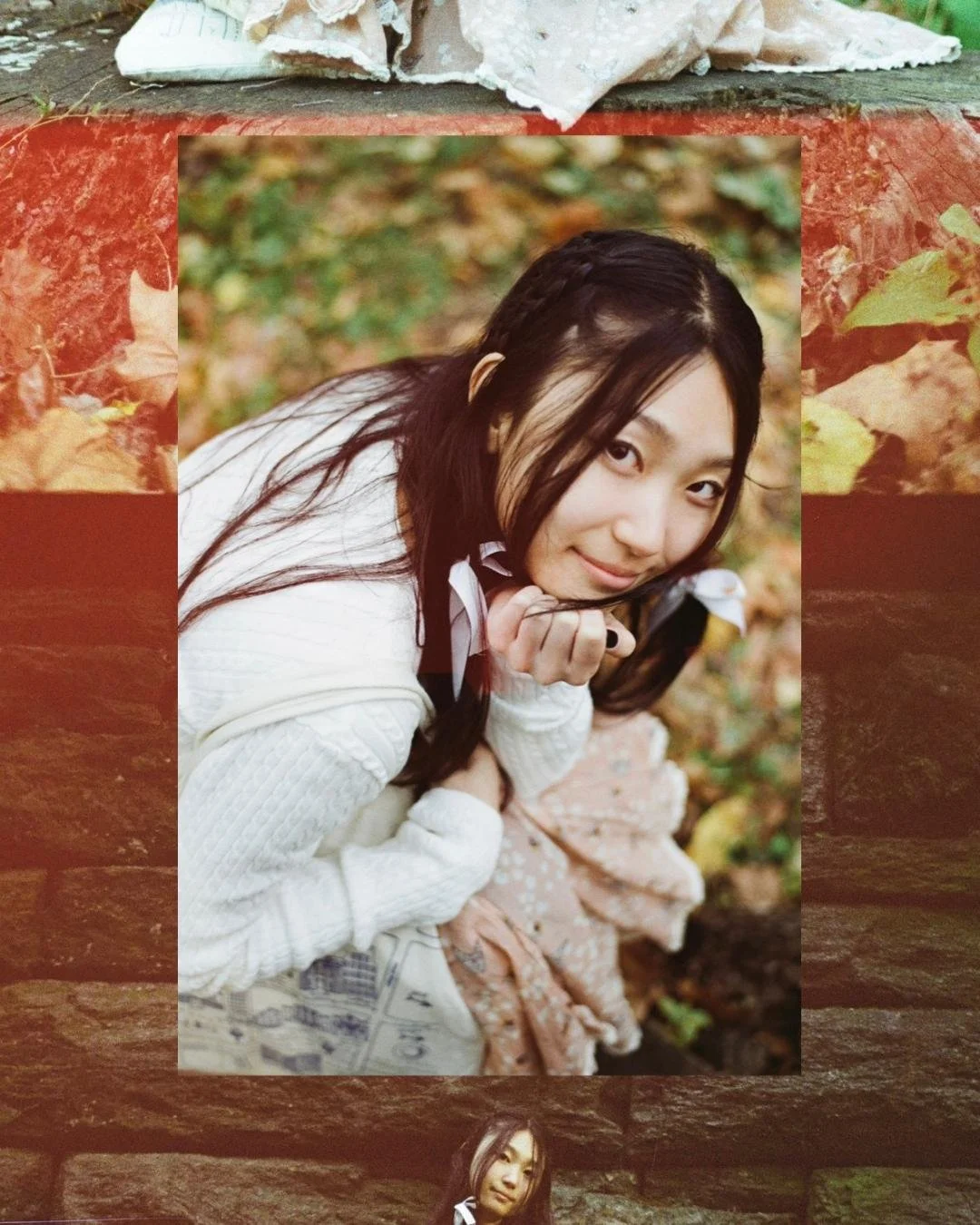
Photos by Sophia Zhu
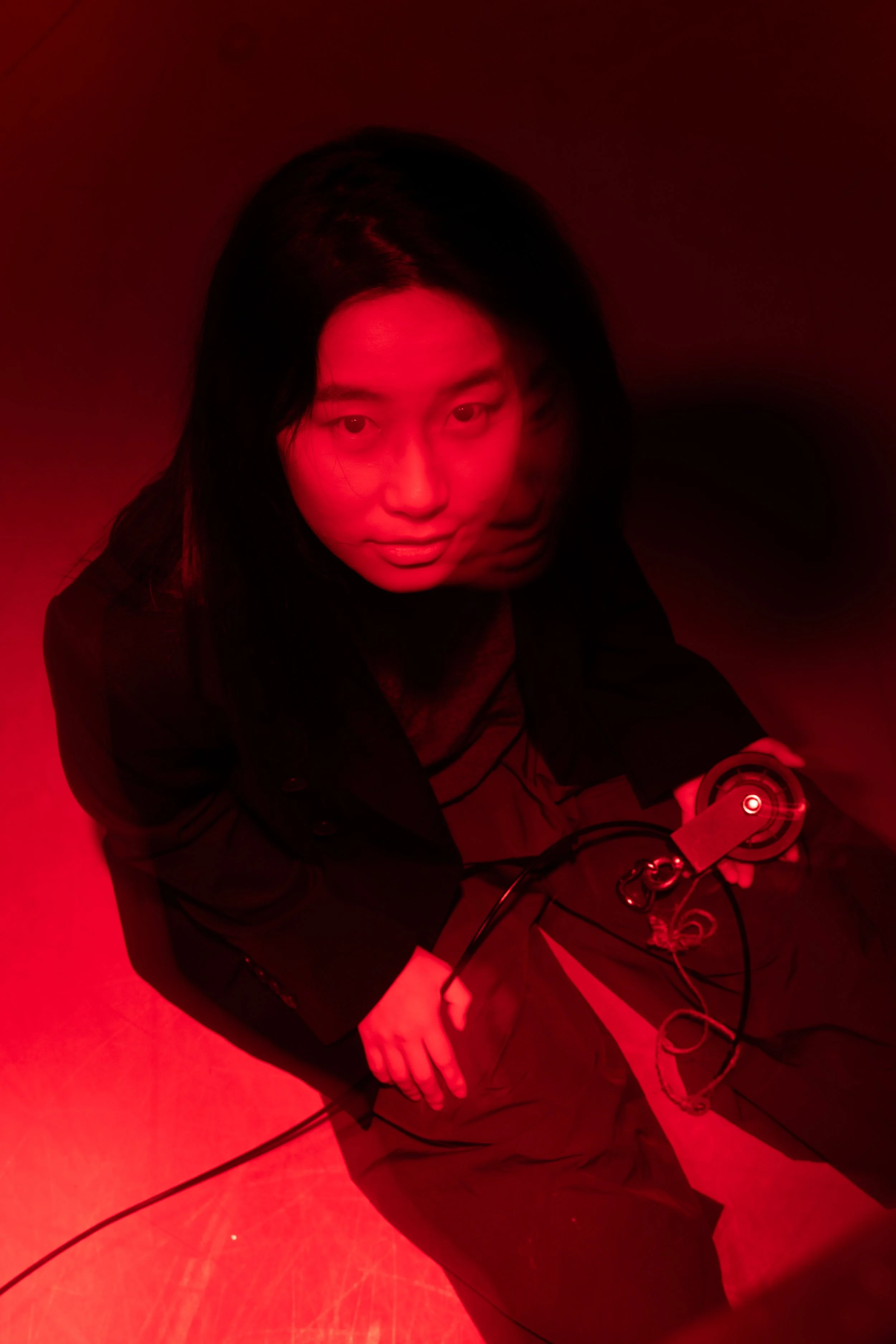
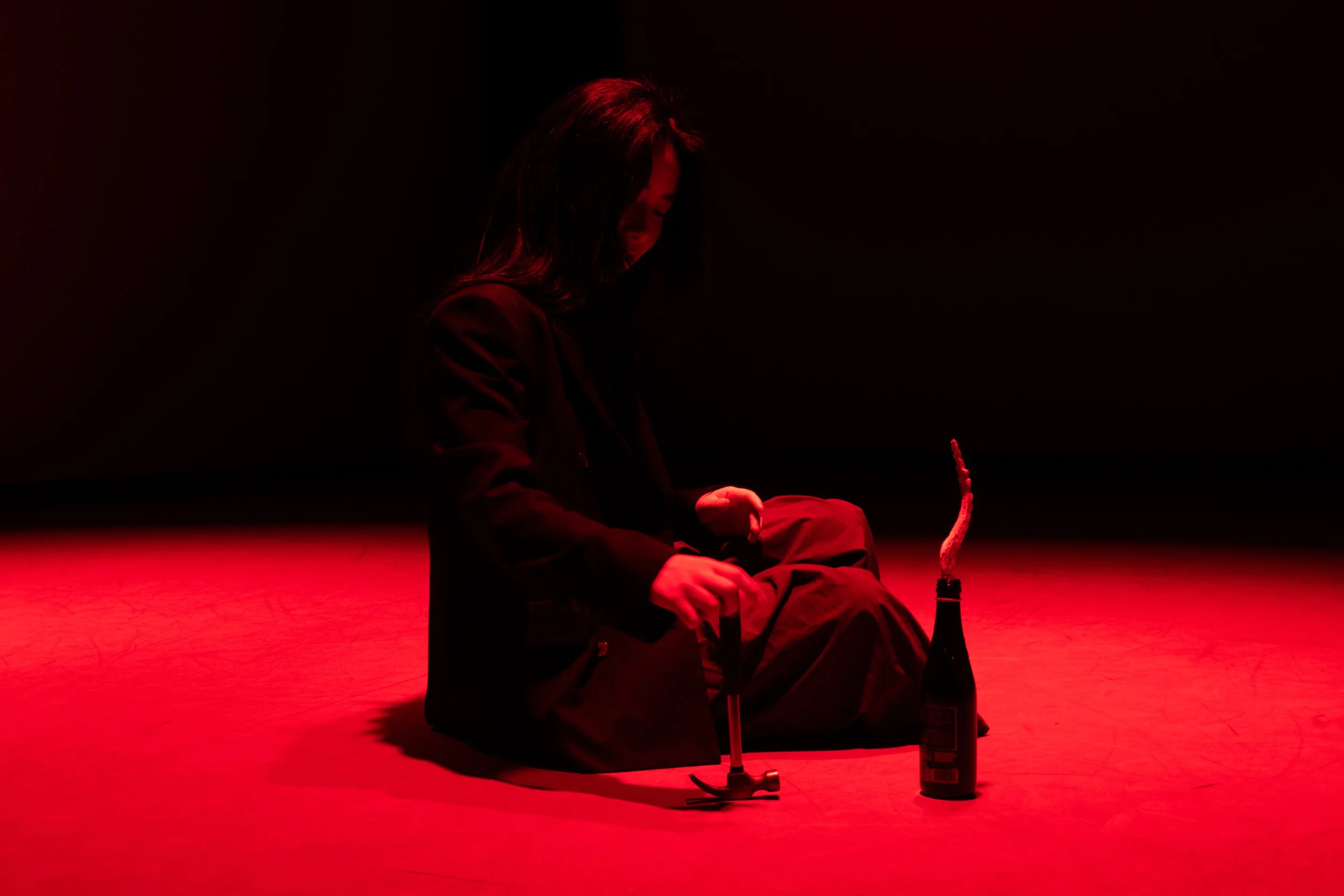
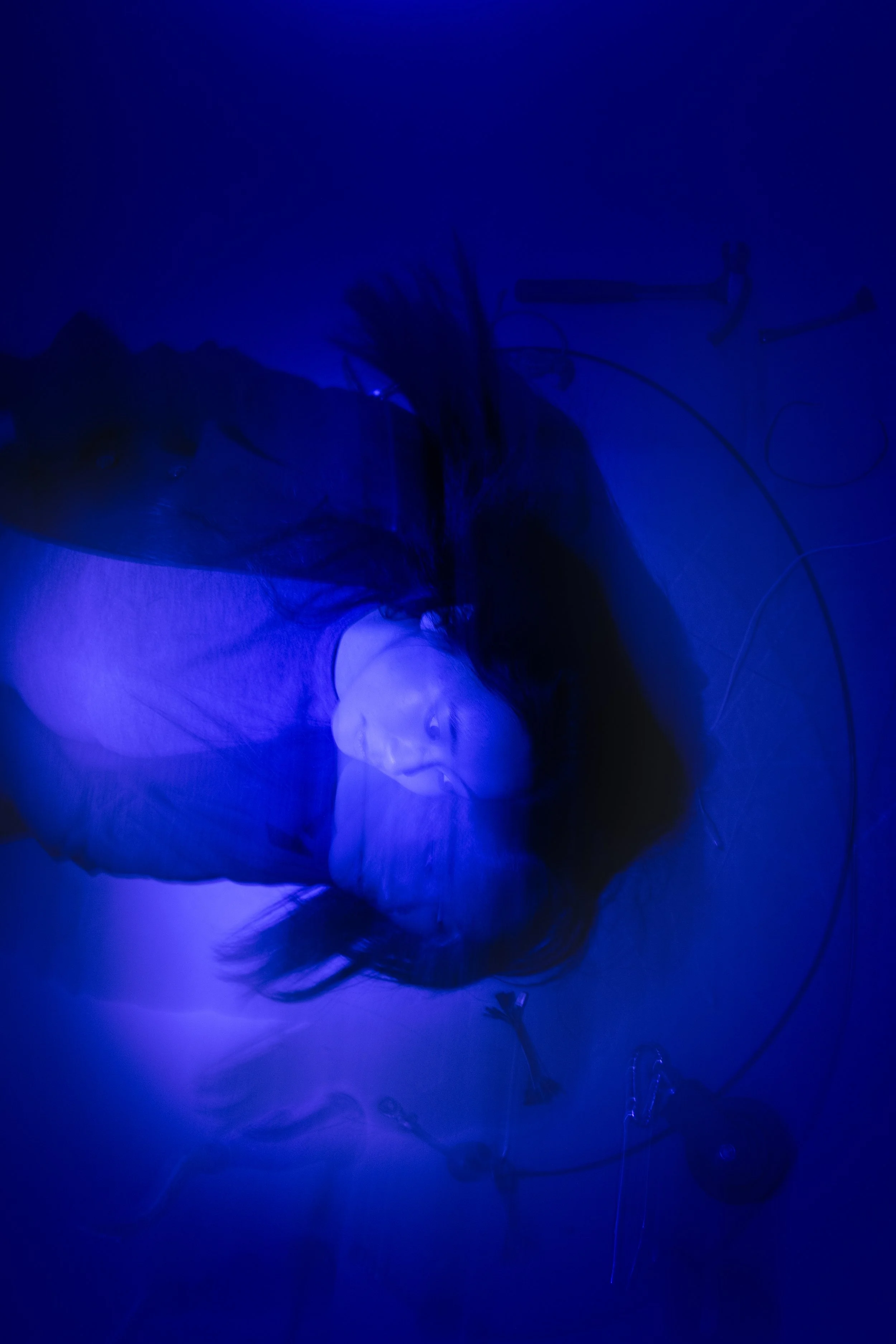
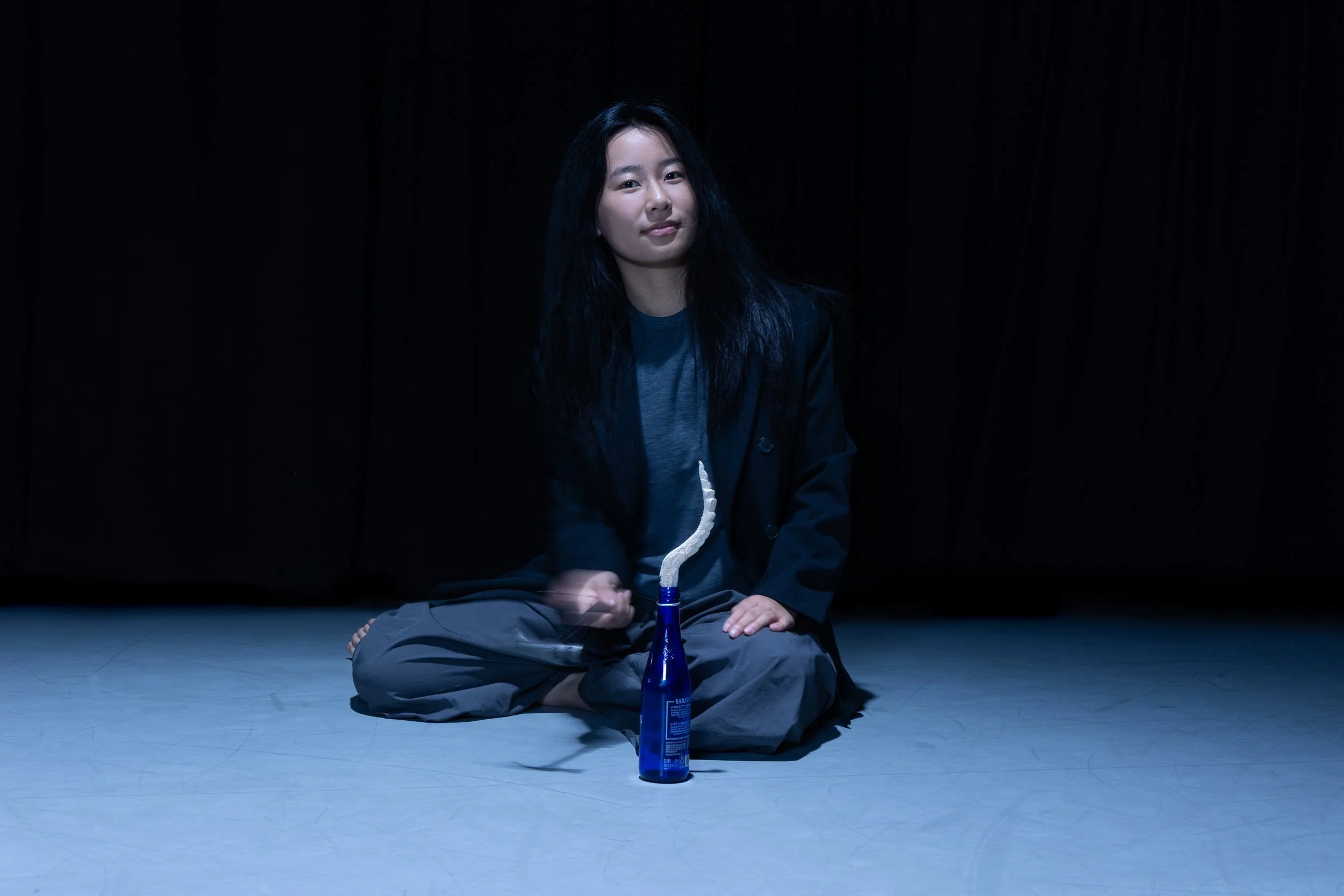
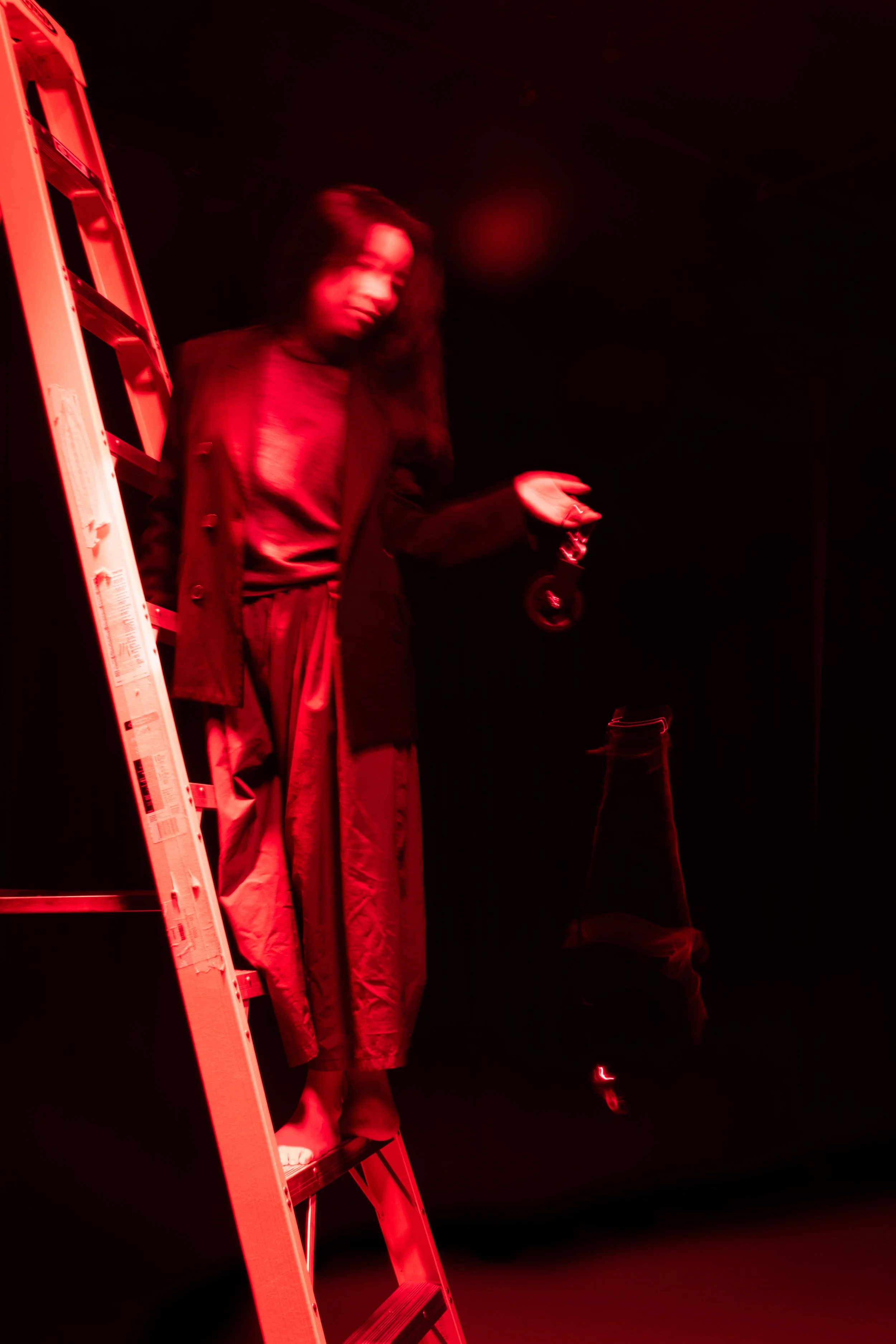
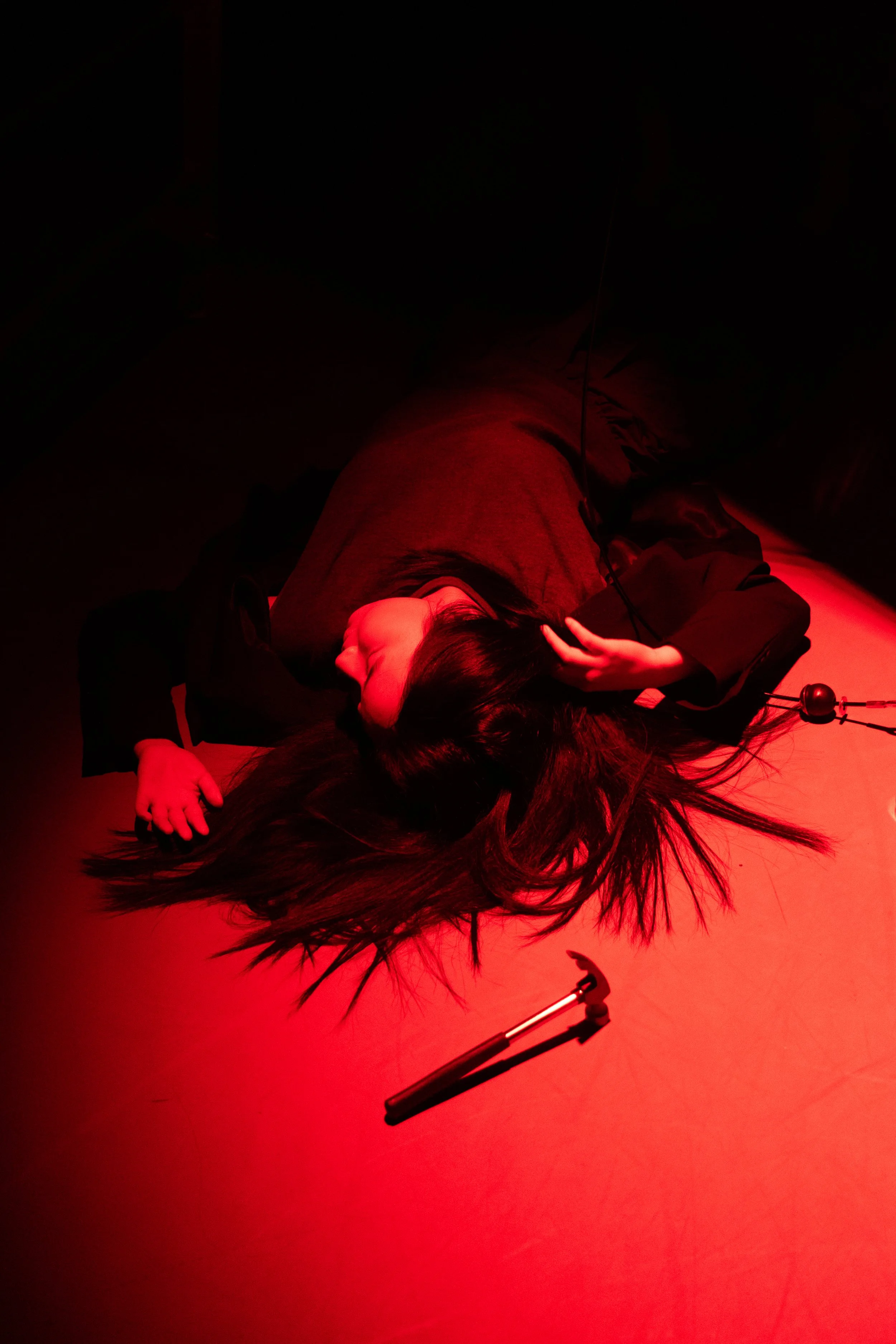
Lulu Wang (CC '26) is someone who 动手 [makes something with her hands]. She makes paintings appear, gives spirit to robots, and plays around with the environment. Her artwork makes us feel something sloshing around and forming branches in a place right behind our direct perception.
There was a moment in the interview when Lulu Wang, CC '26, answered a question I had about an object hung by a string from the ceiling of her art studio, then—as if to optimally re-answer—started poking it around with her pencil. Lulu, who double-majors in Computer Science and Visual Art, gets a cube-shaped studio from the university, surrounded by her many creations (she likened them to "babies"... more on this later) and a suitcase that she admitted belongs instead in her dorm (it's a room which calls one to ask about every single thing in it). Maybe the suitcase still tells us something: she's a Shanghaier-slash-New Yorker, but she also cites a stay in Berlin and trips to Tibet and Utah as inspiration.
Lulu told me about Utah– how she appreciated the rock in both its up-close-tactile and far-off-panorama incarnations, hints at how fundamental the specifics of her perception are to the outputting aspects of her art.
She recounted to me that during COVID, when she often found herself lying around at home, she would look through traditional Chinese landscape paintings to find "spiritual refuge." In their original format, Chinese landscape paintings are hand scrolls: worlds bloom upon unfurling them, worlds "interactive and immersive." Lulu's way of seeing renders the phrase "art object" obsolete, whether this be her German expressionist-influenced egg tempera paintings, her 2025 "Lightbox (Synaptic)", or her multiple wearable and solo-standing robots. An artwork is alive to the observer as much as the observer is alive to it.
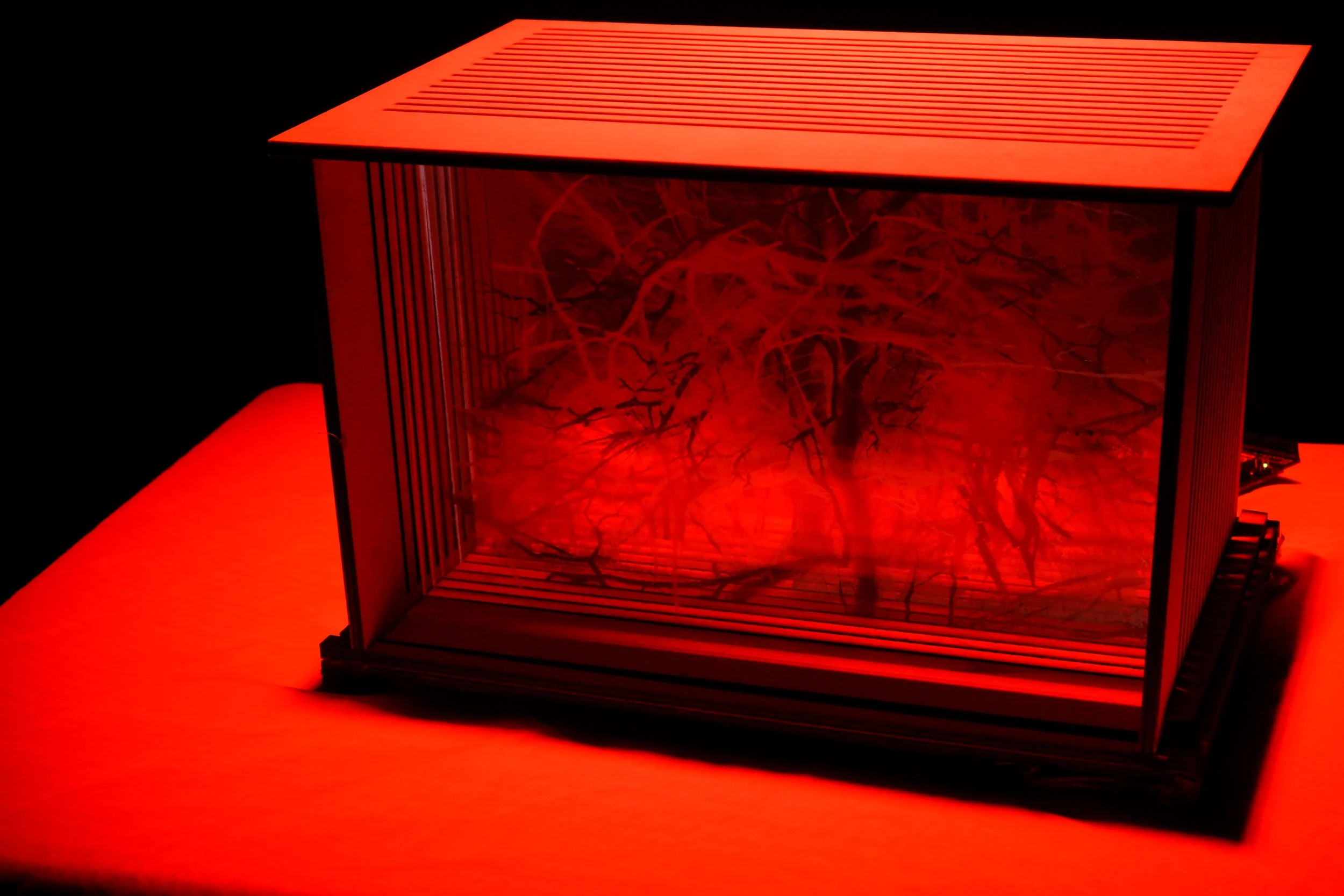
Lightbox (Synaptic), 2025
Lulu is inspired by musicians, too—she remarks that music is specially "time-based" because sound waves hit her in a language which light waves cannot speak. Maybe this oscillatory feeling is why Lulu calls Chinese landscape paintings "ancient VR." Her VR, contrasting how the same thing is advertised by corporate technocracy (Meta goggles etc.) as a frontal irreality, identifies the phenomenon at the source and traces its über-real outgrowth—anticipation!—toward the here and now… like how we can watch the life of waves from when they first appear on the ocean to when they crash ashore.
Roughly a third of Lulu's artistic endeavours fall under painting. Here, the same wave filters into Lulu's workflow. She laughs that the computer scientist in her comes out when she describes her paintings as developing over "iterations." What does this mean, though? In her words: "I draw one layer… or maybe 0.9… and the process is so, so spontaneous. And after doing that, [I] try to use… my knowledge in composition and color to… fix it or modify it. And then I draw the second one, and so on… it's kind of like recording my life stage at the time." I then wonder aloud whether she memorizes each layer by heart before moving onto the next, and she refutes this, saying that she photographs the painting at its various stages of incubation.
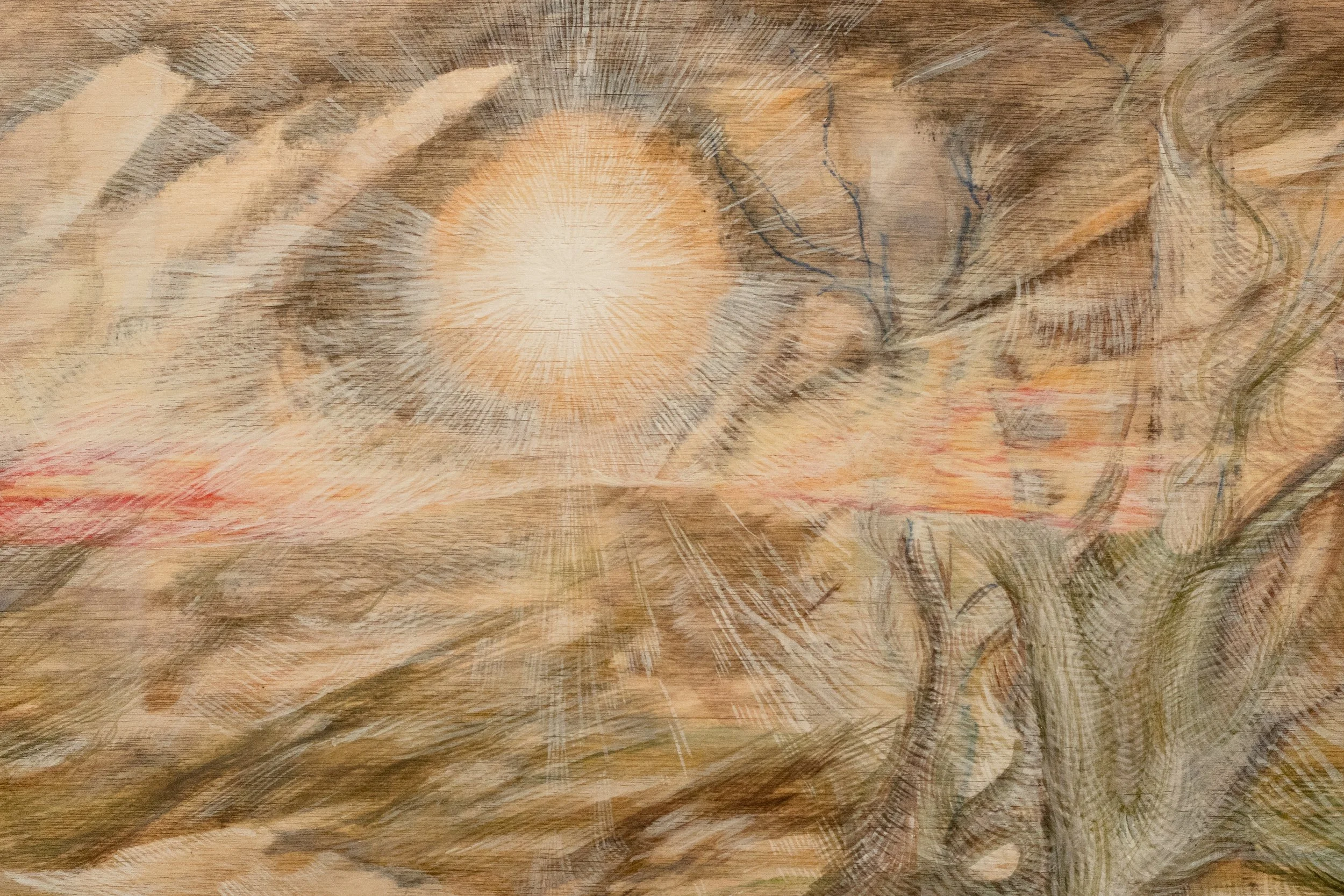
Sunrise, 2025
Jacques Derrida, 20th-century French scholar, criticized hegemonic Western thinking for assuming that "[t]here is[…] good and bad writing," where "the good and natural is the divine inscription in the heart and the soul[, and] the perverse and artful is technique, exiled in the exteriority of the body." In other words, memory is wrongfully associated with the illusion of only certain things 'belonging' to the body. In Lulu's world, the non/existence of this construct is irrelevant in the first place: she muses on how prosthesis is a keyword for her work (in its processes and its materials—more on this later). "I feel like [the works] are like a baby for me," she says, "because it's... a product of my body, but doesn't control... me after I create them." This fledgling quality is accentuated in works like Contemporary Landscape (2025), where Lulu first extracts her 2D painting into 3D sculpture, then projects an AI-generated animation onto this sculpture using the original painting as a dataset.
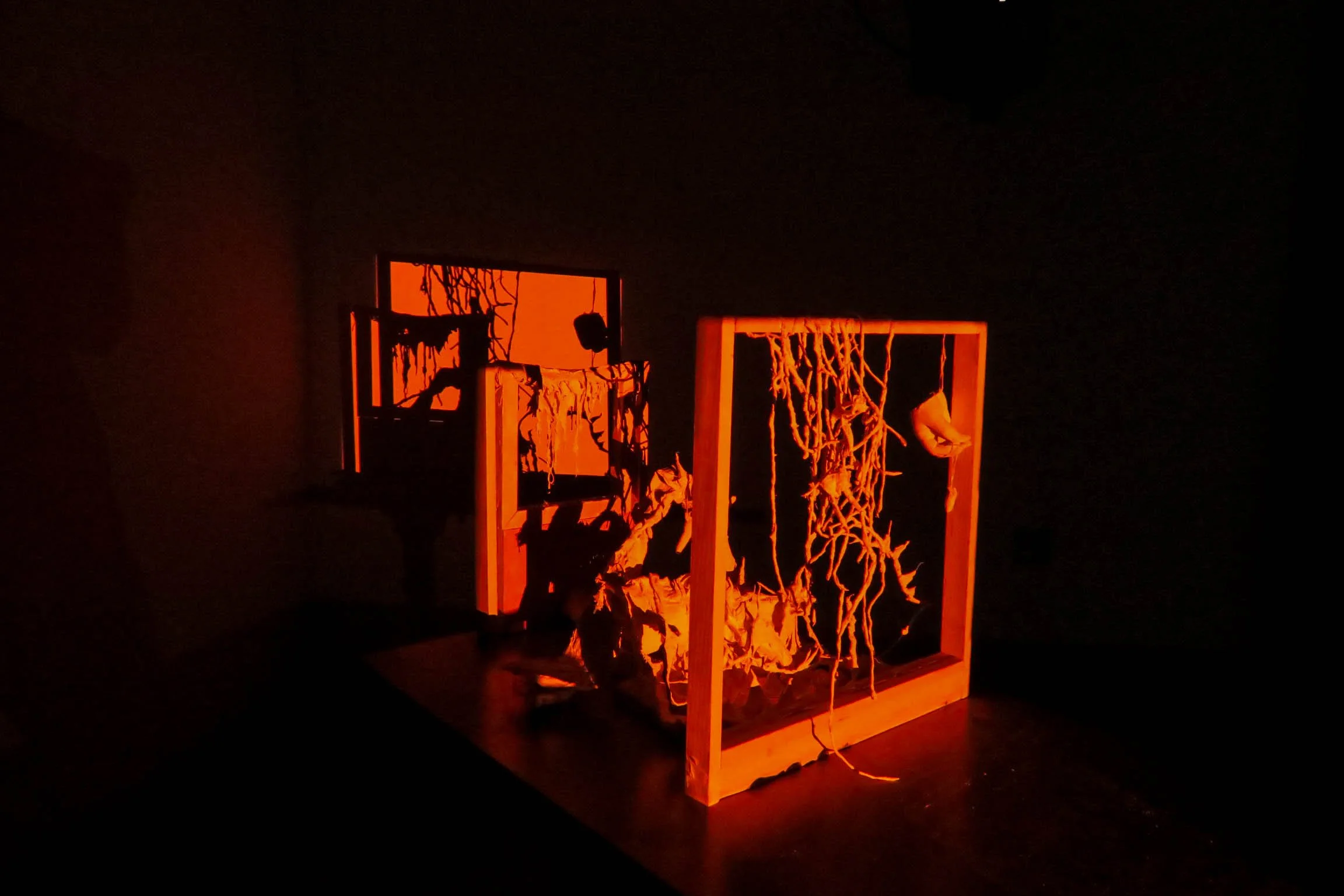
Contemporary Landscape, 2025
We then discuss Lulu's work with robots. One robot, for instance, can be worn like a neck pillow and can be controlled by a person who wants to provide physical touch over a distance. Other works isolate the robot and cast interactively coded lighting upon it. Lulu proposes that language cannot fully correspond to sensorially generated feelings. She claims that language is a surface that can lie about its depths. To demonstrate this, she takes me through a concise mental exercise: "I'm like, 'I don't have a house,' but I can say 'I have a house,' and now I want to find that." Preach it!
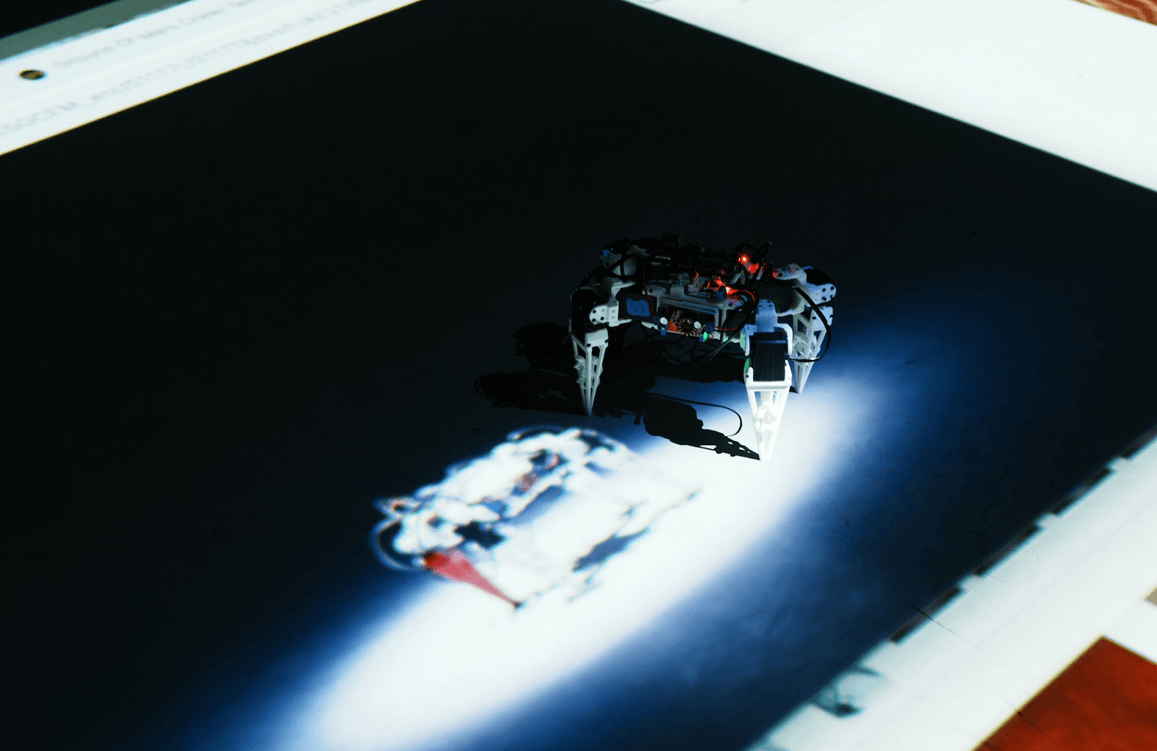
The way her work can still leave memory without a particular place while striving toward earnest expression… this feeling of difference can be reframed as a question of where the alienness of her layered paintings (their layering of emotions from different times) merges with the alienness of her robot works (their being what we would call 'adjacent' to the body).
Her insight: "I feel like the connection is the movement." The movement in her brushstrokes is the "contemplative… orbit of the hands," and that is what allows those same brushstrokes to later recall information like "the texture, the [motion], the force applied on the canvas." Her wearable robots are the "physical embodiment" of a movement that somebody wants to convey remotely. She also shows me some ceramic work she has been experimenting with and comments that it "crystallized my touch."
Related to this "movement," importantly, is that "[her] work doesn't need the audience to think first, but [instead they] are feeling first"... she reflects how her friend described one of her paintings as carrying a "hair-scratching" sensation, and floats the possibility of "moving people's minds." She recalls that her CC professor's favorite action word was "to read"; one she used frequently in our interview "to digest" because "the work itself is a living body." She attributes a "different pathway" to the eye and the hand, saying that she "feel[s] like my hands are connected directly to my heart."
"I don't know where my ideas come from," Lulu says. This is because for her, it is impossible to fix inspirations to concrete, identifiable sources; she can "tell you every interesting part of the space."
That her perception corresponds to the diffuse nature of stimuli does not mean that she herself resigns herself entirely to diffuseness. Now in her senior year, one of Lulu's big goals has been to eat, sleep and exercise well. Having a sense of self at a distance from the art, she realized, is nurturing for the self and fertilizer for the art. She points out, for instance, how her 2024 Landscape lives a tormentedness that dissipates in her serene 2025 Grassland, and attributes that change to a transposition in mindspace.
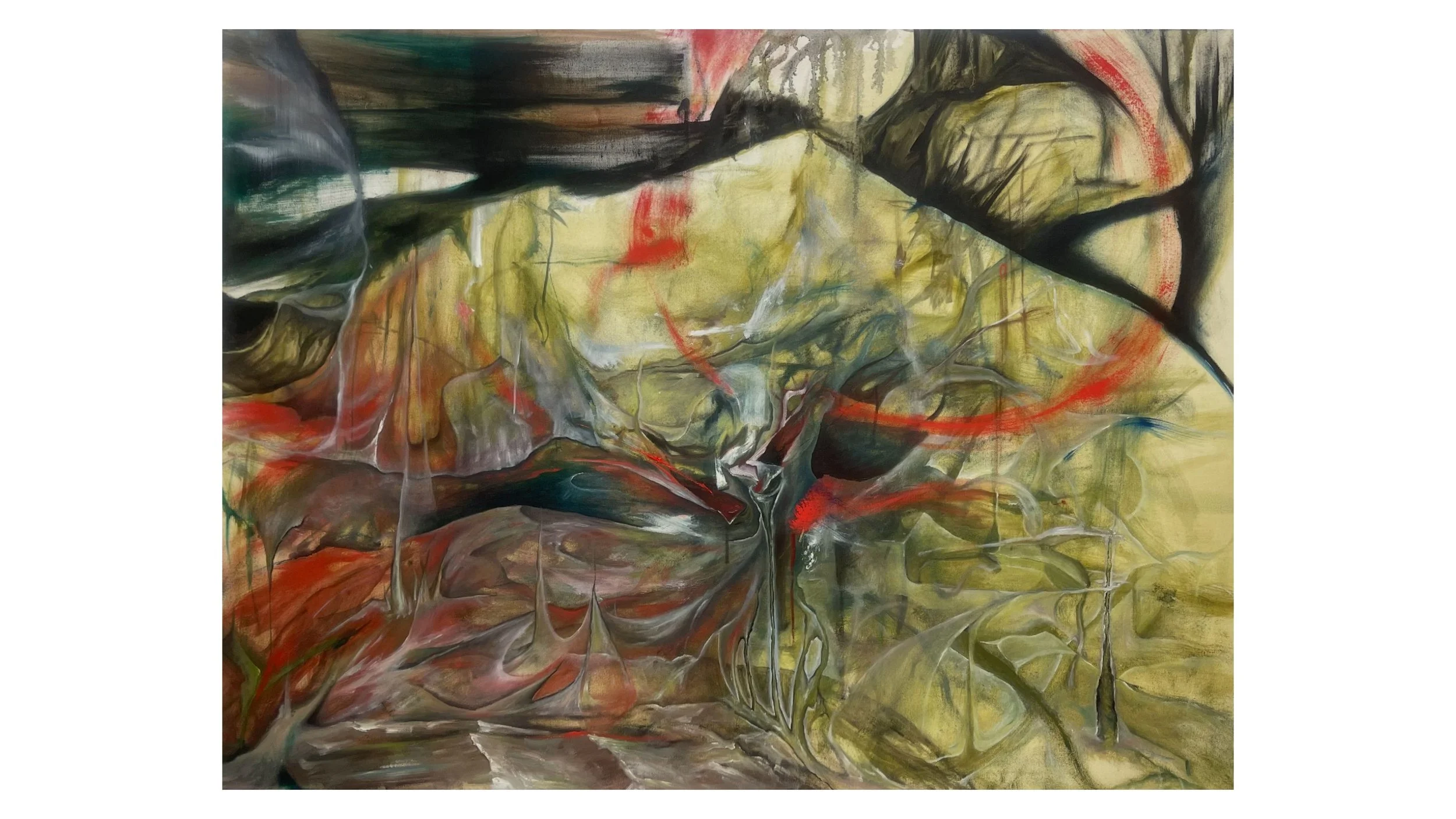
Landscape, 2024
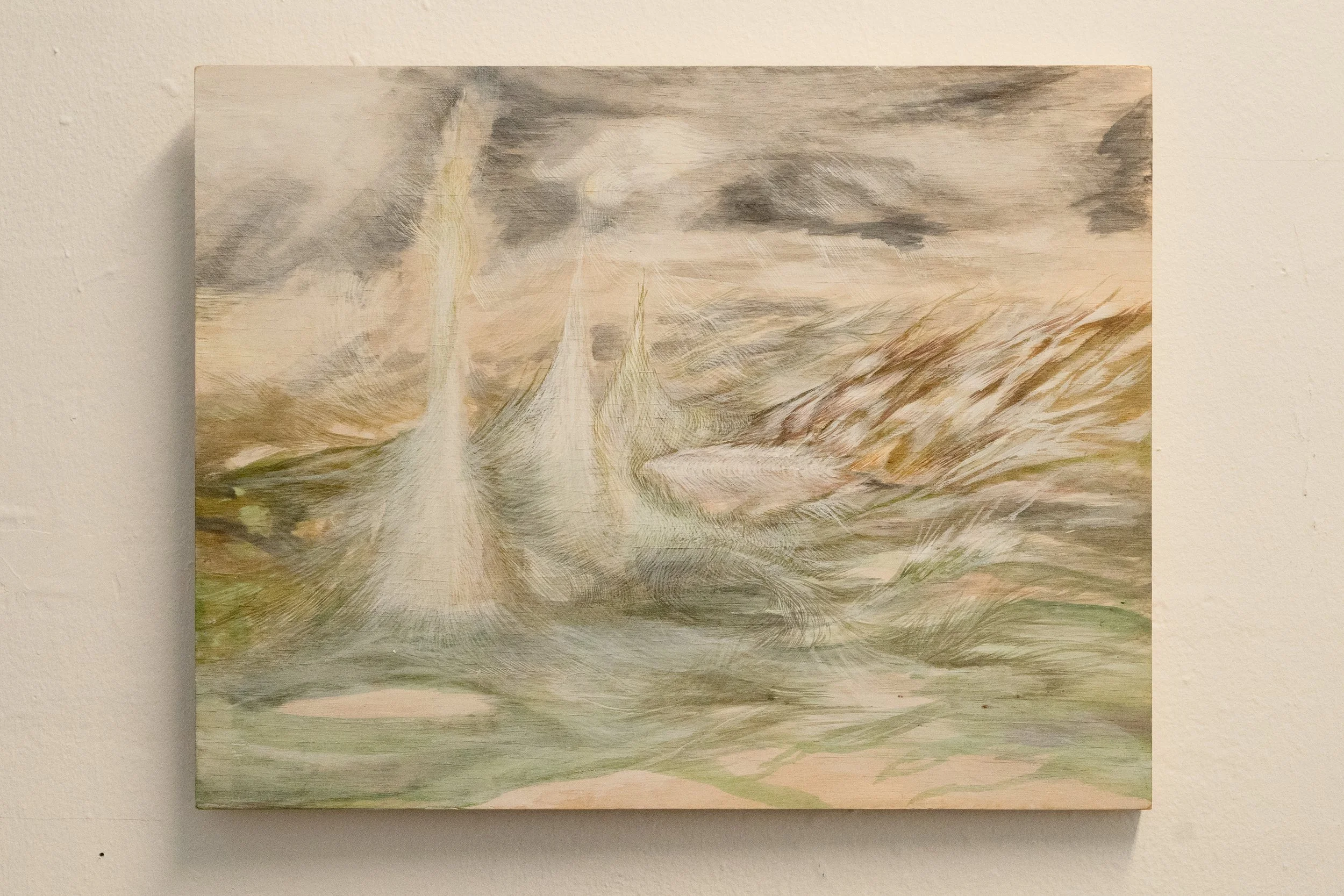
Grassland, 2025
Currently, Lulu is preparing an installation for the Barnard Movement Lab, where she is a Student Artist-in-Residence. The idea at the time of our interview was that visitors will go up to a robot (the protagonist of the installation) one at a time, at which point they will be "digested" with an amalgamation of audio-visual-tactile cues. Confirming the description of this installation with Lulu one week after our interview, though, she told me the idea had transformed. When the installation opens, the experience is likely to have ridden another couple of changes—all the more worth checking it out.
For example, she notes that while planning the projection on her robot, she became fascinated by the "really expensive" lighting fixtures in the Movement Lab Lighting fills a space, unlike projection (which illuminates a surface). Fired up by this new possibility, she now is interested in a "minimalistic color-based space" for its potential to point the visitor toward "feeling centric."
This video catalogs Lulu experimentation with encoding lighting by defining a series of 'steps.'
It seems that such a movement also manifests in the way Lulu's methodology darts between its strands. She introduces the analogy of a computer's "search tree": when looking for the fastest inroads to a piece of information, some computers utilize depth (pursuing one path for a long time) while others use breadth ("each layer just grows, like branches"). Lulu self-describes as the latter searcher, declaring, "I am a person who has millions of ideas, a new idea each week. I cannot make commitments to one." Earlier in the interview, she had noted with so much humility that one of her 'weaknesses' is creating a coherent series of works. This statement, though, asks an incisive question of the hyperspecialized art world, where she deems that "I have no work to sell right now."
The center of Lulu's thought process runs through the fogginess of the borders that structure different sorts of negotiations—between concrete self and diffuse scanning, digestee visitor and digester installation, forgotten layer and preserved brushstroke. So, let those boundary regions possess you for a second, and see that feeling cannot be relegated to sentimentality. See that feeling is the systematics. Let Lulu Wang's work open your eyes hands. https://luluyueyiwang.com/