






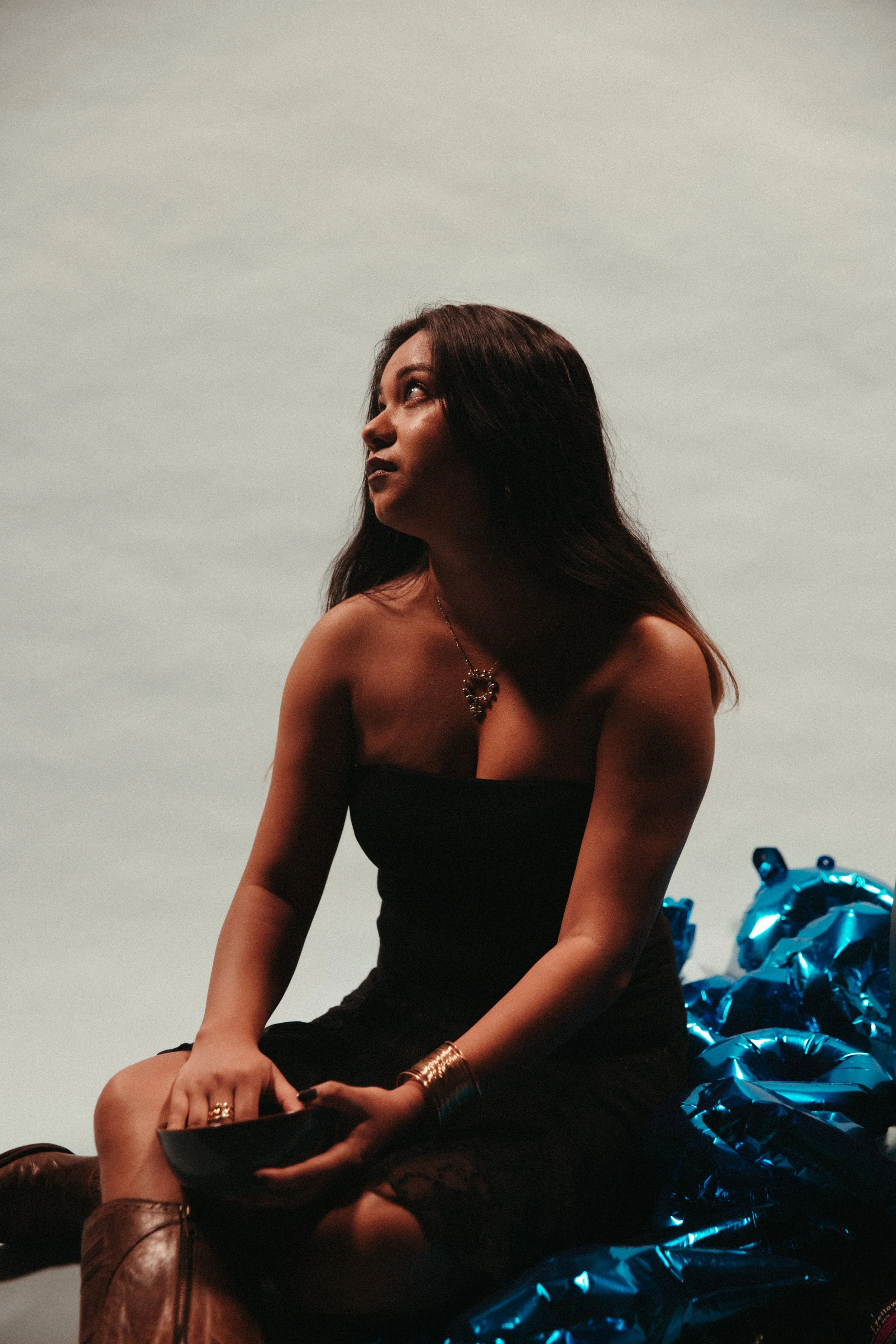


Feature by Angel Wu
Photos by Colson Struss
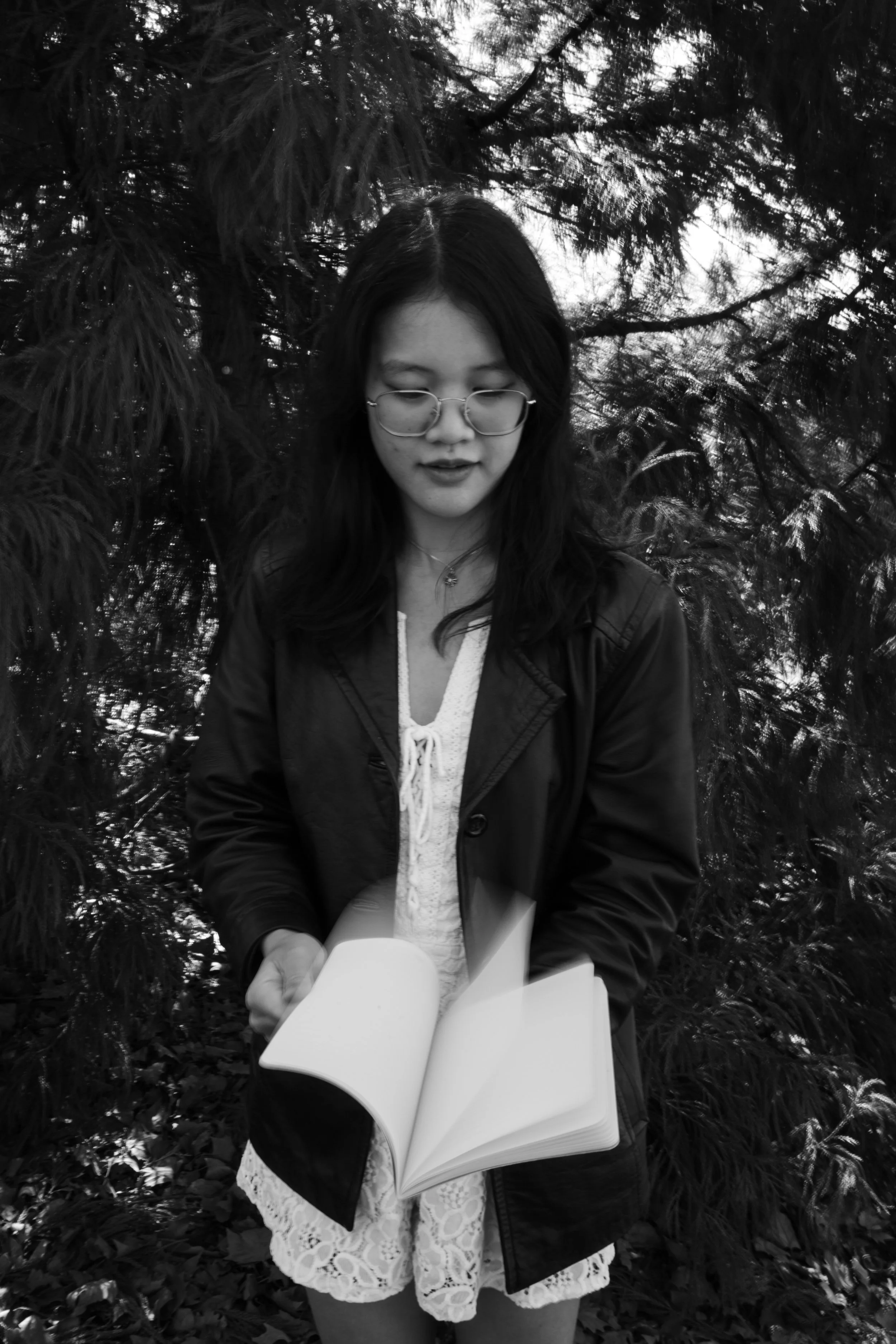
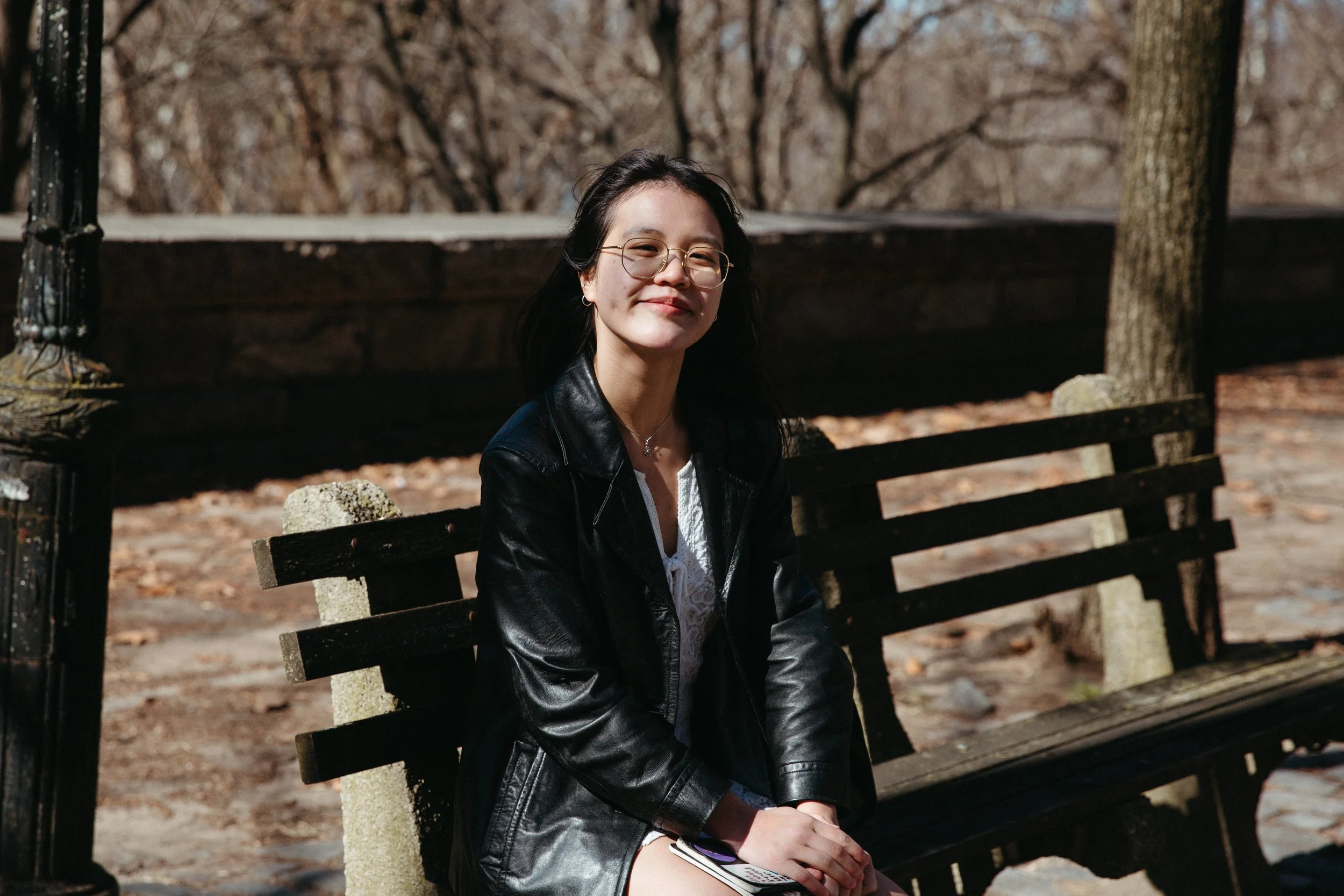
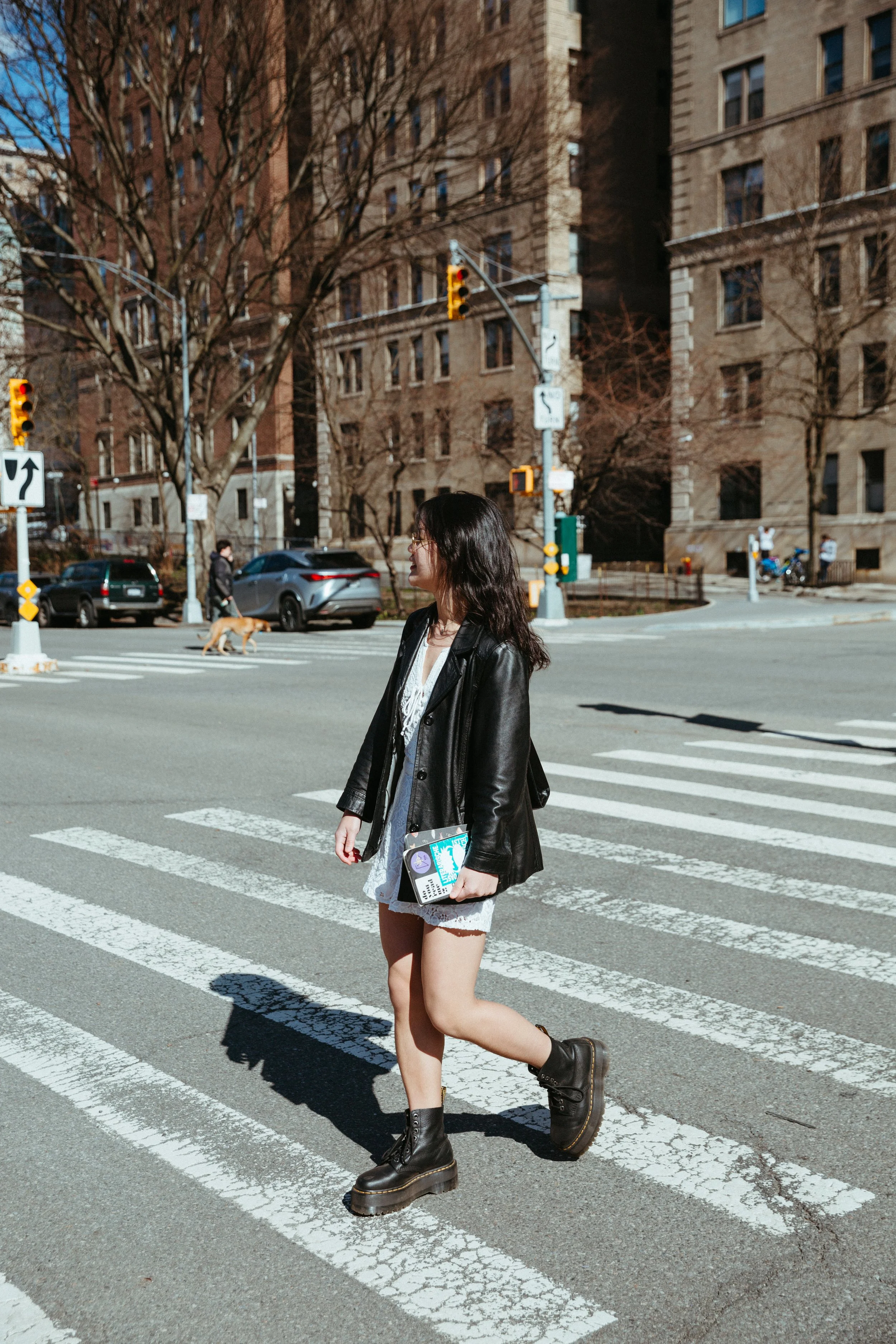

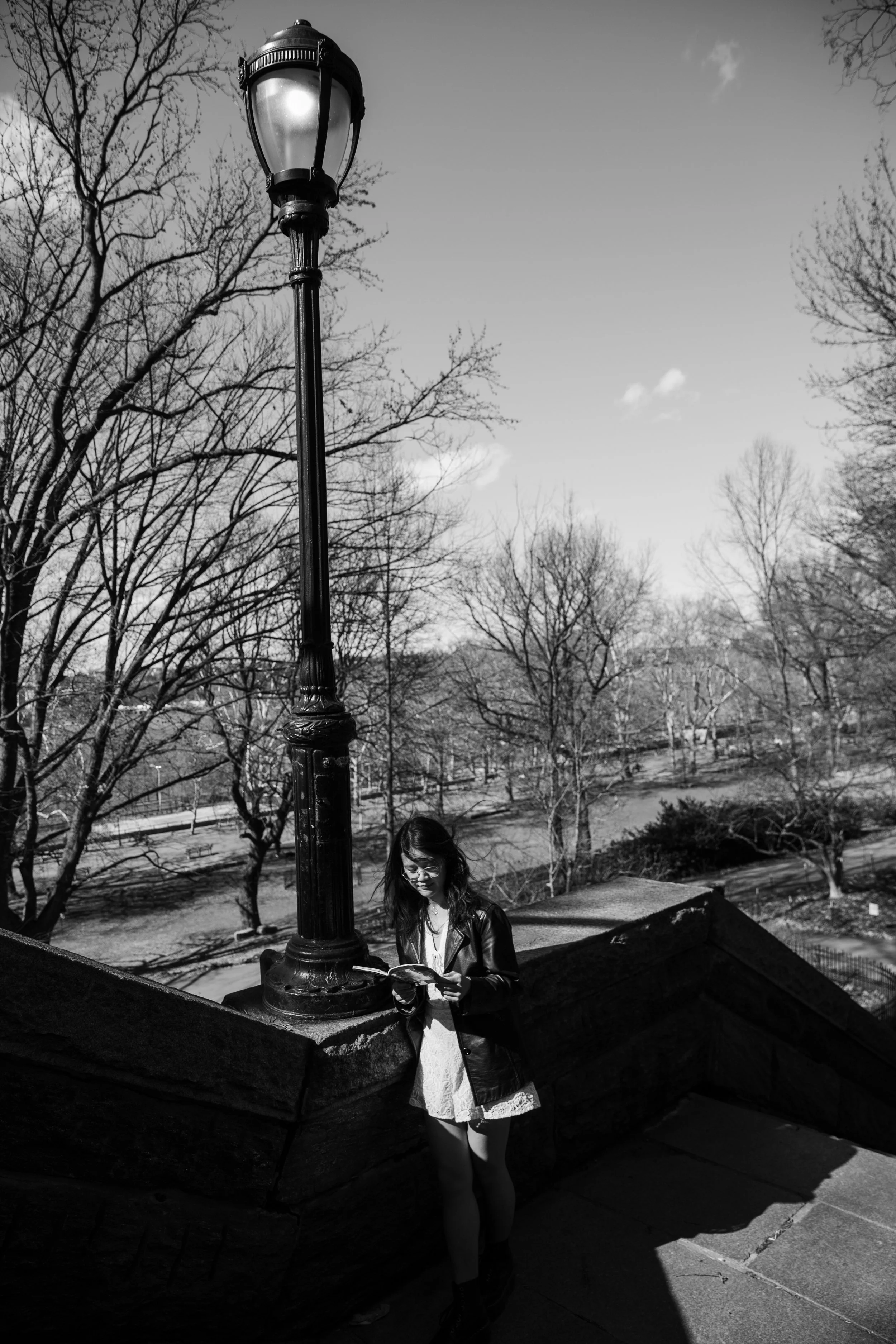
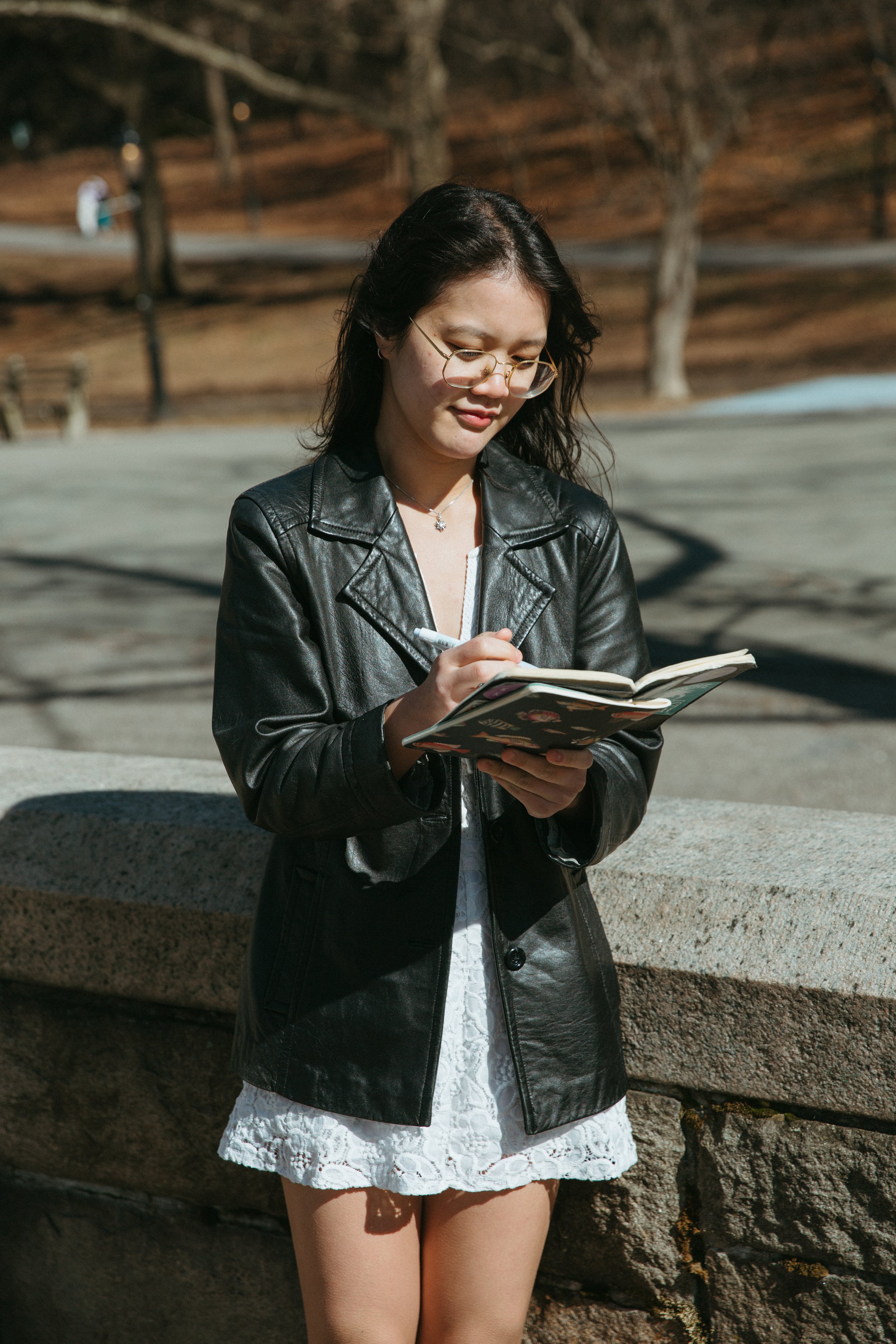
Gabrielle Hrung (BC’ 26) studies Comparative Literature and Music at Barnard College. She is a classical musician and a literary translator. Her work focuses on capturing the linguistic and the literary in poetry, as well as balancing the granular and the general in the process of translation.
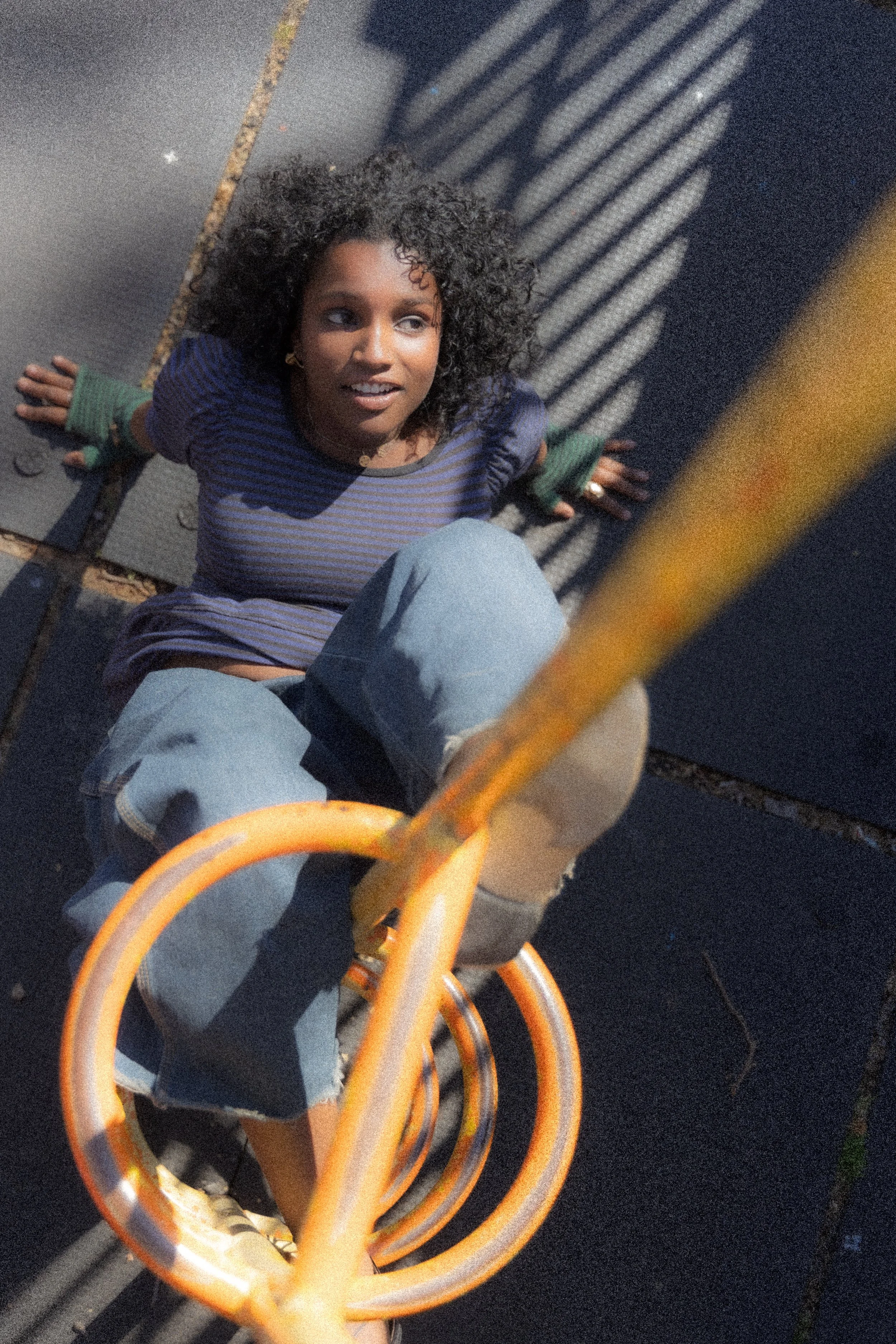
Gabrielle and I meet on a Friday afternoon, on the 5th floor of Diana. When I push in the large fire-escape door, she enthusiastically waves me over. I immediately take notice of the three colorfully patterned notebooks lying by her hand, and a prominent sticker displaying, “Berlin.” As we begin the interview, it suddenly occurs to me that the afternoon light has cast lined shadows on the floor—like musical staffs, or the undeciphered lines of a poem.
*
Initially, Gabrielle admits, she hadn’t expected for German to become such a large part of her life. But when she moved to Switzerland with her family at the age of 10, it slowly began to weave itself into her life’s path. “When I was younger, I was actually very resistant to the idea of learning German,” she says, laughing. Yet upon returning to the US after two years in Switzerland, she came to realize that she had gained a valuable skill. Now, at Barnard, she continues to study German as part of her comparative literature major. Having also participated in a study abroad program in Berlin, Gabrielle tells me that she feels much “closer” to German now.
I prompt her to explain that developing "sense of closeness.” “I felt it,” she says. “I felt like I was becoming closer to it. And then that translated into ease with language, ease with reading it, writing it, and then also translating it.” But since childhood, Gabrielle has also been connecting with languages that communicate beyond words. Another thing that she “can’t imagine her life without, is something widely considered as an universal language: music.
Since the respective ages of 5 and 9, Gabrielle has been playing piano and viola. Mostly viola these days, she tells me. Jokingly, she describes the viola as a “happy medium” between cello and violin; held like a violin, but the same strings (though an octave higher) as a cello. She has played both instruments for more than ten years now.
She describes music as directly “influencing how she thinks.” I think I can hear that influence in her translations; there seems to often be an almost musical rhythm in the words she chooses. In her work, there are staccato sibilants, punctuated by plosives, and lengthened vowels that evoke notes. Yet Gabrielle’s interest in music extends far beyond “learning how to play it,” but also into how music itself works. “That involves understanding how each note functions within the larger component, like a phrase or measure,” she elaborates, “but then also understanding how that phrase plays into larger structural aspects—if it’s part of a sonata or like which sections.”
It’s a thinking process that once more closely mirrors her work in translation; she tells me that translation is very much about learning to see things on different spatial levels, about balancing “the granular and the general.”
She opens one of her small notebooks to demonstrate. There, I see neatly written lines of German and English. Sometimes individual words are thoroughly annotated with one language or the other. She tells me that despite having a pdf copy of the works, she needs to feel the embodied process of writing the words down on a first translation. “I’m thinking about what each word means and the resonance it could have,” she explains. “But I also have to think about the writer’s voice more generally and how I’m going to communicate that in another language.”
I ask her about the particular nuances of that process specifically in relation to English and German. She points to her translation of “Die Heimkehr,” by Yujing Kang; in Gabrielle’s translation, the title is “The Homecoming.”
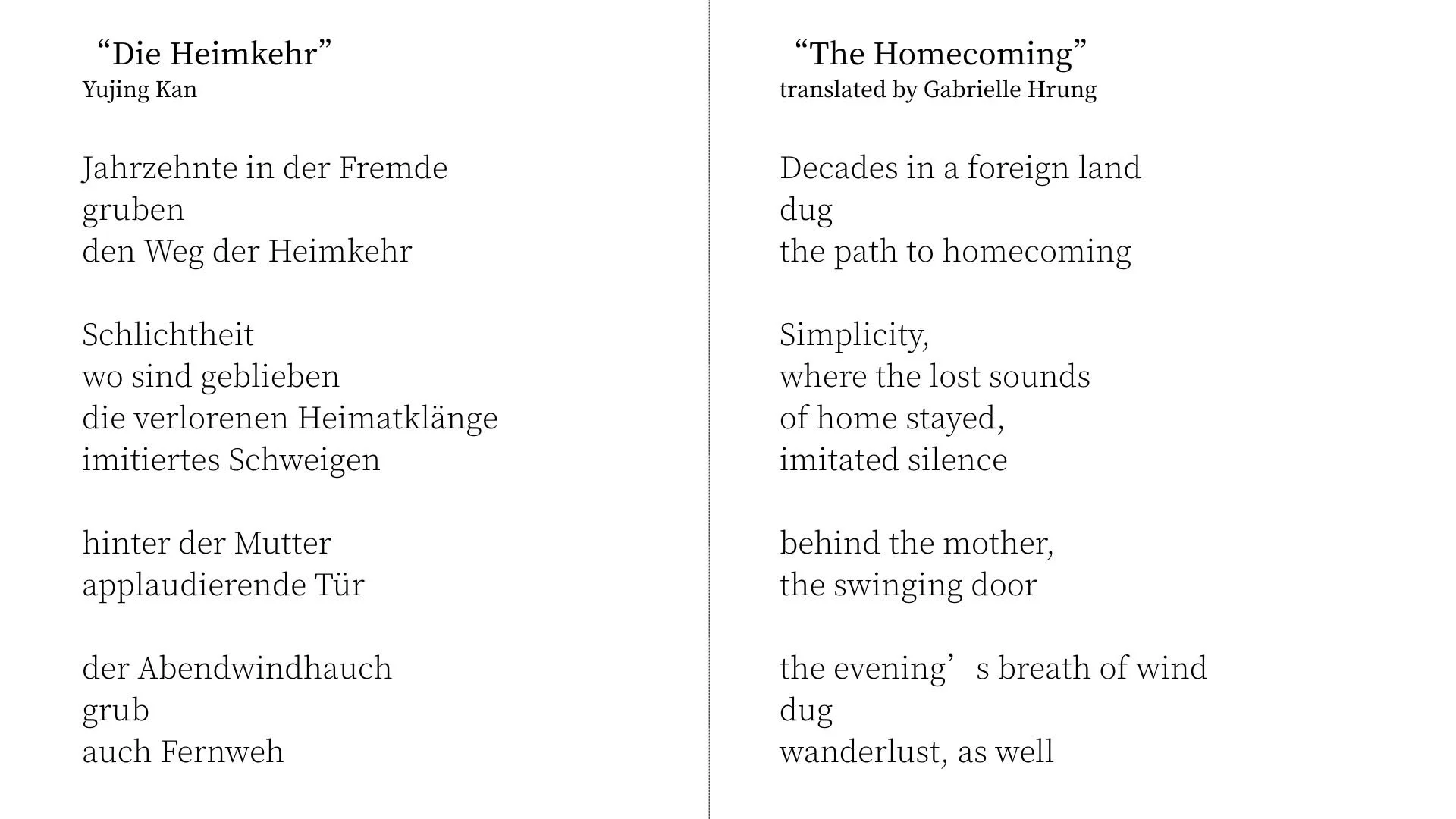
Left: “Der Heimkehr” by Yujing Kang, Right: “The Homecoming” translated by Gabrielle Hrung
“A well-known quirk of German is that you can string nouns together,” she says. In the poem, “Die Heimkehr,” there’s a line that she has chosen to translate as “the path of return”—but even behind this seemingly short line, lies thorough consideration. I admire how each word, though seemingly simple, seems to illuminate a very specific connotation that illustrates the image —— perhaps most vividly experienced when one reads the line out loud. The word “return,” for instance, needs one to roll one’s tongue back, like a “return,” while the exhaled fricatives in “of” and “path” illustrate a long, continuing process, as if just like a path.
Beyond this, Gabrielle tells me that the words were also chosen for their symbolic meaning. In the original German, the line is: ” den Weg der Heimkehr.” She tells me that while “den Weg” means “the path,”or “the way,” “Heimkehr” is a particularly rich word. The word is composed of two parts: “Heim” meaning home, and “kehr” meaning “to turn.” Combined, literally, that word would mean “hometurning.” Yet there is no word in English that corresponds precisely to that idea. Hence, Gabrielle had to meticulously compare many different verbal candidates.
“Homecoming was a possibility,” she begins. Just like in the German word, the word “home” is also embedded in the word “homecoming.” However, in her final translation, the word she chose to place there was “return.” Homecoming doesn’t have the same sense of turning towards somewhere, she elucidates. Language’s spatial connotations and properties is clearly something that matters extensively to Gabrielle. I notice that even language itself seems very spatial in all her descriptions; she consistently mentions languages and words in relative positions to herself and to each other. This peculiar sense of distance often inherently implied by language is something that many of Gabrielle’s literary inspirations have identified.
For Gabrielle, one such notable inspiration is Barnard professor Jhumpa Lahiri. Known for choosing intentionally to write in Italian—a language not native to her—and translating her writing back into English, Lahiri is a writer who is recognized for her experimentation and insights into languages non-native to oneself as well as the process of translation. As someone who also works in a language not native to herself, Gabrielle finds these particular experimentations fascinating and often ruminates on Lahiri’s insights into one’s relationship with foreign languages.
From another one of Gabrielle’s patterned notebooks, where she keeps her inspirations, Gabrielle reads me a few Lahiri quotes. One sticks with me in particular: “Why do I write? To investigate the mystery of existence. To tolerate myself. To get closer to everything that is outside of me” (Lahiri, In Other Words).
When Gabrielle describes “shopping,” “reaching” for different words to fit in the spaces in her translated lines, it seems to match Lahiri’s process of “get[ing] closer to everything that is outside of me.” She also expresses that this process feels different when applied to different languages.
“I realized the thing about English is that it’s always so close and immediate,” she says. “It took me a while to understand that the space I felt between myself and a foreign language is not something to punish or condemn.”
This spatial awareness is something that continues to guide Gabrielle as she continues to work on her many translations. It, too, guides her music when she takes her place in the Columbia University Orchestra. Her work ultimately reads like a melding of those two spaces; after all, poetry is a medium that inherently has musicality, too.
*
Our interview draws to a close as time ticks towards evening. The shadows have lengthened. I watch as the lines shift and morph, and I imagine what it would be like to be able to read them. They remind me that there is something truly unique and miraculous about the artistry of translation.
You can see Gabrielle play with the Columbia University Orchestra.