






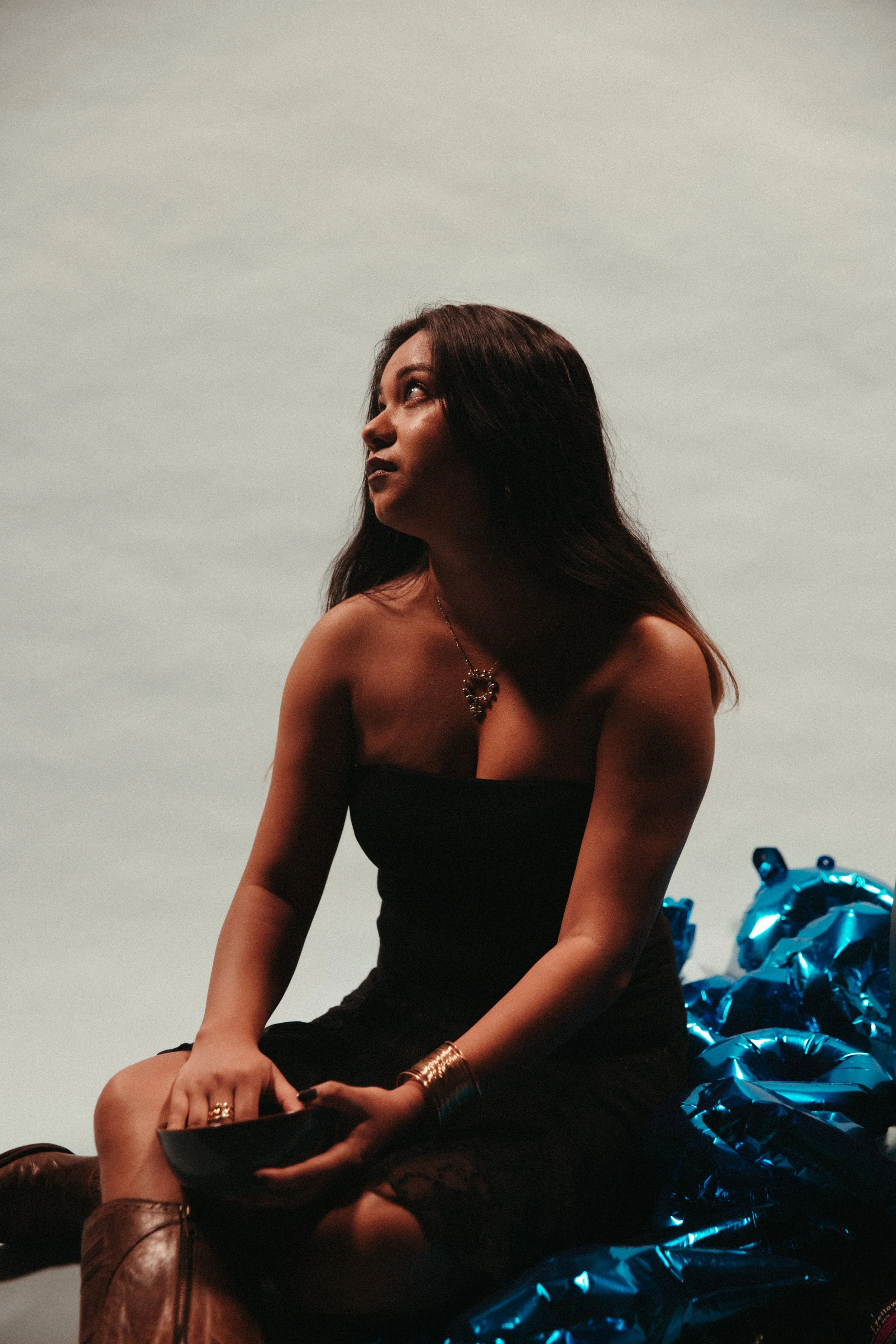


Feature by Mira Krish
Photos by Lucie Bhatoey-Bertrand
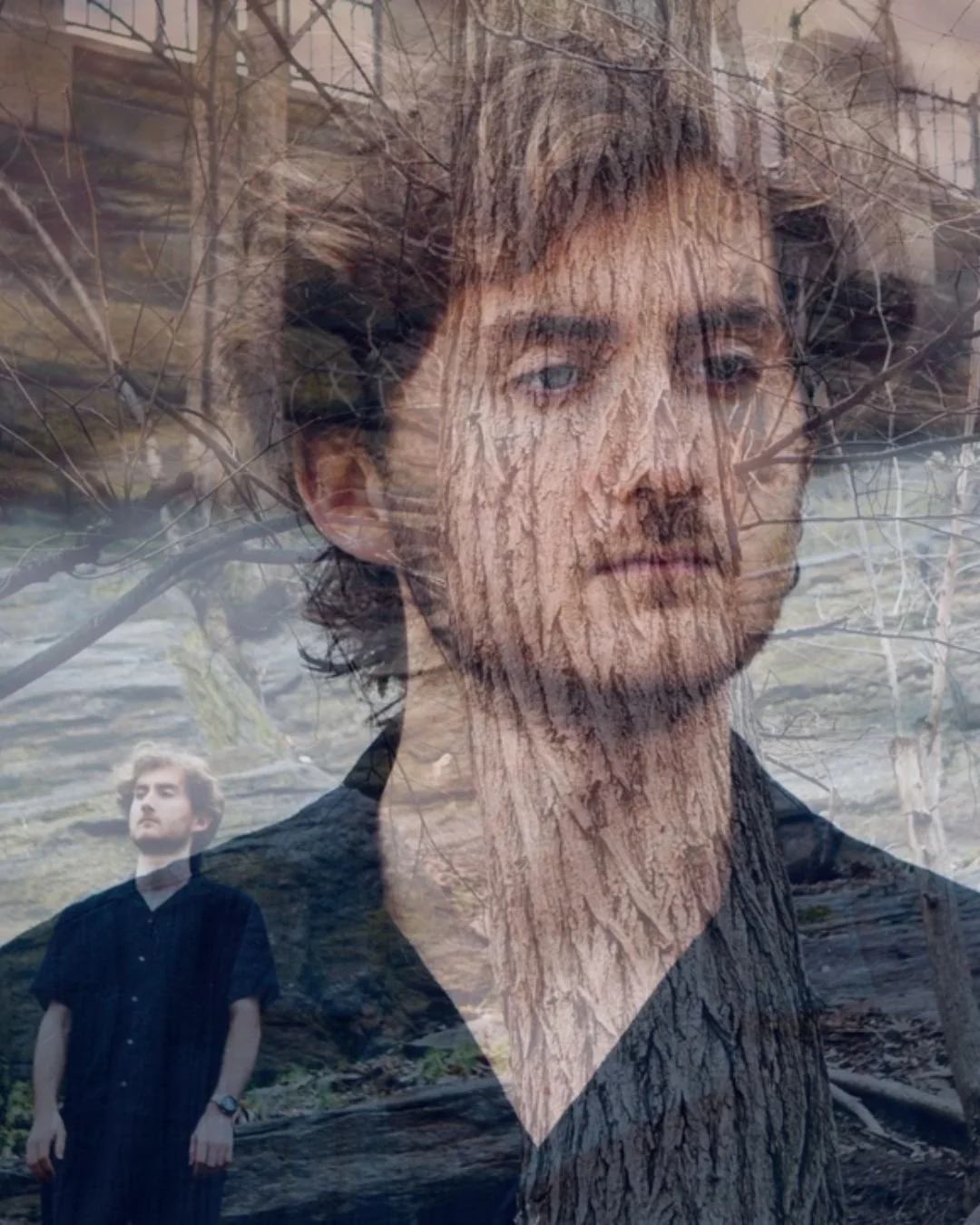
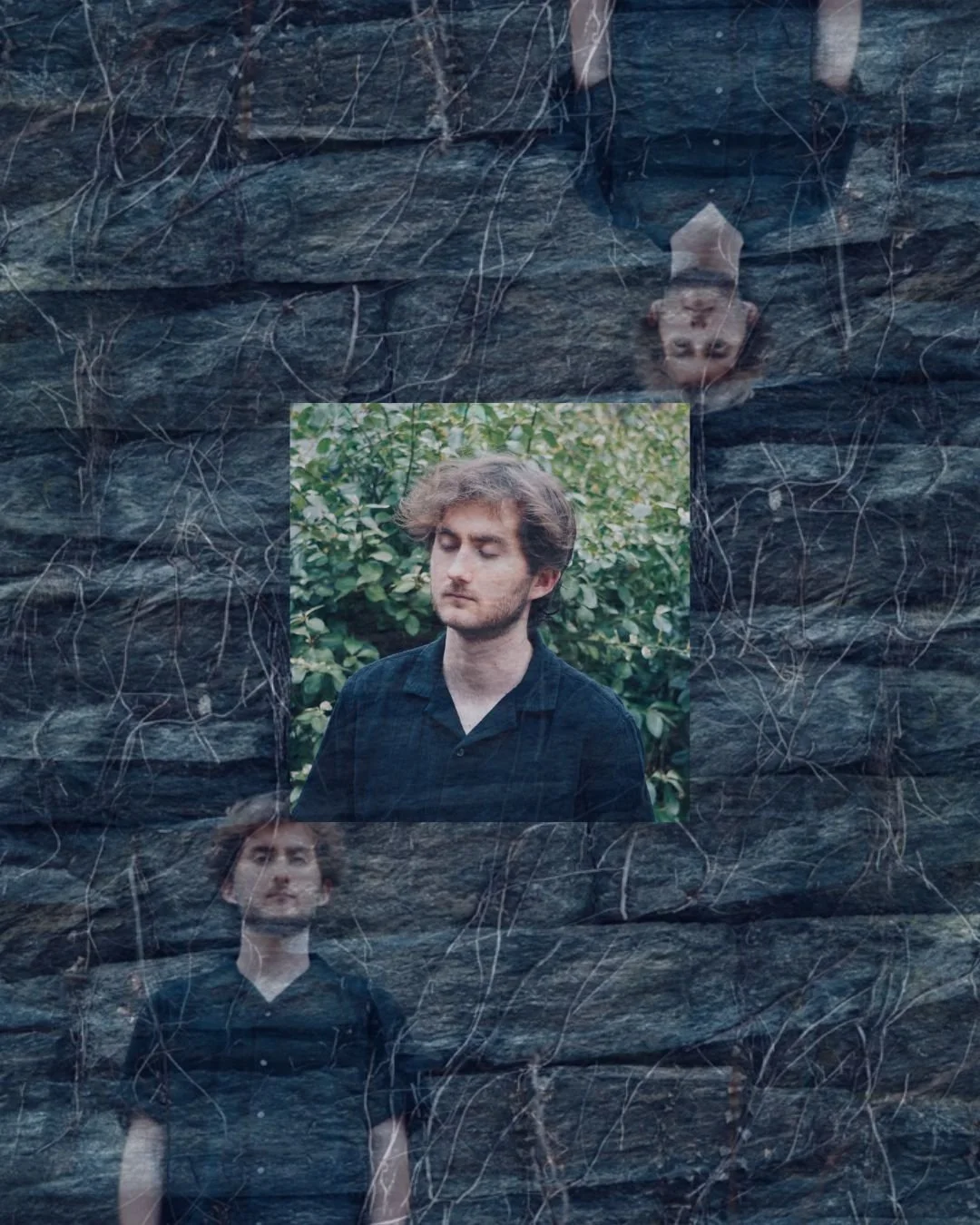
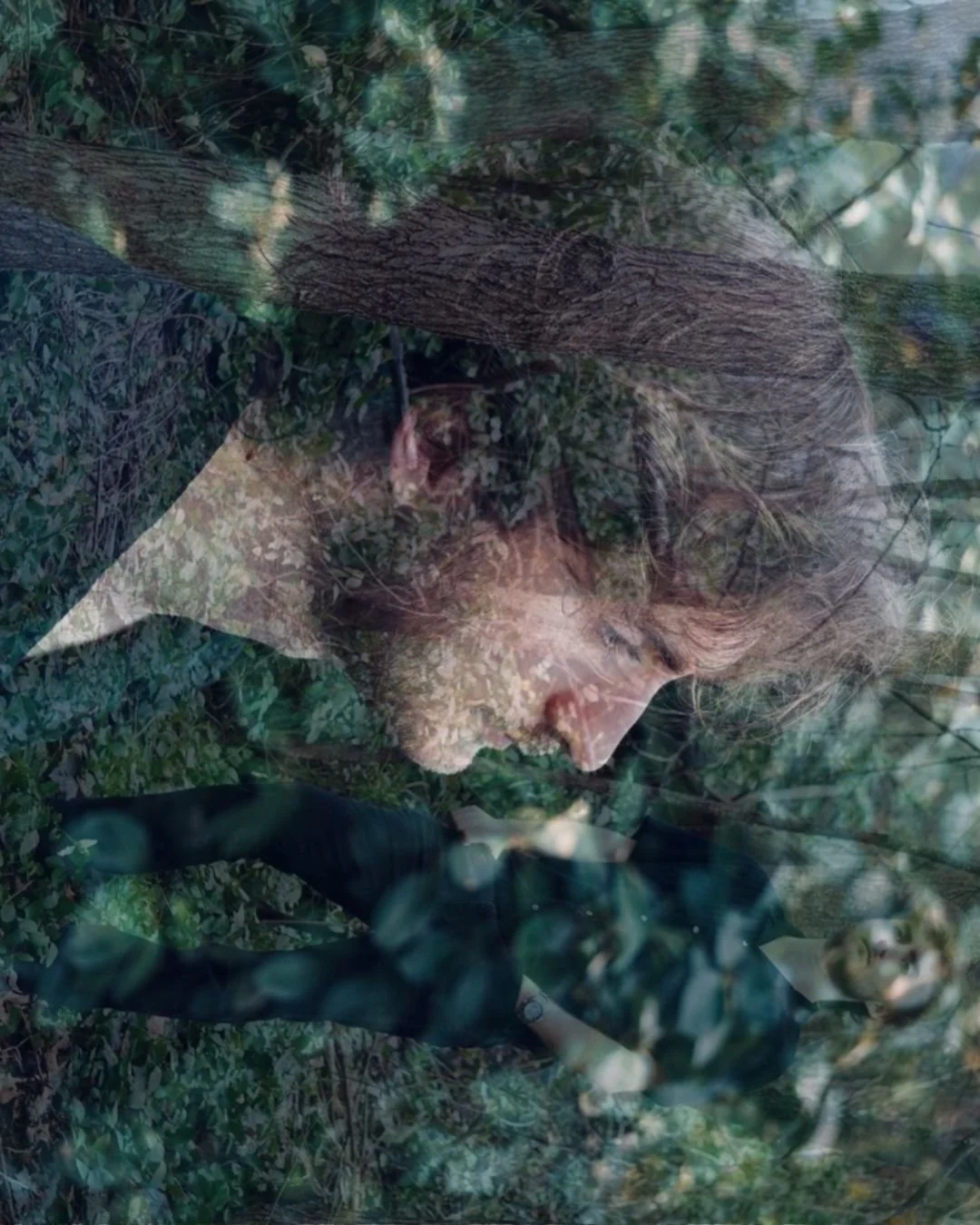
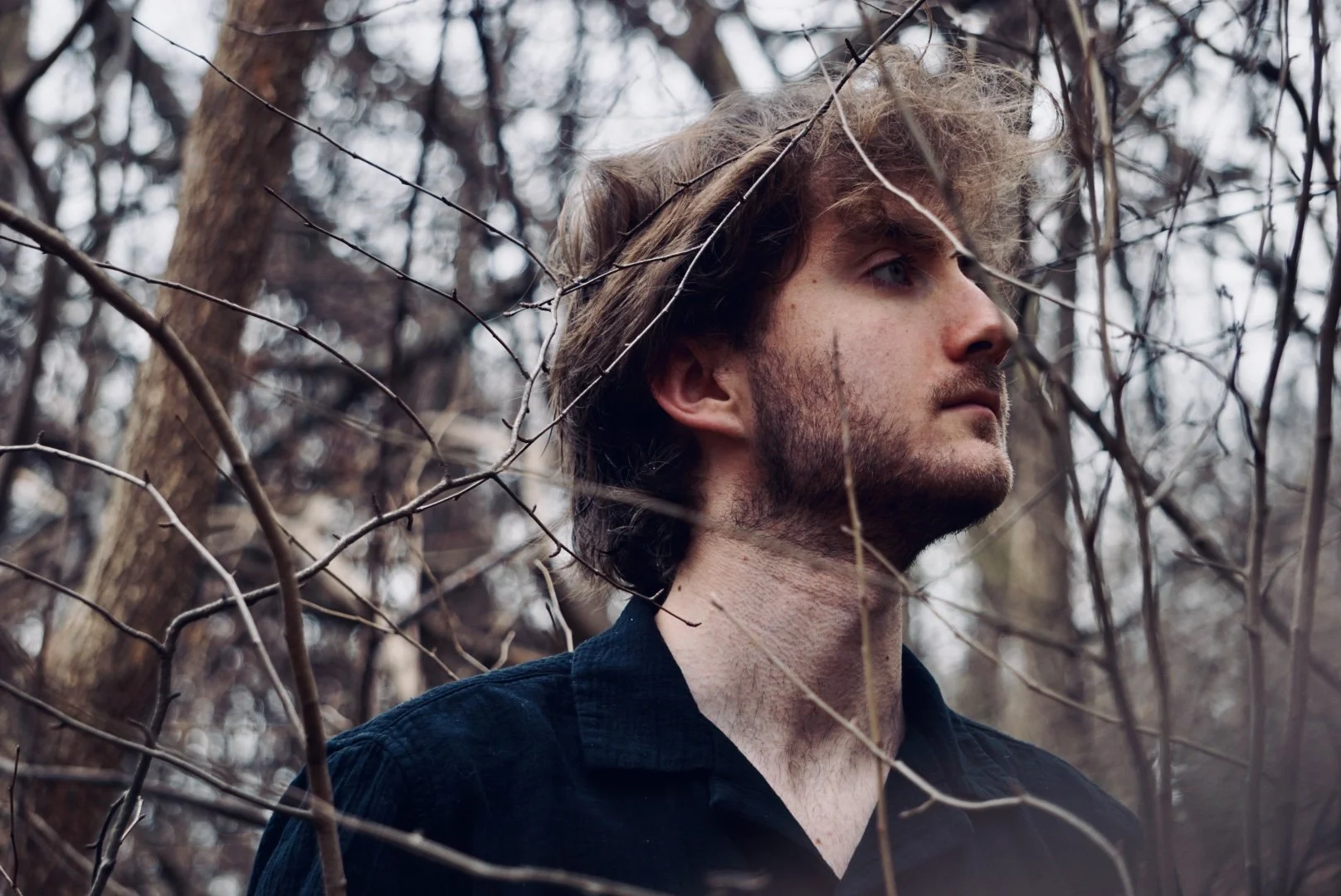
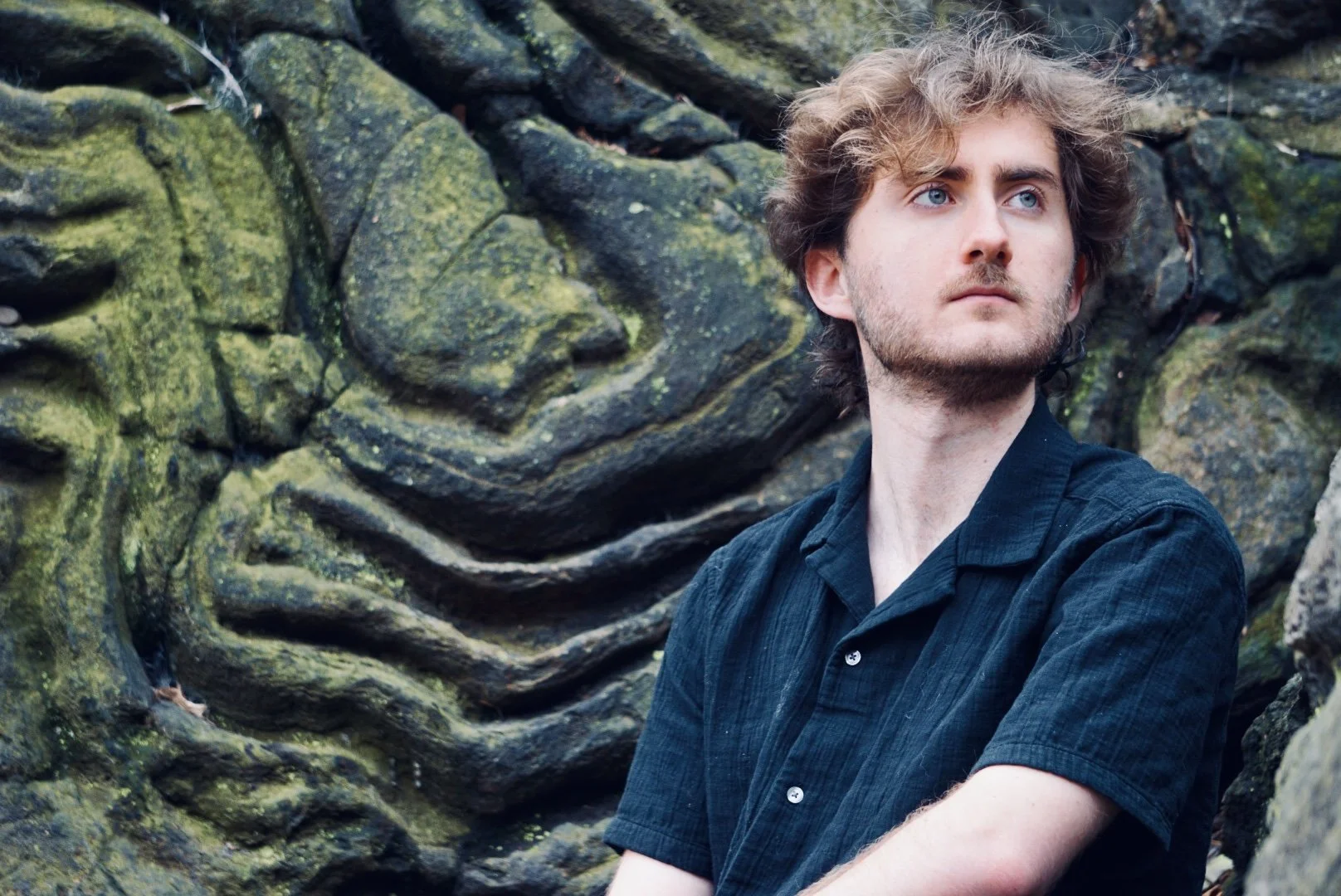
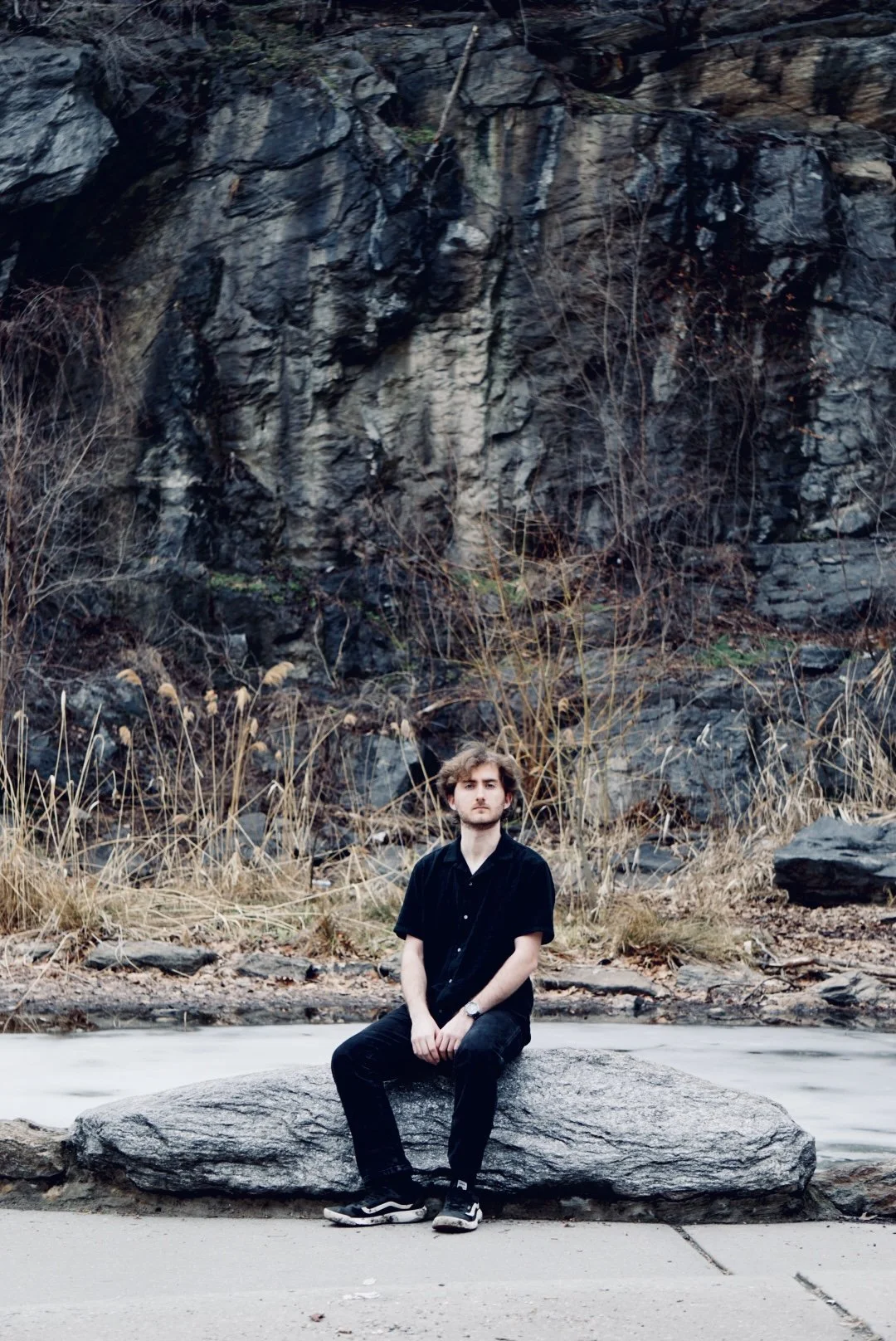
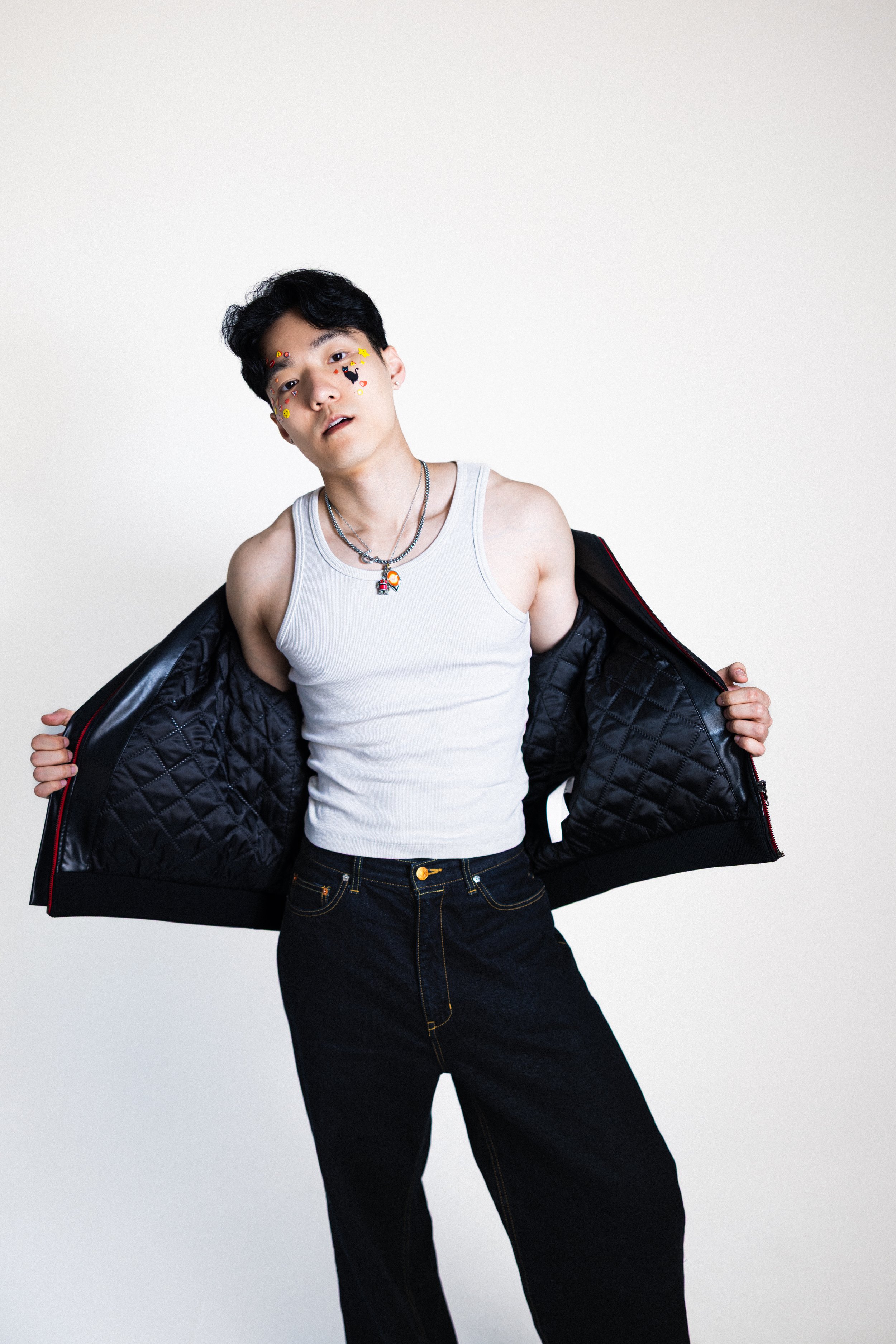
Joey O’Neill CC’26 is from Marin County, California. He is a composer of instrumental music that plays with restriction, experiments with musical variables and prioritizes emotional reaction.
I met Joey on a Sunday afternoon in February. We are in the middle of his room on the first floor of Watt. One wall is scattered with a few framed photographs, we sit in two chairs facing one another. His room possesses a sense of stillness similar to what I found listening to his songs. Not too long ago, after some frantic text coordination, I was on the subway headed to his dorm, the long emotive string notes of his music ringing in my headphones. This is Joey’s intention in his composition, he wants for his music to evoke emotion, for the pieces he writes to be transcendent, for the listener to feel, for two or five or ten minutes, as though they have experienced something beyond themselves.
This intent is the place from which Joey’s work is created. He tells me that at present the majority of his music is created for Columbia’s composing class (which he has taken for almost 4 years). The class rotationally focuses on a specific instrument each semester. Last semester, students composed for violin and electronic, and the one prior, it was two pianos and two percussionists.
Joey’s composition begins quite simply in his notes app. He has one large note where he records sparks of inspiration that pertain to the instrument(s) of the semester. “This semester I have this thing called flute and piano, I have a bunch of thoughts about those instruments, or what they can do, or prior repertoire that's been written for those instruments, or things that I want to explore in my next piece, or things that I did in prior pieces that I thought worked or didn't work so well, that I wanted to explore again” he said. His ideas constantly ricochet off each other, and what he doesn’t write in one piece will go into the next. He tells me that he thinks of his songs as one continuous project–each piece relating to the next.
Joey likes for his music to live in the balance between complexity and simplicity. At the time of our interview, the inner workings of musical composition were both foreign and intriguing to me. I was interested in how one embarks on the process of writing a piece. In his composition, Joey is always thinking about manipulating one element of the song, “It's kind of like a balancing act because there are lots of different parameters of music. Obviously, there's harmony and rhythm and melody and timber, and you can go on and on.” In his process, Joey simply decides to focus on one of these elements, the rest is tangentially composed.
Composition starts from the physical reality of the instrument. Joey gives me an instructive runthrough of what this means, “You just study the music that's been written for those instruments [that you are composing for], and then you read books about the instruments. Or you look for fingerprint charts, for strings, to know, like what stretches are possible right now. So it's a lot of not necessarily creative work that goes into it before you can write for the instrument.” Many of his pieces are for instruments Joey does not personally play. He tells me about the not necessarily creative work that goes into composition before one can write for an instrument. Joey spends time reading books about the instruments he writes for. Looking at fingerprint charts, for strings, to know what stretches are physically possible.
Joey started playing the flute at 10, he has since dabbled in a few instruments and has been continuously reading books about music. The only other instrument which seems to have really stuck is piano, which he occasionally aids him in the beginning stages of composition. Sometimes he will improvise for an hour or two and record it. Later, he listens back, choosing one specific part he likes, and spends time expanding and editing it. He describes the piano iteration as an almost greyscale version of the final piece. At present, however, he has moved away from this approach. He has been preferring to create a scaffolding for pieces ahead of time, finding constraints helpful in his writing.
As described by Joey, a big part of composing looks like, “staring at a wall for four hours, basically.” I asked him for further explanation. The phases to him are as follows: "there is a sort of mystical, vague, very beginning. The piece could be absolutely anything, and you have made no decisions of any kind. Like fantasy land detached from material reality,” then he makes more practical tactical decisions, “about the length of the piece, or structural conceits or scaffolding.” Then he streamlines his vision for the piece, “ [when] you're creating you're being as ruthless as possible with editing and deleting and revising. You are making decisions and figuring out a vision for what the piece is going to be.” What is left is iterating the execution of the piece, writing it out. Joey likes to compare his full draft to the idea he had at the beginning. From here it is rather quick onwards into the rehearsal stage. Columbia’s composition class only permits 1-2 rehearsals before the piece is performed. If he is unsatisfied with the sound of the end result, it only makes for more for him to change for next time.
Joey writes from anywhere, in his room, in the library, JJ’s. When it comes to where within a piece he starts writing, he likes to start specifically at the mid-point. “Structurally, I like to do the kind of thing where you're leading towards a moment of like compartments or transformation or transcendence.” However this mid-point does not always have to come in the middle. “You can play with where it is gonna be, a lot towards the beginning, or towards somewhere else, because that has an interesting psychological effect on the listener.” A recent favorite piece of his is called Arc. He said “that piece was for six minutes, and then it slows down to half tempo. I thought that turned out very well in terms of restricting the musical material, and then freezing certain frameworks and pushing other parameters to their extreme. That's the kind of thing I've been interested in lately.”
Joey began composing at the start of high school, during the pandemic. The first piece he composed for was for an assignment, a piece called a Passacaglia, which is when there is a repeating bass line. He plays in an orchestra, and it was in his orchestra where he was given this first composition project. He has now been composing for six years. Joey says he likes to focus on a lot of music where the process is the piece. “For me one thing is enough, exploring all the facets of that, trying to make it feel like a big kaleidoscope, where you're turning the same thing and seeing different aspects of it, but fundamentally it's the same thing.” he said.
I asked him how his composition has changed since he began, which is something he tells me he’s been thinking about recently. In his work, Joey likes to create a musical world. “I want them [the musical worlds] to feel very focused and very evocative. A way I’ve found to do that is to just be really hyper specific and very kind of ruthless in the editing process with the musical material you're choosing. So I feel that creates a very specific kind of emotion, emotional register and frame of mind for the audience when they're just thinking about one musical idea for 10 minutes.” You can feel it when you listen to his songs. Joey also likes the idea of a musical through line “my ideal piece of music is something where you're taking a breath, then you hold it for the duration of the piece, and then you let it out. I like things that are very focused in that way.”
Over time Joey has become more interested in electronic music, he really likes the way it sounds. I asked him about his influences. He said he is inspired by electronic music made by minimalists and the way they structure their music. Most of Joey’s headspace is occupied by music, when he is not composing he is attending various concerts, or listening to one the hundred of albums he has kept on a list which he keeps for albums he hopes to listen to. While he is interested in other time-based mediums, movies, sound design, Joey hopes in the future to keep playing music. At present Joey is in the process of applying to grad school for music composition.