




Feature by Caroline Nieto
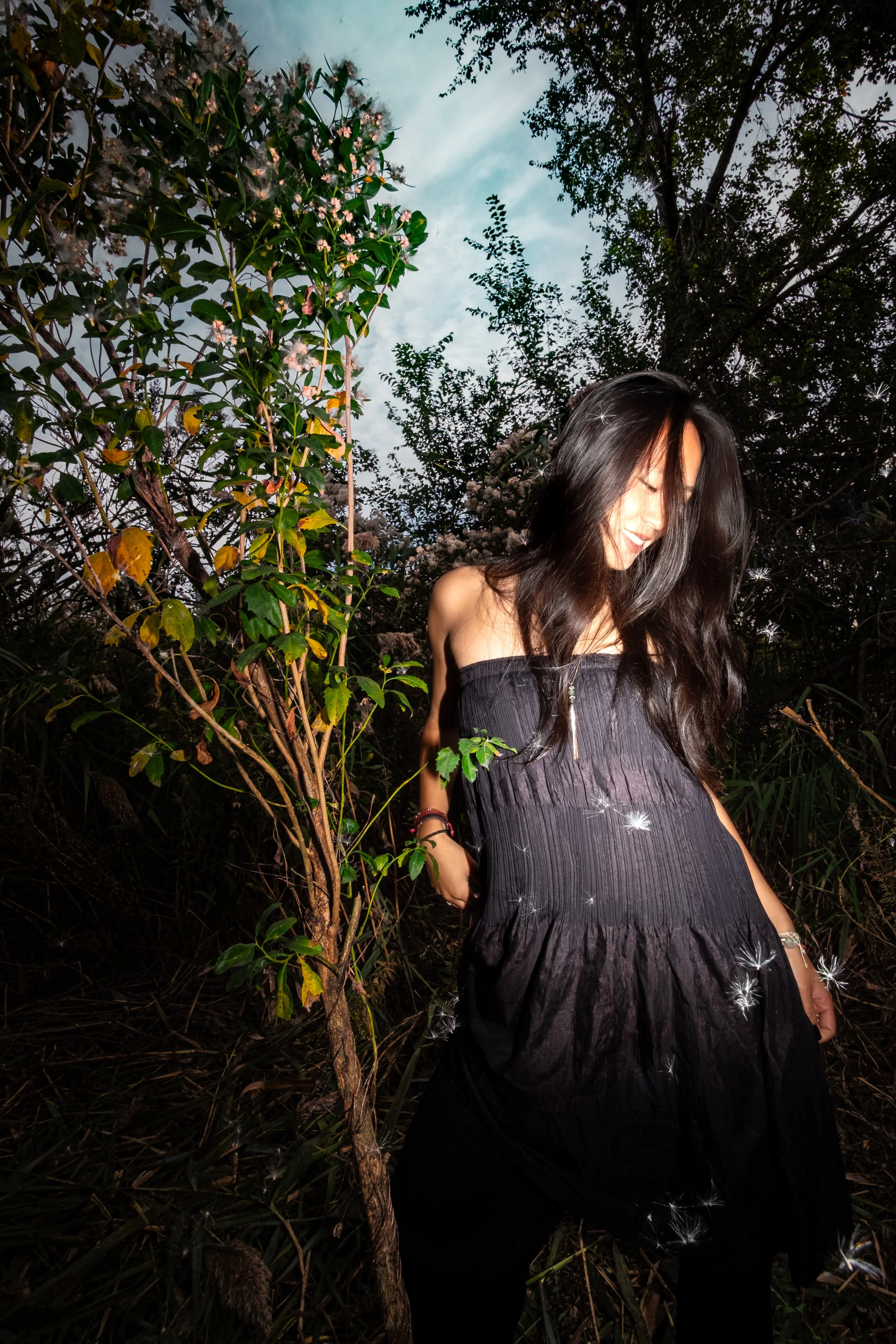
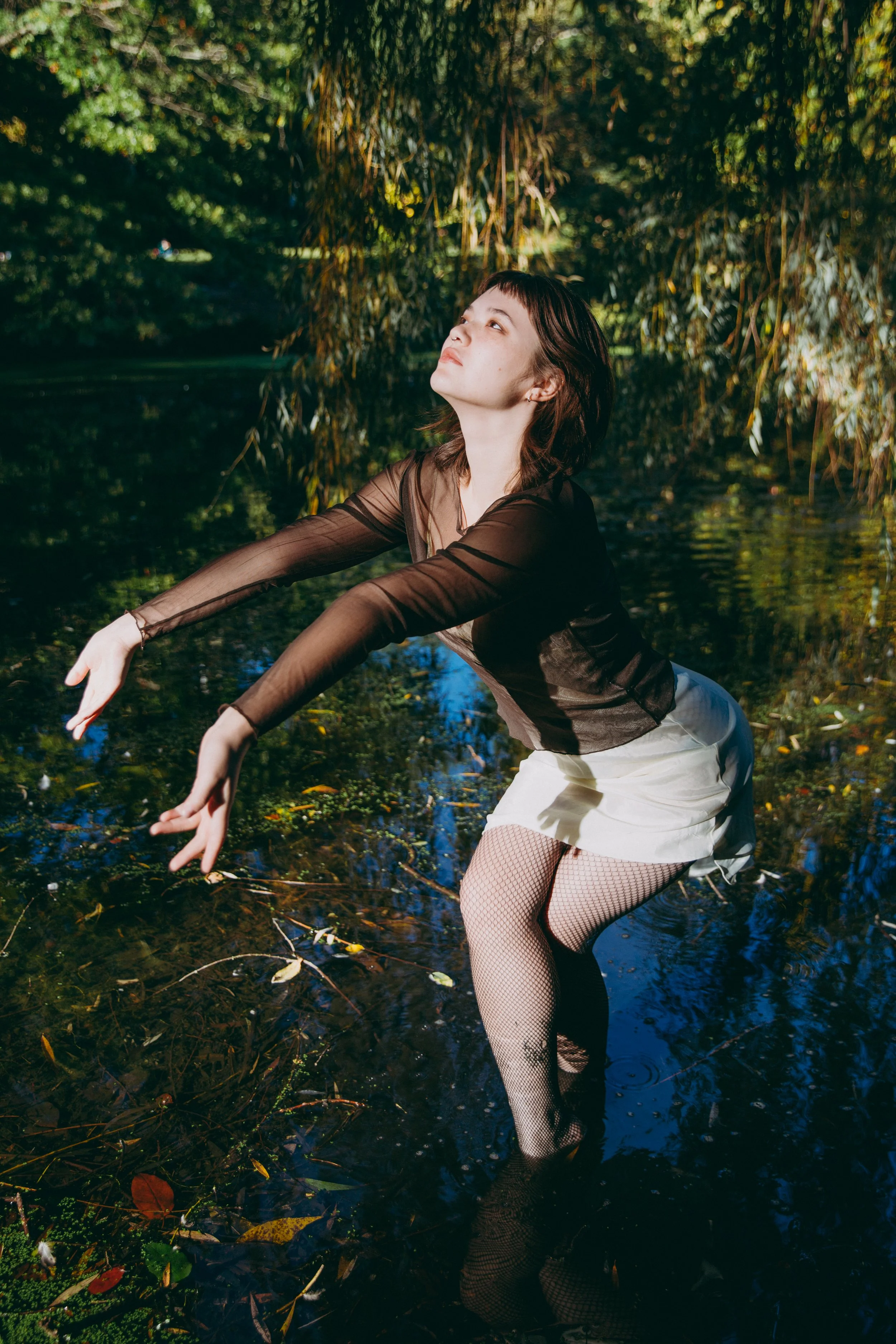
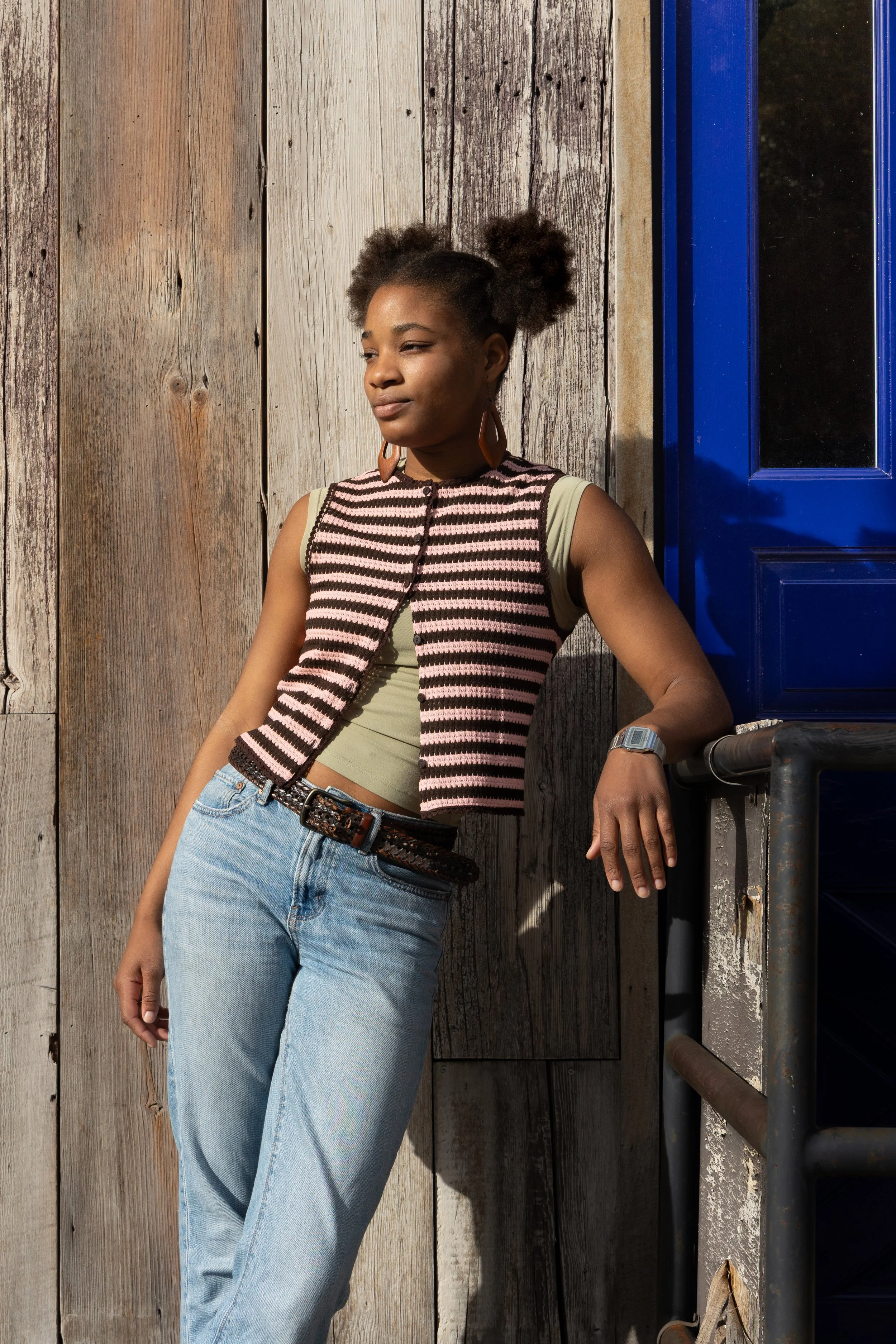
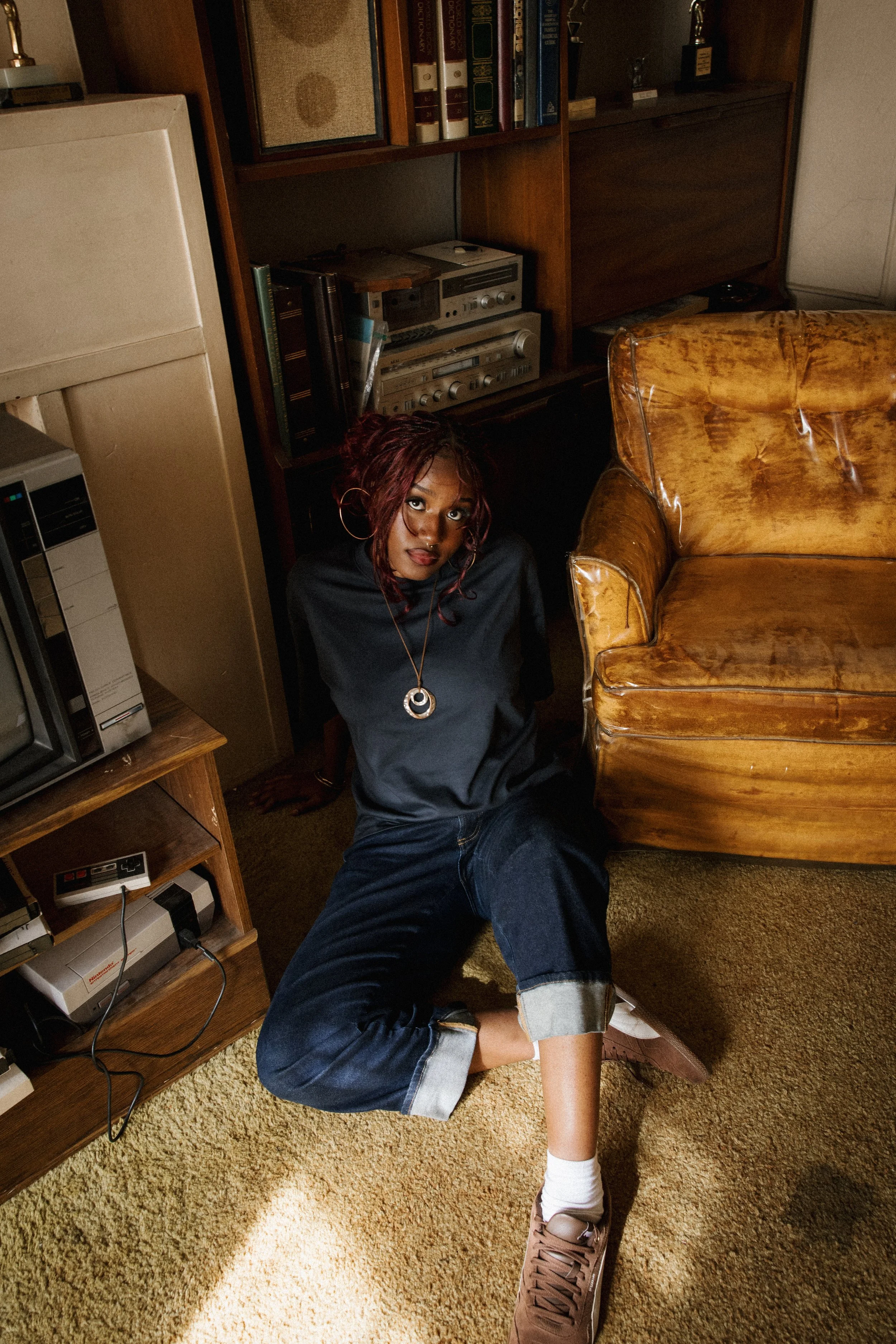
Photos by Linxi Jiang
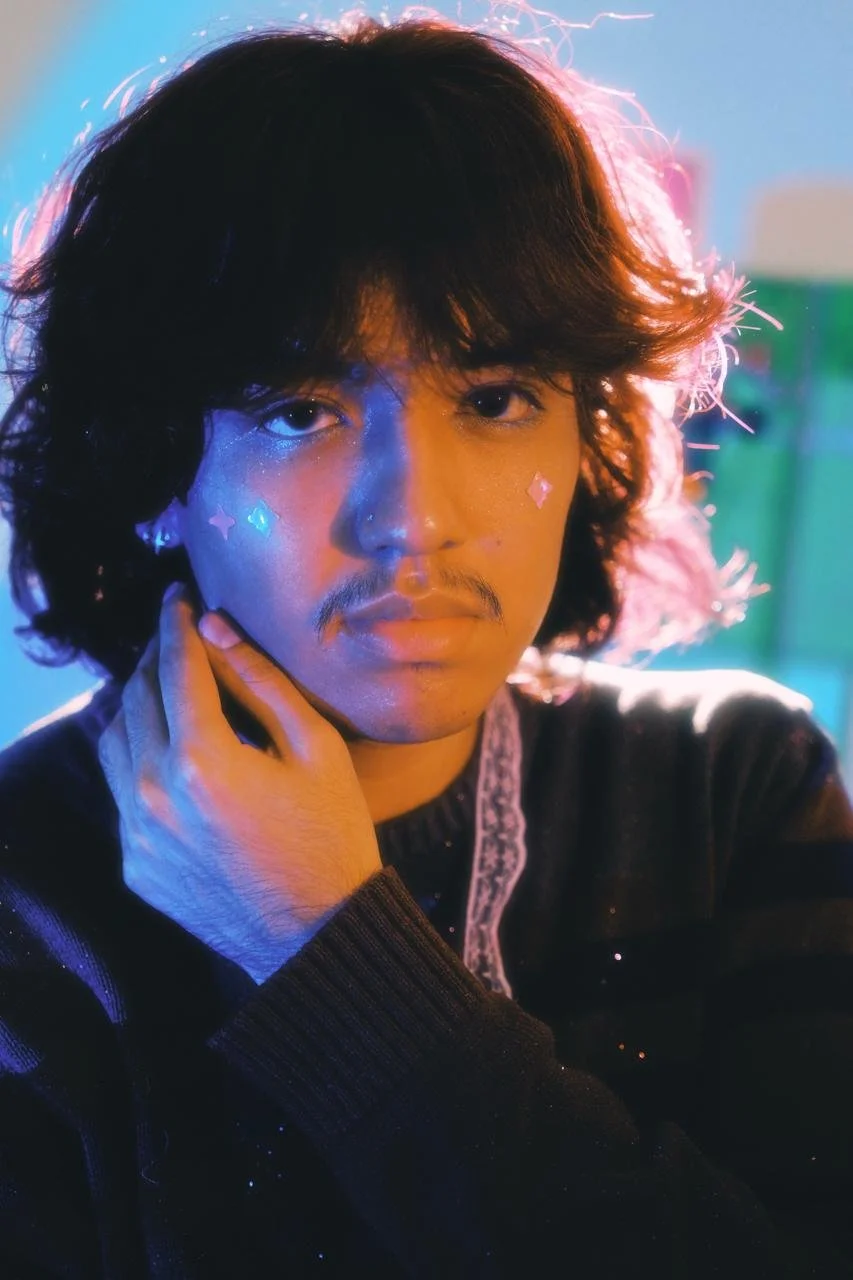
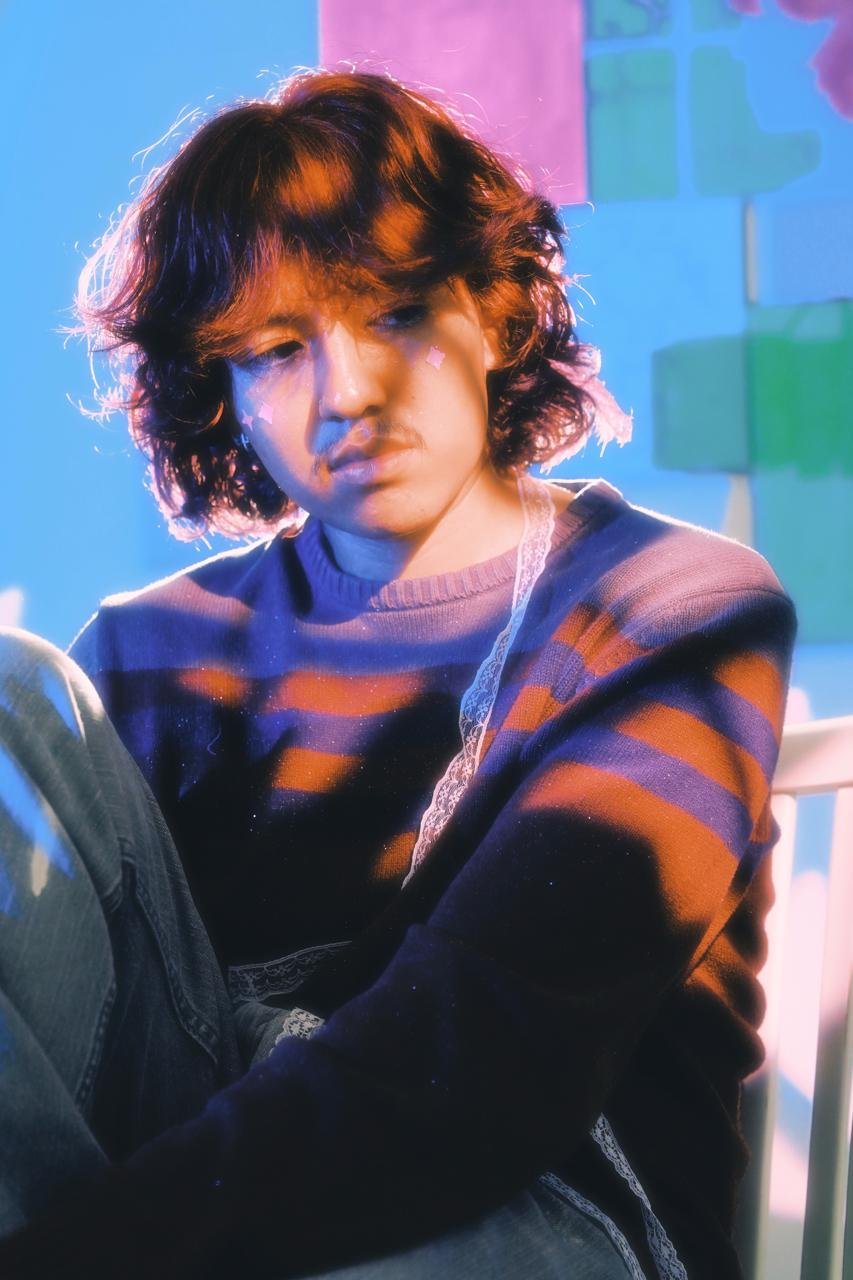
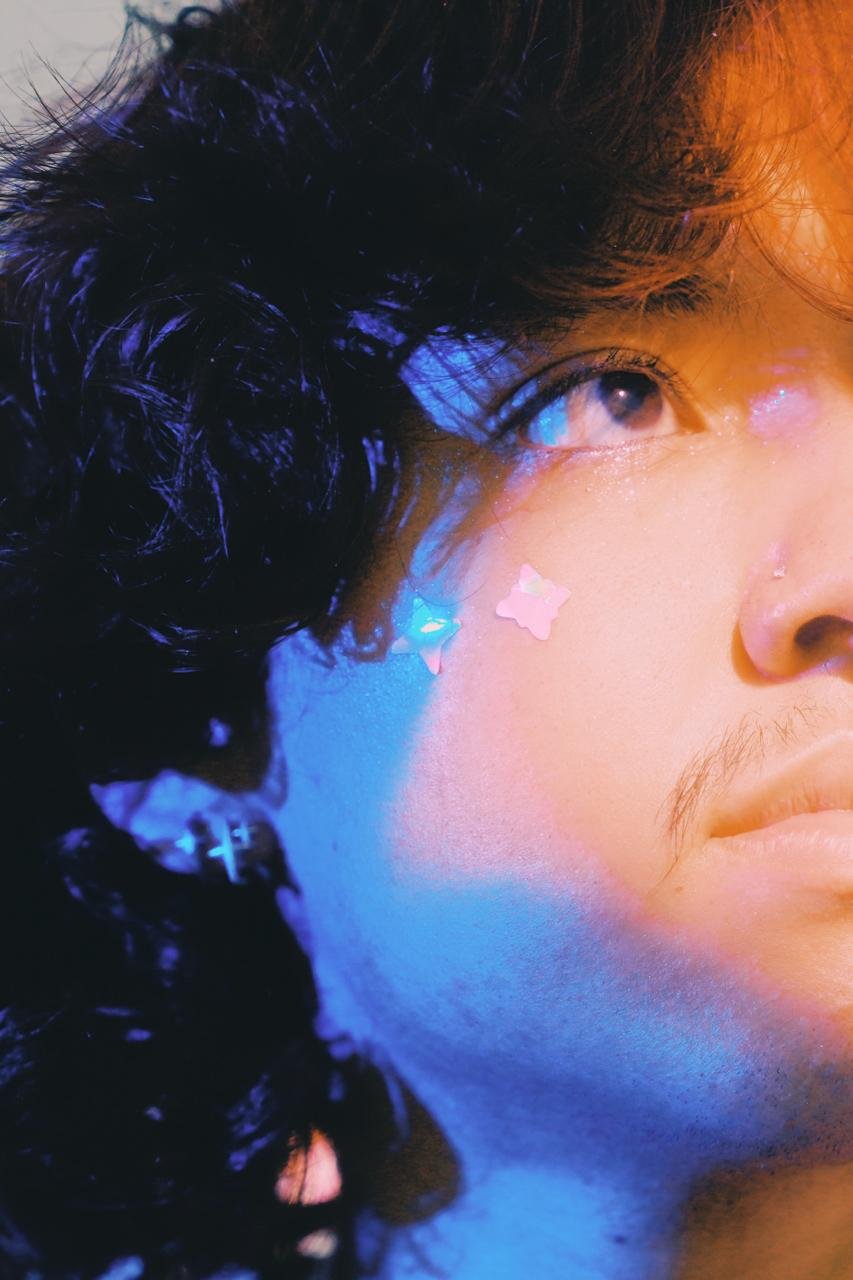
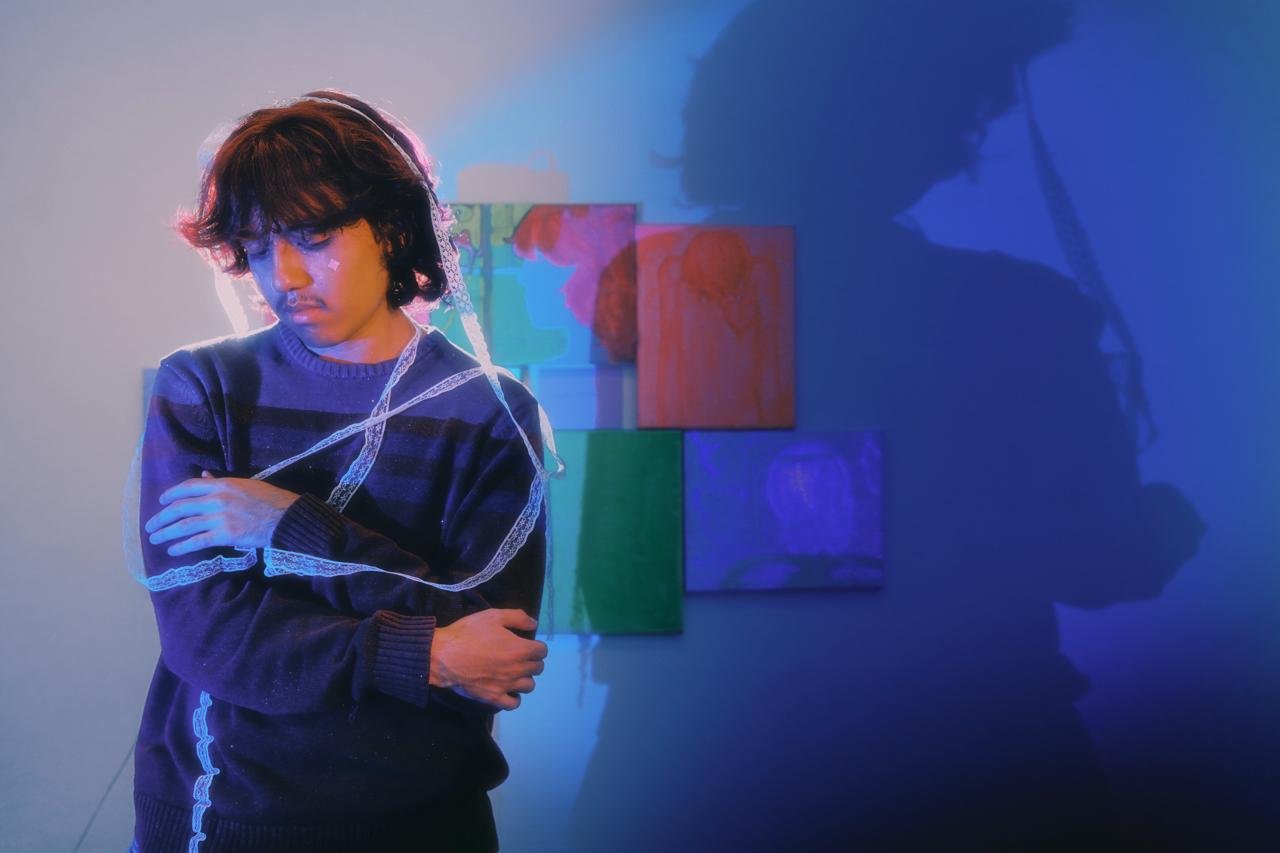
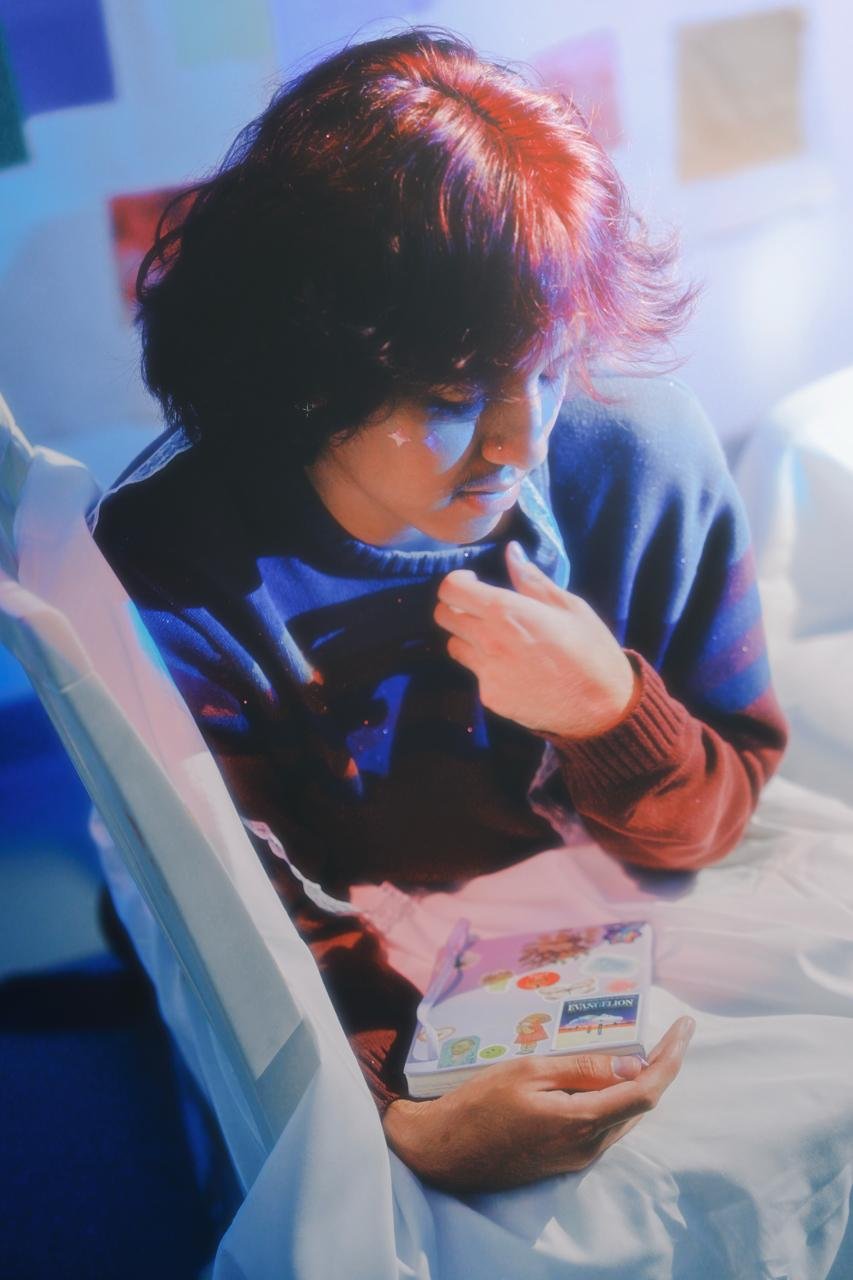
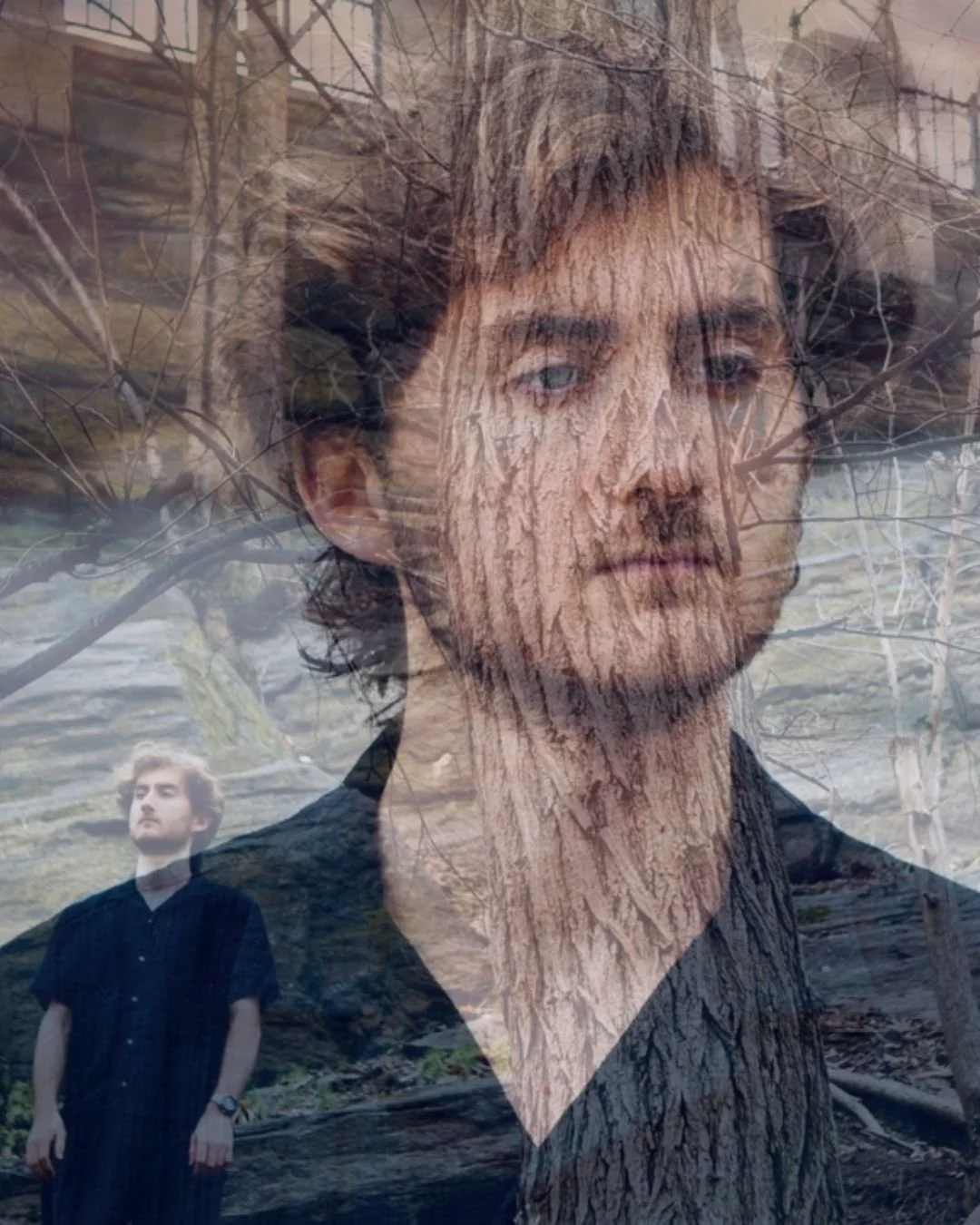
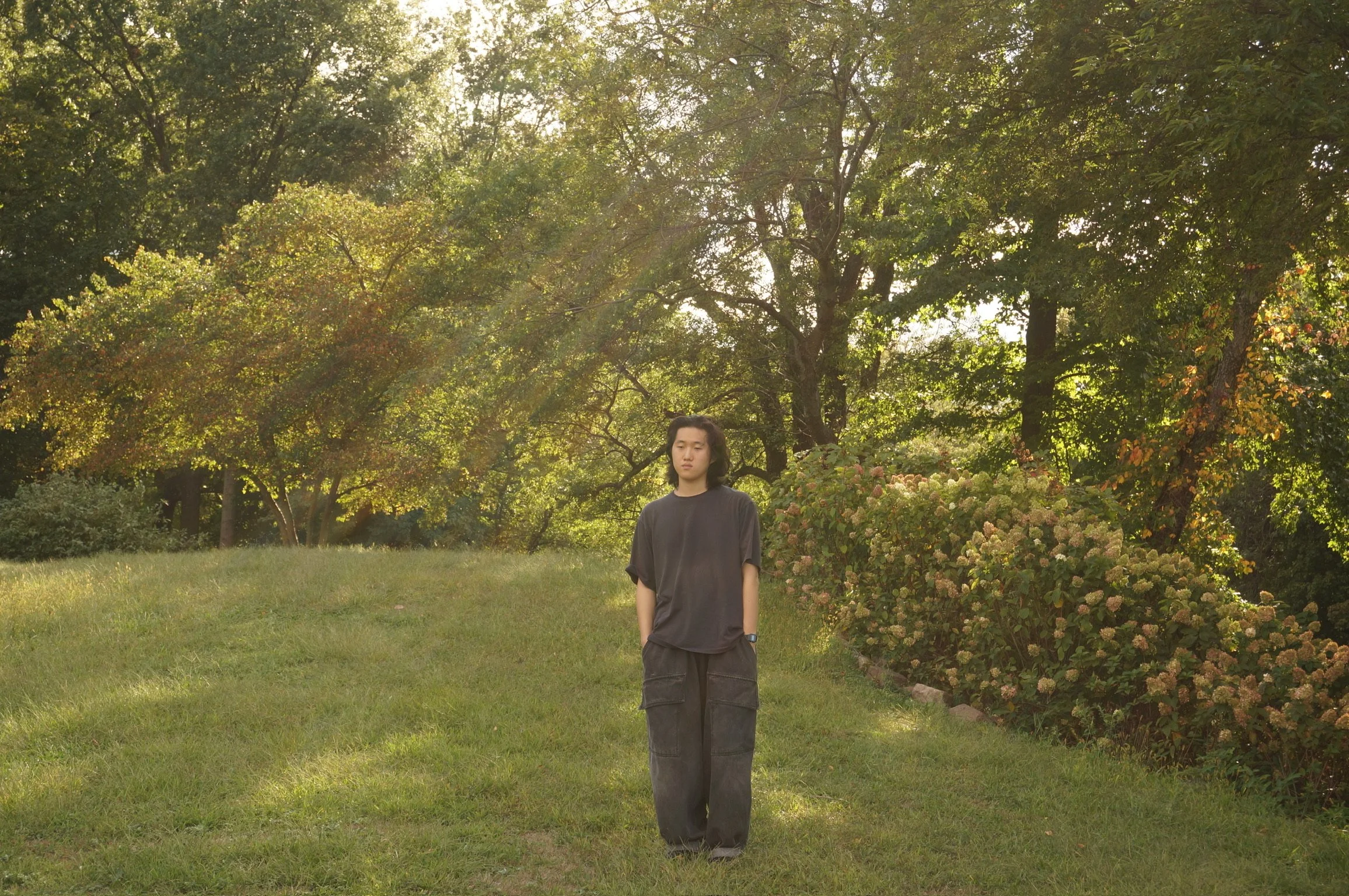
Kevin Gutierrez is a senior in Columbia College studying visual art and women’s studies.
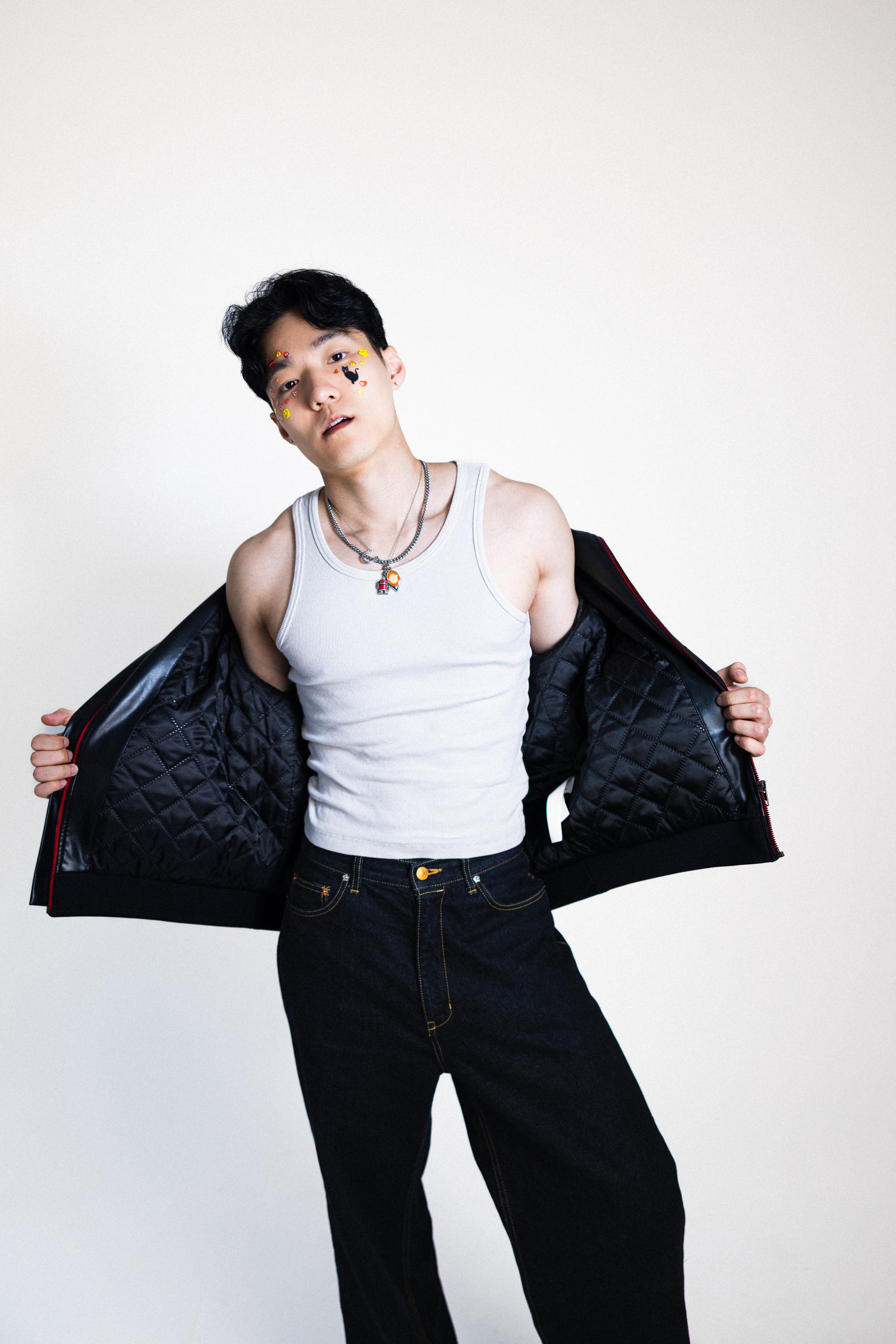
I meet Kevin at Milstein midday, the sun shining through the floor-to-ceiling windows in the lobby. I see his hair first, a deep shade of cherry red that darkens at the roots. He tells me it was natural for about a month this summer, for the first time since his freshman year—he hated it. If you’re familiar with any of Kevin’s art, you can see why.
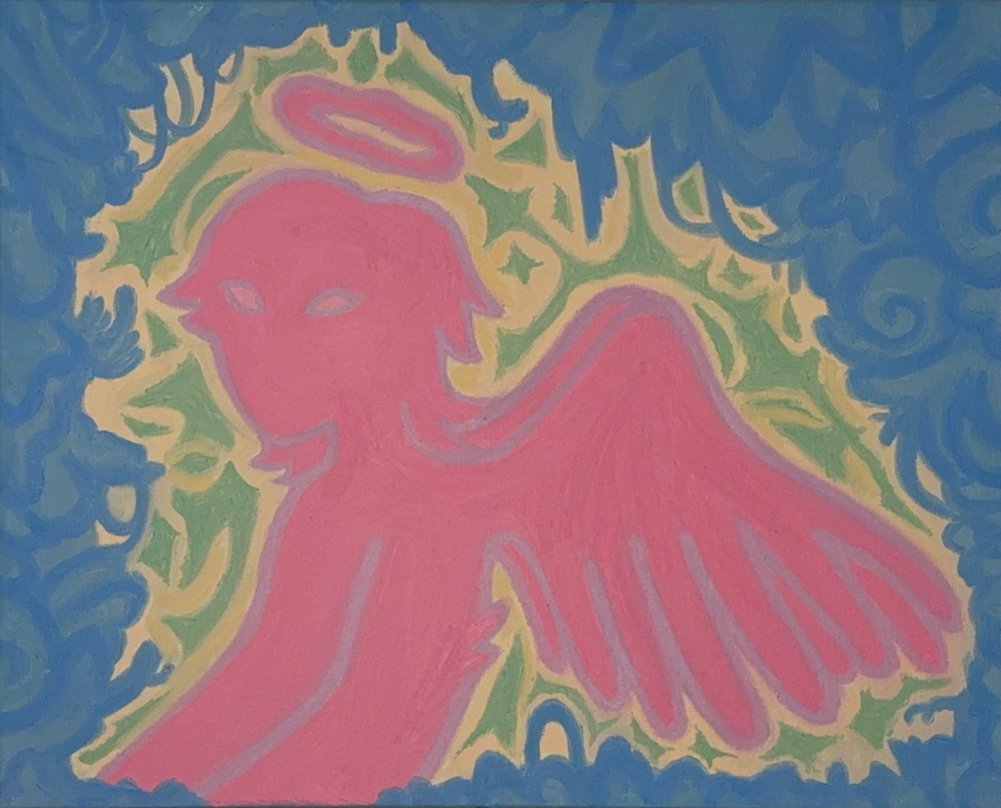
Color is the defining feature of Kevin’s paintings, each canvas filled corner to corner with bright swaths of paint. In his depictions of the human body, which range from shirtless mermaids to his own face, Kevin is indifferent to realism. “I really like this idea of clutter or visual chaos in my work,” he says. “I like a lot of colors, a lot of brightness, a lot of clusters of shapes.” His visual identity is inextricably linked to process, which is only ever additive. Utilizing extensive layering and overlapping forms, “Assemblaging is essential to how I approach painting,” says Kevin. Having experimented with digital art in the past, he prefers analog artmaking because of its permanence. Digital art, and the ability it grants to reverse decisions, Kevin says, “creates a habit of hesitancy that I’m trying to avoid.”
Digital aesthetics, however, are not off the table, and Kevin takes a lot from the visuals of the early internet age, “when everyone was really excited about colors and putting images on the screen.” While it currently feels like everything from websites to big companies are embracing visual minimalism, Kevin’s work is a response of opposition to this trend. He works from a palette of neon paints and high contrast images, embracing the low-fi internet world as a place of artistic intrigue. “I’m interested in how people depicted light in liminal spaces,” says Kevin. He lights up, pointing to the wall directly in front of us, an array of blue rectangular plaques arranged in a vague clump, citing them as the kind of alignment of shapes he’s drawn to. “I feel like rectangles and squares are very visually interesting to look at when they’re clustered together.” Chance encounters like these, an odd street sign or beam of light hitting just the right angle, will be put into Kevin’s camera roll and filed away, awaiting Kevin’s artistic eye to bring them to life.
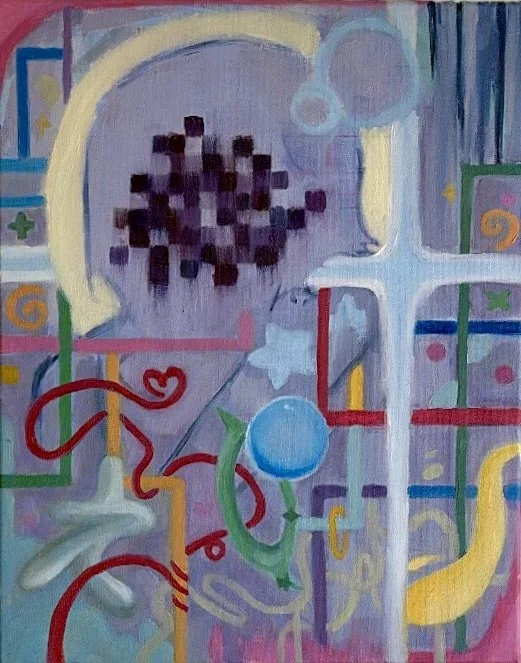
Before coming to Columbia, Kevin didn’t have a formal artistic education, save for the odd high school art class. Almost all of his experience is self-made, the product of late nights spent in his bedroom in high school, when creating art became something vital. At that time, Kevin built his well of artistic inspirations, citing Fiona Apple and Edvard Munch as his two biggest heroes. “Fiona Apple said one time that her music all comes from negative emotions,” said Kevin, admitting that sometimes he feels the same way. In making art, he hopes to channel not only the aesthetics of his inspirations, but the parts of themselves they give to their art. “I’m trying to be as vulnerable as they are,” says Kevin. Moments of vulnerability aren’t something he searches for to feel inspired, but are welcomed as they come. “When I’m emotionally volatile, I’m more productive when it comes to art.”
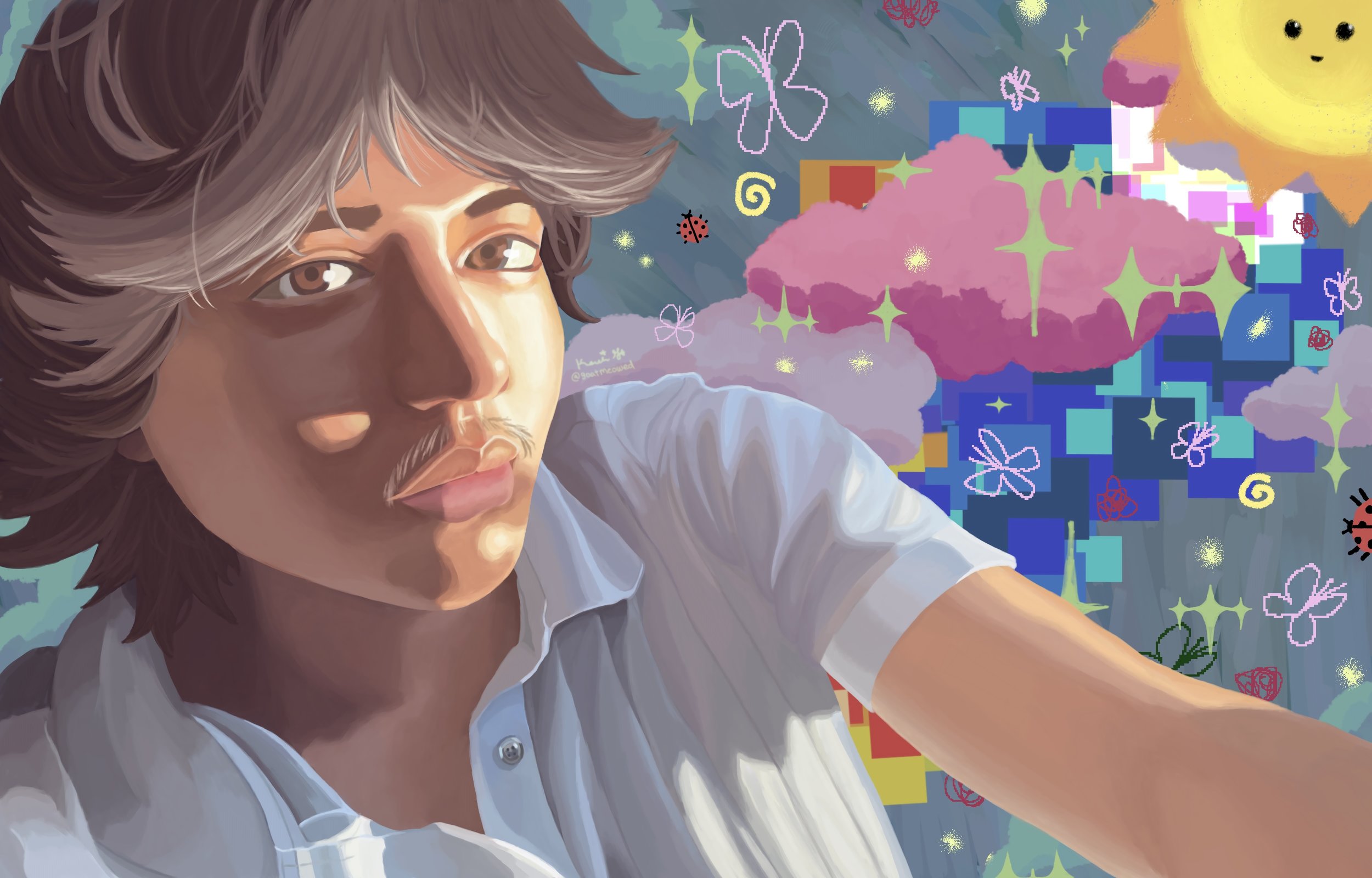
Identity is intrinsic to Kevin’s work, never more than in his series of self-portraits. For him, a self-portrait is a time capsule, not only of his appearance, but of an era of his artistic practice. “I don’t think I’ve ever really considered art as something that has its own process,” says Kevin, “because I’ve always really thought about it as something that I’ve done intuitively.” He’s gravitated towards self-portraiture as a way of seeing himself on different scales, expanding past the boundaries of his sketchbook and even beyond life-size. His interest in self-portraiture led to a new curiosity with depicting bodies and shapes, and searching for new ways to represent them. “I really enjoy working with the body because it gives you a chance to either be abstract or naturalistic,” says Kevin. “I found that it’s not really realistic to be too technical about the process of drawing different bodies.” Bodies in Kevin’s paintings often have hair in shades of bright citrus, cerulean skin, mouthless faces. Breaking away from realism has allowed him to fully embrace the surreal. Even when his art depicts people and things other than himself—unidentifiable forms or fictional creatures – Kevin’s identity is still found everywhere on the canvas. “Even based on the way you make a mark on paper, the physicality that comes with that carries something,” he says. “You can tell if it’s angrier.”
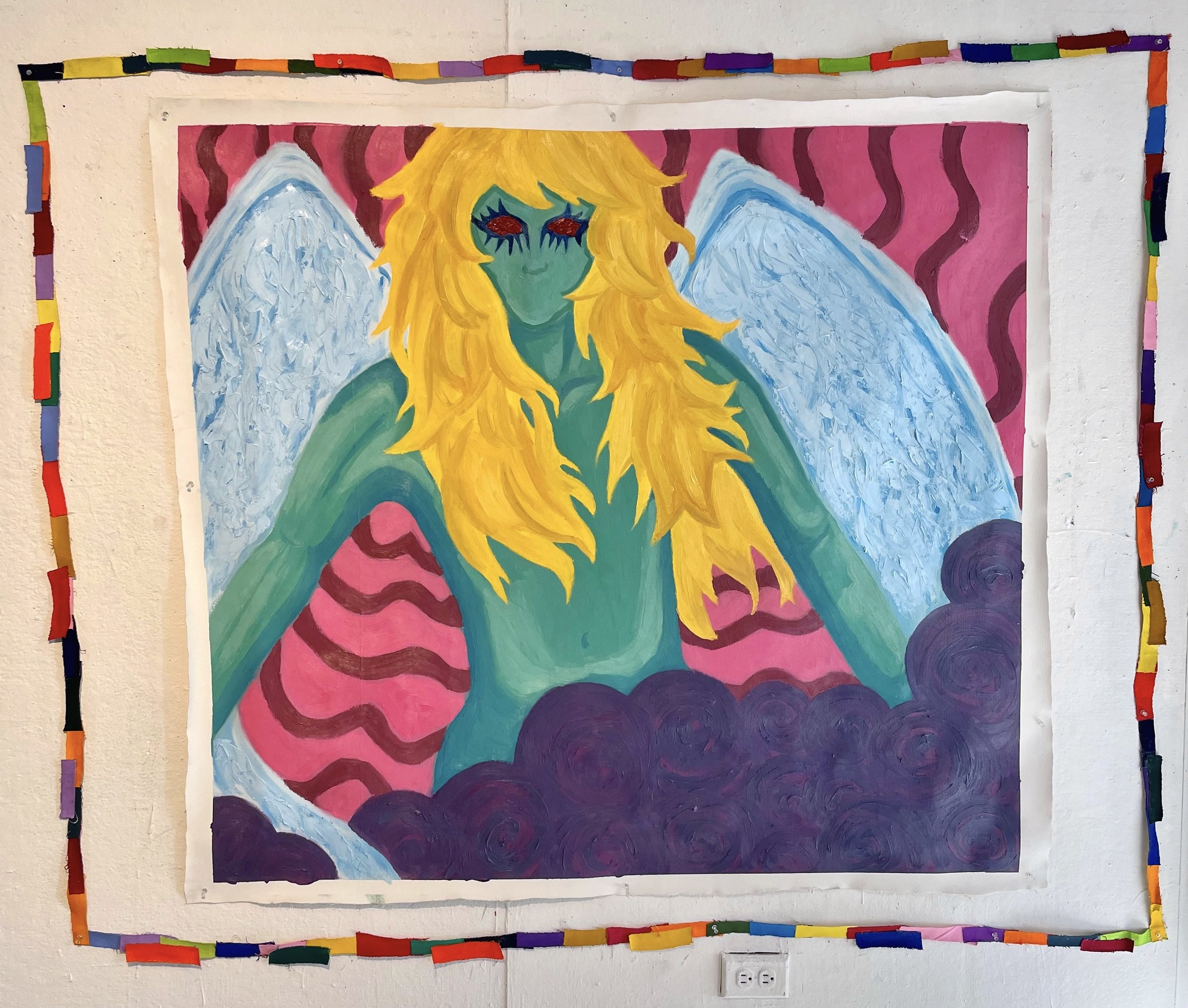
I tell Kevin I’m drawn to a particular canvas of his, one featuring an angel with long yellow hair and blue skin, its abdomen fading behind a cluster of purple clouds. What strikes me most about the painting is its frame—pieces of cut up canvas painted bright red, purple, brown, green, which delicately line the outside of the picture, unevenly glued together. He tells me it’s a midterm project from a painting class, where the assignment was to create 100 paintings. Instead of working from square one on each, Kevin chose to make the angel his main focus and surround it with 99 painted rectangles. The frame wasn’t made to fit the painting, rather the painting made to fit the frame.
A lot of Kevin’s ideas start this way, with a constraint or limitation he can propagate with his style. As he works on his visual arts thesis over the next two semesters, a series of self-portraits which range in size and style, scale is heavy on his mind. Having picked the largest studio for the year—a random selection from a hat—Kevin feels called to take advantage of the gift of space, creating as many paintings as possible in many different sizes. Like much of his work, memory and sentimentality have influenced these new paintings, as well as the college experience itself. Immortalizing this time, on the precipice of so much change, “is just crazy,” says Kevin. “Because now you have a visual documentation of the stages of your life.”