












Feature by Susana Crane Ruge
Photos by Iris Pope
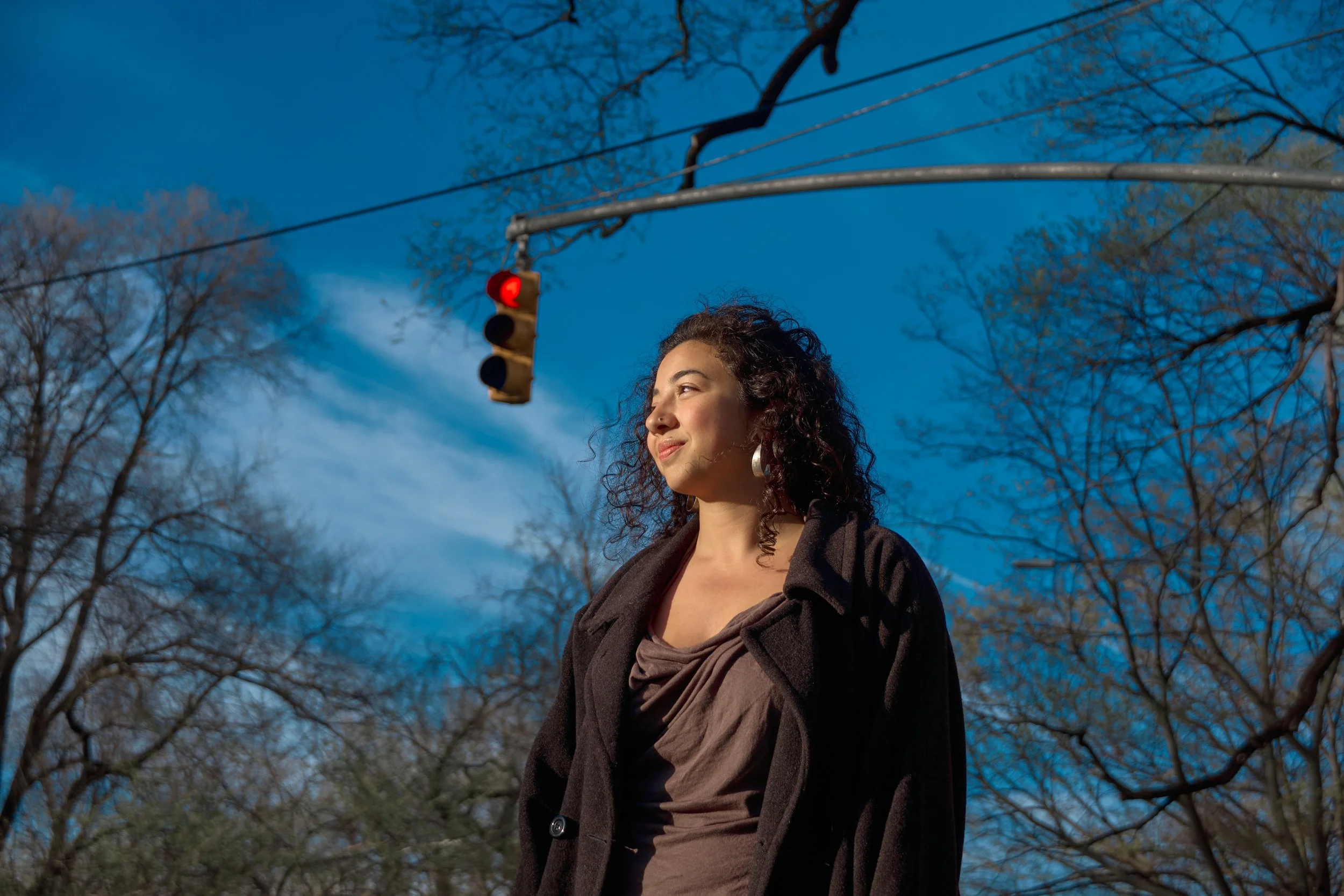
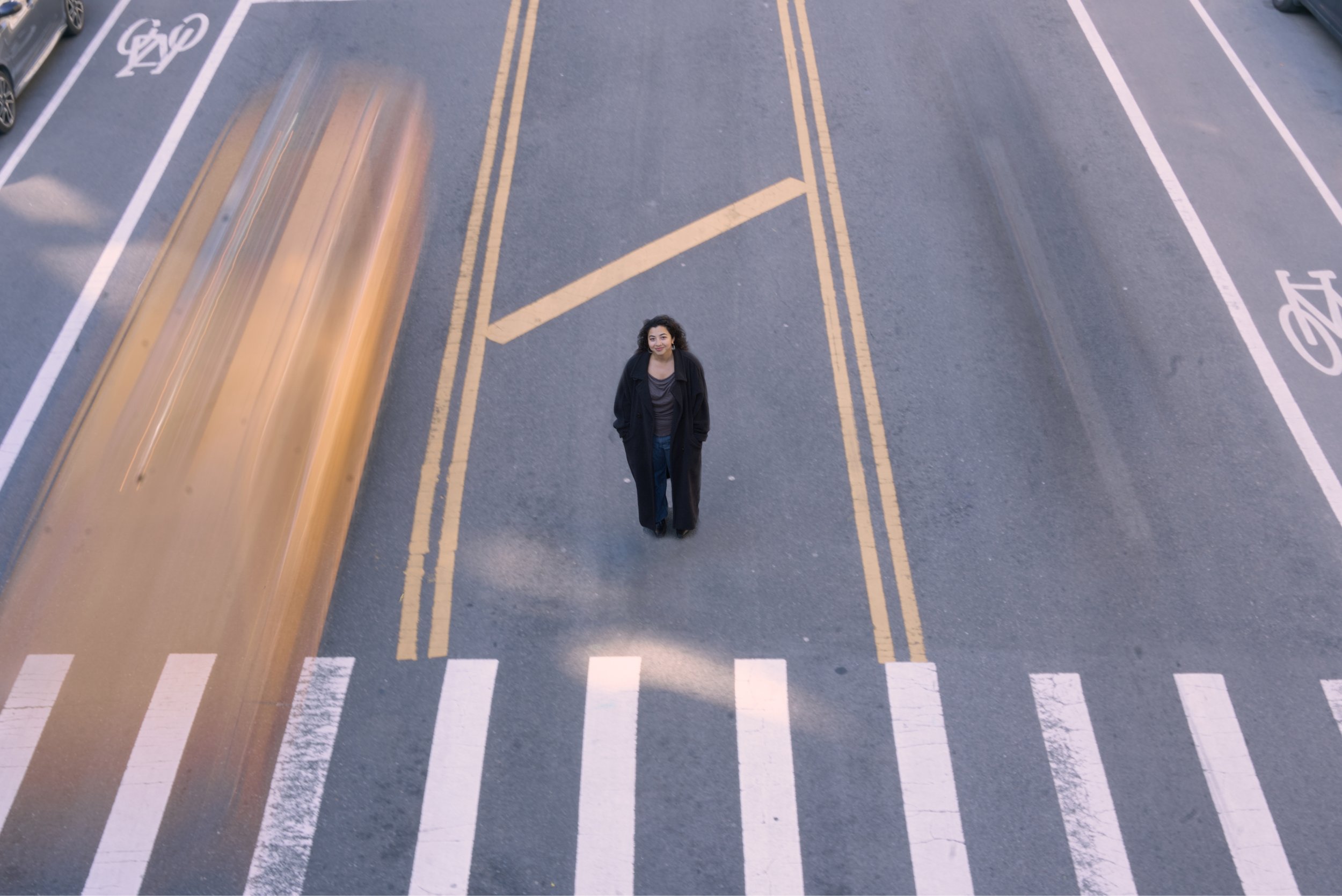
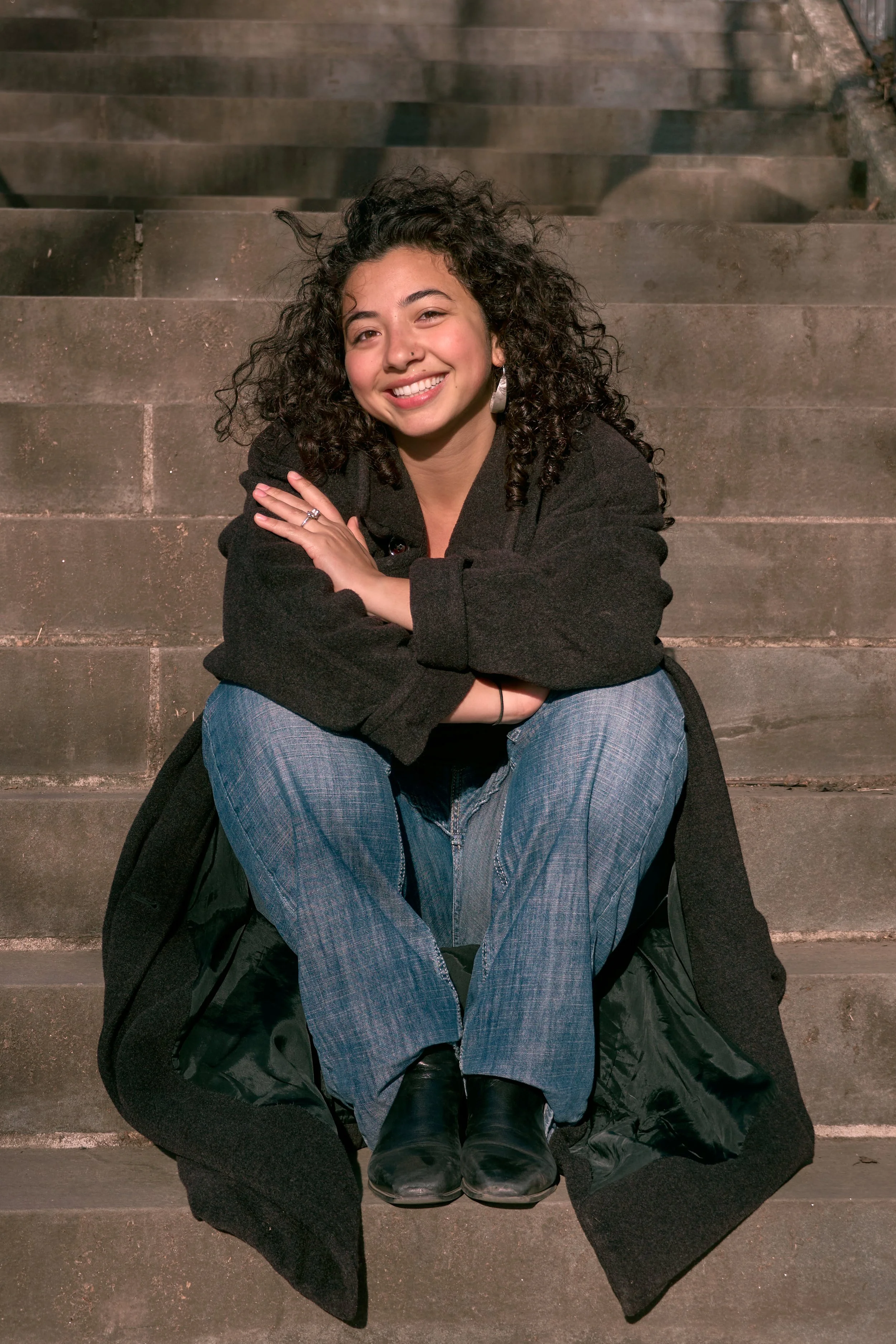
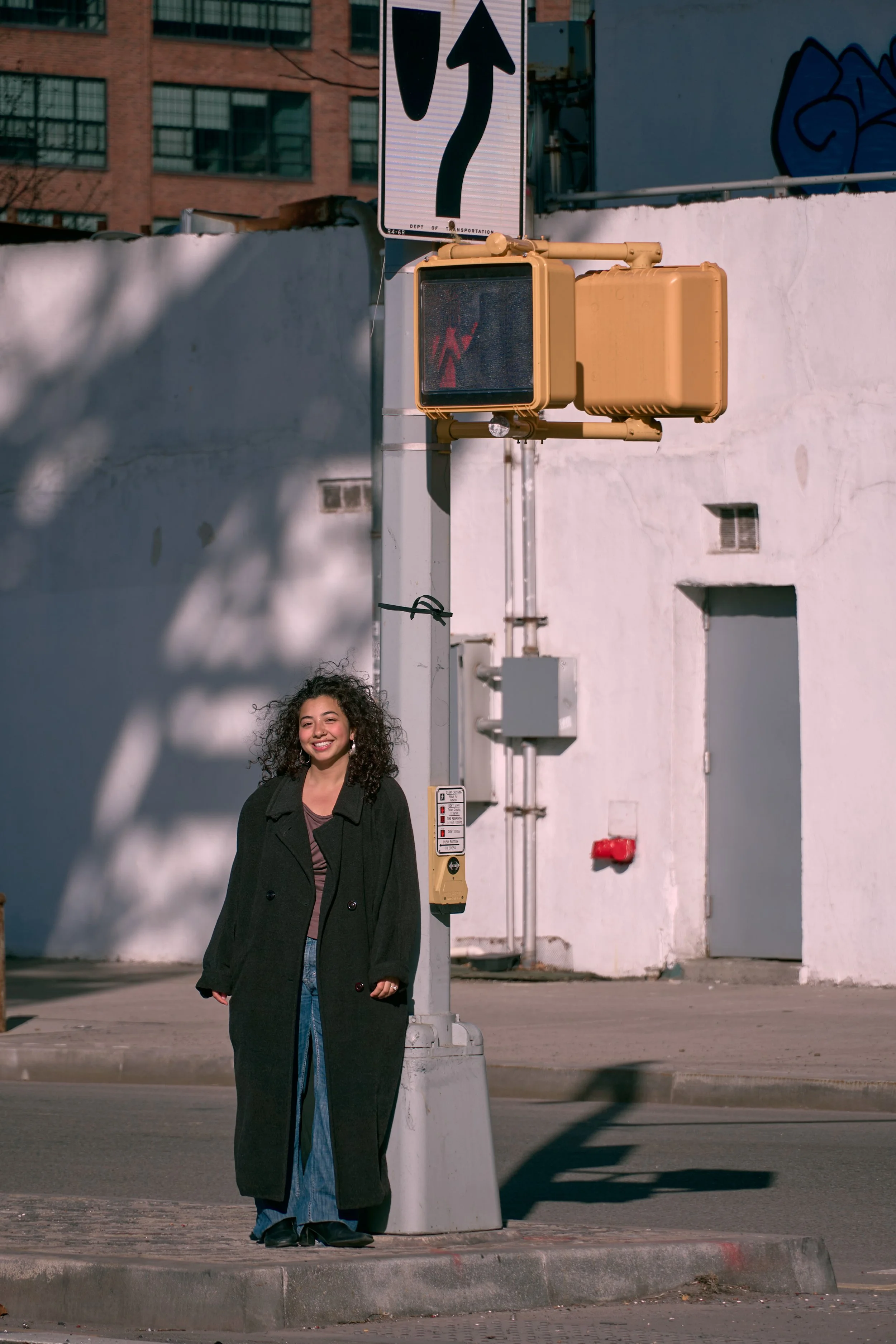
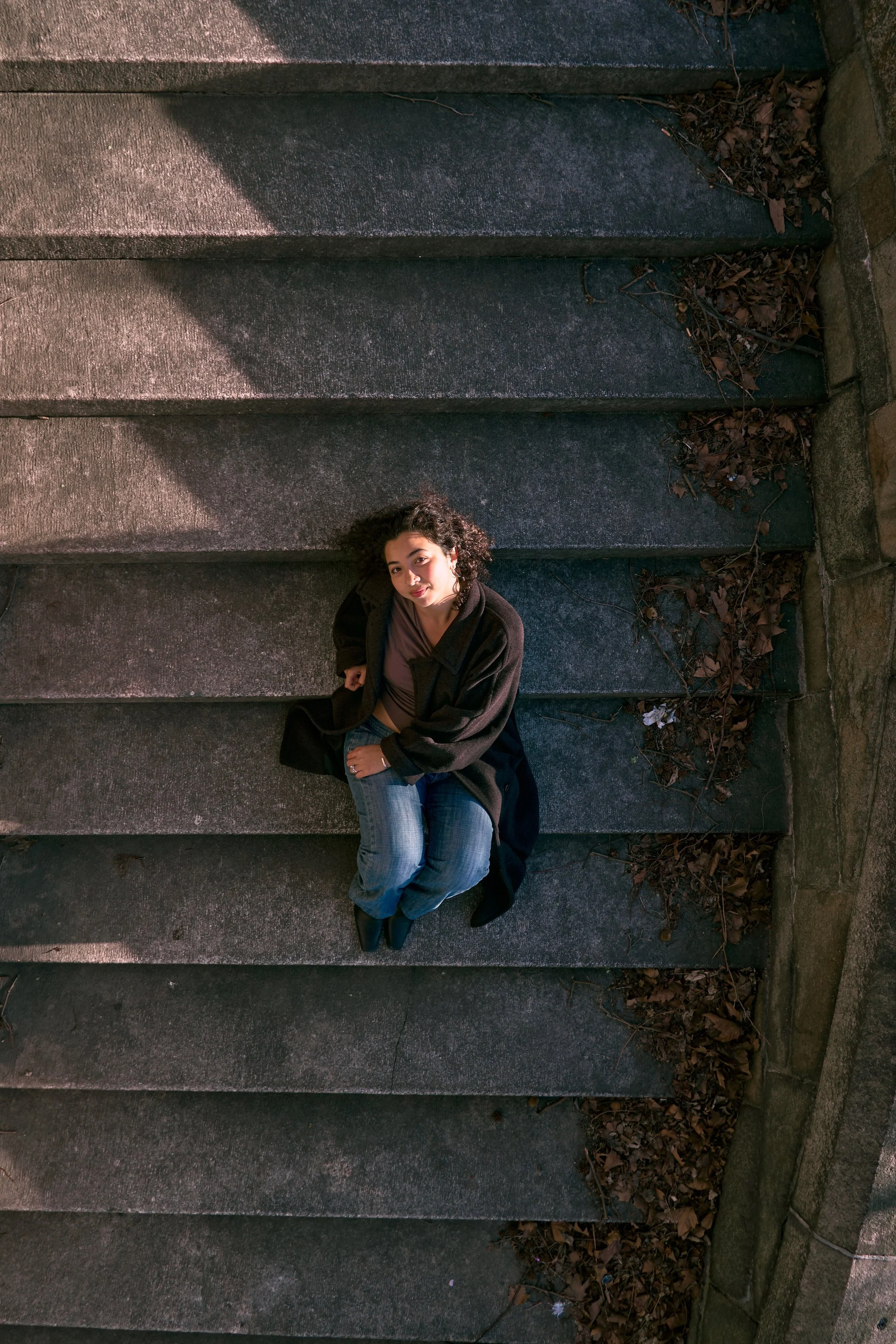
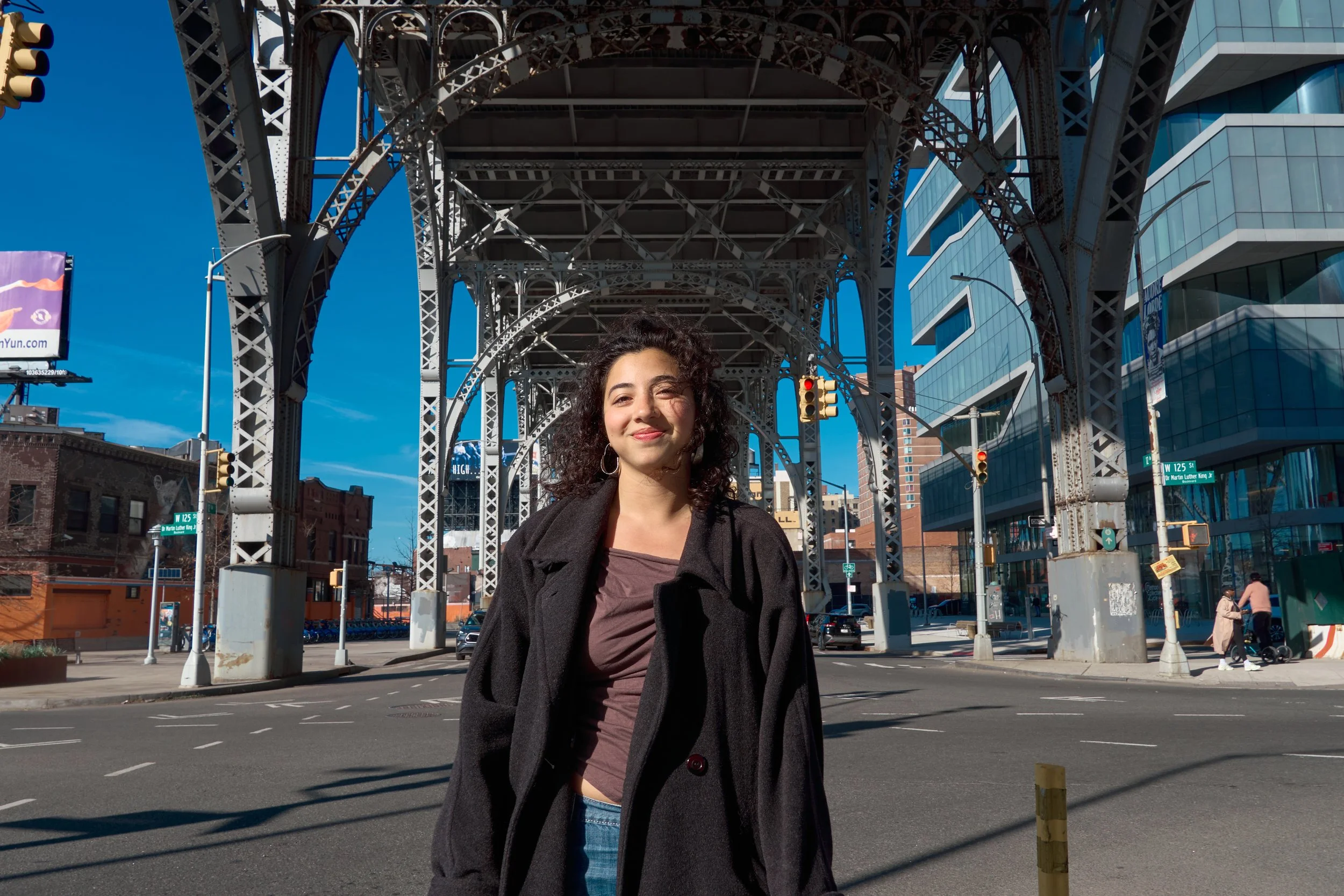
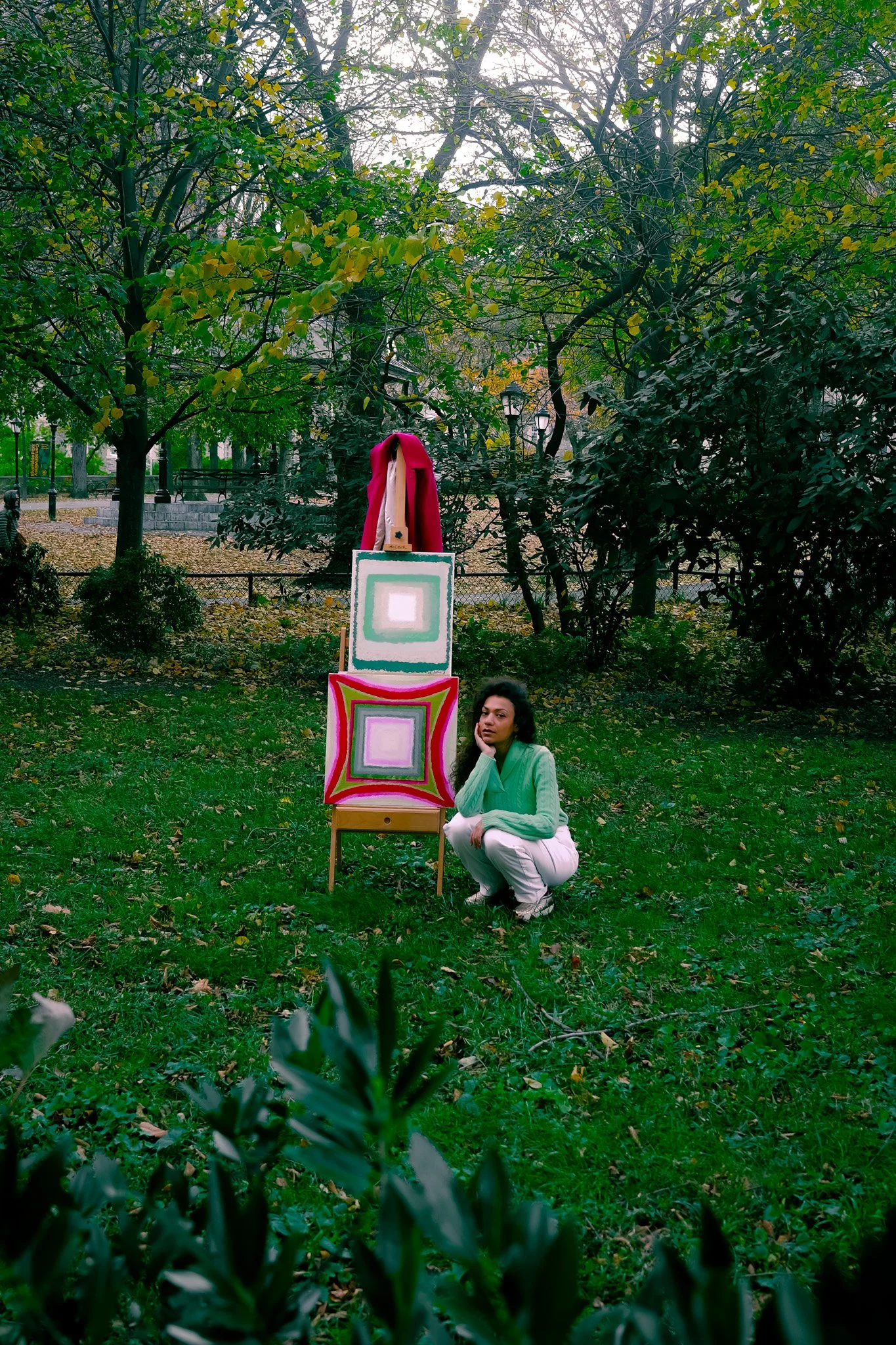
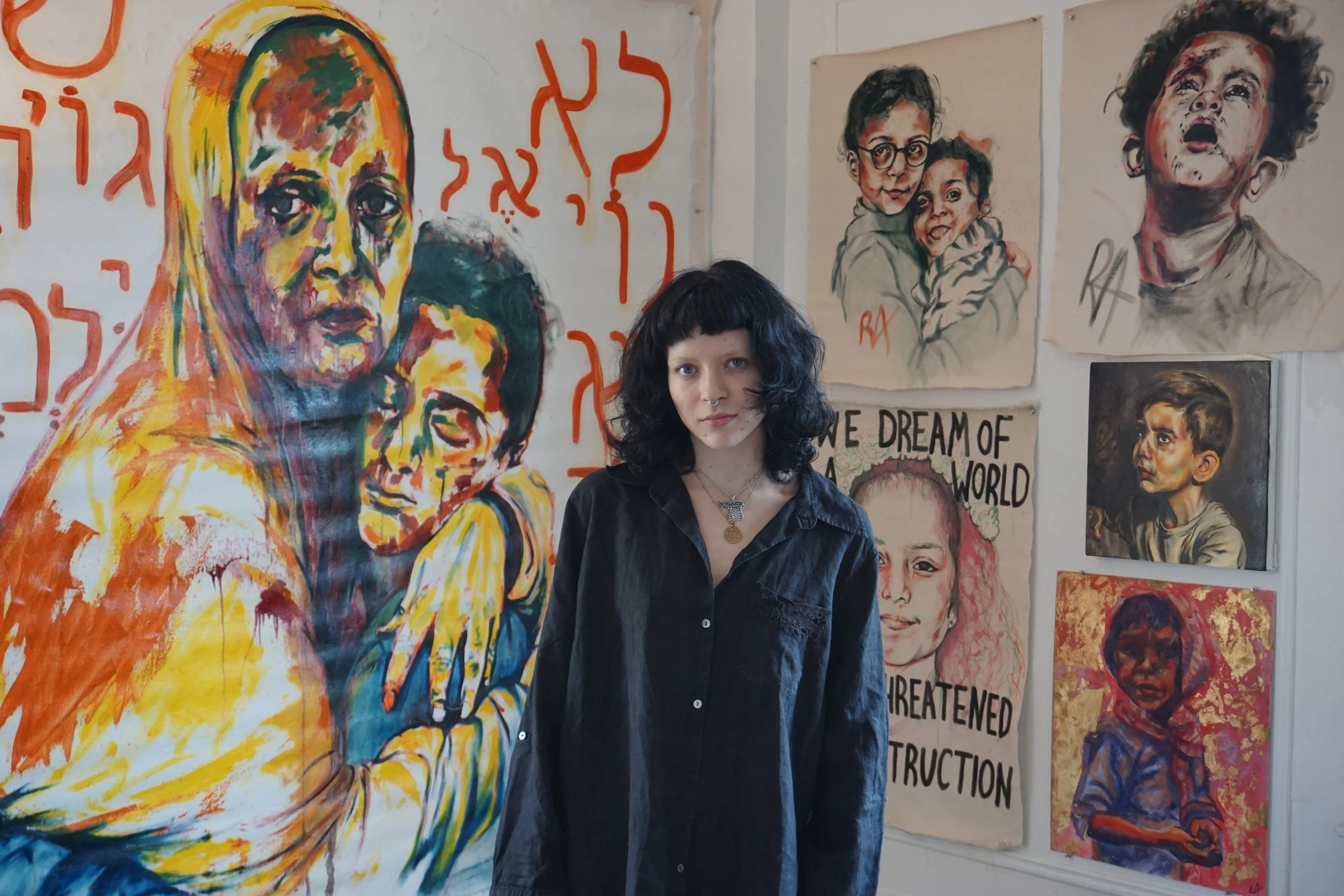
Gefen Mor is a graduating senior (CC ‘26) double majoring in Visual Arts and Architecture. Her passion for craft is prevalent throughout her myriad artistic mediums and interests, positioning herself clearly as an analytical artist. Her favorite medium is weaving, yet there is practically no art form she has not tried.
I visited Gefen on a Tuesday evening with a friend of mine, who wanted to sit, listen, and do work in Gefen’s art studio in Watson. She came down to swipe us into the building and, of course, since all architecture people know each other – they were already friends! We walked up three flights of stairs to Gefen’s prime real estate studio, and the first thing I noticed was the diversity of form in all of her work. It was pretty impressive. There were traffic cameras on the walls, drawing around a woven sculpture, a hello kitty sewing machine, oil paintings, laser cut models. Bet any medium, Gefen will have worked with it.
I asked Gefen if she could encapsulate her artistic identity in 3 words. It was hard. Nevertheless, she conceded: pattern, transactions (as a concept; more on that soon), textiles, and meditation. I would add a word— craft. She is incredibly dedicated to the materiality of her work and the experience of transforming and distorting a material into her final concept. This weaves together with her insistence on pattern and meditation. Gefen speaks slowly – intentionally – during our conversation, because she has premeditated and processed her intentions physically, artistically, and conceptually. Therefore, Gefen chooses materials that will provide a different meditation for her concepts “I always come back to mediums that have a reactive relationship with me…. It [the material] has its own body. Its definitely, those kinds of materials are very embodied” Her craft develops an interaction between the material and the practice of artistic production.
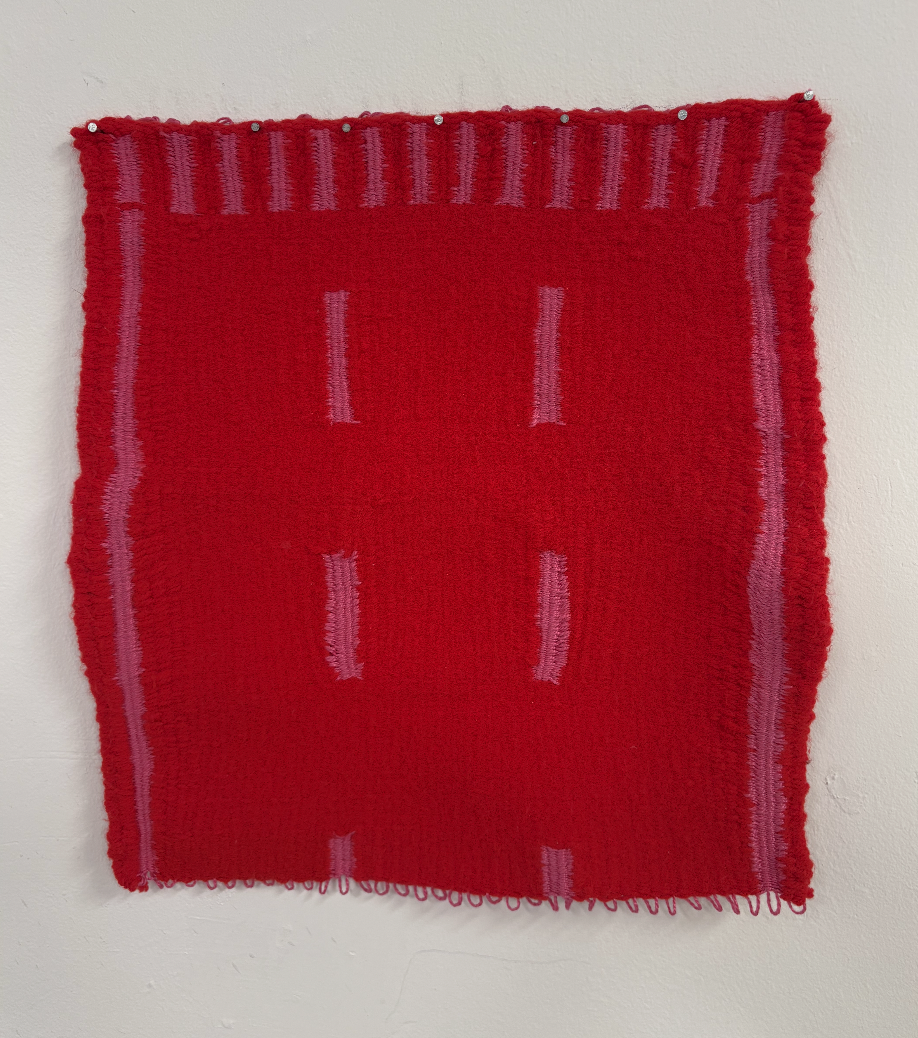
This woven street plan, which includes metrocards as a weaving tool, represents Gefen’s desire to meditate while she challenges a medium to transform into her vision. She mentioned how a street goes so fast, it is designed to hold speed, and she wanted to encapsulate that speed through a slow, slow, slow medium. “I wanted to see how I could work with that concept materially. That’s why I chose weaving. “ Gefen’s piece exemplifies her dedication to a conceptual challenge that is materially expressed. She questions her object of study: cars, transport, urban planning, and picks a medium that might challenge an assumption about it. Naturally, it seems, Gefen is also an architecture major.
However, architecture wasn’t a clear path for Gefen, at first. Her identity as an artist settled in high school, where she knew she wanted to dedicate her time in college as a visual artist. She pursued that at Columbia. However, at some point, she took Modern Architecture in the World, an architectural history lecture at Barnard. She notes how architecture is a very different language. She was captured by its theory and specificities. She likes how, in architecture, one hones in on, say, a bathroom, an ecology, and the specifics about built structures. Yet, architecture is also about everything else. Everything that is not a built structure also fits into architecture just as every medium and concept that seems separate from art seems to fit into Gefen’s artistic and architectural practice.
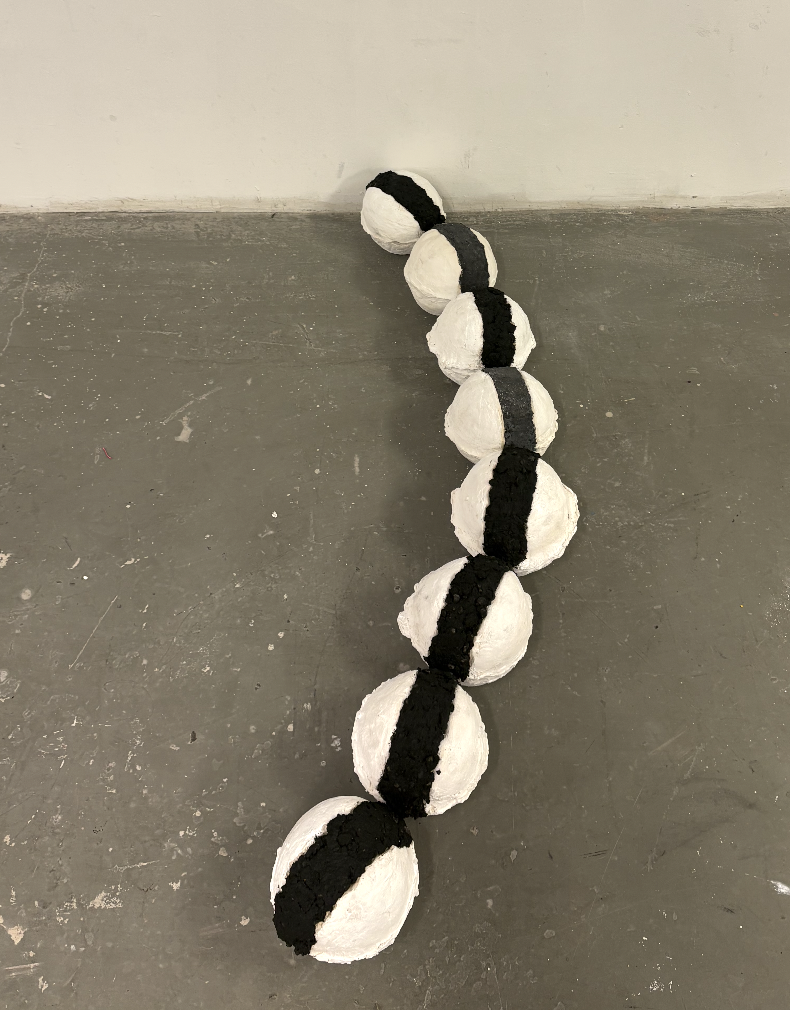
Insert Figure 2 and 3: stable sculpture
Some of Gefen’s architectural pieces focus on similar themes as her visual art. Themes of transportation and our relationship with our forms of movement have been pervasive in her art and architecture projects, especially as she works towards her senior thesis (which will be on display at Prentis and Dodge on May 5th and 7th, 2026). Architecture has given her a new medium: 3D modeling. It gives her a new way of observing her conceptual intentions and it allows her to materialize her ideas in a language that requires clarity and legibility, a different objective than that of creating through the lens of art. Gefen explained to me how she had an itch for exploring cars and transportation because of a comment from her neighbor, “we care for cars like we care for people.” That comment inspired her to explore the transaction of a car to a person. She mentioned how she is intrigued by how cars provide something to people, and people somehow care for them in return. In her eyes, humans and cars have relational interactions. In some way, Gefen personifies cars and explores their personhood. In her barn/garage sculpture, she questions human modes of transportation in relation to the wellbeing or home of said mode.
Hence Gefen’s insistence on transactions as a defining term to artistic practice. Whether she is exploring data on transportation and questioning– challenging– its speed and presence in our lives, or the materiality and embodiment of a medium in her art practice, Gefen understands her art as an interaction. Between her and a concept, her hands and a sculpture, or her and the viewer. Architecture challenges Gefen into a certain legible visual language that art does not require, and she is grateful for the opportunity to explore her intellectual pursuits in their two expressive ways of crafting.
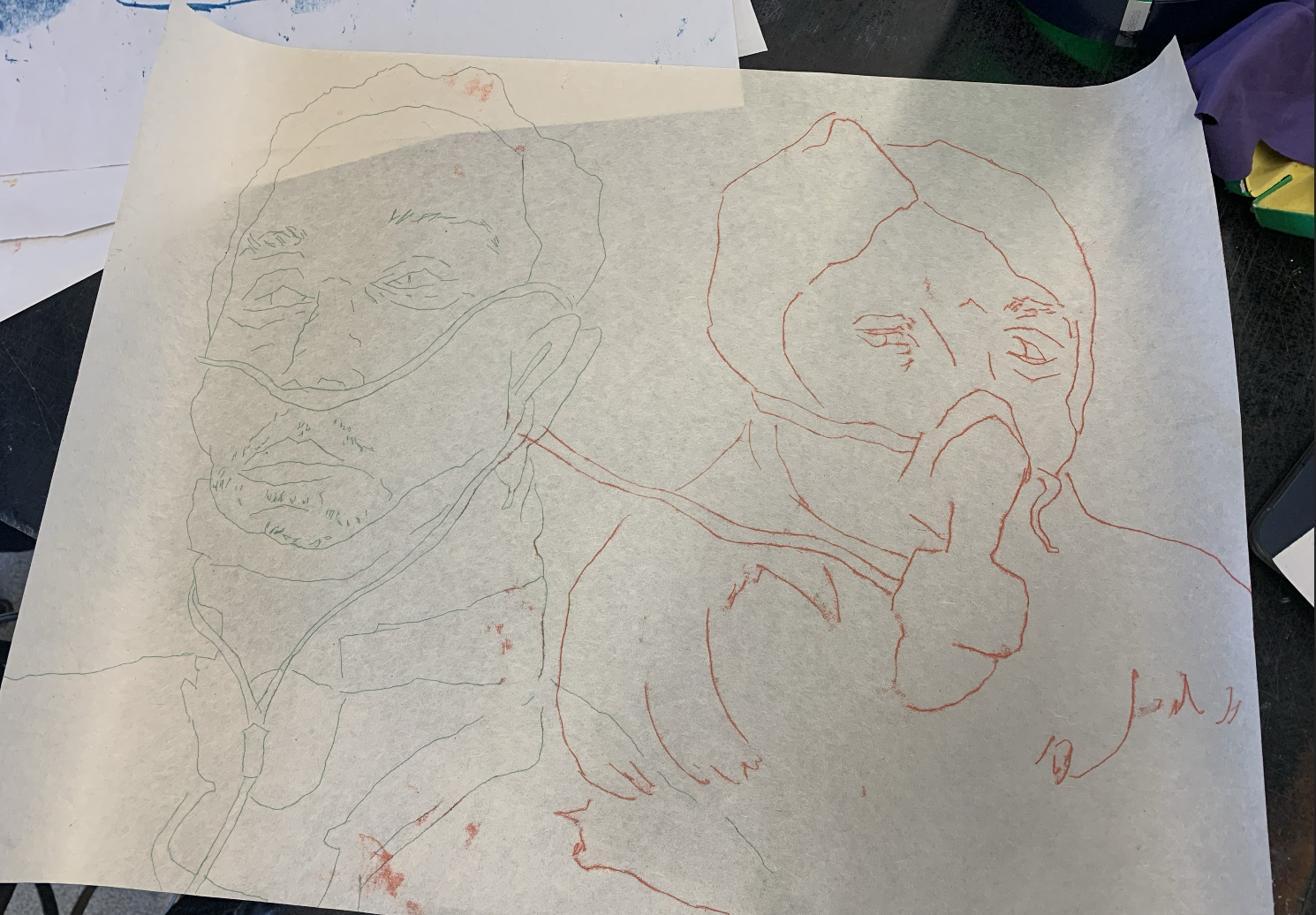
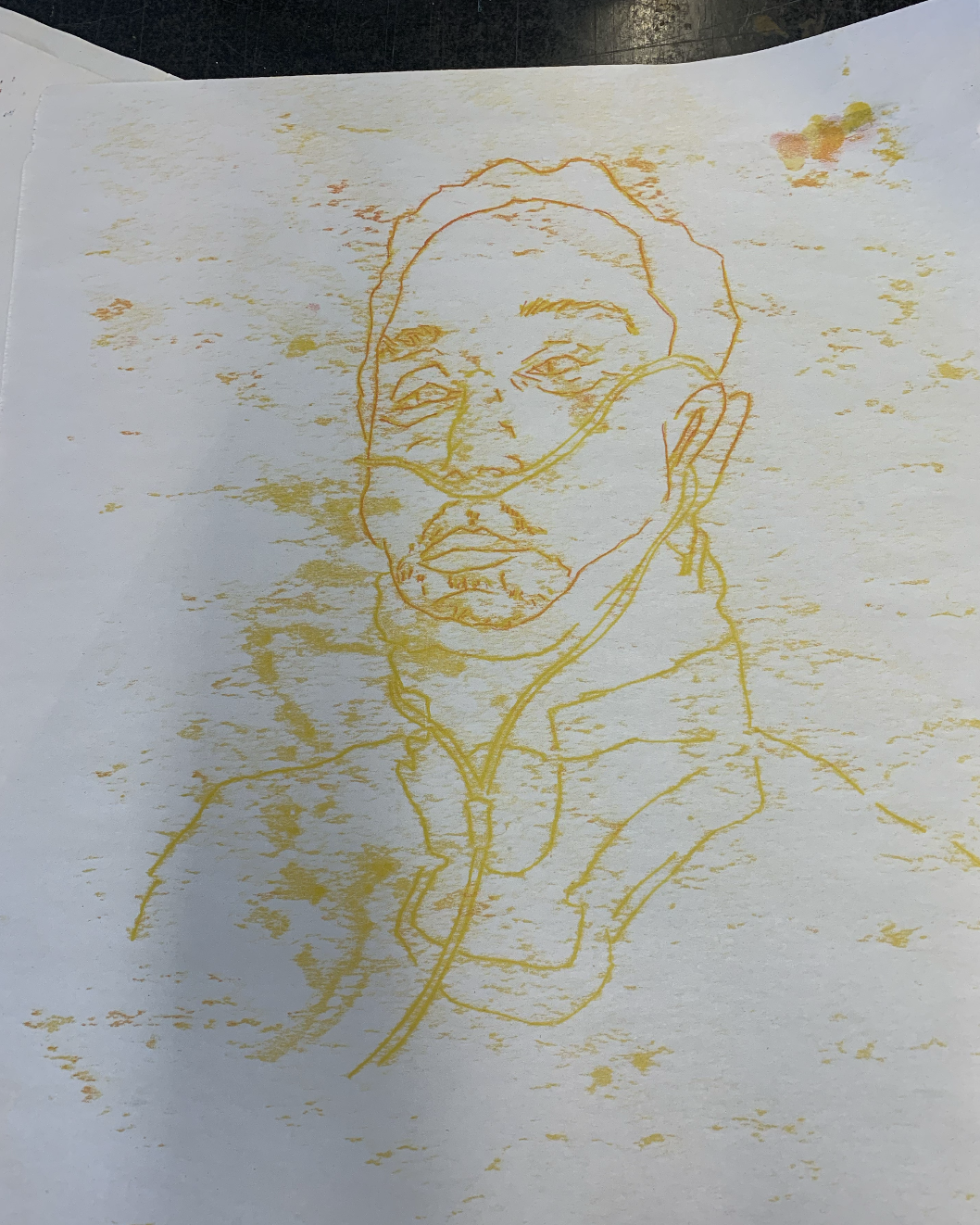
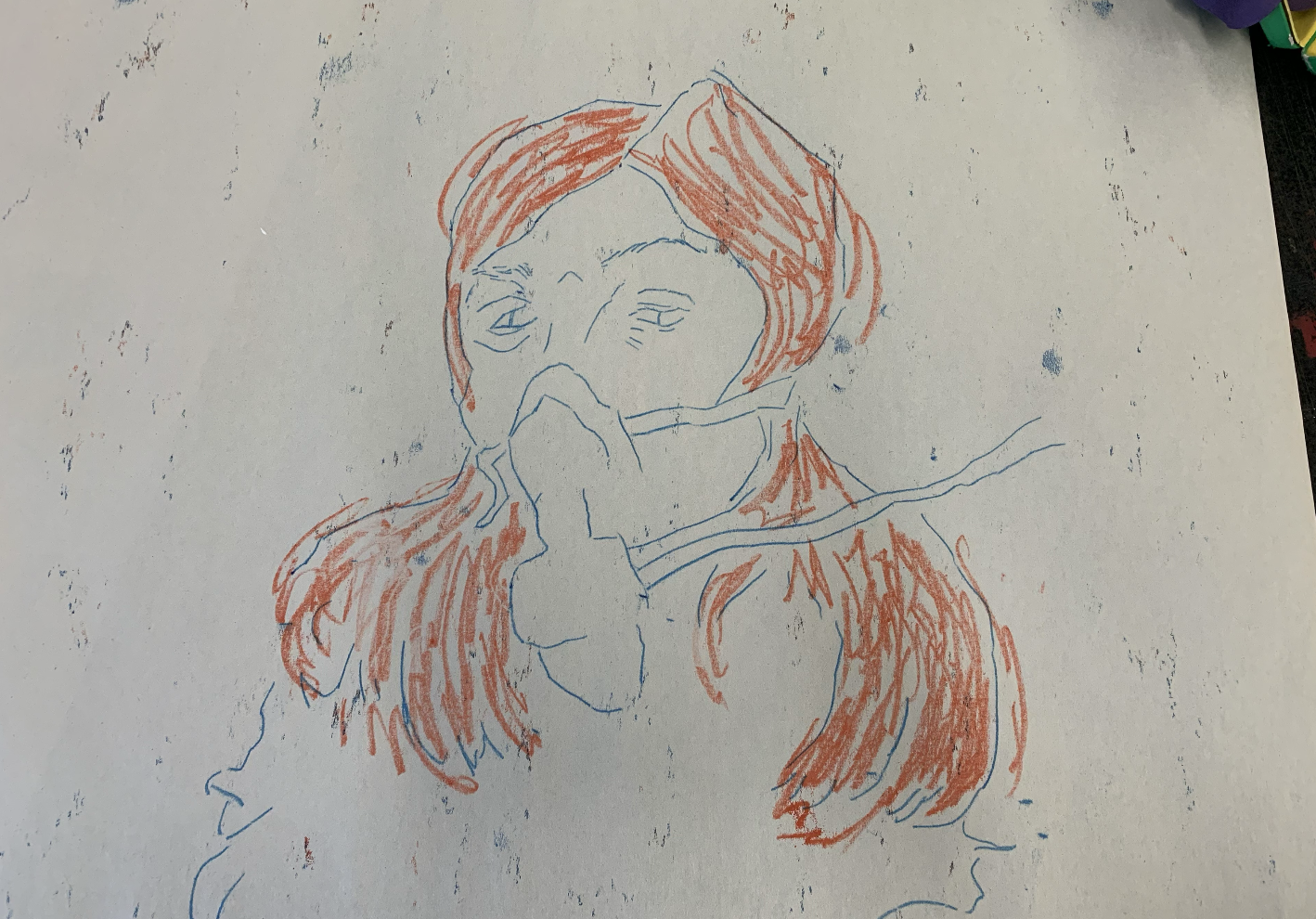
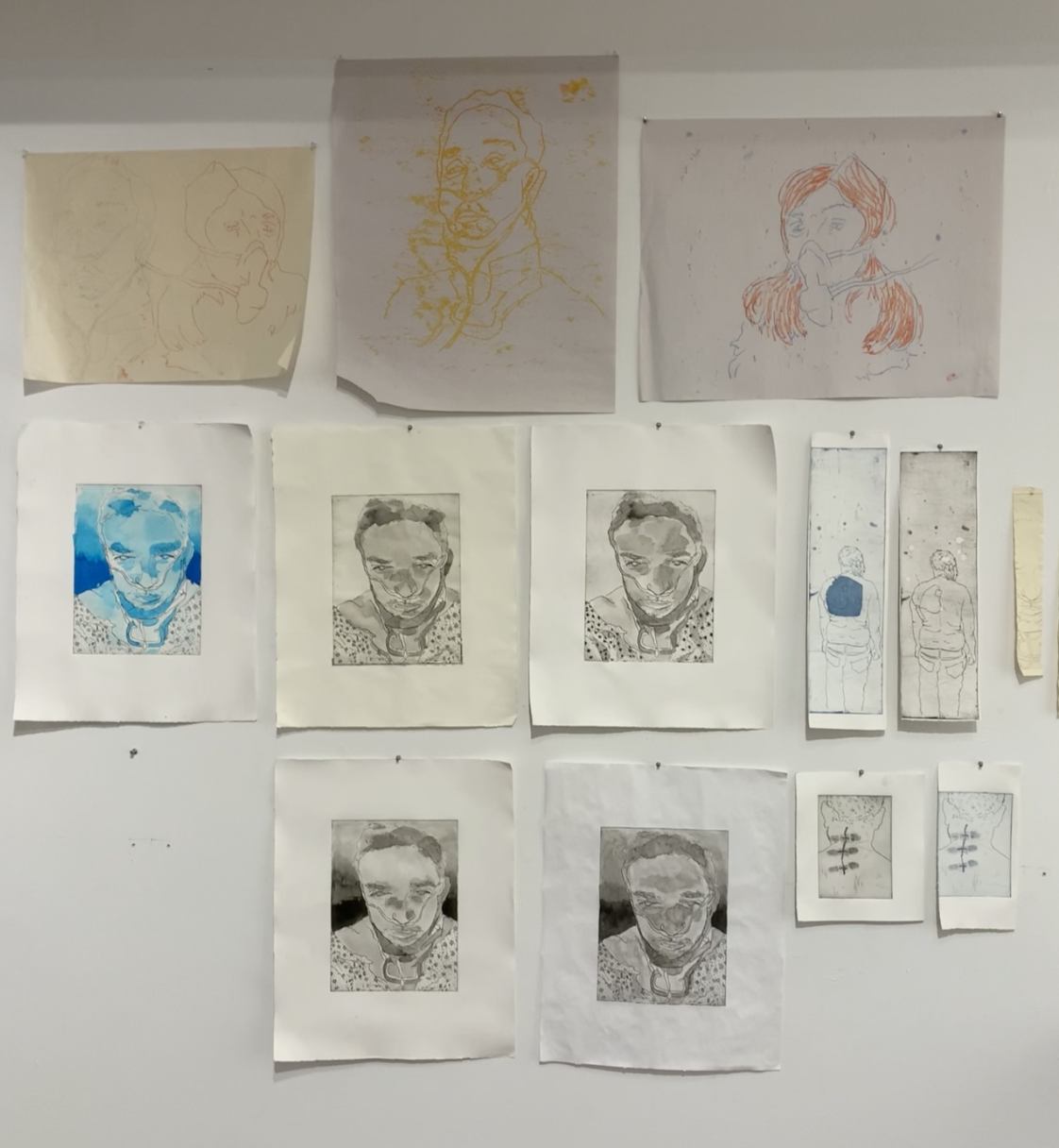
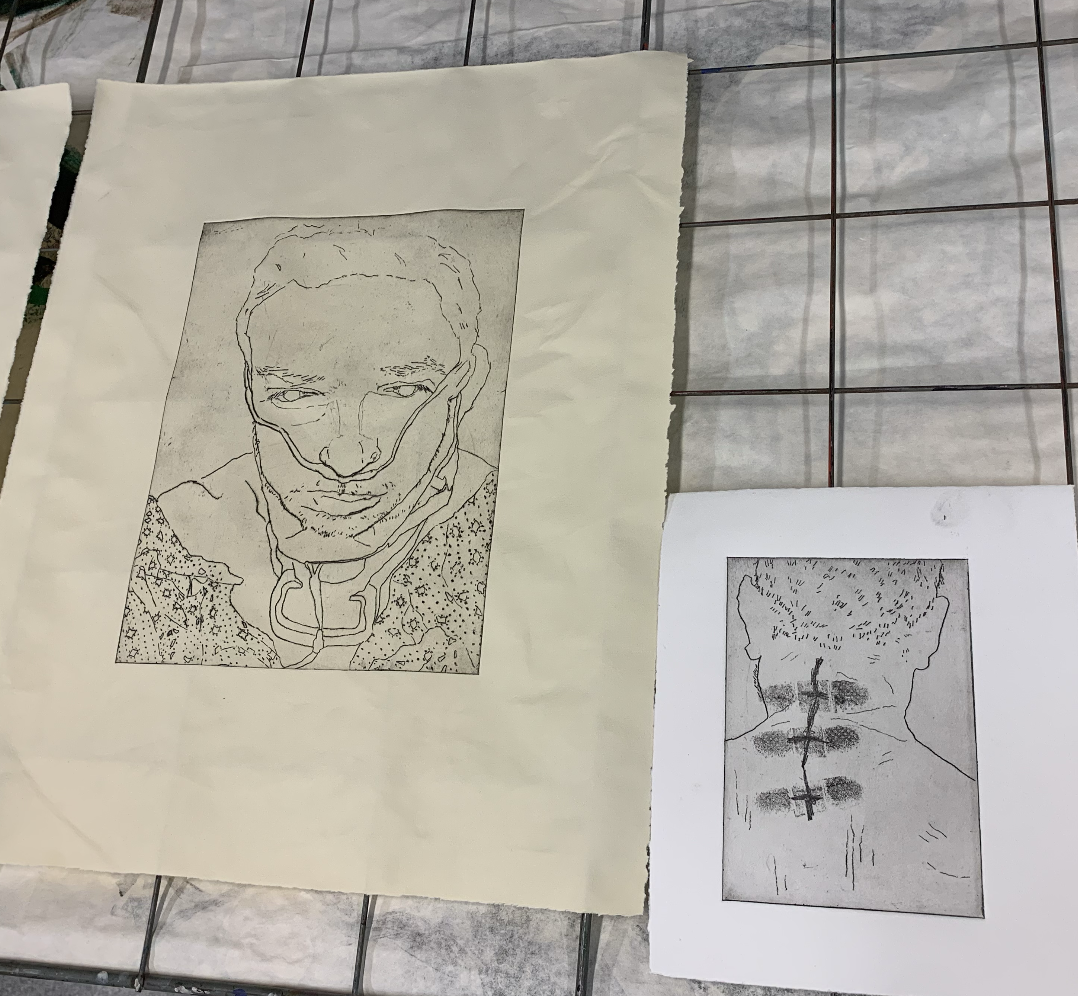
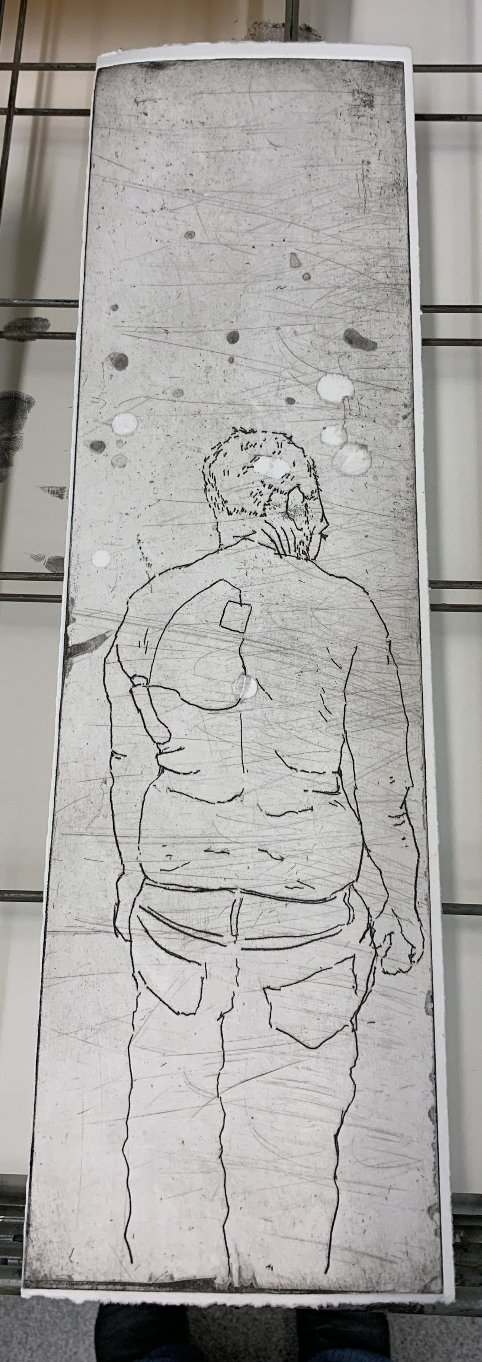
Another limb she explores when it comes to the material world and the body, is that of medical apparatuses. Gefen’s father has had a complex medical history, so going to the hospital and seeing this addition onto the body is another concept Gefen finds cathartic in her art. Gefen spoke with me about the tactility of her prints. Touch and pressure are impressed onto each, a process which intrigues her and allows her to connect this physicality to the invasiveness of medical procedures.
Upon graduation, Gefen is now more interested in Architecture as a career path. She is excited to graduate and explore new ways of settling into her artistic and conceptual being. You can find her work on instagram at @mor3gefen.