









Written by Yunah Kwon
Under the violet haze of a Brooklyn warehouse, engineers, artists, and students crowded around glowing screens chasing the promise of a neoteric art born from AI.
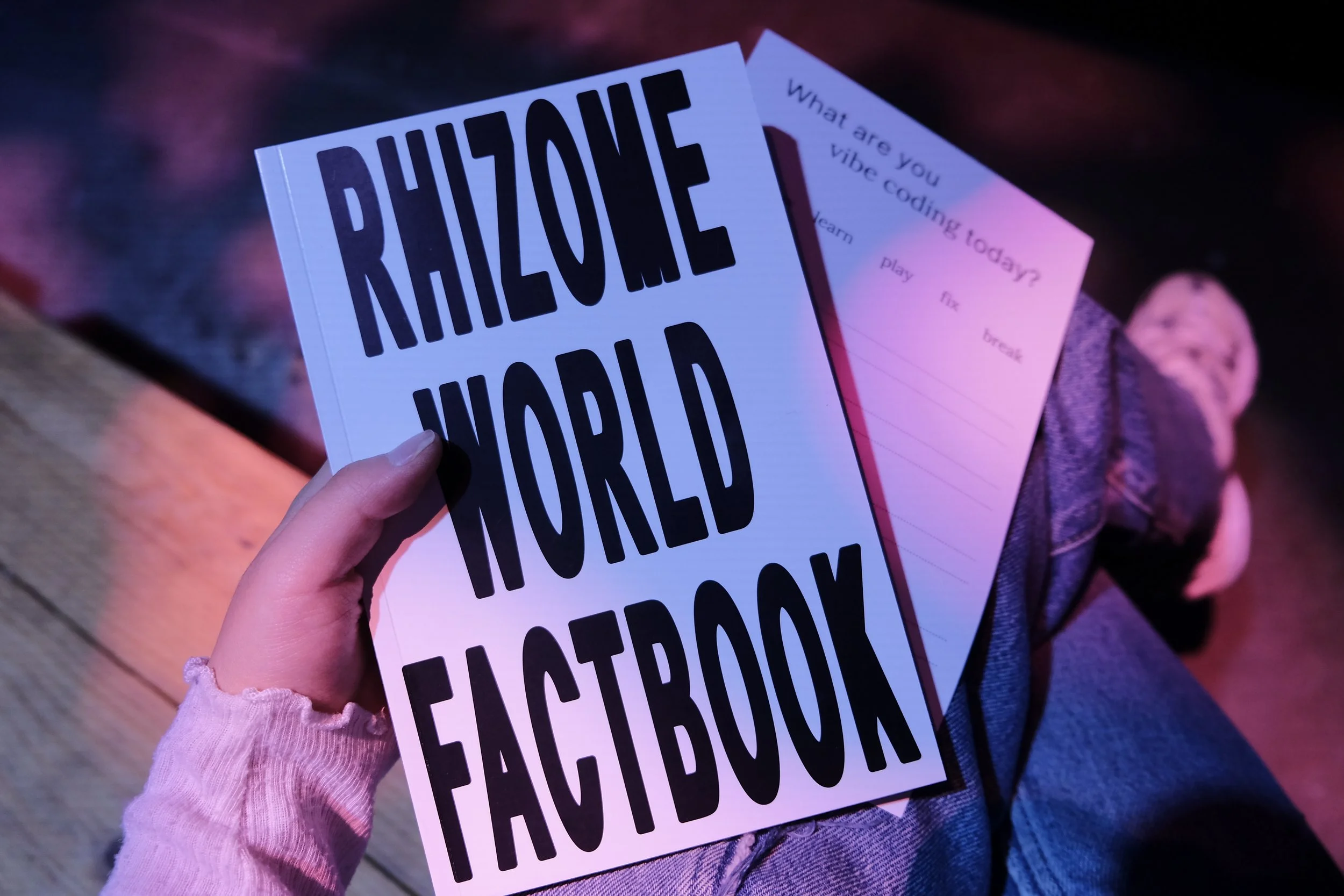
On October 9, 2025, I attended Vibe Shift, an event presented by Rhizome in partnership with Anthropic, Onassis ONX, and members of the New Inc community. It promised a glimpse into AI’s imaginative and interactive side—a counterpoint to the mechanistic, profit-optimizing image of AI that haunts the media.
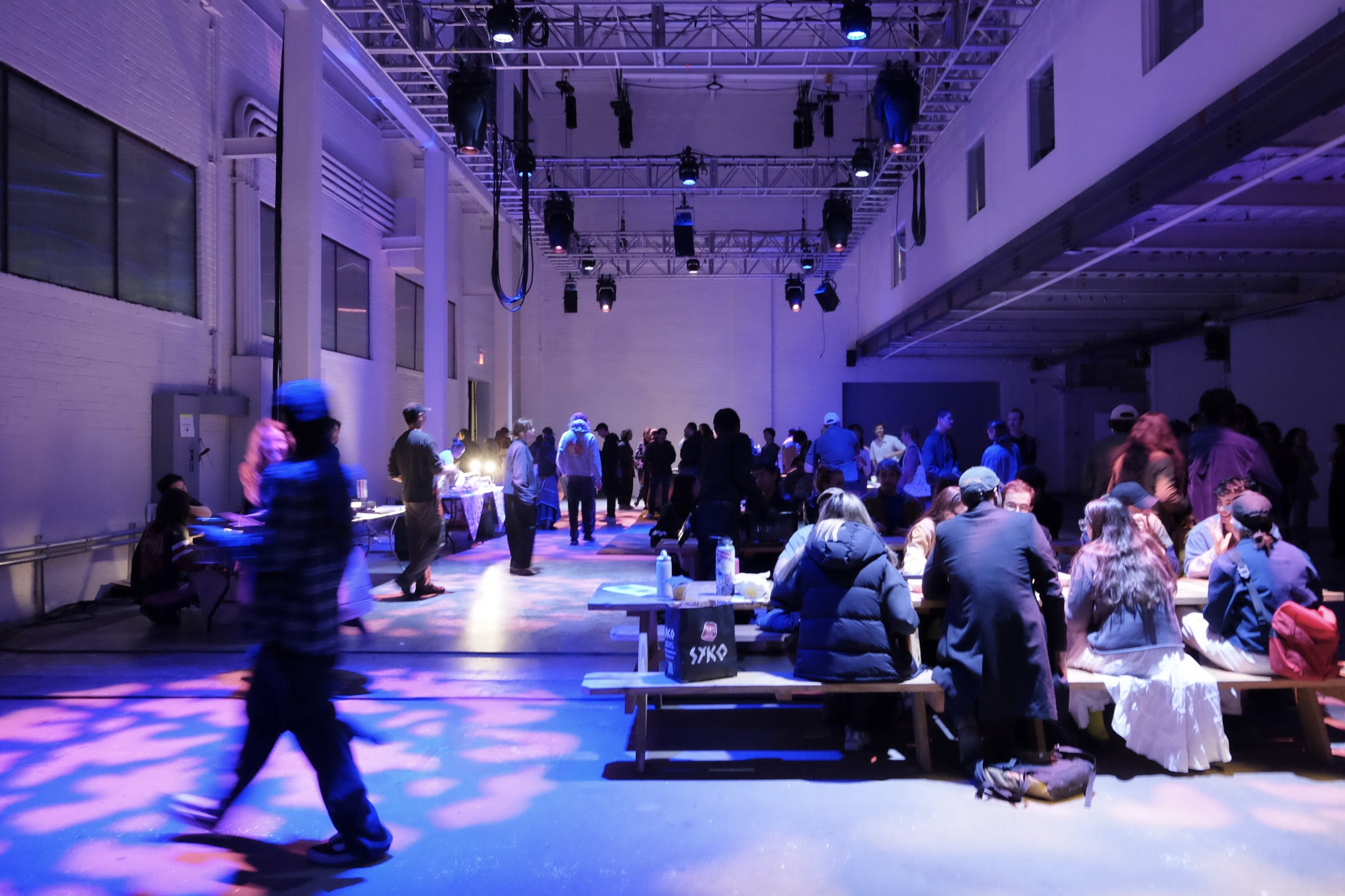
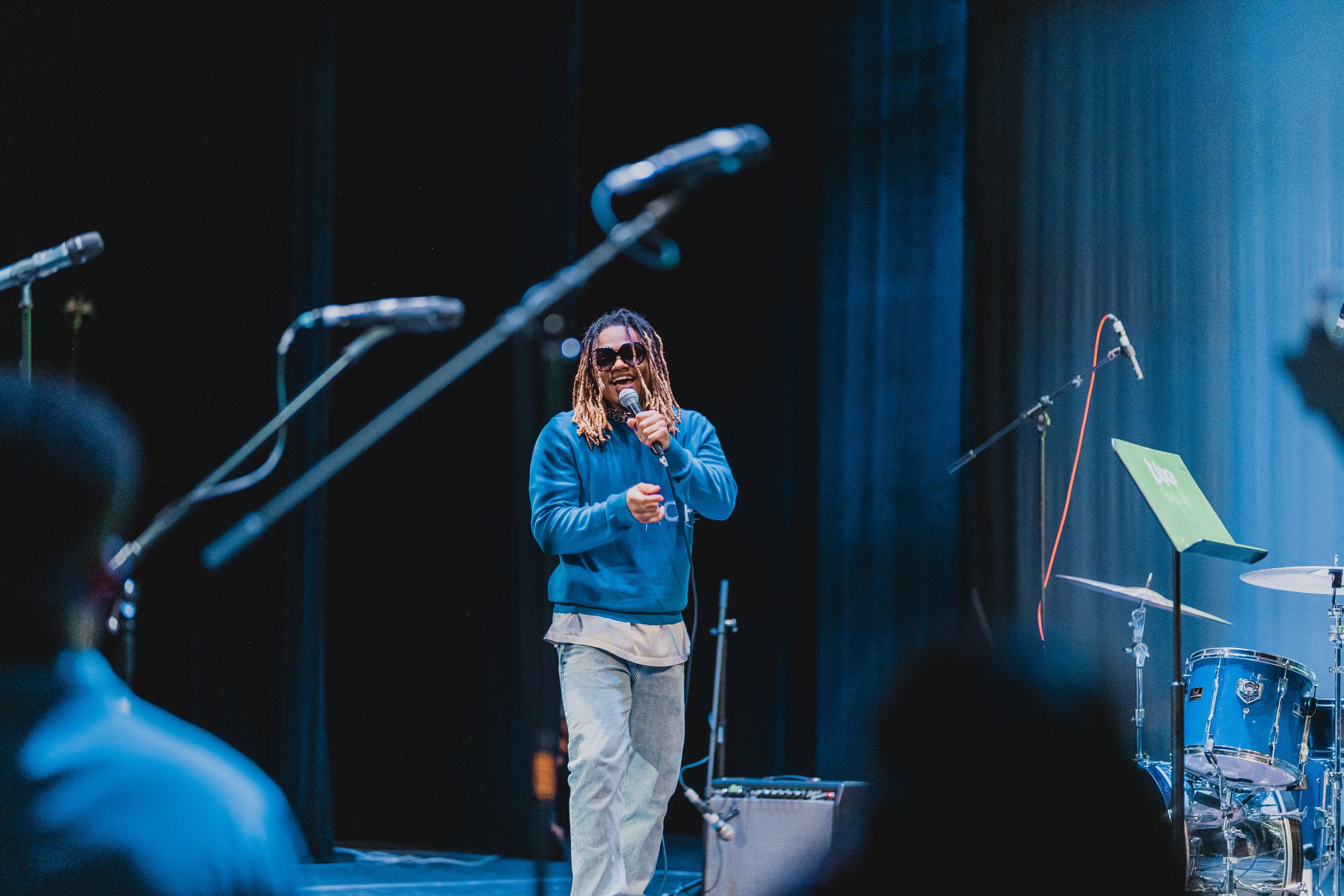
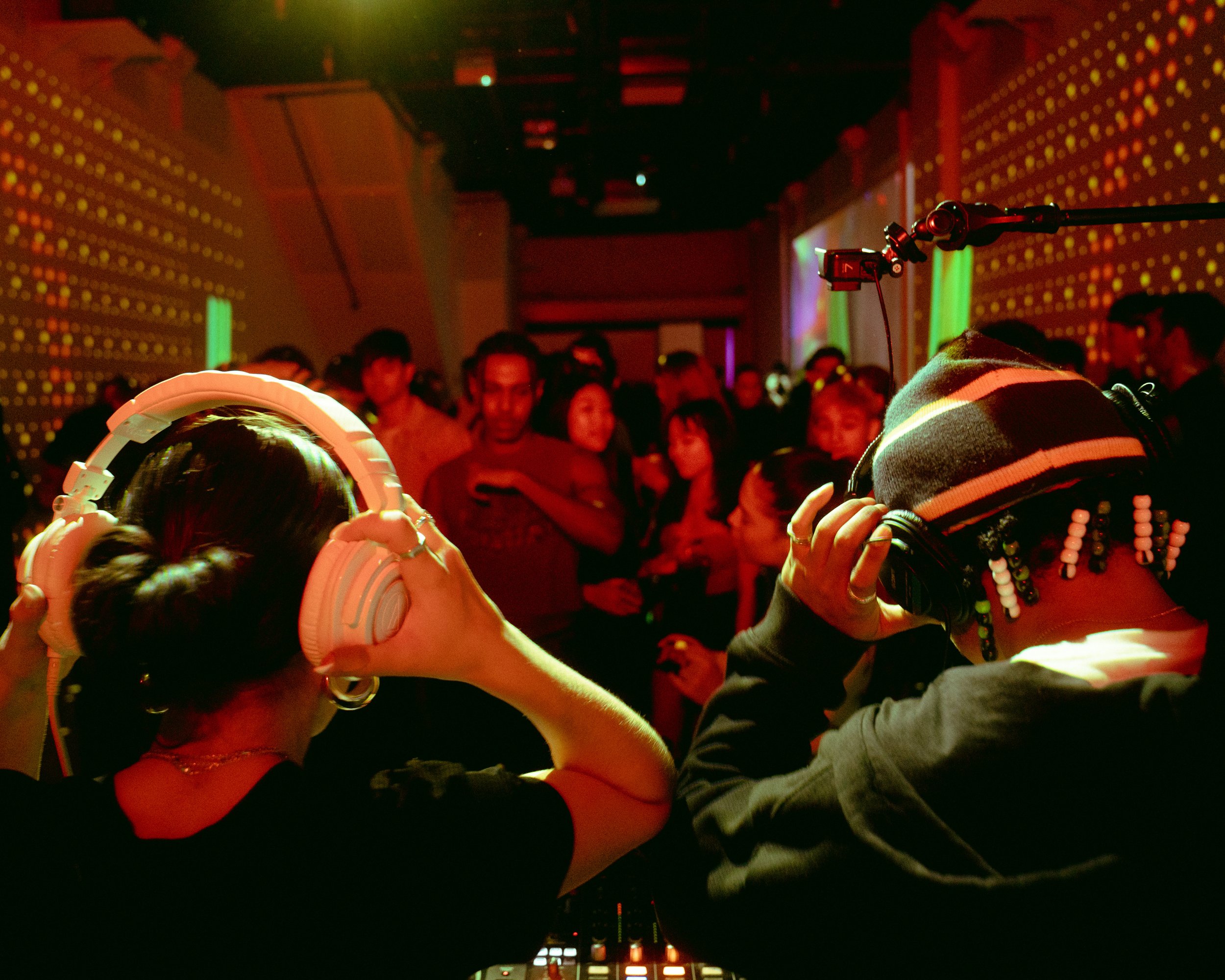
The venue, a warehouse-turned-production-studio owned by ZeroSpace, was comfortably packed with a sense of pulsating sound and energy. Futuristic violet rays washed over strangers mingling at the open bar, balancing tacos and laptops as they conversed on diverging creative backgrounds. Around me stood tech bros dressed in clean sneakers, artists with piercing fashion styles, middle-aged engineers, and curious students; the diversity surfaced a striking heterogeneity of identities and motivations for coming to the event. A rare cross-section of people brought together by curiosity about “slow AI,” an idea that prizes deliberation and creativity over speed and scale.
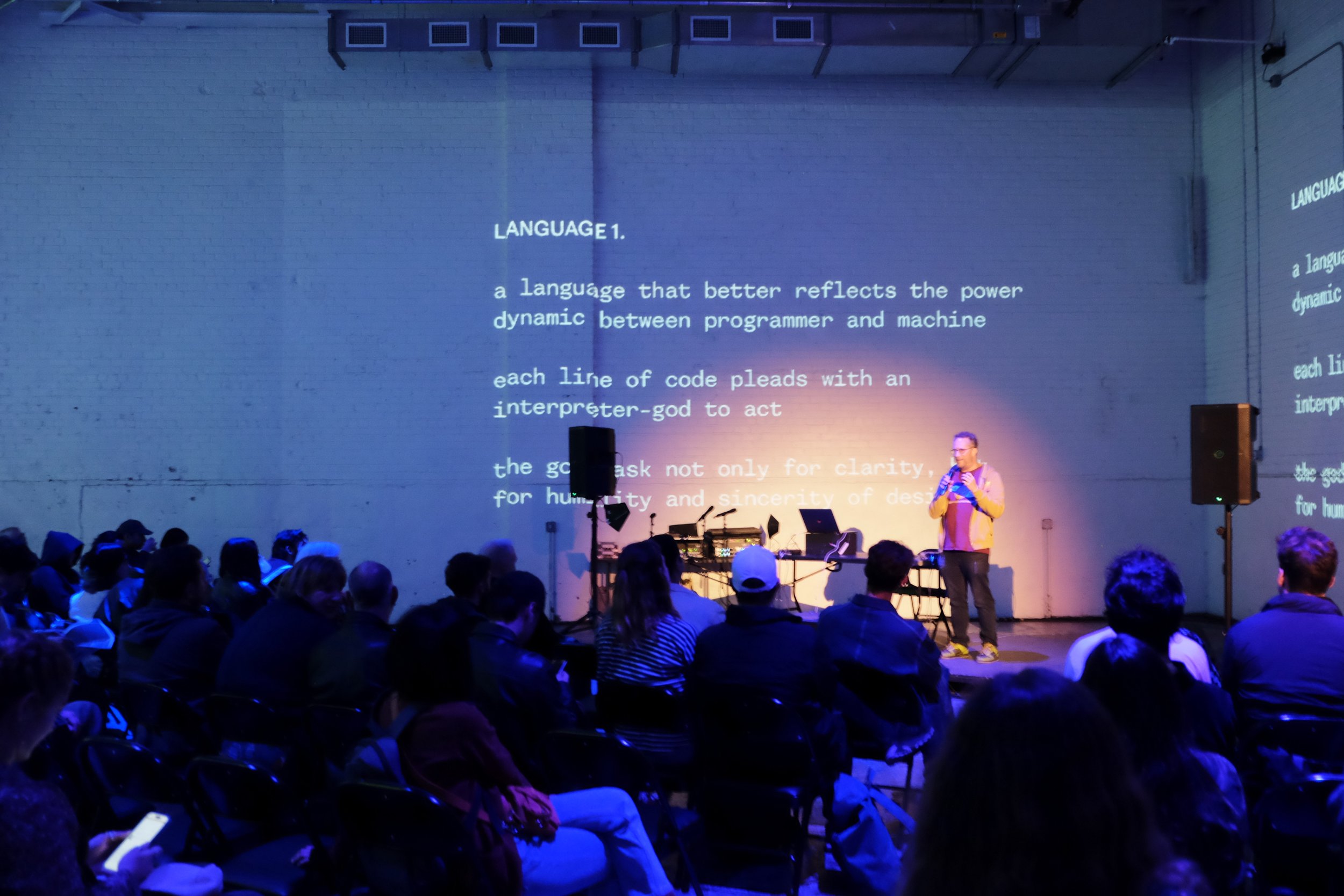
At the center of it all was Claude, Anthropic’s large language model, introduced as a tool that removes technical barriers for creators such as graphic generation and data collection. The event invited contestants to try “vibe coding” — prompting Claude in natural language to generate code, websites, and interactive art. In minutes, participants replaced creative labor with AI, generating websites, graphics, and videos with just a few careful revisions. One father asked Claude to see the world through his two-month-old infant’s eyes; another built a digital maze where users could “browse the universe.”
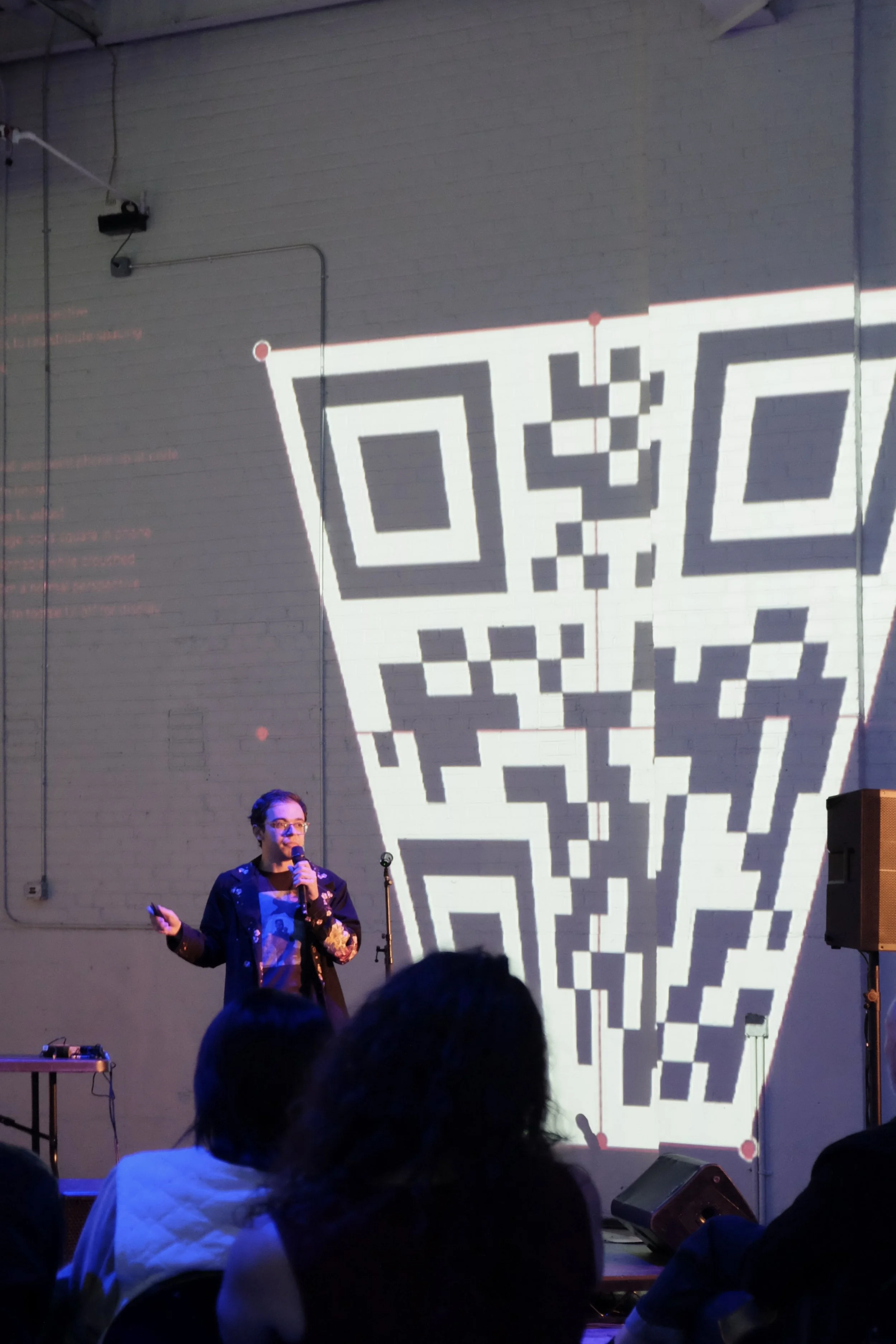
My favorite project was simple but striking: a set of distorted QR codes that forced people to crouch or tilt their phones to scan them. A QR code called “Crouch” with an obtuse top invited humans to bend for access. It elegantly criticized how software isolated humans from their physical bodies, inserting technology’s presence in space through human interaction.
As I settled into a seat in the audience, I met Brian, a quiet software engineer who had also come unaccompanied. Between presentations, he revealed his background in machine learning and AI across finance reporting and web services. I was delighted to hear of his passion projects: a pay-as-you-go platform for AI tokens without monthly subscription fees or usage limits, and an entirely AI-published news site dedicated to independence and accuracy over generating outrage.
I left my conversation with Brian feeling reenergized—even after working at big firms with a return-oriented culture, he nonetheless retained a deep curiosity for humanitarian exploration through tech-assisted initiatives. In the purple light of the room, I sensed a humble, private man brainstorming solutions to solve society’s upcoming problems, unclouded by goals for profit-maximization or recognition.
Anthropic, too, seemed to project this humility. Against competitors like OpenAI and Google DeepMind, it had been earning a reputation from investors and users for its moral rigor and due diligence testing for safety. “What becomes possible,” one presenter asked the crowd, “when our objective is cultural creation and preservation—instead of scale or profit?”
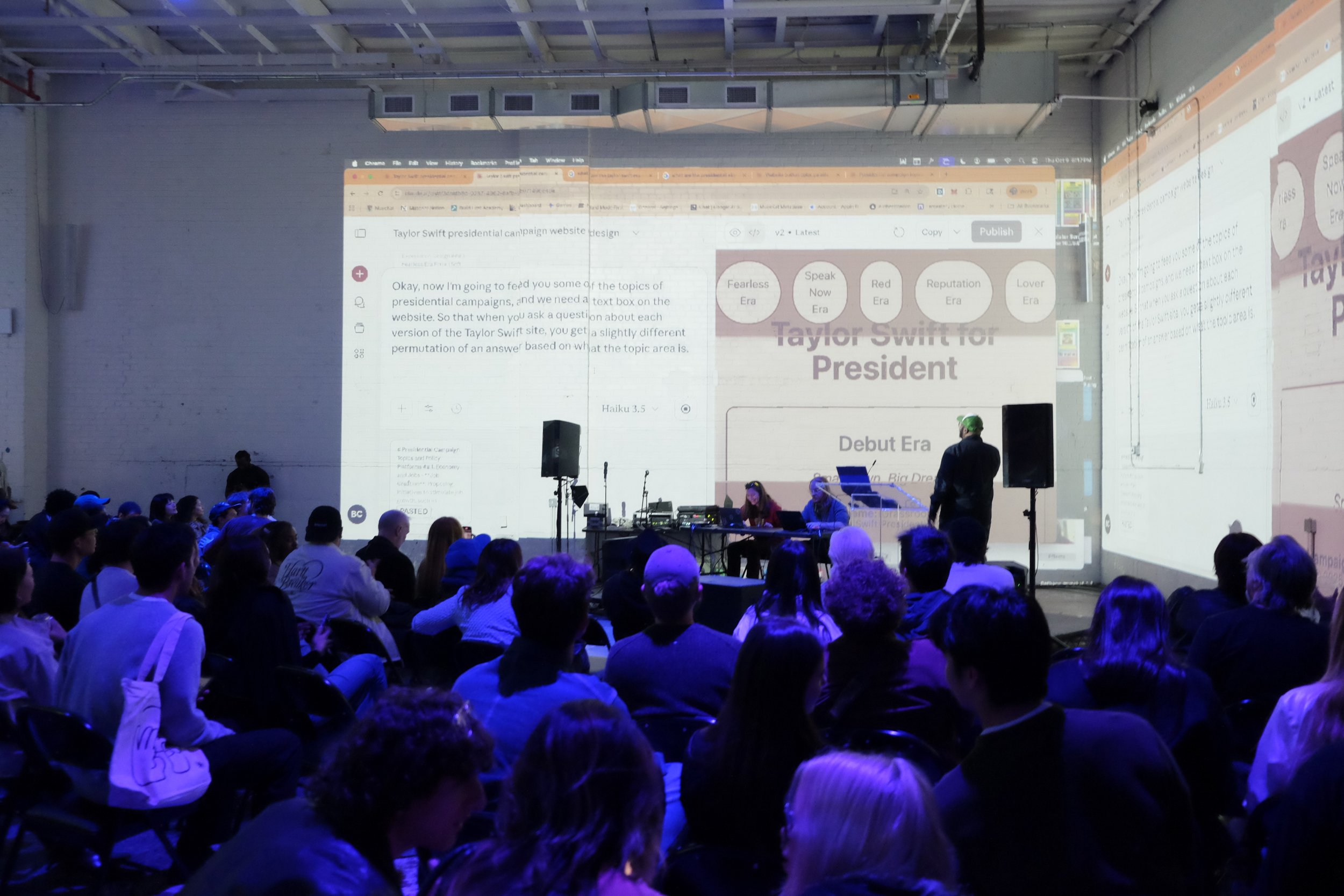
Then came the vibe jam: a live coding competition where veteran “vibe coders” were pitted against each other to build an audience-winning project from a blank prompt in eight minutes. Final results included an ASCII composition, a Taylor Swift political campaign website, and an MS Paint clone that turned sketches into 3D objects. The audience cheered as the emcee hyped the countdown. My mouth burning from a habanero taco, I joined the crowd, swept up in the emcee’s hype.
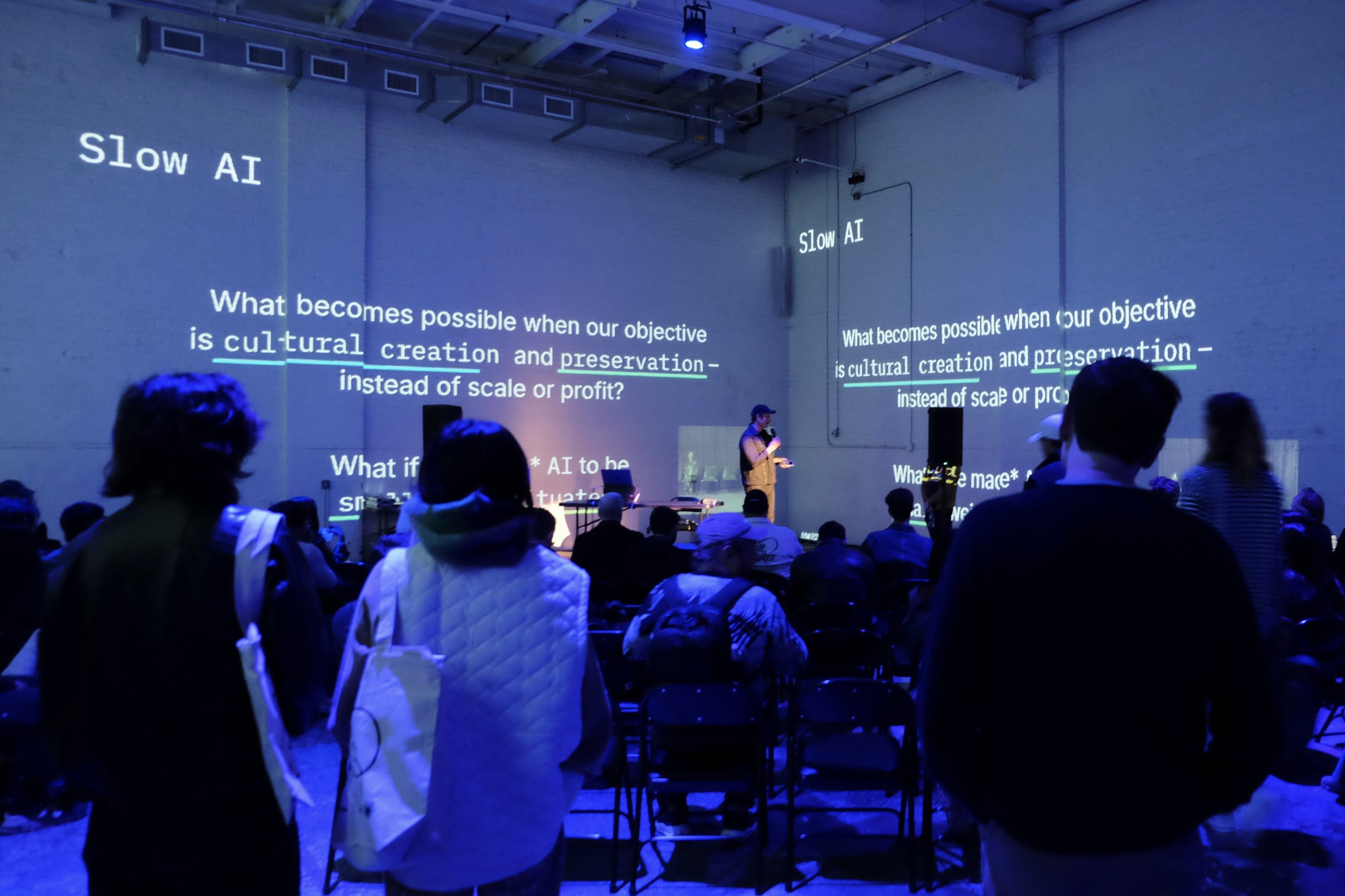
But, as I walked out of the warehouse into the frigid night, the contradictions began to settle in. The event had opened with talk of “slow AI”—tech-infused art born from deliberation and incubation—yet ended with a contest built on efficiency and output. The coding battle awarded the winner based on crowd reaction, prioritizing hasty execution over care. Ironically, this judgment directly reflected how winners for AI were determined by the market based on scale and profitability. I turned over the experience in my head with clarity and found it troubling. What could speed coding a Taylor Swift campaign website possibly accomplish for the world of innovation, critical analysis, and creative revolution?
This tension is reflected in Anthropic’s own operations. Although Claude was touted as a safer, ethically-minded LLM, it is largely deployed for scale and profit, streamlining corporate workflows for tens of thousands of employees. Anthropic’s largest users are corporate clients, including Deloitte, Cognizant, Pearson, and Bridgewater Associates. “Slow AI” seemed more a branding posture than a practice—a way to make efficiency sound soulful.
The paradox of Vibe Shift blurred two distinct visions of “Slow AI.” One treats AI as a creative collaborator for projects that are unscalable and motivated for its own sake from its conception. The other markets it as a cautious, responsible technology for scalable systems. At Vibe Shift, Claude took advantage of this elusive difference, marketing a product for efficiency that contrasted the intended goal of Slow AI.
It frustrated me that many attenders might leave the event with the wrong impression of what integrating slow AI into art looks like. Though both quick, scalable building and slow incubation are gamechanging and applicable in their own rights, by merging the two, Vibe Shift undermined the marketed ideals of AI and the ethos of Rhizome’s art hub. Mistaking the two concepts risks diluting both the art and commercial viability of Claude.
Still, I couldn’t dismiss the glimmers of inspiration and genuine conversations I saw that night. Brian later sent me an email inviting me to a software engineers’ meet-up in Brooklyn, a curious venture for another time. The special appeal of Slow AI to corporate engineers intrigued me. Perhaps their private desires for creativity drew them to community gatherings outside of work. Inside us ran an underlying desire for creativity, not capital—could AI dream of art, too?